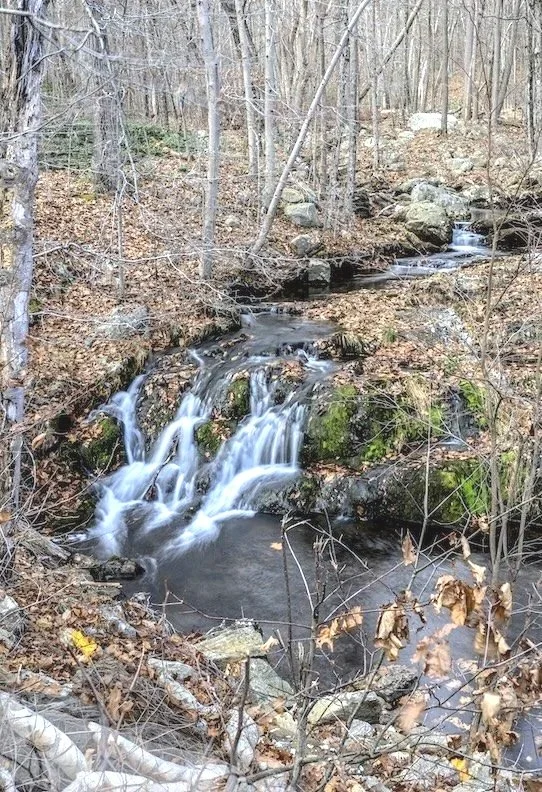
Tiorati Brook Cascade - Harriman State Park - 11/10/26
A dry Autumn here in the Hudson Valley led to a gorgeous golden landscape through much of October. Recently, however, a Noreaster blew through our area bringing substantial rain and strong winds. The time for the splendid hues of Autumn had come to an end. Trees laden with brilliant yellows, gold, a crimson foliage were laid bare in a matter of a day or two, and streams that had no more than a trickle of water suddenly were flowing again, in some cases torrentially. Rivulets like Tiorati Brook were transformed from a dry scar on the landscape to a series of rapids and cascades. And so, in a 48 hour period, one form of beauty is exchanged for another - one a colorful piece of landscape art and the next a dynamic illustration of the power of nature.
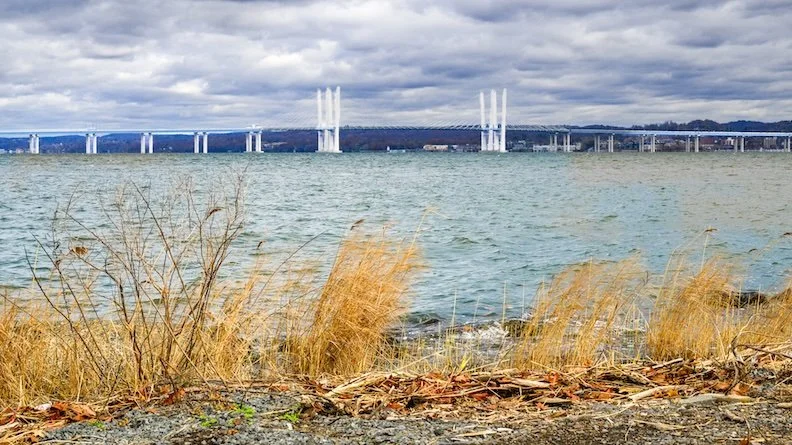
Tappan Zee Bridge - aka Mario Cuomo Bridge - 11/14/26
A day or two after the noreaster had hit the area, the flood waters were still rising. The Hudson is a large river and can hold a vast amount of water. It also drains a huge area of land, however, so it may take days for the excess water from the heavy precipitation to be funneled into the river channel. Normally, there are rocks exposed a short distance out in the river from the pier at Piermont. Today, however, the river covers almost all those emergent boulders. This can be a good area for shorebirds moving through the area headed south at low tide, but there is little sign of these birds under these high water conditions. The only water birds seen today are a small number of Double-crested cormorants.
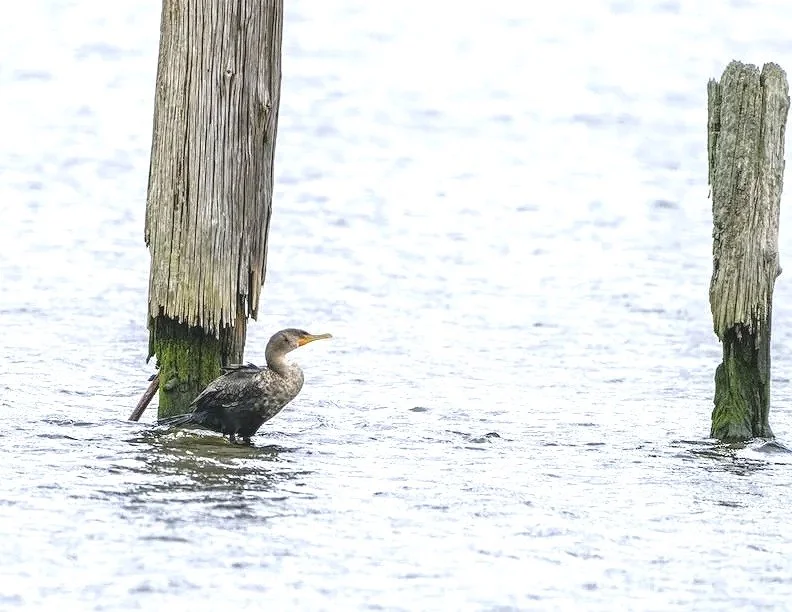
Double-crested cormorant - Piermont Pier - 11/14/26
Unlike those little shorebirds absent today, the cormorants are not reliant on shallow water and mudflats to provide suitable conditions for providing a source of food. The cormorants are fishers and can find a good supply of food-fish in many different depths of water beneath.
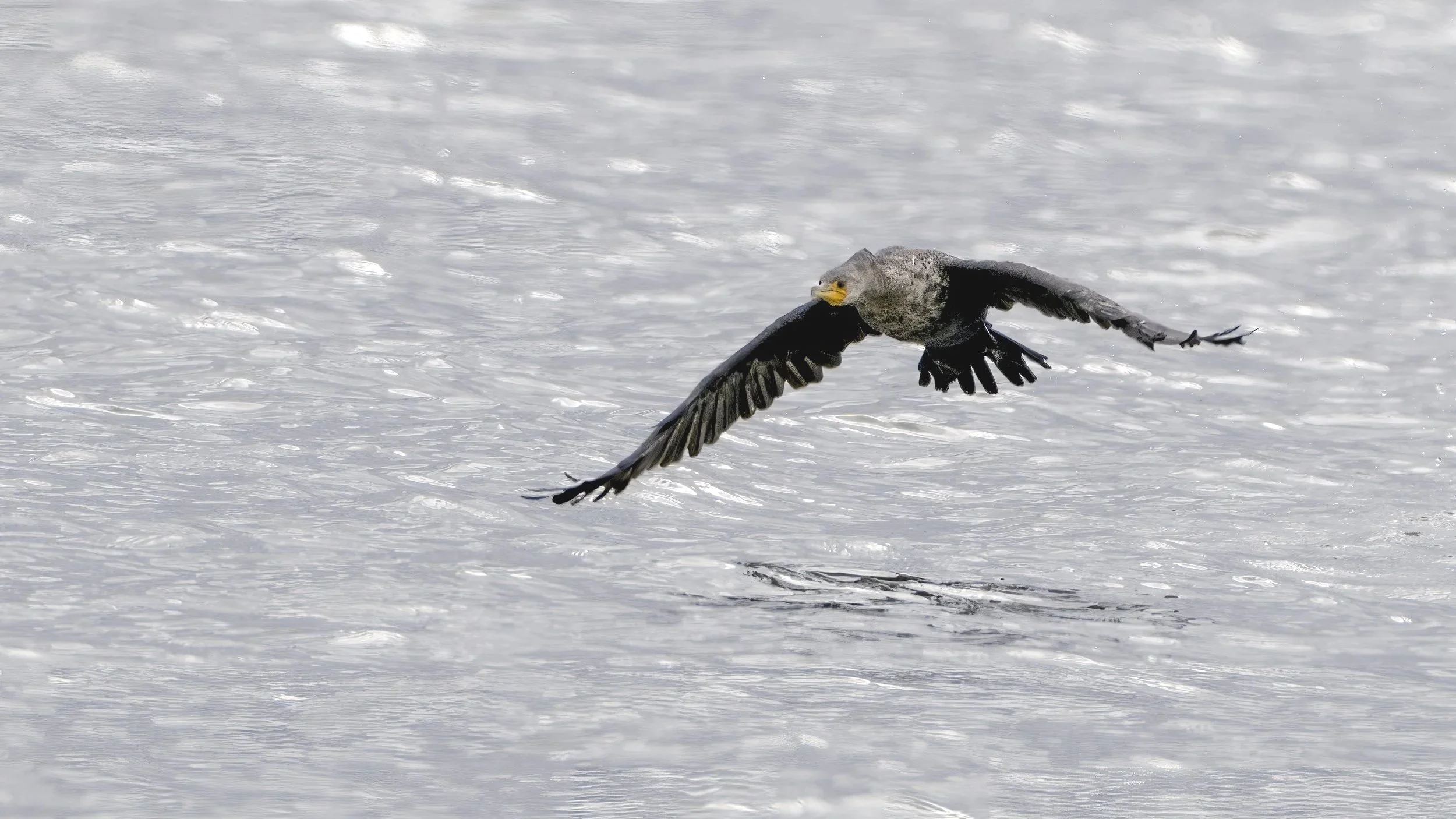
Double-crested cormorant - Piermont Pier - 11/14/26
The Cormorant above had been bobbing along on the choppy waters of the Hudson for some time before deciding to take flight in the hopes of finding a better spot in which to find a meal. These Double-crested cormorants gather along the lower Hudson in fall, their black silhouettes punctuating rocky shorelines and derelict pilings as they hunt in cooling waters. After dives they perch with wings spread to dry, their hooked bills and orange facial skin standing out against slate skies while juvenile birds like the one in the image above show paler plumage and mottled throats. The seasonal influx reflects shifting fish schools and migrating patterns—cormorants exploit decreased competition and abundant baitfish drawn to tidal flats. Their presence is a reminder of the river's productivity. As the winter progresses, more and more waterfowl of varying species will appear in this area as the waters to the north become harder and harder to find food due to frozen over surfaces. What will tomorrow bring?