So Santa is not the only visitor we can expect to see here in the Hudson Valley at this time of year. Waterfowl are build to withstand the rigors of winter, but when their aqueous environment goes from liquid to solid, it’s time to move to better digs. As the season progresses, we expect to find more and more ducks and other waterbirds showing up in the relatively warmer and open waters of this region. A quick stop at Rockland Lake State Park provided me with some nice views of some of these species that will be more than happy to remain here as long as there is open water.
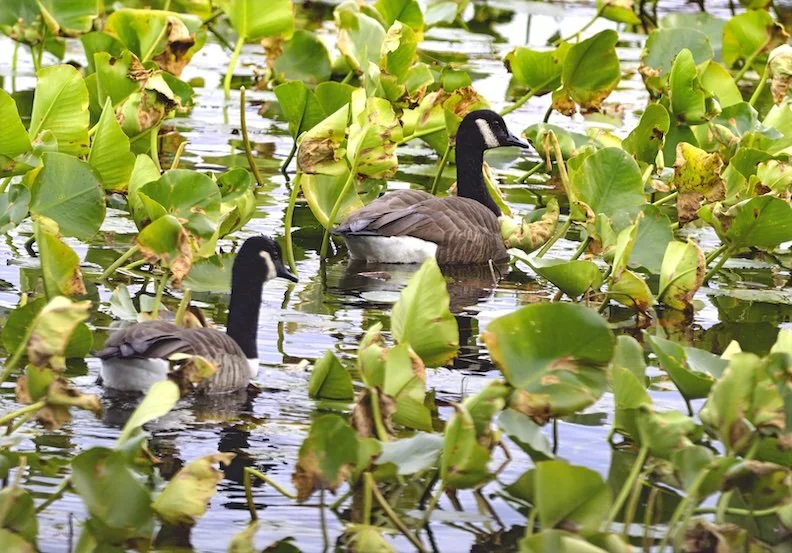
Canada geese - Rockland Lake State Park - 11/14/26
Each autumn, large flocks of Canada geese funnel through southeastern New York along traditional flyways that trace river valleys, reservoirs, and coastal wetlands; these birds stage at sites like the Hudson River estuary and Jamaica Bay to rest and feed, often forming iconic V-shaped formations as they travel between northern breeding grounds in Canada and wintering areas farther south. Geese time their migration to take advantage of milder weather and abundant food, using strong site fidelity and social cues from older birds to select stopovers where agricultural fields, open water, and protected marshes provide safety and energy reserves. Observers in urban and suburban areas commonly hear their honking at dawn and dusk and can see large rafts on reservoirs or roosts at night. Conservation efforts and changes in land use have altered stopover patterns however, sometimes increasing local winter populations and causing management challenges related to habitat use and human-wildlife interactions. Huge flocks can (and often do) create prohlems such as polluting lakes and ponds and fowling public areas like ball fields, golf courses, and picnic areas. When geese graze on grasslands, it’s “in one end and out the other” which produces a large amount of waste.
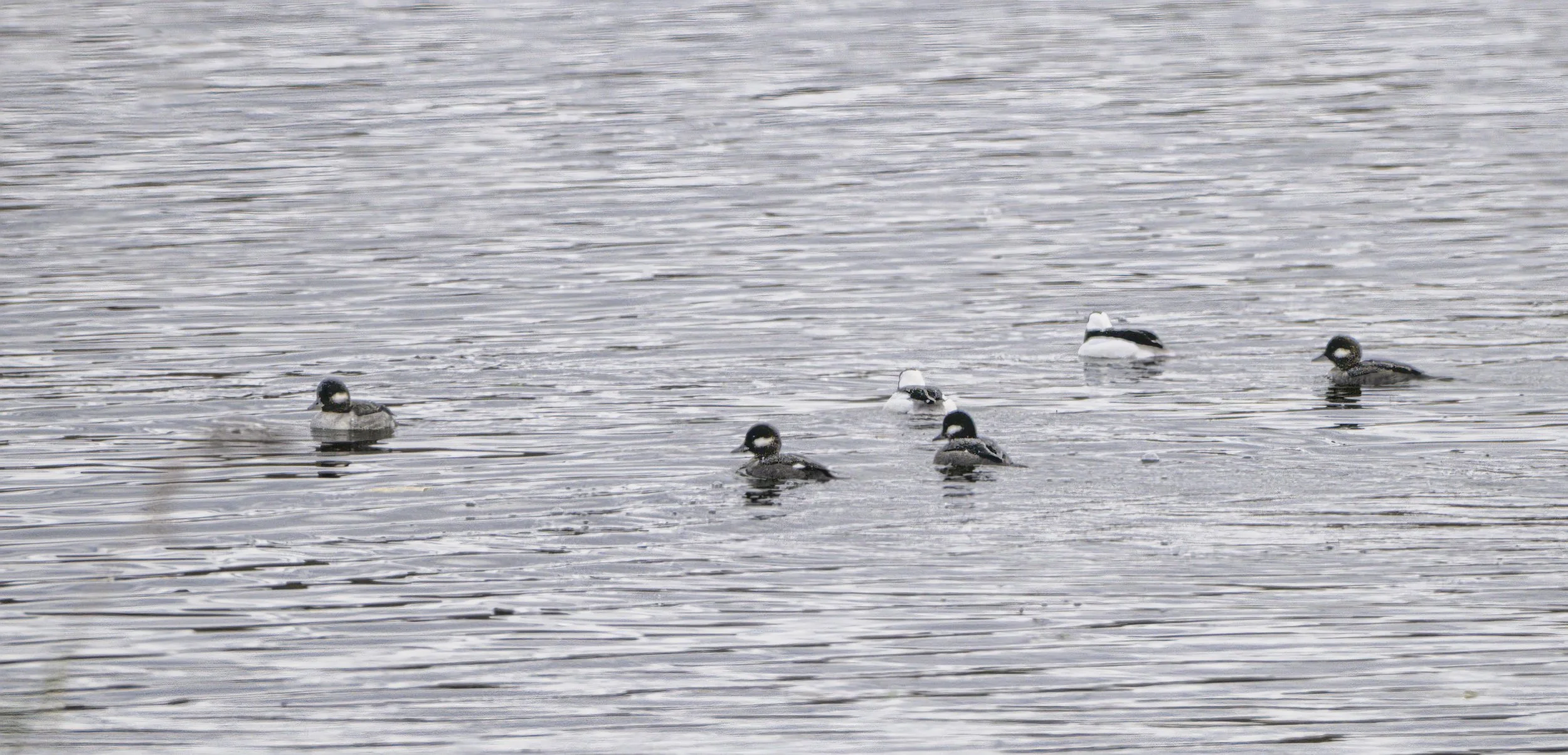
Raft of Buffleheads - Rockland Lake State Park - 11/14/26
A much less “intrusive” migrant is the Bufflehead. These diminutive birds arrive in compact, bustling flocks during the cold months, favoring coastal bays, estuaries, and sheltered freshwater ponds like Rockland Lake where they forage for small crustaceans, mollusks, and aquatic insects by diving close to shore. The small, fast-moving diving ducks are often seen in mixed flocks with mergansers and scoters from late fall through early spring, their iridescent heads and white backs flashing in brief glimpses as they bob and plunge in shallow water, and birders watch for their distinctive rapid wingbeats. The adults are those birds with predominantly white heads while those with the little white smudges along the side of their heads are the females.
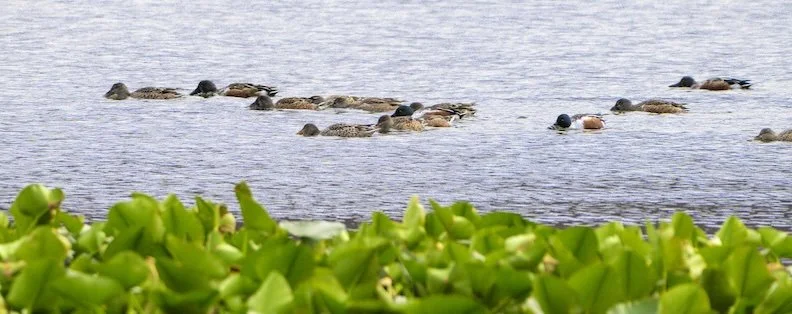
Northern shovelers - Rockland Lake State Park - 11/14/26
Another sign portending colder weather is the arrival of the Northern shoveler. Each fall, northern shovelers pass through southeastern New York in noticeable waves, using marshes, flooded fields, and shallow urban ponds as stopover sites to rest and refuel. The species’ broad, spoon-shaped bill filters plankton and tiny invertebrates from the water, making eutrophic wetlands and shallow basins particularly attractive during migration. Observers in the region typically see greater numbers from October through November on the southbound journey, with counts peaking after cold fronts or storms like the recent noreaster that concentrate food and force birds to linger before many will head south to the Gulf Coast and beyond.
It’s an exciting time to be out looking for these incoming visitors from the northern climes. Species to be expected here in southeastern New York in winter include a diverse cast of waterfowl to coastal estuaries, bays, reservoirs, and river mouths. We can expect common species such as mallards, American black ducks, and Canada geese which are all seen year-round to be joined by larger flocks of ring‑necked ducks, greater and lesser scaup, and common and red‑breasted mergansers on deeper open waters. . Along the Hudson and the Sound look for long‑tailed ducks and bufflehead, while goldeneyes (both common and Barrow’s occasionally) appear on sheltered bays and larger lakes. Brant and snow geese concentrate on tidal marshes and farmlands like the Black Dirt area of Orange County when food is available. Dabbling species like American wigeon and green‑winged teal show up in smaller numbers at unfrozen ponds and marshes. Even rarities—such as scoters—can turn up during cold snaps that push birds south from offshore Atlantic waters. Conditions vary with ice cover and food availability, so the best winter waterfowl diversity is found where open water, tidal flow, and submerged vegetation persist. Great time to hop in the car and head out to local ponds, rivers, and coastal environs.