Cragston Lakes
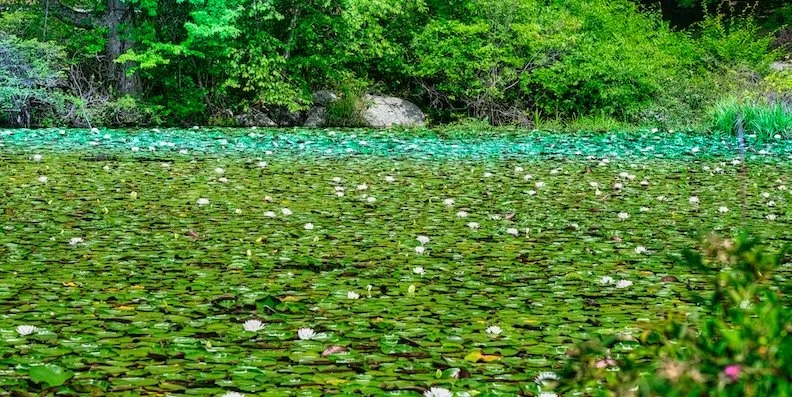
Cragston Lakes - 7/11/26
A brief note to mention that in view of the fact that we have some medical issues here on the home front, the number of posts for the immediate future will vary from week to week. I’ll make an attempt to keep up with the changes that Mother Nature is throwing our way while dealing with what reality is throwing our way. We’ll, moving on…..
I did manage to get up to a spot where I used to take my Environmental Science classes on a regular basis…Cragston Lakes at Morgan Farm. With so much varied habitat in a small area, it makes for the perfect quick stop to gather interesting images of the small wonders of nature. Simply concentrating along the waters edge produces a good number of flora and fauna. One of the wildflowers I encounter up here is the Buttonbush. Buttonbush (Cephalanthus occidentalis) is a striking wetland shrub or small tree known for its spherical clusters of tubular white flowers that resemble pincushions. Common in marshes, swamps, and pond edges across eastern North America, it thrives in saturated soils and tolerates standing water. The dense flower heads attract a variety of pollinators, especially bees and butterflies, while the seeds provide food for waterfowl.
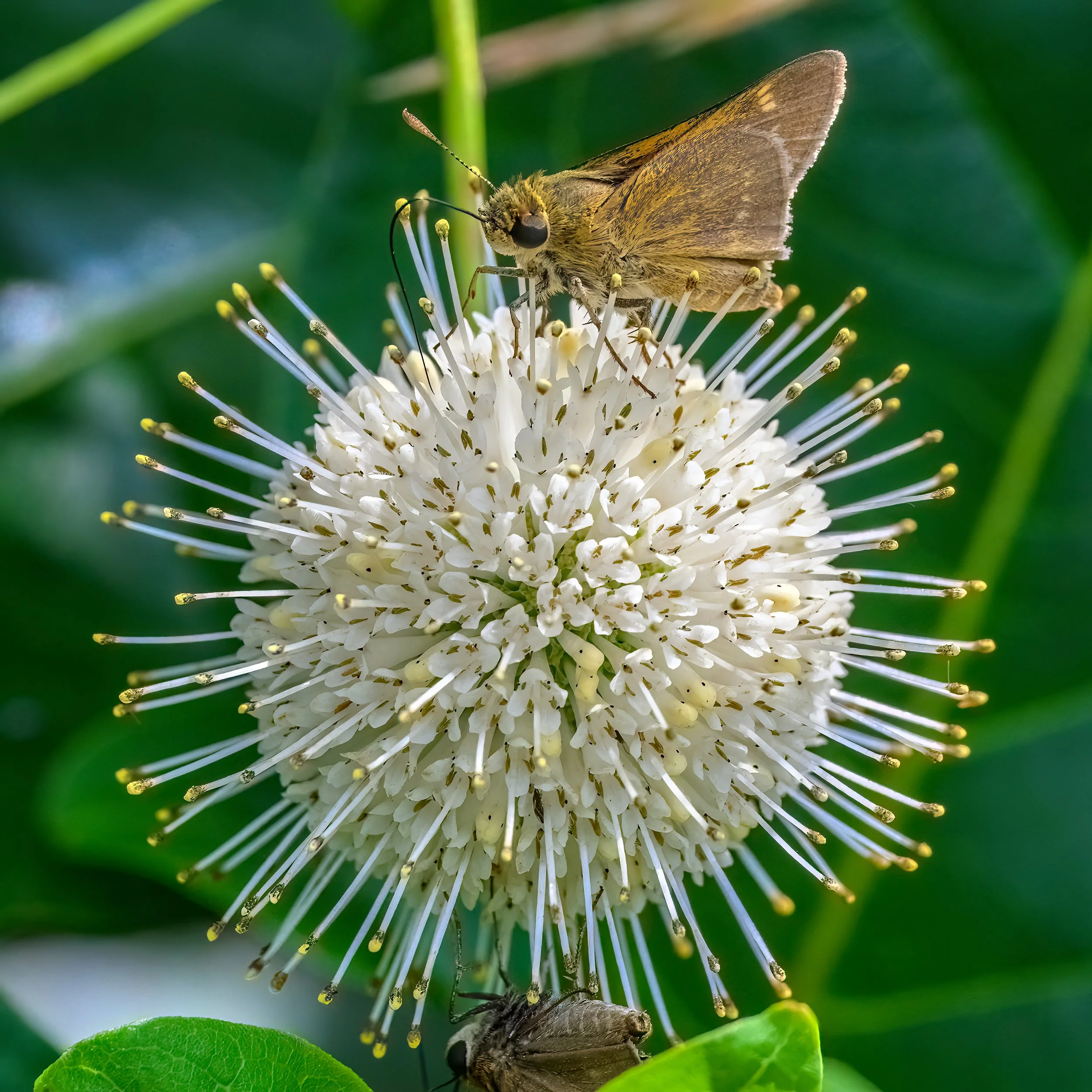
Tawny-edged skipper on Buttonbush - Cragston Lakes - 7/11/26
On this plant, I found Dun skipper, several species of bumblebees, and this Tawny-edged skipper. The Tawny-edged Skipper (Polites themistocles) is a small, fast-flying butterfly commonly found in open fields, roadsides, and gardens. Wingspan ranges about 1 to 1.5 inches. Key field marks: upper forewings are dark brown with a distinct tawny-orange band along the outer edge (more pronounced in males), while the hindwings are brown with faint orange or yellowish scaling near the margin. Underside of the hindwing is pale to bright orange with a narrow brown border and subtle pale spots.
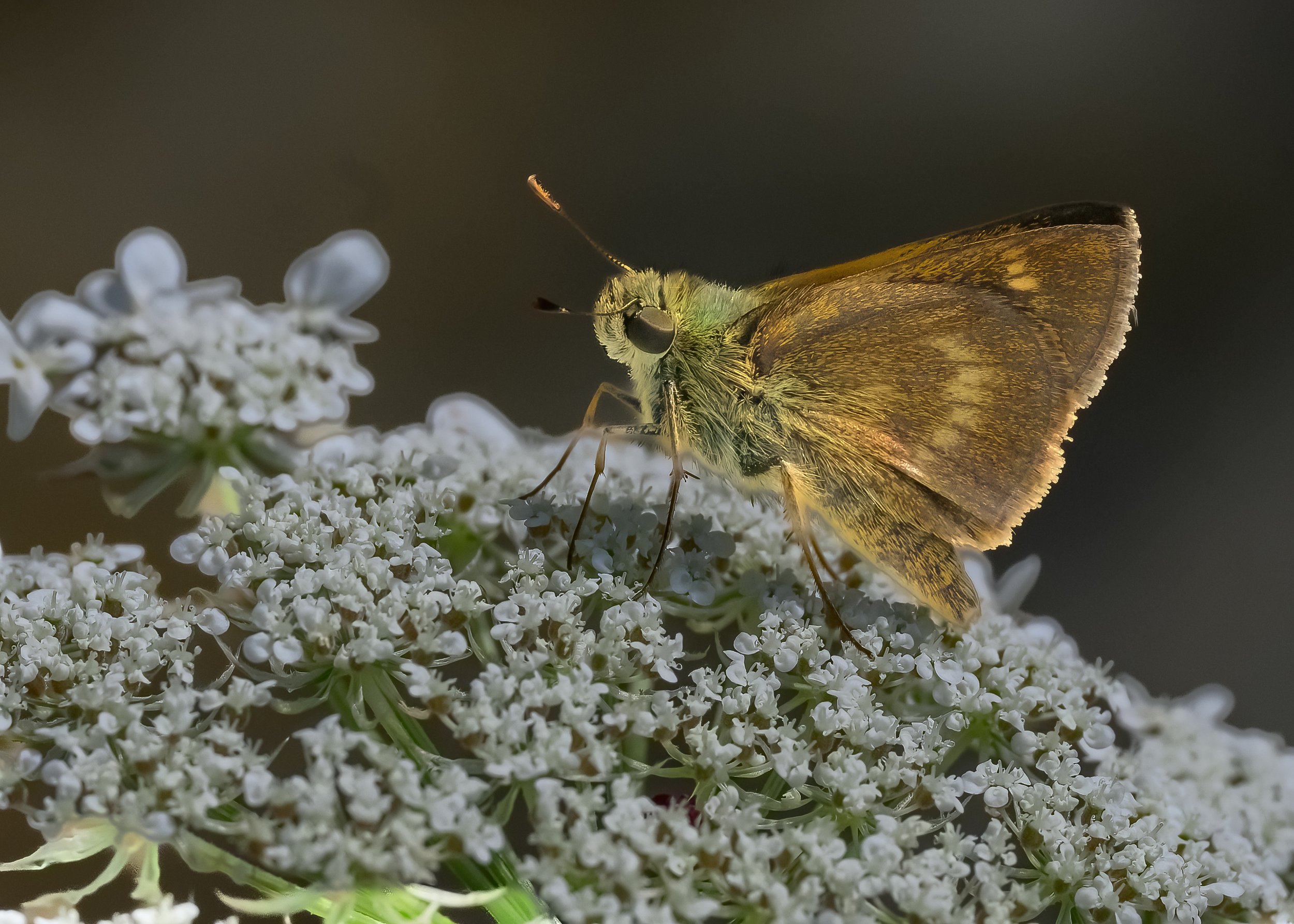
Northern Broken-dash side view- Cragston Lakes - 7/11/26
Nearby, was another small butterfly which we have recently reported on, the Northern Broken-dash. At first glance, this butterfly looks an awful lot like the previous Tawny-edge. But when this little guy flew and landed so that we could see the entire dorsal (top) side, not only is the difference easily noted, but we can actually see how this species got it’s name!
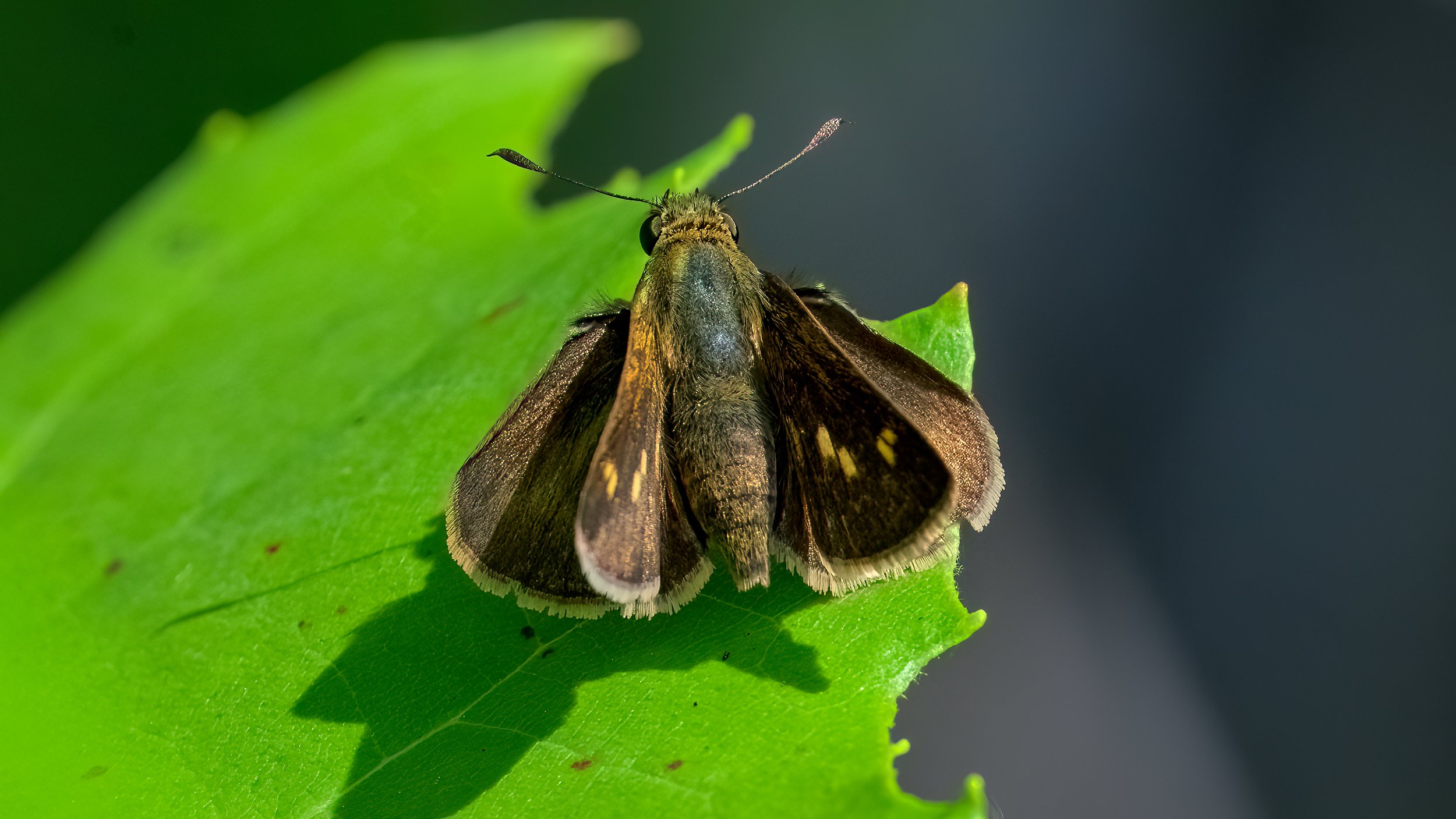
Northern Broken-dash dorsal view- Cragston Lakes - 7/11/26
It’s so refreshing to see the markings for which a species is named. So often, they are so subtle that it takes a great deal of imagination to pick them out. But here in this image, the “Broken dashes” are clearly visible. Now I get it!
There are a lot of nectar rich plants along the pond’s edge and this one is another magnet for bees and butterflies. The plant below is Common meadowsweet. Also known as “Pipestem”, it is native to the wet soils of the Allegheny Mountains and other portions of Eastern North America. Just a look at the number of Eastern Common bumblebees that are visiting this plant is a good indication of how valuable a nectar source the meadowsweet is.

Eastern Common Bumblebees on Common Meadowsweet - Cragston Lakes - 7/11/26
Last but certainly not least are two examples of grasshoppers I found along the ponds perimeter today. They both are great examples of how Mother Nature takes care of her little ones by camouflaging them. The first species is the Carolina grasshopper.
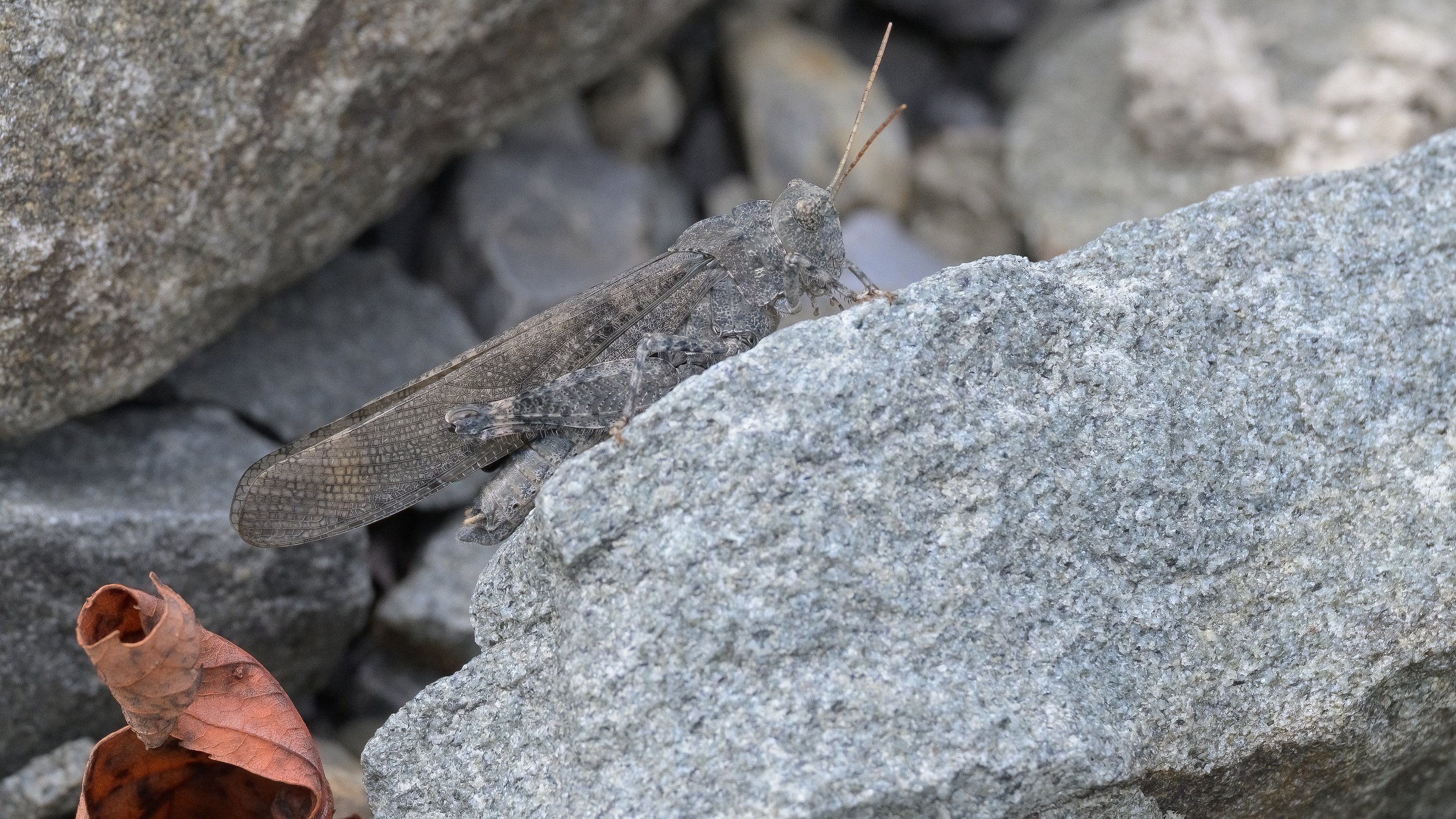
Carolina grasshopper - Cragston Lake - 7/11/26
The Carolina grasshopper blends remarkable camouflage with its environment, sporting a mottled pattern of browns, tans, and greens that helps it disappear among grasses, leaf litter, tree bark and the granite outcroppings where it is often found hiding in plain sight. Its body shape and subtle striping break up its outline, while stillness and precise alignment along stems or blades further reduce detectability to predators and observers. During molting and seasonal changes its coloration can vary slightly to match new surroundings, and juveniles often mimic the background more closely than adults, enhancing survival during vulnerable stages. This adaptive coloration not only conceals the grasshopper from birds, reptiles, and small mammals but also aids ambush hunting of smaller insects and efficient movement through its habitat without drawing attention.
Speaking of the juveniles often mimicking their background more closely than adults, our last species of the day is a perfect example of this characteristic. This is the Two-striped grasshopper. As an adult, this is a relatively large species up to 55 mm in length. A pair of yellow stripes run down its otherwise yellowish green body. In its nymph stage, the grasshopper is quite small and is totally green, blending into the grasses where it feeds and grows, If it had not been for the blades of grass quivering where it landed, I most likely would have missed seeing this grasshopper entirely. Camo is a wonderful thing if you are a tiny grasshopper!
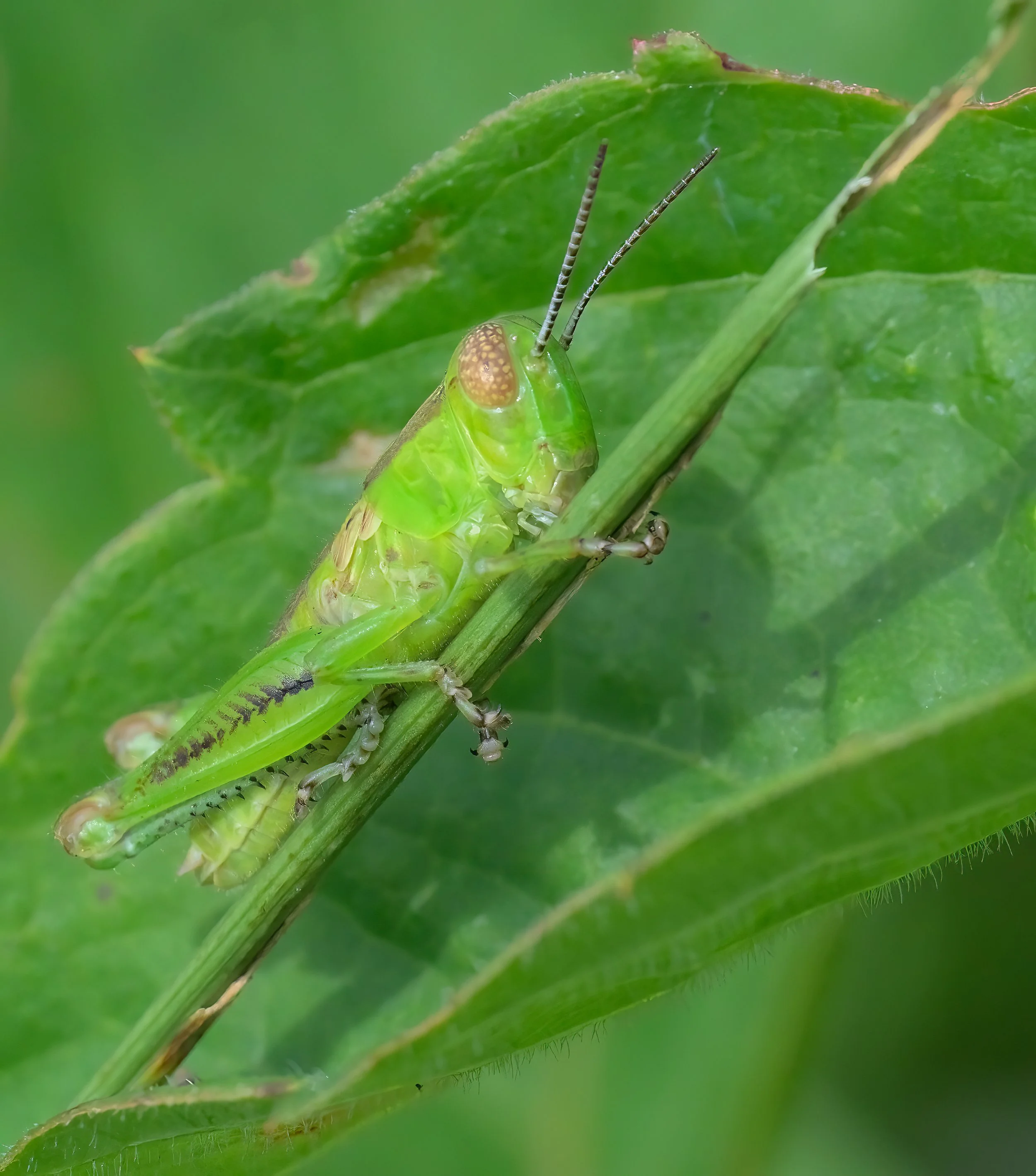
Two-striped grasshopper juvenile - Cragston Lake - 7/11/26