It’s a jungle out there….
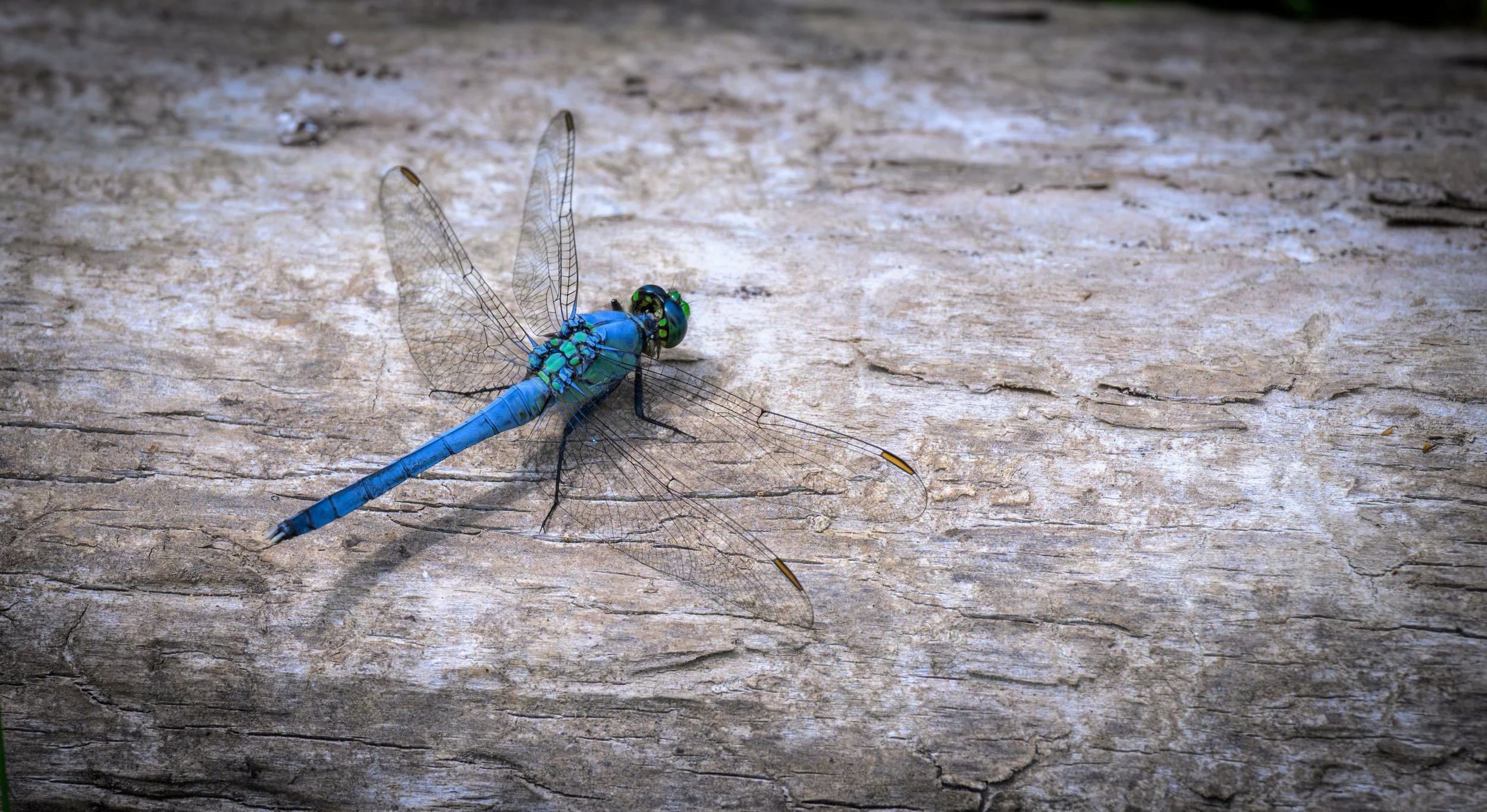
Eastern Pondhawk (male)-Brooks Lake-7/13/26
The previous posting in NatDigital was about what a peaceful and bountiful place the edge of a pond can be. There is beauty to be found in many of God’s creatures along the shore for sure, but that pretty exterior can hide some pretty vicious individuals! Dragonflies are aptly named. And speaking of aptly named species, the Eastern pondhawks feed with a combination of aerial hawking and perch-and-sally tactics, capturing insects—especially other dragonflies, damselflies, mosquitoes, and midges—on the wing. Males (image above) are agile fliers, typically hunting low over water or along shorelines, darting out to snatch prey with their legs before returning to a perch to consume it.
Females (see image below) and immature males often hunt from vegetation or floating objects, launching short pursuit flights to intercept passing insects. They use keen vision to track moving targets and adjust flight speed and angle rapidly, sometimes hovering briefly to assess prey before committing. Feeding bouts are frequent throughout the day, and eastern pondhawks will also take advantage of swarms or emergences of aquatic insects, increasing their catch rate during those events.
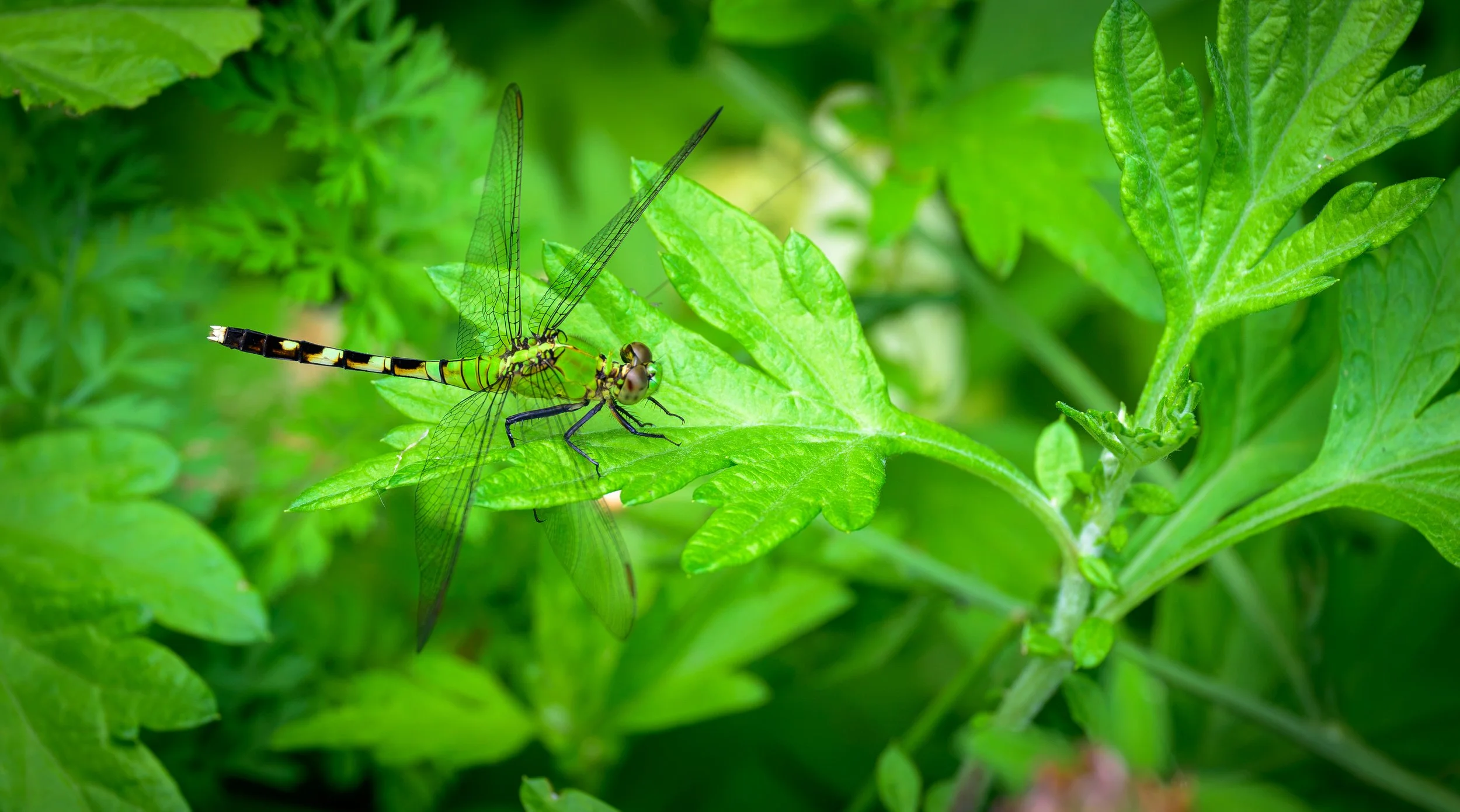
Eastern Pondhawk (female) - Brooks Lake - 7/13/26
Hunting style is obviously not the only difference between the two sexes of the Pondhawk. Kind of interesting that the more ornately adorned members of the species are the females which is not always the case in the animal world. Regardless of the sex of the Pondhawk, they are all very efficient hunters.
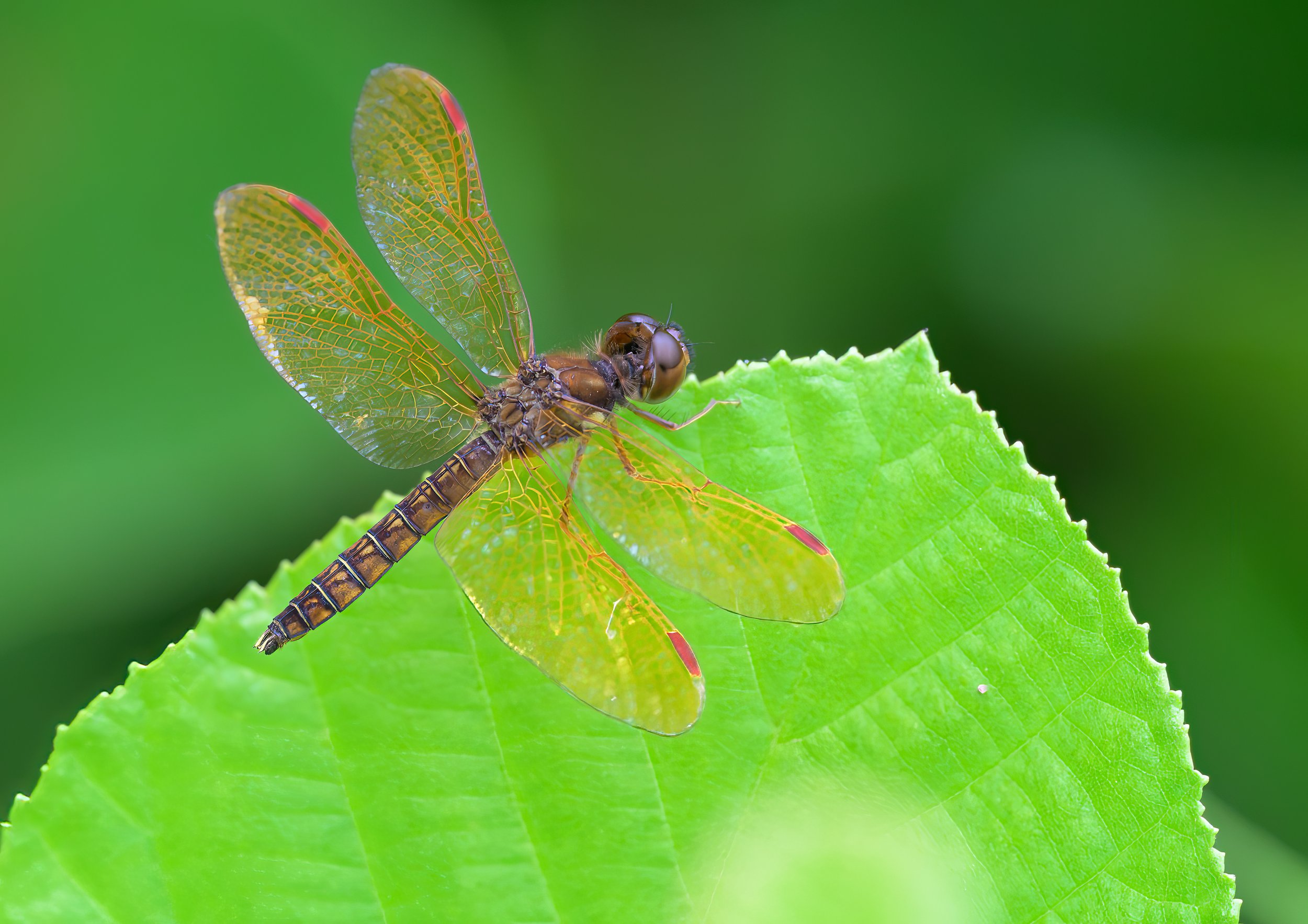
Eastern Amberwing - Brooks Lake - 7/13/26
Another hunter par excellence is the Eastern amberwing pictured above. The little “wolf on the wing” hunts with quick, agile flight and a sit-and-wait strategy that suits its small size. They typically perch low on vegetation—stems, twigs, or floating plants—scanning for prey. When an insect passes, the dragonfly launches in a rapid, direct dash, capturing the target midair with its legs forming a basket. (Yankees could use him this season our in Right Field!) Their hunting often occurs close to water as was the case here where aquatic and terrestrial insects are abundant. They may return to the same perch repeatedly between short forays much to the delight of photographers such as myself. Amberwings rely on excellent vision and maneuverability rather than long chases, taking advantage of quick bursts of speed to seize flies, mosquitoes, and other small insects.
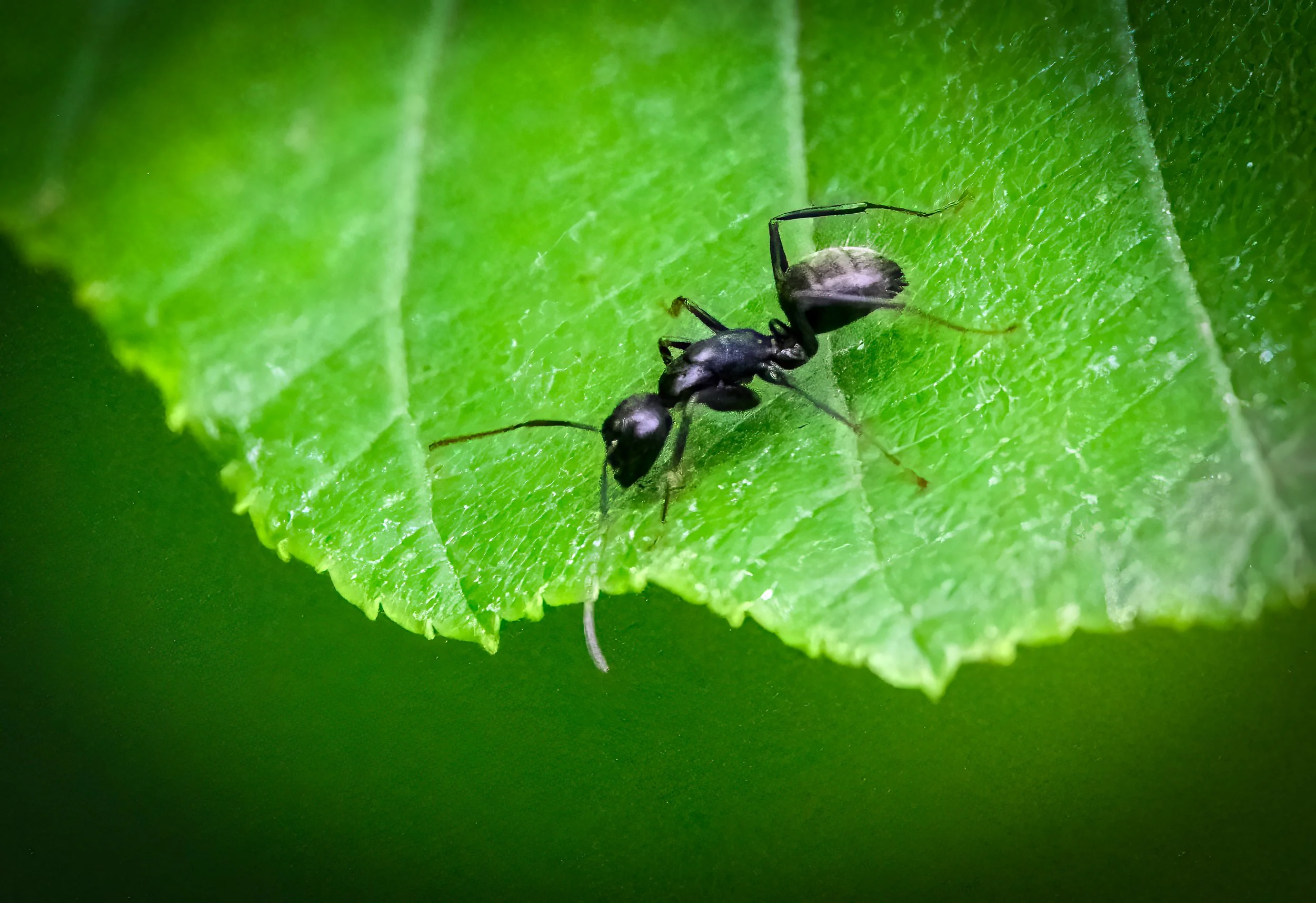
Eastern Carpenter Ant - Brooks Lake - 7/13/26
Next up, the Eastern Carpenter Ant, How do we know that this is indeed a “carpenter” ant? The easiest way to tell is by that fringe of hairs around the butt end of the abdomen. These are among the largest of ants and many people believe they eat wood. False. These ants can do a lot of damage to residential property, but not by eating the wood. Rather, they tunnel through the wood in order to make nesting sites and in doing so, can cause a lot of expensive damage to wooden structures. As for eating, the are pretty much omnivores. While they do enjoy plant based foods, they are not averse to dining on meat….dead or alive. They love that “gang mentality” and will hunt in large groups simply overwhelming prey and bringing it back to their nests for a communal dinner. Hey, “It’s a jungle out there”.
When I first saw this next beast, I thought it was an interesting looking wasp. But iNaturalist set me straight. This insect is in fact a fly….a Physocephala tibialis or “Thick-headed fly”. If you thought those dragonflies were pretty tough characters, they pale in comparison for sheer brutality in the insect world. This incredibly agile flier will wait around for a bumblebee to pass by and then set her plan into motion.
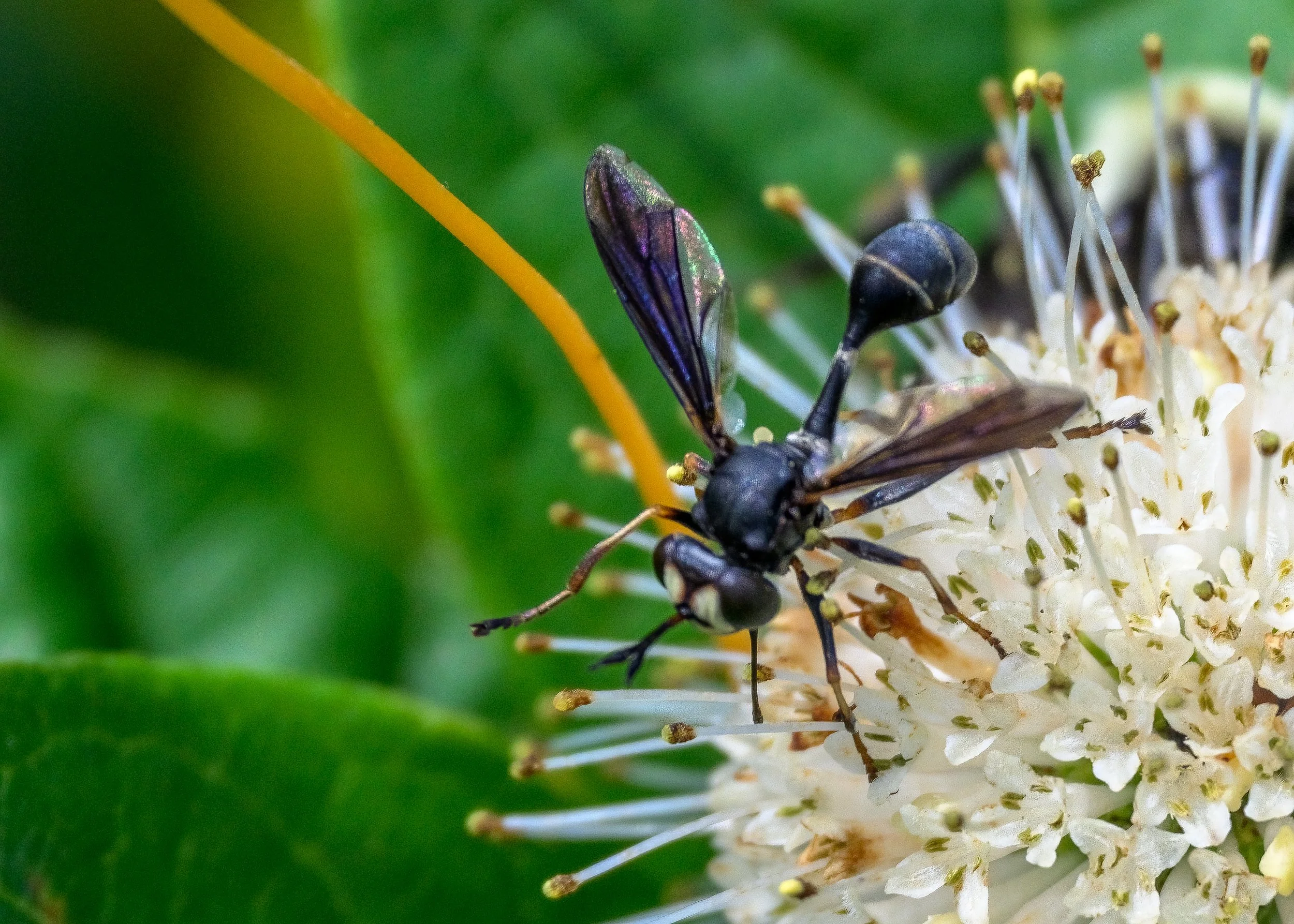
Thick-headed fly - Brooks Lake - 7/13/26
The female of the species will intercept a foraging bumblebee curl her abdomen under the body of the bee and then inject an egg into the bee’s body. Her work is now done. That egg will develop into a larva inside the bee and the larva will survive by eating the bee from the inside out. Rather cruel, but ingenious. Did I mention that it’s a jungle out there?
My final photo of the day is of a bit more placid creature, the Banded Longhorn Beetle. The banded longhorn beetle is a striking member of the Cerambycidae family, known for its elongated body, long antennae, and bold contrasting bands across the wing covers. Typically 1–2 inches long, adults often display cream or yellow transverse bands, making them easily recognizable. Found in forests, woodlands, and suburban areas, larvae develop in dead or dying hardwood, where they bore through wood and aid in decomposition. Adults are most active in warm months and may be seen feeding on nectar (see below), sap, or foliage. While generally not harmful to healthy trees, their wood-boring larvae play an important ecological role in nutrient recycling and creating habitat for other organisms. So they’re not all that bad!
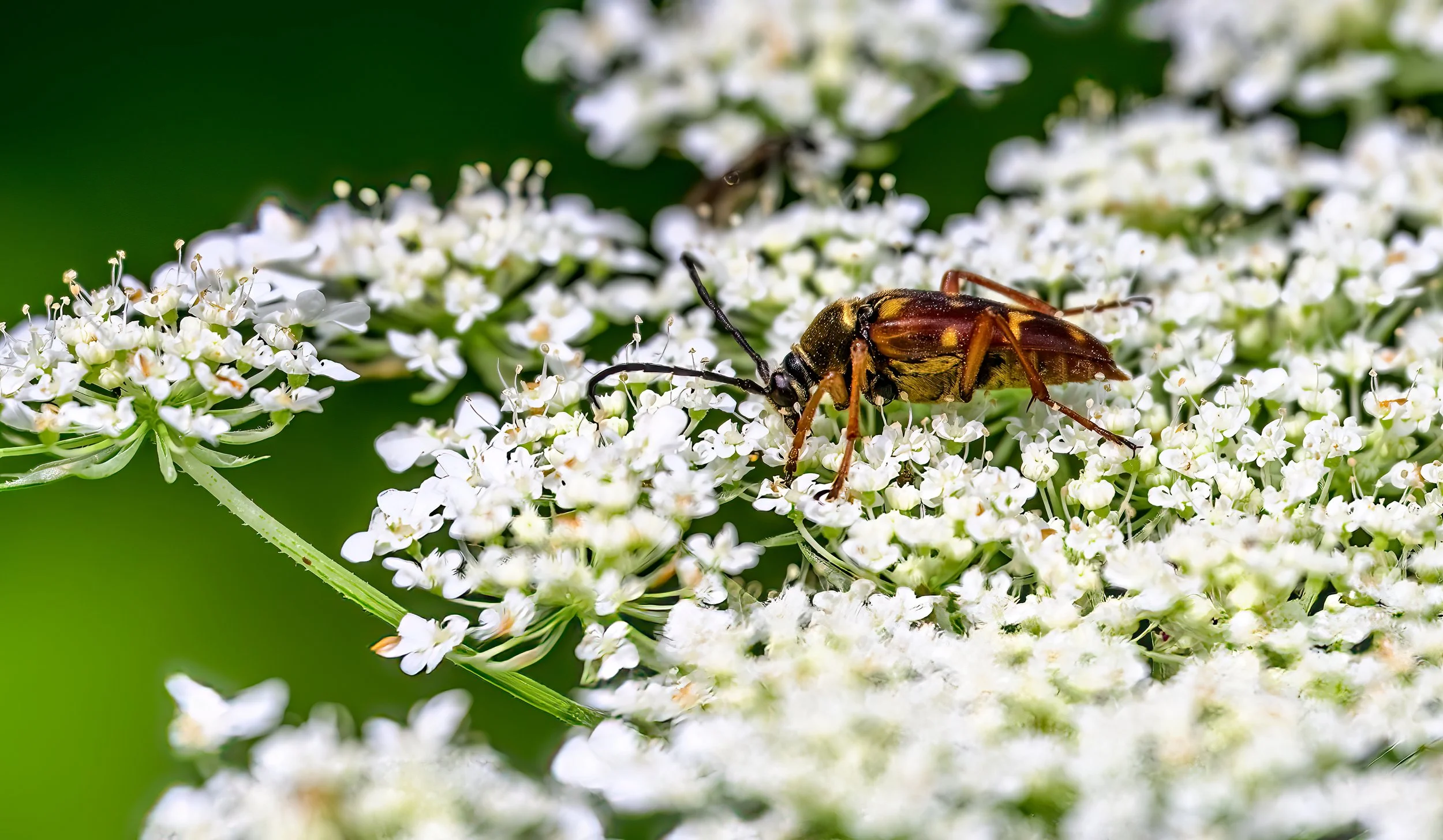
Banded Longhorn Beetle - Brooks Lake - 7/13/26