Backyard Biodiversity III - Bees and wasps and flies
More appropriately, wasp and fly. It is amazing how when you first look into the Butterfly garden, you see an occasional critter moving about from blossom to blossom. I, like most I am assuming, look right past these other insects, only concentrating on the beautiful butterflies for which this garden was originally intended. But upon further examination and looking with a keener eye, it is an eye-opening experience to see just how many other of nature’s inhabitants are buzzing around this tiny patch of flowers.
The one fly that was observed at the garden this week was this interesting Northeastern Plumetop (O. tibialis).
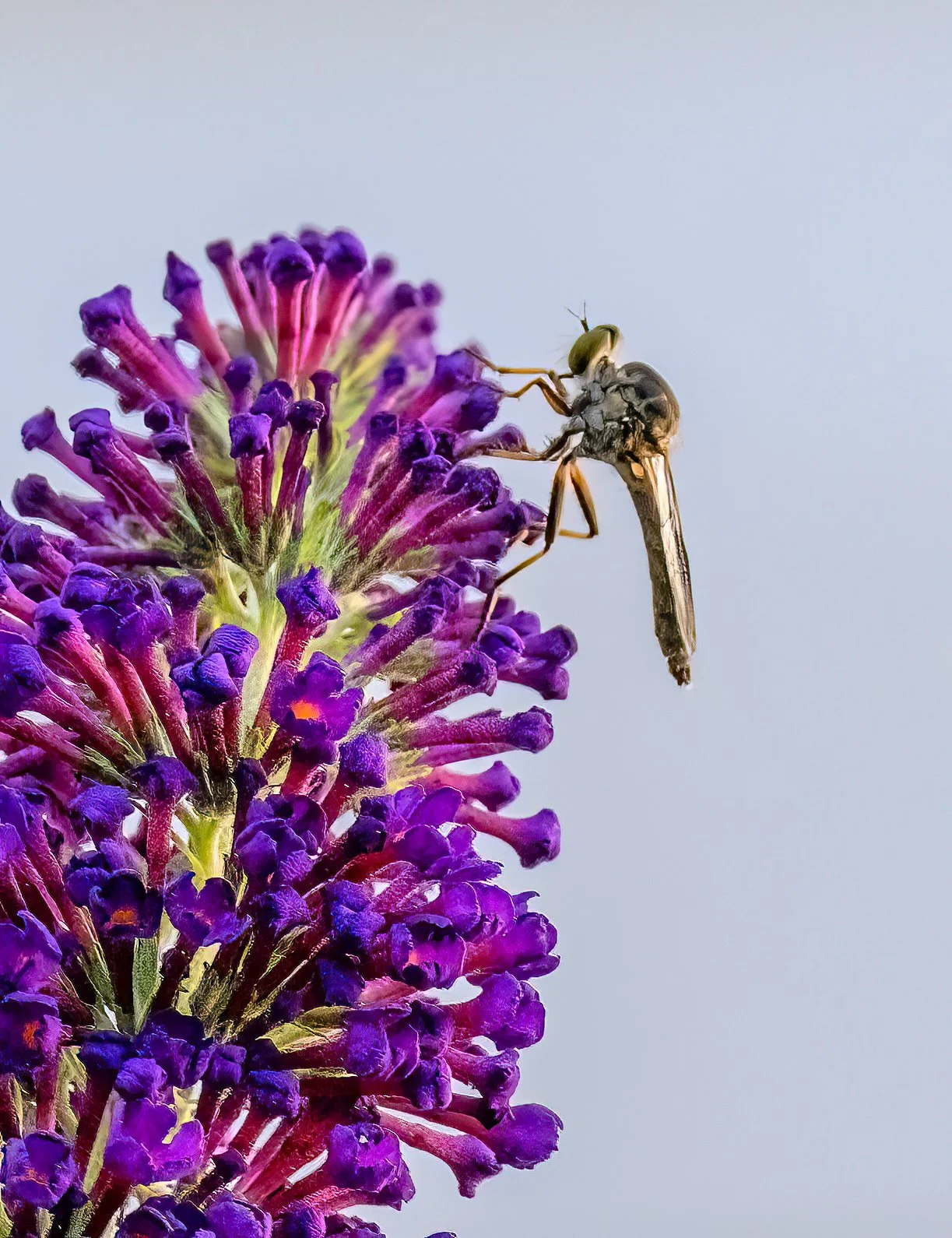
Northeastern plumetop - Butterfly garden - 6/29/26
This insect is a species of “robber fly” known for its predatory habits. The Plumetop will patiently wait, perched towards the top of vegetation and wait for an unsuspecting insect to fly by, capturing it in mid-flight. This species is found from Massachusetts down to Florida and westward to Michigan. The antennae clearly visible in this shot may aid in detecting prey and the yellow tibia for which it is named probably help in blending in with the vegetation upon which it perches.
Our lone wasp this week was the Northern paper wasp. The northern paper wasp (Polistes fuscatus) is a distinctive social wasp found across much of North America, recognizable by its slender body, folded wings, and often reddish-brown and yellow markings; unlike aggressive yellowjackets, these wasps build open, umbrella-shaped paper nests of chewed plant fibers and saliva, typically hanging from eaves, branches, or porch ceilings. Workers and queens display notable individual facial pattern variation used for social recognition, and colonies are annual—founded in spring by a queen, growing through summer, then producing new queens and males in late season before the original colony dies back in winter. Northern paper wasps are beneficial predators, feeding on caterpillars and other soft-bodied insects that damage gardens, while adults mainly consume nectar and can act as pollinators; they will sting if directly threatened or their nest is disturbed, but they generally avoid unnecessary aggression.
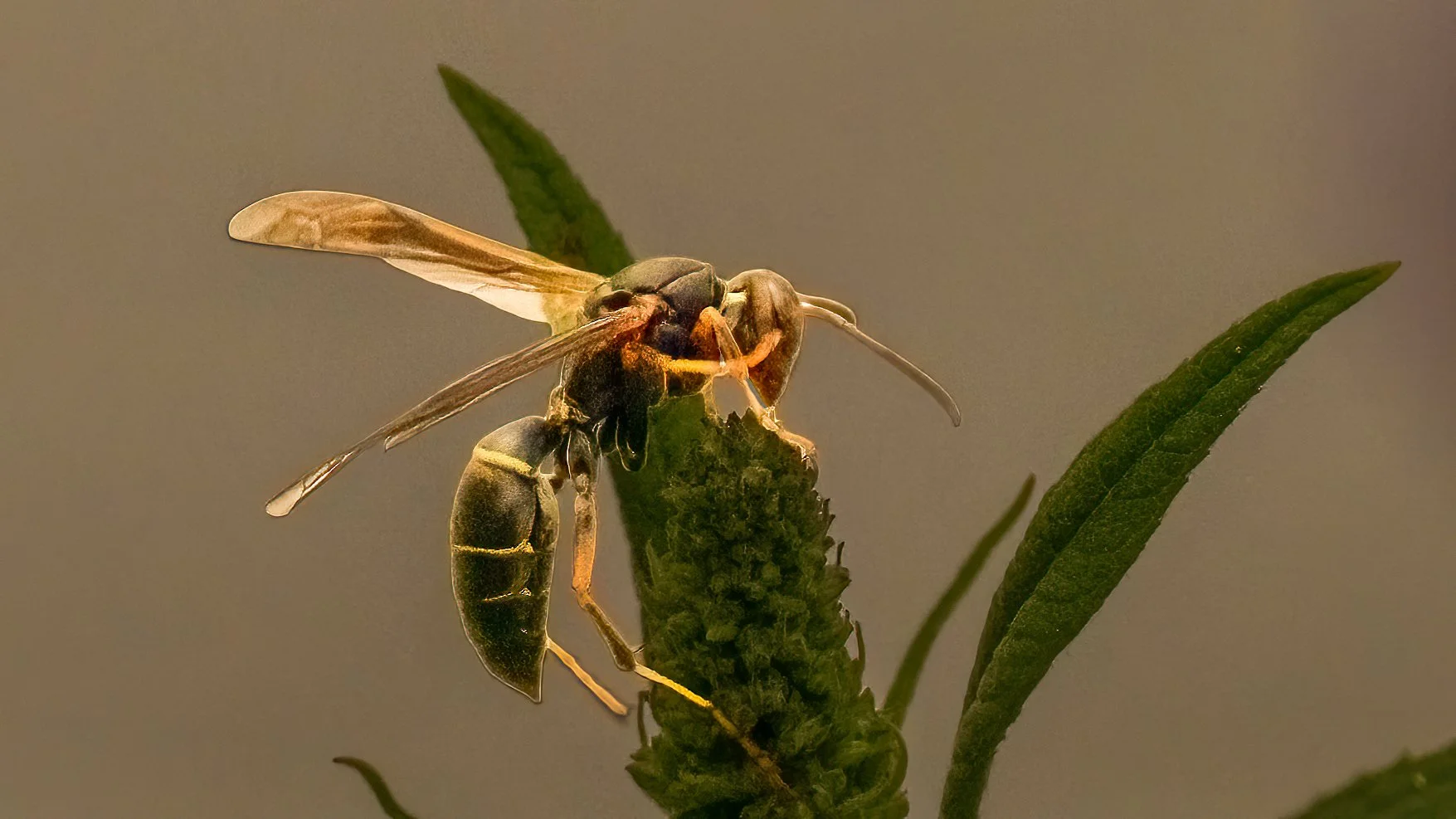
Northern paper wasp - Butterfly garden - 7/4/26
On to the bees. The prettiest bee by far was the Bicolored striped sweat bee. This bee (genus Agapostemon) is a slender, metallic-green bee notable for its vivid, two-toned abdomen marked by alternating dark and pale stripes. Common across North and Central America, these solitary or communal ground-nesting bees are frequent visitors to gardens such as my butterfly garden, meadows, and agricultural landscapes, where they forage on a wide variety of wildflowers and crops. Attracted to human perspiration for salts, they are harmless and non-aggressive, rarely stinging unless handled. Their efficient pollination and striking appearance make them important and welcome members of healthy ecosystems.
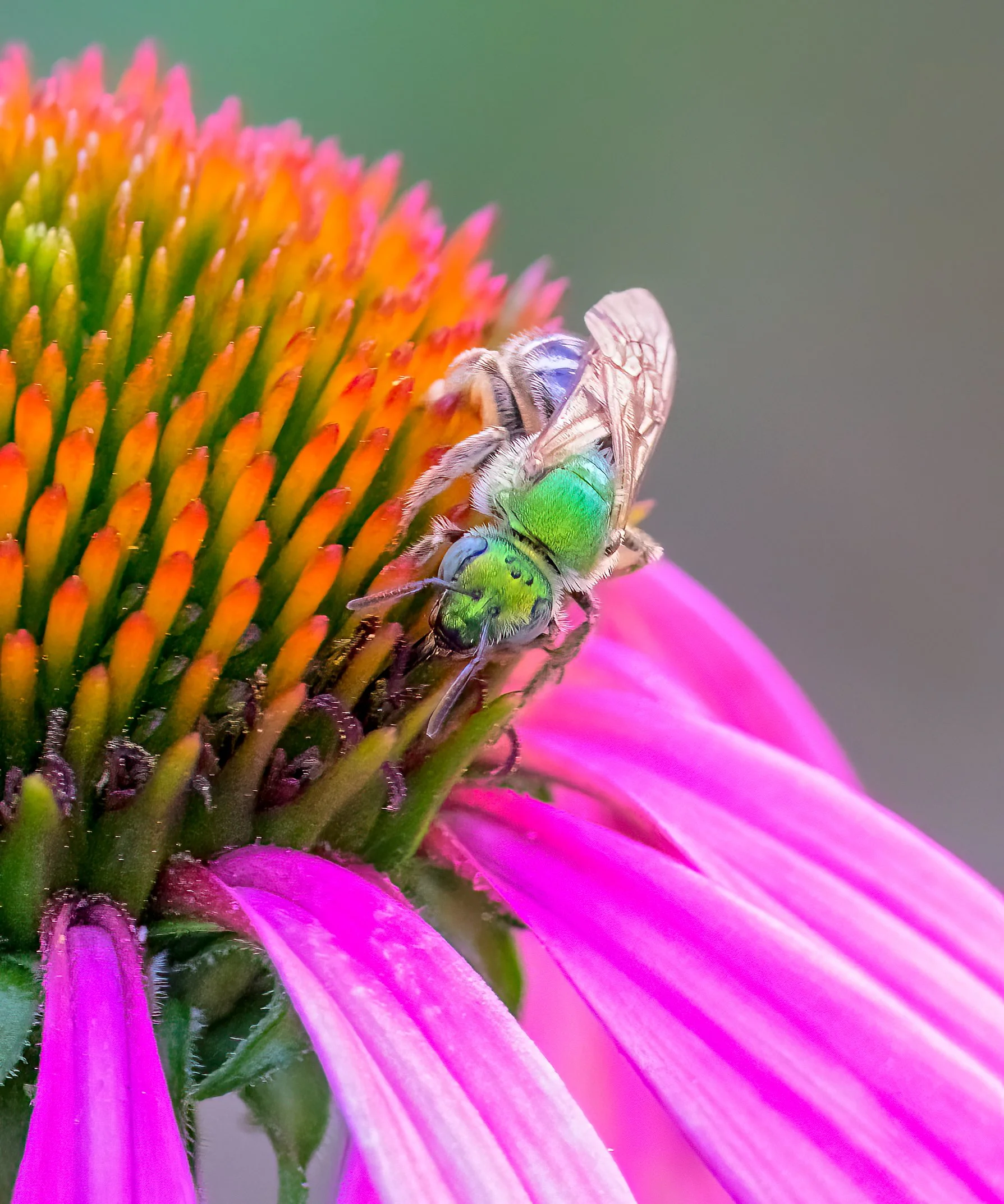
Bicolored Striped Sweat Bee - Butterfly garden - 6/29/26
When we talk of diversity, the bumblebees take first prize. A quick glance at a bumblebee and most people will have no problem in identifying it as such….a bumblebee. But what is truly incredible is the number of species of bumbles we have here in New York State alone. Within our borders, there are roughly 12 - 15 species with others occasionally roaming into the Empire State. One of the most common was found in our backyard this week…the Eastern Common Bumblebee.
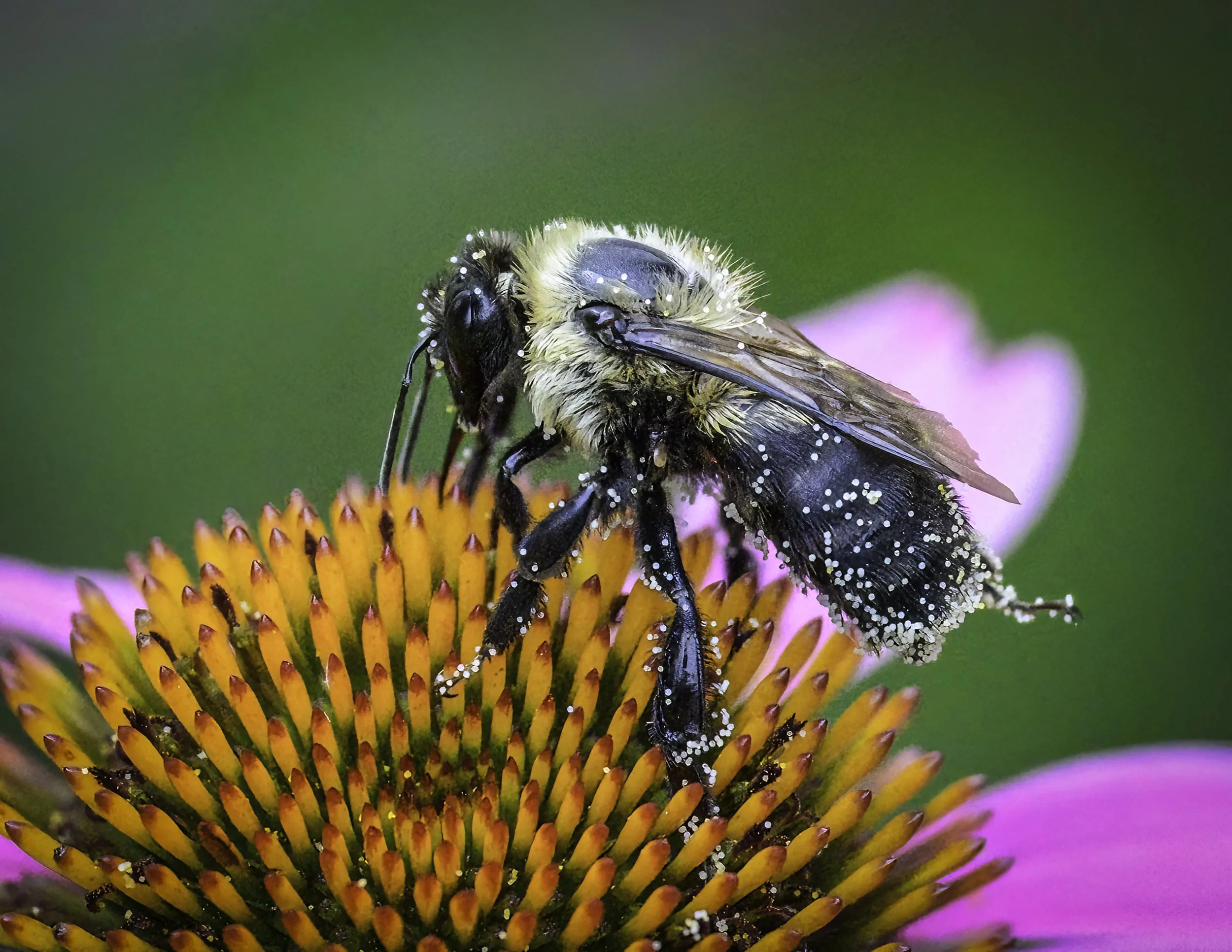
Common Eastern Bumblebee - Butterfly Garden - 6/28/26
This photograph speaks volumes as to the importance of this species as a pollinator. Literally covered in pollen grains, this individual in actively carrying the material on his body in an action that propagates the transfer of genetic material so vital to the reproductive system of these plants. While this species is perhaps the most common in my garden, it is certainly not the only species represented.
Two more species are very similar, but I will post their photos close to one another so that we can see the subtle differences that help to differentiate one from the other. The first is the Brown-belted bumblebee which was featured in a recent post here at Natdigital.
While this is not the most flattering shot of this bee, I used it here because it does clearly show two characteristics that help in identifying this species. Each segment of the “bottom third” section of the bee called the “abdomen” is denoted with the notation of “T1” starting at the top and heading down to “T6” at the end. Here on the Brown-belted bumblebee, the yellowish hairs on segment T2 are actually brownish (hence the name “Brown belted” and are curved to resemble the letter U.
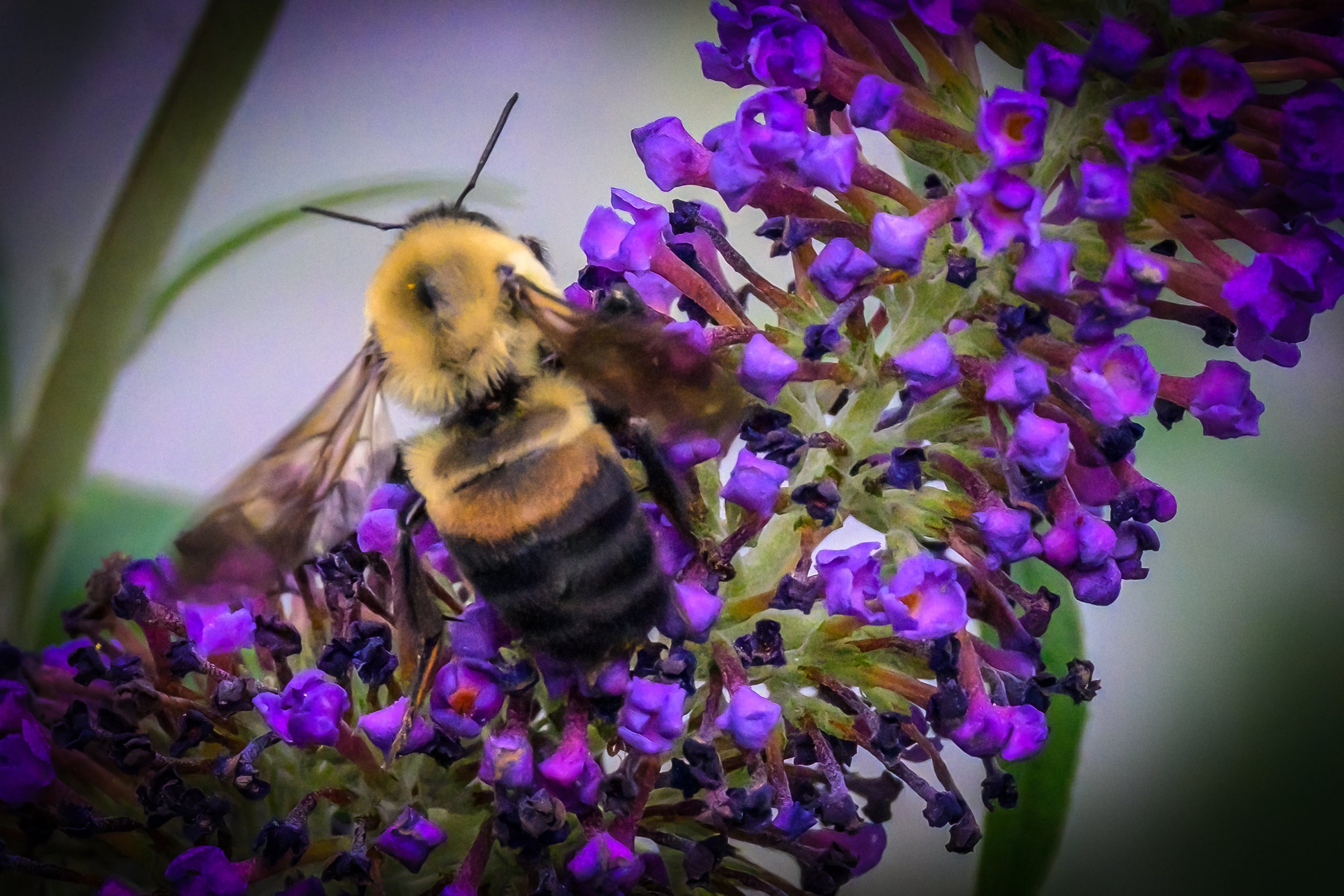
Brown-belted bumblebee - Butterfly garden - 7/4/26
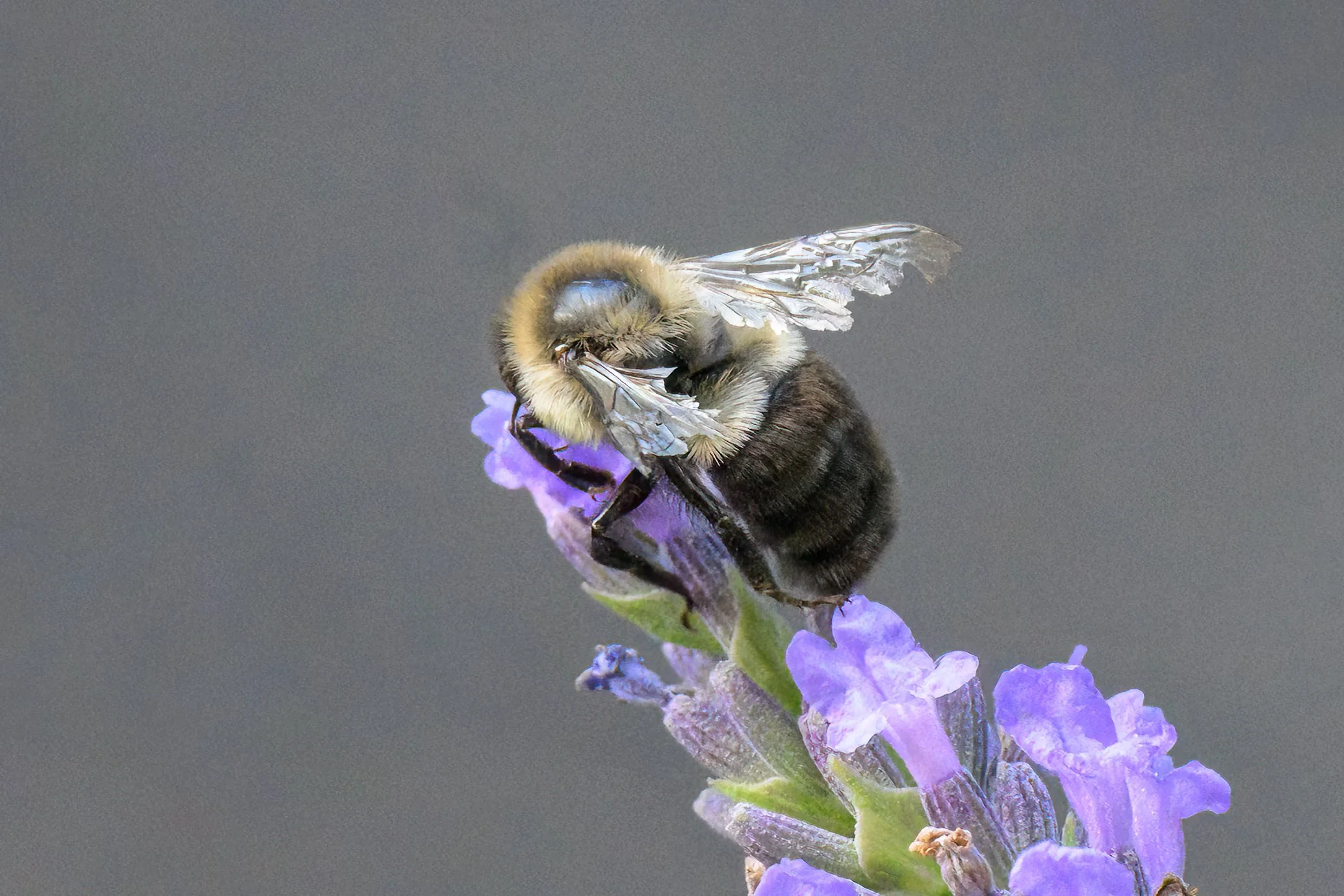
Two-spotted bumblebee - Front yard - 7/4/26
On the Two-spotted bumblebee see above, note that the hairs on segment T2 have black hairs that are interrupted by a band of yellow hairs that resemble a rounded off letter W. Also note that the brownish hairs on the first bumblebee (Brown-belted) extend quite a bit farther down the sides of the bee that do the shorter bands of the Two-spotted seen in the second shot. Small differences to be sure, but features that can indeed be seen with some careful scrutiny.
Our fourth and final bumblebee found in our backyard survey this week is the Half-black Bumblebee.
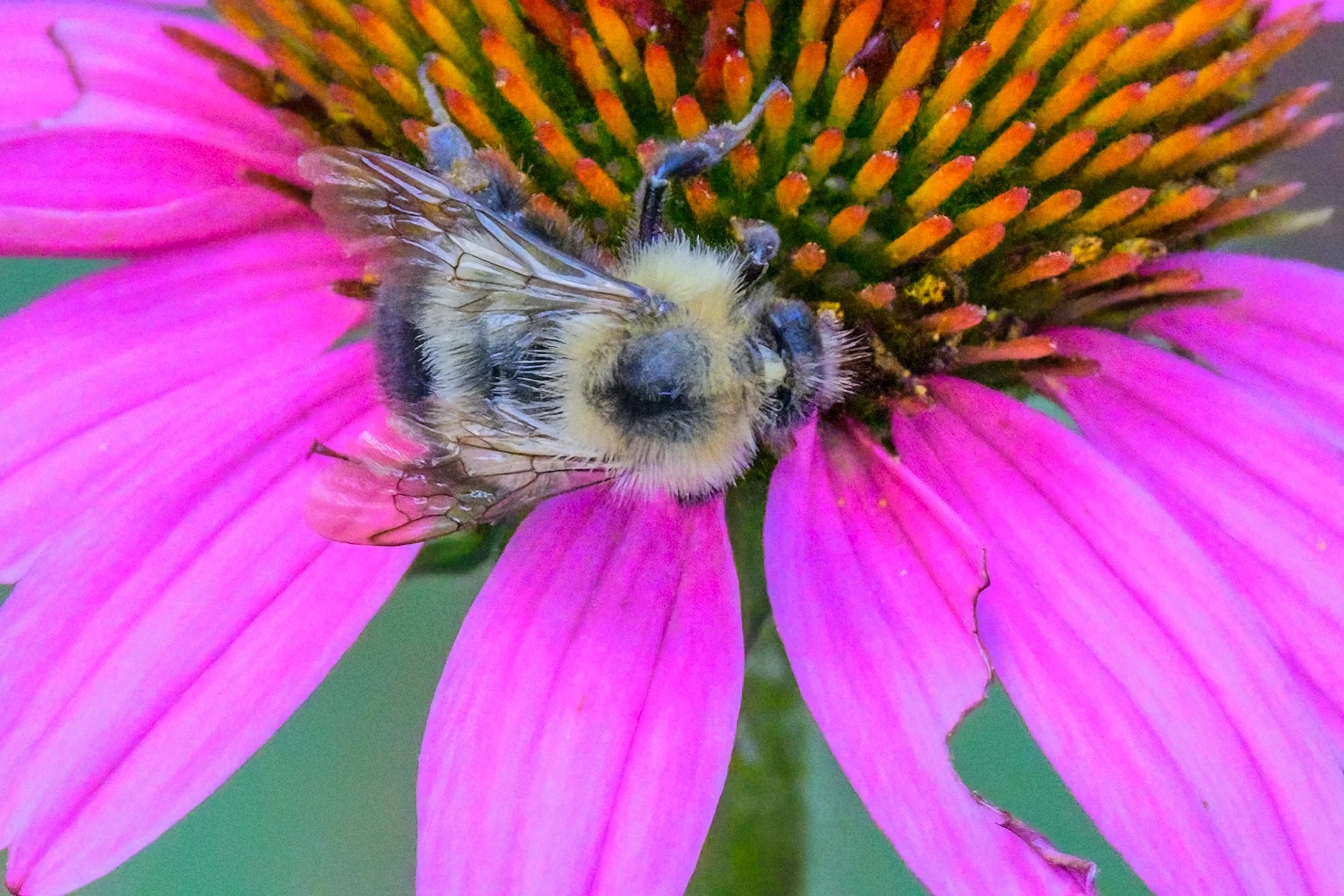
Half-black bumblebee - Butterfly garden - 7/4/26 (Dorsal view)
After observing these different bumblebees for a period of time, this one becomes pretty easy to tell at first glance. The hair on this species is of medium length and a bit on the shaggy side. The thorax (middle section of the bee) is yellow with a black circular patch between the wings. The next two segment of the abdomen are entire yellow and the last four segments (T3-T6) are all black.
And so, without a lot of effort, one can get a pretty good grasp on the great biodiversity that exist all around us just by spending some time in our own backyard and taking the time and effort to really look around. It never ceases to amaze me, and I know that each time I go out with my camera in my own yard, chances are pretty good that I will find something new to photograph and learn about.