Swallow nests…
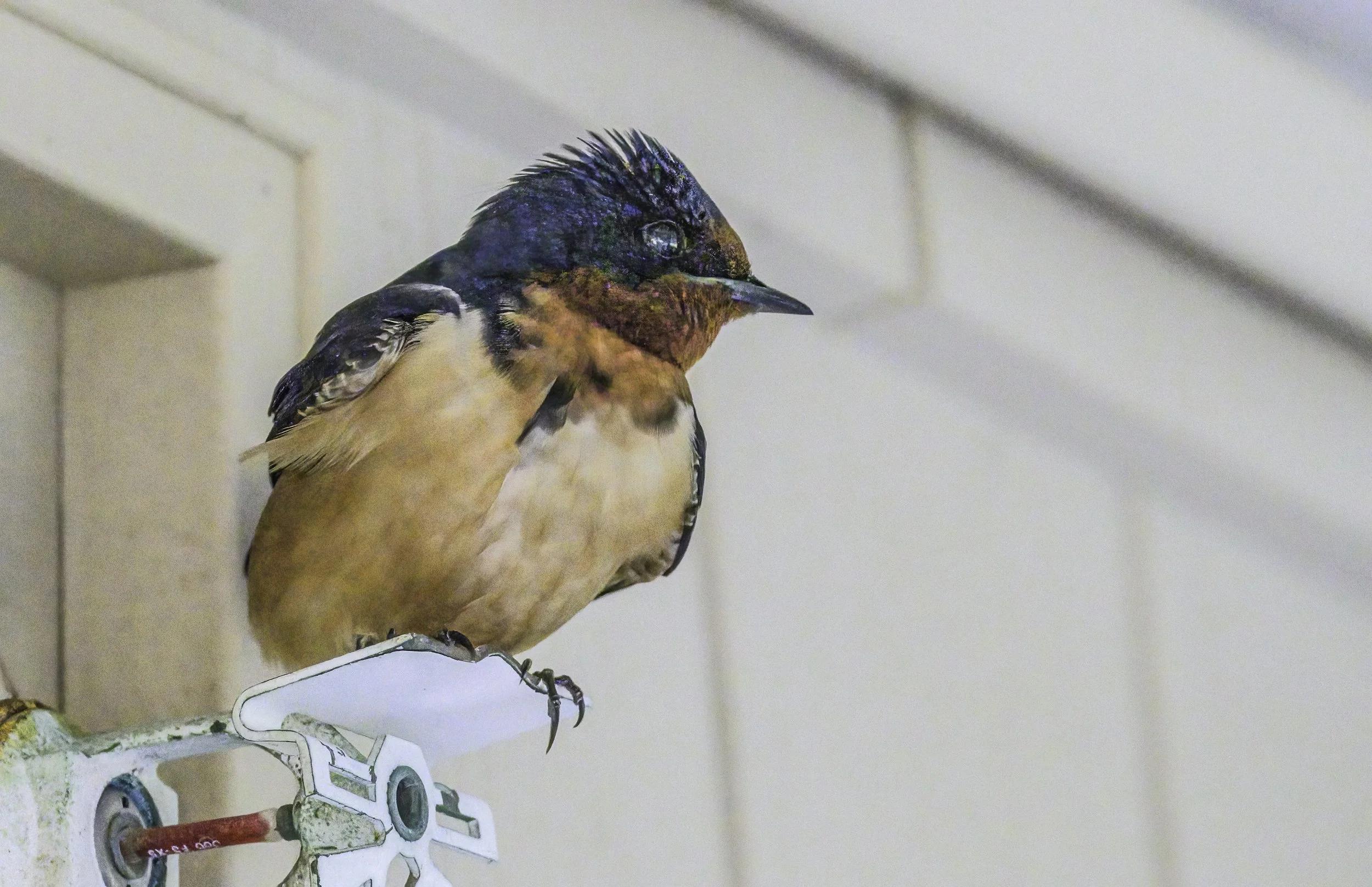
Barn swallow - Eastern Shore of Virginia - 4/24/26
Breeding season is still creeping north and the species of swallows that were already on nest in Virginia several weeks ago are now tending to their nest here in the Hudson Valley. The image above of a Barn swallow was captured in Cape Charles where the Barn swallows were taking advantage of the amenities available at the Shore Stay Inn. Today, I found that the Barn swallows at Silver Mine had begun their task of keeping their lineage moving forward and had constructed or added to existing nests. The images below show a Barn swallow pair tending to a nest under an eave at the picnic pavilion in the park.
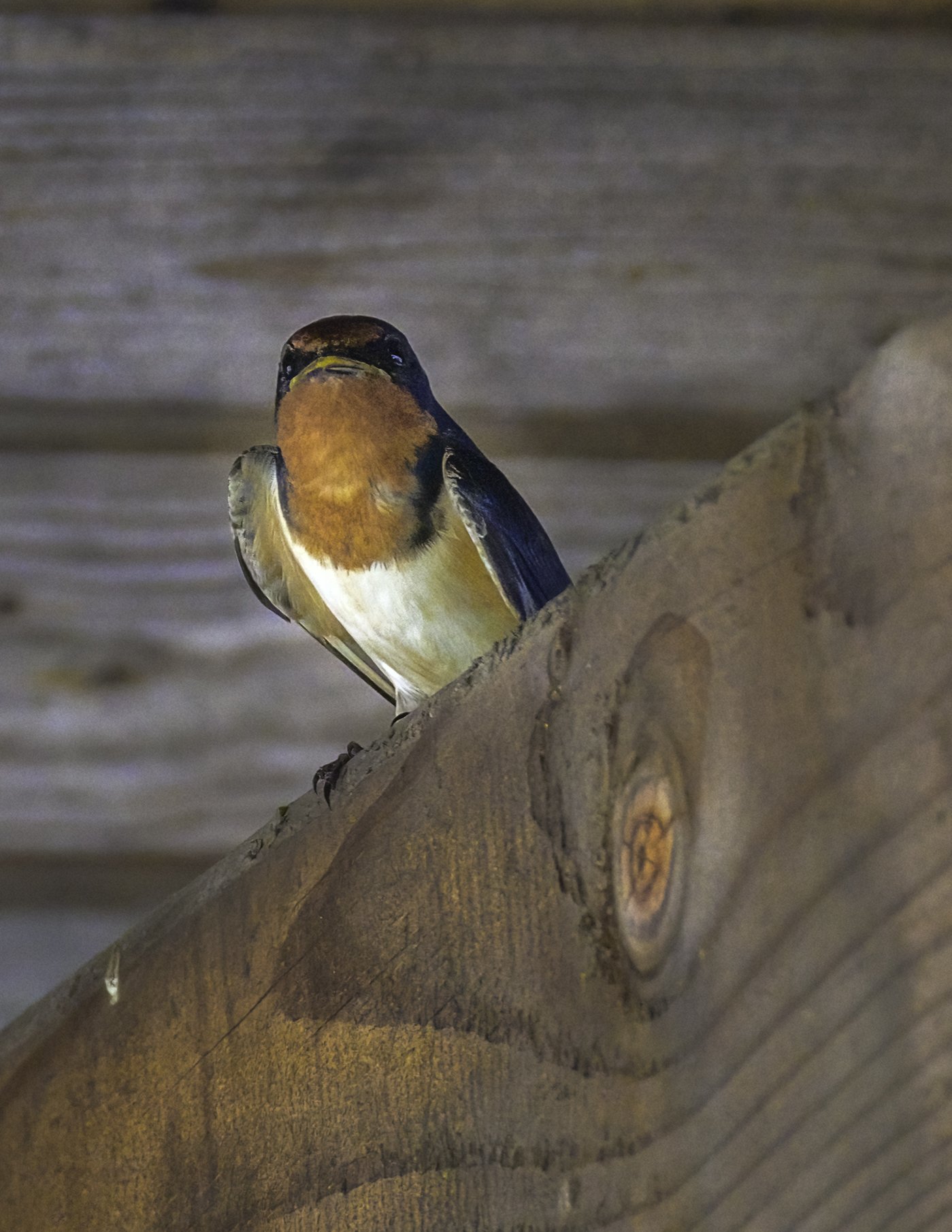
Barn swallow - Silver Mine Picnic Pavillion - 5/19/26
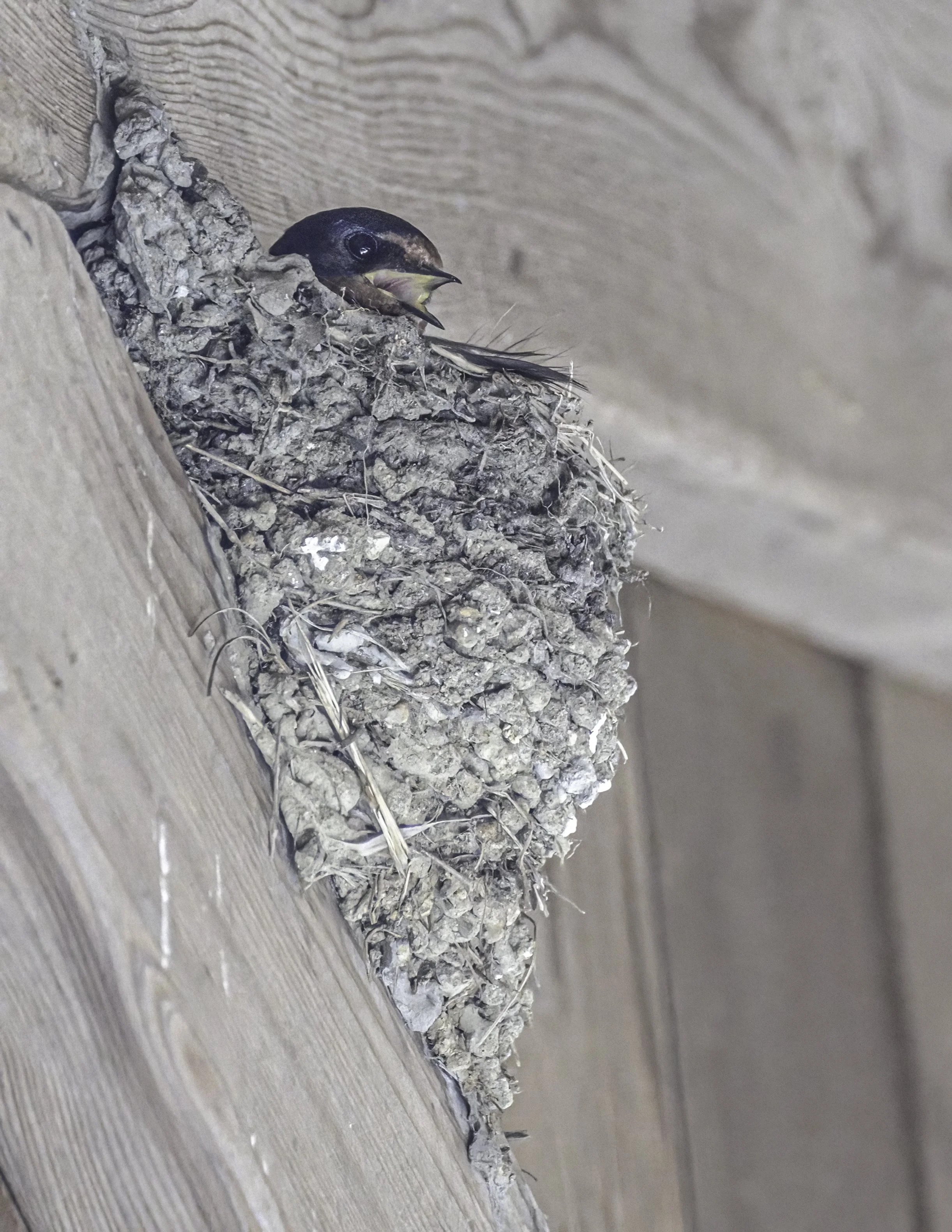
Barn swallow - Silver Mine Picnic Pavillion - 5/19/26
Barn swallow nests are compact, cup-shaped structures crafted primarily from mud pellets mixed with grass and lined with softer materials like feathers or plant fibers. They are typically attached to vertical surfaces such as building eaves, bridges, or cliff faces, often forming colonies where several nests sit closely together. These nests are remarkable for their smooth inner cup and rough outer surface, built over several days by both male and female who gather mud from puddles and wet soil. The nests provide insulation and protection for eggs and chicks, with clutches usually containing three to five pale, speckled eggs; adults fiercely defend nesting territories from predators and competitors. Because barn swallows readily use man-made structures, their nesting behavior links their reproductive success closely to human activity and the availability of suitable sites.
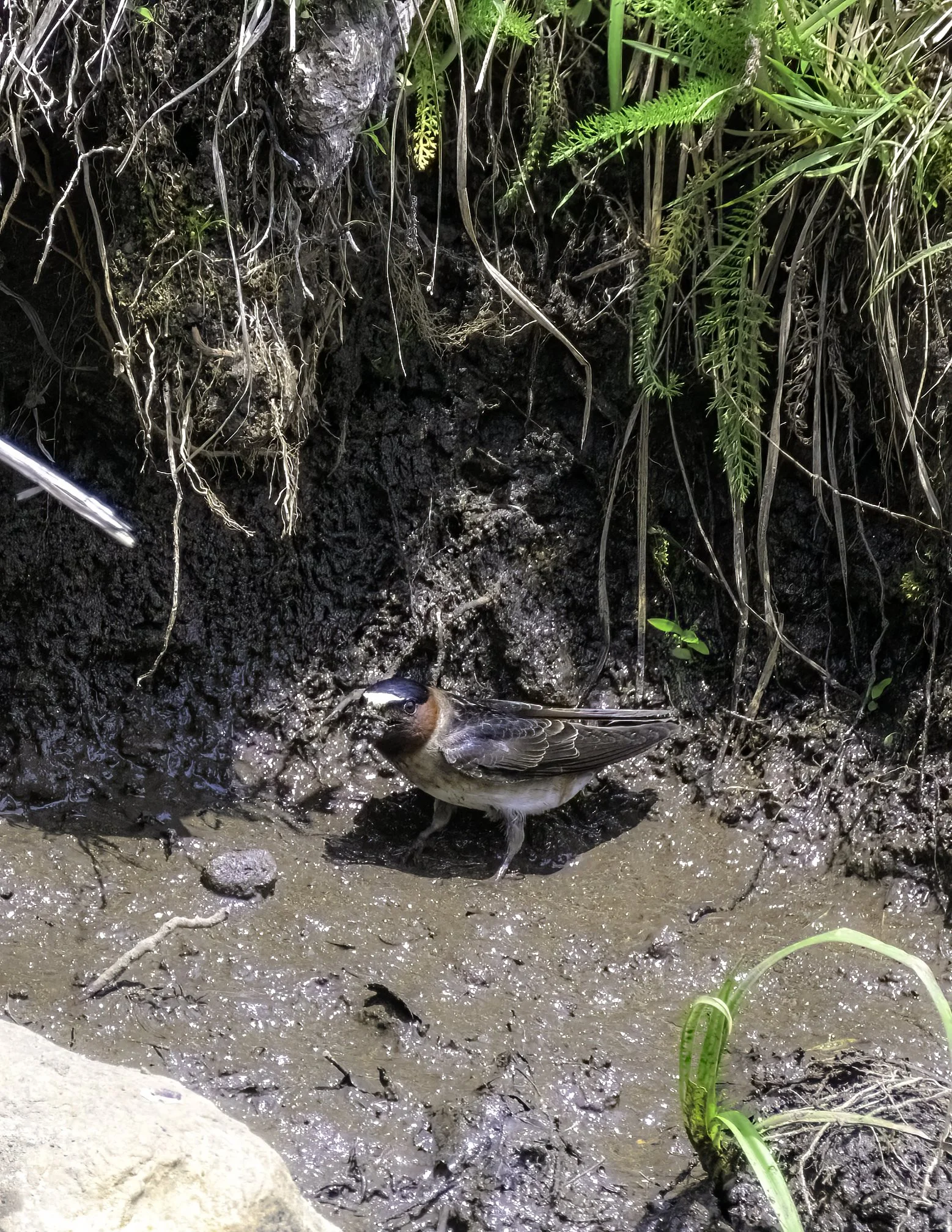
Cliff swallow gathering mud from a seep - Silver Mine - 5/19/26
Another species, the Cliff swallow, was also taking advantage of available “building materials”, name the mud available at a seep along the edge of the stream at the head of Silver Mine Lake. Like the Barn swallows, Cliff swallows build distinctive gourd-shaped mud nests beneath eaves, bridges, and cliff overhangs, plastering pellets of wet mud with their beaks and smoothing interiors with grass and feathers; colonies can number from dozens to thousands, creating dense honeycomb clusters that provide protection from predators and weather while facilitating social behaviors such as communal roosting and cooperative mobbing of threats. After collecting the mud from the seep in the image seen above, these swallows flew off, and I was not able to locate where their nests were being built. Another project for another day!
In the upcoming days, I will be making an attempt to locate the nests of the Cliff swallows as well as monitoring the activity at the Barn swallow nests. Tree swallows were also active across the lake’s surface, so it will be interesting to see if I can find where these birds are nesting. May is certainly an active month across the northeast.
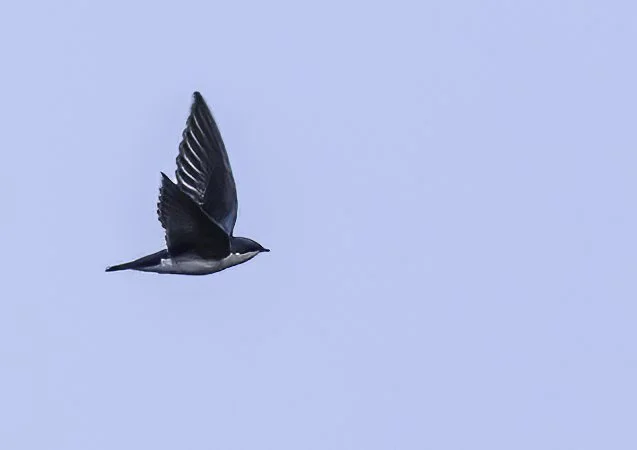
Tree swallow in flight