The “Empies”
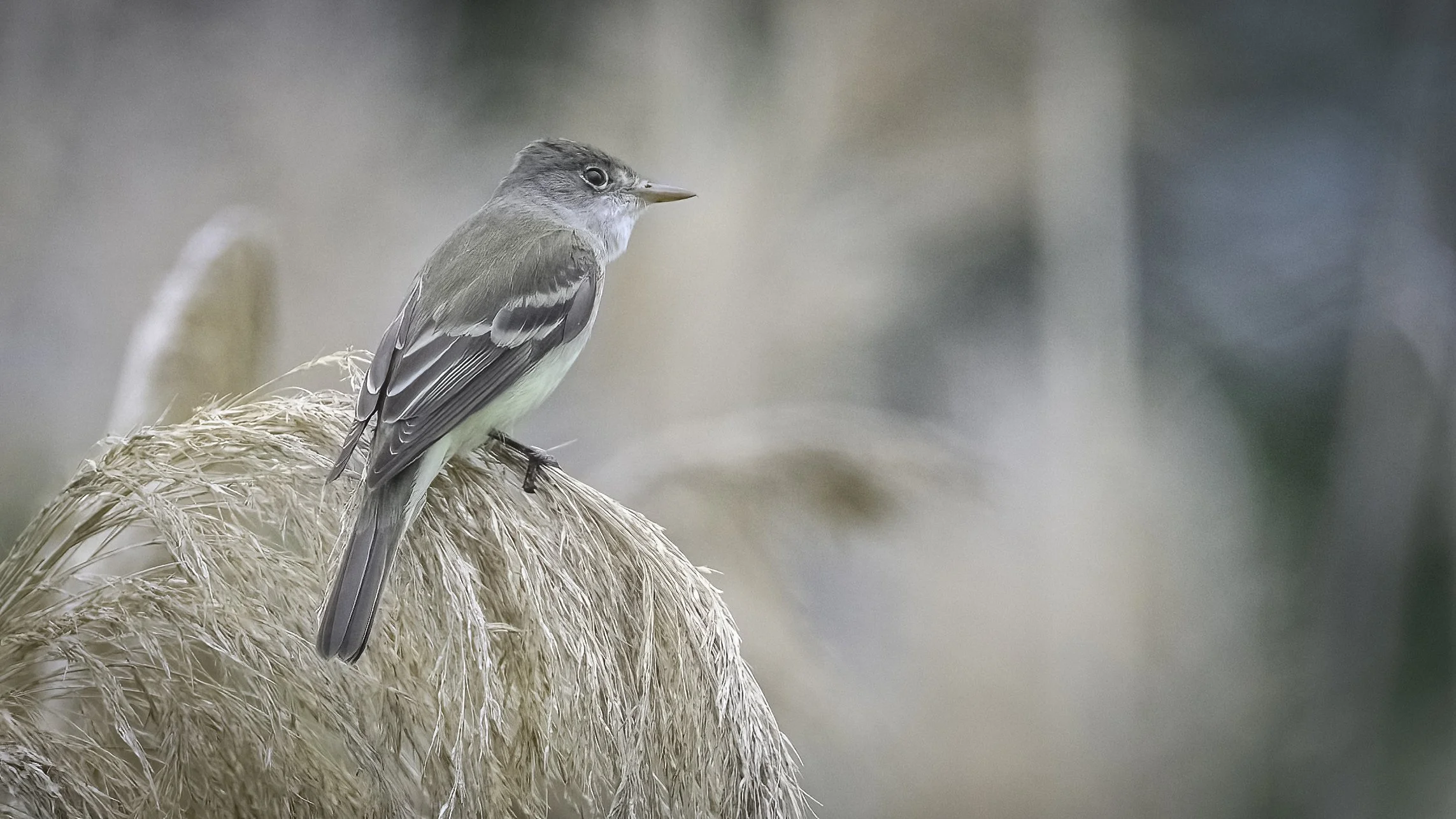
Willow flycatcher - Croton Point Park - 5-27-26
Empidonax flycatchers are a challenging group of small, active songbirds in the tyrant flycatcher family known for their compact bodies, muted plumage of olive-gray to brown tones, and subtle wing bars and eye rings that make field identification difficult. Their distinguishing features often rely on behavior, habitat, and—most reliably—vocalizations, with species-specific calls and songs used by birders and ornithologists to tell them apart. Many Empidonax species are migratory, undertaking long seasonal movements between breeding and wintering grounds. Their subtle appearance, similar silhouettes, and overlapping ranges have make Empidonax flycatchers a challenge for us birding enthusiasts.
The “empires”, as they are fondly referred to, have been making their return to the northeast known by calling out their species-specific songs in an attempt to establish territory and let their presence be known to the opposite sex. I’ve been fortunate enough to hear and find three of this group of the Tyrant flycatcher family in the past couple of weeks. Four common species we might find here in SE New York State are the Willow, the Alder, the Least, and the Acadian flycatchers.
This Willow Flycatcher which I found in Croton Point Park is a small, insect-eating songbird recognizable by its olive-green upperparts, pale underparts, and a short, notched tail. This species favors dense willow, alder, or shrubby wetland habitats such as this stand of phragmites during the breeding season. Often heard more than seen, males deliver a sharp, descending "fitz-bew" or "fitz-bee" song used to establish territory and attract mates, while both sexes sally from perches to catch flying insects. Willow Flycatchers migrate to Mexico and Central America for winter, facing threats from habitat loss, wetland drainage, and fragmentation of riparian corridors; conservation efforts focus on protecting and restoring shrubby wetland habitat and monitoring populations through targeted surveys. So similar in appearance is the Willow to other “empties”, it is easiest to identify by that “fitz-bew” call as heard on the clip below.
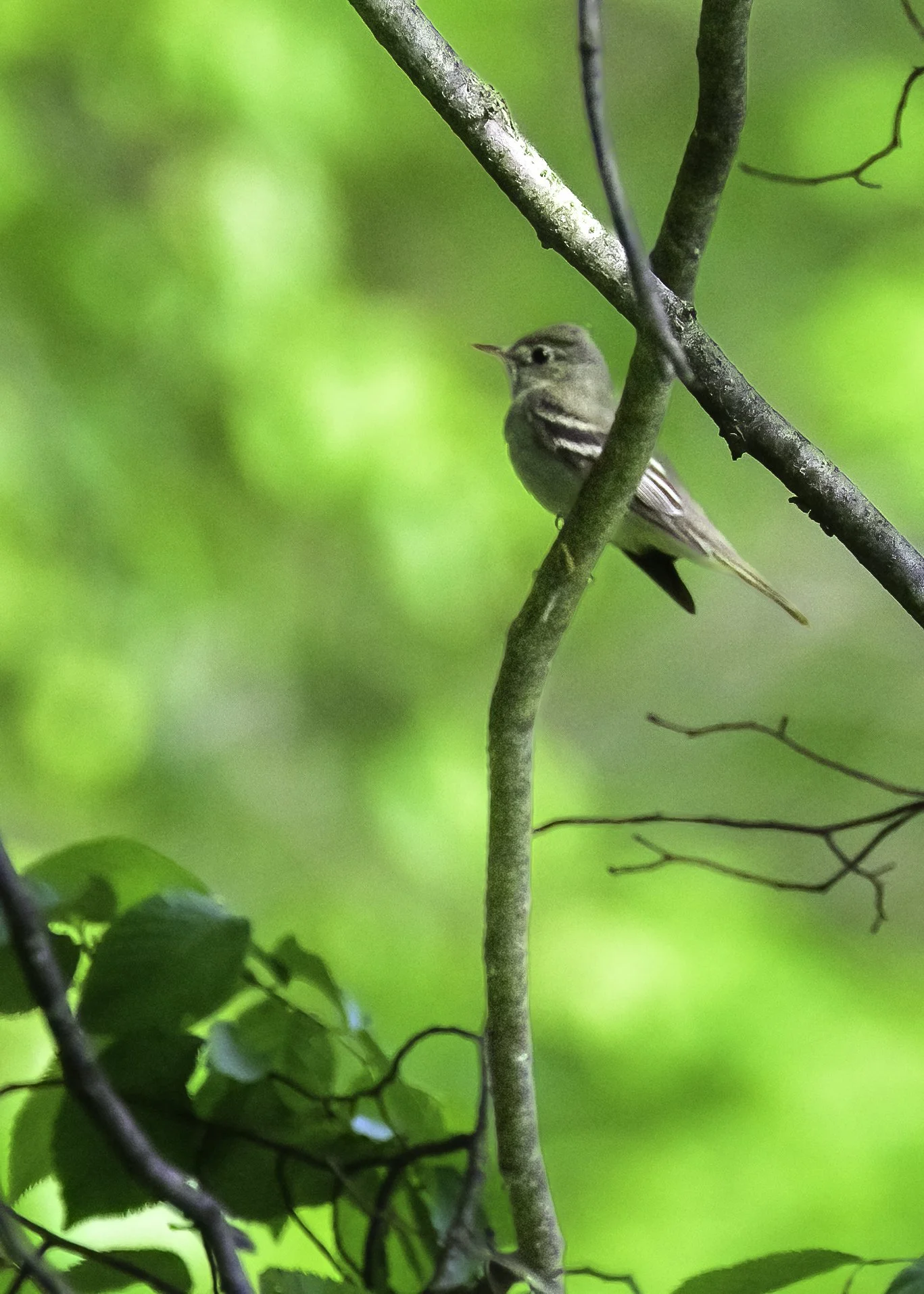
Acadian flycatcher - Silver Mine Park - 5/27/26
Next empi on the list is the Acadian flycatcher. First, notice the remarkable similarities between the Acadian and the Willow. The Acadian, however, favors mature deciduous forests with dense understory near streams and ravines, where it perches quietly before darting out to snatch flying insects from foliage. The site where this image was captured fits that description to a tee. Its song is also quite different…..a distinctive, slow, plaintive “peet-sa” or hollow “peeer,” often heard more than the bird is seen, and its nesting behavior includes building a well-concealed, shallow cup of plant fibers and spider silk placed on horizontal branches. Though generally common within suitable habitat, Acadian flycatcher populations are sensitive to forest fragmentation and degradation, making preservation of large, contiguous tracts of mature forest like we have here in Harriman State Park important for its long-term conservation. Listen to the “Peet-sa” call of the Acadian below.
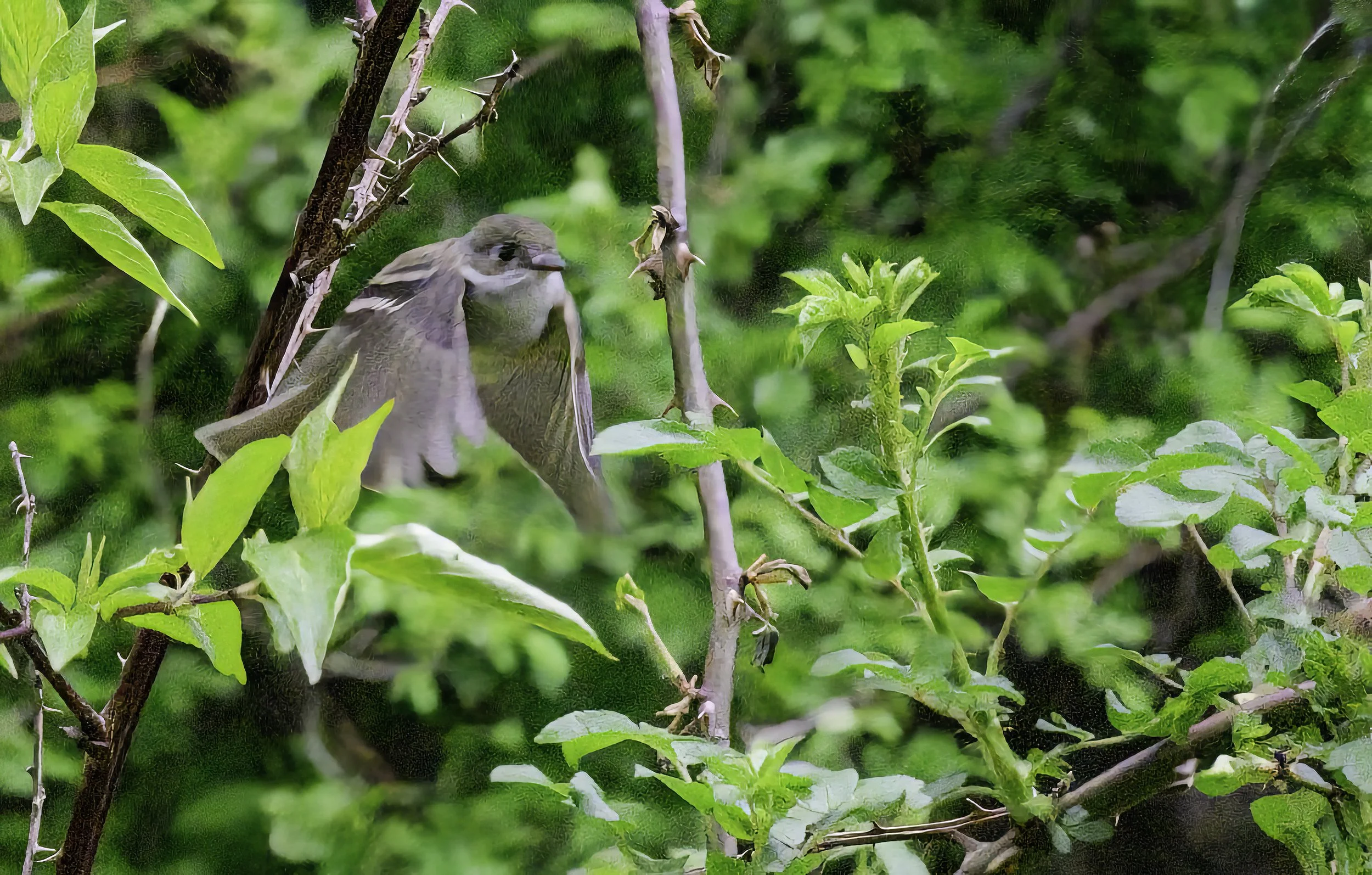
Least flycatcher - Bashakill Wildlife Management Area - 5/8/26
The Least Flycatcher is a small, energetic songbird common in eastern North America, easily recognized by its compact body, gray-olive upperparts, white eye-ring, and distinctive black-and-white tail pattern. In spite of its diminutive size, (adults measure about 4.5–5.5 inches and weigh roughly half an ounce), it still closely resembles the other empidonax flycatchers discussed above. Often found in deciduous woodlands, edges, and regenerating forests where this individual was located, it forages from low perches, making short ventures to snatch insects in midair and returning to the same lookout, a behavior that gives it the “flycatcher” name. Its song is a sharp, emphatic "Ke-bec” as heard below.
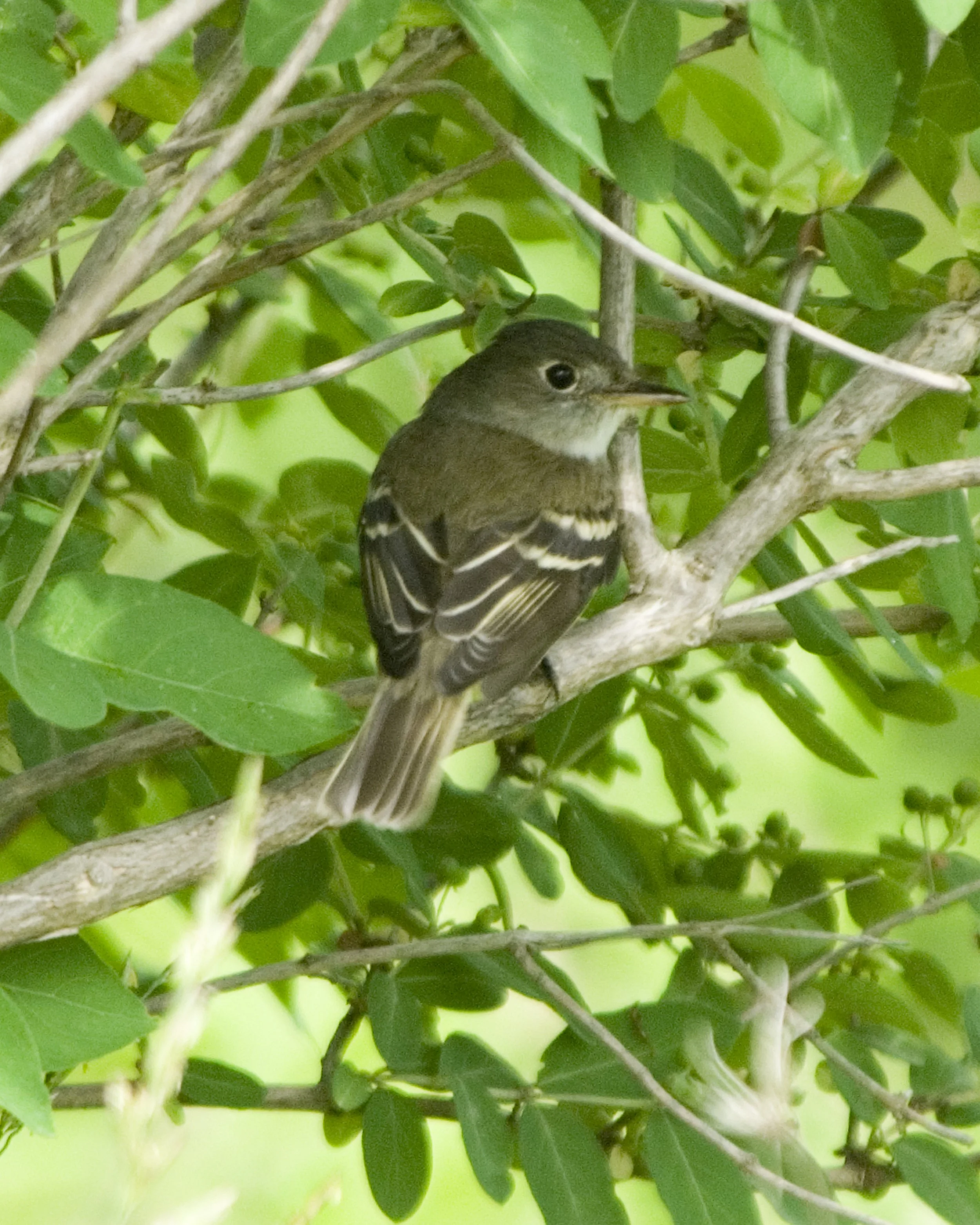
Alder flycatcher - Warwick - 6/12/07
Finally, a flycatcher which has eluded me over the past years….the Alder flycatcher. This flycatcher is another small, olive-gray songbird commonly found in wet thickets, alder swamps, and shrubby edges across much of eastern and central North America during the breeding season. Like the other “empties”, it is plain in appearance with a short, fairly broad bill, pale eye ring, and subtle wing bars, but is most reliably identified by its distinctive, sharp, and repetitive song—often transcribed as “free-beer” or a series of thin, buzzy notes—rather than by plumage alone. Listen to the distinctive song below.
And so, this is your introduction to the empidonax flycatchers. There are 6 other species of Tyrant flycatchers which we will be searching for this spring.
TechTip - Incidentally, the sound files are downloads from a site known as Xeno-Canto. Literally thousands of bird song files can be found at this site. The files have been shortened using a free app (for non-commercial use only) called WavePad.