Summer residents
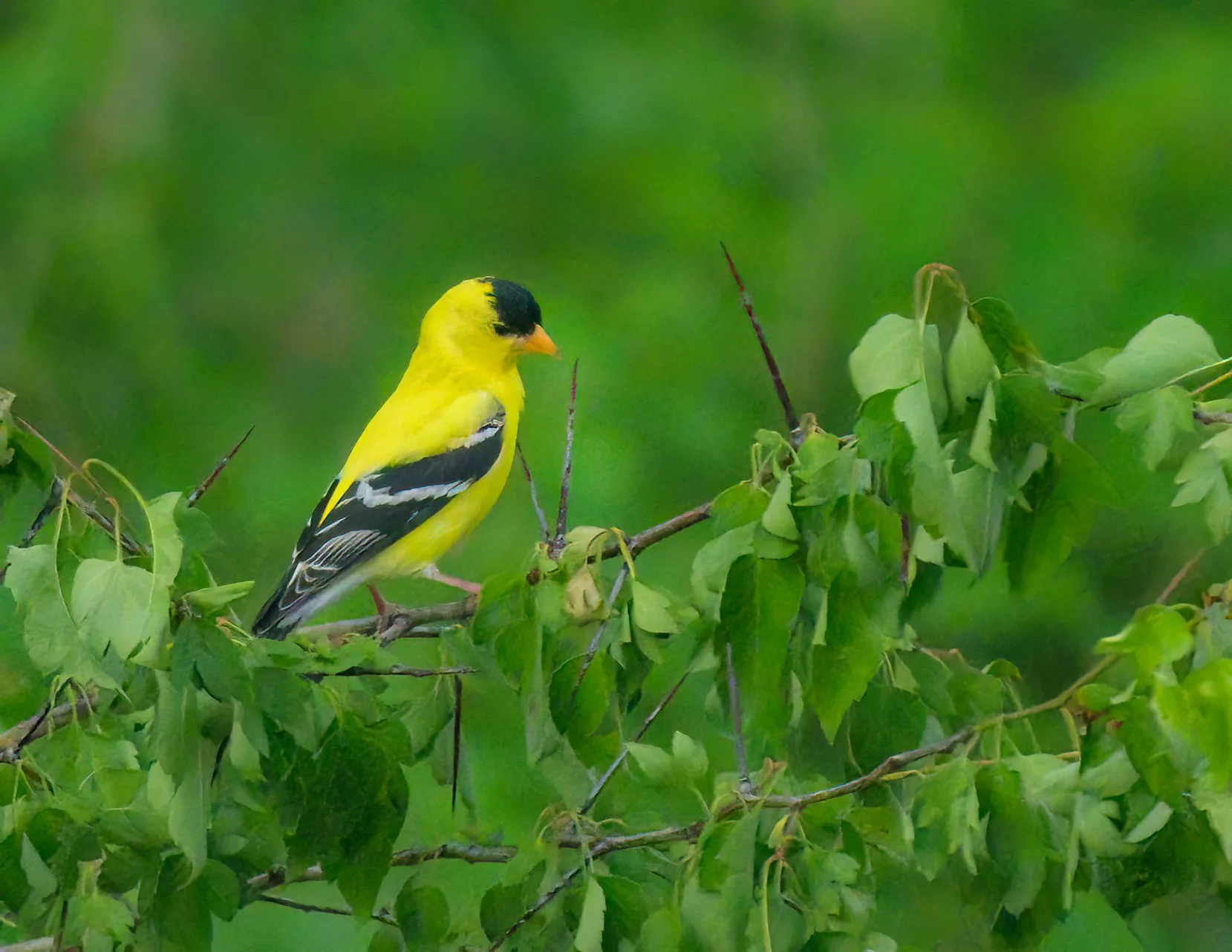
American goldfinch - Back yard - 6/17/26
With the month of May in the rear view mirror, things have quieted down considerably. The migration of the spring of 2026 has pretty much concluded and the chorus of bird song which serenaded us all month long has dwindled to the songs and calls of a select few. During May, when I directed my Merlin app to any portion of the woods, a list of at least a dozen birds would almost immediately pop up on the screen. During this past two weeks, the same area produce perhaps three or four songs which last more than then a brief moment. There are a few, however, that are loud and long letting us know that this bird is on territory and her to stay.
These species are perfectly happy to remain here in the valley and will set up shop right here, building their nests, laying eggs, and rearing their young. We’ve already seen in previous posts how the Barn, Tree, and Cliff swallows are already well on their way to propagating their lineages, and they are not alone. The beautiful Goldfinches are visiting our backyard feeders in nice numbers as are a number of other feeder birds. I love to keep feeding the birds right through the summer, more for the sake of my wife and me than for there well being. I do have to make sure that I take in those feeders at night as I would prefer not to have any ursine visitors as have frequented our yard in the past. A bird bath is another feature that is indeed welcomed by our avian friends during the sweltering days of July and August.
A drive along Mine Road earlier this week provided me with some other clues as to some species that are hanging on as Summer visitors. I had no sooner passed onto the initial stretch of this silvan road than I heard the unmistakable song of the Warbling vireo. One of the most fun “mnemonics” is associated with this bird. A mnemonic is a memory aid such as a phrase of acronym that helps you remember something. The mnemonic for the warbling vireo’s song is “First I sees ya, then I seize ya, then I squeeze ya till ya pop!” Play the song below and see if this mimics the actual notes emitted by this little bird. (admittedly , it helps to have a good imagination!)
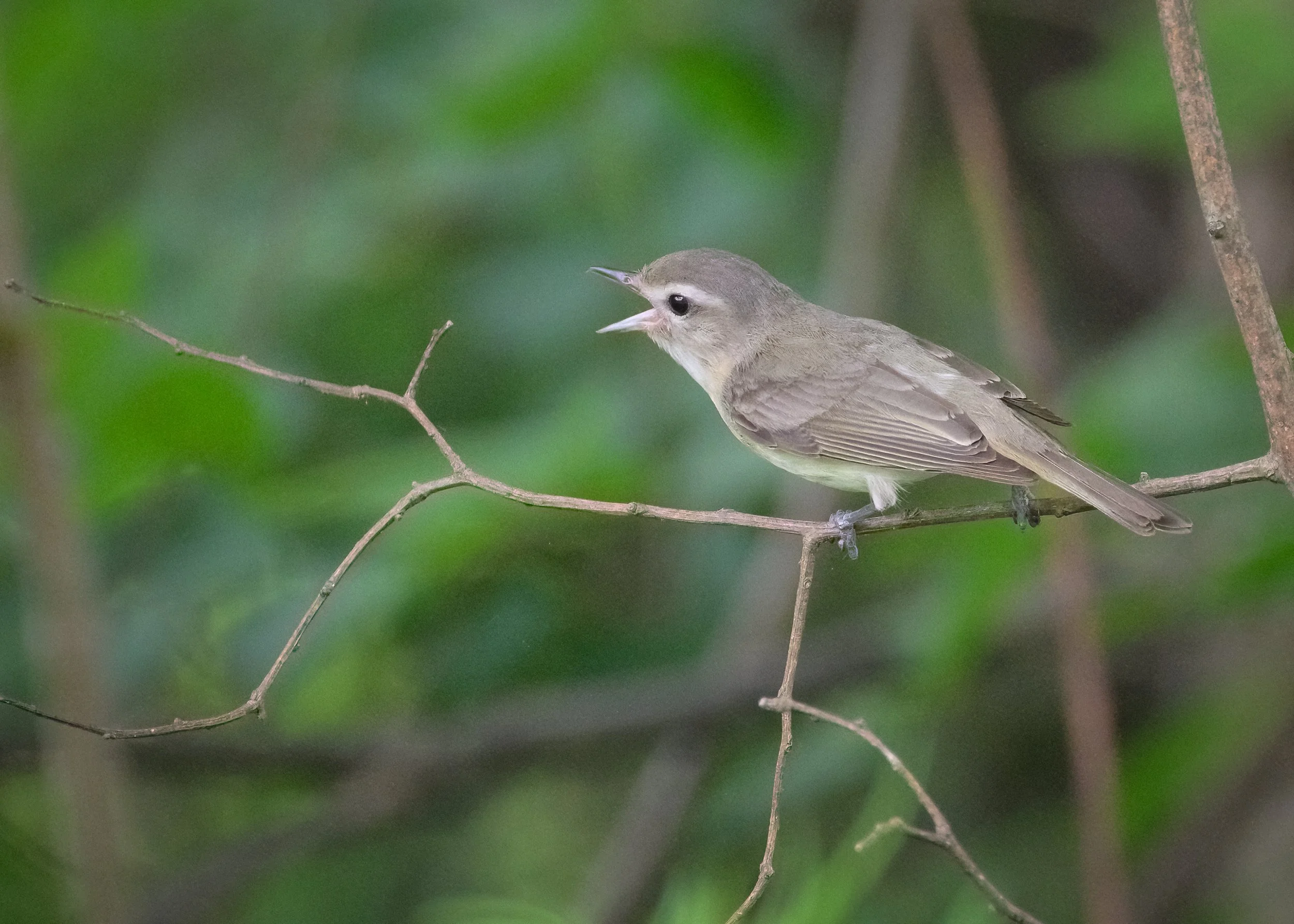
Singing Warbling vireo - Mine Road - 6/18/26
This little guy was telling everyone in the neighborhood that this was his territory and if you were not a nice looking female, you best keep on moving. I sat for at least 15 minutes with him popping in and out of view, and when I departed, he was still singing his little heart out. He has no intention of leaving the Hudson Valley this summer. These digs are just fine.
A bit further along the road at another pulloff, Merlin detected an Indigo bunting. These beautiful azure birds are a staple along this road all summer long, so I was not surprised to come upon this individual. All too often, I find the bird in a less than idyllic setting for a photograph with the bird singing from his perch on the phone lines above. This bird was low in the bushes along the road side, however, and made for a much more pleasing backdrop.
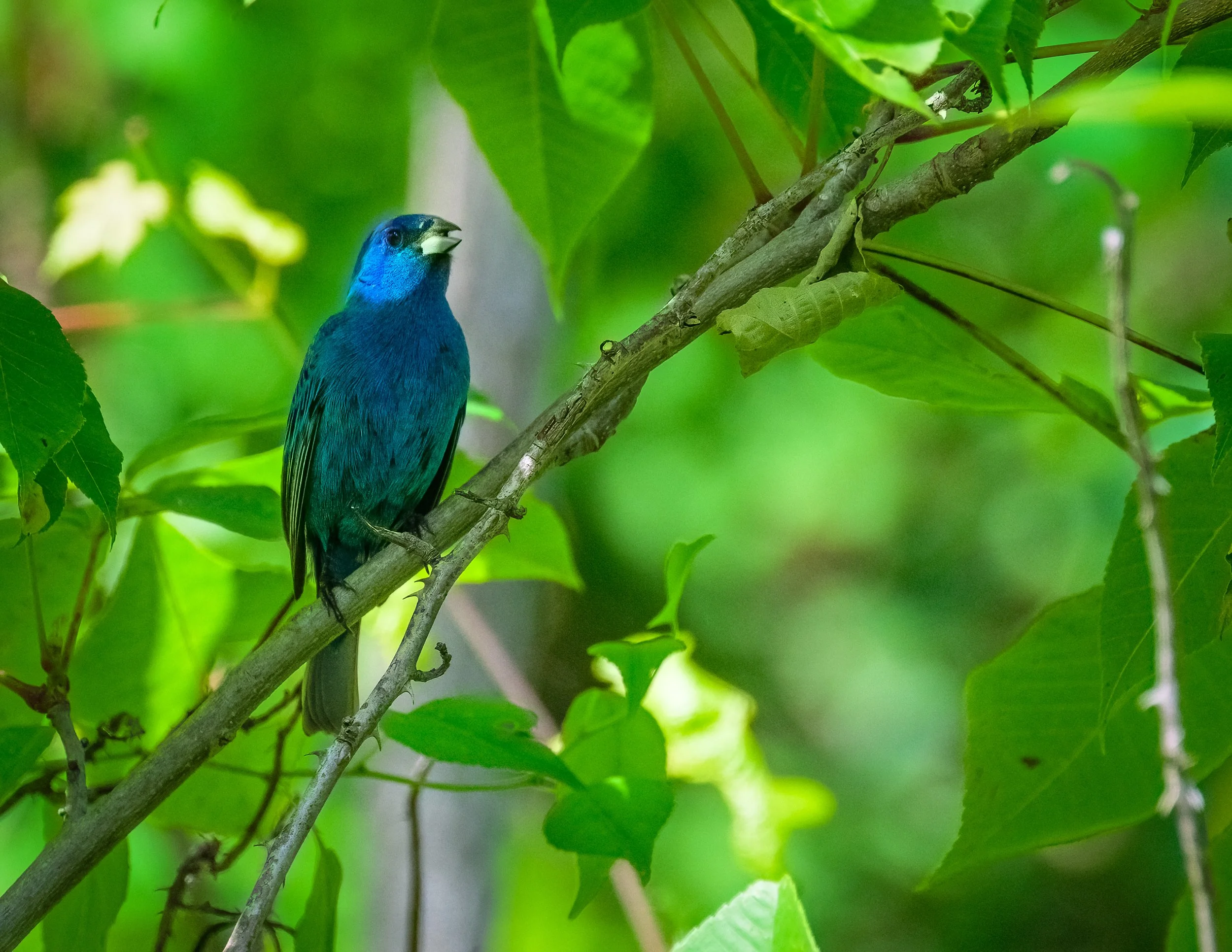
Indigo bunting - Mine Road - 6/18/26
Were it not for a beam of light shining through the foliage and fortuitously landing on the buntings head, I may not have seen him lurking in the shadows. I could hear him singing his song (“Fire!Fire!Where?Where?Put it out, put it out!). After a short bit of time, the bird retreated further into the forest. I could still hear him, but he was out of sight, and i was happy to have had the opportunity to capture an image in a more natural setting.
Next on tap was the Tufted titmouse. Again, this bird is known to hang out all summer long and indeed into and through the winter months. He is a regular visitor to our feeders and loves the safflower seed we put out all year long. Like the Warbling vireo, this individual was proclaiming his claim to the territory he had established along Popolopen Creek on Mine Road. And like the vireo, he was singing his song when I arrived and continuing to announce his presence when I left. He packs a lot of decibels into his little body, so his song carries a good distance. So much more rewarding to see him in the forest than to capture an image of him at my feeder.
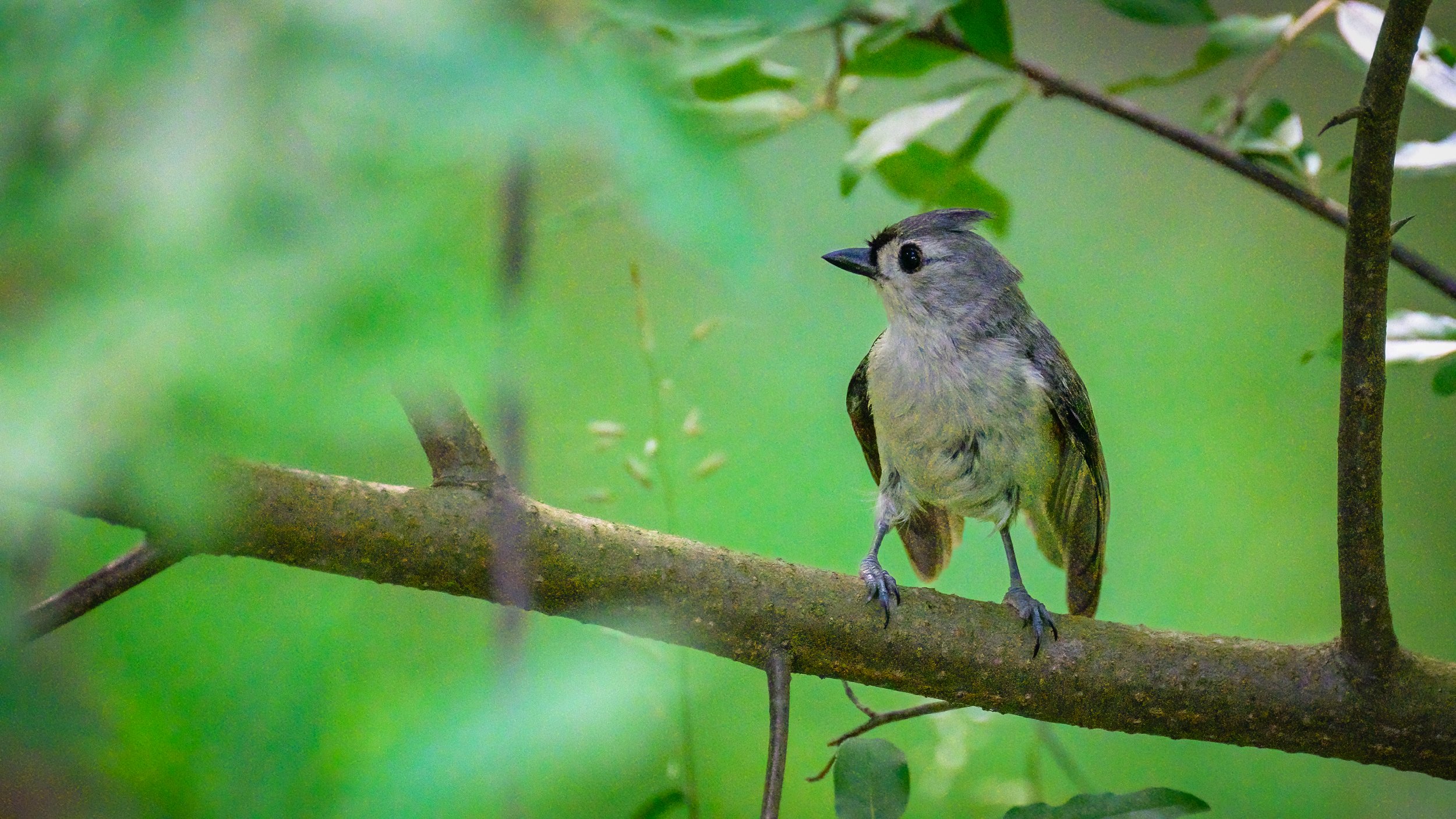
Tufted titmouse - Mine Road - 6/18/26
And one more for the road…. Earlier this week, I had visited Benedict Farm Park out in Montgomery as I drove through the area. Another Summer resident, he was also singing away even though it was the middle of the day. Perfect habitat for this sparrow - open fields with plenty of grasses for foraging. Often when we are in Florida, we relish the sighting of the Song sparrow, as they are much more elusive during the winter months in the southland. Here in summer, however, he is pretty reliable as a species you can find in almost any open grasslands in this part of New York. Glad to have him as a fellow Summer resident.
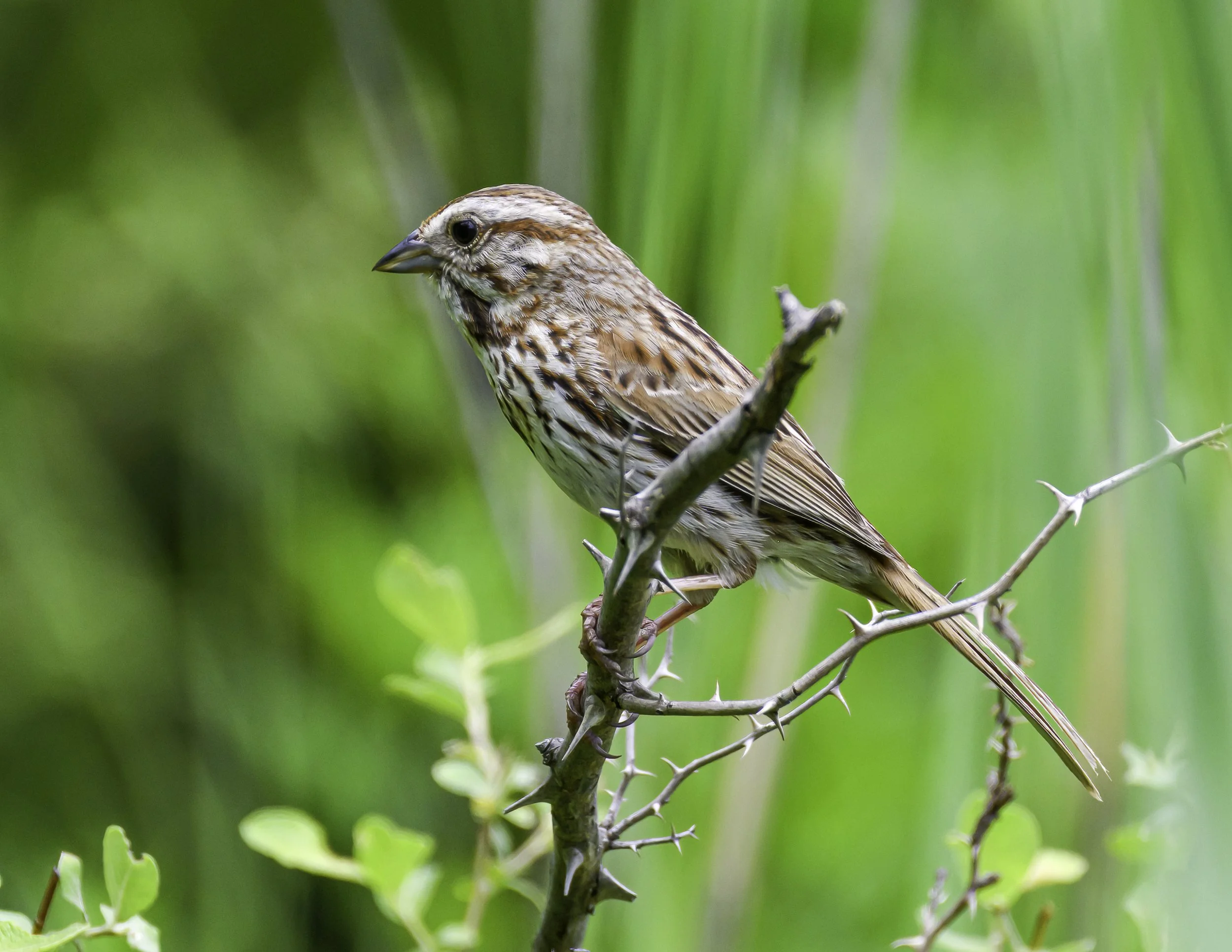
Song sparrow - Benedict Farm - 6/18/26
Tech Tip - During the summer months, birds are often found skulking in the shadows as the vegetation has filled in and birds are looking for shade to avoid the often high temperatures of summer. Be prepared by being ready to “overexpose” your shot by doing one of the following. Add time to your exposure to allow more light into the camera, open up the aperture to achieve the same effect, or increase your ISO to make the sensor more sensitive to light. Another quick way to achieve the same goal is by adding several clicks to your Exposure Compensation (the button marked +/- on your camera). Make sure you're clicking it in the plus direction. New mirrorless camera use WYSIWYG technology (What you see is what you get), so it should be easy to make sure that the bird lurking in the shadows is going to be visible in your photograph simply by observing the image in your view finder.