Fort Montgomery
I spent the afternoon with camera in hand checking out a few locations in the historic town of Fort Montgomery. I was lucky enough to take part in the restoration of a trail which circumvents Brooks Lake a number of years ago. I still enjoy stopping by to check out the water front at this time of year in search of waterfowl, local reptilian residents, and dragonflies. It’s still a bit early for the full dragonfly show, but there were a couple of species that made an appearance.
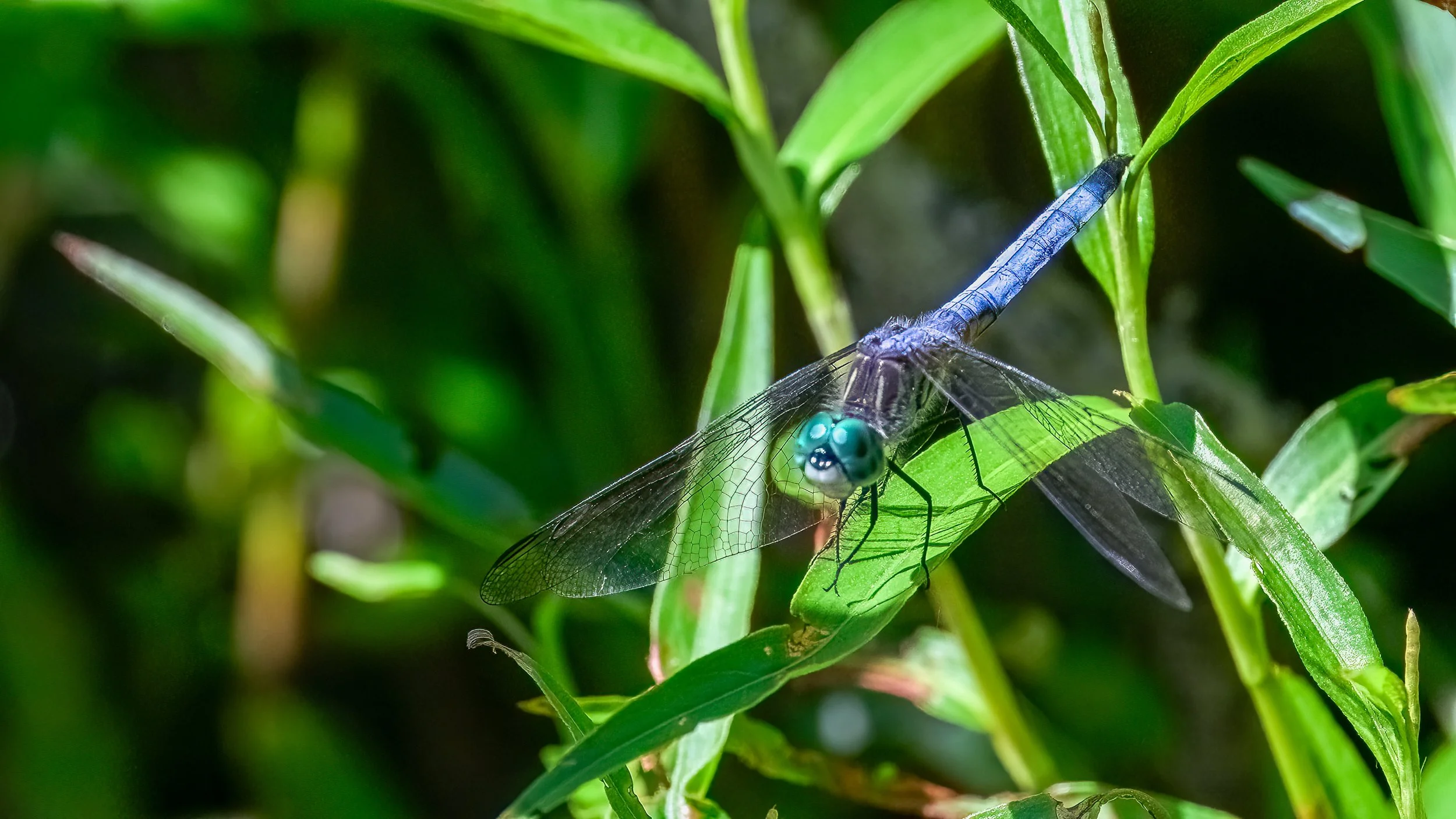
Blue dasher - Brooks Lake - 6/15/26
The first sighting of the day was the Blue dasher which is one of the first dragonflies to show up along the lake’s edge each year. Today’s shot was a bit better than the one of this same species that I took last week at the Orange County Arboretum inasmuch as the green eyes are much more pronounced. I also liked the setting with the dasher perched on a fresh green foliage.
I then noticed a second dragonfly species which at first glance looks much like the dasher. The second species observed was the Eastern pondhawk
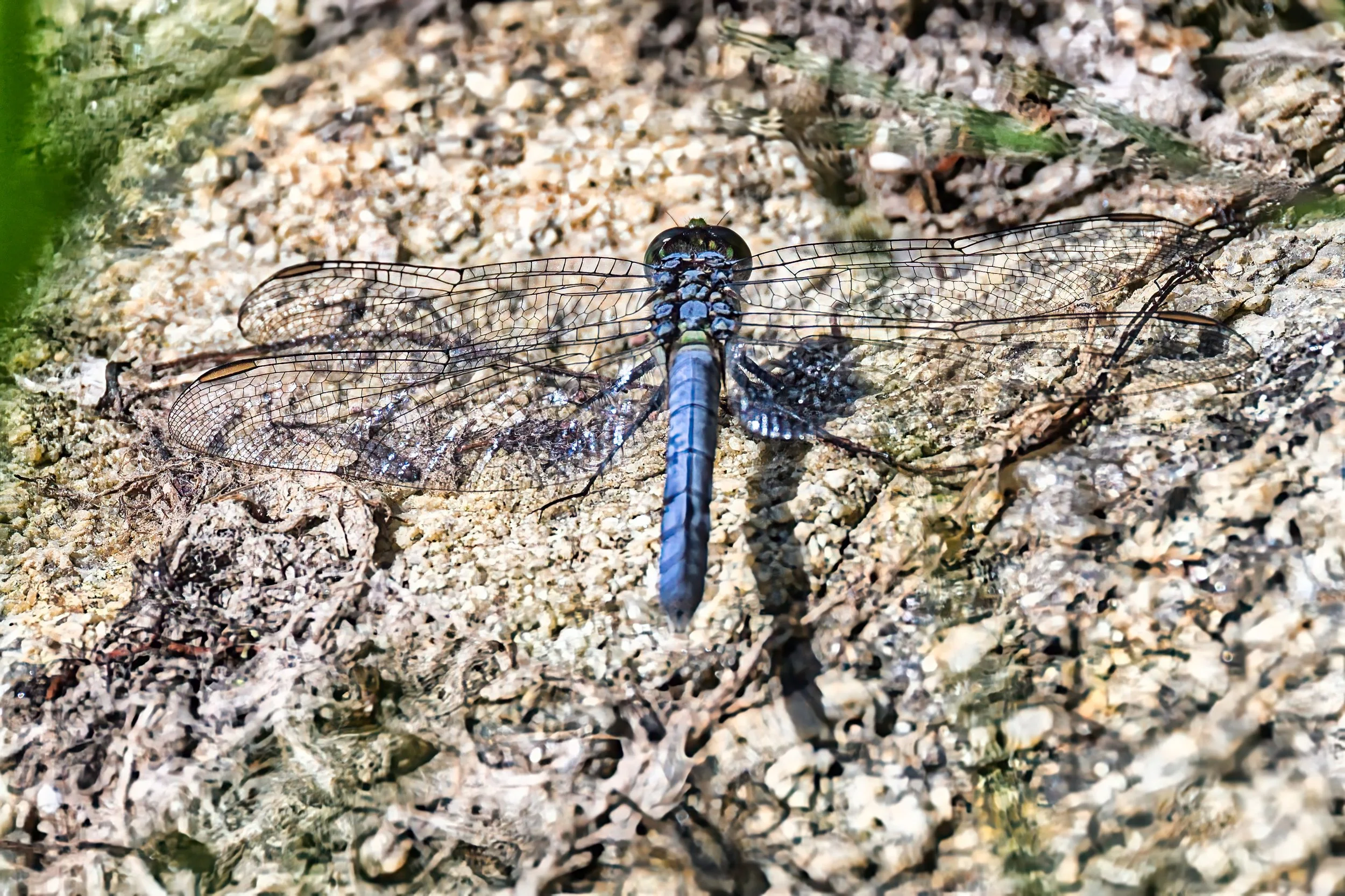
Eastern pondhawk - Brooks Lake - 6/15/26
While not the greatest angle to make out the most distinguishing characteristics of these two, note that the thorax of the Blue dasher is striped and the Pondhawk’s thorax is solid. Also note the tip of the abdomen on both…dasher has a black tip, the Pondhawk does not. Small differences, but they are obvious enough to make it simple to tell one from the other.
As I watched and photographed the dragonflies, a much larger presence was seen in the water below. A Common watersnake was working its way along the lake’s edge. As I turned the camera in the snake’s direction, he took note of me and quickly maneuvered into the heavy weed bed out of my sight. With a little patience, however, the snake reemerged and actually came to a stop just below me.
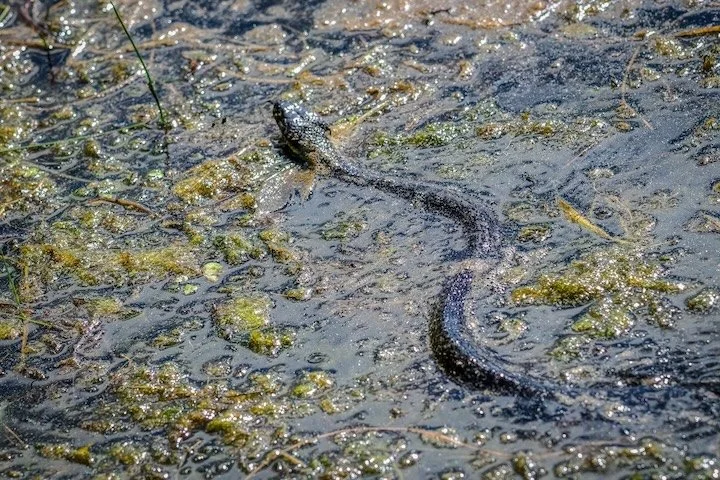
Common watersnake - Brooks Lake - 6/15/26
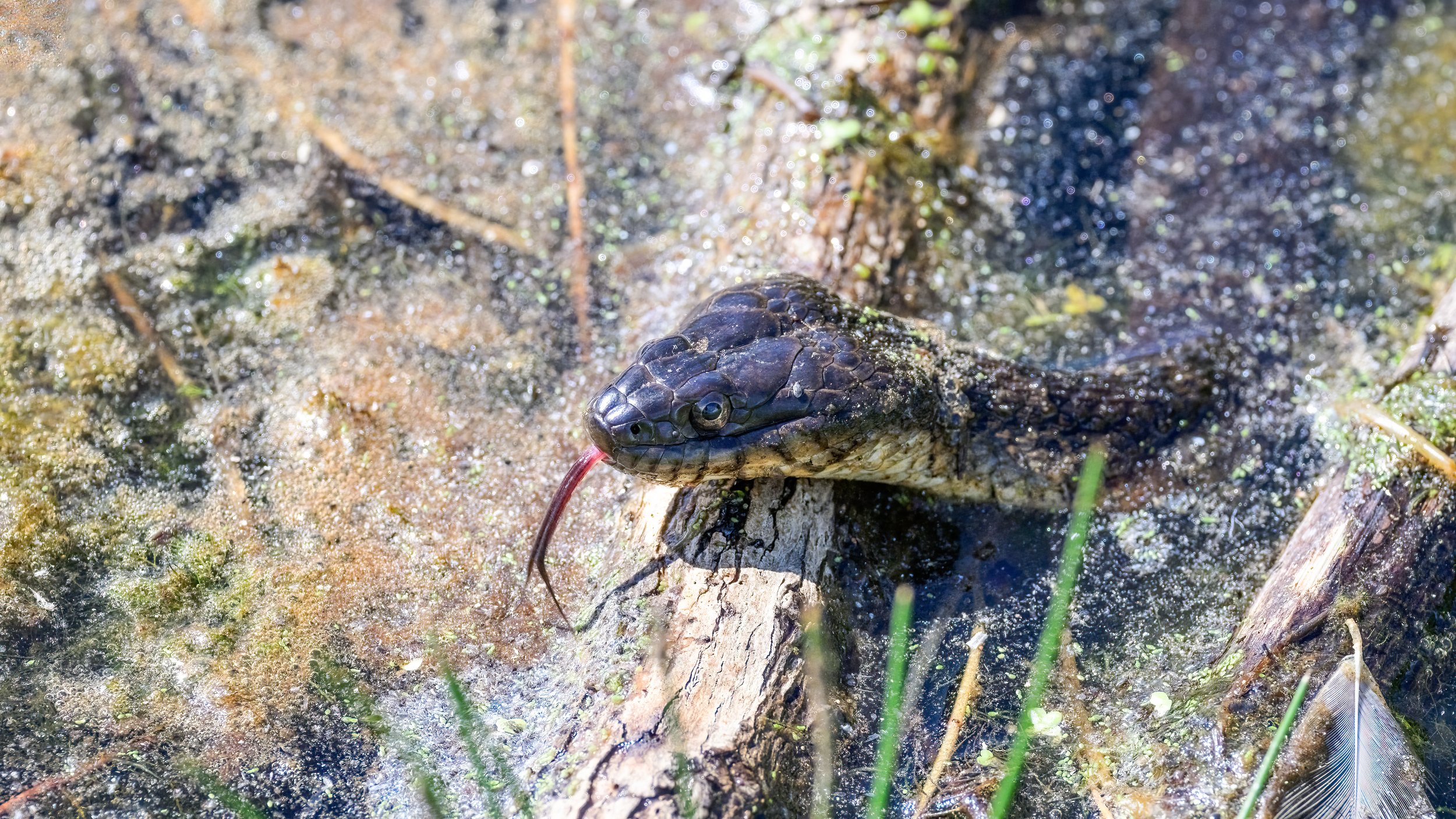
Common watersnake - Brooks Lake - 6/15/26
The snake remained in place long enough for me to grab a couple of images of his head and his long forked tongue flicking out. Snakes flick out their tongues to sample airborne chemical cues and gather detailed information about their environment. The forked tongue collects microscopic odor particles and transfers them to the “Jacobson’s organ” located in the roof of the mouth, allowing the snake to detect prey, predators, mates, and navigate terrain with remarkable spatial resolution. The forked shape gives snakes directional sensitivity—each tip can pick up slightly different concentrations of molecules, and by comparing signals from left and right, the snake can effectively “smell in stereo” to track the direction of a scent trail. Tongue-flicking also refreshes scent samples rapidly, so snakes can continuously monitor changes in their surroundings while remaining visually unobtrusive or hidden.
As I processed this image later on my computer, I noticed another feature which has eluded me when I first took the shot. On the side of the snake’s head, a small insect called a Waterlily planthopper (I had to use the iNaturalist app to identify this one!) was taking a ride….have to rename this insect a “snake hopper”. So many things in nature simply pass us by unnoticed.
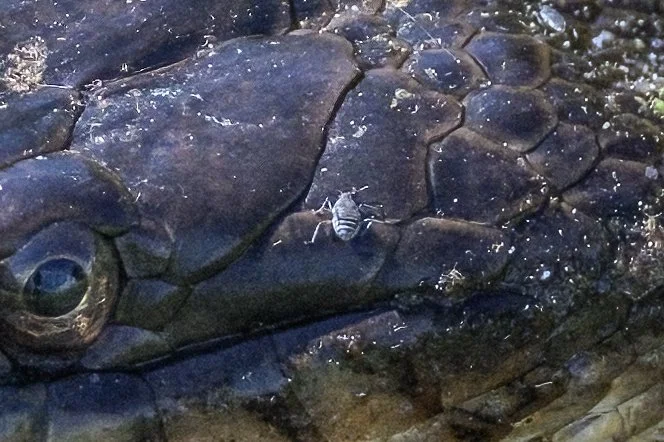
Waterlily planthopper on Common watersnake - Brooks Lake - 6/15/26
From Brooks Lake, I drove down the road directly across from the access to the lake and headed down to Mine Dock Park, a beautiful little park which is located on the banks of the Hudson just north of the Bear Mountain Bridge. A beautiful schooner was sailing down the river and although not exactly a “natural” subject to photograph, it was too pretty to let it pass. I later found out through a Google search that this boat, the Apollonia, is actually a Carbon-neutral shipping vessel used to haul cargo up and down the Hudson. A crew of 5 mans the ship and they carry cargo normally shipped by truck in a pollution free fashion. Check it out on the web…a really interesting and “green” enterprise.
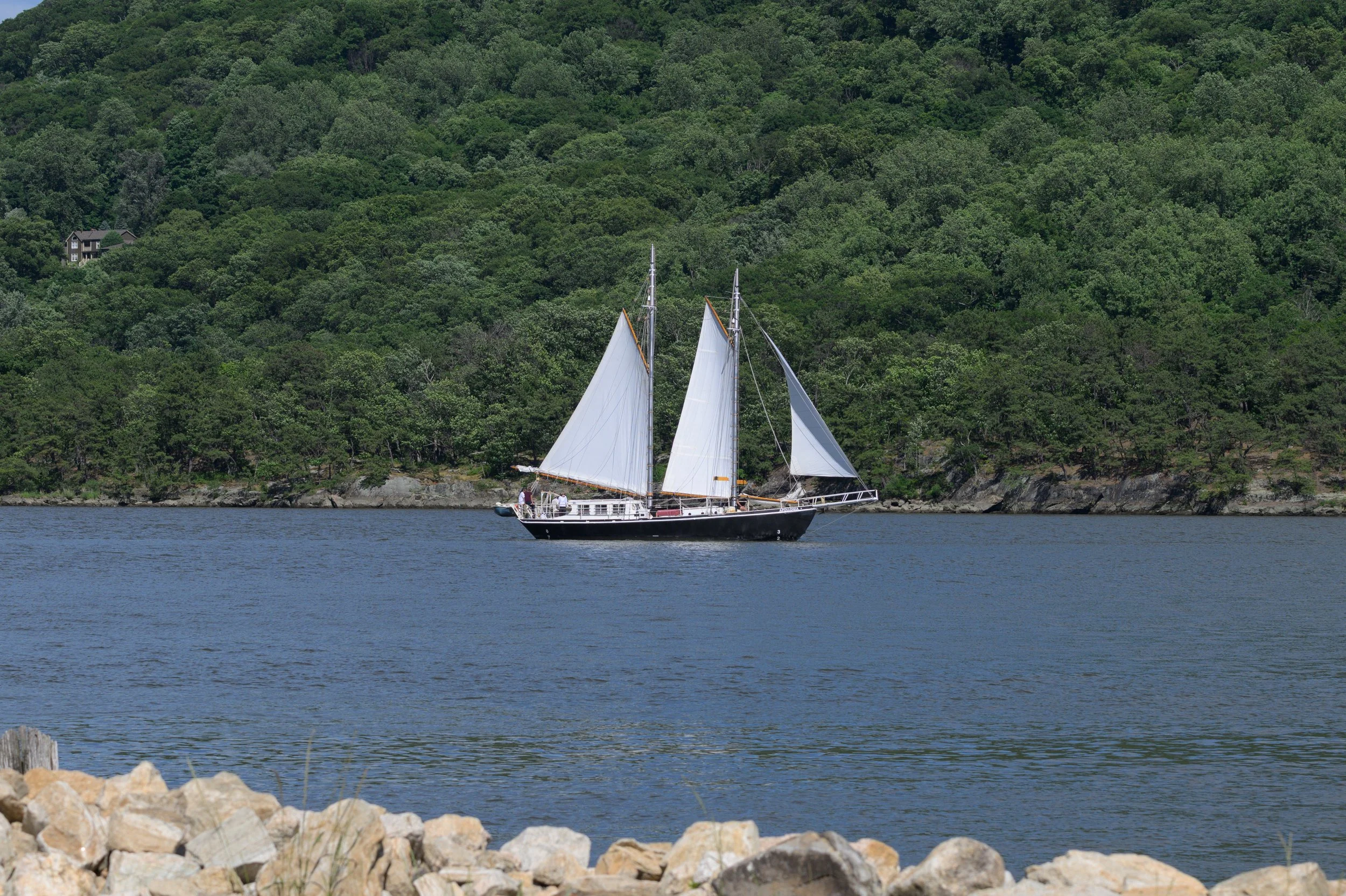
Cargo Schooner Apollonia - Mine Dock Park - 6/15/2
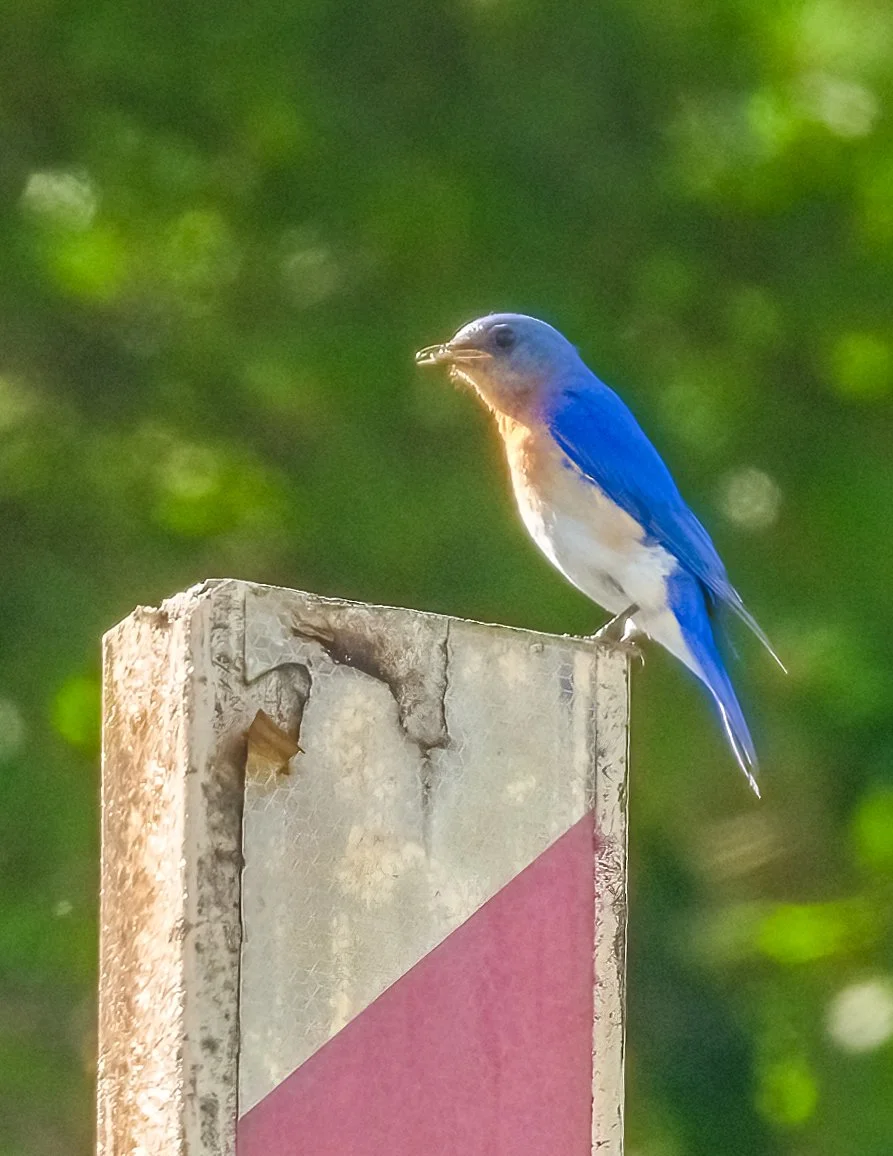
Eastern bluebird - Mine Dock Park - 6/15/26
Final image of the day was an Eastern bluebird which flew high up onto a steel girder along the railroad tracks. The bird was radiant in the late afternoon sun and was out foraging for its family. Note the insect it is carrying. As noted in a previous blog, if a bird is seen carrying food and not immediately ingesting it, he or she is carrying that food back to a nest. And so, another sign that this lineage will be carried on. Great way to end a nice productive afternoon.