Barn swallow success
As you know, I have been monitoring several Barn swallow nests out at Silver Mine Park. I’m so happy to report that one of the nests has indeed been successful and now has several youngsters being tended to by their attentive parents. Sadly, one of the other two nests that I found has been removed. Whether by natural causes or my human interference, I do not know. But there was no sign of the nest material below its original site in the rafters of the picnic pavilion, so I’m thinking it may have been removed by humans. Not happy with that outcome to say the least.
Watching the adults take care of the little ones in the nest in the eaves of the storage building was a joy. I was able to document the whole process as seen below. Step 1: the hunt for insects to feed the little ones…..
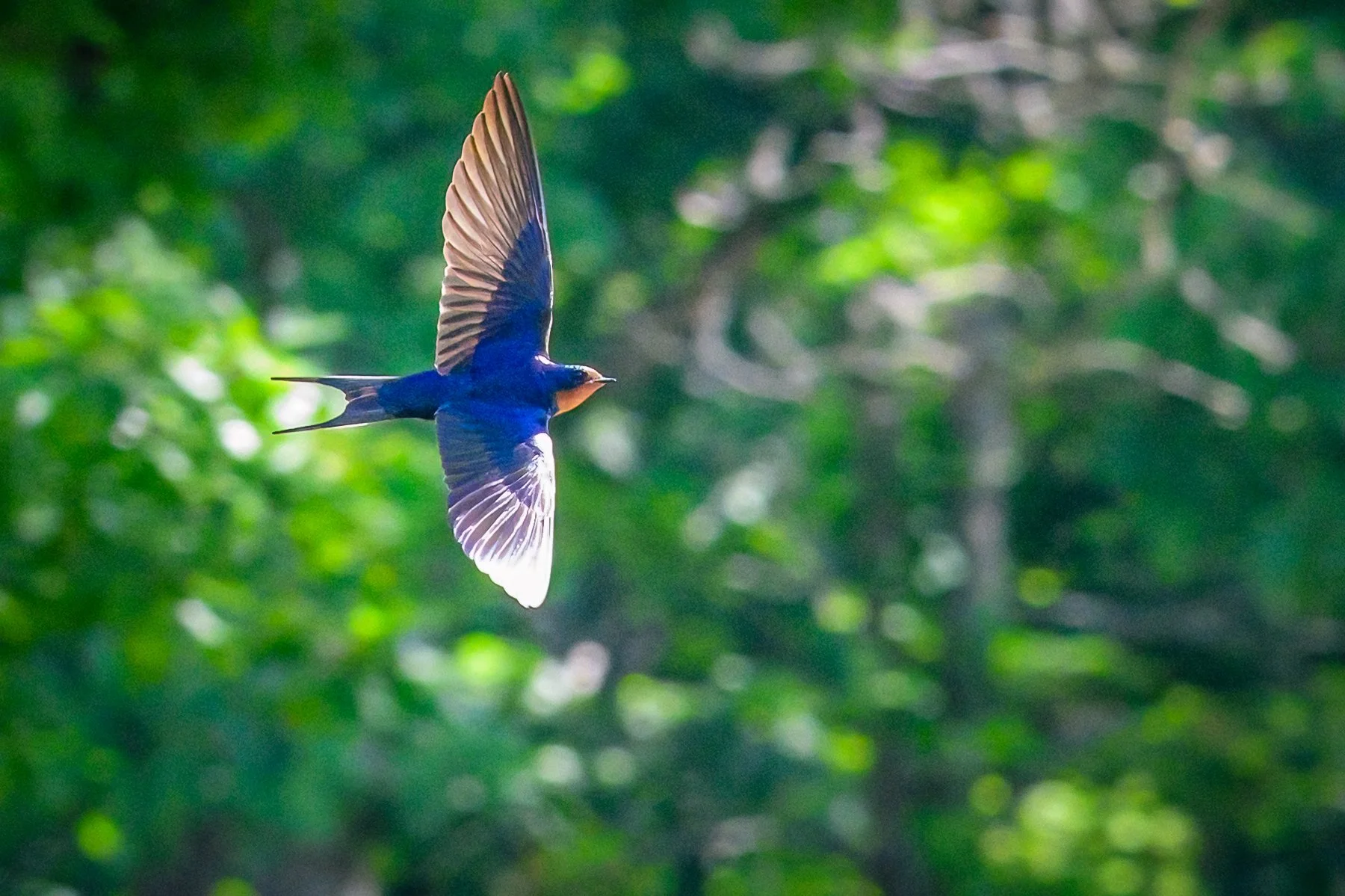
Barn swallow-Silver Mine-6/13/26
The adult Barn swallows and Cliff swallows which are sharing the Silver Mine site were constantly soaring above the water of the lake itself and the stream which empties into the lake behind the storage building. It is easy to distinguish the barns from the cliffs in that the Barn swallows are the only swallows that have the forked tail as seen so clearly in this photograph. It is amazing how agile these birds are and how they can snag a small insect out of the air at such high speeds.
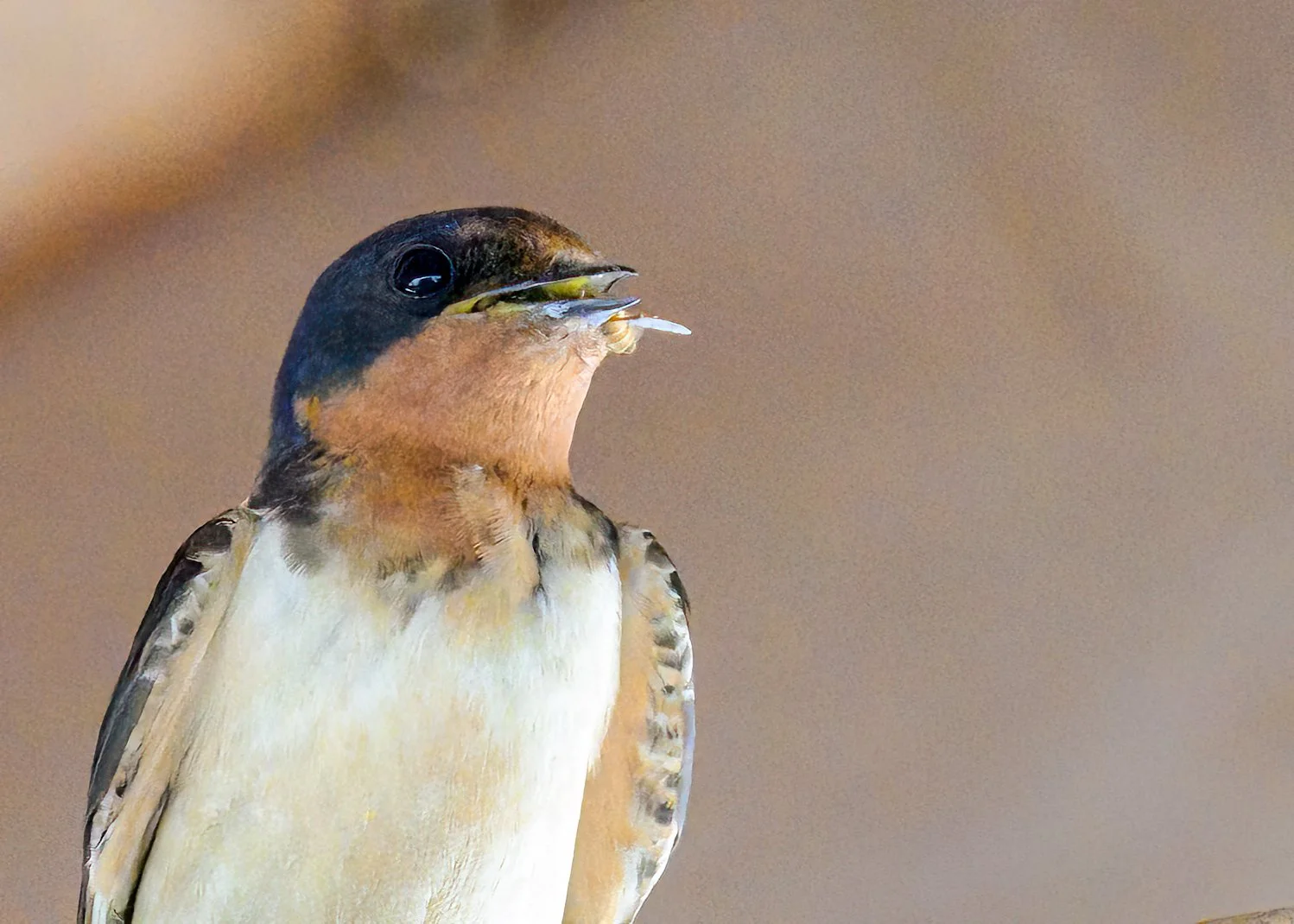
Barn swallow with bee - Silver Mine - 6/13/26
I noticed several of the Barn swallows flying into the site where the “missing” nest was located and went over to capture a closeup of one of the birds. I was pleased to note that one of the birds had a bee in its beak. This is a sure sign of the bird having chicks on a nest. If the bird was out simply hunting for food for itself, it would quickly devour the pray and not be found with it still in its beak. The bird soon took off for the nest in the peak of the nearby barn roof.
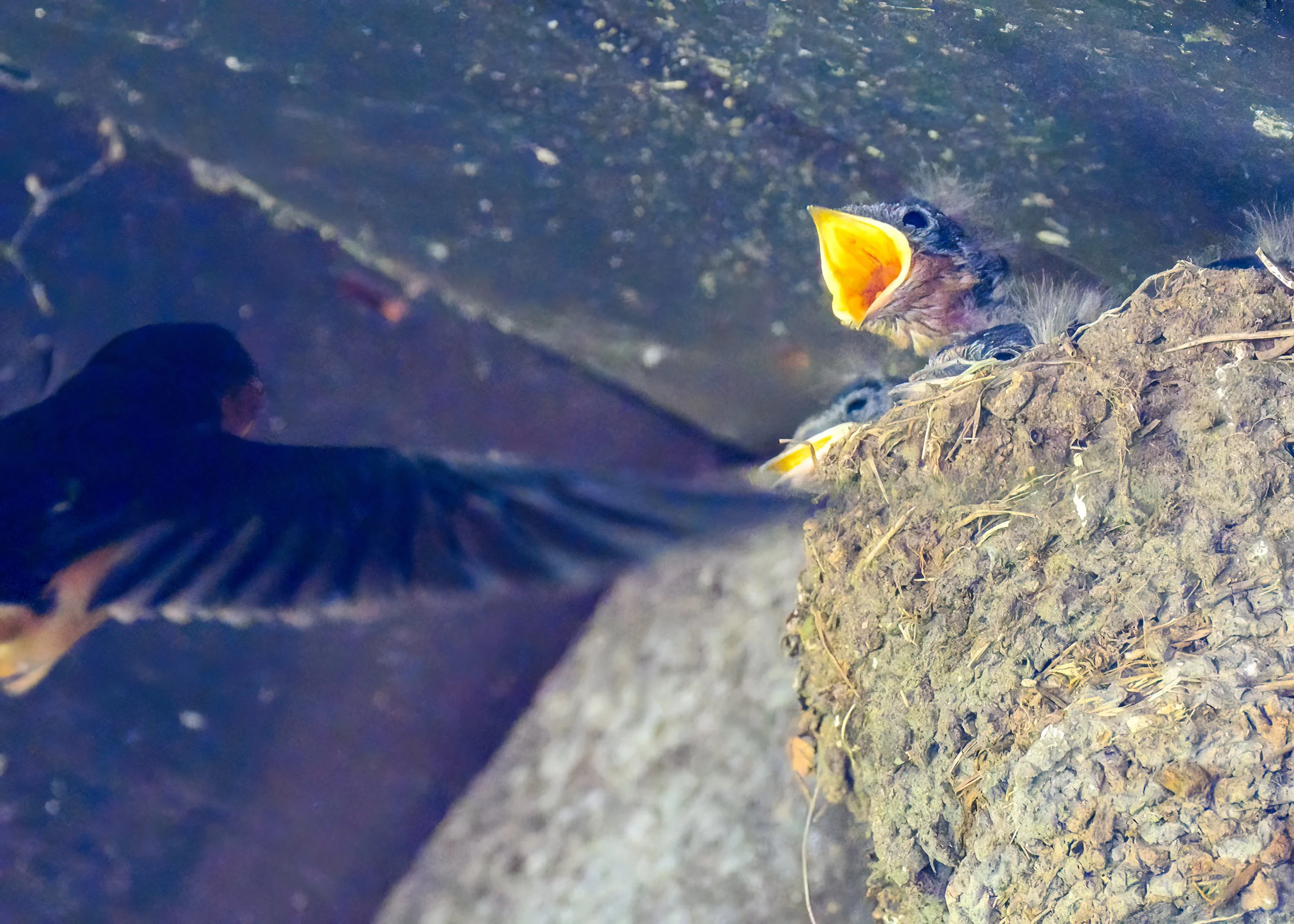
Begging Barn swallow chick - Silver Mine - 6/13/26
Sensing that food was on the way, one of the chicks in the nest began begging and got into position with its beak agape. Surprisingly, its two siblings were content to sit down in the nest and watch big brother take the prize. Is this the eldest and most dominant sibling or were the other simply recently fed and satiated? I really don’t think “satiated” is in a young chick’s vocabulary . Regardless, the adult swooped into the nest and was happy to oblige the begging chick by placing the morsel deep into the craw of the little swallow.
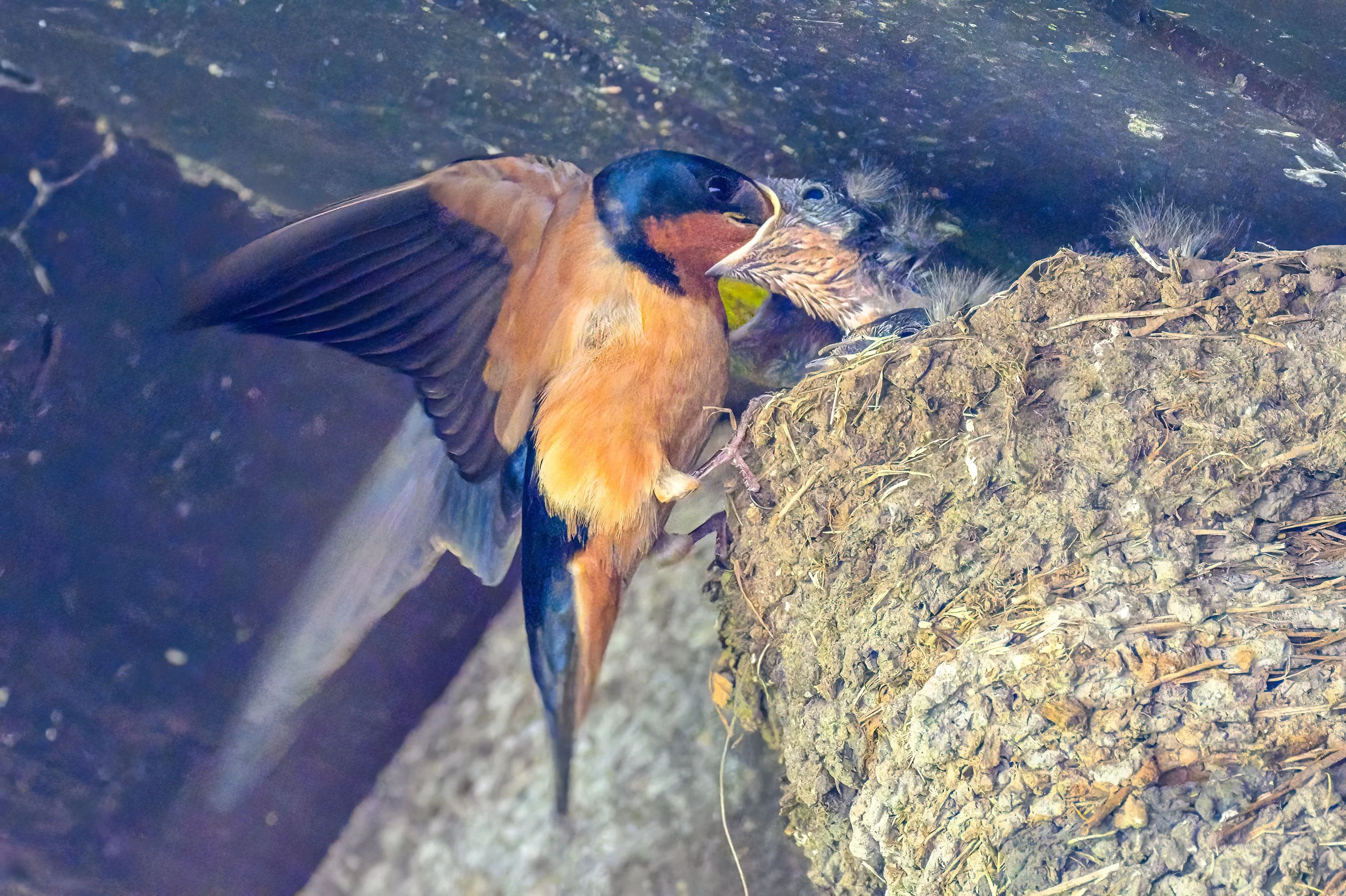
Barn swallow feeding its chick - Silver Mine - 6/13/26
Door Dash in the avian world - meal delivered with 100% satisfaction guaranteed. Once the meal was ingested, both adult and chick took a short well deserved break at the nest before the adult was out on the hunt again in pursuit of more nourishment for a hungry family. Great to see that these birds are back in the business of raising another generation of these fantastic fliers.
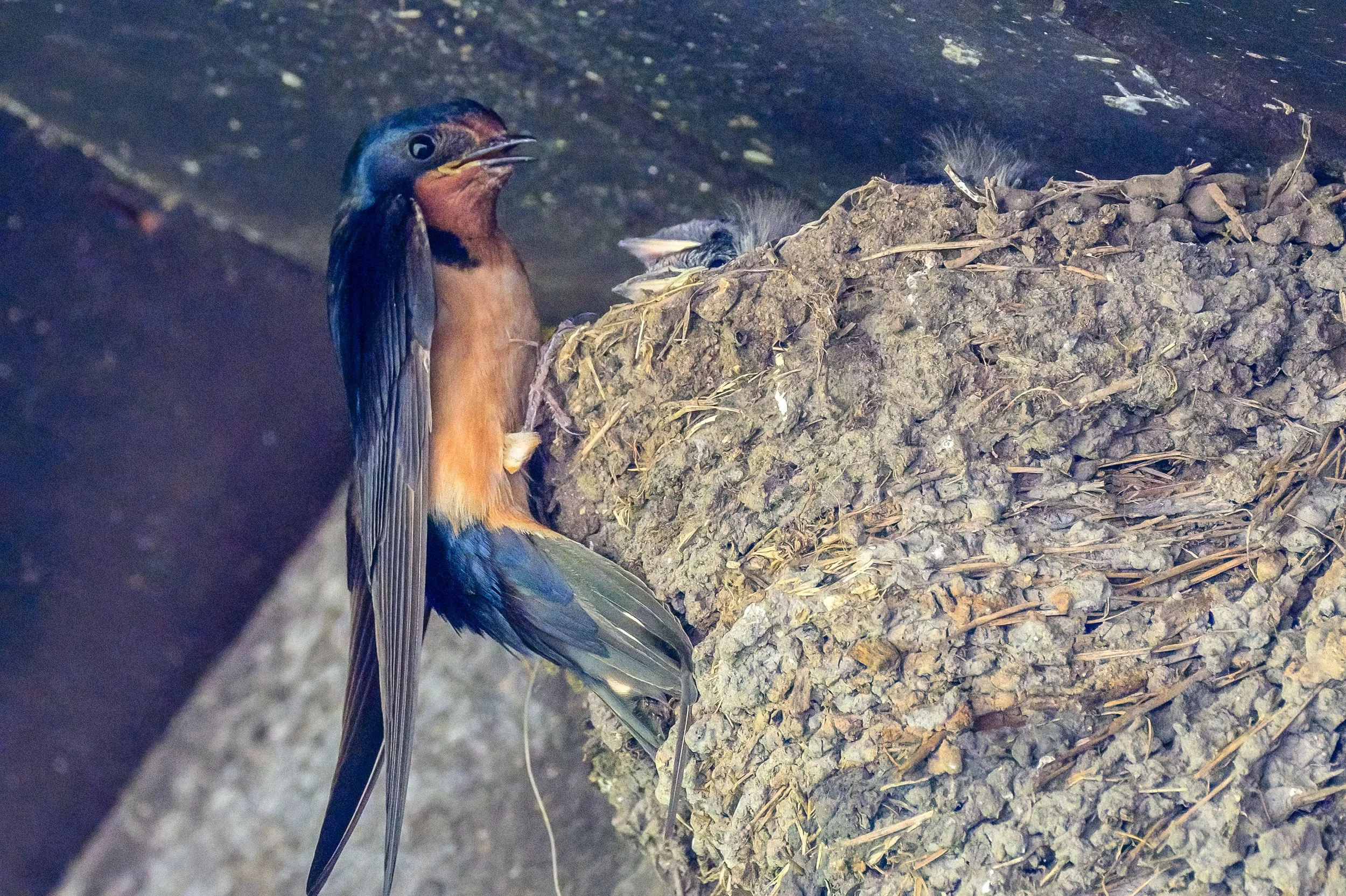
Adult Barn swallow with chicks at the nest - Silver Mine - 6/13/26
Earlier in the day, I had gone to check out a reported colony of Bank swallows nearby. As I approached the site, I had multiple Bank swallows flying overhead and figured I’d wait until I got to the colony to get some nice shots of these swallows going in and out of their burrows. Well, “he who hesitates is lost”, and when I got to the colony, I found multiple burrows and only one swallow which entered and left the nest in the blink of an eye. No time for a shot and unfortunately the other swallows I had seen just a few minutes before were gone. I will surely have to visit the colony again and different time of day to see if I can capture this species at their nests. Bank swallows are hard to find these days. Like many other species, their preference for a specific habitat and nesting site is quickly disappearing as “development” takes its toll. Thankfully, this sandbank has been spared for the meantime and hopefully for the long term.
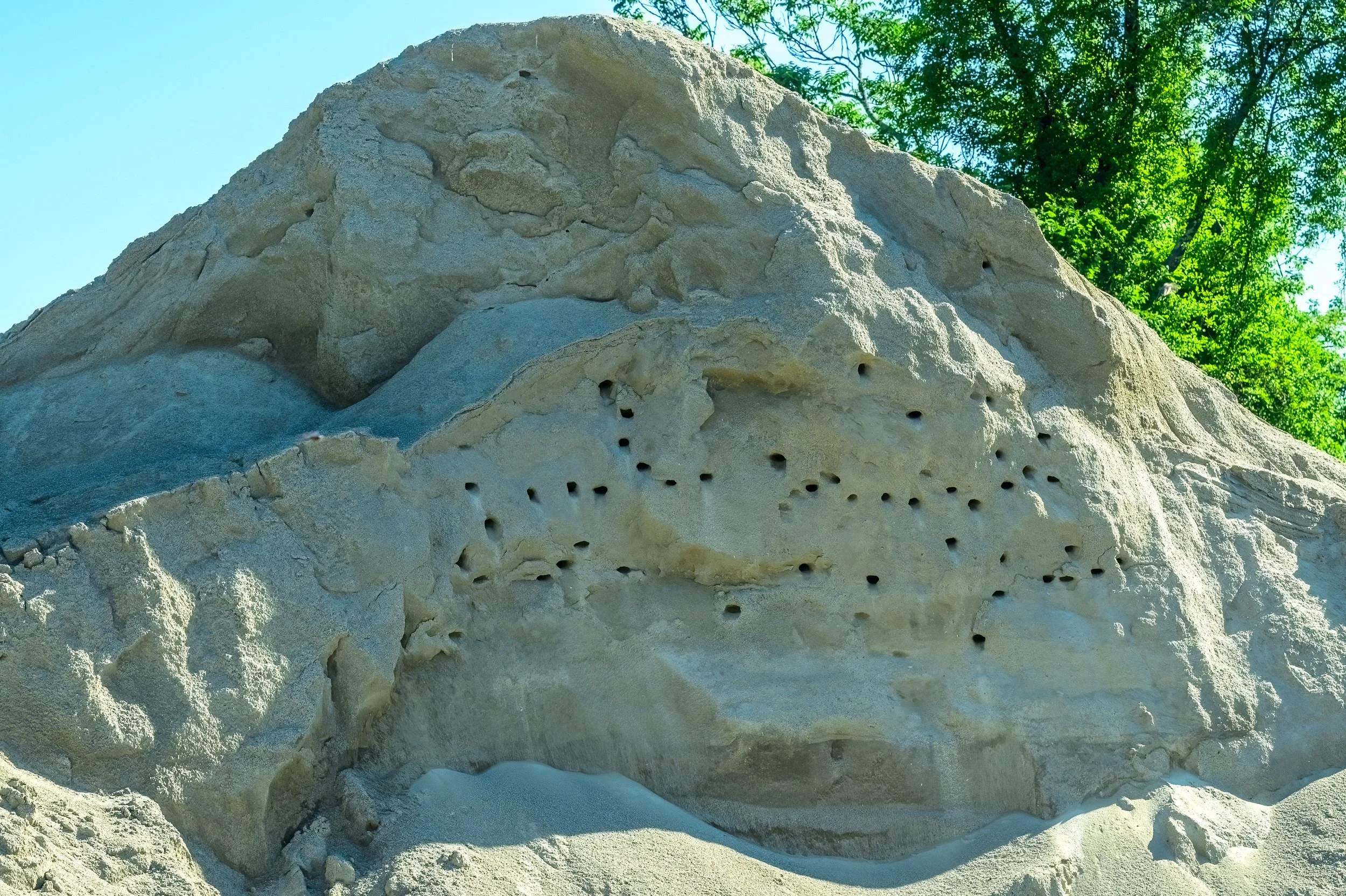
Bank swallow colony - Long Mt Circle - 6/13/26
Tech tip - “Panning” -
Panning in photography is a technique for capturing a moving subject sharply against a motion-blurred background by tracking the subject with the camera during exposure. For today’s first shot (Barn swallow in flight), I used a relatively fast shutter speed of 1/1250 second and matched the subject's speed and direction with the sweeping motion of the camera to maintain focus in the center of the frame, resulting in a sense of speed and dynamic motion while isolating the subject from the surroundings.