The Bees are Back
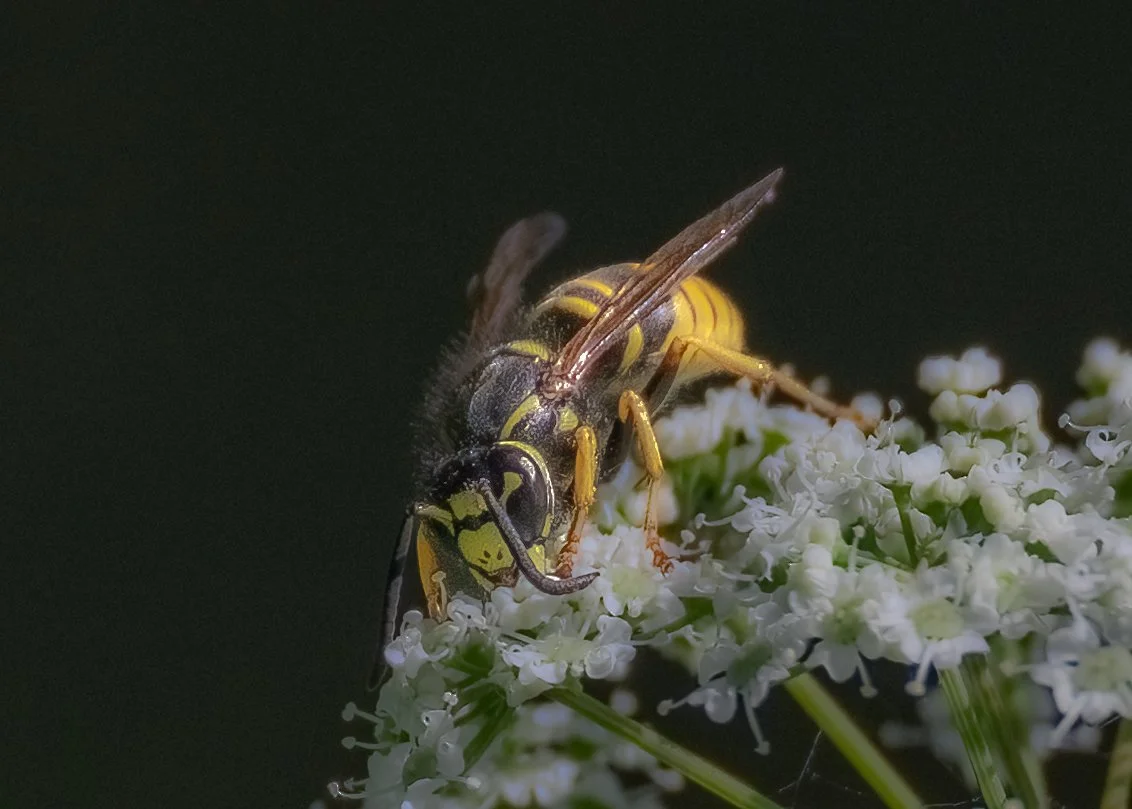
Widow yellow jacket - Morgan Farm - 6/20/26
I have spent a great deal of time during my life searching for new species of birds to record and photograph. In North America, The American Birding Association puts the total number of bird species in North America at 1,107, so there are a lot of birds to hunt for. Most dedicated birders see the threshold of 700 as being the “holy grail” of birds observed on your “lifelist”. I have yet to reach that plateau.'
That being said, when we look at bees that are frequenting our gardens and fields during these summer months, how often do we actually look closely enough to see differences in the species we may observe. Too often a “bee” is a “bee” and we leave it at that. In fact, according to Scientific American, there are about 4000 species of native bees here in the United States alone. During the hot summer months, I have found myself searching for new species of insects…..dragonflies, butterflies, and bees when the bird species are scarcer and quieter. This quest also allows me to get back into the realm of “Macrophotography” since these subjects are considerably smaller than the avian wildlife I’ve been concentrating on so far this year.
My first bee today was a species known as the Widow Yellowjacket. The widow yellowjacket (Vespula vidua) is a small, slender social wasp native to parts of North America, recognizable by its glossy black body with bright yellow markings and a distinctive tapered abdomen. Unlike more aggressive yellowjacket species, it tends to nest in preexisting cavities above ground and often forages quietly on insects, nectar, and fallen fruit, playing a useful role as both predator and pollinator, though it can sting when threatened and should be observed from a respectful distance. I must admit, that much of what I will be reporting on this site regarding bees is material that I am also learning for the first time. So we can go on this journey of discovery together!
My second bee of the day was the Brown-belted bumblebee.
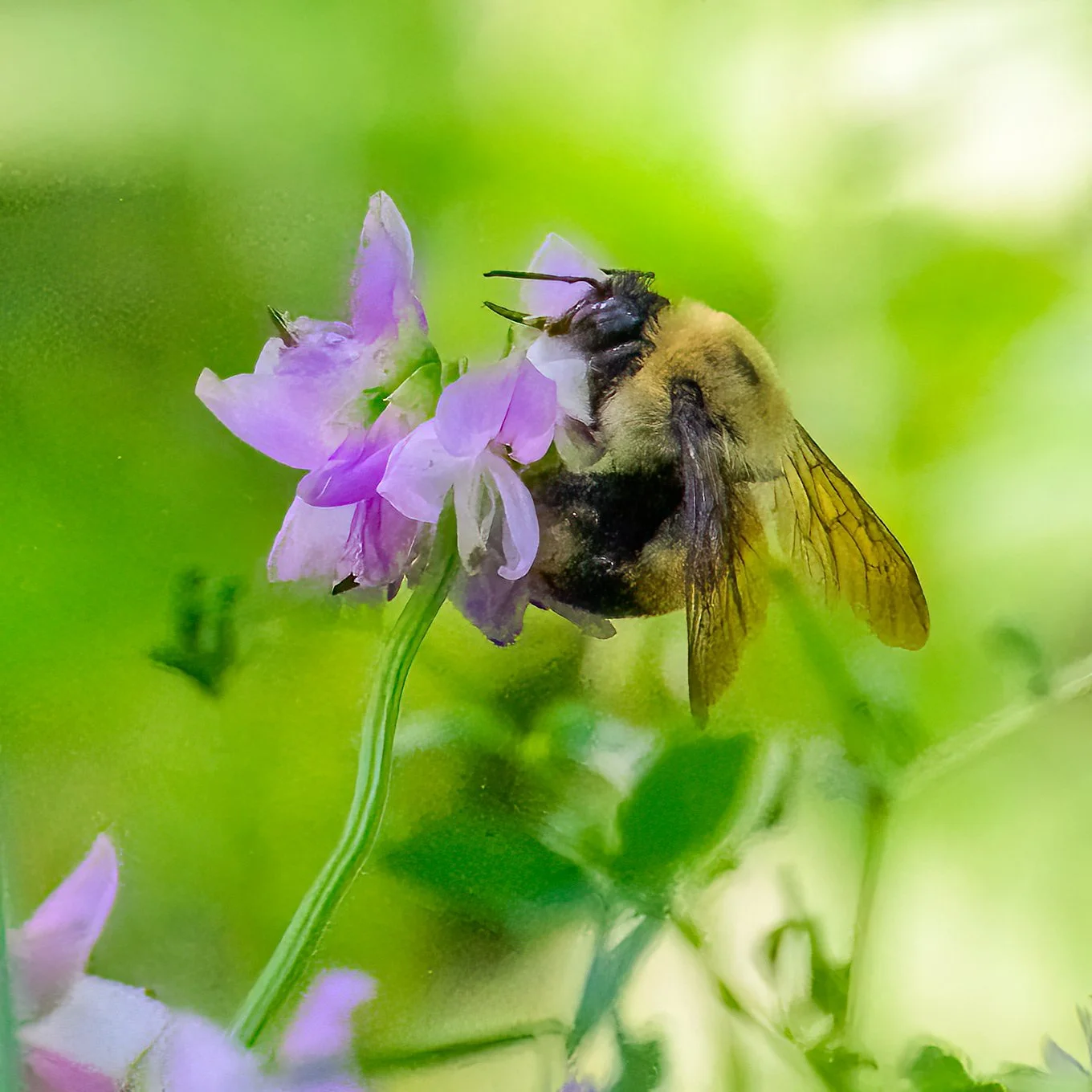
Brown-belted bumblebee - Morgan Farm - 6/20/26
Bumblebees fascinate me in that they all look so similar. Again, I admit to being a total novice and rely heavily on iNaturalist (a remarkable app for identifying wildlife and contributing to citizen science) to aid in the identification of these bees. The brown-belted bumblebee (Bombus griseocollis) is a medium-sized, robust pollinator characterized by a band of brown or cinnamon-colored hairs across the abdomen that contrasts with yellow and black sections, making it distinguishable from other bumblebee species. Although this photo was taken in a shady glen, you can make out this darker “belt” between the two yellow and black areas. Native to North America, it favors open habitats such as meadows, gardens, and roadside margins where it visits a wide variety of flowering plants, playing a vital role in pollination, while nests are usually built in grass tussocks, abandoned rodent burrows, or protected cavities, and colonies are annual—queens overwinter and found new colonies in spring—though populations can be sensitive to habitat loss, pesticides, and climate change, so maintaining diverse flowering landscapes and pesticide-free corridors benefits their survival.
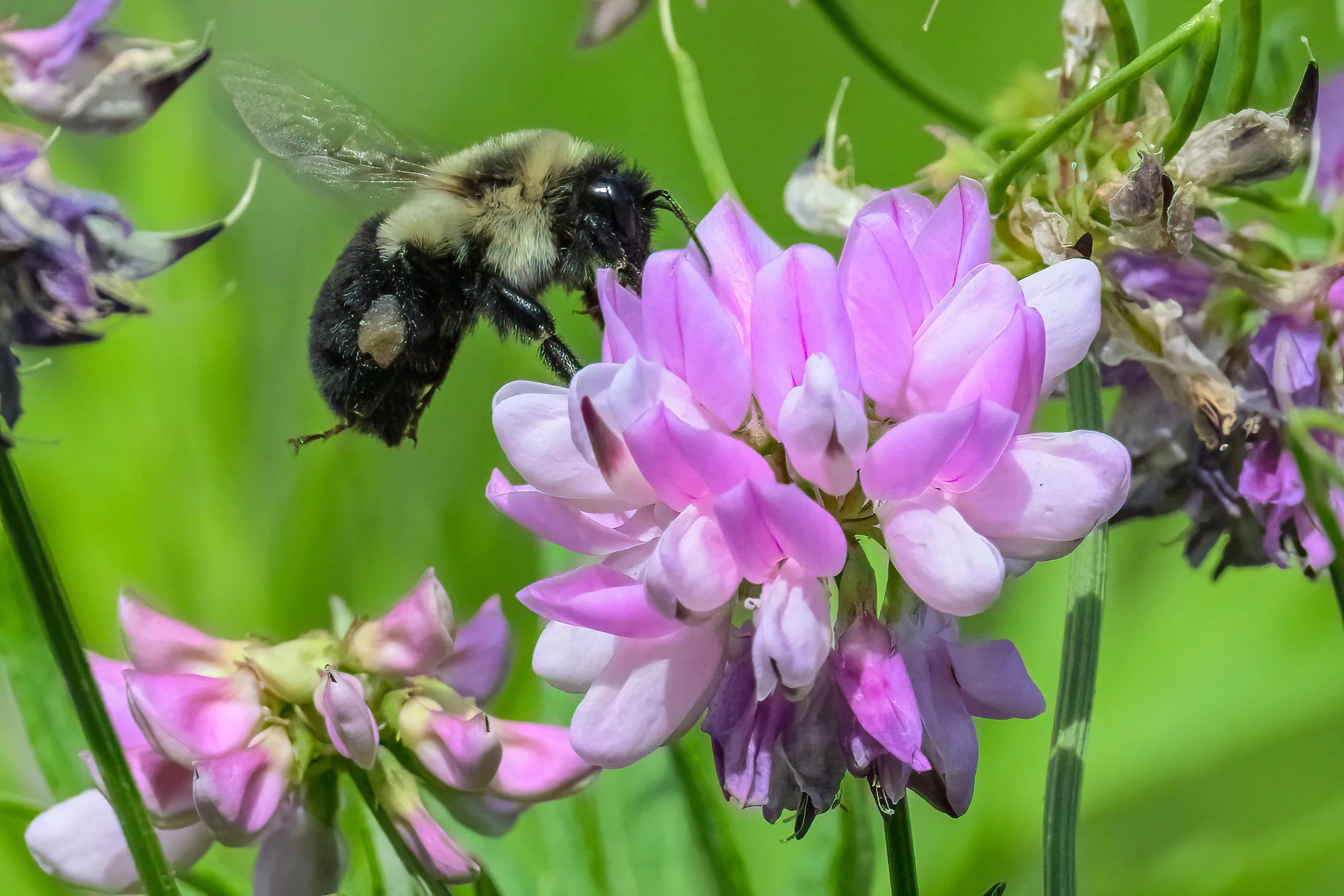
Common Eastern Bumblebee - Mine Road - 6/19/26
My third species of bee was found along Mine Road yesterday in a gorgeous stand of Crown vetch, a common wildflower found along many a roadside during the summer months in New York. This is perhaps the most pervasive of all the bumblebees in this area and it is all too inviting to just say “Common Eastern” when you see a large bumblebee in the garden. The Common Eastern bumblebee (Bombus impatiens) is in fact widespread and a familiar pollinator in eastern North America, recognized by its robust, fuzz-covered body with a black head and thorax, a yellow band on the thorax, and one or two yellow bands on the abdomen depending on caste and region. Active from spring through fall, these social bees nest in cavities at or near ground level—abandoned rodent burrows, compost piles, and thick grass—forming colonies that can number a few dozen to several hundred individuals. They forage on a broad variety of flowering plants, making them valuable for both wild ecosystems and agricultural crops, and they are tolerant of cooler temperatures and lower light, often flying on cloudy days when other pollinators are inactive. While generally docile, they can sting if provoked.
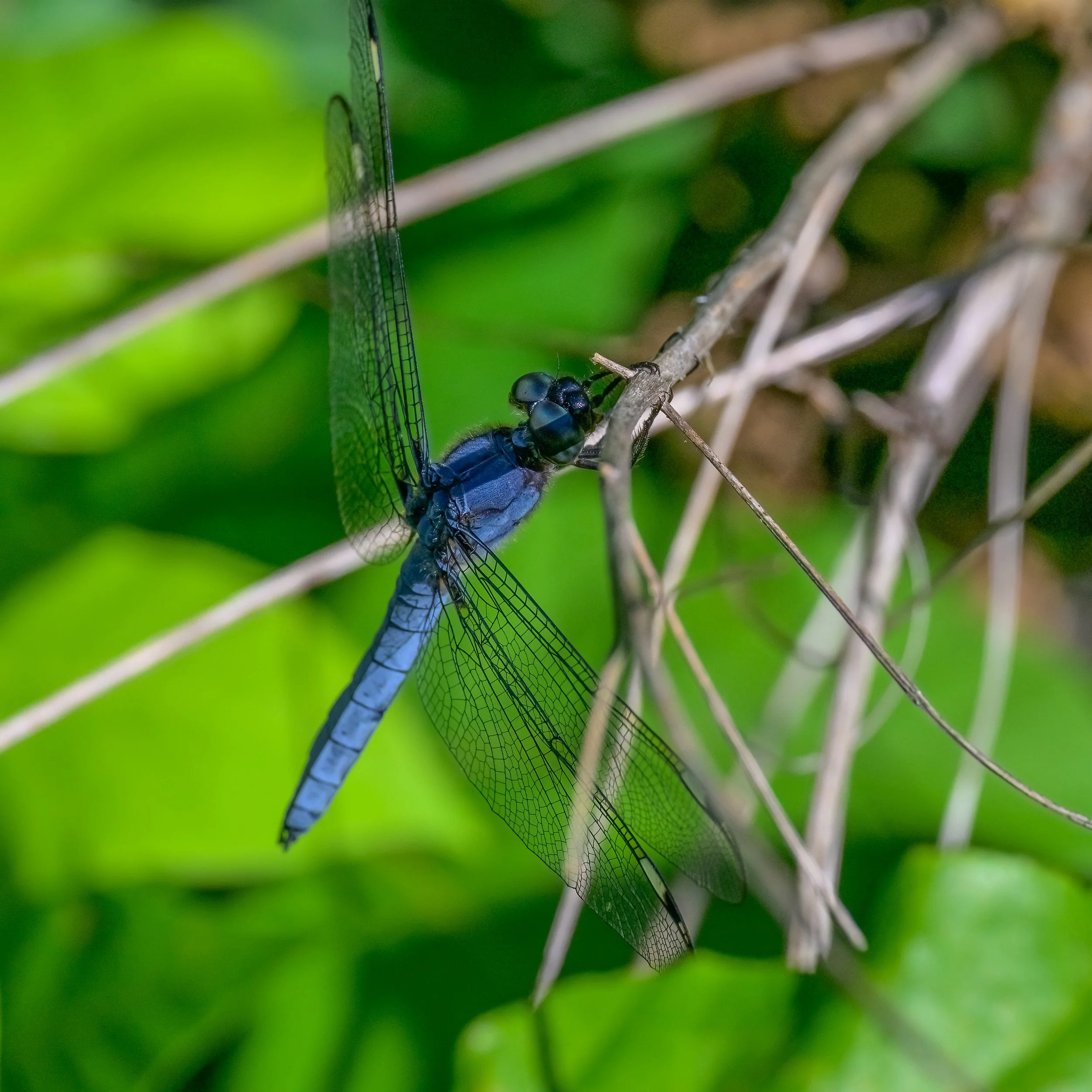
Spangled skimmer - Morgan Farm - 6/20/26
Ad I mentioned earlier, bees are not the only game in town at this time of year. Dragonflies are also present in good numbers and the wide variety of species available makes them a challenge to identify and photograph as well. According to the 2021 edition of the Checklist of North American Odonata, there are 471 different species of dragonflies and damselflies to be found in the US and Canada. Should easily be able to learn to identify all those, right? Many are so distinctive that they are in fact easy to remember. Others….perhaps not so easy, but always fun to find, photograph, and then identify. The are collectively found in the insect order Odonata which means “toothed ones”. The odonates have serrated teeth on their jaw parts leading to this moniker. Today’s find is one of many expected in the warm months of June, July and August.
The dragonfly pictured above is the Spangled skipper. Males like this individual have a blue body and black head with the most distinguishing feature of this dragonfly being the black and white spots or “spangles” on the leading edge of each of its four wings.
Tech Tip - With a small subject like these bees and dragonflies, it is necessary to capture a “macro” image of the individual. One might think that this requires a special macro lens, but those lenses require you getting very close to your subject. Bees are often so preoccupied with gathering their nectar that they are not easily scared off by your presence. In that case, a macro lens or simply getting up close with a cell phone camera is more than adequate. Dragonflies, on the other hand, are a bit more skittish and will take flight if they see movement or even shadows. In this case, I find it much more beneficial to use a regular telephoto lens while keeping your distance. Make sure your aperture is fairly small like f/11 or smaller. Telephoto lenses tend to have a small depth of field and if the head of the dragonfly is in focus, the tail portion may not be so. By using a small aperture, you increase the DOF and bring the entire insect into focus.
A second way to keep the entire image in focus when using a telephoto lens to capture close up images is to attempt to get a side view rather than a head on view. In this case a shallow depth of field (DOF) will be enough to keep the entire dragonfly in sharp focus. Below is an imager which illustrates this method of capture pretty well.
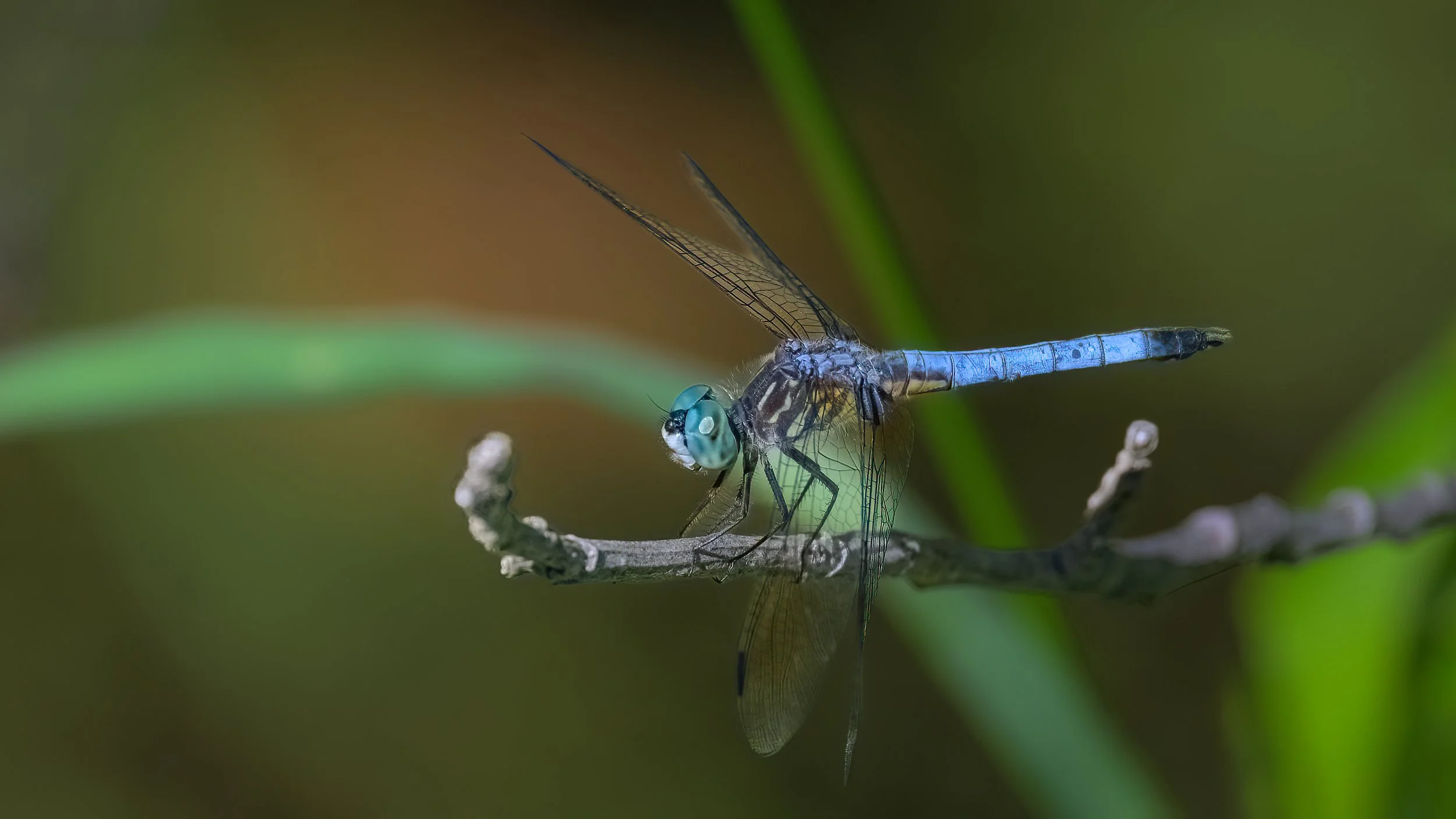
Blue dasher - Morgan Farm - 6/20/26
Note the shallow depth of field….the front most part of the twig upon which the dragonfly is perched is out of focus as is the section behind him. All of the body is in focus since it is the same distance from the camera lens - side view. Even here, however, the wings closest to and farthest away from the camera are slightly out of focus. Smaller aperture would have helped.