Riverbreeze Park
Southeast Volusia Audubon or SEVAS typically has field trips every Tuesday morning during the Winter and Spring months. Today’s outing is to Riverbreeze Park in Oak Hill, Florida. The park offers areas with wide flat trails traversing wooded flatlands, a boat launch site with ample parking and a fishing pier that juts out into the Indian River Lagoon. We began this mornings jaunt by walking out onto the pier to survey the wildlife often found in the shallows leading out to the river. Our group of 21 members was greeted by a “wake” of Black vultures lined up along the railings of the boardwalk.
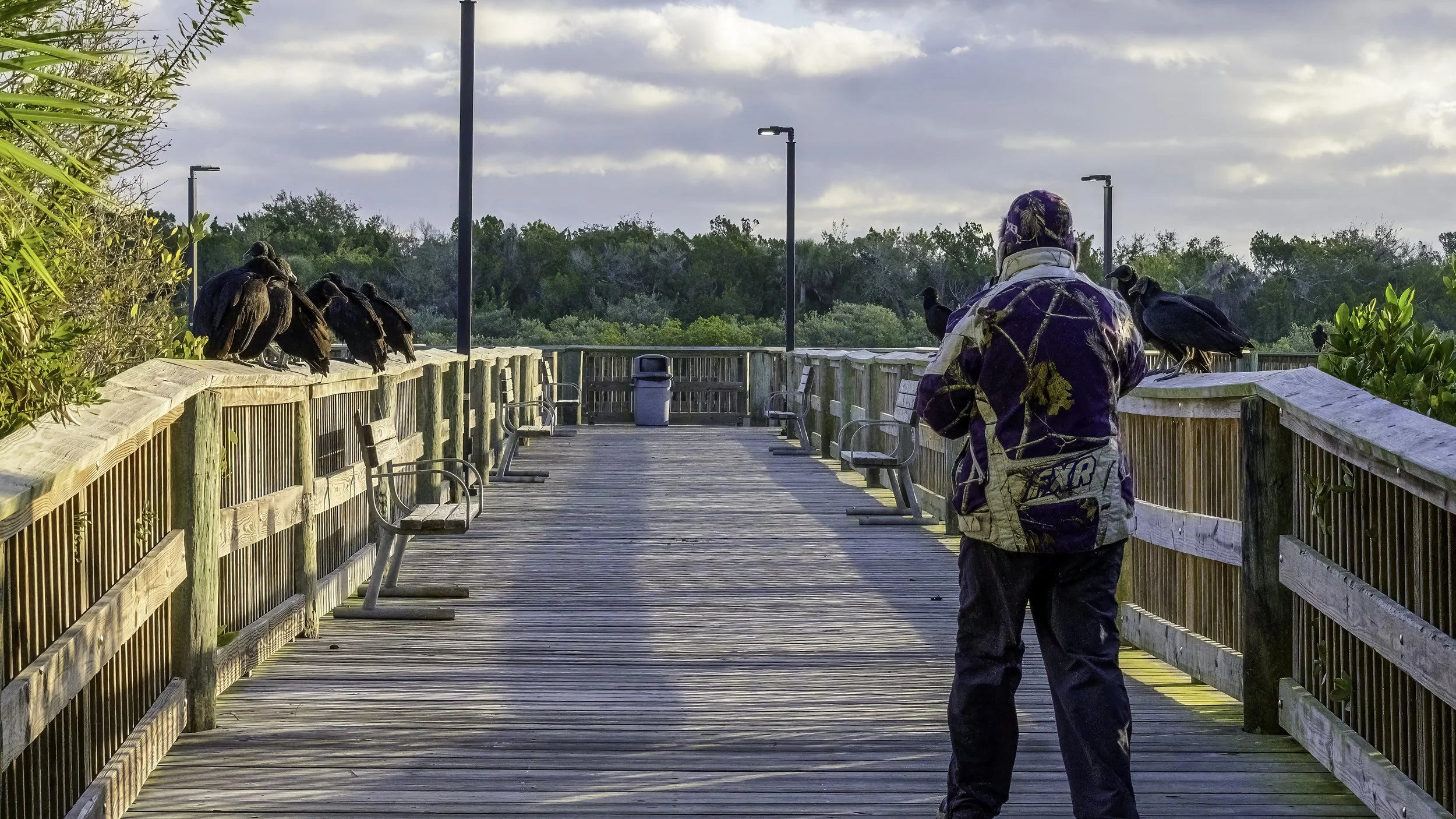
A welcoming committee of vultures - Riverbreeze Park - 1/27/26
Black vultures are much more gregarious than their Turkey vulture relatives, and these birds were not going to leave their perches until they were good and ready to do so. Often, Black vultures will hiss at intruders who they feel are getting too close and have been known to use a defense mechanism of hurling projectile vomit at anything or anyone they feel is invading their space.
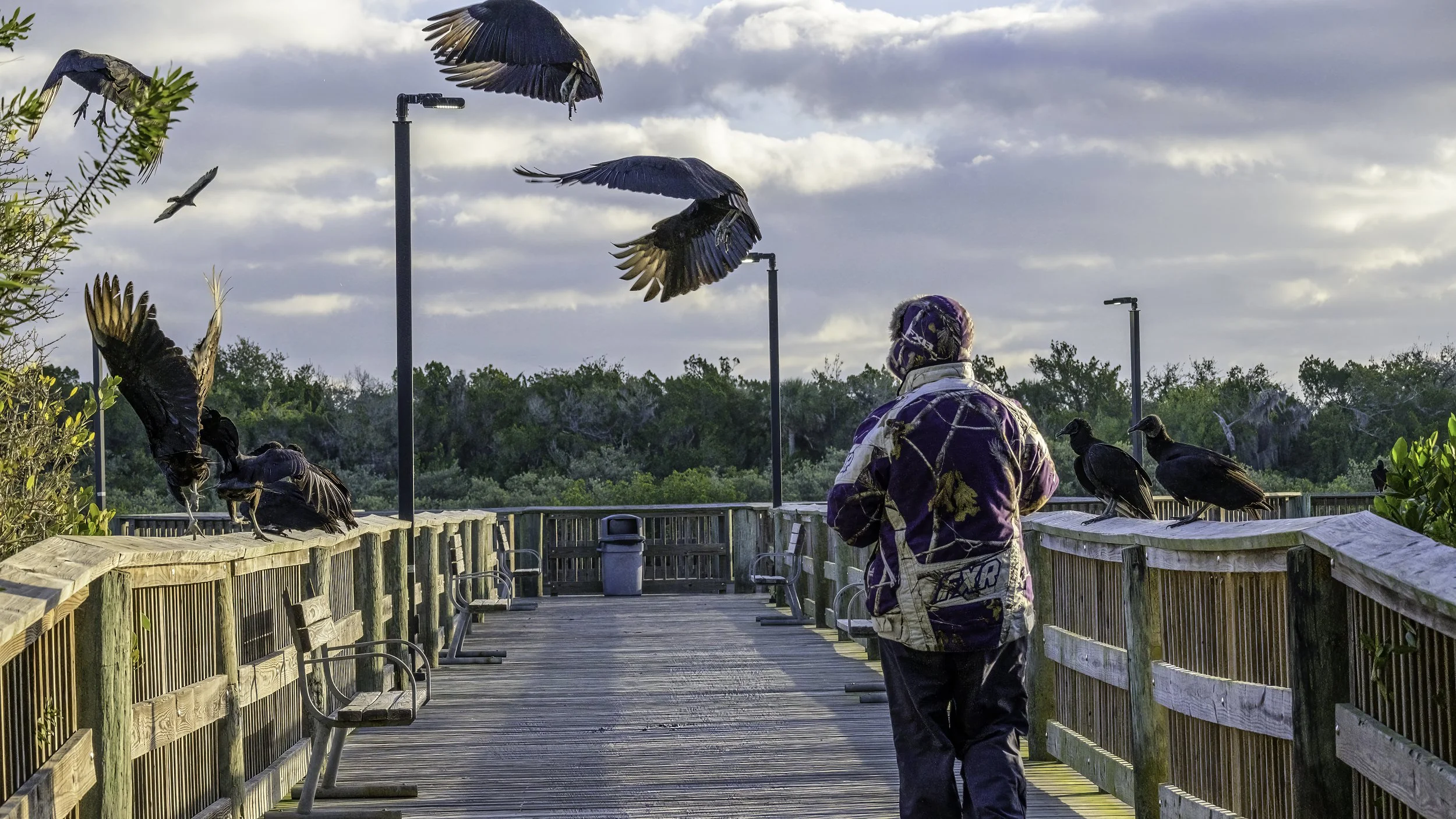
Fortunately, these vultures decided it was easier to simply take their leave and allow us access to “their” fishing pier.
One of the first sightings of the day was of two birds we are always thrilled to see. A lone Yellow-crowned night-heron was perched in the mangroves across the shallows to the north side of the boardwalk. Directly below that bird as a much smaller Green heron. Both these birds can be elusive, so to have a nice sighting of the two of them in the same field of view was a real treat.
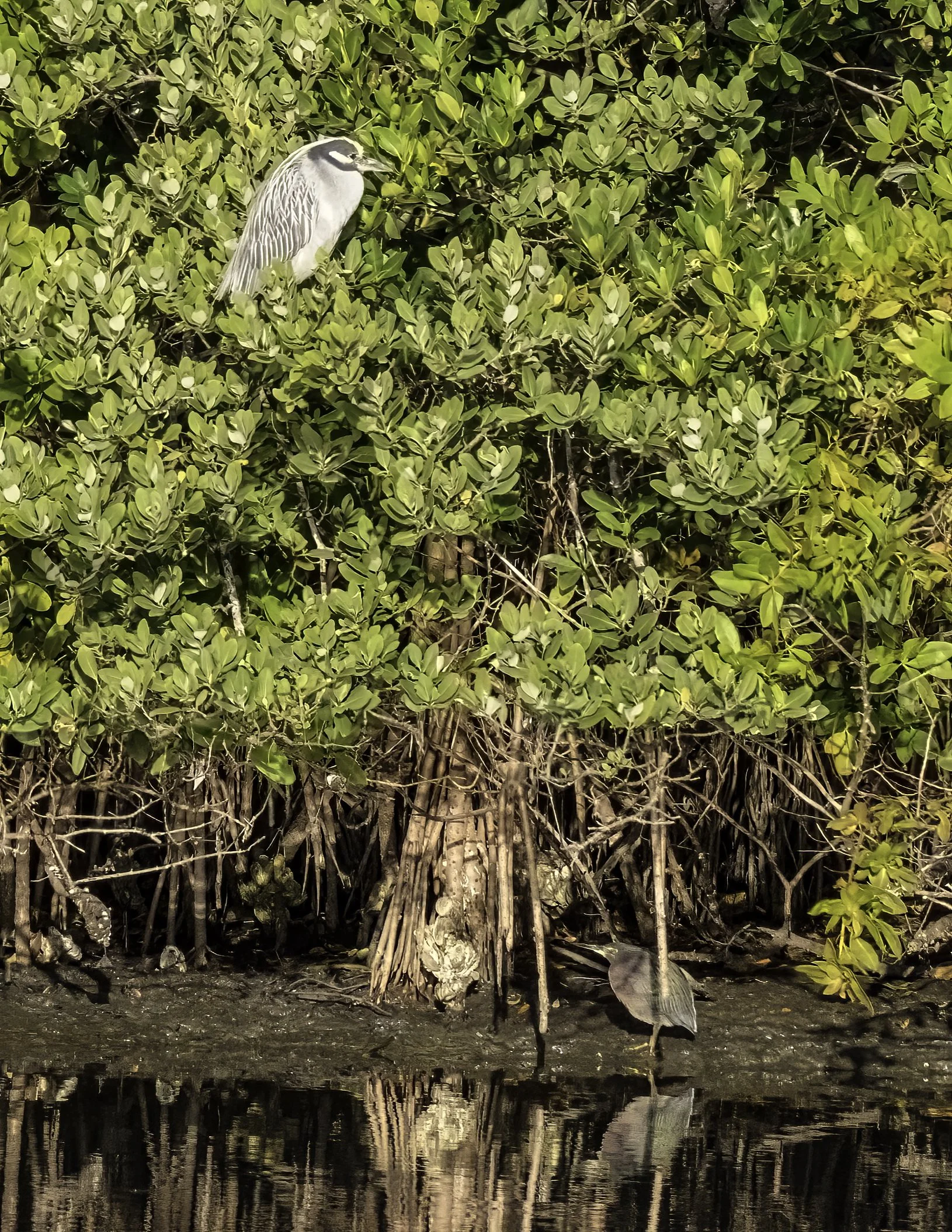
Yellow-crowned night-heron and Green heron - Riverbreeze Park - 1/27/26 Nikon Zfc with Z 50 - 250 zoom at 250 1/1000 sec, f/8, ISO 1000
As we walked out on the boardwalk to the fishing stations at the end, we saw several Bottlenose dolphins swimming in close proximity to the pier. This individual has obviously been a brawl or two and is showing the signs of these skirmishes. Biologists use these scars to help identify individuals since virtually all of the dolphins show some unique signs of these interactions.
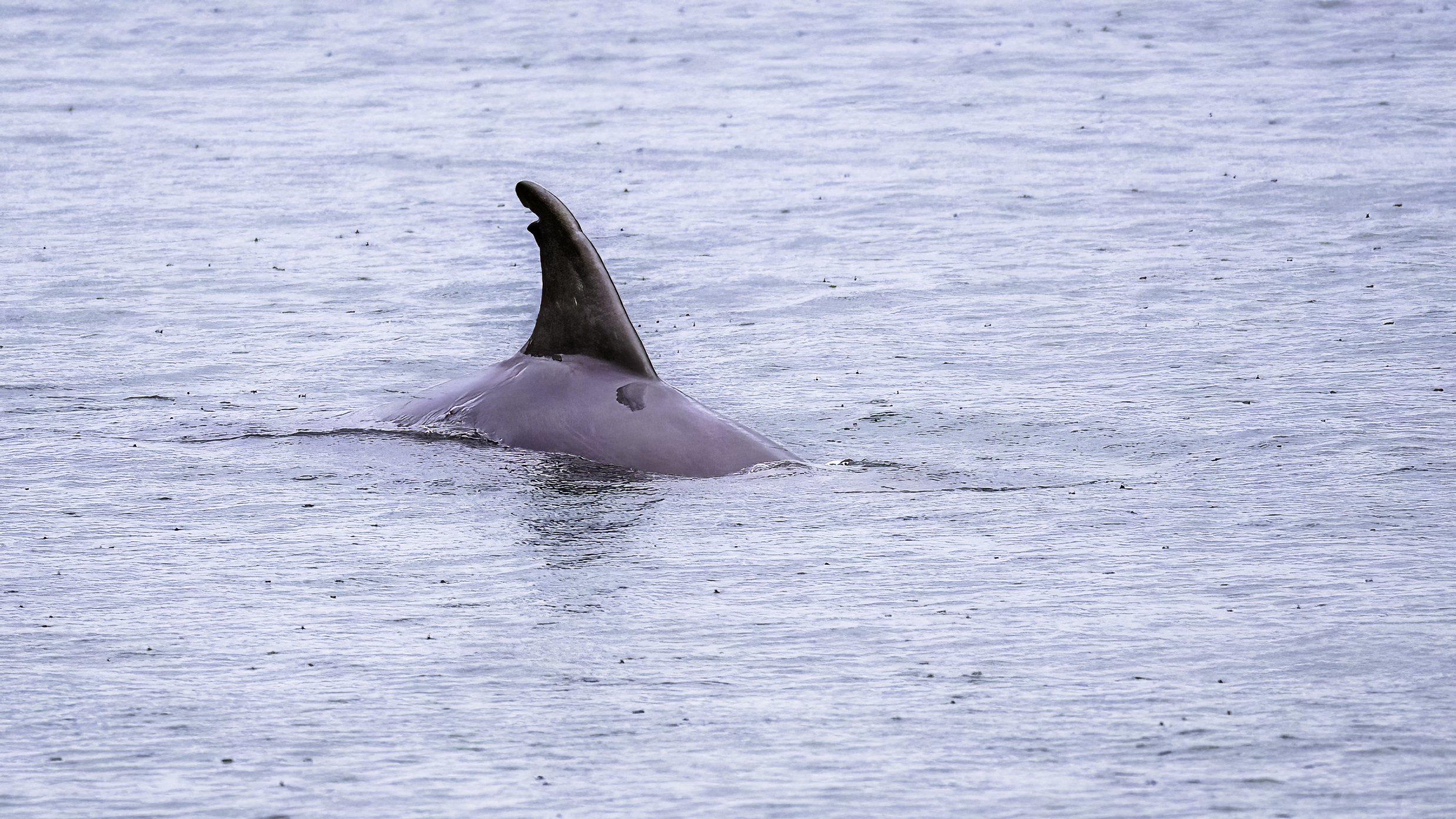
The scarred dorsal fin of a Bottlenose dolphin - Riverbreeze Park 1/26/26
While dolphins are seen in both the Indian River and in the Atlantic here in Volusia County, it was believed that river dolphins stayed in the river and oceanic dolphins were content to remain at sea. However, recent studies conducted by Florida Atlantic University’s Harbor Branch Oceanographic Institute at Fort Pierce have shown that dolphins that were tagged with geotracking devices did indeed occasionally venture out into the Atlantic at night. Just another example of scientific data being tentative and temporal. So, where will this guy end up tonight?
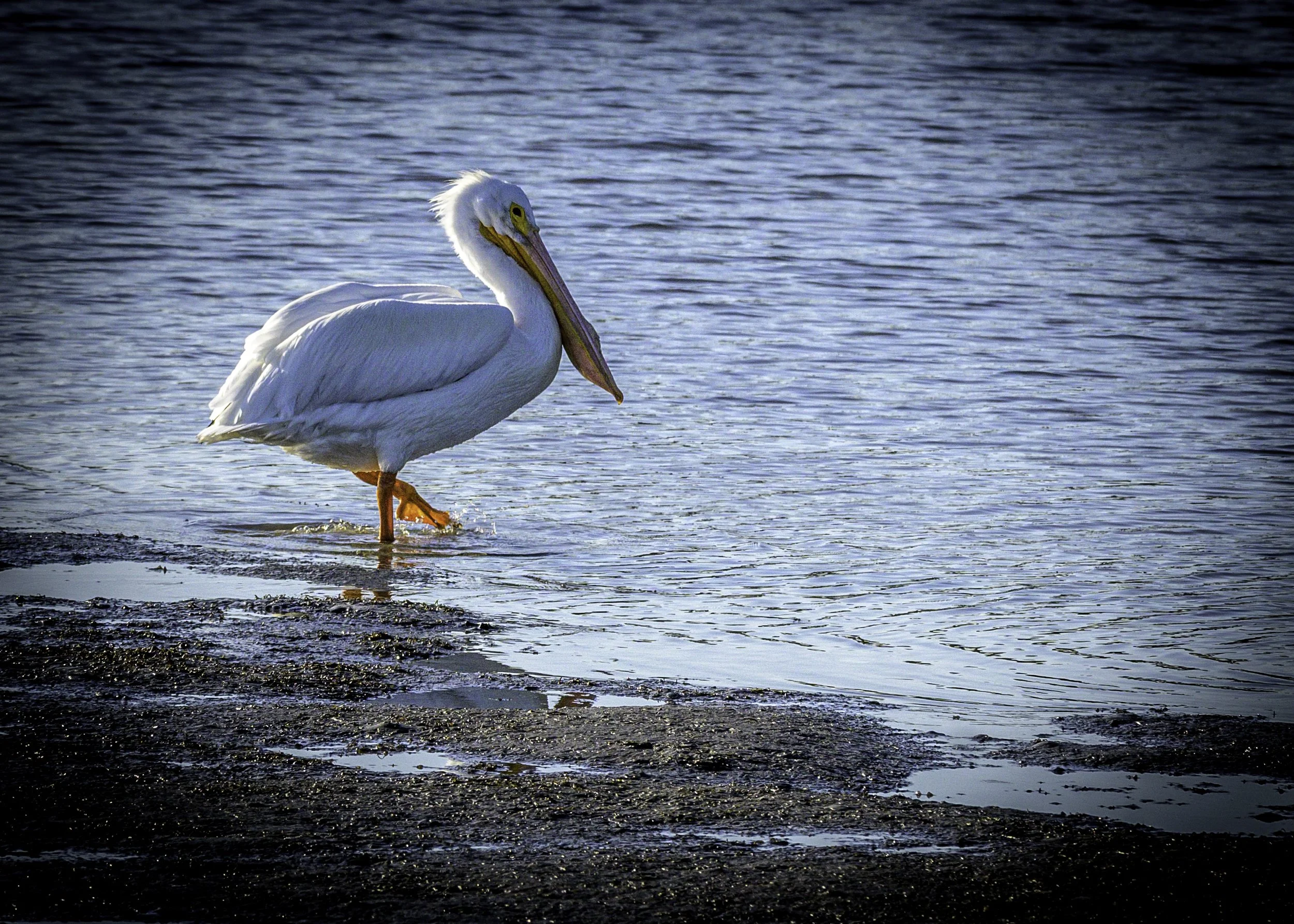
White pelican - Riverbreeze Park - 1/27/26
Another Florida winter speciality we found today was the American White pelican. This large bird has its breeding territory in the northern United States and Canada as well as a few smaller pockets in the Great Plains and the mountain west. Many migrate here to Florida for the warmer climes during the winter months, however. This bird is one of the largest on the continent with only the California condor having a greater wingspan. The length of the White pelican’s wingspan can exceed 10 feet.
Many more species such as the Little blue heron, Great egret, Great blue heron, Ring-billed and Laughing gulls, Forster’s and Royal terns, several Bald eagles, many Yellow-rumped warblers and this handsome Red-shouldered hawk also made an appearance at the park this morning. In total, we tallied 34 different species making for a very successful outing.
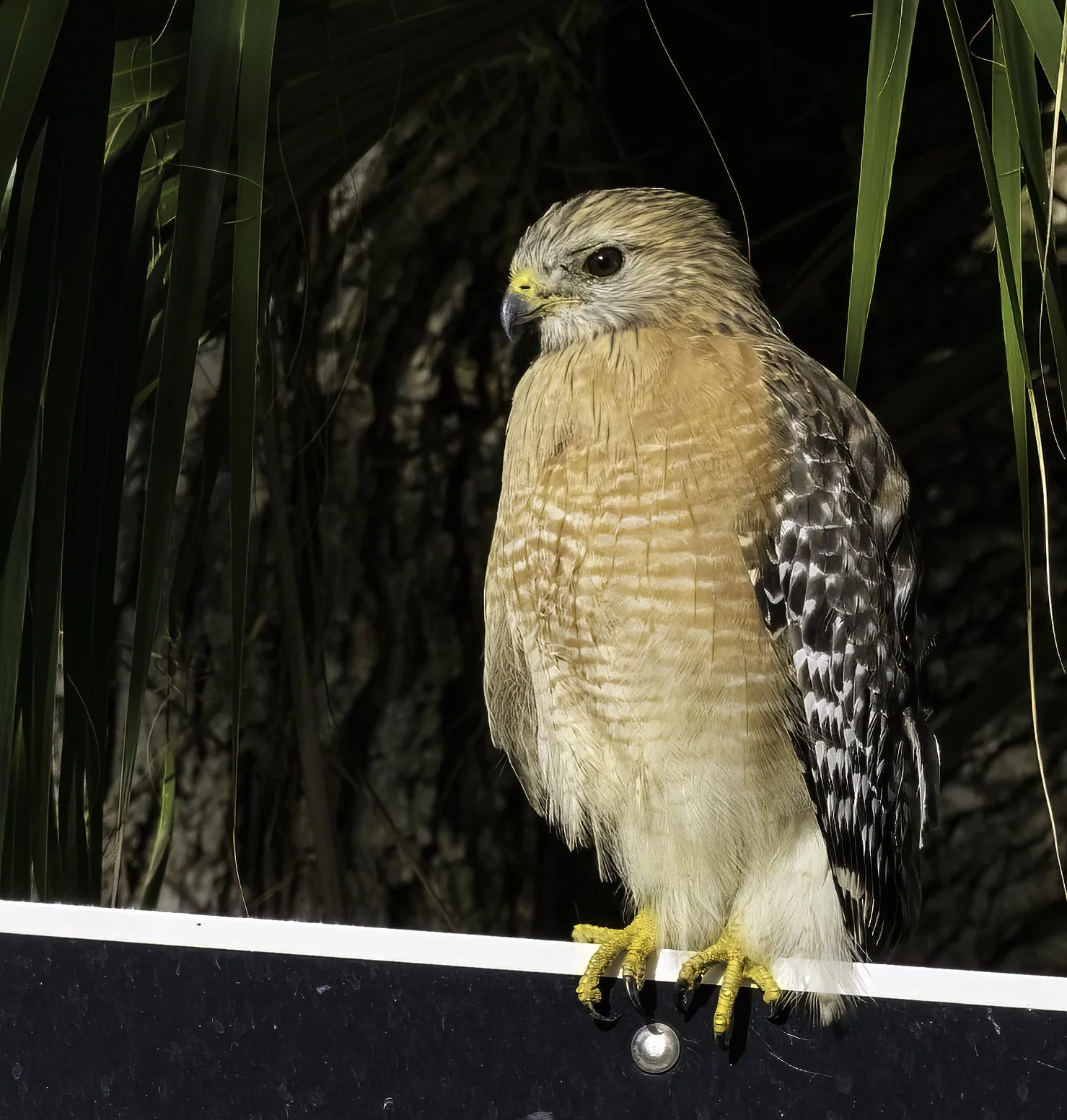
Red-shouldered hawk - Riverbreeze Park - 1/27/26 Nikon Zfc with Z DX 50 - 250 lens 1/1000 sec, f/8, ISO 500
Tech tip - Lighting is one of the most crucial elements of getting a well exposed sharp image of your subject. The hawk seen above was cooperative and sat in position on a street sign (which I decided to crop out of the image for the sake of aesthetics) for an extended period of time. This allowed me to move around until I got to the location where my shadow was pointing directly at the bird. Having the sun shining directly on the subject will minimize distracting shadows and bring out the absolute best colors of the bird. Sadly, all birds are not so accommodating or the lay of the land simply does not allow you to move into a better position. Look again at the shot at the beginning of this post. Notice that the faces of the vultures are muted due to not be illuminated by direct sunlight. Also notice that the shadows of the railings on the boardwalk indicate that in order for me to get the sun directly shining on their faces, I’d have to be standing out in the shallows. So, my advice is to shoot while the opportunity is present and then whenever possible start to slowly move in and around for the ideal shooting angle. Patience is the name of the game.