Eagle nest update….
As promised, here’s a quick update on the progress being made by our eagles on the nest. We first checked out our newest find, the nest on Volvo Road. Last week, there was activity around the nest, but there did not seem to be a need for the adults to be constantly in the nest. Today was different. One adult was quietly and steadfastly sitting in the nest leading me to believe (or at least HOPE) that there are finally eggs being incubated. As I mentioned in last week’s post, the eggs will be incubated for a little over a month before hatching, so we’ll keep a sharp eye on how this nest goes forward. A promising beginning!
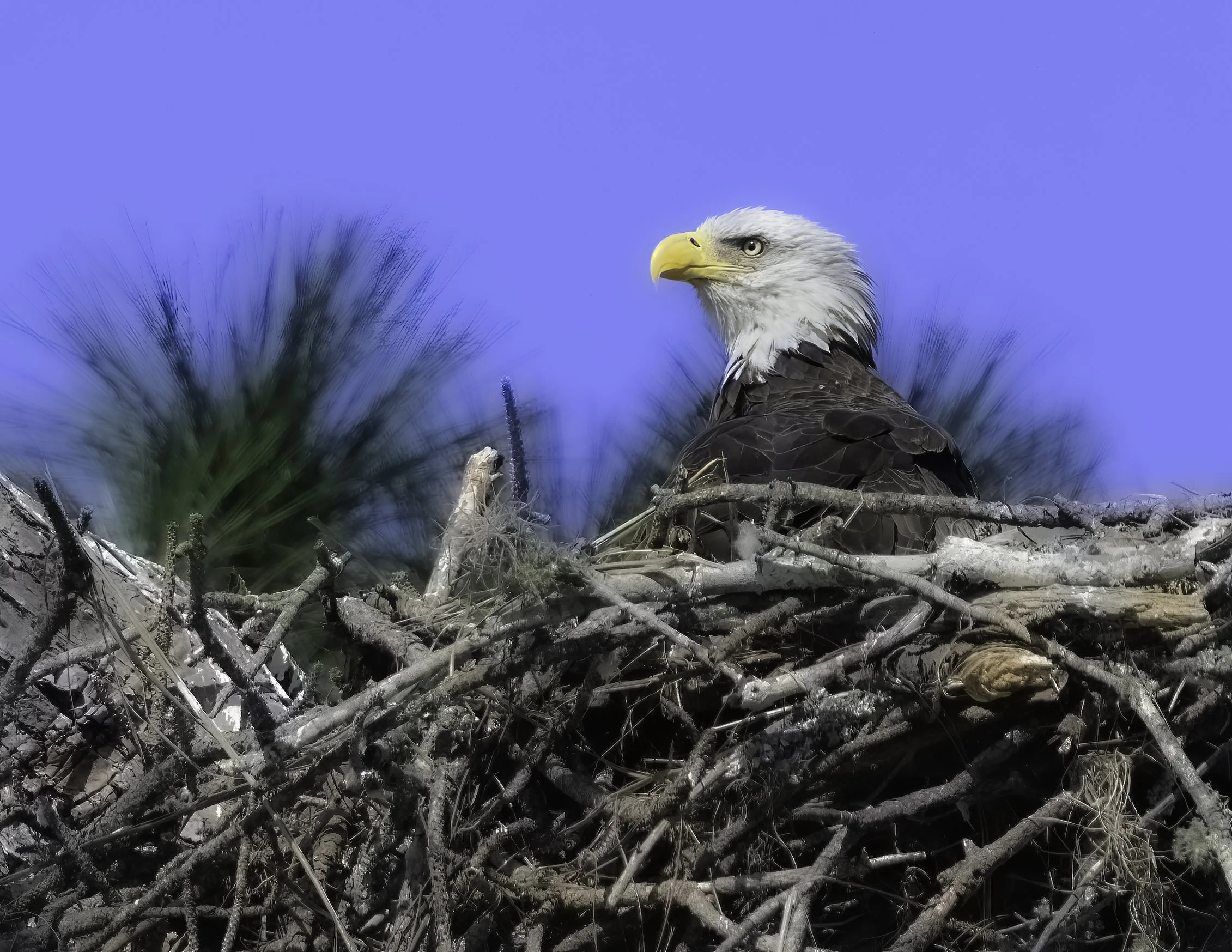
A adult Bald eagle attentively sitting on eggs (or so we hope) at Volvo Road nest site - 1/25/26
Our second nest is the one along Kennedy Parkway on the entrance into Merritt Island National Wildlife Refuge. Last week the adult was seen in the nest as if incubating eggs. Only the top of the bird’s head could be seen and never did we see the bird emerge from that position. Today, however, the adult was seen on the edge of the nest and was constantly looking down into the nest (at young???) and then looking off in the distance as if looking for the other parent to come back with some nutrition for mom and kids. Since we obviously don’t have a nest cam to see what it is that is exactly happening in the nest and we are observing from a distance, we are only guessing and hoping that we are correctly interpreting our observations from our vantage point. Later, once the chicks arrive, the activity will become much more obvious and easier to interpret.
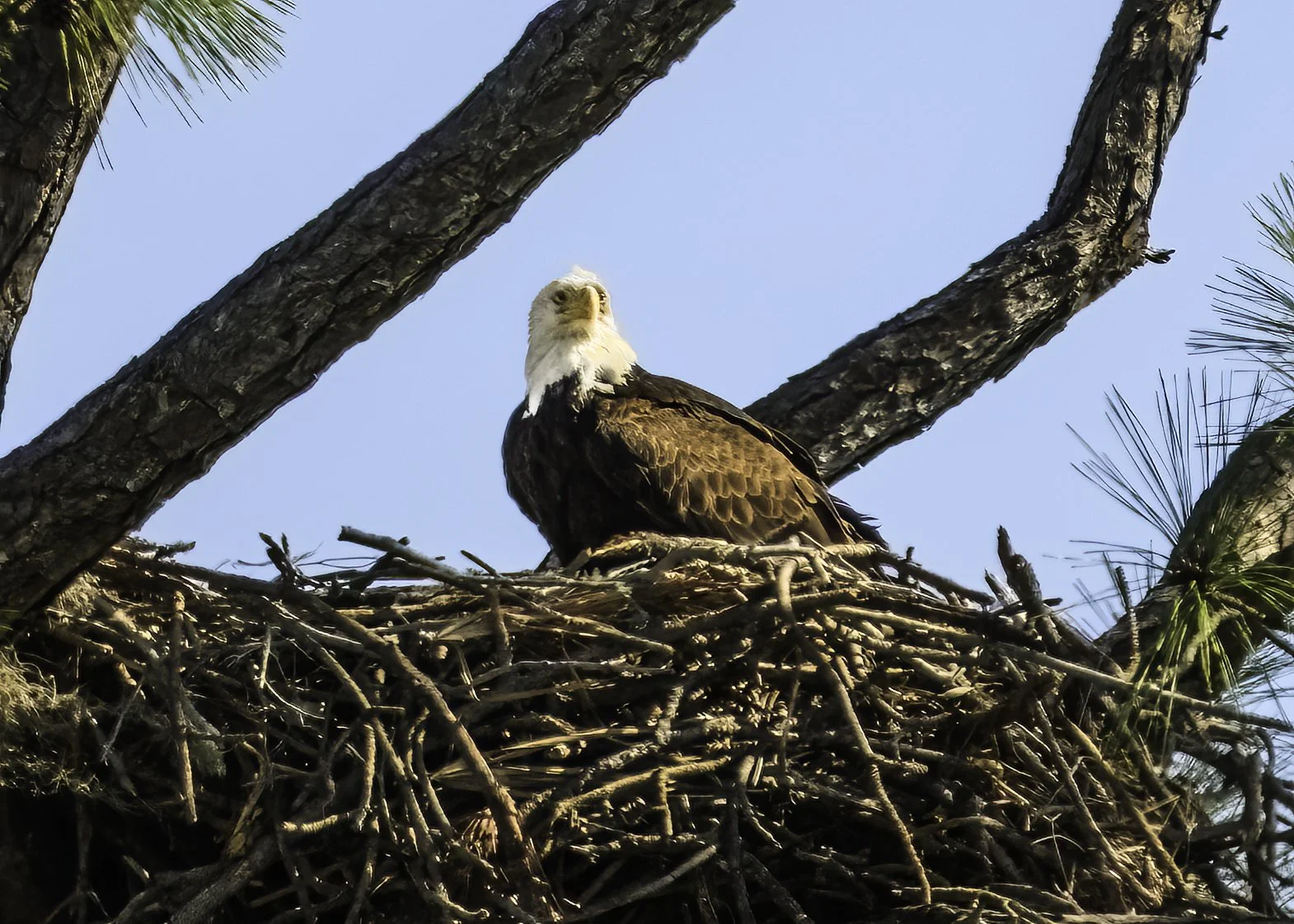
Adult eagle at the Kennedy Pkwy Nest - 1/25/26
As we were hunting for new nest sites, we ran into another avid birder who knew the area well and offered to show us other possible sites. Among these was a site we had known about in the past just past the Haulover Canal Bridge. We found the site and then got the lowdown as to what had recently transpired here. This nest was occupied by a bonded pair of eagles in the not too distant past. Recently, however, a Great horned owl had decided that he or she wanted to move in. Great horned owls do not make their own nests. They prefer to move into abandoned eagle, hawk, or osprey nests to use as their own. The owl was a bit overzealous and decided not to wait for the nest to be abandoned. Over the period of a week or two, the owl visited the eagles nest and constantly attacked and harassed the eagle pair to the point of bloodying the heads of the eagles. It is suspected that the female may have been killed as a result of the constant assaults and eventually the eagles abandoned the site. The owl had its way and is now the proud owner of this real estate. Nature can be cruel as we all know, but life goes on. We will continue to monitor this nest as well as the eagle nests to see if any new owlets show up in the near future.
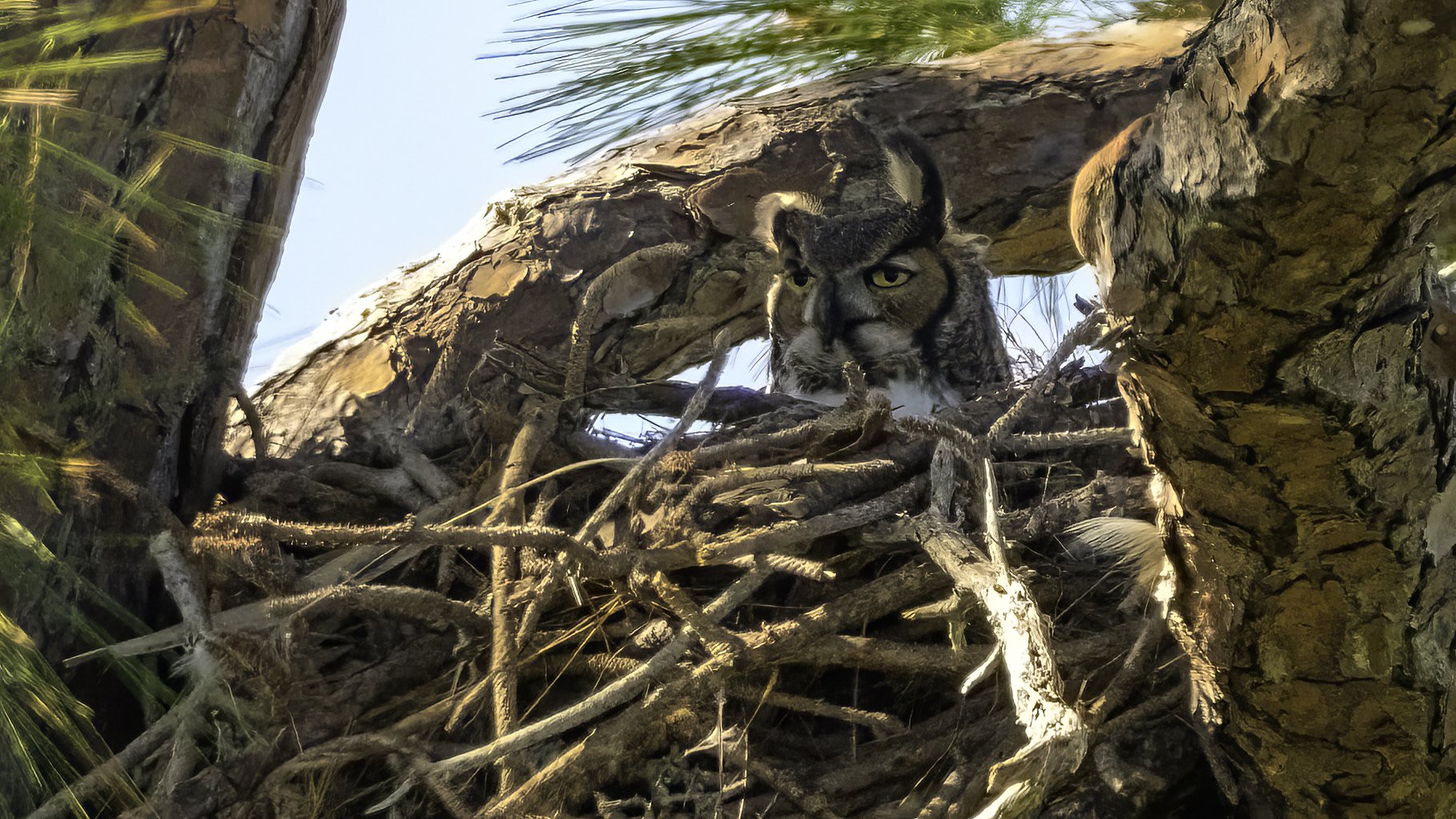
The perpetrator of a “hostile takeover” - Great horned owl - Bairs Cove Road - 1/25/26
Our last nest to be monitored today is the Ranken Drive site in Edgewater. On a brief stop during the week, Sharon and I visited this nest and were somewhat concerned that there were no eagles to be found in the area. Today, however, we were relieved to find that an adult was again in close proximity to the nest. No activity that we could see directly in the nest, but the fact that this bird was attentive to the surrounding territory is a good sign that this is once again an active nest.
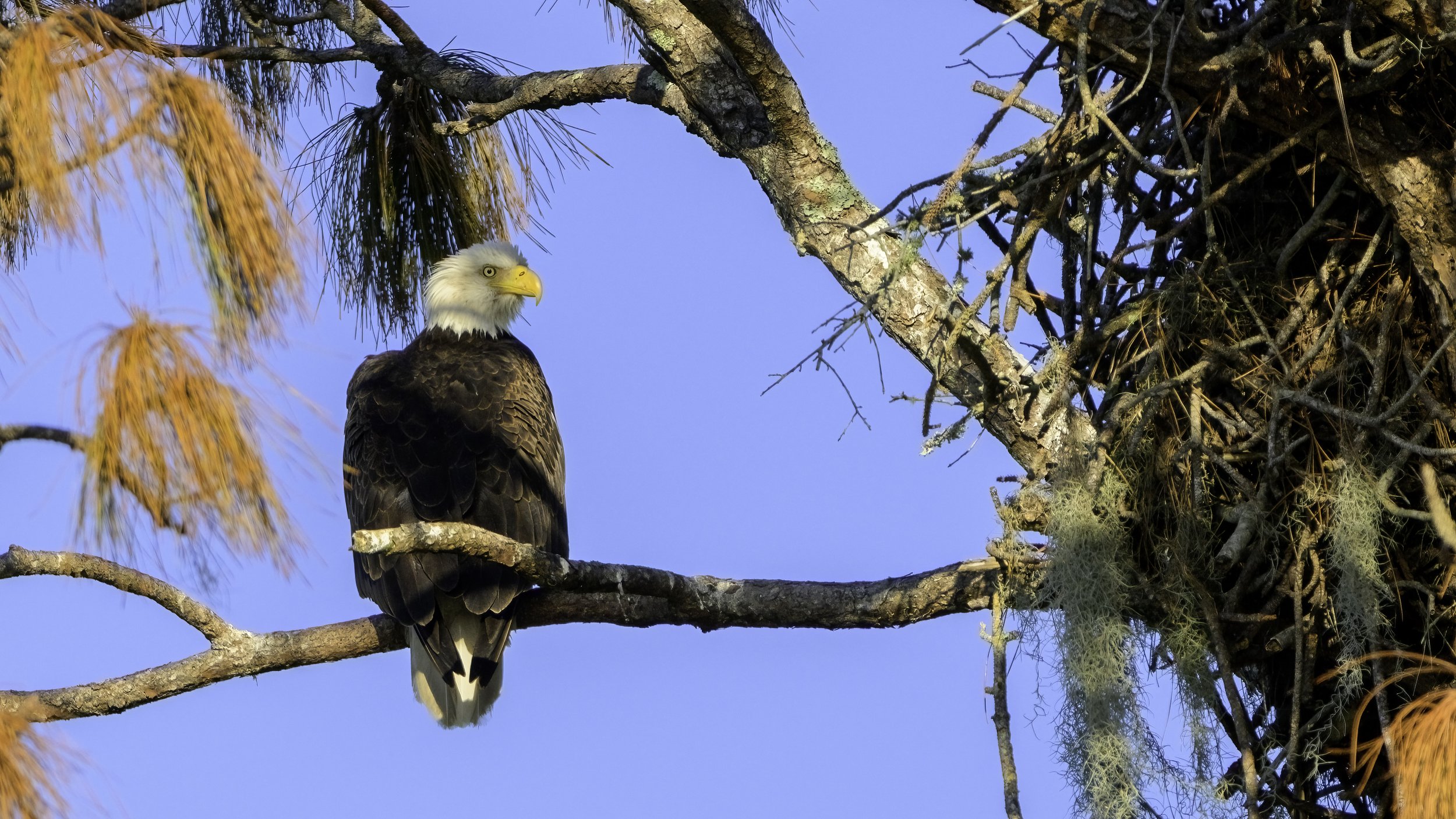
Bald eagle at the Ranken Drive nest - 1/25/26
One final shot of the Ranken nest from a wider angle to give you an idea of the size of the nests we’re talking about The average height of an adult eagle is 2.5 to 3 feet tall. Compare the height of the eagle which is sitting right next to its nest to get some concept of how big these nests can be. Over the years, eagles will add to the structure perodically. Some references site that eagles nests can grow to become the size of a Volkswagen! One of the major contributing factors to nests collapsing other than hurricanes is simply that the tree can no longer sustain the weight. Looking at this nest, it’s easy to see how that could happen.
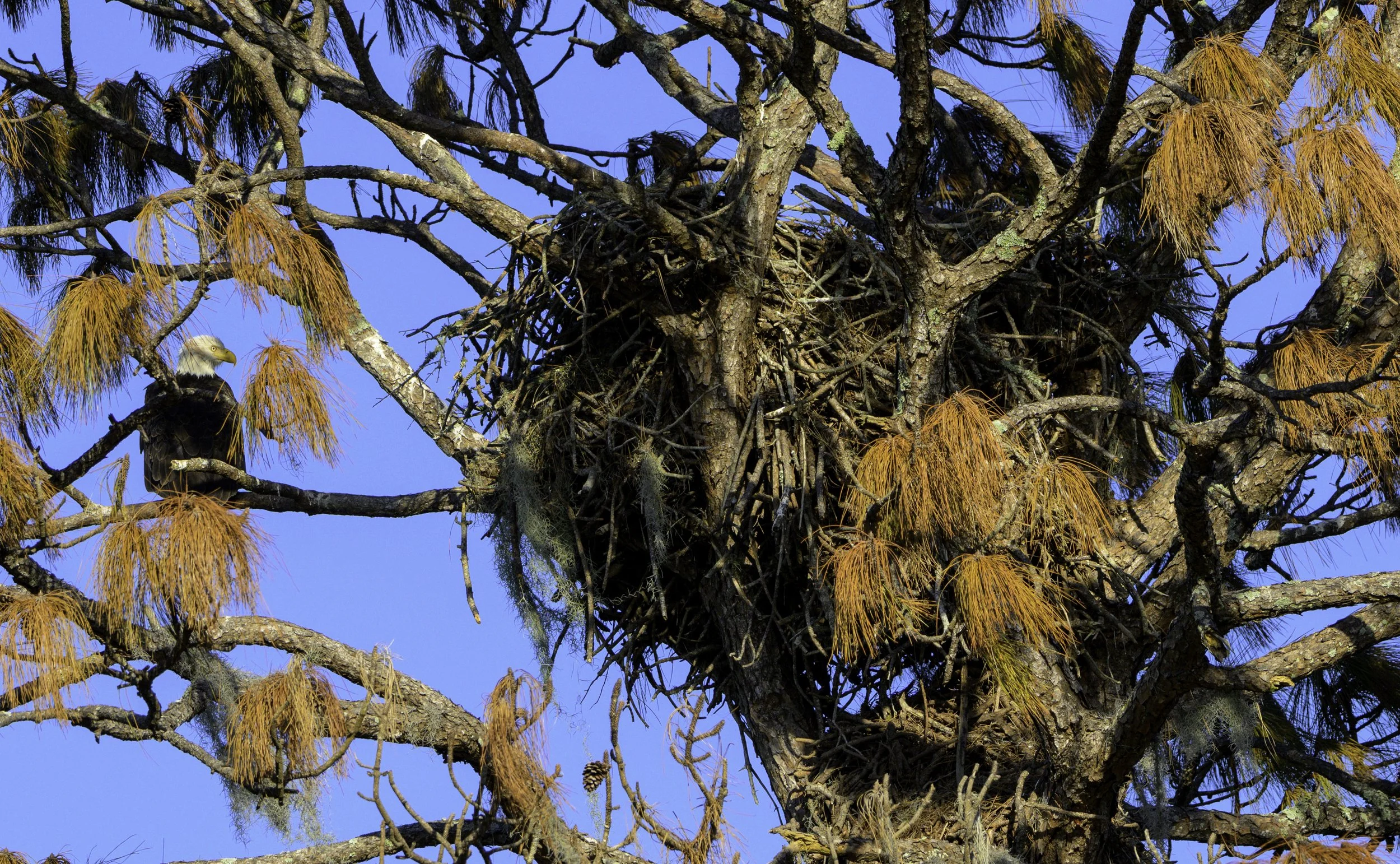
A bald eagle surveys his handiwork - Ranken Drive Nest - 1/23/25