Ponce Inlet
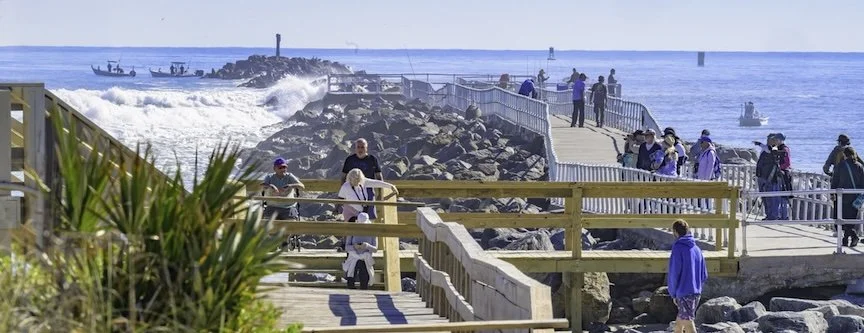
Jetty at Ponce Inlet Park - 2/10/26
Today’s “Tuesday morning Southeast Volusia Audubon bird walk” was located at the Ponce Inlet Park. A good crowd of close to 30 birding enthusiasts joined trip leader Joan to see if we could find the Harlequin duck that has been sighted here recently. (Spoiler alert! The Harlequin never showed up!) The second target of the day would be the Purple sandpiper. Both birds would be a nice find, although the sandpiper has become more of a regular here at the jetty over the past few years.
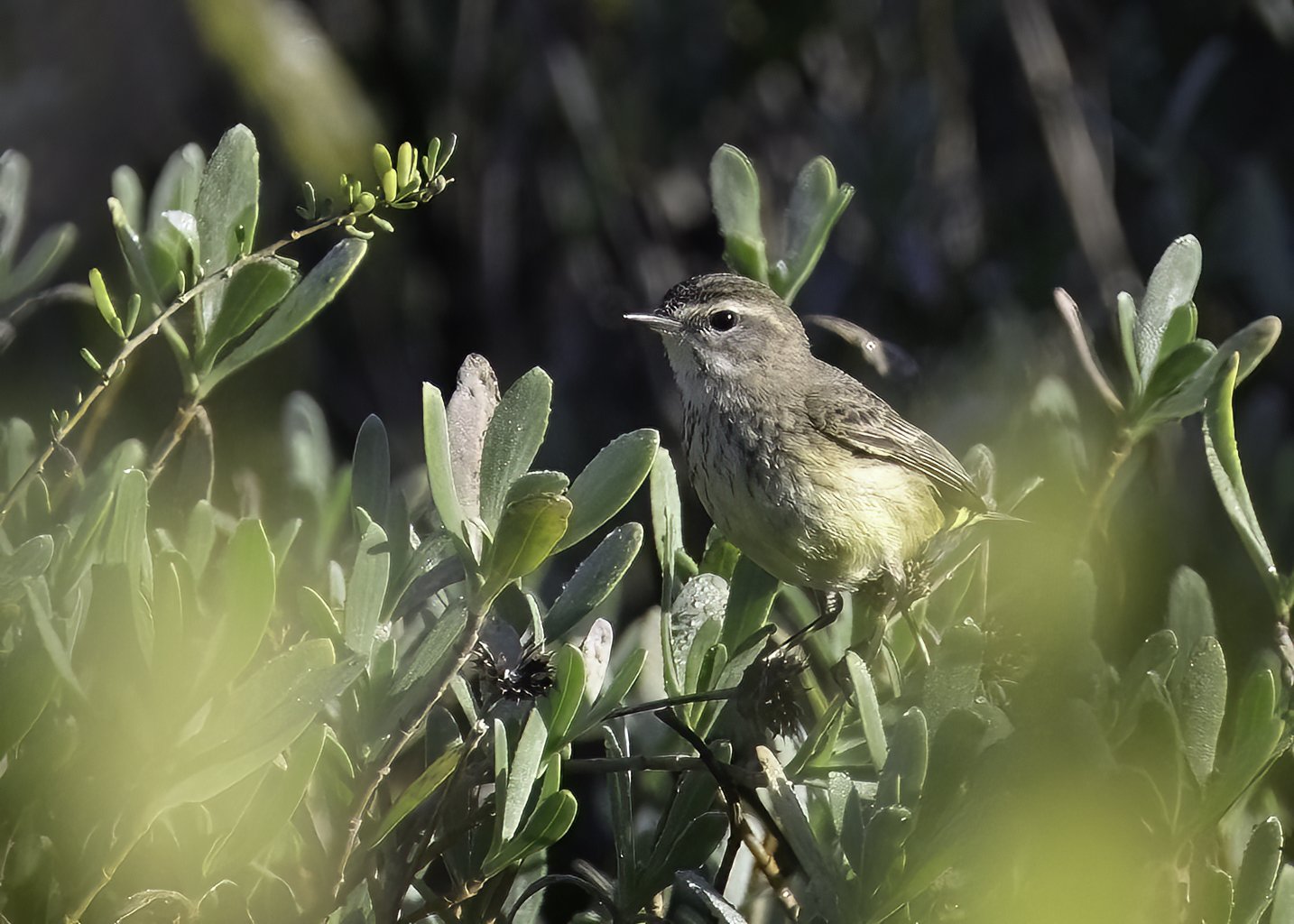
Palm warbler - Ponce Inlet Park - 2/10/26 Nikon Z8 with Z100-400 @ 400mm 1/1250 sec, f/7.1, ISO 720
At the west end of the park, “Disappearing Island” is visible at low tide and provides us with a number of gull, tern, and shorebirds. Looking out at the sandbars, too often we neglect the vegetation stand behind us where songbirds often feed on the abundant insects and berries. We spotted two warbler species at this spot this morning, the Palm warbler seen above and the Prairie warbler in the image below.
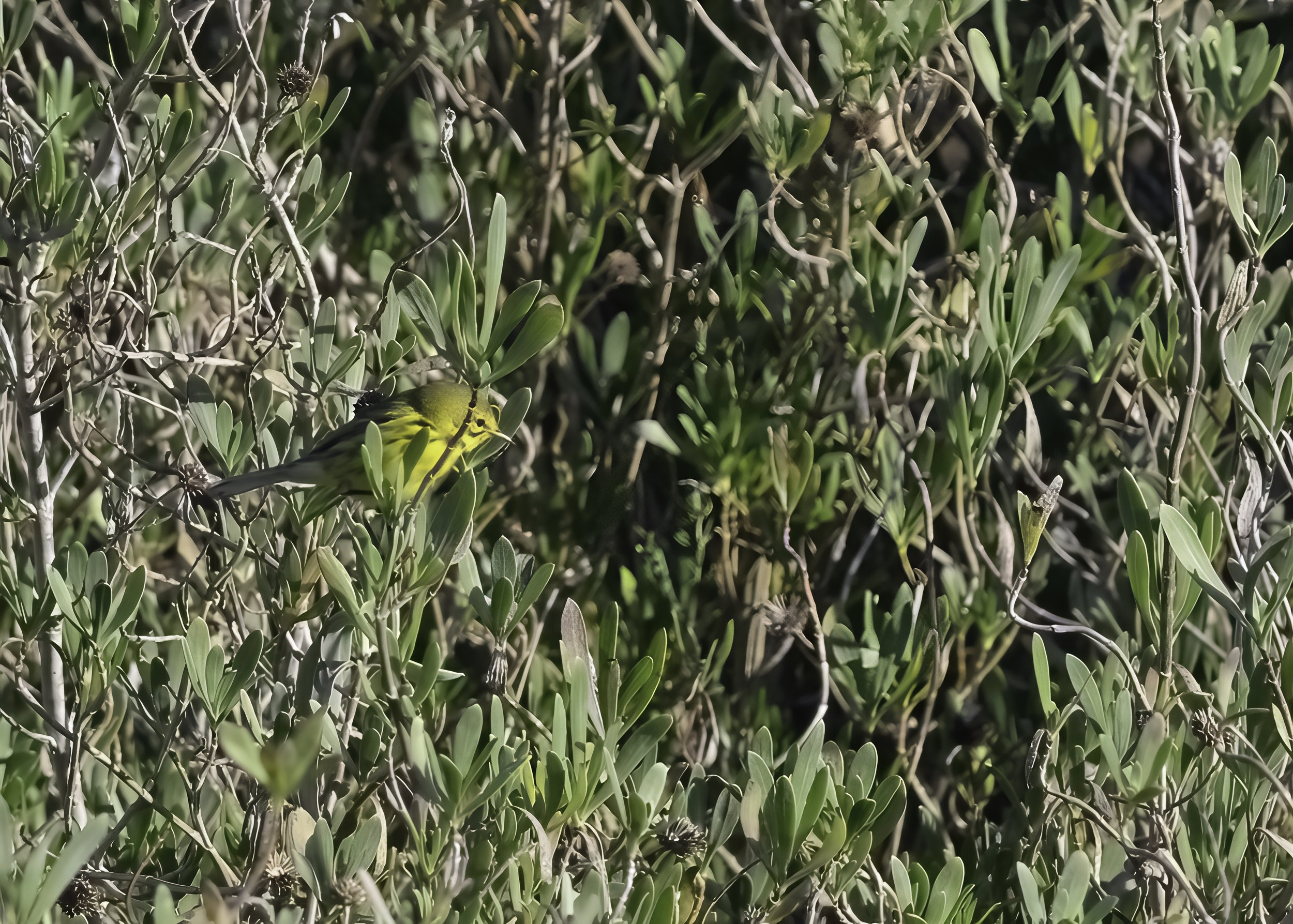
Prairie warbler - Ponce Inlet Park - 2/10/26 Nikon Z8 with Z 100-400 @220mm, 1/1250 sec, f/7.1, ISO 640
Winter warblers in Florida arrive each year from northern and eastern breeding grounds, bringing bright flashes of yellow, black-and-white, and olive-green plumage to scrub, hardwood hammocks, and coastal mangrove thickets. Species like the Yellow-rumped Warbler, Palm Warbler, and Prairie Warbler are among the most commonly seen, foraging actively in leaf litter, low branches, and coastal scrub for insects, berries, and small invertebrates that sustain them through milder southern winters.
Moving out to the jetty, we watched the acrobatic Bonaparte’s gull acting so much more like a tern than a typical gull. The Bonaparte's gull is a small, graceful gull native to North America, recognizable by its delicate build and long, pointed wings that give it a buoyant, tern-like flight. Breeding plumage features a striking black cap, white underparts, and pale gray upperparts, while the nonbreeding birds we see here in Florida at this time of year show a rounded dark ear spot instead of a full hood. This species favors boreal forest lakes and rivers for nesting and migrates to coastal and inland waters across the continent in winter. Bonaparte's gull feeds largely on insects, small fish, and crustaceans, frequently catching prey in flight or by surface-dipping and is noted for its agile aerial maneuvers.
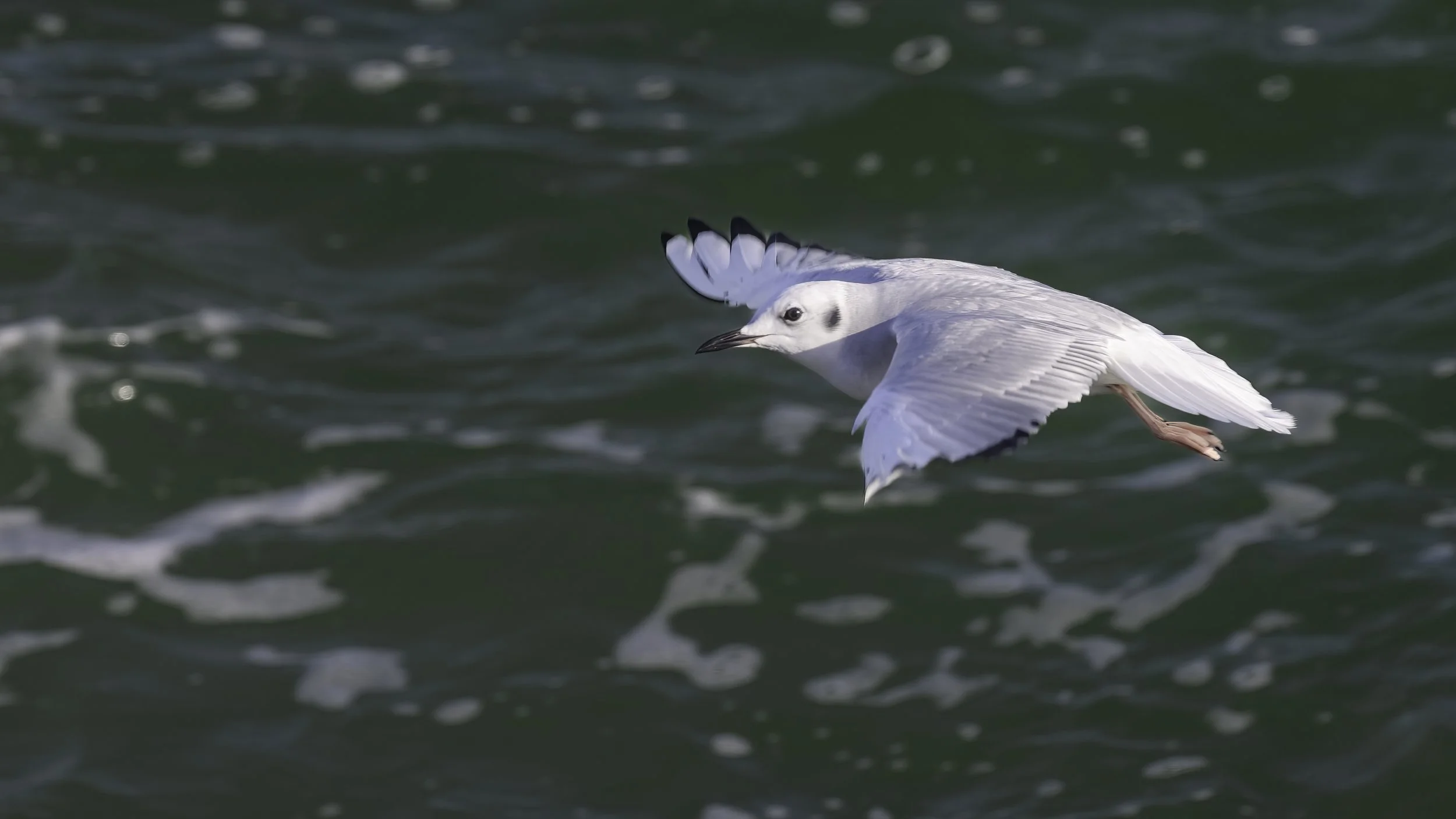
Bonaparte’s gull - Ponce Inlet Park - 2/101.26 Nikon Z8 with Z100-400 @ 300mm, 1/1250 sec, f/8, ISO 360
Present in fewer numbers were the Forster’s terns. These terns are easily identified in winter by the “mask” over their eyes. During breeding season, that mask grows into a full hood. Although similar in appearance to the Common tern, the Forster’s tern regularly winters along the coast down here in Florida and other southeastern states. They especially favor areas around estuaries and inlets making Ponce Inlet an ideal spot for viewing these remarkable aerialists.
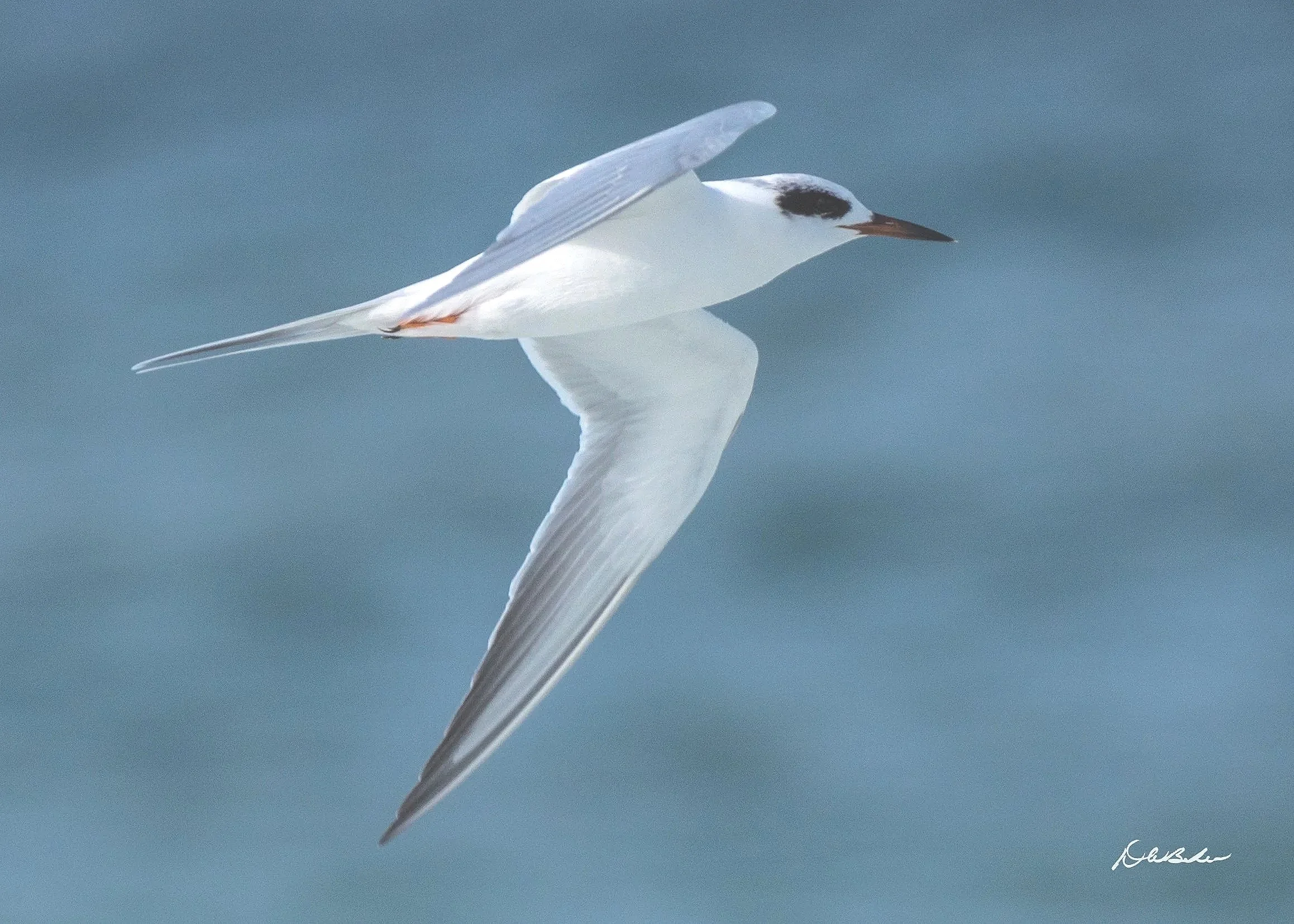
Forster’s tern - Ponce Inlet
After walking the entire length of the jetty in search of the Purple sandpiper, we did find a new subject to photograph all the way out to the end of where pedestrians can venture safely. A relatively small Green Sea turtle was basking just below the water’s surface and made for some tricky photography to cut through the reflective glare of the water’s surface. Unfortunately, I did not have my polarizing filter on which would have helped immensely, but the UV filter did cut the glare a bit. Using the “Dehaze” and “Clarity” sliders in Lightroom did bring the turtle into a pretty sharp clear image, however, so all was not lost.
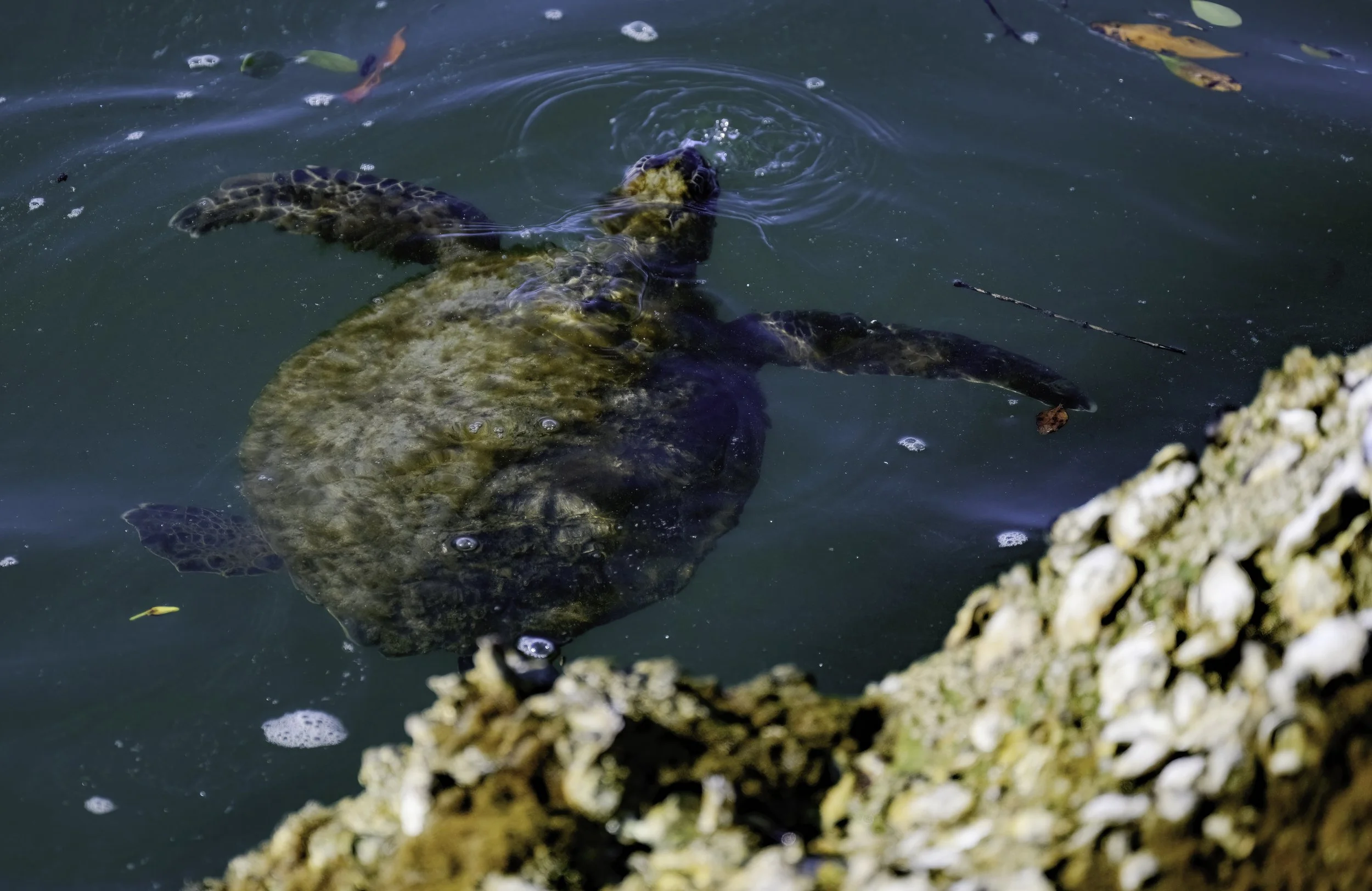
Green Sea turtle - Ponce Inlet - 2/10/26 Nikon Z8 with 400mm lens 1/1250 sec, f/5.6, ISO 260
Finally on our return back down the jetty, one of number did find that elusive sandpiper and we were able to get some nice images. With the sun at our backs, the colors of the bird and the vegetation on the rocks popped right out at us. The fact that we could shoot in such a well lit condition also meant that I could use a low ISO making for clean crisp images.
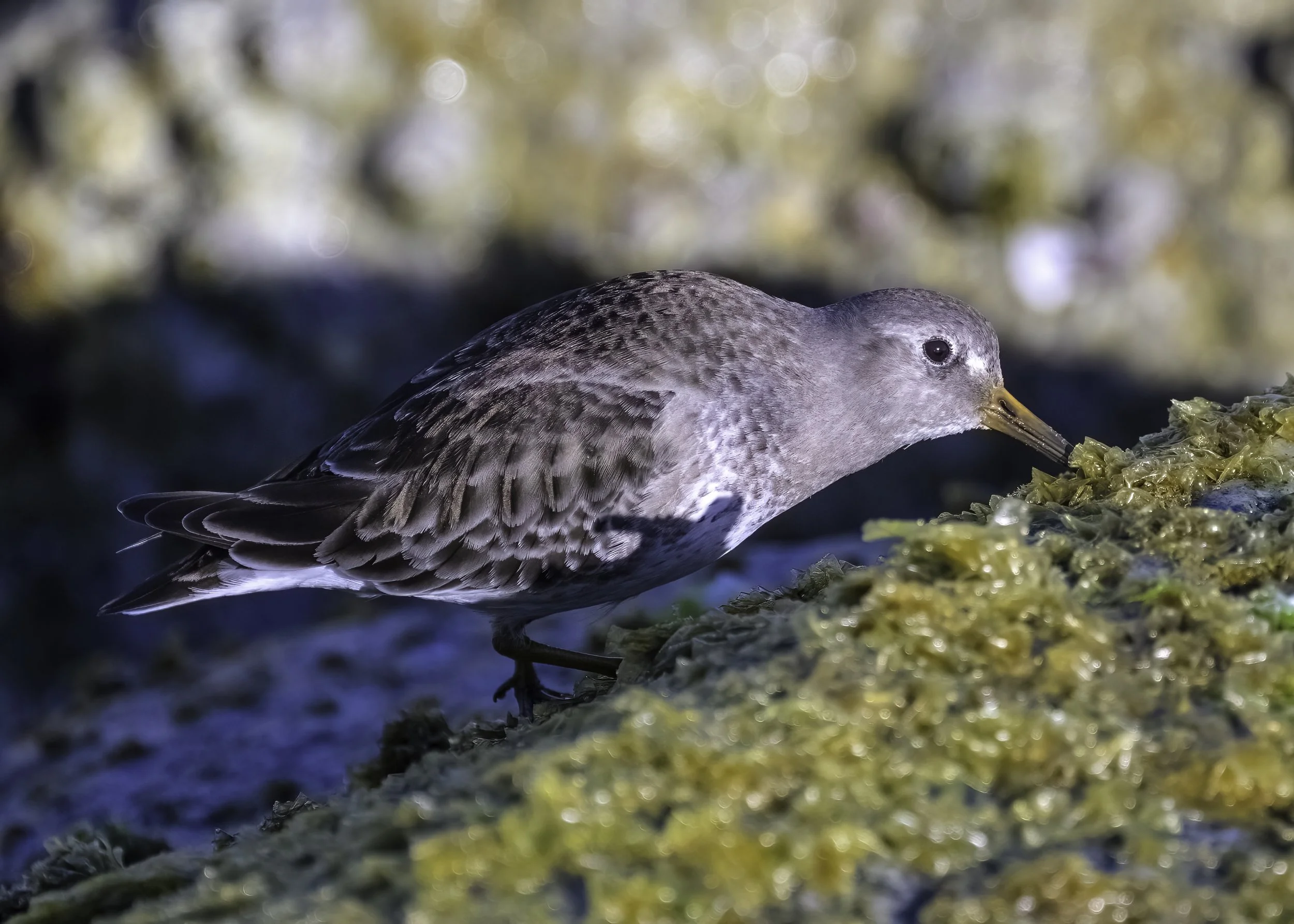
Purple sandpiper - Ponce Inlet Park - 2/10/26
The bird was so busy searching through the vegetation on the rocks of the jetty that it did not pay us any heed and got very close allowing me to capture an image of what it was eating. Quite the buffet out there for this winter resident!
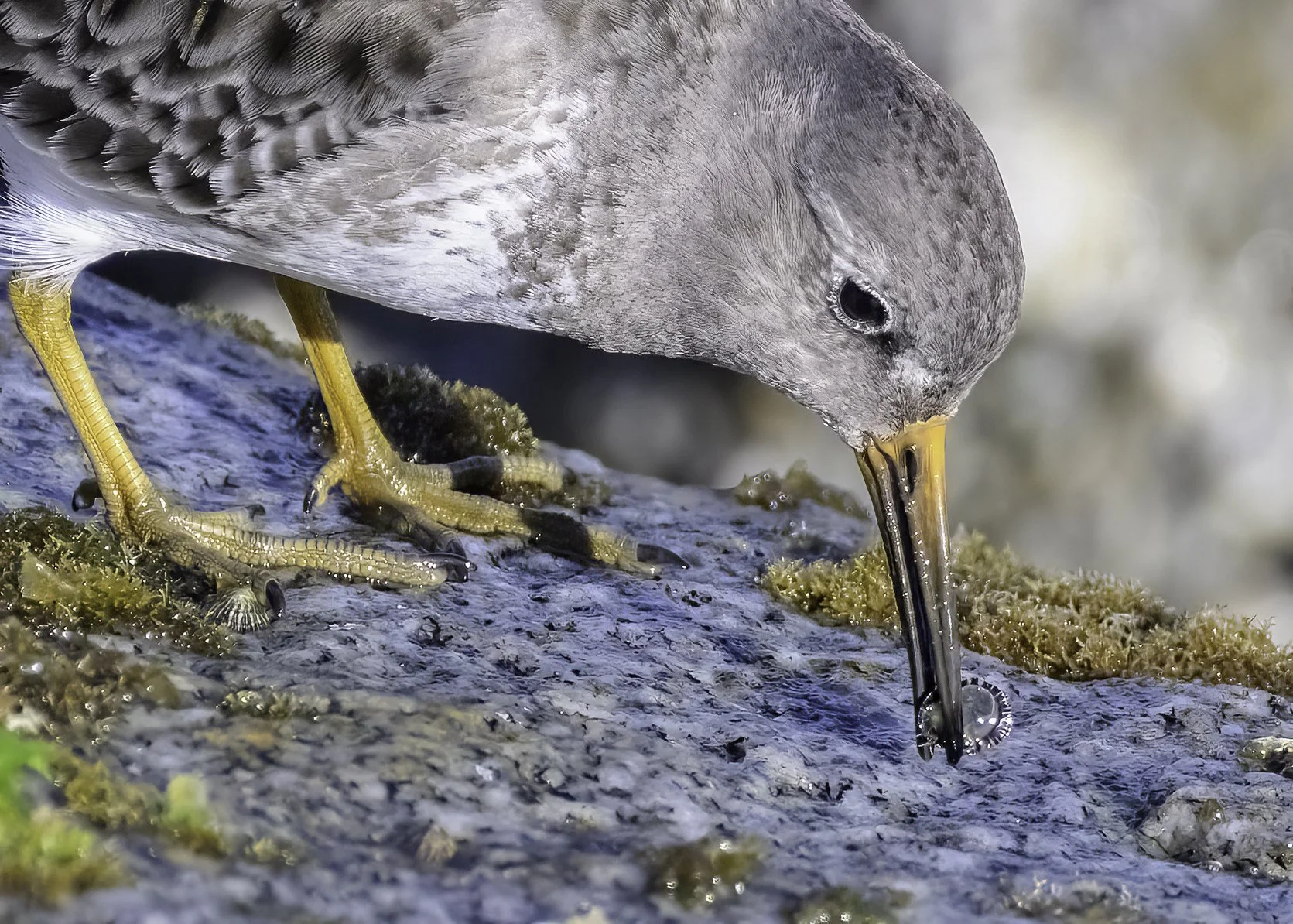
Purple sandpiper closeup - Ponce Inlet Jetty - 2/10/26 Nikon Z8 with Z 100-400 @400 1/1600 sec, f/7.1, ISO 800
In closing, here is a short video to illustrate just how busy this little guy was looking for those tender bits of mollusks, insects, crustaceans, and vegetation on the jetty.