Great Backyard Bird Count -I
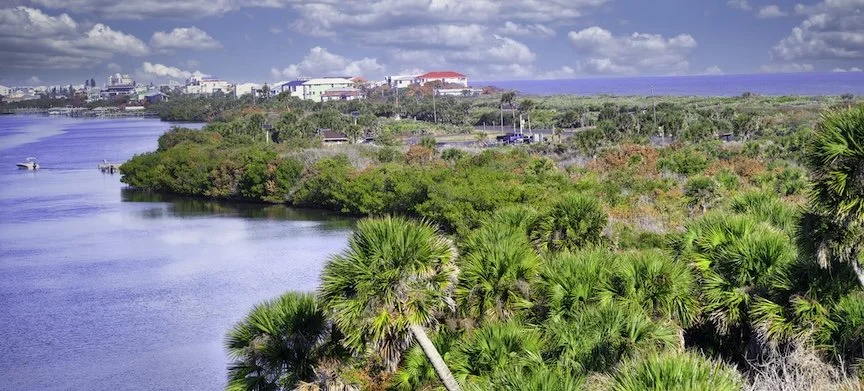
Our “Backyard” from Turtle Mound - 2/14/26
This weekend is the annual Audubon “Great Backyard Bird Count” during which bird enthusiasts from all across the country get out and conduct a “census” of the bird life they find in their neighborhood. We covered four area this weekend and will probably check out at least one more before the weekend is over. Today’s post will include some images/video of some of the birds we counted for the GBBC.
Our initial count was conducted along the beach outside our condo. With our friends the Bartholomews, we covered the area just north of us and then moved up to the jetty at Smyrna Dunes Park where have reported on recently in this blog. First sightings were of a species we always look on the beach - the Sandwich terns.
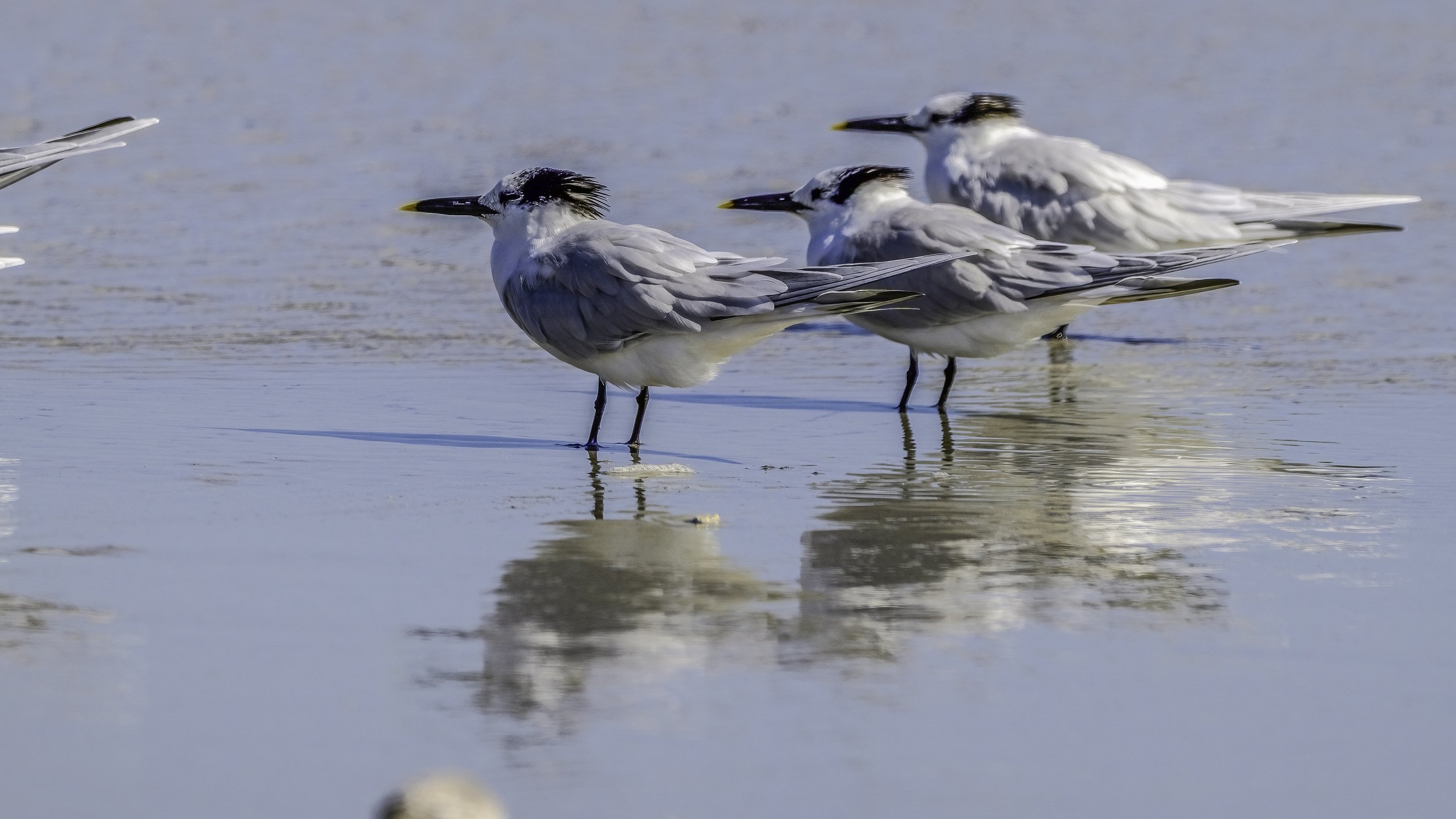
Sandwich terns - New Smyrna Beach - 2/13/26
The Sandwich terns are smaller than the Royal terns they generally are found with and besides their diminutive stature, their black bills with the little “dollop of mustard” on the tip are the give away markings of this species. These three showed signs that they had recently been in the surf with moistened plumage and splashes of sand on their feathers. We found 14 different species along this mile long stretch of beach. Perhaps the most significant for us was the sightings of Northern gannets which we have had trouble finding over the past several years. These are amazing deep diving birds which hover above the ocean waters and plunge from above in search of their next meal. Scientists have determined that these birds can dive down as deep as 60’ into the ocean water!
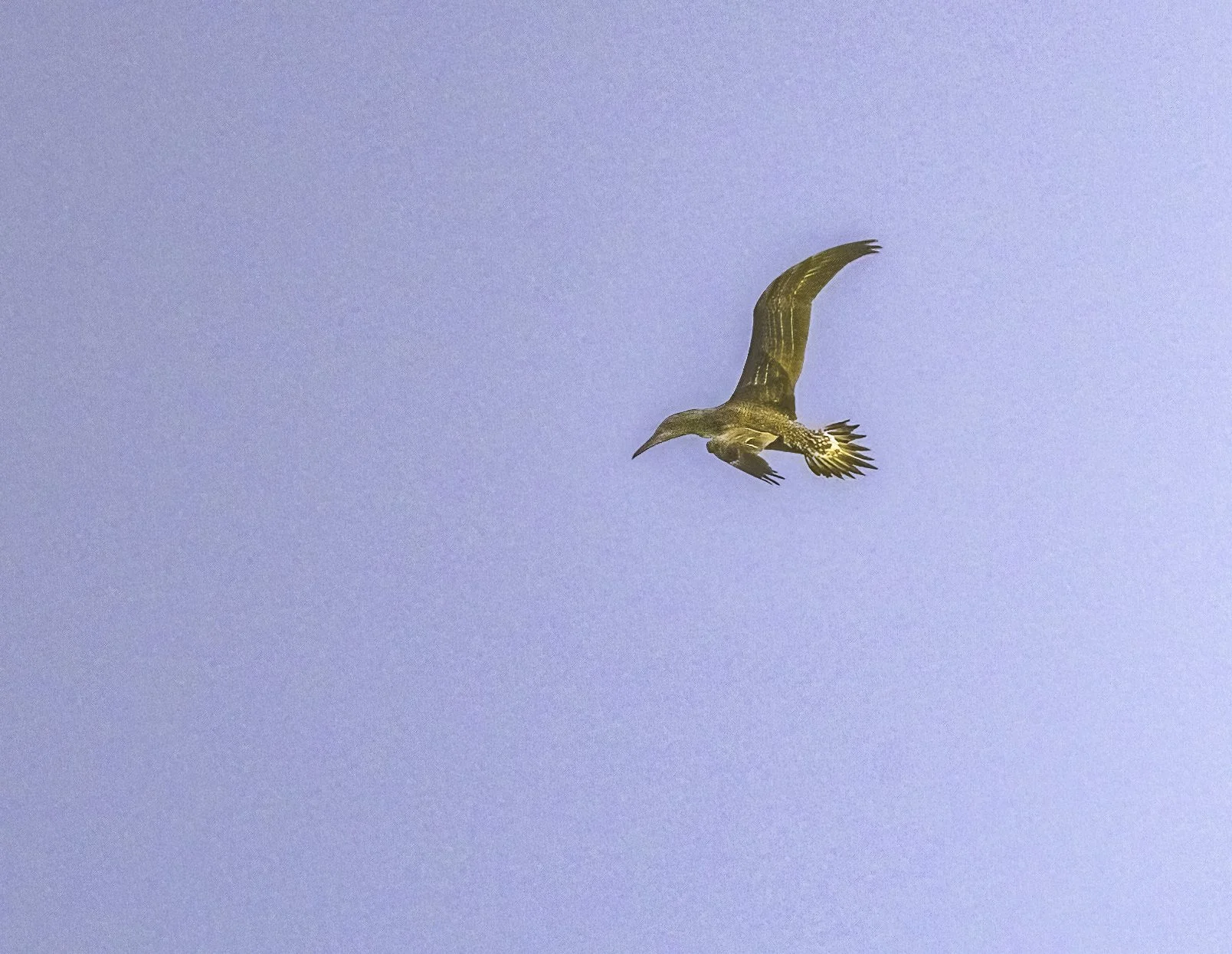
A young Northern gannet over New Smyrna Beach - 2/13/26
As we proceeded north up to the Smyrna Dunes Jetty, we hoped to see another Purple sandpiper such as we found earlier this week on the jetty located on the north side of Ponce Inlet. We did find 8 species of birds including 28 Ruddy turnstones, but no purples here today. It was enjoyable to watch the turnstones bathing in the shallow pools on the leeward side of the jetty where the little pools are protected from the pounding surf. Check out how active these little guys are.
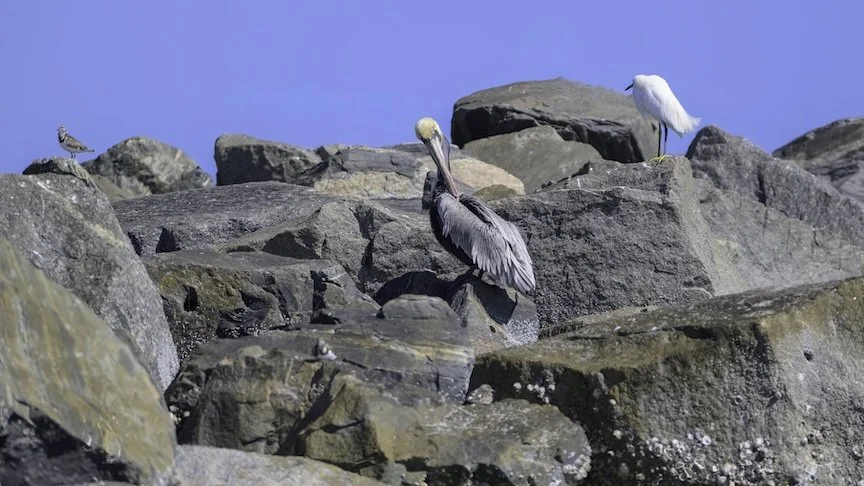
The final shot from the jetty is pretty indicative of what we usually find at this site. The jetty’s surf-washed boulders provide ample amounts of food found within the attached moss and seaweed, and the surrounding intertidal pools hold abundant small fish and crustaceans. Here (left to right) a turnstone, a Brown pelican and a Snowy egret all share common ground.
We began the following morning with a tour of Canaveral National Seashore which is just a few miles to our south. First stop was at Turtle Mound boardwalk where we spent about a half hour finding 10 species. While the number of species is not bad for a half hour walk, the total number of individuals was quite low. We did find other wildlife to entertain us such as Great Southern White butterflies, Gopher tortoises, and a number of these little Green anoles.
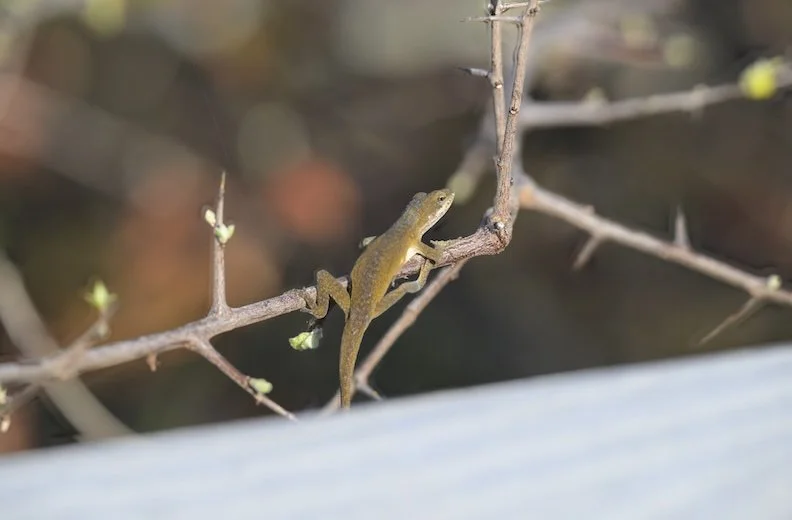
Green anole - Turtle Mound - 2/14/26
We moved onto the Visitors Center in the hopes of finding some waders or waterfowl off the dock. Once again, the numbers were down, but we did have a nice American kestrel perched on the wires of a nearby utility pole.
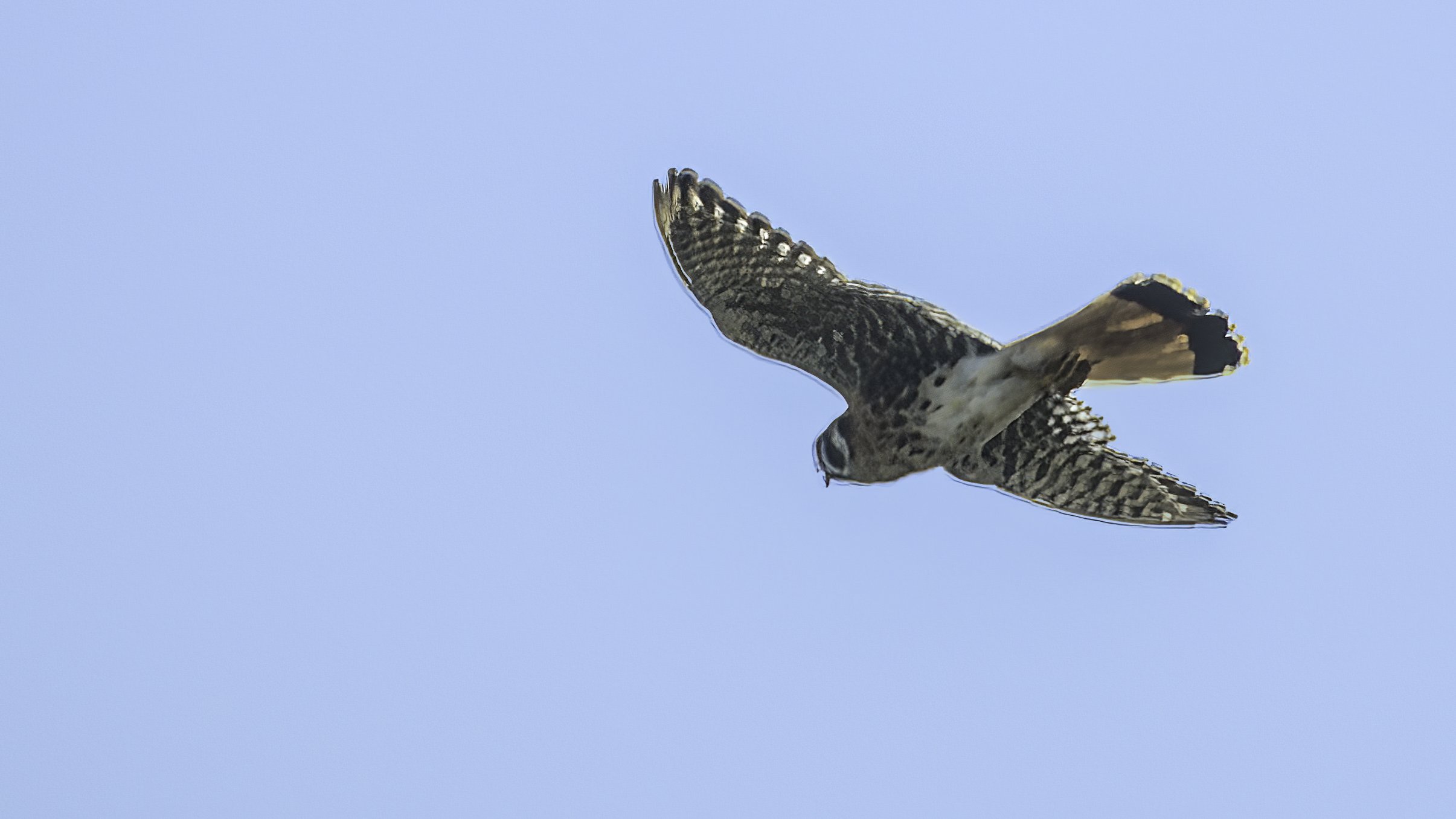
Kestrel found between Turtle Mound and the Visitors Center - Canaveral National Seashore - 2/14/26
From here it was down to ElDora Road and the fishing pier near the historic State House. Slow again! Only 6 species here. Highlight was a Belted kingfisher WAY in the distance and a Pileated woodpecker which called loudly but kept hidden by the canopy. Again, it was other wildlife that kept us occupied like this Gopher tortoise.
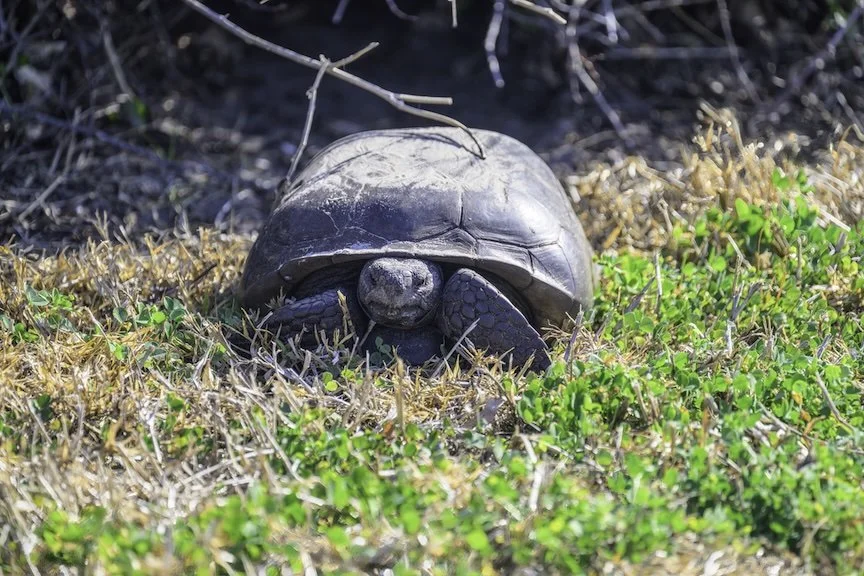
Gopher tortoise - Canaveral NS - 2/14/26
Our last stop of this leg of the count was at Lot 5 at the terminus of the road into the National Seashore. Once again, only 6 species found. Some days, we find a good number of birds throughout the National Seashore, but today is definitely not one of those days. The most interesting image at this sight was not avian but rather a beautiful Gulf fritillary butterfly.
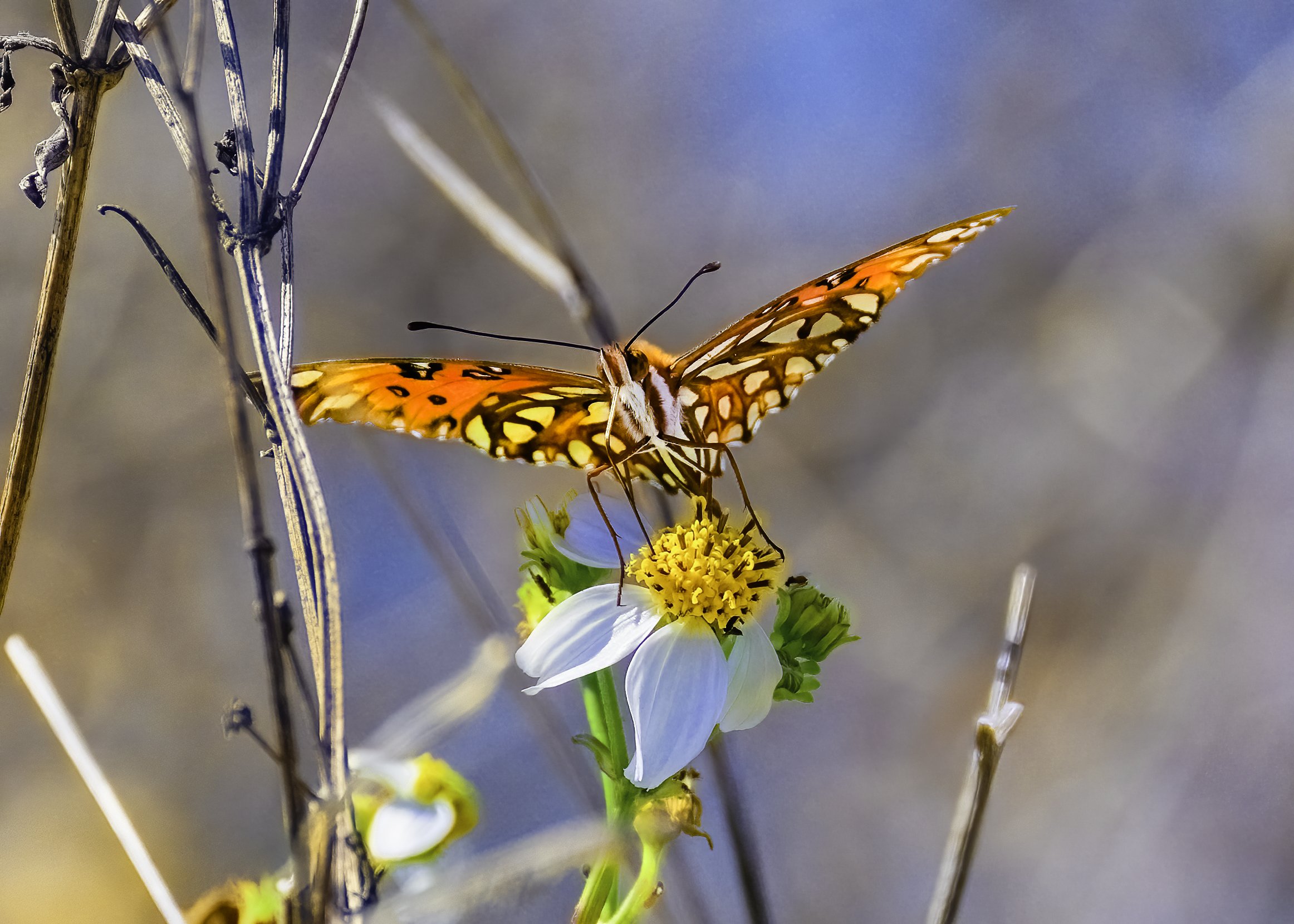
Gulf fritillary - Lot 5 Canaveral National Seashore - 2/14/26
The gulf fritillary (Agraulis vanillae) is a striking orange butterfly with elongated wings and bold black markings, commonly found in the southern United States, Central America, and parts of South America; its underside displays silvery spots seen in this image that make it unmistakable in flight and at rest. Adults favor open, sunny habitats such as gardens, fields, and roadsides. Gulf fritillaries’ life cycle includes multiple broods per year in warm climates, contributing to their common presence here in Florida.
So much for this mornings excursion out to find data for the Great Backyard Bird Count. In my next posting, I will relate how we make out in this afternoon’s leg of our efforts to find species in our “Back Yard”, this time at the Marine Discovery Center in New Smyrna Beach.