Black Point Picks
Sharon and I take advantage of the beautiful weather (finally) and head down for another trek around the loop at Black Point Drive. En route, we stop at the Volvo Road eagles’ nest to check on any activity there. We were thrilled to see a large young eagle in the nest with an adult. We had not seen any young in here since we began monitoring this site two weeks ago, but obviously we were simply missing the appearance of the youngster. A fellow birder/photographer who's been checking on this nest confirmed that this eaglet is at least several weeks old as its size would suggest. Great news. That’s three out of the four nests we’re monitoring that have two chicks on board!
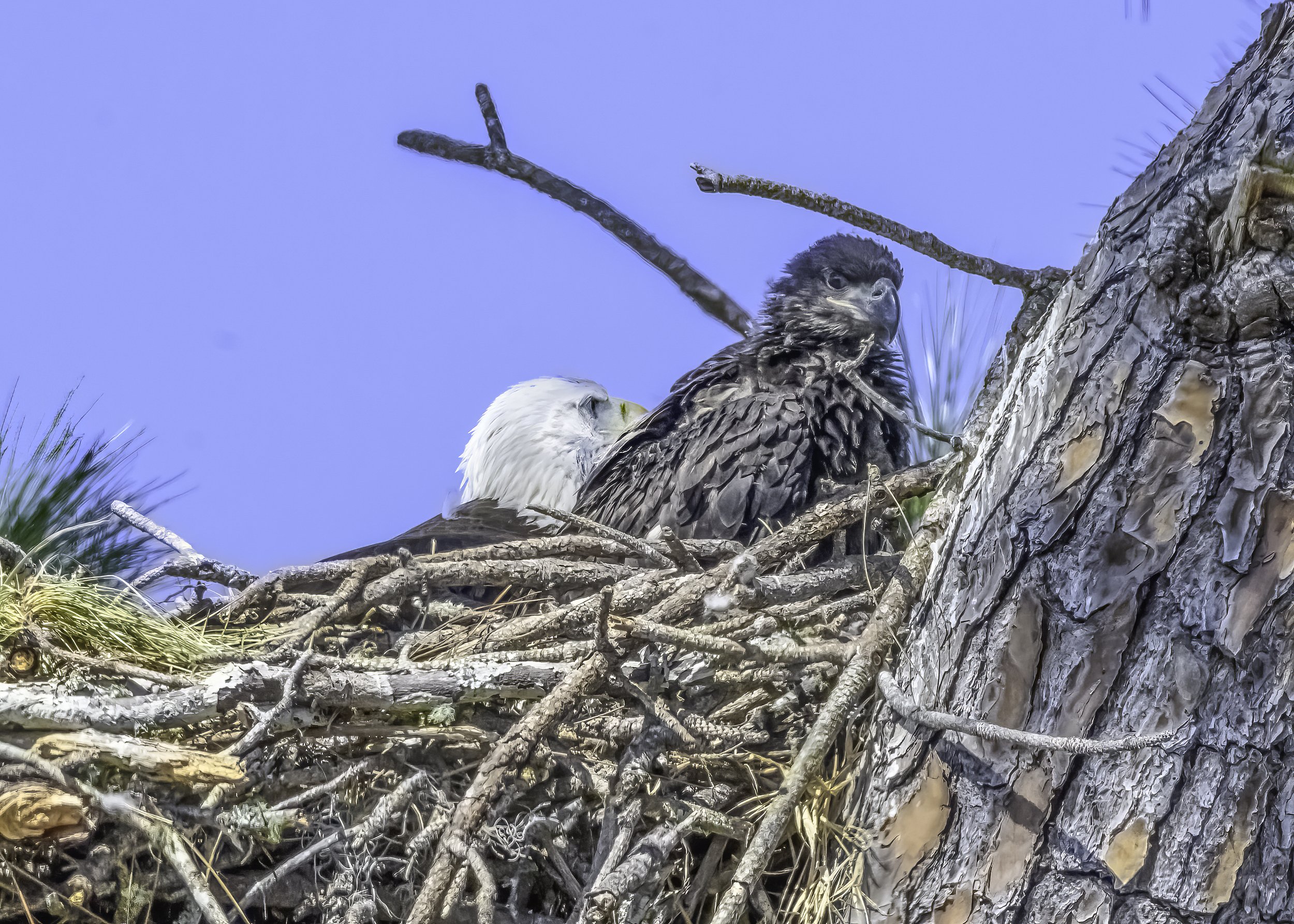
Adult eagle and chick - Volvo Road - 2/9/26
On to Black Point Drive in Merritt Island. This is our second trip down to this hot spot and it will certainly not be our last. It seems that every time we drive this circuit, there is something new to see and some species that have already departed. Today, the bird of the day is the Wilson’s snipe. Last time here two weeks ago, we had a grand total of one individual. Today….61. When I mentioned this to our friend Joan who is a birder “par excellence” and spends some time down in Merritt Island, her response was, “that’s all?”. While tongue in cheek, there’s a lot of truth to that. We see only what is close to the roadway….a mere fraction of the acreage covered by this reserve. If we are seeing 61 individuals, can you imagine the actual number of snipe in the refuge right now? Mind boggling!
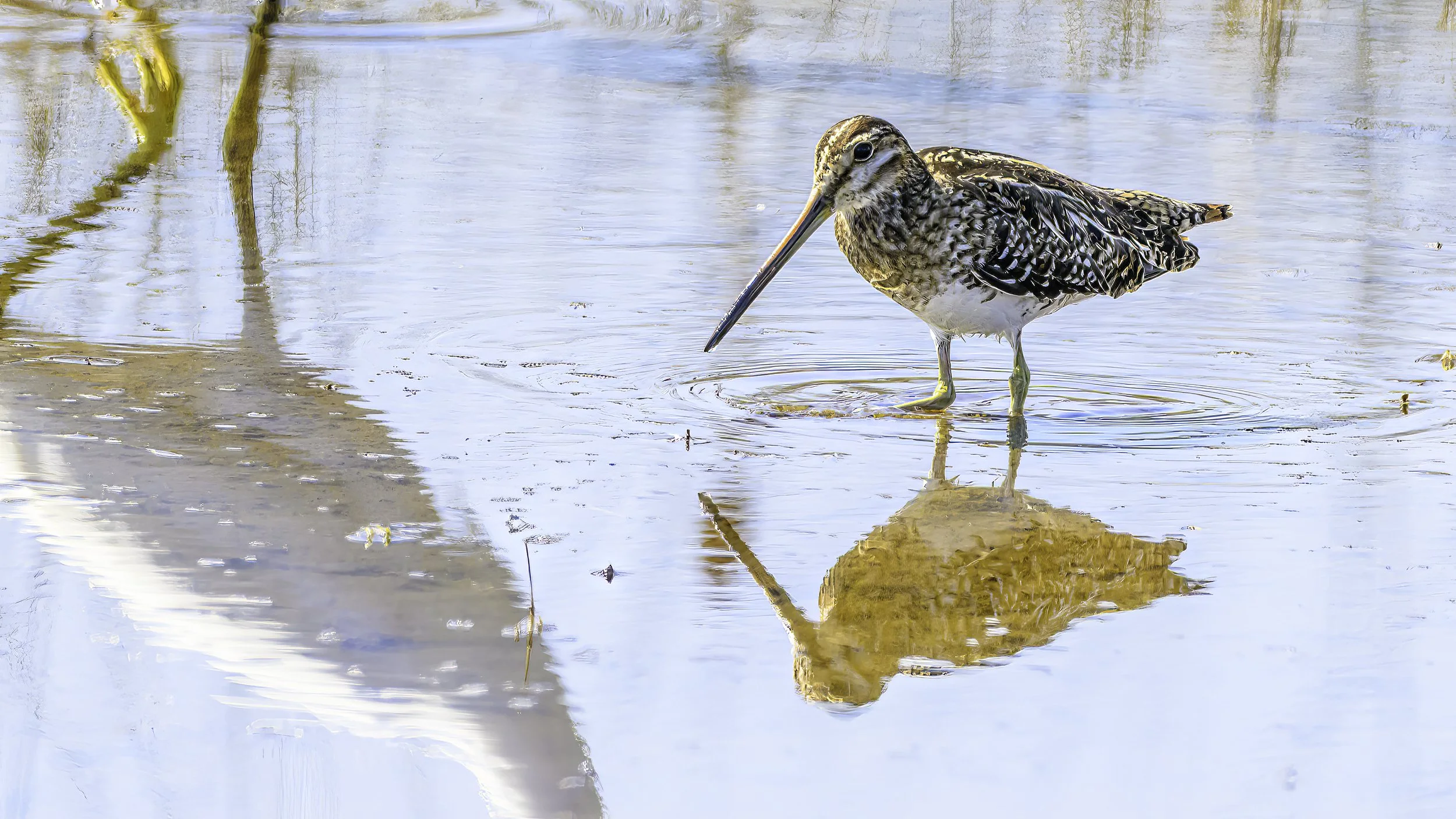
Wilson’s snipe - Black Point Drive - 2/9/26
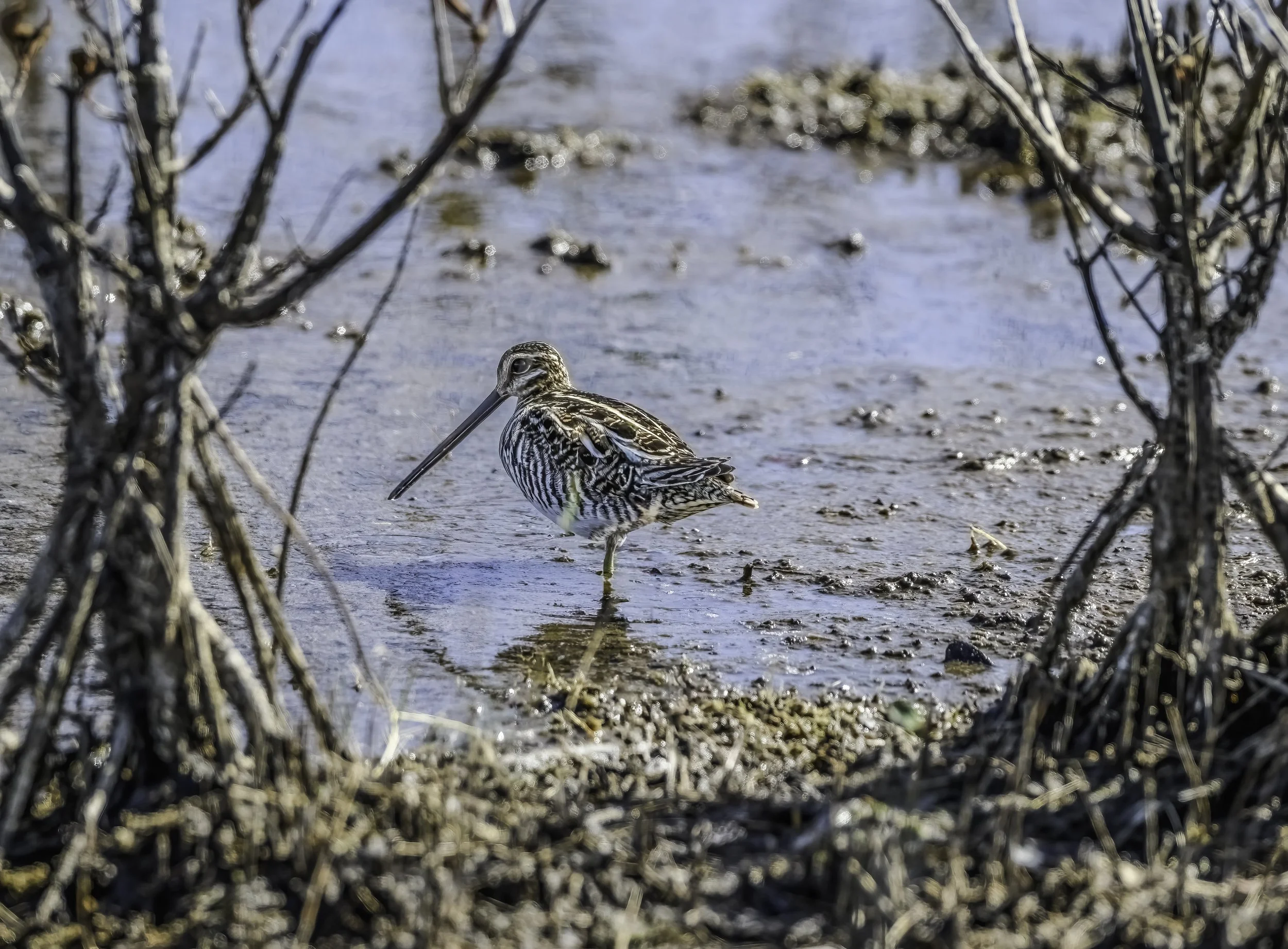
Wilson’s snipe - Black Point Drive - 2/9/26
Other birds were here in significant numbers as well. Among them were the Long-billed dowitchers. The long-billed dowitcher is a medium-sized shorebird notable for its very long, straight bill and distinctive "sewing-machine" feeding motion as it probes mudflats and shallow water for invertebrates. Adults in breeding plumage show rich rufous underparts and barred flanks, while these nonbreeding birds are more gray-brown above and pale below. Often found in coastal estuaries, tidal flats, and inland wetlands such as are found here along Black Point Drive during migration and winter, it forages in flocks and uses tactile sensing to locate prey such as worms, crustaceans, and mollusks beneath the waters’ surface.
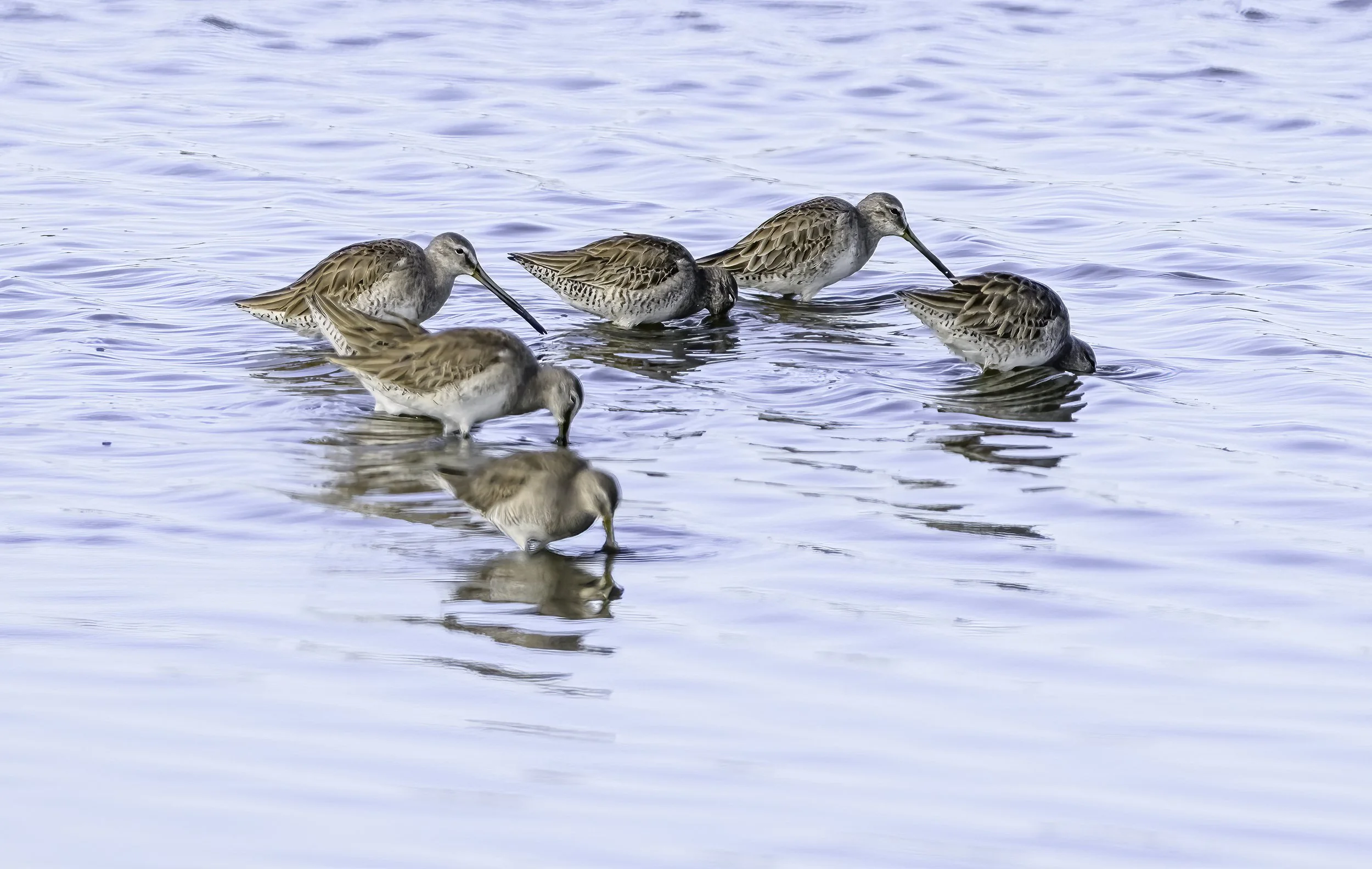
Long-billed dowitchers - Black Point Drive - 2/9/26
In close proximity to the dowitchers, we found large flocks of Least sandpipers which would occasionally rise up en masse fly about over the shimmering waters and eventually land once again in the shallows to resume feeding. In flight, these birds are distinctive displaying white rumps bisected by a longitudinal black line.
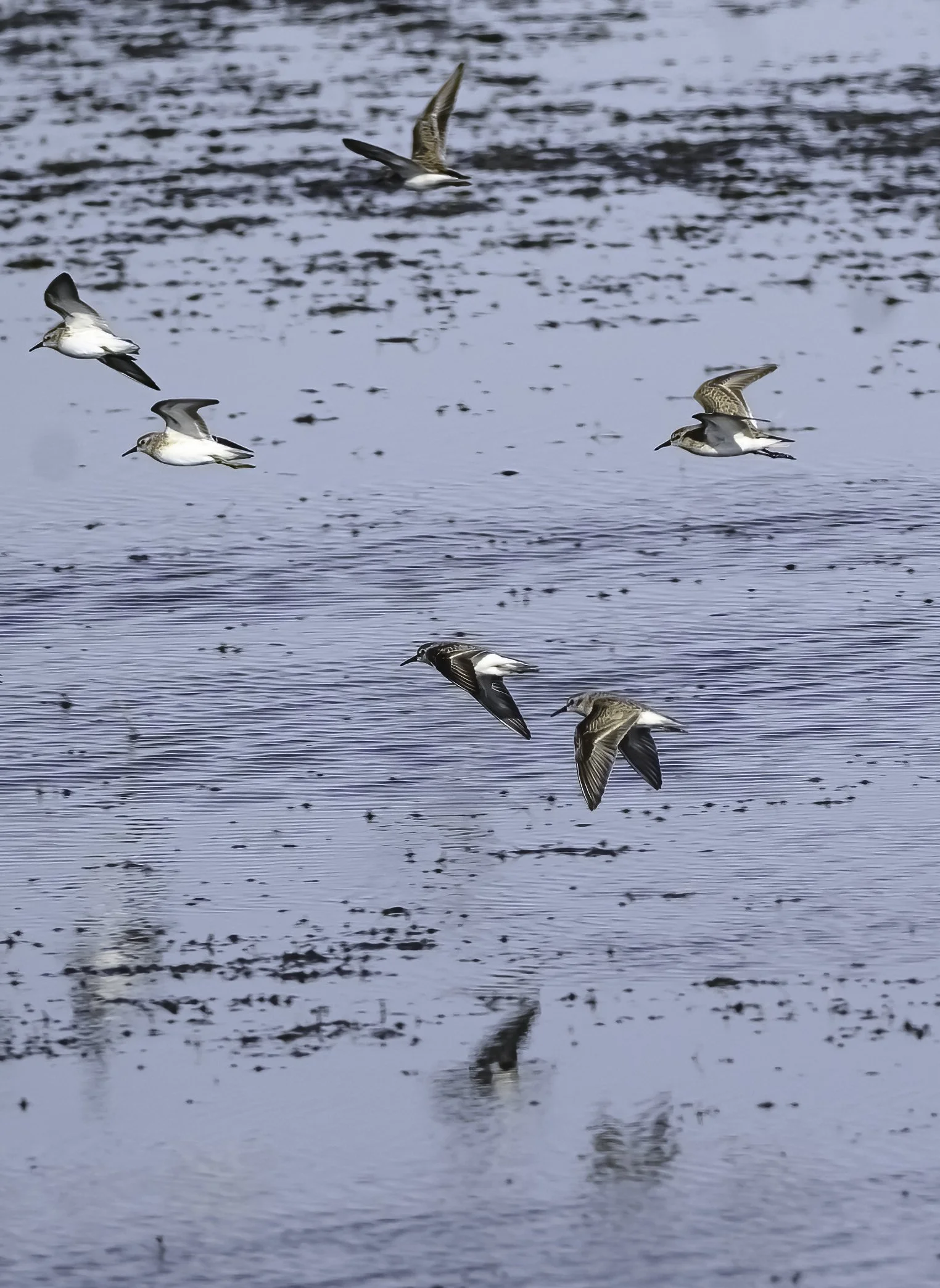
Least sandpipers in flight - Black Point Drive - 2/9/26
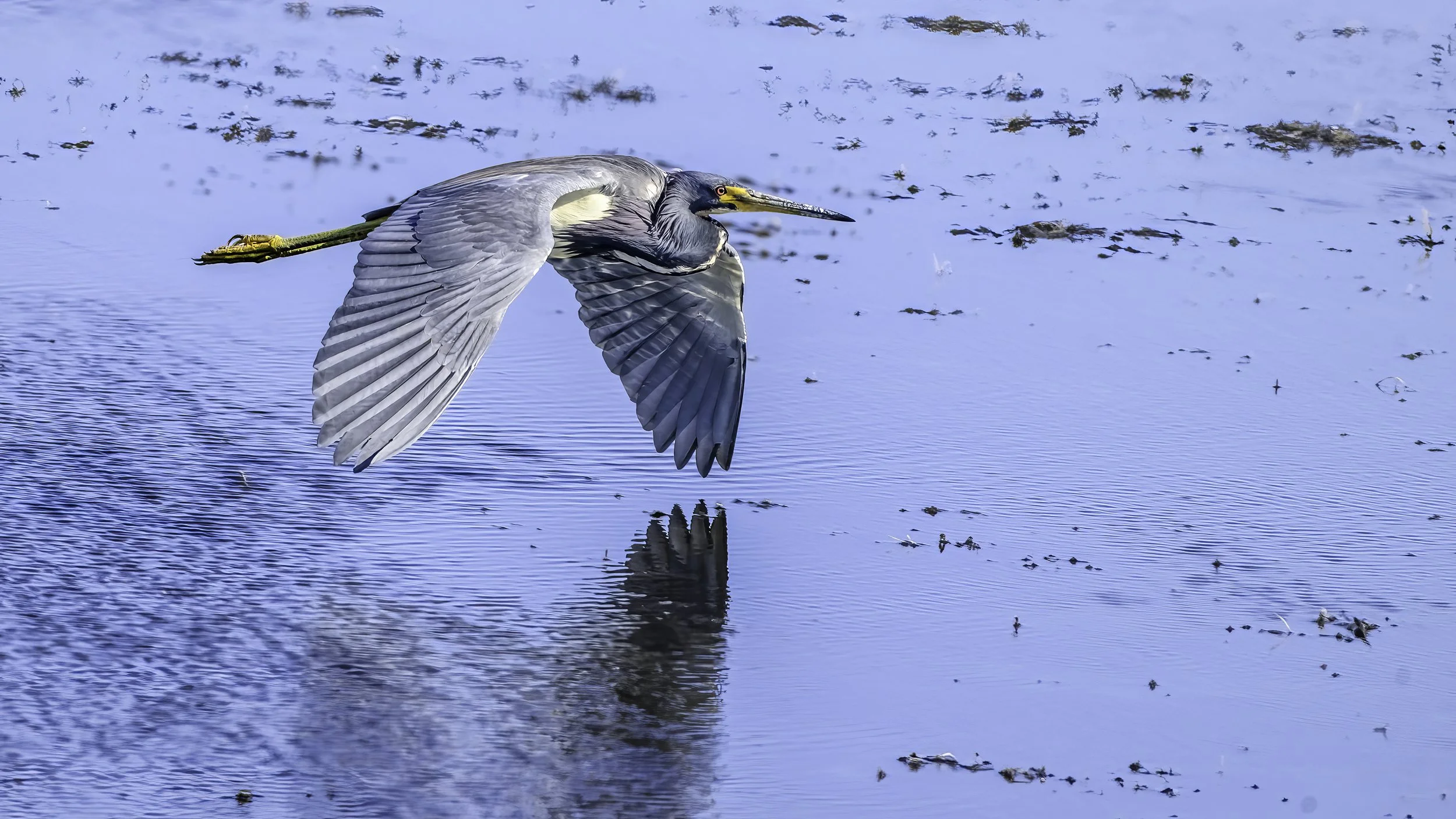
Tricolored heron - Black Point Drive - 2/9/26
While photographing the sandpipers and dowitchers, a lone Tricolored heron came flying by at a nice close and quite photographical distance with wings barely skimming the water below. Made for a pretty shot….pays to have the camera in hand and ready to fire at a moment’s notice.
Two more shots for today’s blog….first is a Mottled duck. The mottled duck is a medium-sized dabbling duck native to the coastal marshes and wetlands of the southeastern United States and parts of Mexico. It is similar in appearance to the male Mallard found ecognized for its rich brown, streaked plumage that provides excellent camouflage among reeds and grasses. males and females look similar, though males tend to be slightly brighter with more distinct mottling, and both show a yellow to orange bill with a dark saddle. Typically non-migratory, mottled ducks are closely tied to brackish and freshwater marsh habitats where they feed on seeds, aquatic vegetation, and invertebrates.
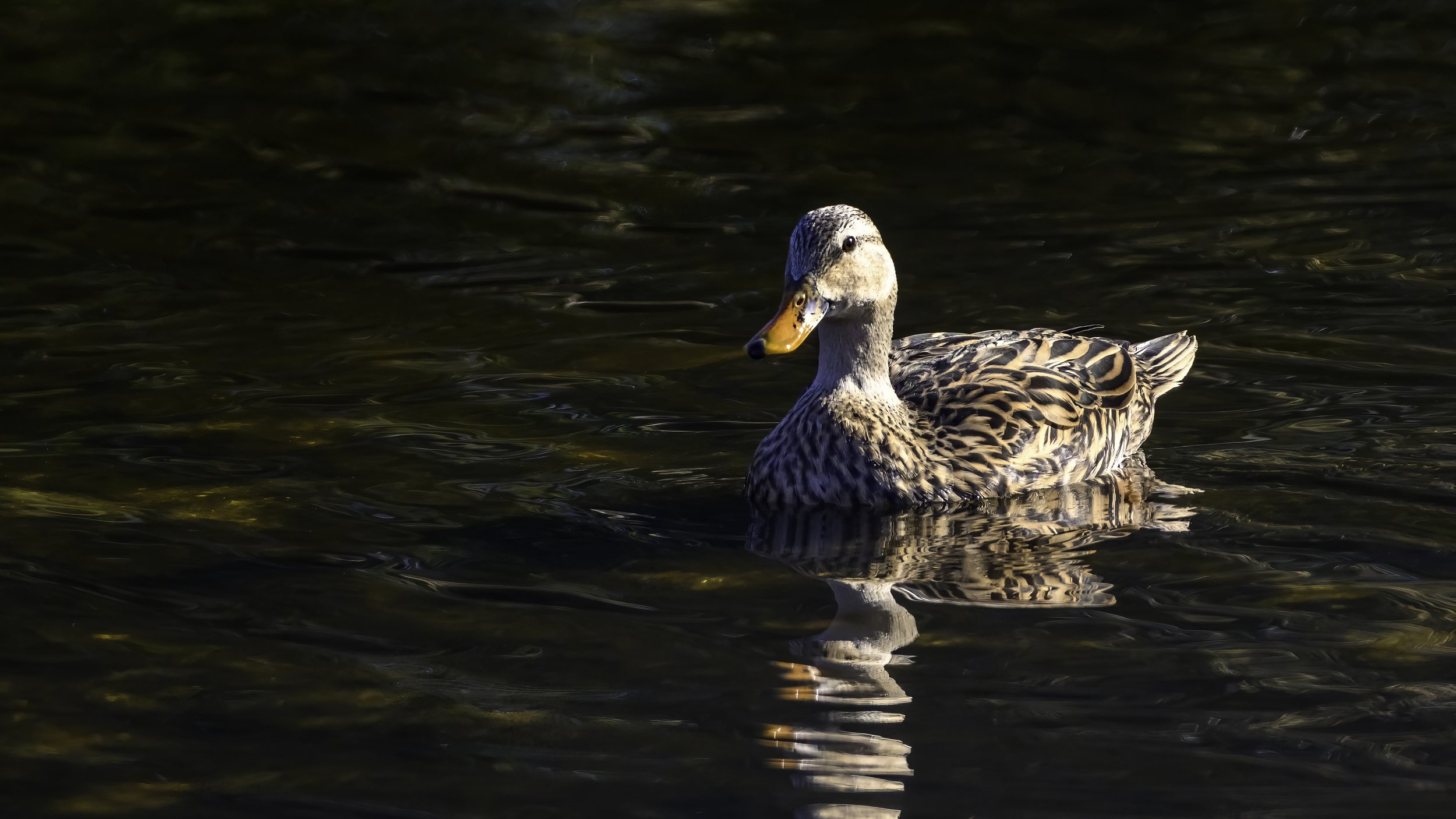
Mottled duck - Black Point Drive - 2/9/26
Last bird of the day from Black Point Drive is a beautiful Black-crowned Night-heron. This was a shot made all the more interesting because the bird had just caught an Atlantic needlefish and was attempting to work it into the best position for ingestion. Birds have to eat the fish head first to avoid the spines on the fins from lodging in their throats. The length of this fish added to the heron’s dilemma. Eventually, the bird did manage to get the fish down and judging from the size of the fish, would be satiated for at the least the time being.
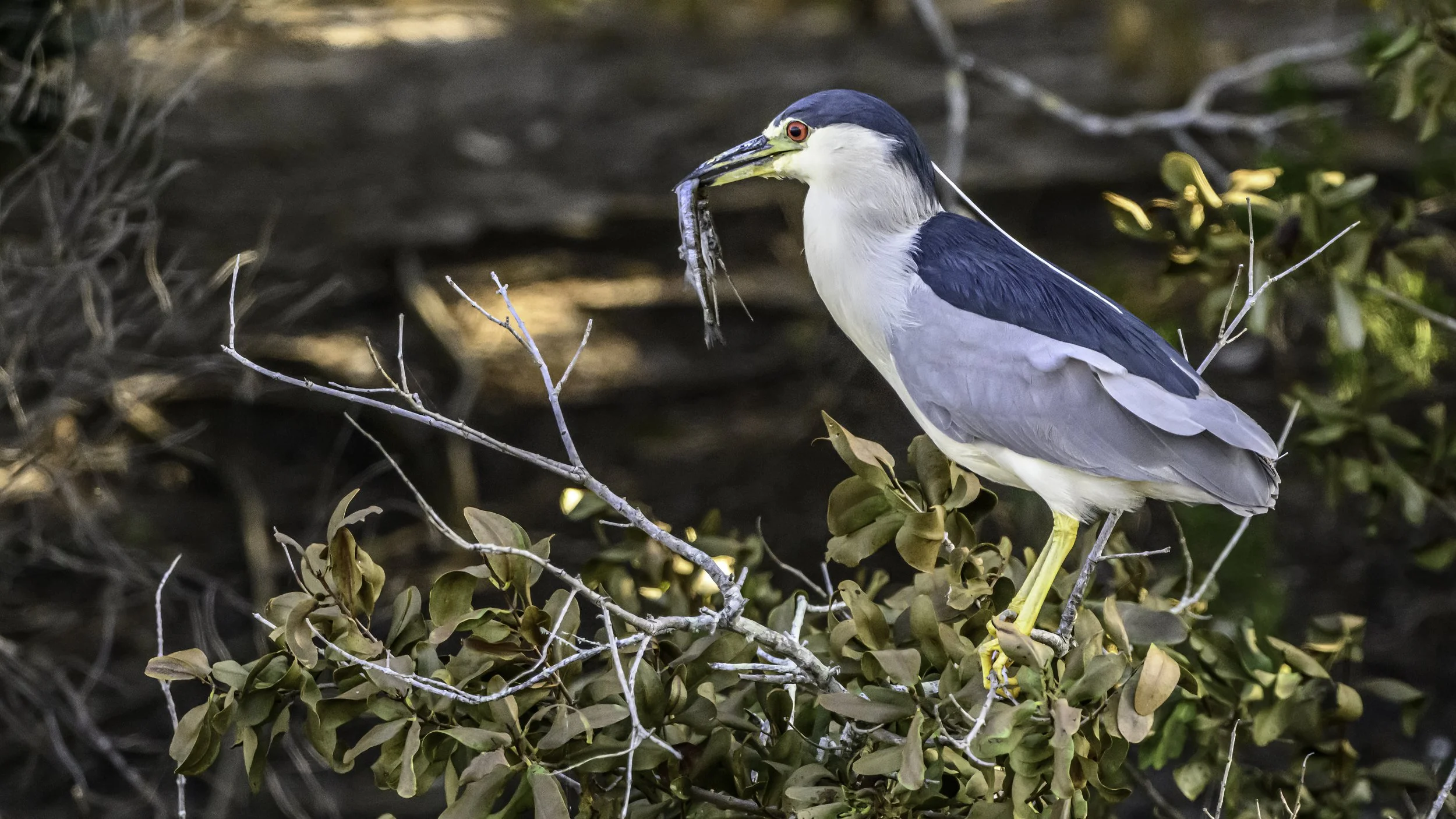
Black-crowned night-heron with an Atlantic needlefish - Black Point Drive - 2/9/26
Tech tip - The two images of the Wilson’t snipe illustrate techniques which can make a photograph more interesting. The first image employs the use of reflection to add to the “gestalt” of the image. Ideally, the water should be as quiet as possible to get the most mirror-like image. Obviously, you can’t always plan out an image like this, but the point is to be looking for opportunities such as this in order to add an element which makes the image a bit more engaging.
The second image is using a technique known as “framing”. Rather than simply pointing and shooting, I moved around in order to get the bird framed within the vegetation. Again, the plants had to be there to begin with and the bird had to be somewhere where it was possible to position him within the ”frame”. But….look for these opportunities when photographing the natural world and incorporate as many interesting elements as is possible to “kick it up a notch”.