Fall migrants
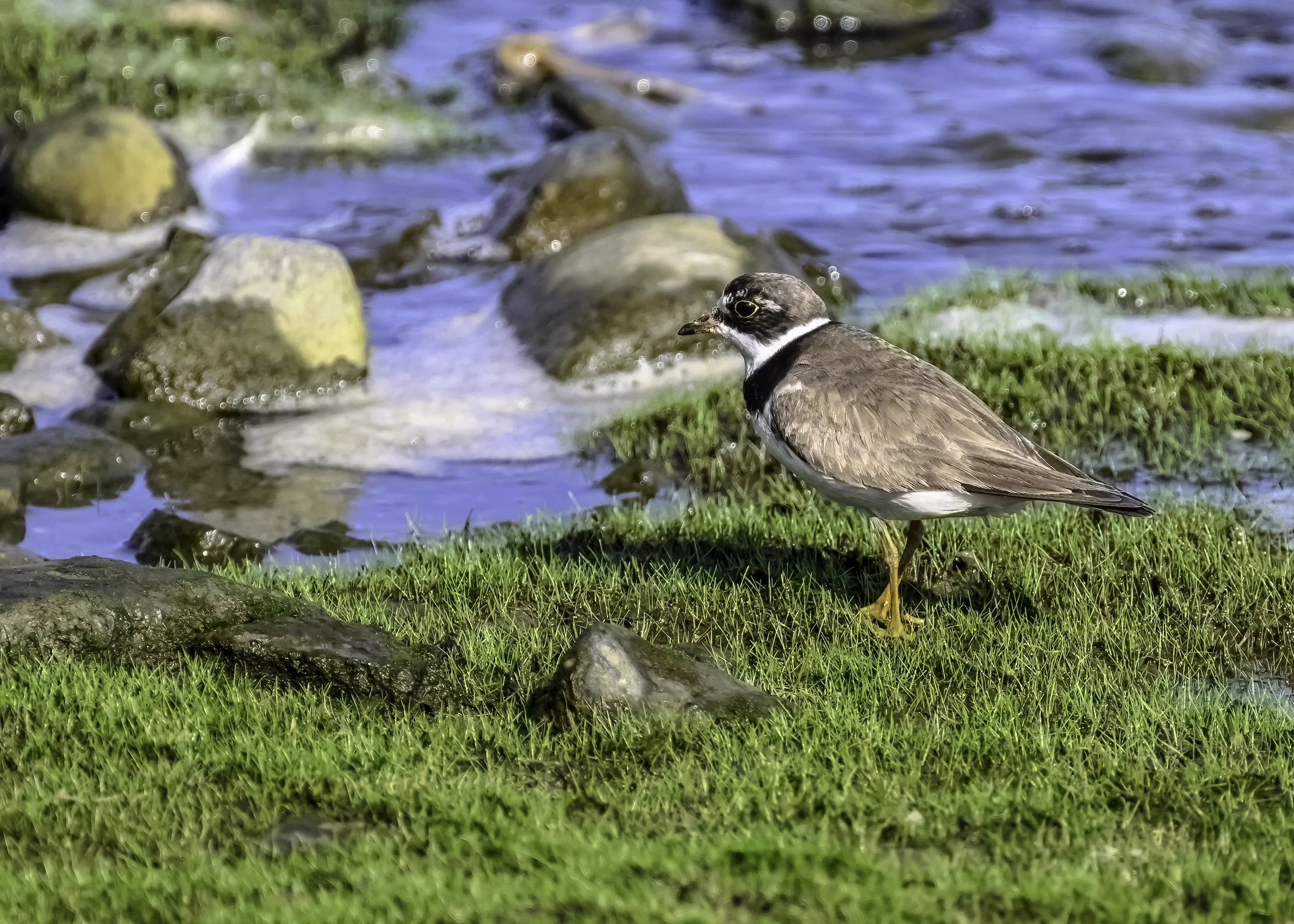
Semipalmated plover - Piermont Pier - 8/14/26
After a few weeks of “downtime” as far as the birds in the lower Hudson Valley are concerned, we are now entering the fall migration. Hawks will be heading through in a few weeks and many of the songbirds have already begun to head for the warmer wintering grounds. Among the major movements of birds here in the Hudson Valley are the shorebirds. The trick here, however, is to find suitable habitat for these birds to stopover and refuel. Ideal spots are mudflats, beaches, shallows along lake edges and the like. One such location is Piermont Pier in Rockland County. Stretching out into the tidal Hudson River, flats comprised of mud, sand and gravel stretch out from the perimeter of the lengthy rock pier making for ideal grounds for the migrating shorebirds to set down and “refuel” on small crustaceans, annelids, and insects. One such visitor today was the Semipalmated plover seen above.
This migratory shorebird is fairly common in southeast New York State during the spring and fall travels between their winter breeding grounds in the arctic and their wintering grounds in South America. Today, I found about a half dozen dispersed along the exposed tidal flats on the north side of the jetty.
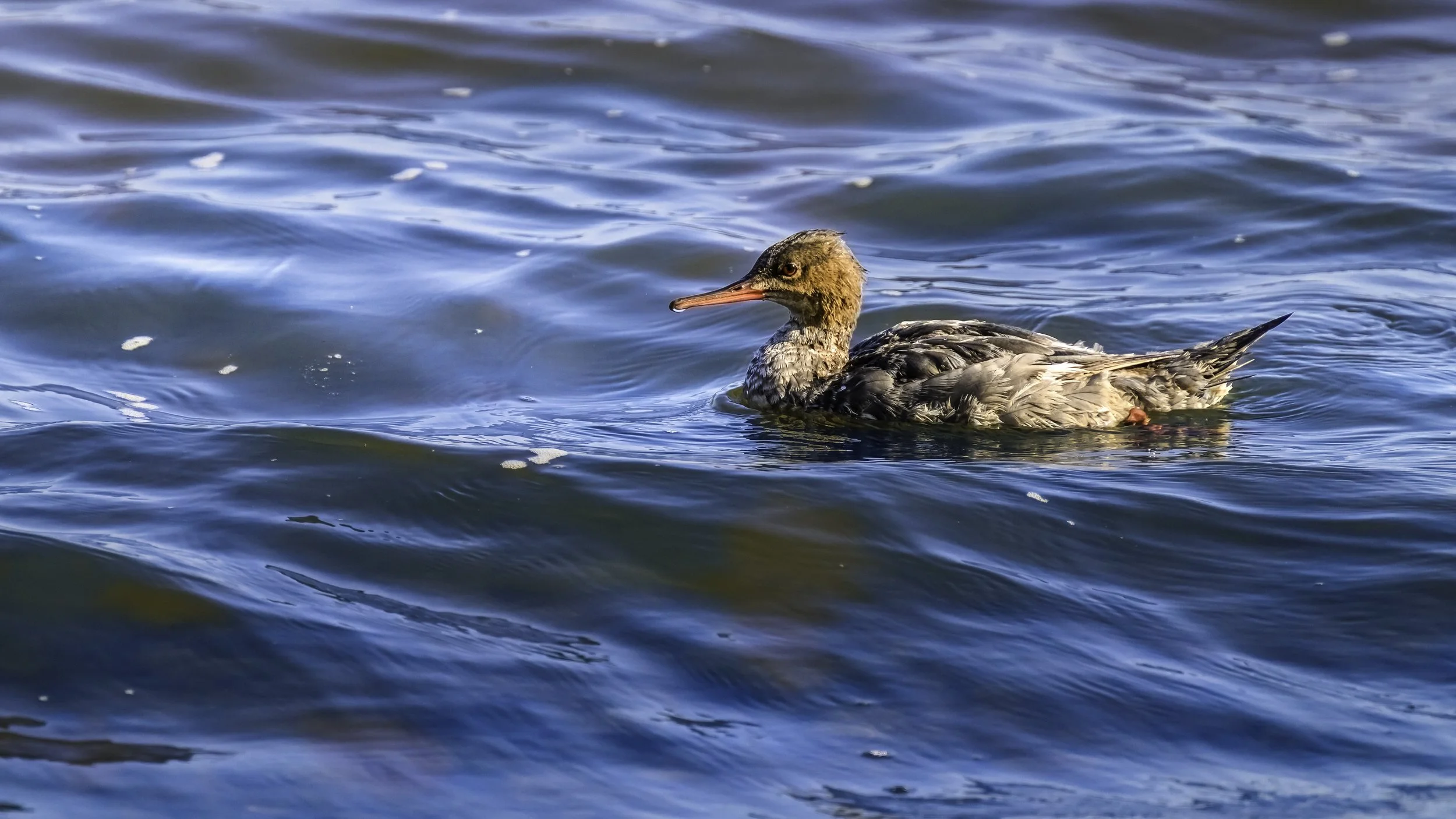
Red-breasted merganser - Piermont Pier - 8/14/26
While the Semipalmated plovers were scouring the sandy flats for whatever tender morsels were exposed by the retreating tide, another shorter distance migrant, the Red-breasted merganser, was swimming along in the adjacent shallow water of the river. The Red-breasted Merganser is a sleek, crested diving duck often seen along coastal bays, estuaries such as the Hudson, and large inland reservoirs during migration and winter. Males are striking with a spiky greenish-black crest, rusty breast, and thin serrated bill adapted for catching fish, while females like this bird and immatures show buffy-brown heads and more subdued plumage. In SE New York their presence peaks from late fall through early spring when icy freshwater pushes them from their Canadian breeding grounds to coastal waters, so many of these ducks will stick around southeastern New York for much of the rest of this year into the winter months.
One of the more puzzling observations today was a congregation of 14 (at least 14 that I could see and count) ospreys all perched in close proximity to one another in a stand of trees along the banks of the Hudson. Ospreys are not known as being communal and even mated pairs go their separate ways after the breeding season. Living in Florida for part of the year, I see many ospreys but have never observed this behavior of roosting together in the same area.
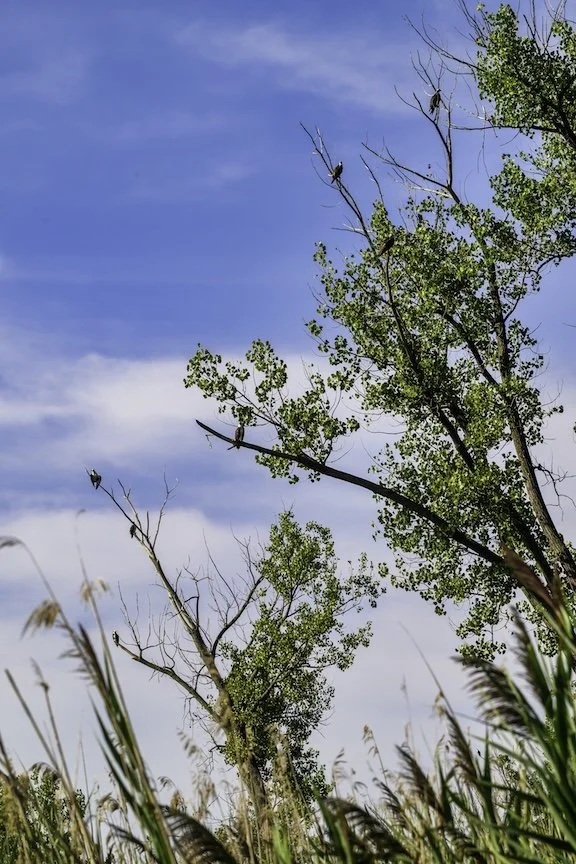
A section of woods in which 14 ospreys were perched - Piermont Pier - 8/14/26
The image above shows 7 of the ospreys perched close to one another. At least 7 that I could see were out of frame but close by. Birds will often “stage” or get together before migrating south, but as I said before, these birds prefer to migrate solo. If any readers have any other ideas about what’s going on here, leave a suggestion in the Comments section below. (Note: After writing this, I learned that as many as 30 ospreys have been seen in this same patch. I have to assume it’s simply a case of excellent fishing grounds!)
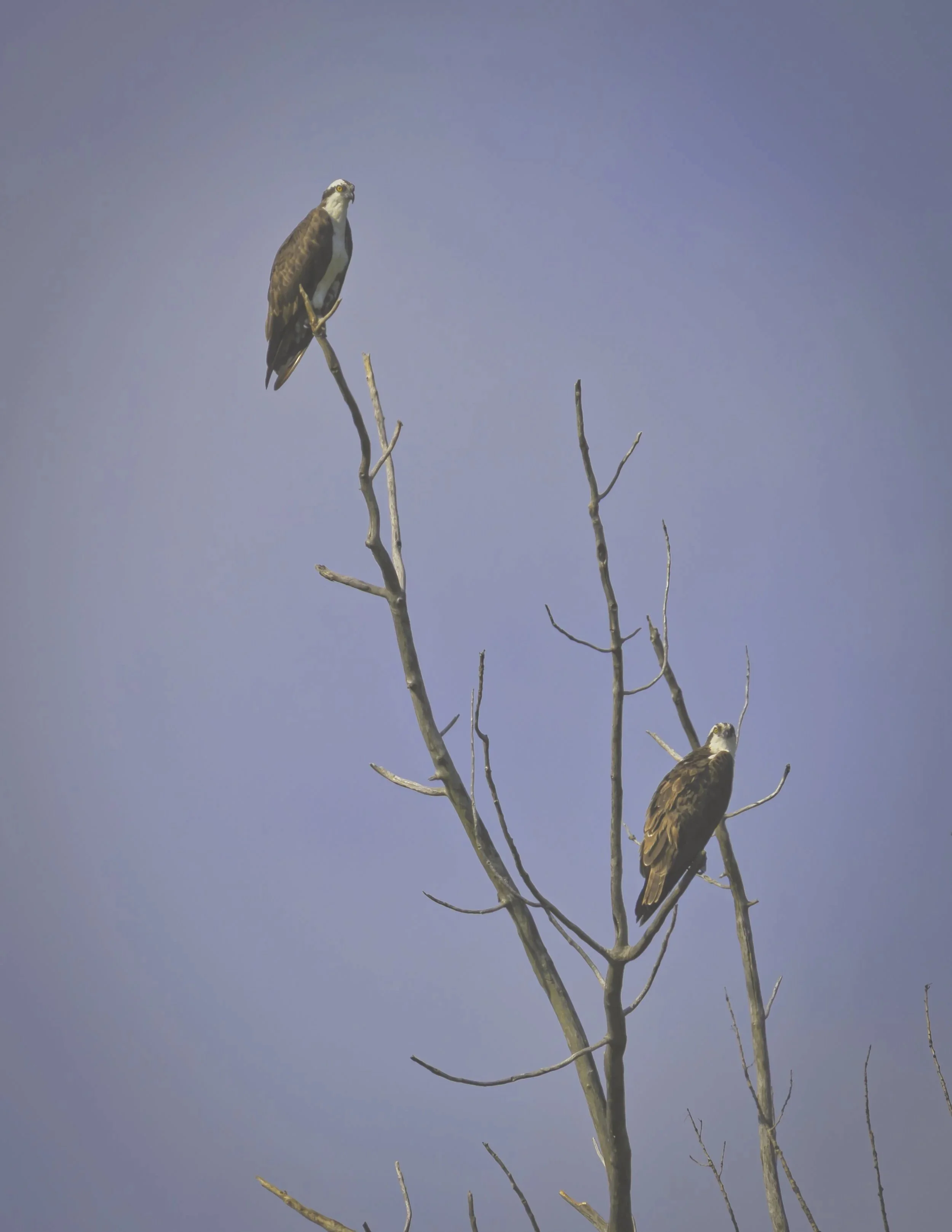
Two of the group…..
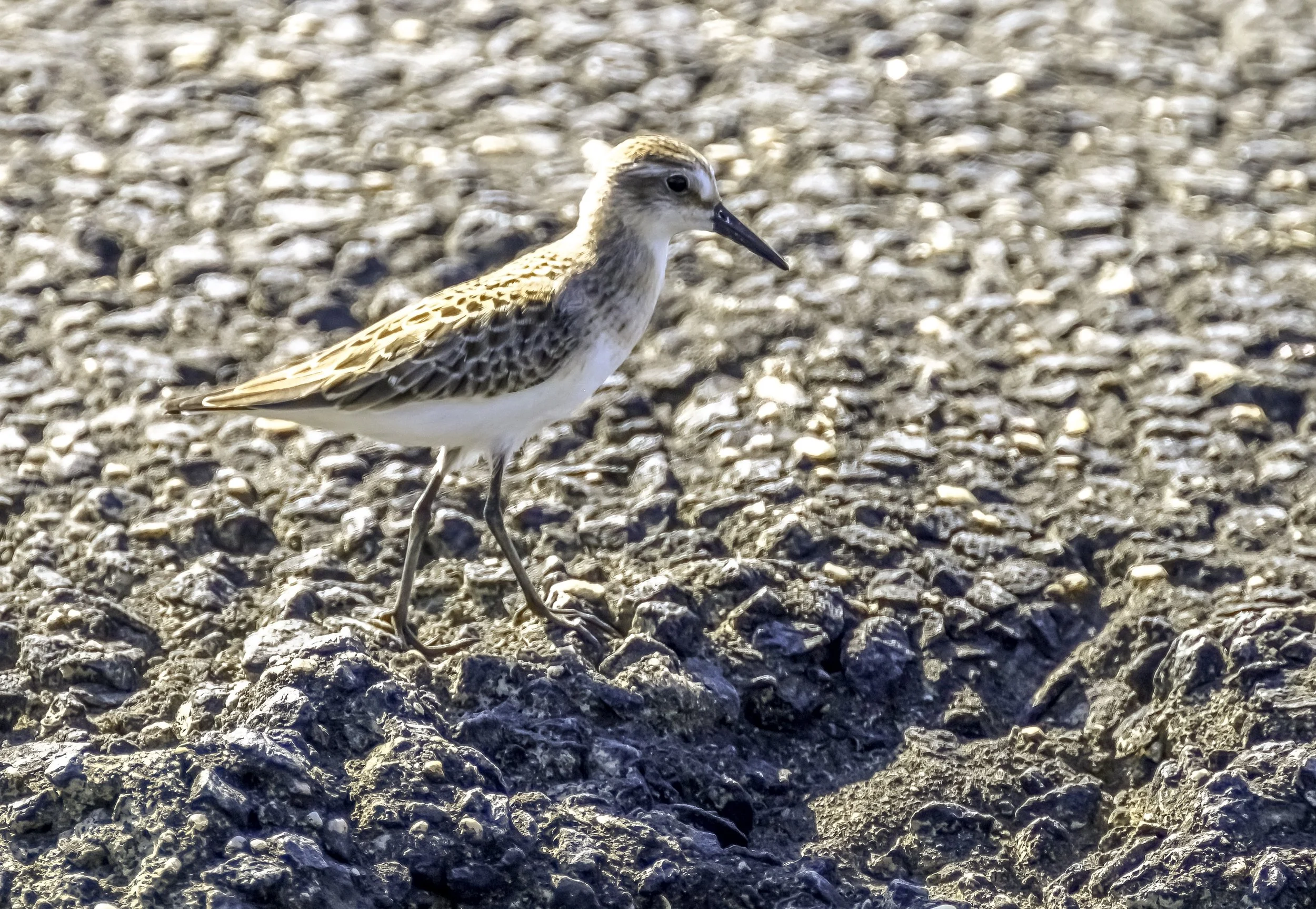
Semipalmated sandpiper - Piermont pier - 8/14/26
My “target bird” today was a Baird’s sandpiper which was seen here yesterday. As I made one last run down the pier, I finally saw the Baird’s but only for a moment before it took off. I kept checking out the same area and got one more sandpiper….not the hoped for Baird’s which had eluded my camera’s lens, but a Semipalmated sandpiper. While much more common that the Baird’s, this is still a nice visitor to find and photograph during the early stages of shorebird migration. As far as Semipalmated sandpipers go, this is actually close to the peak time for them to be migrating through this part of the state and literally thousands of these birds are known to end up on the coastal beaches of Long Island and New Jersey as they head south to South America.
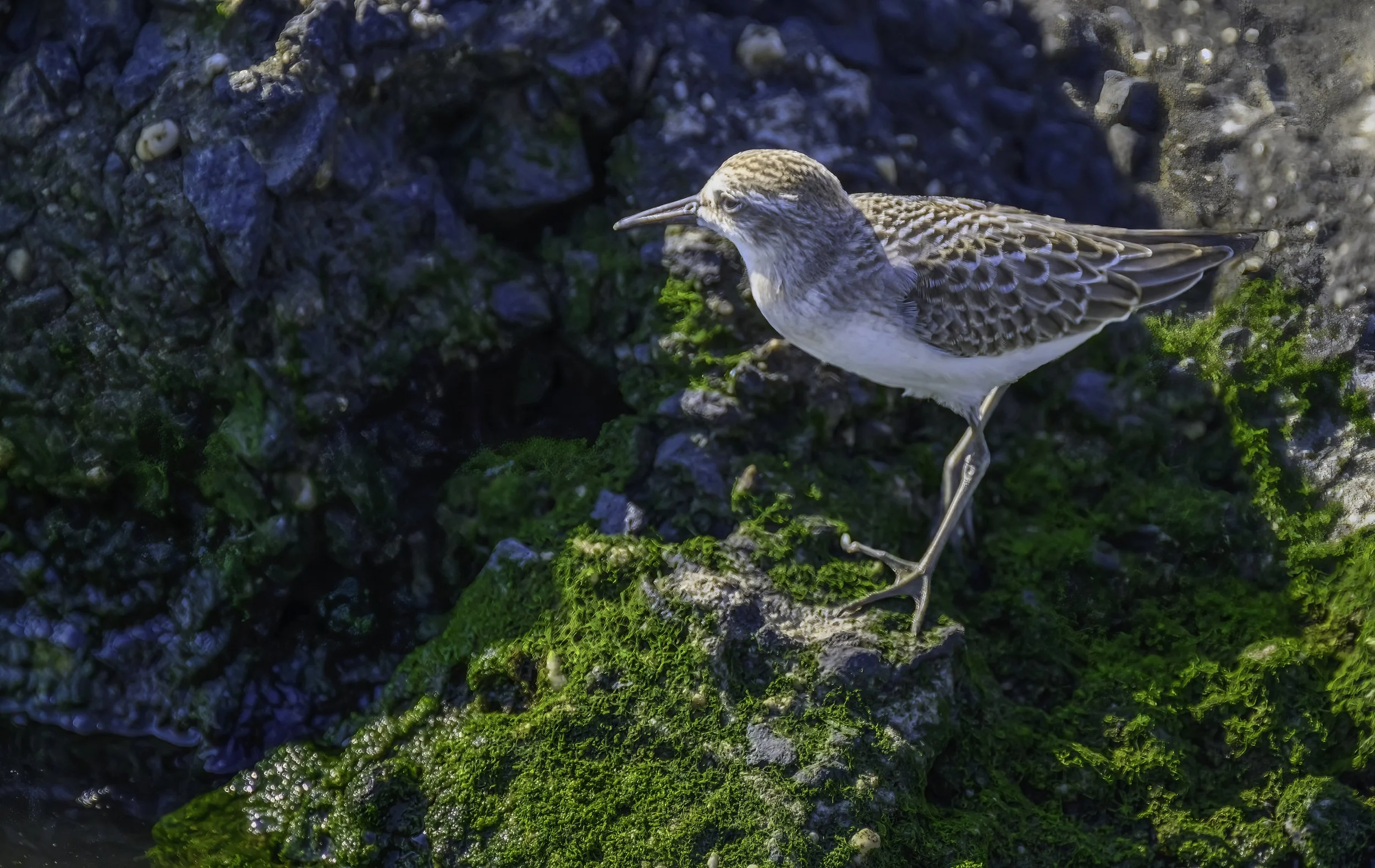
Semipalmated sandpiper - Piermont Pier - 8/14/26
Point of interest - the name “semipalmated” refers to bird’s that have partially webbed toes. In most cases, this is something you just have to “take my word for it”. These are not big birds (5-6 “ long) and usually they are pretty far off. So, even with a good scope, it is difficult to see these features under normal circumstances. Today, however, this bird was more than cooperative and came very close to me and my telephoto lens. And then, as if on cue, he lifted up his left talon to display that feature which we are discussing right now. Clearly, you can see his “semipalmated” toes for which he is named. Learn something new everyday, right?
We’ll finish up today’s posting with a couple of images of a very common fauna which are in fact non-migratory. These guys will find a way to stick around all winter.
First of all, I am including this image of a House sparrow because it shows how important these sandy flats along the pier are for a myriad of species of birds. Here, this sparrow is taking advantage of some of the grasses that grow along the flats and provide seed for any and all takers. Nature always seems to have a way of providing for her flock.
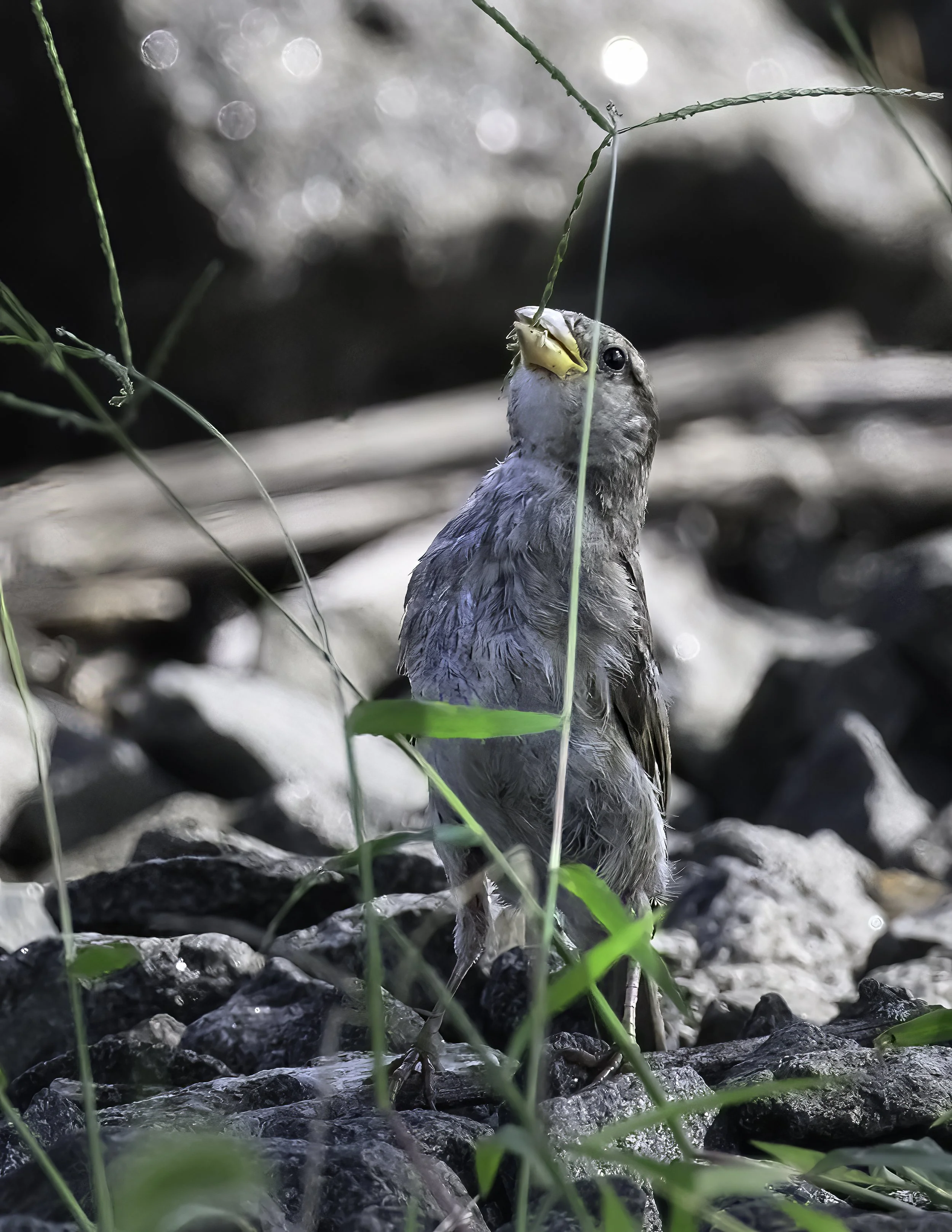
House sparrow - Piermont Pier - 8/14/26
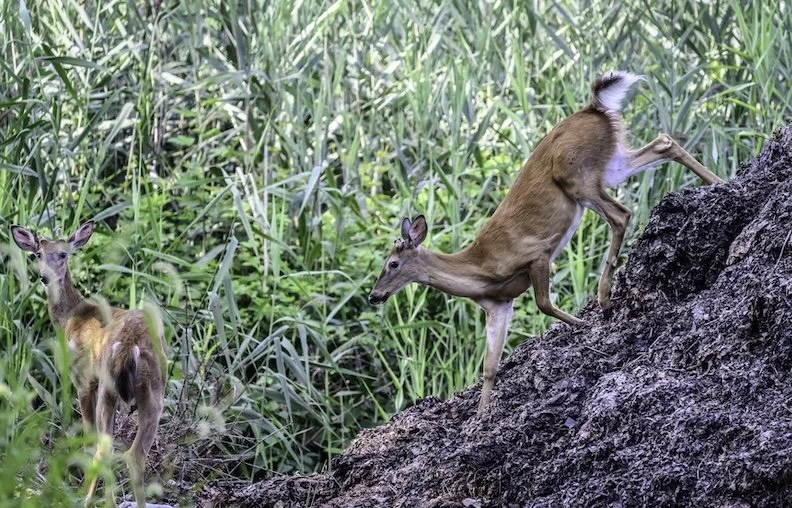
And last but certainly not least, we have the largest of today’s subjects the White-tailed deer. In this case, it’s actually two White-tailed deer which were found near the equipment storage area near the entrance to the causeway. At first, a solitary doe met me in the middle of the trail and stared me down for a minute of two prior to scampering behind a tall sand pile nearby. I then noticed a second deer, a young buck, atop of the same sand pile. I waited for him to come trotting down figuring it would make for a nice action shot of sorts. Sure enough, down he came and as he did so, another little “button-buck” poked his head out to watch his buddy make his descent. Turned out to be a rather nice parting shot. Always something of interest out there in nature.
Tech Tip - All of today’s photographs were taken with a Nikon Z9 equipped with the Nikon z 100-400 mm telephoto lens. I use this combo a lot, but today, knowing that many of my subjects would be somewhat distant, I added a 1.4X teleconverter. This effectively boosts the focal length of my lens from a maximum of 400 mm (or about 8X magnification) to 560 mm (about 11.2 X magnification). While not cheap, (the telexconverter from Nikon costs a little over $500), it is cost effective when you consider that a new Nikon 500 mm lens could run you close to $2000 and up. Just saying…. In the “good ole days”, you only took out a teleconverter in desperation since the quality rendered by those add-ons was less than ideal. The newer gear, however, provides nice crisp images with next to no deterioration. Gotta love the new tech gear.