Butterflies, beetles, and bees
Well, it’s still that time of year when insects are a lot more photogenic (or at least available to shoot) than birds and that was the case yesterday at Morgan Farm. The habitat at this site is ideal for finding grasshoppers, dragonflies, wasps, beetles and more, so why not take advantage of it while the time is right? First sighting was of a dragonfly I’ve featured on the site in the past, but it is quite pretty in its patterning and coloration, so why not give it an encore?
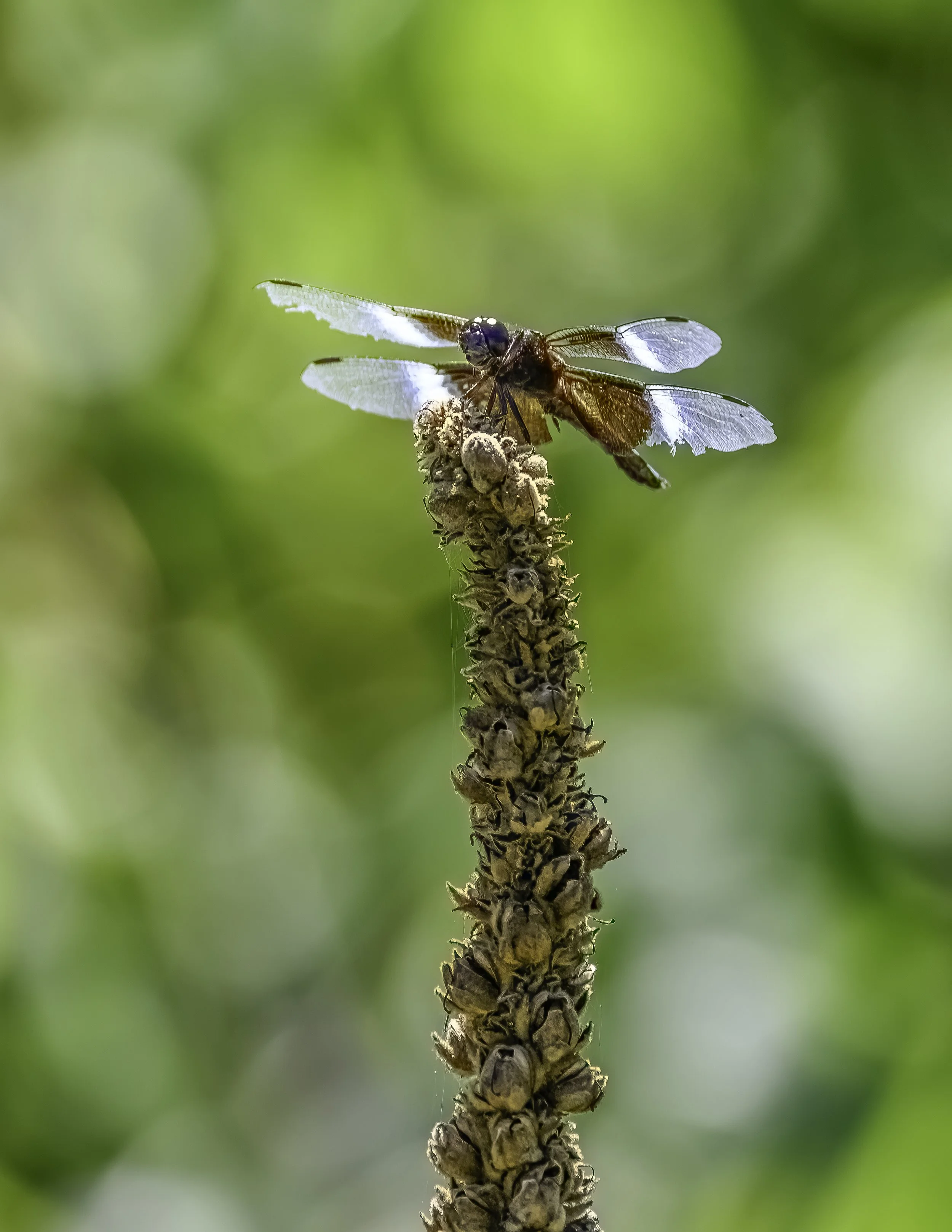
Widow skimmer - Morgan Farm - 8/15/26
As soon as I got out of the RAV, the Widow skimmer was in my line of sight and begging to be photographed, so here it is. This is a relatively large dragonfly, so it’s not easily overlooked. Always fun to photograph these aerial marvels.
There are still more species of butterflies, wasps and bees to be found almost on a daily basis at the pond’s edge where the Purple loosestrife is flourishing right now and is a magnet for a myriad of nectar-lovers.

Purple loosestrife - Morgan Farm - 8/15/26
Purple loosestrife (Lythrum salicaria) is a striking perennial plant with tall spikes of vibrant magenta to purple flowers that bloom through mid to late summer often carpeting wetlands, marshes, and stream edges with dense, showy stands. Though attractive, it is an invasive species in many parts of North America and can rapidly displace native vegetation, reduce wildlife habitat, and alter hydrology by forming monocultures that choke waterways and impede water flow. But if you ask the bees and butterflies around Morgan Farm, they have no complaints.
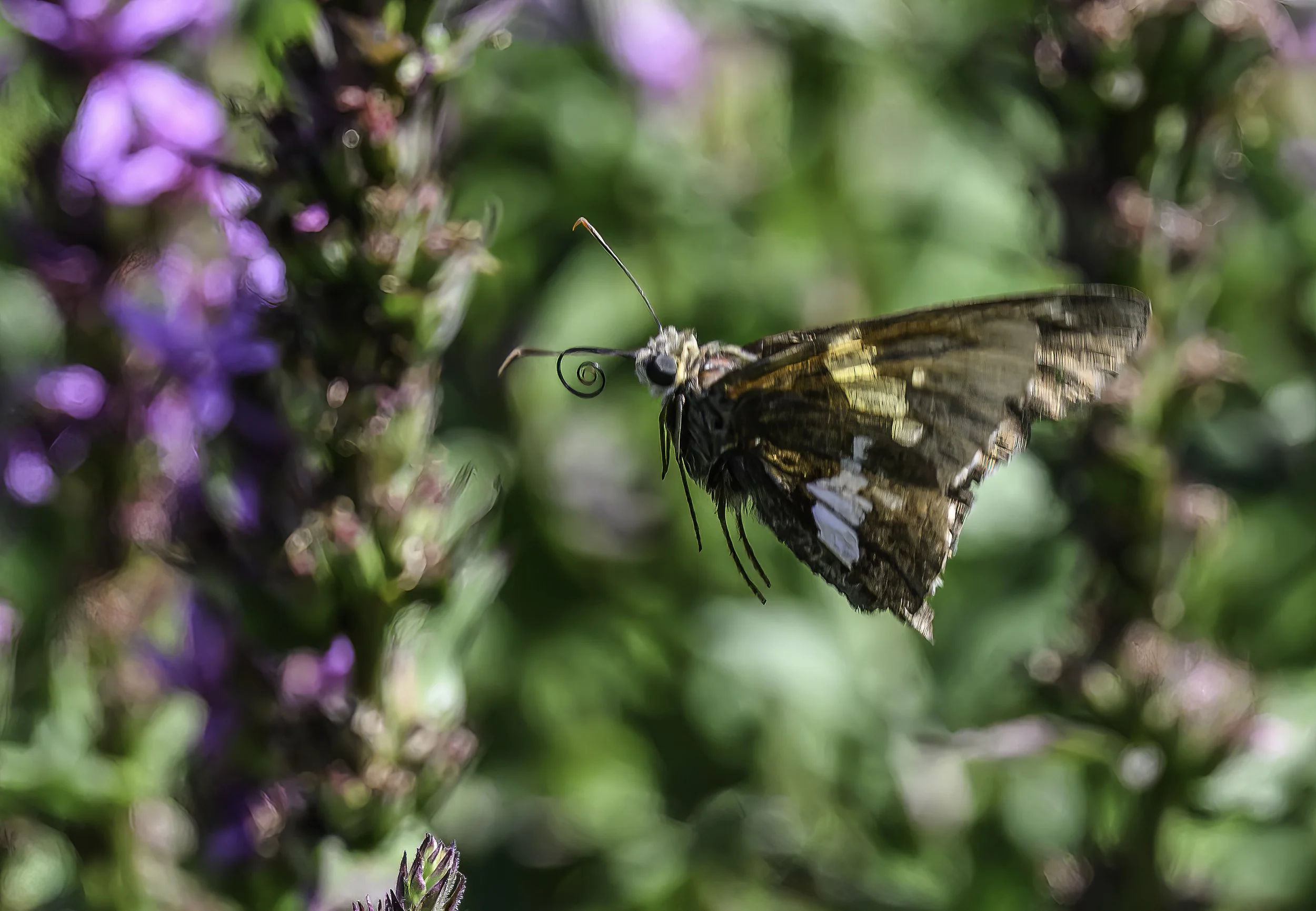
Silver spotted skipper - Morgan Farm - 8/15/26
One of the most common of late summer butterflies is the Silver-spotted skipper. This garden variety butterfly is a robust, fast-flier common across much of North America, recognizable by its brown wings marked with a distinctive silvery-white patch on the underside of the hindwing. Adults favor sunny, open habitats such as gardens, fields, and woodland edges where they nectar on flowers like thistles, milkweed, butterfly bush, and in this case Purple loosestrife. With multiple broods in warm regions and a wingspan typically between 1.5 and 2.5 inches, the silver-spotted skipper is a common and conspicuous member of summer butterfly communities.
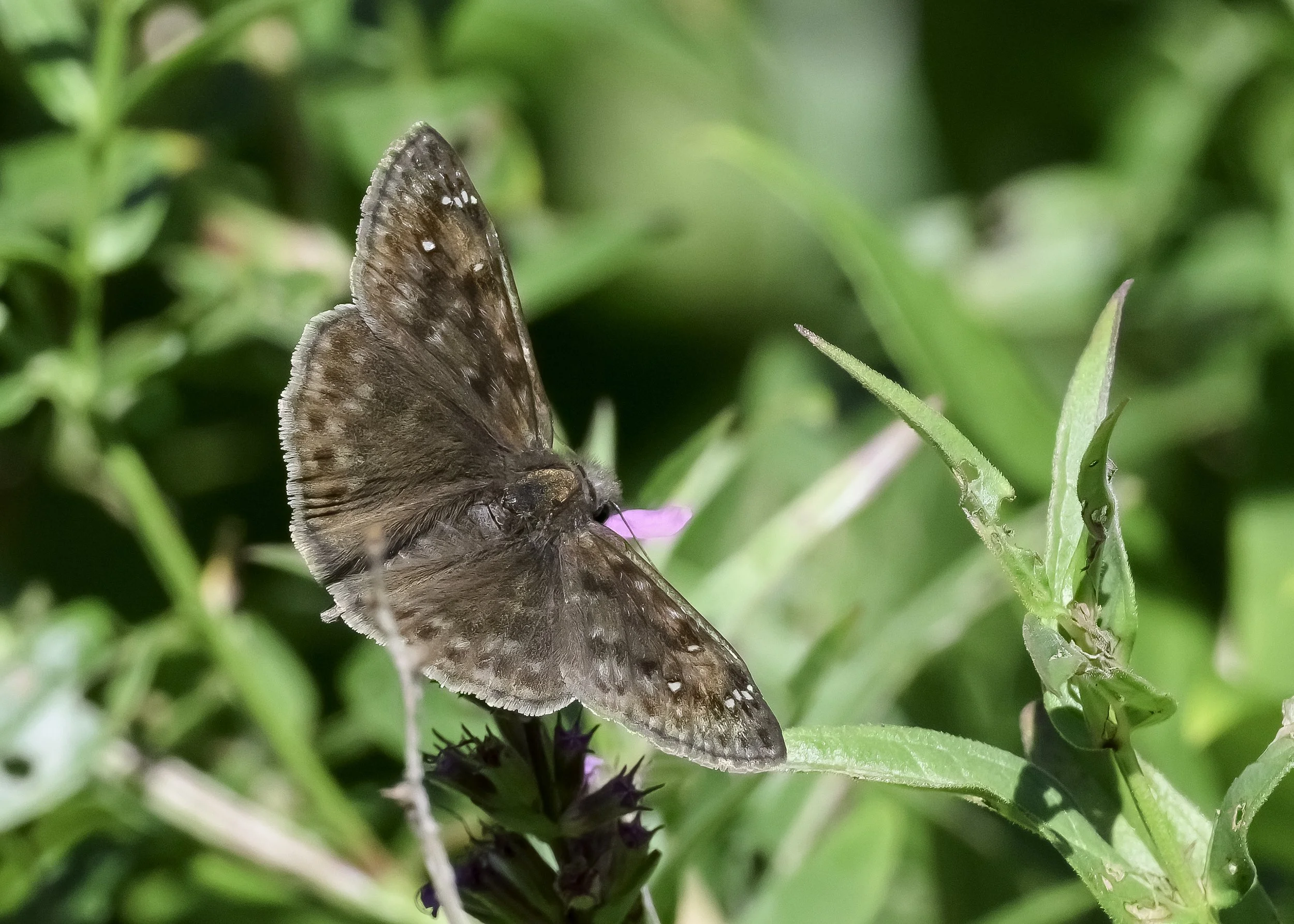
Horace’s Duskywing - Morgan Farm - 8/25/26
Another not-so-common butterfly was also on site this morning. The Horace’s Duskywing is a small, fast-flying skipper butterfly found across much of the eastern and central United States and into parts of Mexico. It is identified its dusky (naturally) brown wings patterned with subtle pale spots and short, rounded forewings. Males such as this individual often show a faint pale stigma on the forewing but are generally less boldly patterned. It frequents open, sunny habitats such as fields, roadsides, and woodland edges where adults sip nectar from a variety of low flowers and are most active in warm, sunny weather.
Next, on to bees and wasps. We have two new species for Natdigital today. First is the Western Honey Bee. Also known as the European Honey Bee, it is the most common “honey bee” species in the world. According to iNaturalist, the latin name Apis mellifera is derived from Apis meaning “bee” and Mellifera which is Latin for “honey-bearing”.x…well named!
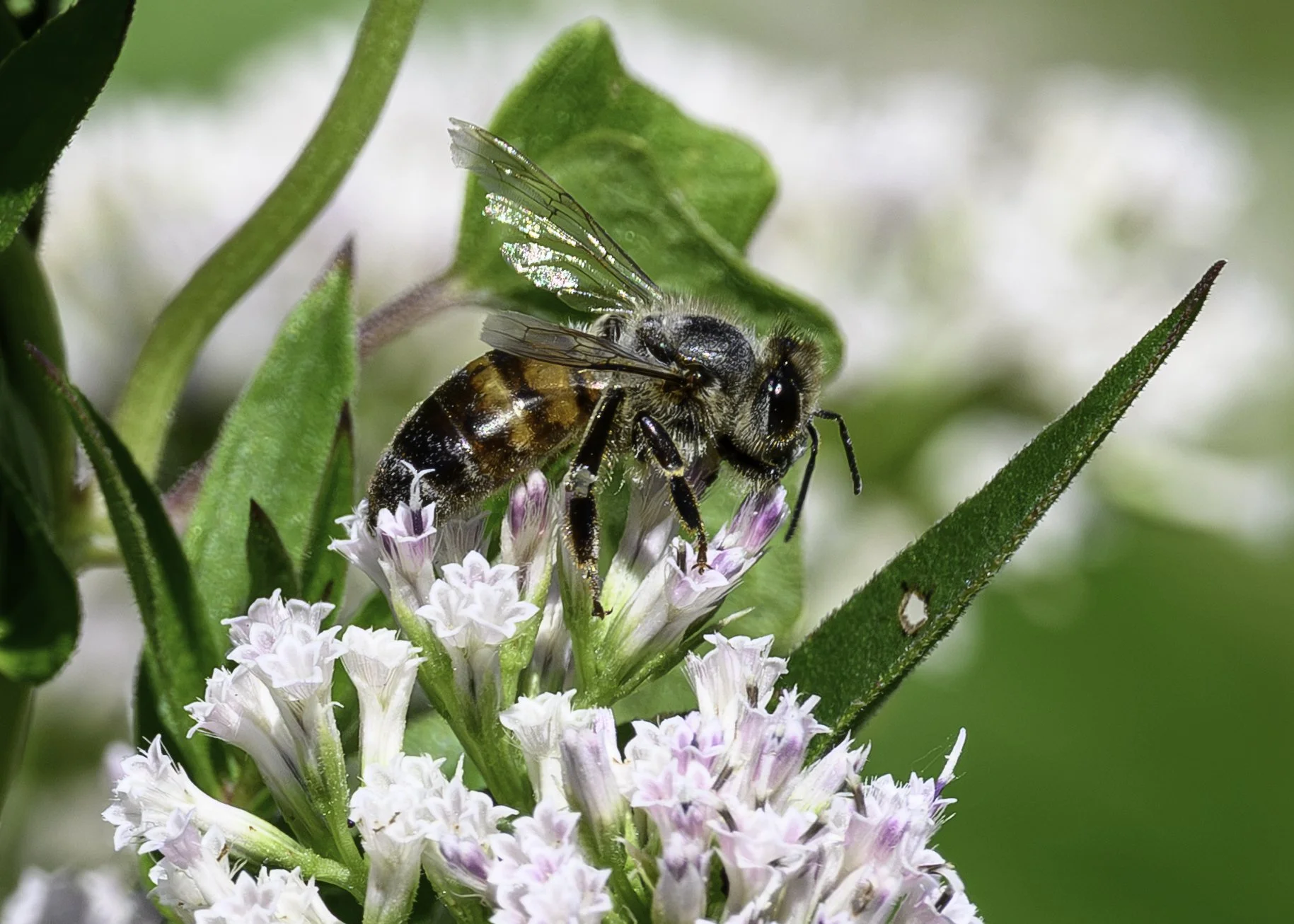
Western Honey Bee - Morgan Farm - 8/15/26
And our second “bee” of the day is actually a wasp, the Double-banded Scoliid Wasp. This wasp is a striking solitary wasp known for its robust, hairy body marked by two distinct bright bands—usually yellowish or orange—across a glossy black thorax and abdomen as well as iridescent bluish-violet wings. Adults are often seen nectaring on flowers while females do what Scoliid wasps do…. search the soil for beetle larvae to provision their burrows, paralyzing hosts and laying eggs so larvae have fresh food. Despite their size and bold colors, these wasps are not aggressive toward humans and rarely sting unless handled, and they play a valuable role in both pollination and biological pest control in gardens and wildlands.
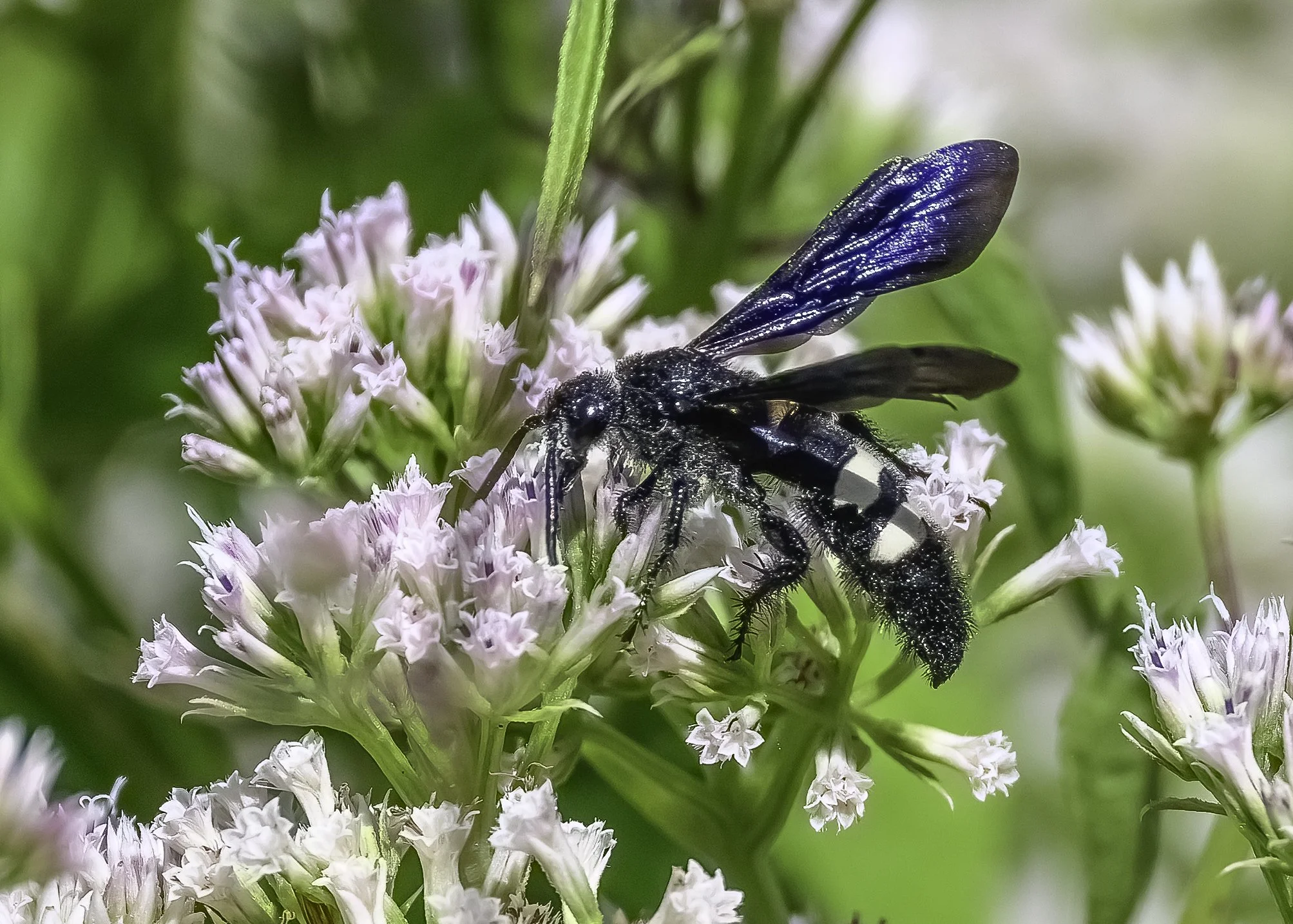
Double-banded Scoliid wasp - Morgan Farm - 8/15/26
Next, we have a new variety of grasshopper for this blog….the Pine tree Spur-throat Grasshopper.
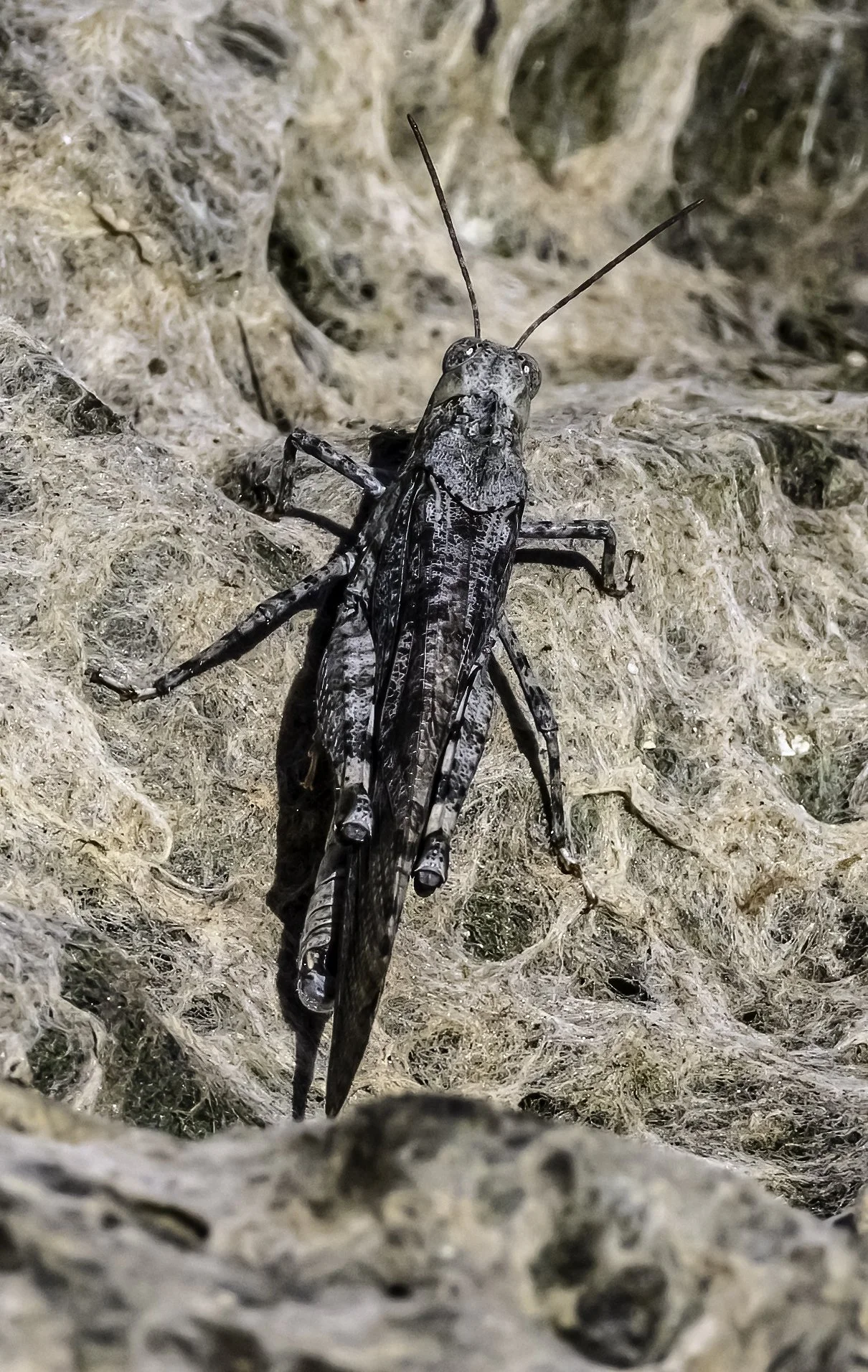
Pine tree Spur-throat grasshopper - Morgan Farm - 8/15/26
The Pine tree Spur-throat Grasshopper is a small, cryptically colored orthopteran often found in coniferous forests where it feeds on pine needles, grasses, and low shrubs. Its stout body, short wings in many populations, and a distinct spur or projection between the front legs help distinguish it from other grasshoppers. Unfortunately, I was unable to get the proper angle to be able to photograph that distinguishing characteristic spur. Active during warm months, it uses tonal camouflage—mottled browns, greens, and grays—to blend with bark and litter, reducing predation from birds and small mammals. Adults exhibit strong hind legs for jumping rather than long-distance flight, and their lifecycle follows the typical grasshopper pattern of egg, nymphal instars, and adult, with eggs overwintering in soil or pine duff.
Our last critter of the day is the Tumbling Ragdoll (Mordella marginata), a small, wedge-shaped tumbling flower beetle notable for its glossy, black to dark-brown body and distinctive tapered abdomen that forms a pointed "tail." which is easily seen in this photograph. Adults are commonly found on flowers, where they feed on pollen and nectar and are most active in warm months. Their name comes from their agile, tumbling flight, a characteristic escape behavior. Larvae develop in decaying wood or plant stems, contributing to decomposition and nutrient cycling. Widely distributed across Europe and parts of North America, Mordella marginata is a harmless and ecologically useful insect that often goes unnoticed due to its small size and quick movements.
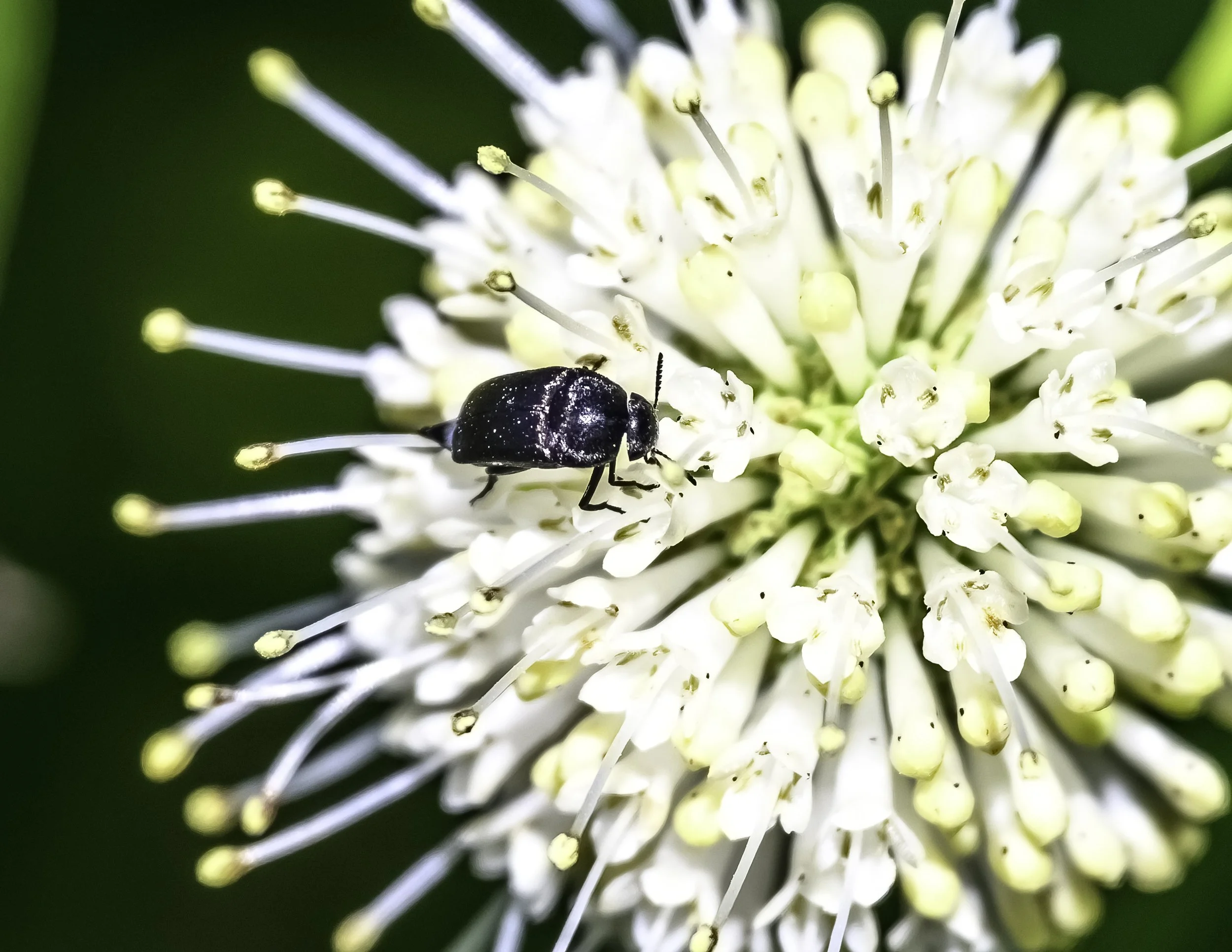
Tumbling Ragdoll - Morgan Farm - 8/15/26
And so, insects continue to occupy most of our time here at Natdigital while the heat of summer persists and the Fall migration has yet to begin in earnest. It will soon be time to head up to the mountain summit to start monitoring the movement of raptors from the north heading to their wintering grounds down south. The summer is quickly fleeting by, so in the meantime, we will get our final doses of grasshoppers, bees, wasps and butterflies.