Monarch migration
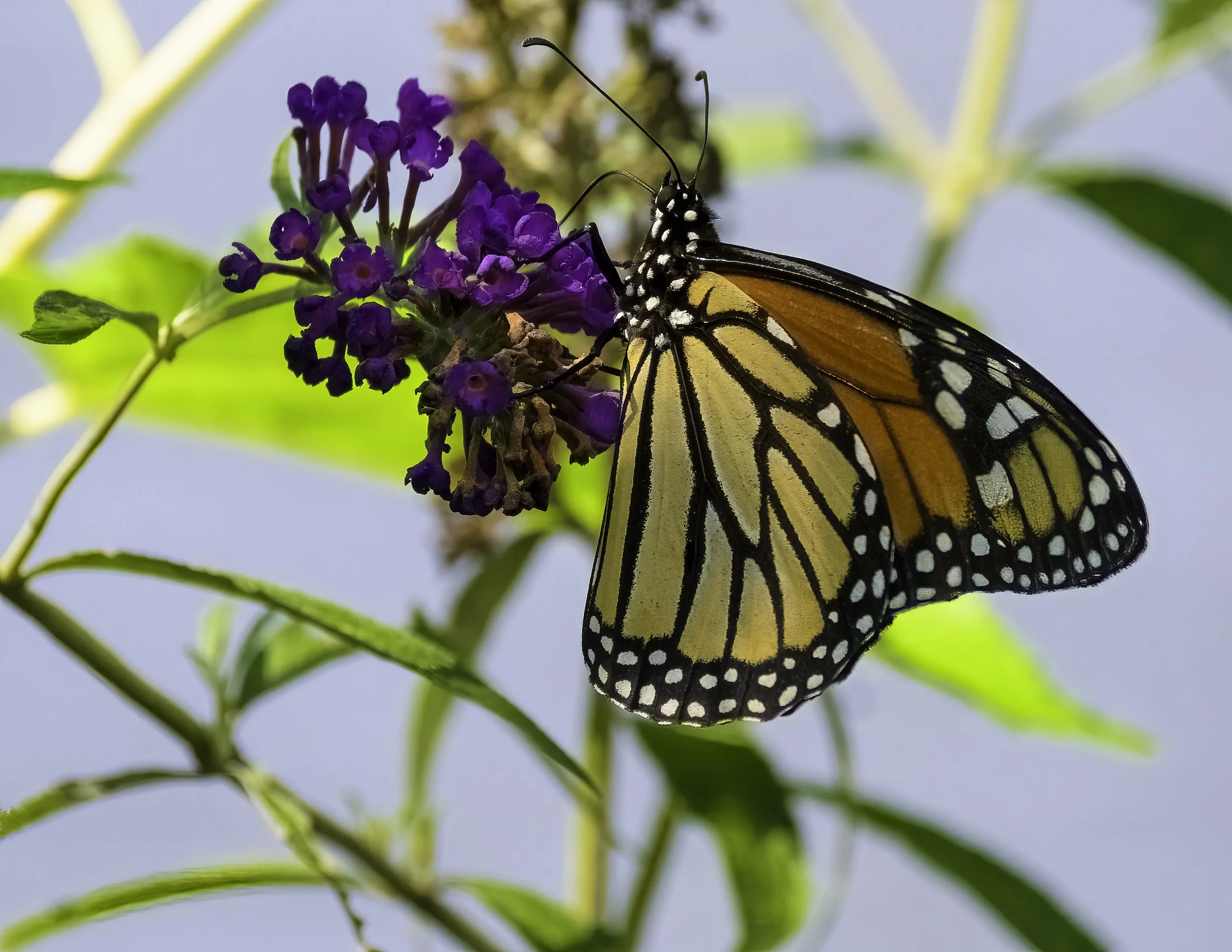
Monarch butterfly - Home garden - August 2026
Monarchs are well known for their incredible journey from across the United States down to Mexico and the California coast. Millions of these beautiful butterflies will travel over 3000 miles to overwinter in the warmer climates in relative safety. Do all monarchs migrate? Well, in fact, it is only one generation out of 4 that will make the trip, and in August, we get to witness the one generation out of four which gets to make the epic trip.
It all began last winter when the first of the overwintering generation of monarchs began their trip home to their breeding sites in North America. Those individuals did not get to make the entire journey north, however. It takes three generations, each traveling one leg of the journey to make it all the way north.
Each generation must at their termination along the route stop, lay eggs (one single egg on a milkweed plant), have the egg turn into a caterpillar such as I found and photographed for this final generation earlier in August.
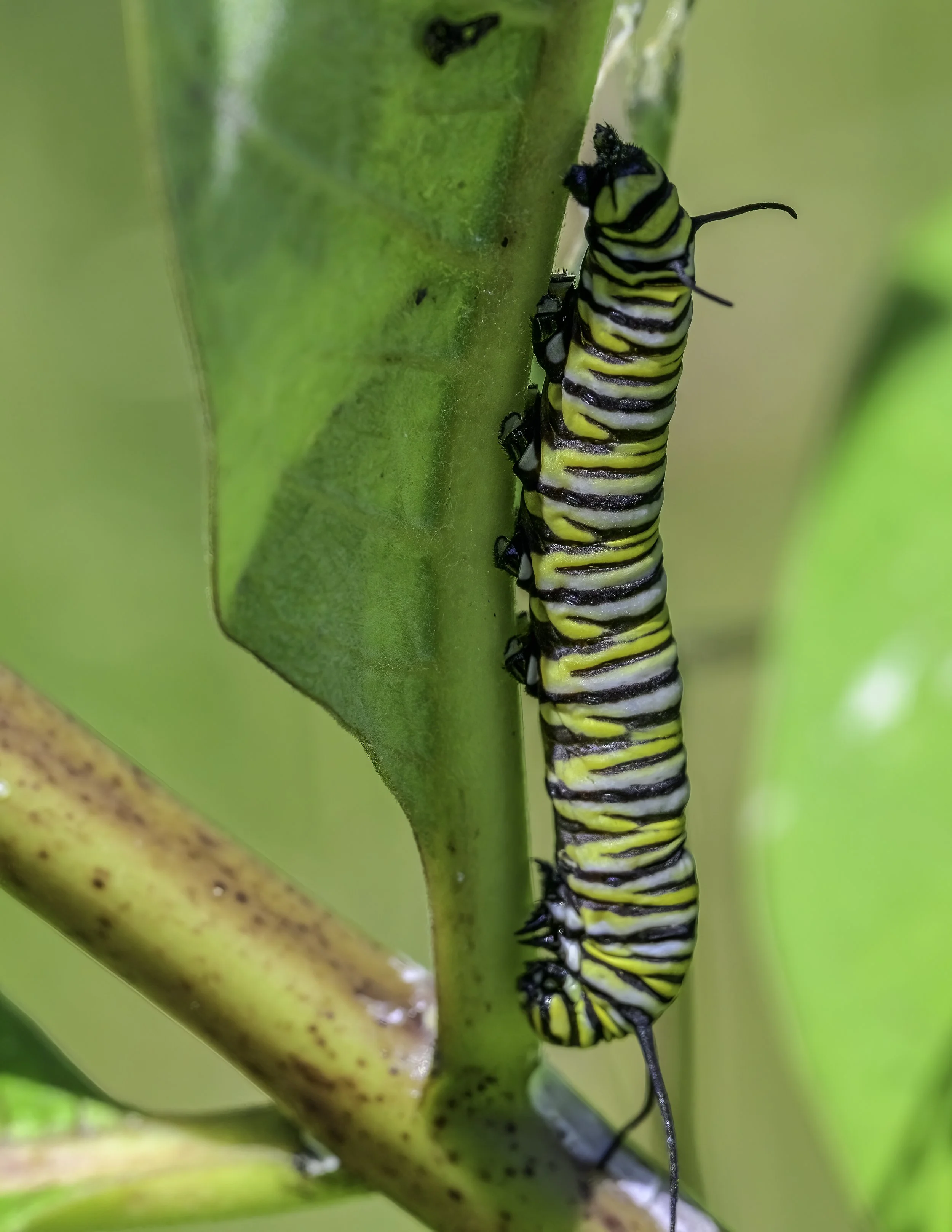
Monarch caterpillar - Silver Mine - 8-4-26
The milkweed is incredibly important for the Monarch due to its toxicity for other insects and birds. The sap is poisonous to most other organisms and since the larva (caterpillar) eat the leaves of the milkweed, they become toxic as well.
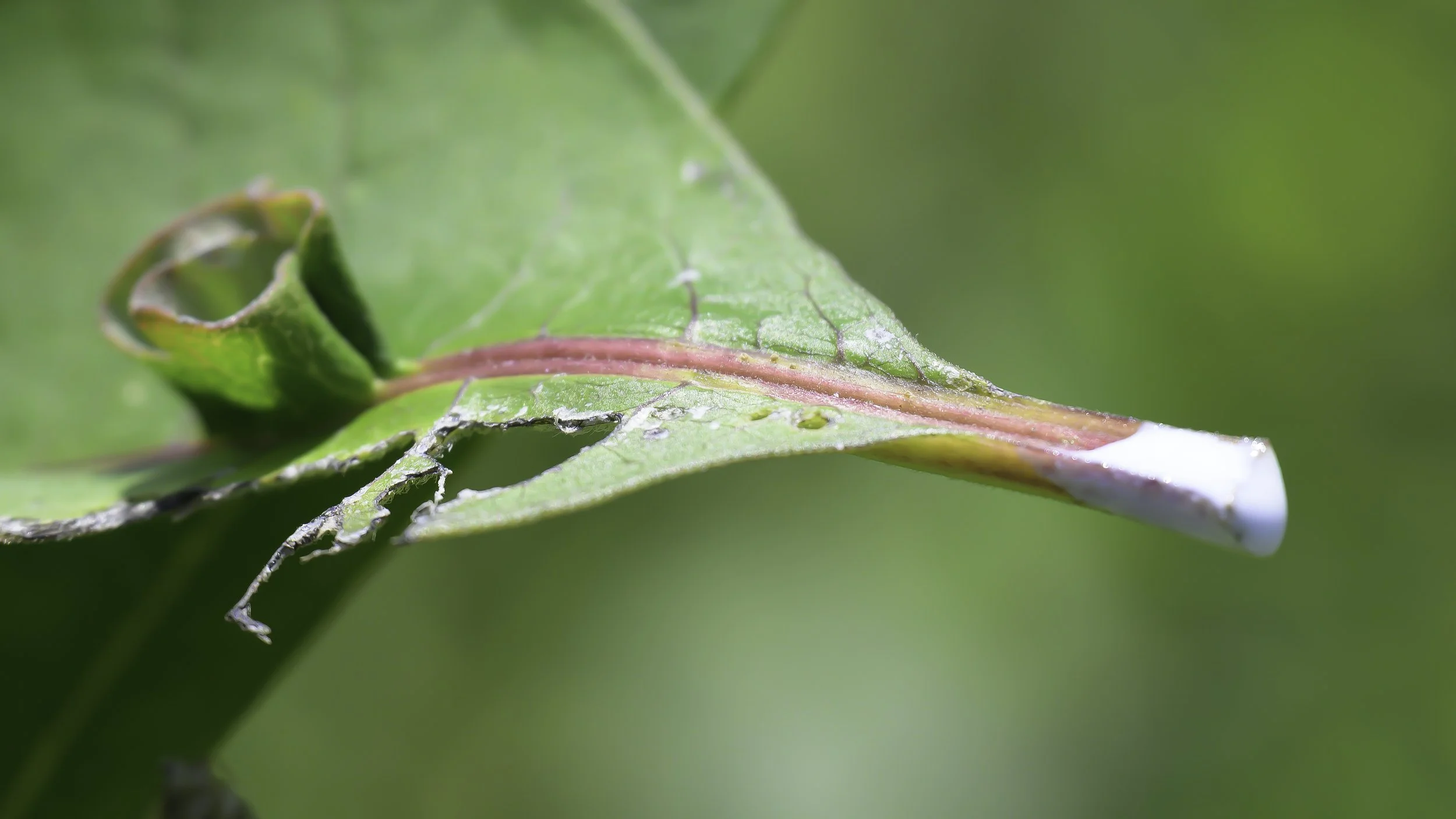
Sap of the milkweed plant - Silver Mine - 8-4-26
Their bright yellow, orange, and black coloration let other animals know “Hey, I’m toxic to don’t even think about eating me!” Eventually, these caterpillar encase themselves in a chrysalis and metamorphose into the beautiful similarly colored and equally toxic butterfly.
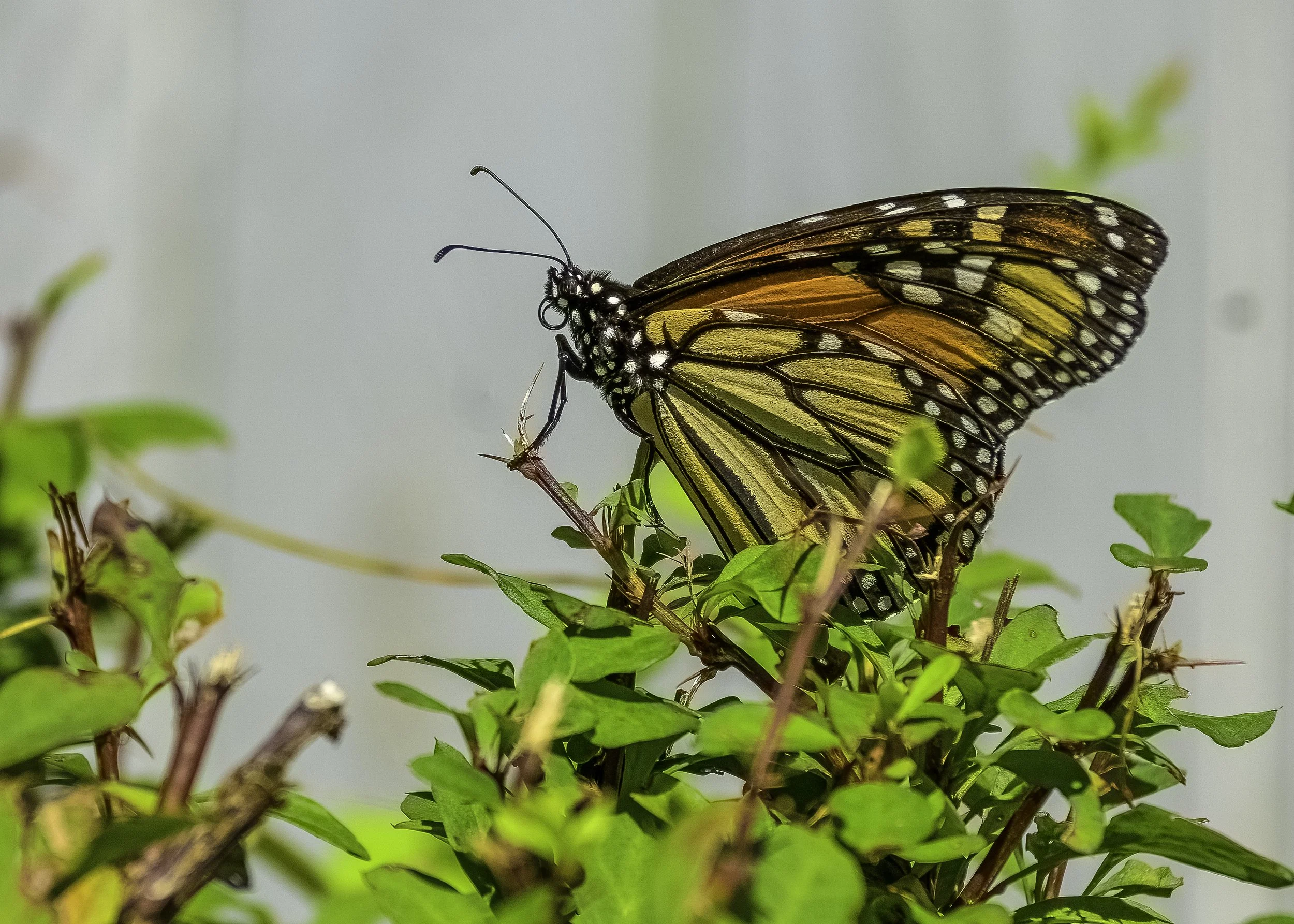
Monarch - Home hedge line - 8-2-26
Since the butterflies leaving Mexico don’t live long enough to make it all the way back to the north country, they must rely on this sequence of egg laying, larva development, and metamorphosis in the chrysalis three more time before the final fourth generation is born and is ready to make the trip back south. These monarchs that we are seeing now are the fourth generation and the “chosen” ones which live longer and can make the trip to Mexico for our eastern group or Southern California for the western population. All in all, a miraculous story that plays out year after year.
Sadly, the gradual loss of host plant milkweed as well as other habitat along the way and overwintering habitat has led to a steady decline in the overall numbers of these gorgeous butterflies. Efforts are being made by organizations and individuals to help the monarchs by planting more and more milkweed and helping to preserve that milkweed which still survives. You can contribute by finding out how to plant milkweed stands in your yard or neighborhood. Check out https://www.monarchwatch.org to learn more.