New sightings
We’re already into the month of August and I keep finding new species of plants, insects, reptiles and mushrooms (yes, mushrooms) to photograph and learn about. We’ll begin the month’s blog with several species I had not yet observed in 2026. The first is another of the dragonflies….a most aptly named Halloween Pennant.
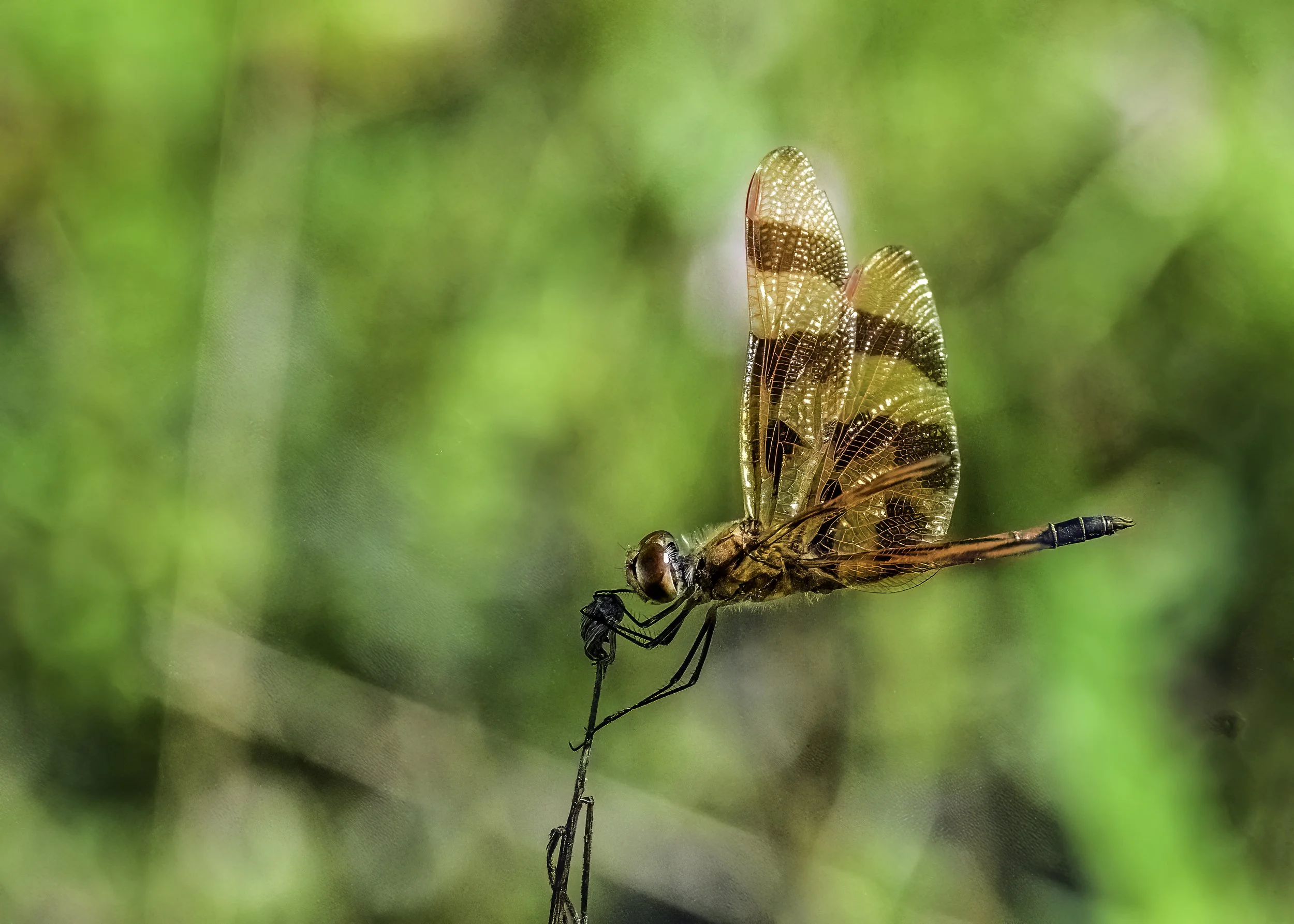
Halloween Pennant - Cragston Lakes - 8/3/26
The Halloween pennant (Celithemis eponina) is a small, brightly patterned dragonfly found across North America, notable for its orange wings marked with dark brown to black bands that give it a festive, autumnal appearance. Adults perch often on emergent vegetation or twigs, fluttering in short bouts as they hunt small flying insects, and are commonly seen in late summer into fall when their coloration blends with waning foliage. Males typically display more vivid wing markings than females including red wing veins which are seen in the images above and below. Both sexes have bulging compound eyes adapted for acute motion detection. Preferring still or slow-moving waters—ponds, marshes, and ditches—its larvae develop in submerged vegetation where they prey on aquatic invertebrates before emerging after several molts.
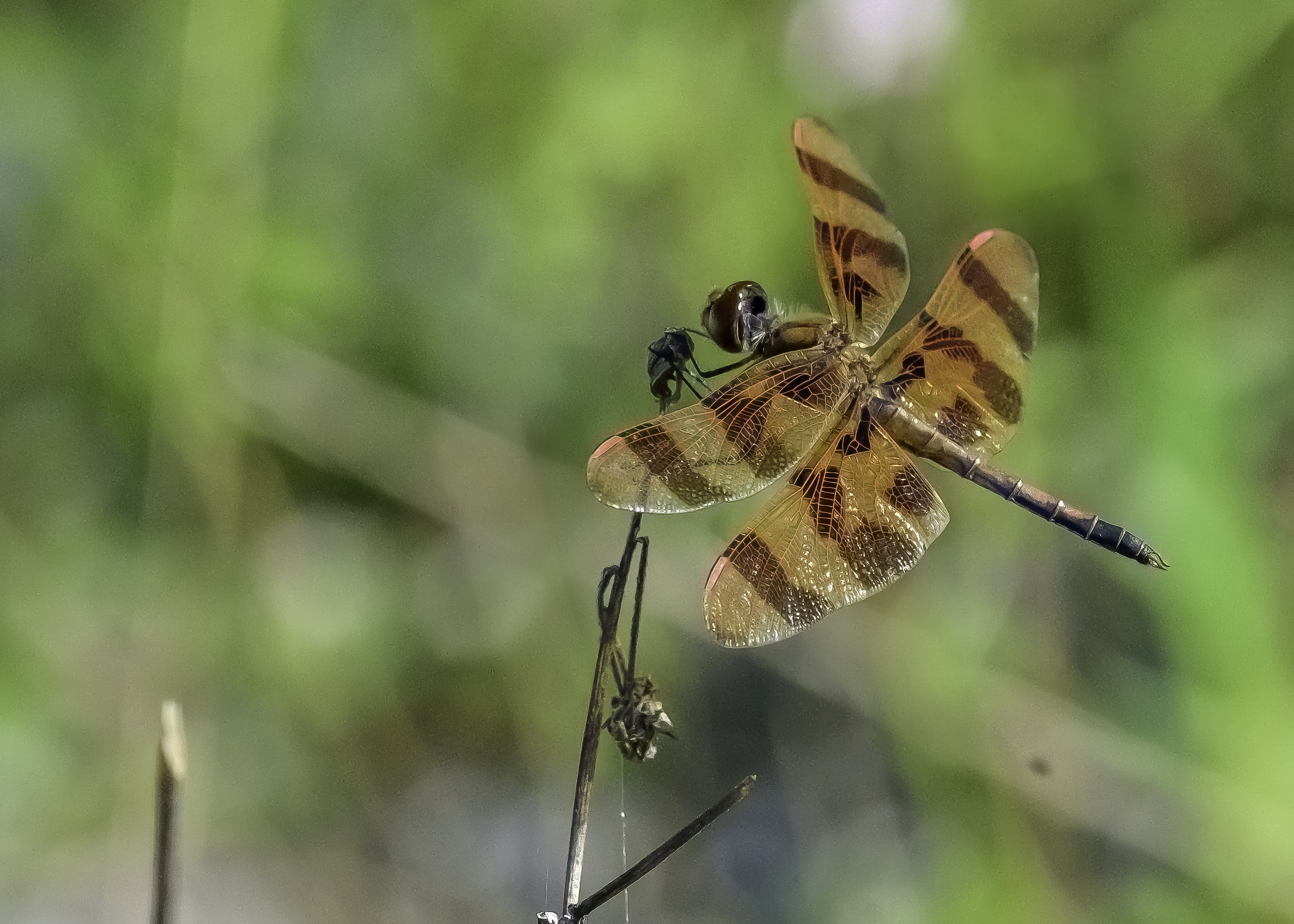
Halloween pennant - Cragston Lakes - 8/3/26
Reptiles have been scarce of late, perhaps due to the copious rain. During dry periods, the snakes and lizards are a bit more on the move as they seek out areas of moisture, but this summer, we have had more than our fair share of rainfall. The image below shows a Five-lined skink which was scurrying across a granite boulder when I first saw him. This is one of a pair that I saw, and both were quite small compared to the adult size of up to 8.5 inches. These guys were about 4 inches in length.
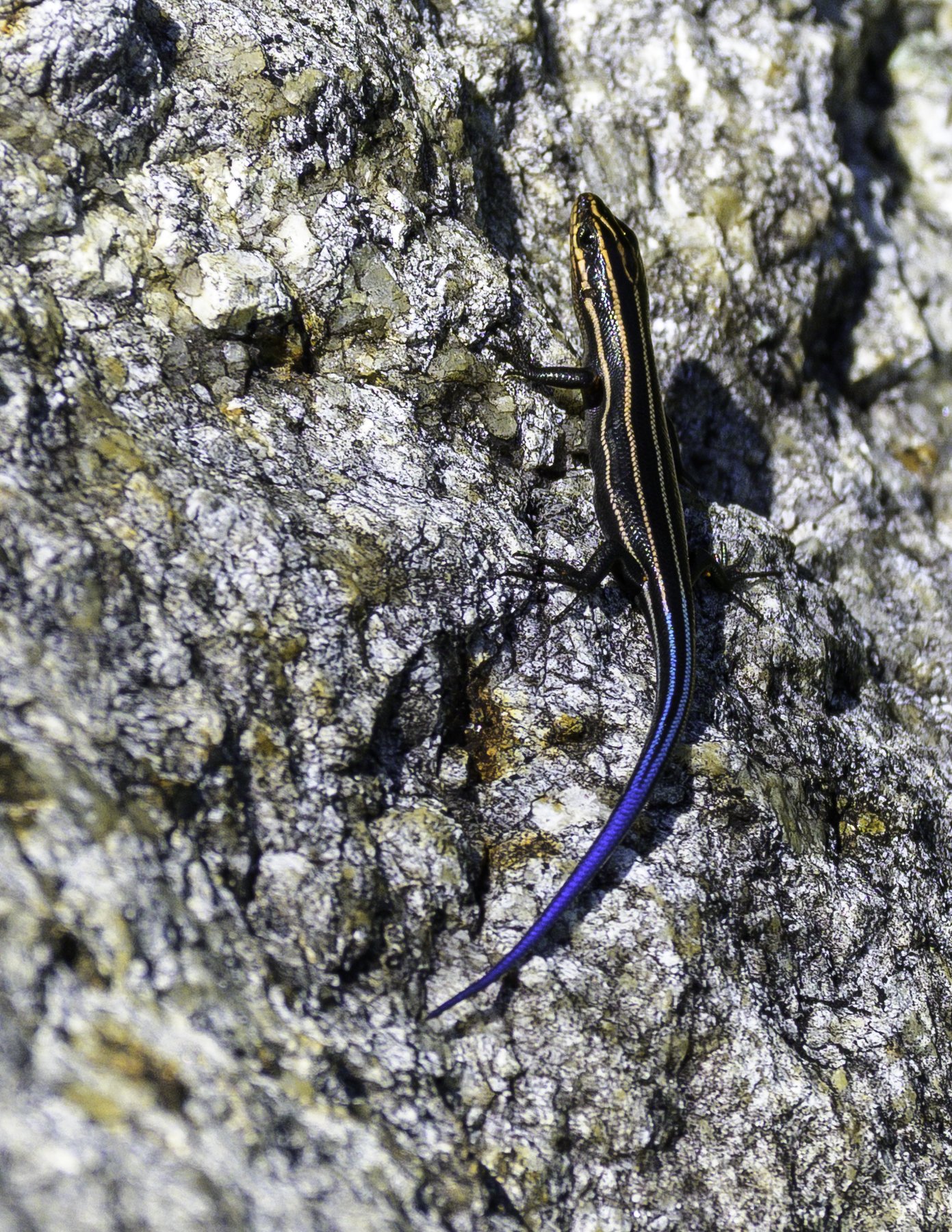
Five-lined skink- Cragston Lakes - 8/3/26 Nikon Z8 with Z100-400 at 250mm, F/7.1, 1/400 sec, ISO 360
The five-lined skink (Plestiodon fasciatus) is a small, smooth-scaled lizard native to eastern North America, recognized by its glossy dark body with five light dorsal stripes and, in juveniles and breeding males, a vibrant blue tail that fades with age. This lizard favors moist, wooded habitats, rocky crevices, and log piles where it hunts insects, spiders, and other small invertebrates and basks to regulate body temperature. the bright blue tail serves to attract any predators to this less vulnerable part of the skink’s body. When the predator grabs the more attractive tail, the skink simply detaches that body part and beats a hasty retreat. The tail will then regrow over time. Ain’t nature amazing?
Next new species for us this summer is another wasp….the Four-banded stink bug wasp.
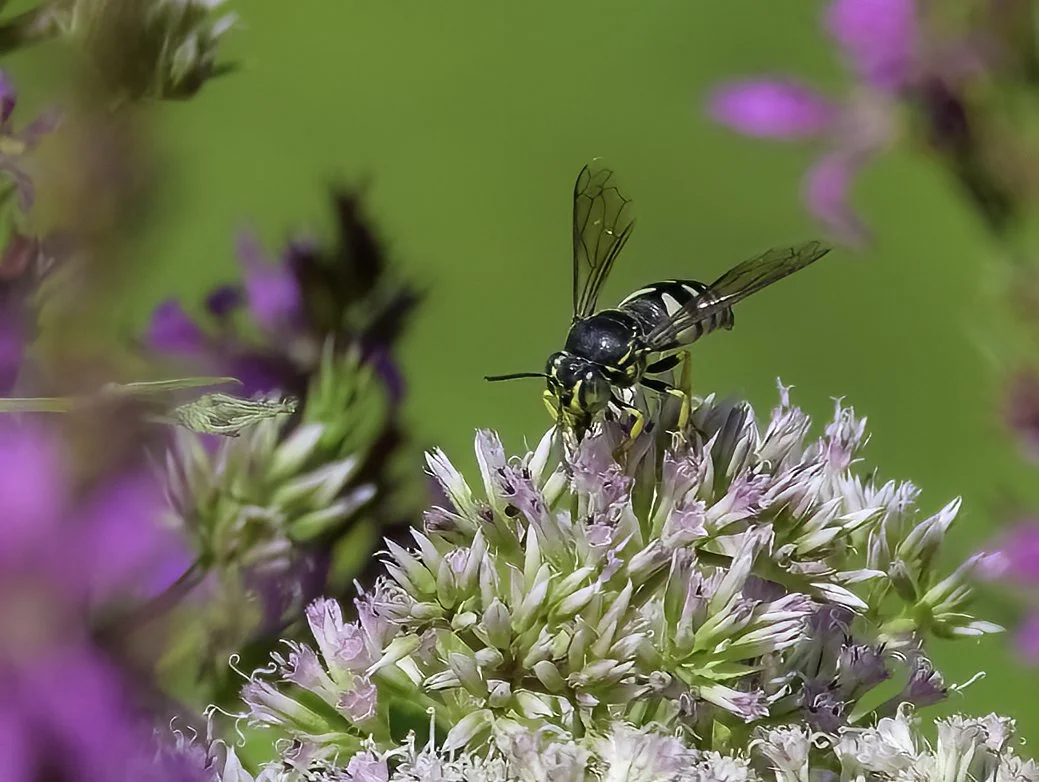
Four-banded stink bug wasp - Cragston Lakes - 8/3/26 Nikon Z8 with Z100-400 at 250mm, F/8, 1/640 se, ISO 280
This is a Four-banded Stink Bug Wasp (Bicyrtes quadrafasciatus). The insect seen here is foraging on flowers, but there is a darker side to the female. She will provision the nest which is in sandy soil with stink bugs or other bugs which she has paralyzed with her sting and them buries the bug to be consumed by her larval offspring. By burying the paralyzed insects, she insures that they will remain “fresh” as opposed to burying dead critters which would rapidly decay in the nest. And so, the larva have fresh meat to help them develop into adulthood.
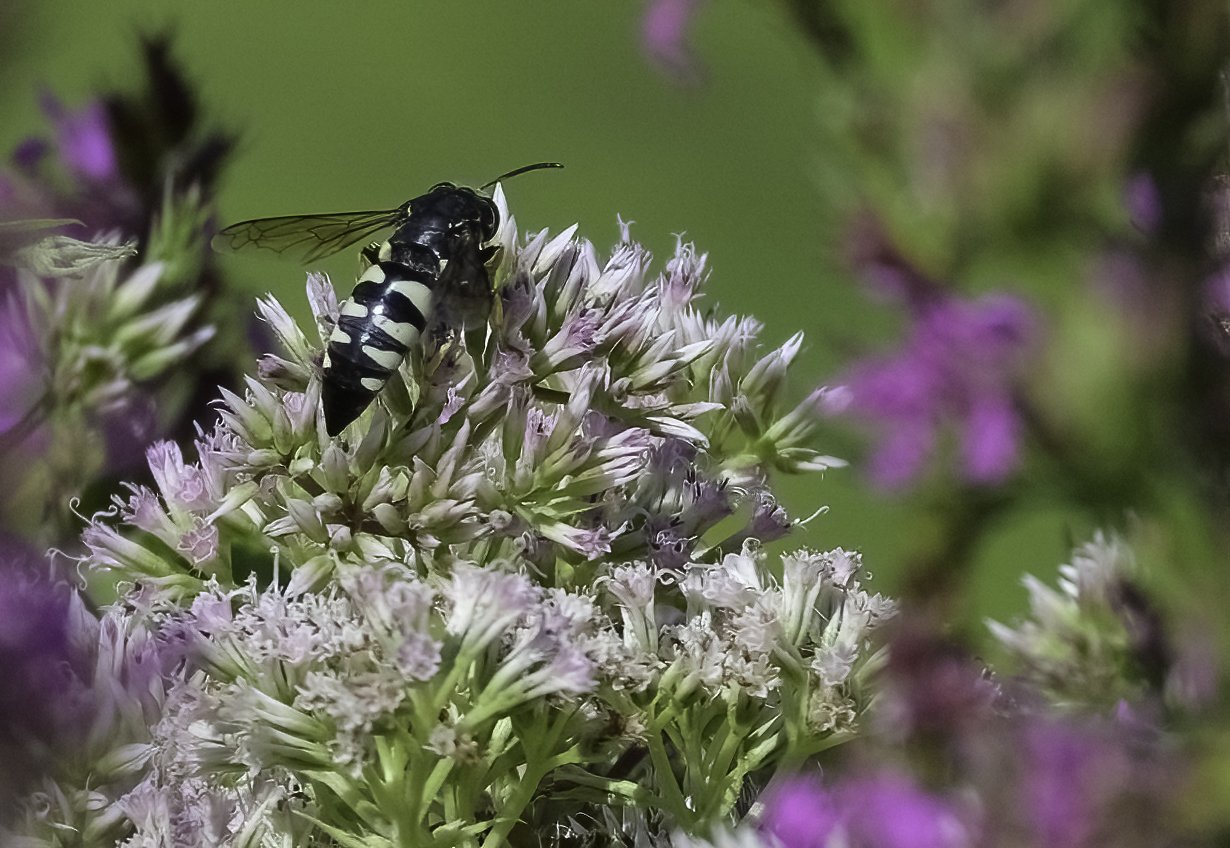
Four-banded stink bug wasp - Cragston Lakes - 8/3/26
Next up, a new grasshopper species to photograph….the Red-legged grasshopper.
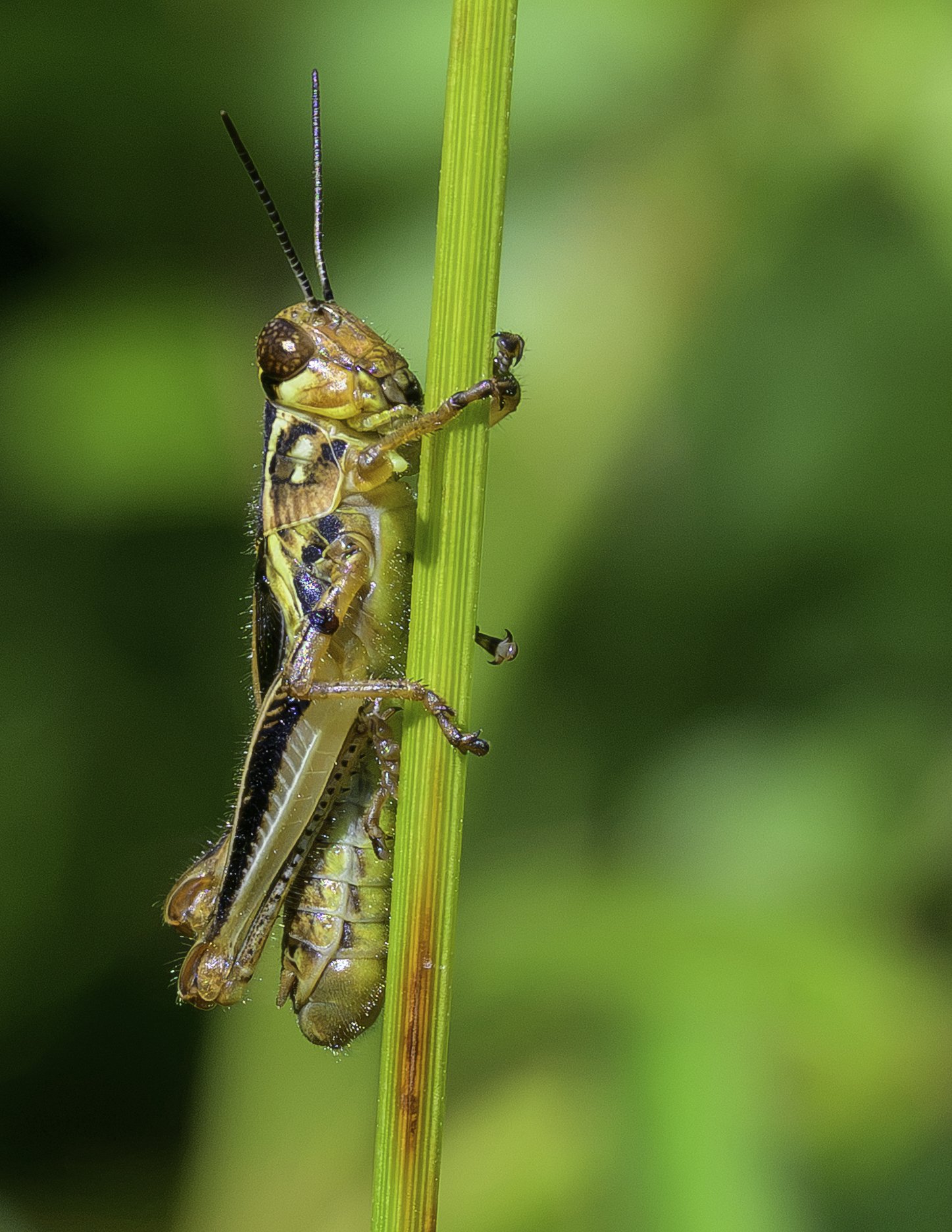
Red-llegged grasshopper - Silver Mine - 8/7/26
The Red-legged grasshopper (Melanoplus femurrubrum) is a common North American short-horned grasshopper recognized by its reddish hind legs and distinctive markings. Adults typically measure 1 to 2 inches long, are active in warm months, and favor grassy fields, meadows, and open woodland edges where they feed on a wide variety of grasses and herbaceous plants. As tiny as this grassphopper is, I probably would have looked right past it had it not made a leap from one blade of grass to another while in my field of view. I love to get nice closeup shots of these small insects as you really miss much of the intricate markings which looking from a distance.
And last but not least, one more new species of wasp for the week - The Smoky winged Beetle Bandit Wasp (don’t you just love these names?).
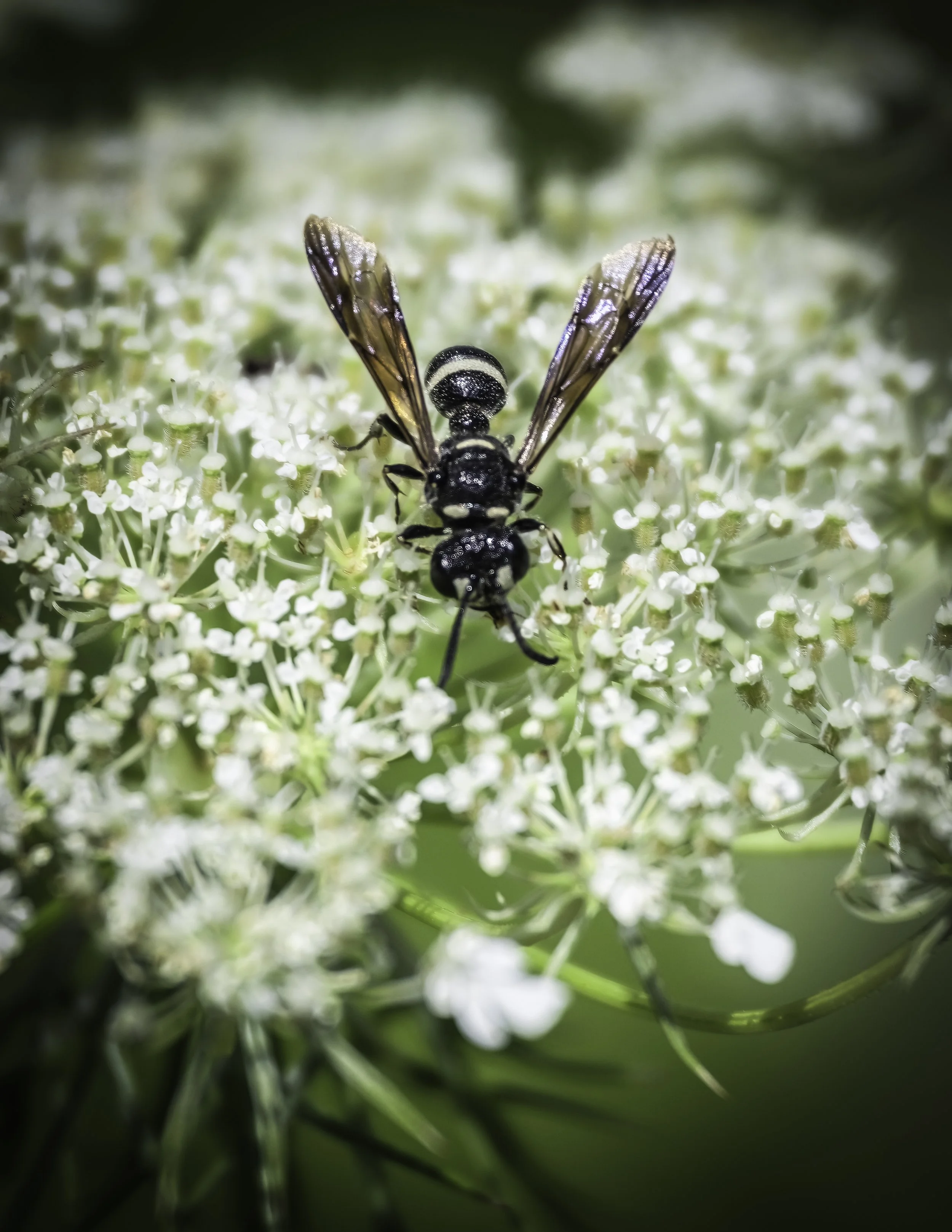
Smoky-winged Beetle Bandit Wasp - Silver Mine - 8/7/26
The Smoky-winged beetle bandit wasp is yet another nest-provisioning wasp. The wings are the most helpful diagnostic characteristic in identifying this wasp. As the name would imply, the wings are a smoky brown color and the second band of the abdomen has a pale yellow band. Females have three spots on the face while the male (seen here) has only two. Like the previously discussed Stink bug wasp, this is another ground nester which also paralyzes its prey and buries it in her nest. She then lays a single egg in the beetle and closes up the nest entrance to allow her egg to hatch and the larva to feed on the still living beetle. Nature sure is amazing if sometimes a bit disturbing.
While in search of wildlife out at Silver Mine, I began to find evidence of the August activity of the Monarch butterflies which I will cover in the next posting of Natdigital….stay tuned!
Tech tip - All of the close-up shots of the insects and the skink seen above were shot with the Nikon Z 100-400 mm lens. I often use the 105mm macro lens for close up shots, but I find that if I’m photographing critters that are a bit more wary and quick to move on, the telephoto lens allows me to stay a short distance away rather then crowding the subject and scaring them off. Keeping the f-stop down around f/8 to f/11 allows for decent depth of field even at that close range. Hopefully, there is ample sunlight to keep the ISO down below 1000 to help keep the image sharp. Shutter speed does not have to be all that fast (say 1/400 sec or so) since we’re not talking a bout high speed individuals in most cases. In the case of stationary subjects like flowers or caterpillars, I can slow the speed down to around 1/125 which keeps the ISO nice a low. Practice and variation in settings when the case permits.