Denizens of the Forest Floor
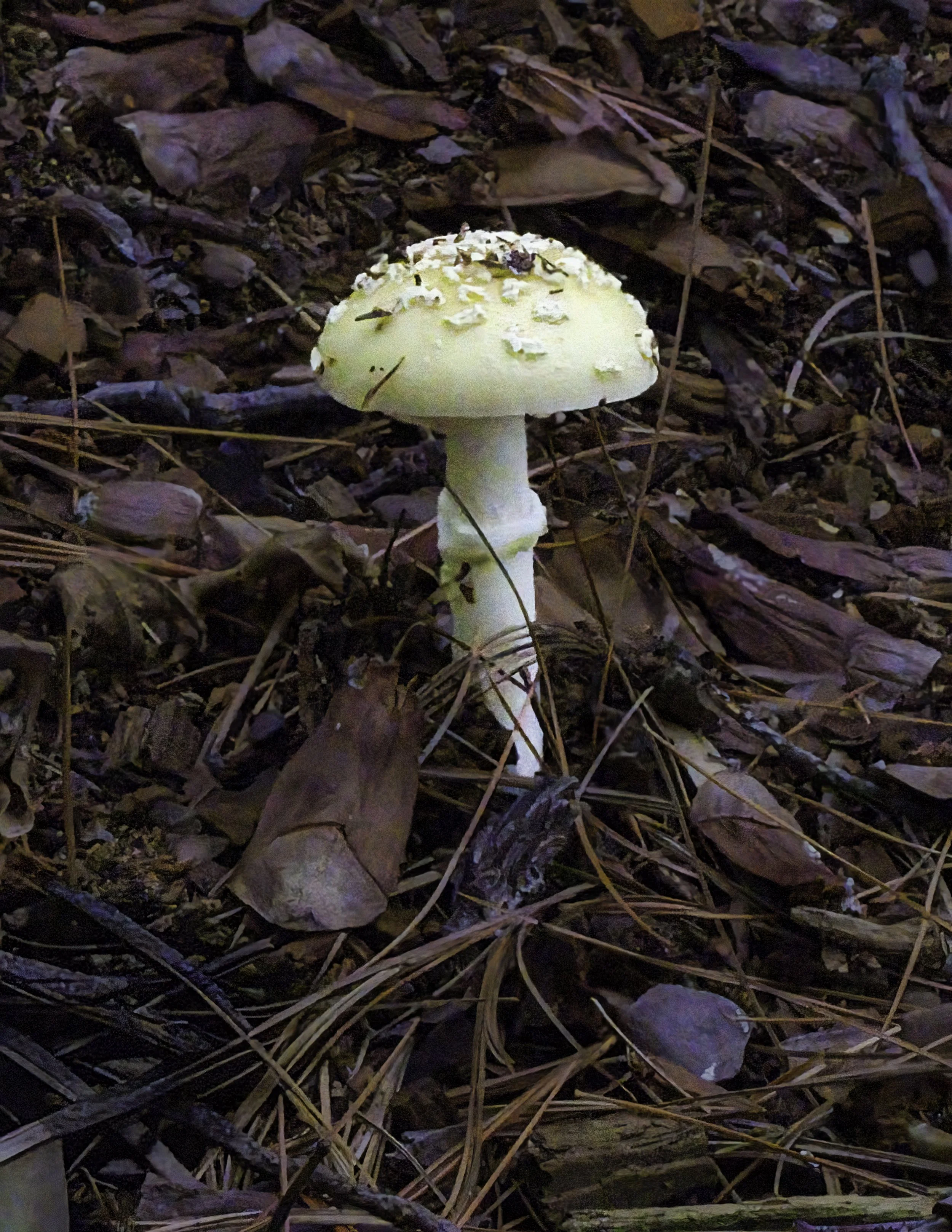
Poison Champagne Amanita - Brooks Lake Park - 8/2/26
When we use the term “denizens”, it often conveys scary animals lurking in the shadows of the forest. Technically, it can mean a plant naturalized in a certain region, but this is not a plant. Nor is it an animal. Mushrooms do not make food from the sun like plants do. Nor do they take in CO2 and release O2 like plants. In fact, they take in O2 and release CO2 making them more like animals than plants! Mushrooms are a kind of living things known as fungi. What we see growing on the forest floor is only a small part of the organism…the “fruiting” body. Most of the organism lies below the surface of the woodlands. Rootlike structures of the mushrooms called “Mycelia” lie beneath most of the forest floor and supply not only its mushroom fruit with water and nutrients but also surrounding vegetation, most notably trees.
The first mushroom found and photographed is the Poison Champagne Amanita seen in the image above. Poison Champagne Amanita is a pale, yellowish-beige mushroom with a sticky cap and a distinctive, slightly mealy or radish-like odor. While not the deadliest of Amanitas, it contains toxins that can cause severe gastrointestinal upset and has been reported to produce kidney and liver damage in some cases, so it should never be consumed. Let me publish a disclaimer here….I AM NOT A MUSHROOM EXPERT!!! I am learning about mushrooms by photographing them and then researching them to find out what I can. Take these identifications with a grain of salt. If you know any are are mislabeled, please leave me a note on the comments section at the end of the blog. Basically, I am posting this blog because I find these organisms fascinating and in many respects beautiful. So do not assume I can tell you what wild mushrooms are edible and which are not. I simply cannot with any confidence whatsoever tell you that “oh yeah, that’ll taste yummy in your salad or on your pizza”. My advice, if you know as much as I do about mushrooms, don’t eat them unless they come from the produce section of Hannafords!
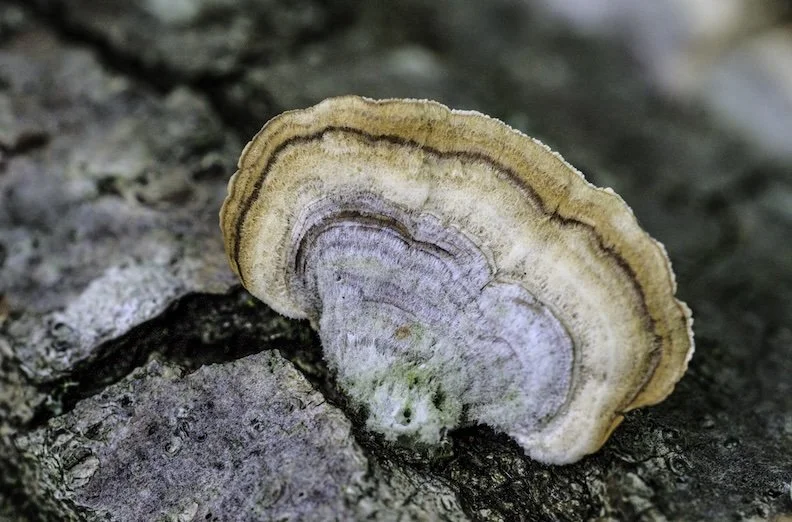
False Turkeytail - Brooks Lake Park - 8/3/26
False turkeytail (Stereum ostrea and related Stereum species) is a thin, leathery bracket fungus. Identified by its concentric zones of color and layered growth on dead wood. This fungi usually grows in overlapping rosettes on decaying hardwood, favors warmer, more humid climates, and plays an important role in wood decay by breaking down lignin and cellulose. While visually attractive, it is considered inedible. These fungi thrive in wet environments and are generally found on decaying wood in hardwood forests such as we have at Brooks Lake Park.
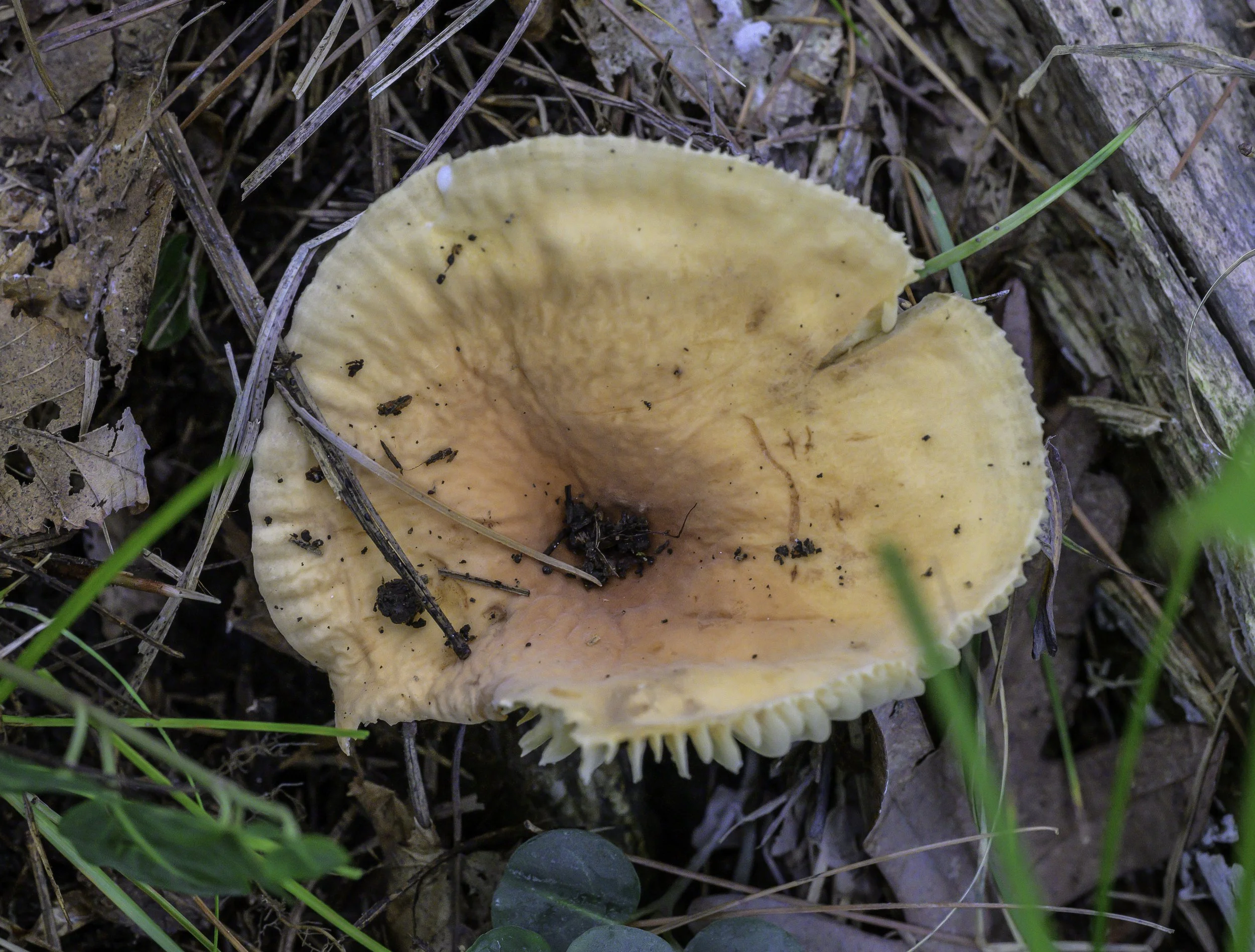
Hygrophorus milky - Brooks Lake Park - 8/3/26
Hygrophorus milky is known as a “Mycorrhizal mushroom” meaning that it forms relationships with trees by their root connections. It is so named because when disturbed, this mushroom releases a latex substance from the gills found on the underside of the mushroom.
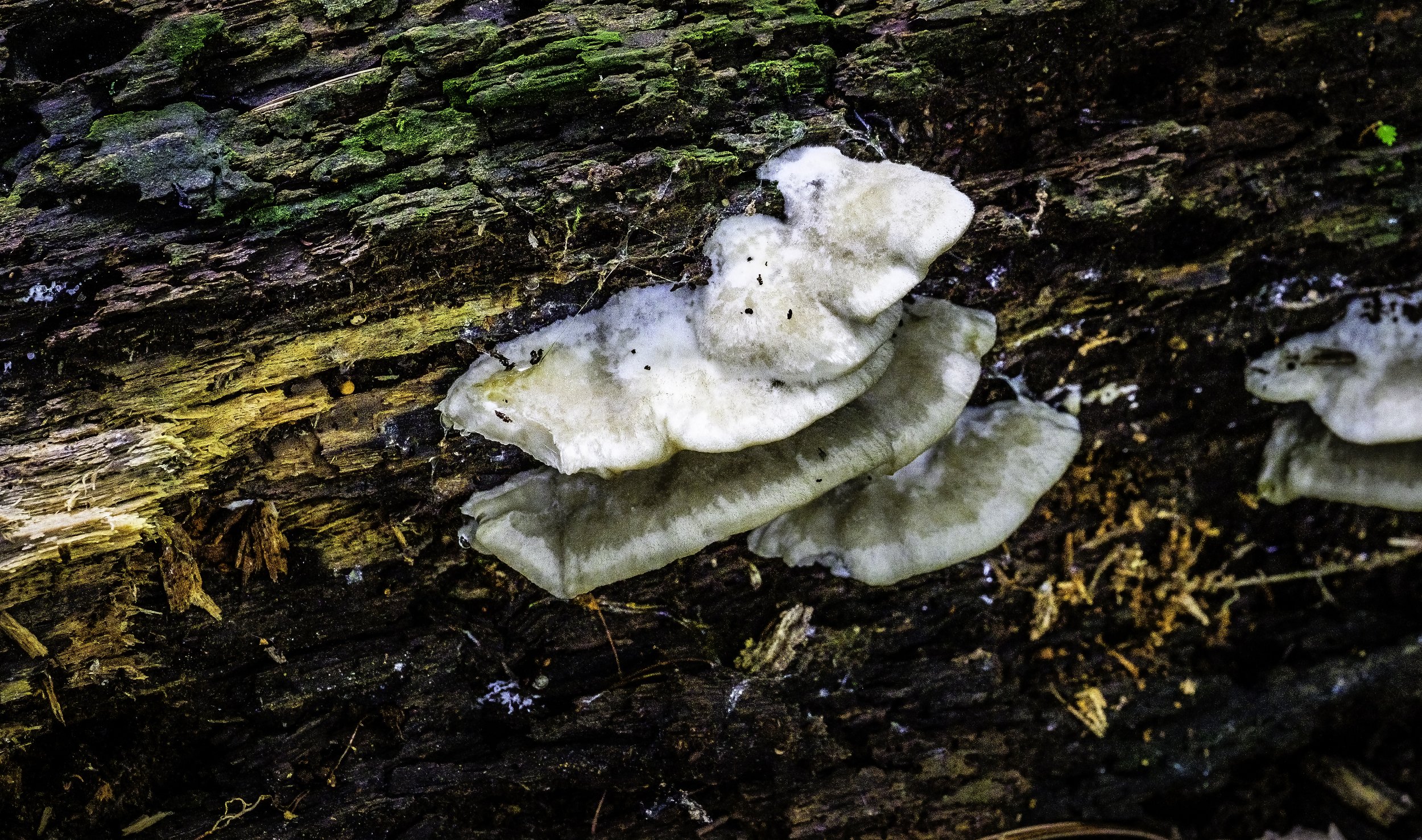
White cheese polypore - Brooks Lake Park - 8/3/26
White cheese polypore (Tyromyces chioneus), also called the white pore fungus, is a small-to-medium bracket mushroom commonly found on dead hardwoods across temperate forests; it forms thin, soft, white to cream-colored semicircular caps with a smooth to slightly velvety surface and a pore-bearing underside that is initially white but may yellow with age. Typically appearing in late summer through autumn, it favors deciduous hosts such as birch and beech and often grows in overlapping clusters, contributing to wood decay by causing white rot that breaks down lignin and leaves the wood lighter and fibrous (note decaying wood in photo). The flesh is soft and pliant when fresh—hence the common name referencing a cheese-like texture.
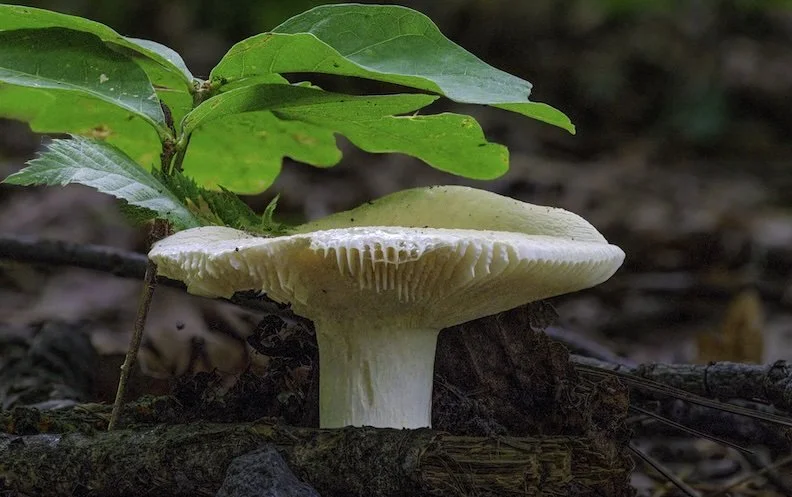
Yellow-green russula - Brooks Lake Park - 8/3/26
Yellow-green Rusulla - Brooks Lake Park - 8/3/26
Yellow-green russula (Russula aeruginea), a striking woodland mushroom found across North America and Europe, is recognized by its vivid yellowish-green cap that often fades with age and a firm, white stipe (stem in mushroom-speak) and gills; it typically grows under birch and conifer trees in late summer to autumn. This is another mushroom that forms mycorrhizal associations that aid tree nutrient uptake. The cap ranges from 3 to 8 cm, sometimes slightly sticky when moist, and the brittle flesh snaps cleanly, a characteristic of Russula species. While generally considered edible with a mild to slightly peppery taste when young, correct identification is important because some lookalikes can be inedible or cause gastrointestinal upset (remember my earlier admonition regarding my level of expertise in shroom id!). Ecologically, Yellow-green russula contributes to forest health through symbiosis with roots and serves as a food source for small mammals and invertebrates.
There are literally thousands of species of mushrooms out there, so you can certainly find new species to start your new “year-list” when the birding activities are at a lull. Especially in the “dog-days of summer” in the warm humid weather, it’s a great way to spend some time in the relative coolness of the forest. Try it…you’ll like it!
Tech Tip - Mushroom photography is benefitted by two practices. First, you really do have to get down on your belly and photograph these guys from their “eye-level”. I was happy nobody was around watching an 80 year old guy trying to right himself from a slippery forest floor! Secondly, “focus stacking” where you take multiple images at ever-so-slightly different focus points and then stack them in Post-processing really helps get the entire mushroom in focus. All that being said, you can still get nice shots using your cell phone and just bending over.
Second recommendation - I just started using a new app called “Picture Mushroom”….free for the first 7 days to try it out and then $29.95/yr. Not cheap, but it does seem like the most reliable and easy to use app for mushroom id out there. If you find yourself getting into mushroom ID….just saying.