Cedar Pond Meadows - II
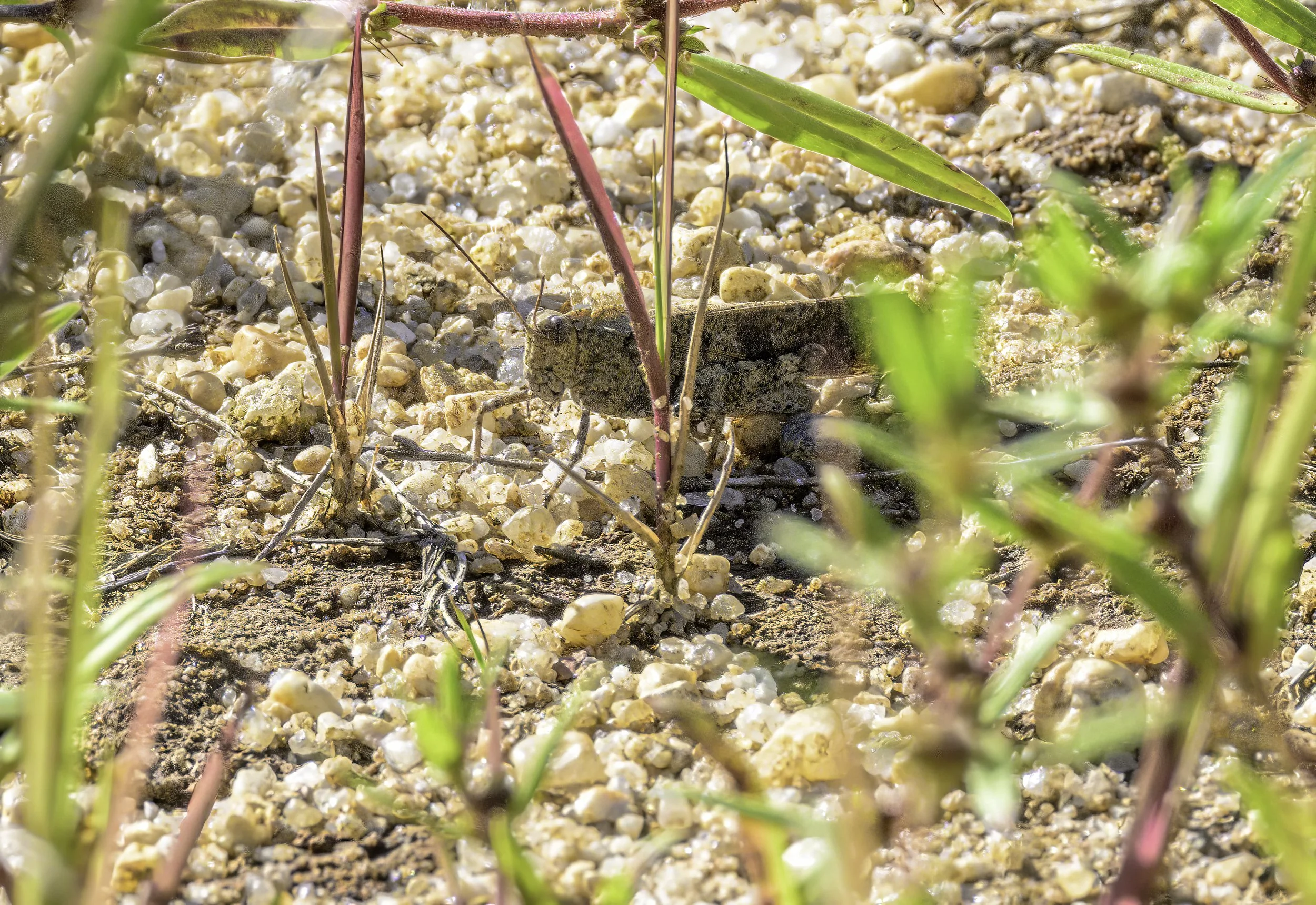
Carolina Grasshopper - Cedar Pond Meadow - 8/26/26
Today we follow up on yesterday’s posting of the butterflies and moths I found in the meadow which has taken over the old baseball field along Cedar Pond Road below the Lake Tiorati dam. Since today’s posting will concentrate on the grasshopper species that I found inhabiting the meadow, I figured I reprise the shot of the Carolina grasshopper which led off the Part I post. By far the largest and the most conspicuous, this species has plenty of company hiding out in the taller grasses beyond the gravelly turf upon which the Carolina specie was found. Nest up are a group of smaller and well camouflaged members of the Tettigoniidae and Orthoptera.
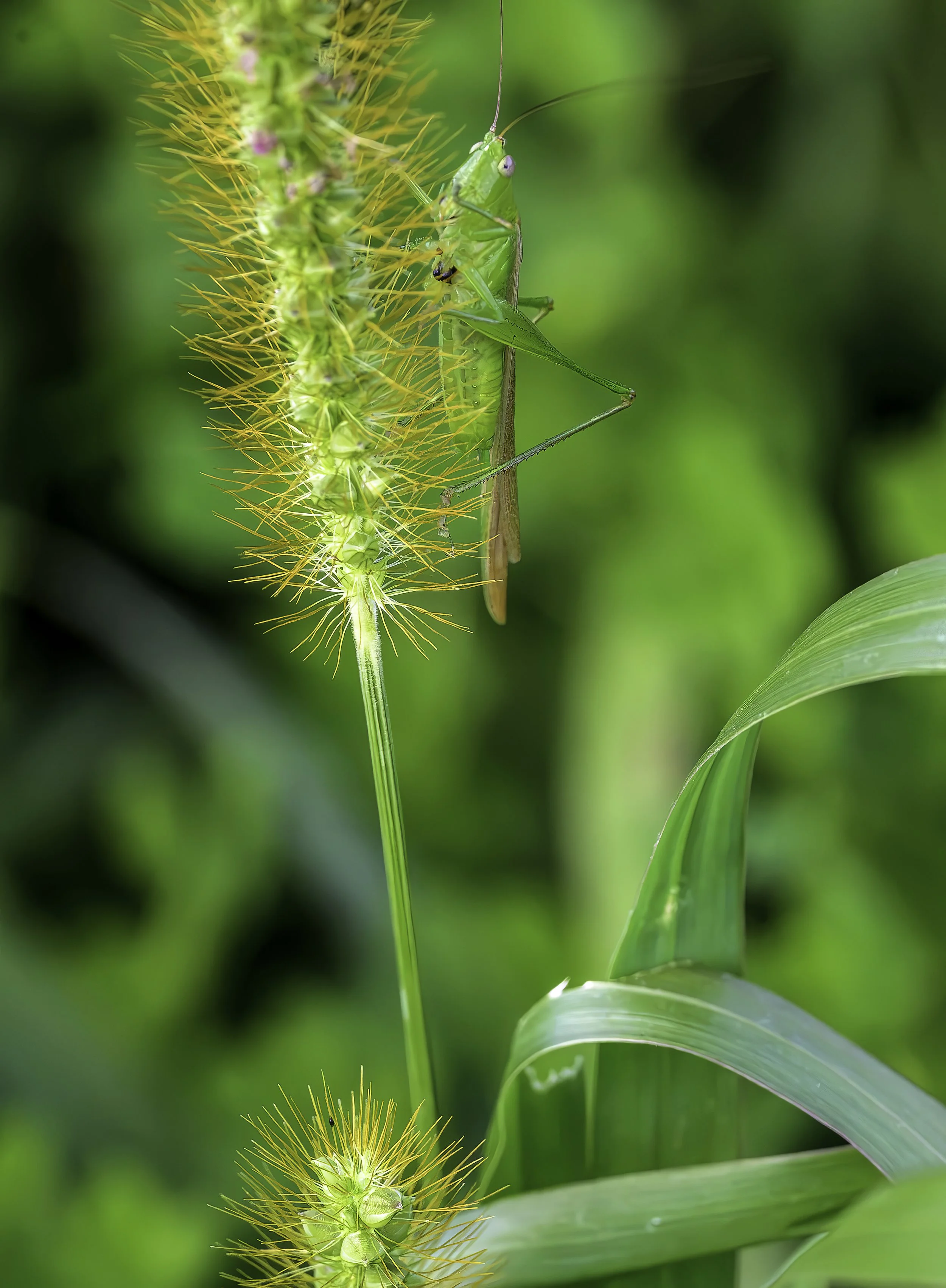
Slender Meadow Katydid - Cedar Pond Meadow - 8/26/26
The Slender Meadow Katydid has an elongated body, narrow wings, and a characteristic sharp, pointed cone on the head (See image below). Adults typically measure about 0.6 to 1 inch long and blend seamlessly into grasses and meadow vegetation as can be seen in the image above. Active mainly in late summer and early fall, males produce a soft, rapid trill by rubbing their forewings together to attract females, and their diet consists largely of grasses and small insects, making them both herbivores and occasional predators. They favor open, sunny habitats such as fields, roadside verges, and marsh edges where dense grass provides food and cover, and their cryptic coloration plus slow, deliberate movements help them avoid predators like birds and spiders.
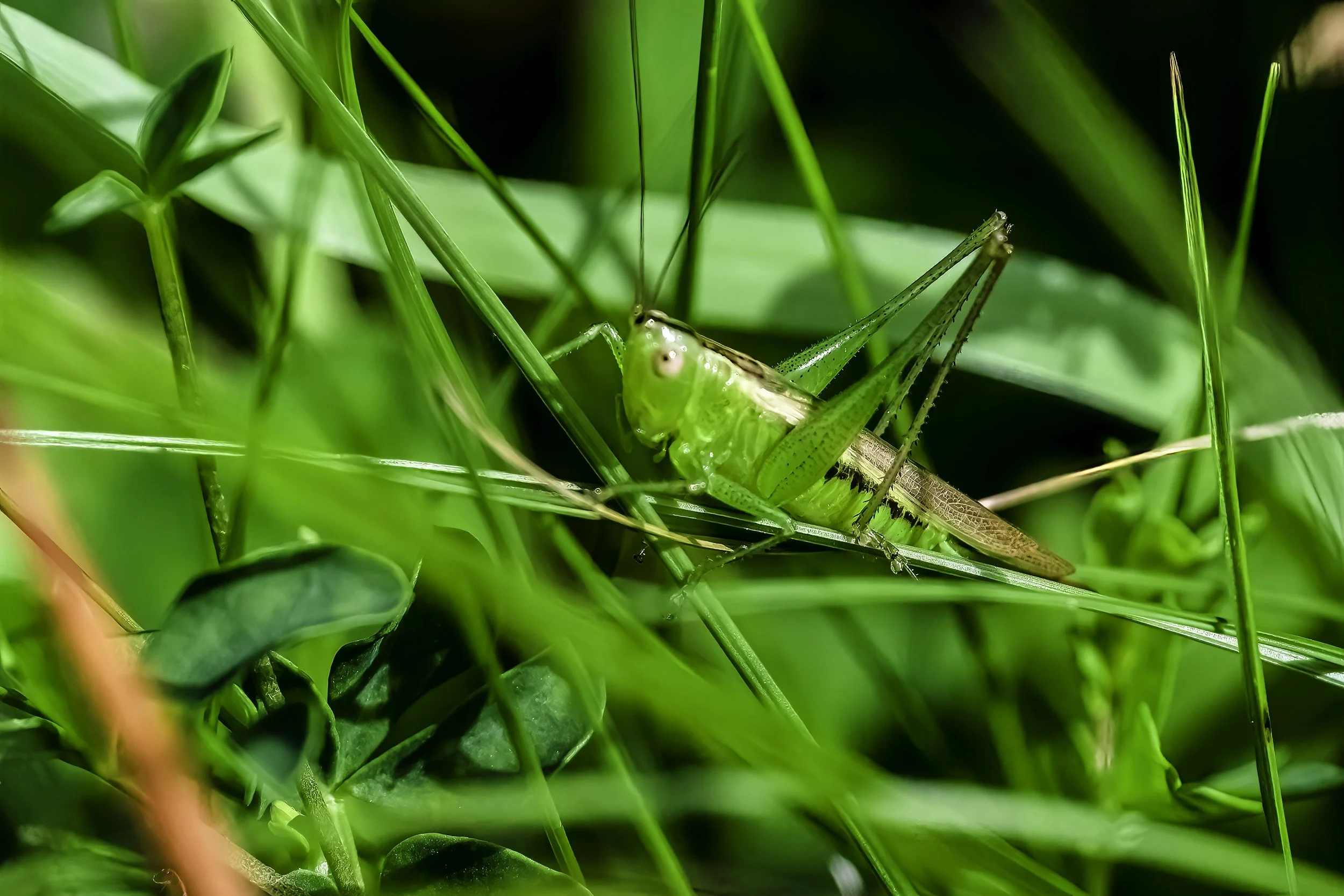
Slender Meadow Katydid - Cedar Pond Meadow - 8/25/26
The Red-legged Grasshopper (Melanoplus femurrubrum) is a common North American species recognized by its distinctive reddish hind legs and robust, mottled brown body, typically measuring 1 to 1.5 inches long. It inhabits fields, meadows, and roadside grasses where it feeds on a wide variety of grasses and forbs, often becoming more abundant in disturbed or overgrown areas like this old baseball diamond. Adults are most active now in late summer and early fall, producing a chirping song by rubbing their hind legs against their wings to attract mates
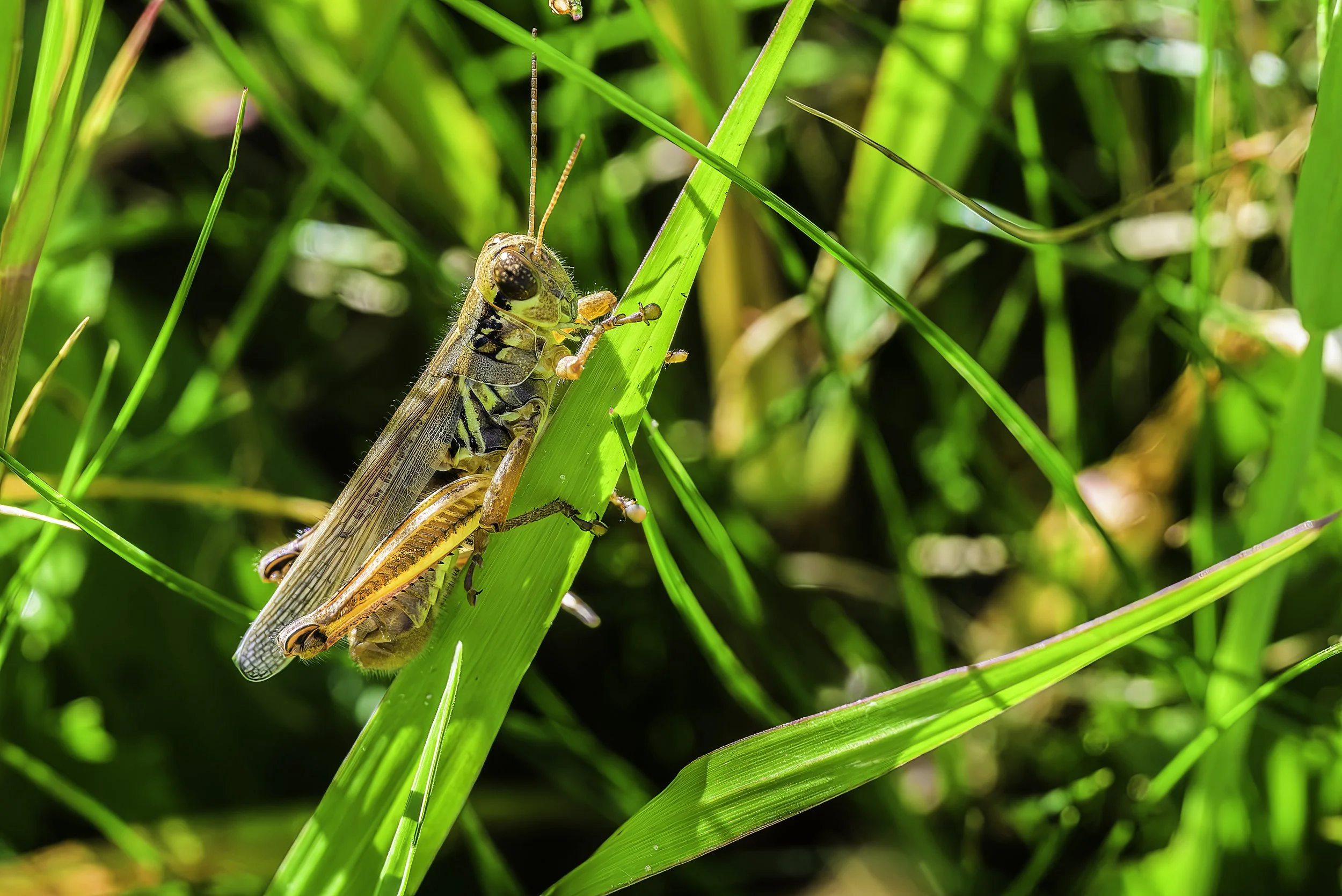
Red-legged grasshopper - Cedar Pond Meadow - 8/26/26
Somewhat similar in appearance to the Red-legged variety, the Differential grasshopper was also found in relative abundance here at the meadow. The differential grasshopper (Melanoplus differentialis) is a common North American species notable for its large size, powerful hind legs, and distinctive coloration—typically brown to yellow with dark markings and a series of pale vertical stripes on the abdomen; adults measure about 1 to 2 inches long. It thrives in warm, open habitats such as crop fields, grasslands, and roadside vegetation, feeding on a wide range of grasses and broadleaf plants. Differential grasshoppers are strong jumpers and capable fliers, with males producing short, rasping songs by rubbing their hind legs against their wings during courtship.
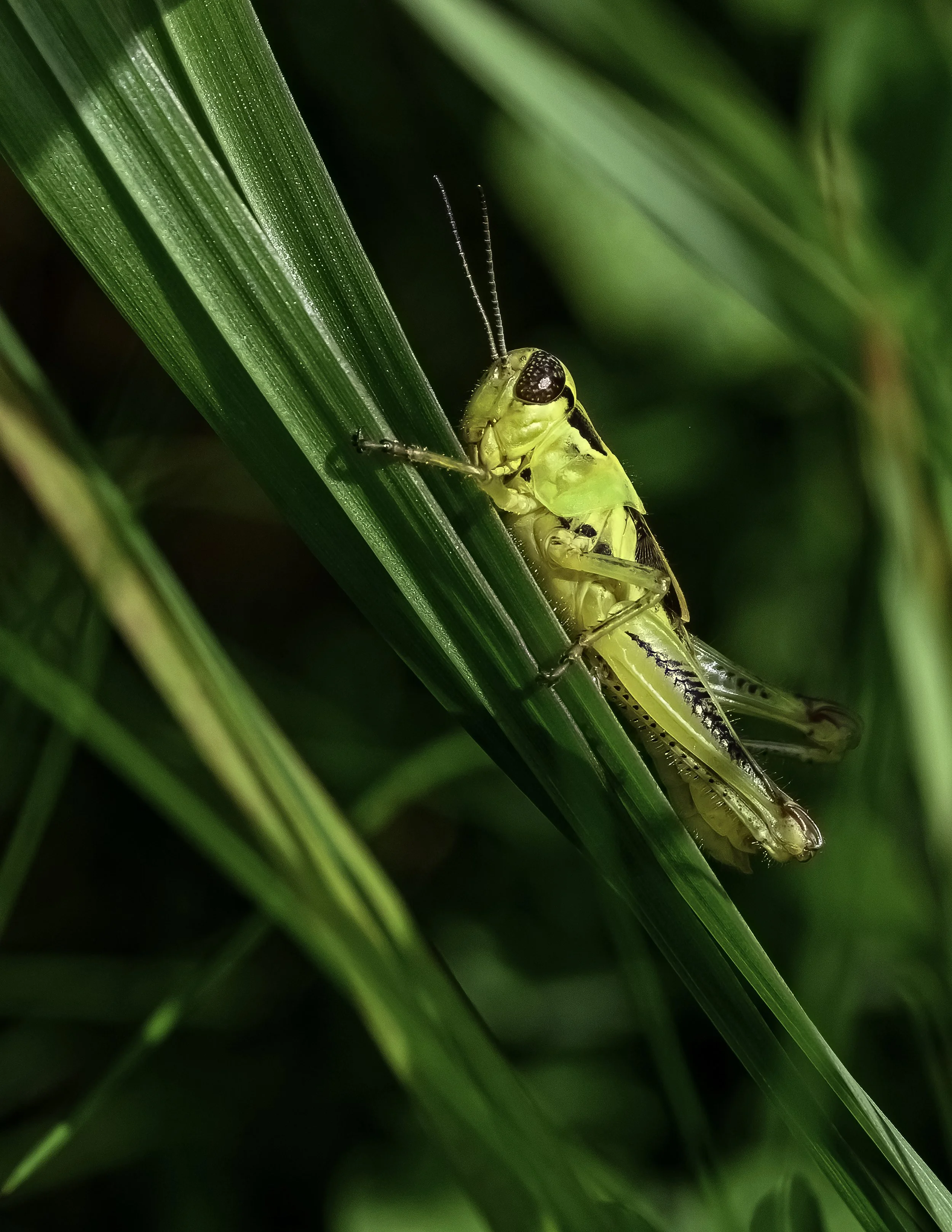
Differential grasshopper - Cedar Pond Meadow - 8/25/26
Even in these photographs, the more robust size of the Differential grasshopper is noticeable. Take note of the hind legs of each species and it becomes apparent which is the more accomplished jumper.
Although this blog posts is primarily about grasshoppers at the meadow, we’ll mention another butterfly of interest that was located in the grasslands here along Cedar Pond Road. This is the Eastern-Tailed Blue.
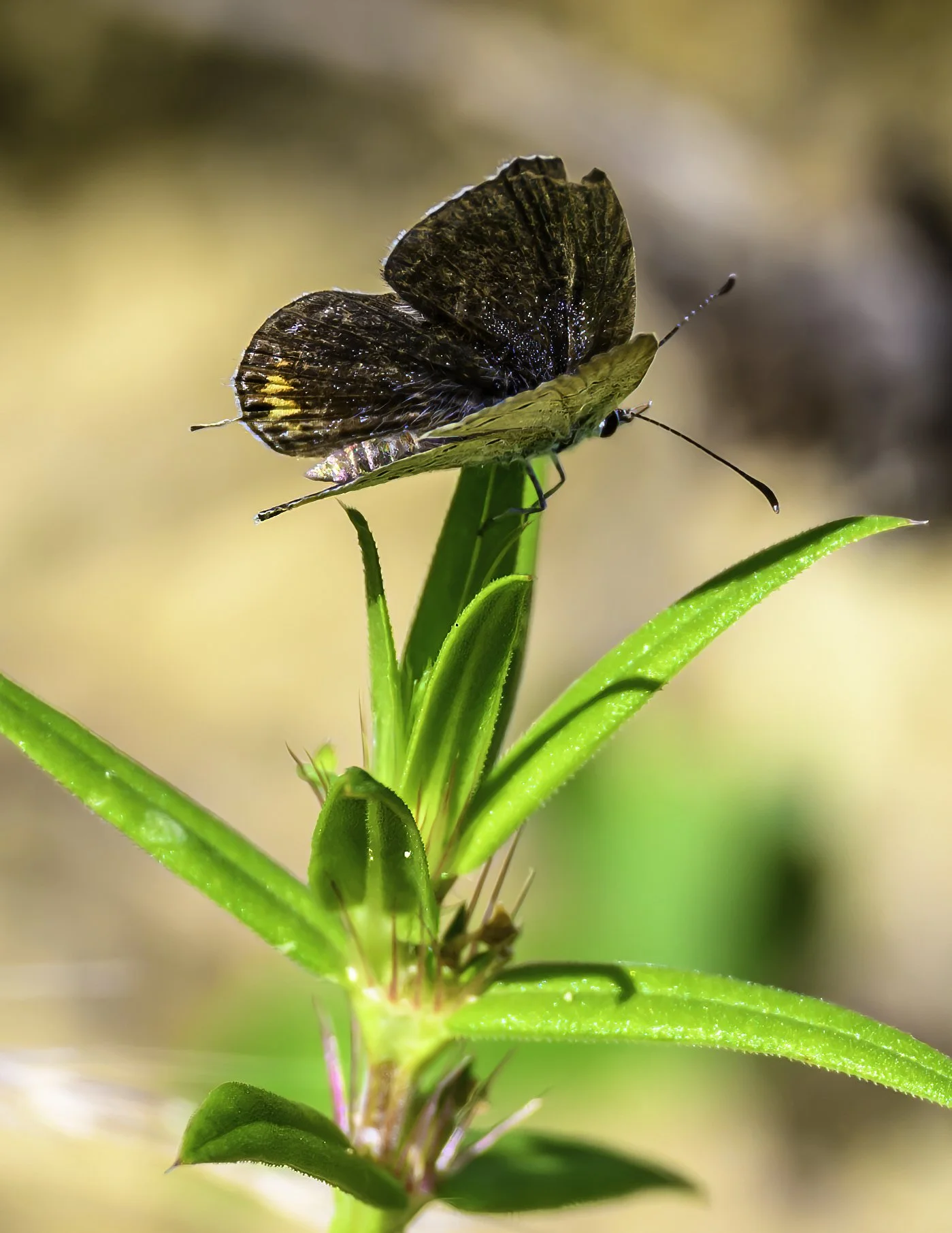
Eastern-tailed blue - Cedar Pond Meadow - 8/25/26
The Eastern-tailed Blue is a small, widespread butterfly found across much of North America. This butterfly is most easily identified by its powdery blue upper wings in males and grayish-brown wings in females, with both sexes showing tiny black spots and a characteristic short "tail" on the hindwing edged by an orange submarginal patch. This is classic habitat - open, grassy fields, roadsides, and gardens where their host plants—mostly legumes like clovers and vetches are both prevalent. These butterflies exhibit quick, erratic flight while nectaring on flowers and bask with wings closed, revealing the more cryptic underside pattern that aids in camouflage.
And last but certainly not least are the bees. Bumble Bees (particularly Common Eastern Bumble Bees) are here in great numbers. The Red clover and Crown vetch are especially attractive to the bees and can be seen and heard throughout the meadow.
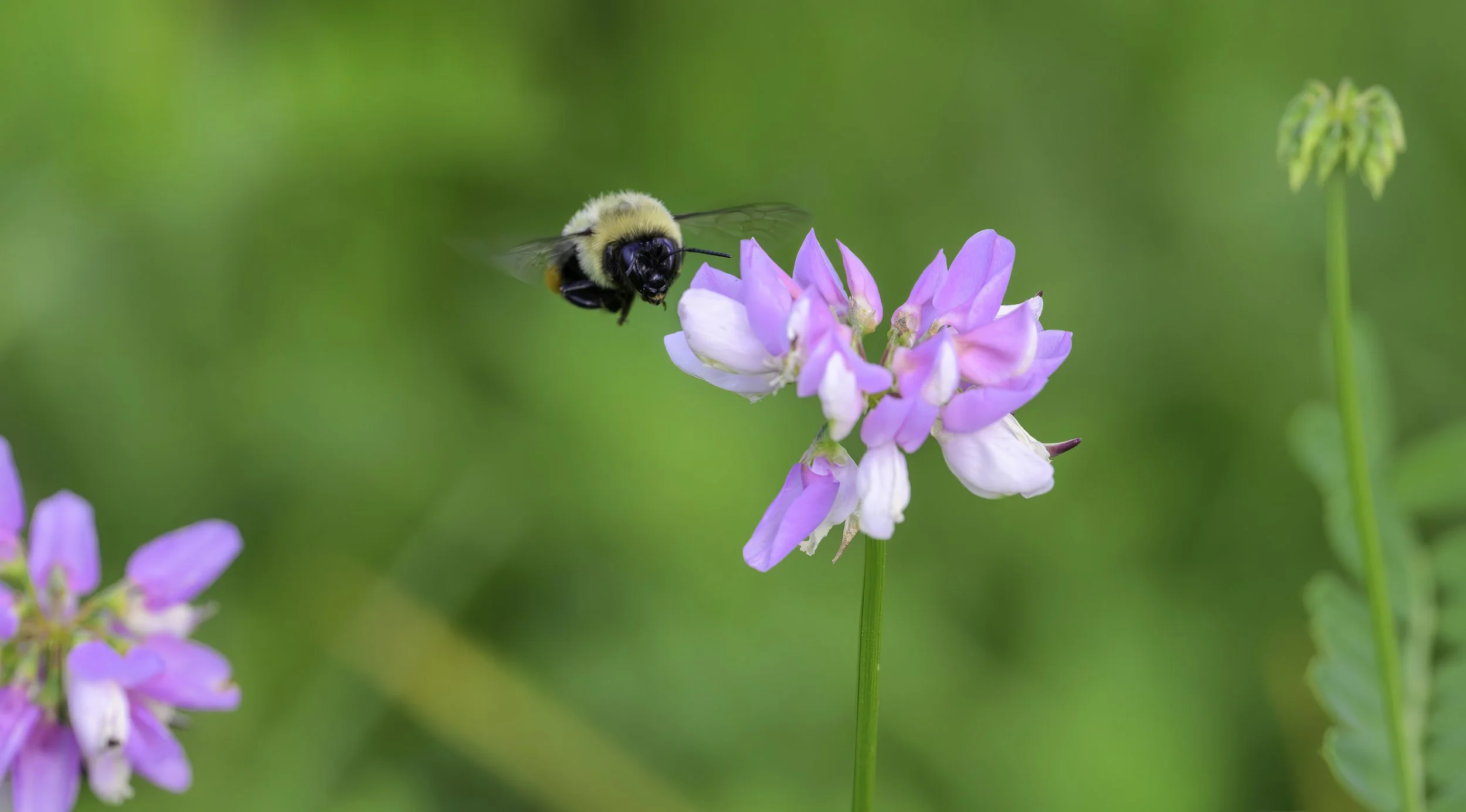
Common Eastern Bumble Bee with Crown Vetch - Cedar Pond Meadow - 8/26/26
Open grasslands are becoming more and more difficult to find here in southeast New York. Development has slowly but unceasingly overtaken these valuable parcels of habitat. It’s of little wonder that when we do find a nice open field like this one alone Cedar Pond Road in Harriman State Park, it is a magnet for pollinators of all sizes and shapes. Those of you interested in viewing and photographing these small wonders of nature would do well to find an area of grass fields that have not been plowed under or paved over to explore one more element of nature we far too often overlook…..the meadows and grasslands.