Cedar Pond Meadows - I
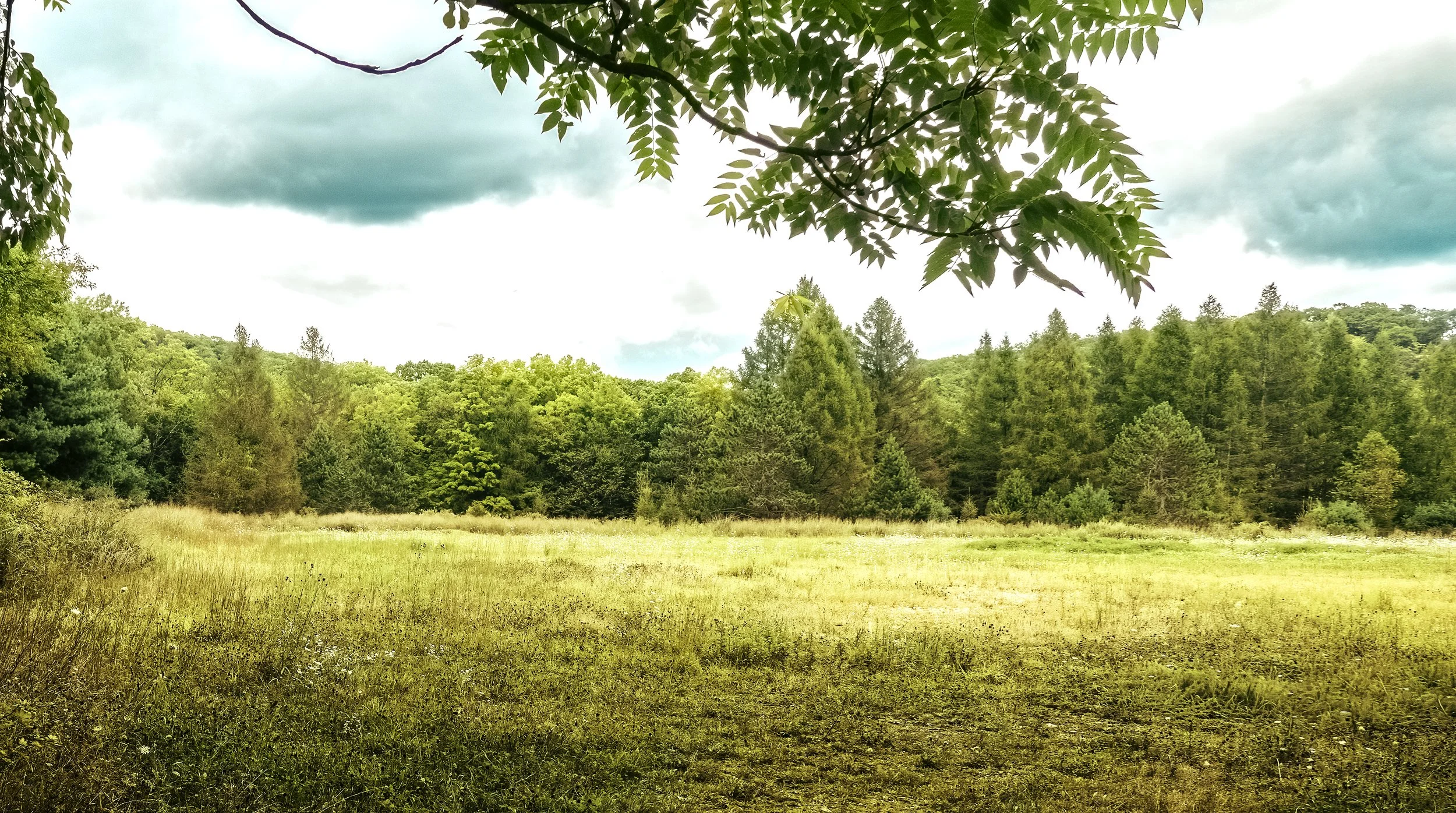
Meadow along Cedar Pond Road, Harriman State Park 8/25/26
I spent a couple of days wandering through an old ballfield in Harriman State Park which has pretty much been left to go back to its original state of a meadow. Meadows unfold as open, sunlit refuges where grasses, wildflowers, and low shrubs weave a living carpet that supports pollinators, ground-nesting birds, and small mammals. Their seasonal rhythms—lush growth in spring, a riot of blooms in summer, and seed dispersal in fall—create a shifting mosaic of color and texture, while their shallow soils foster both biodiversity and resilience. What appears as a somewhat desolate area of sparse growth and little biologic activity is in reality an environment literally “abuzz” with life.
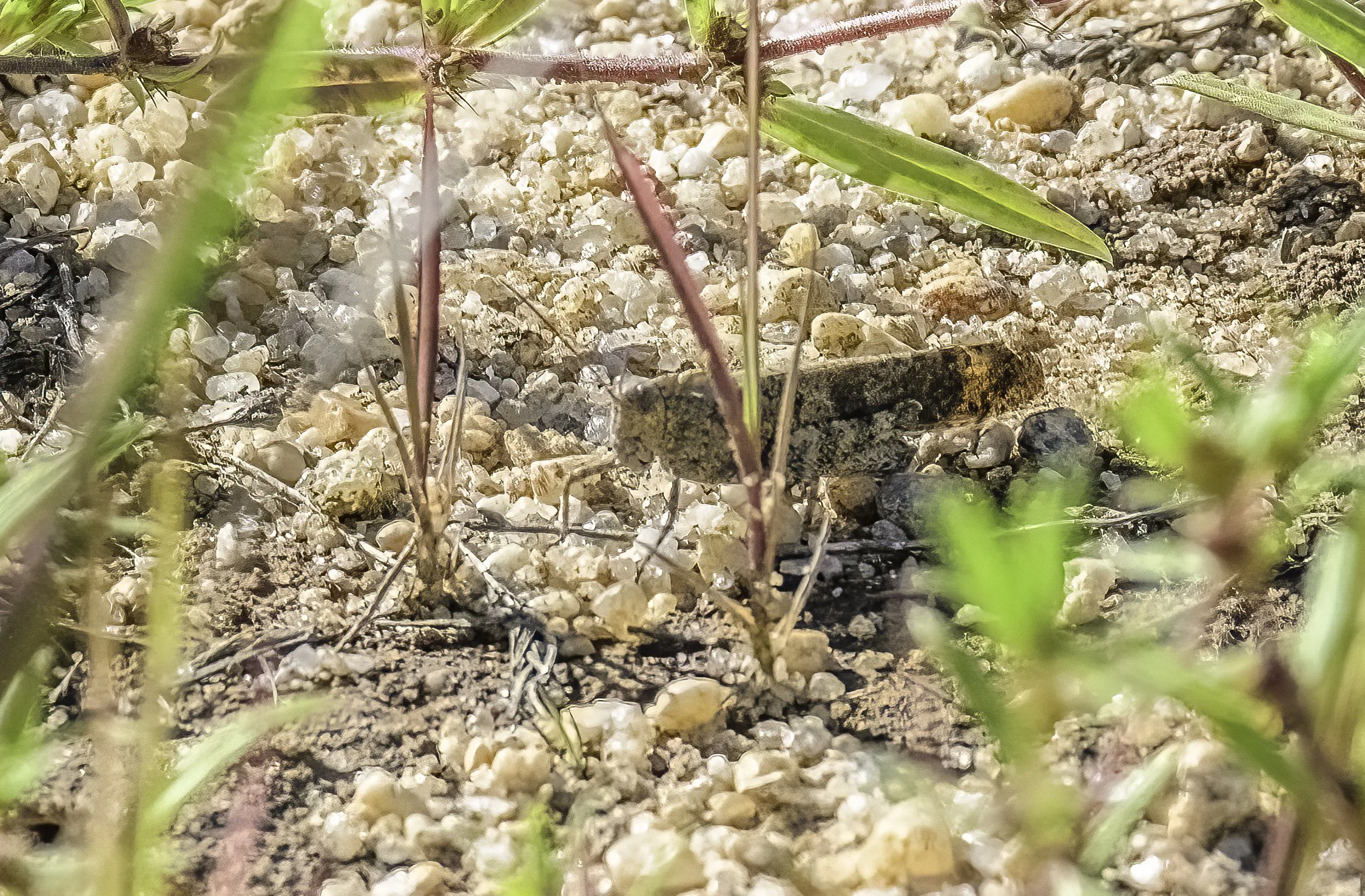
Carolina grasshopper - Cedar Pond Meadow - 8/26/26
Walking out onto what used to be the infield of this abandoned ball field, the vegetation is sparse and the soil a mixture of sand and gravel. What little plant life grows on this “pavement” provides refuge of the largest f the grasshoppers found here, the Carolina grasshopper. These agile jumpers and short-distance fliers, are noticeable for their quick, jerky movements and if approached at any proximity will take flight. Getting one to stay in place long enough to capture a photograph is quite the challenge. You watch where they land and then slowly and quietly approach, hoping to locate their well camouflaged bodies.
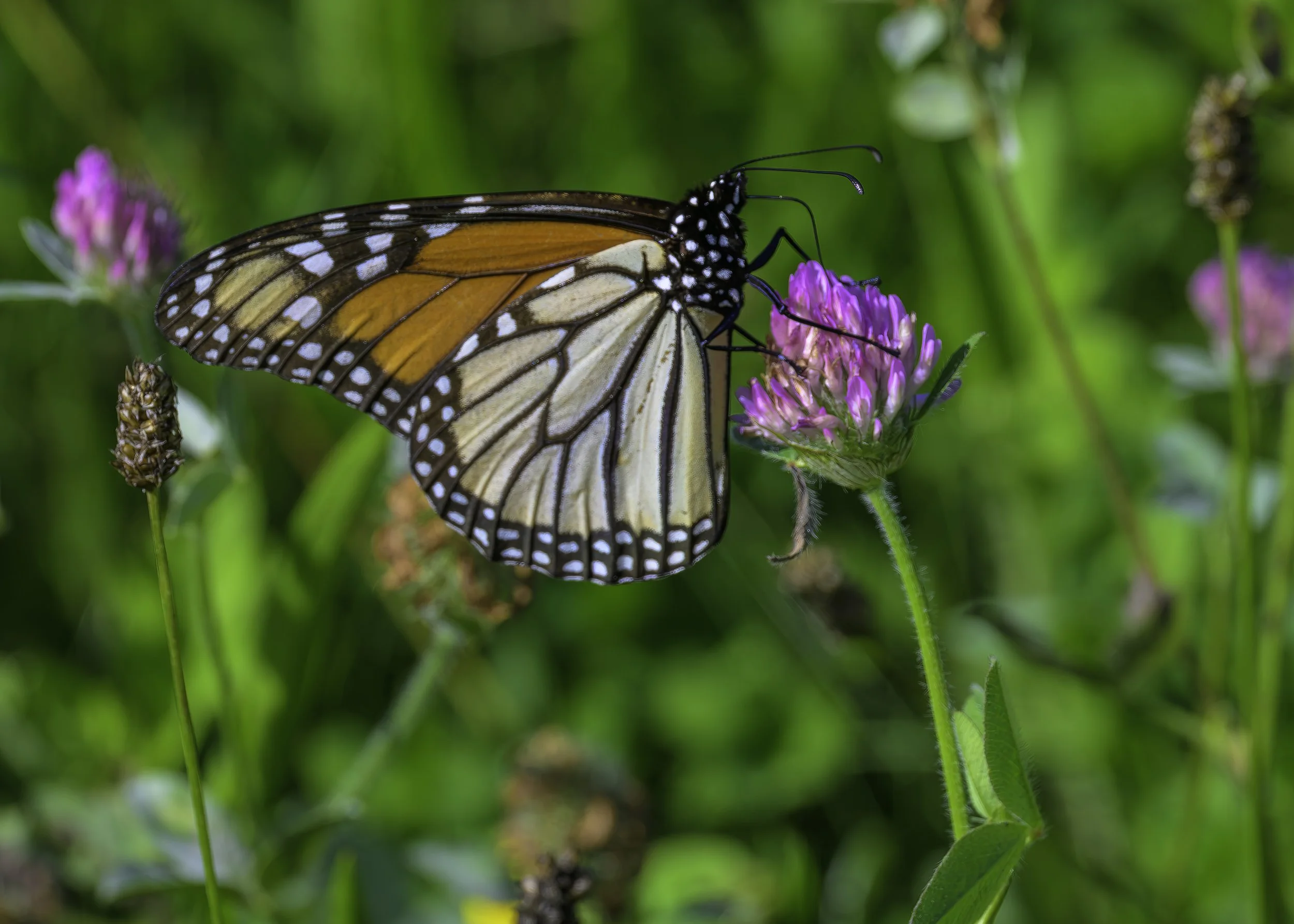
Monarch butterfly - Cedar Pond Meadow - 8/26/26
Where the inflield ends and what was the outfield begins, the grasses and wildflowers have taken over rather aggressively and provide great habitat for butterflies and other insect life. Today’s post will concentrate on the butterflies and moths that were found in the tall grasses. The most obvious today was the Monarch butterfly presumably on its way south to Mexico. The Red clover found throughout the meadow is a great provider of nectar for many pollinators, and a variety of butterflies and bees could be found on these lovely blossoms today.
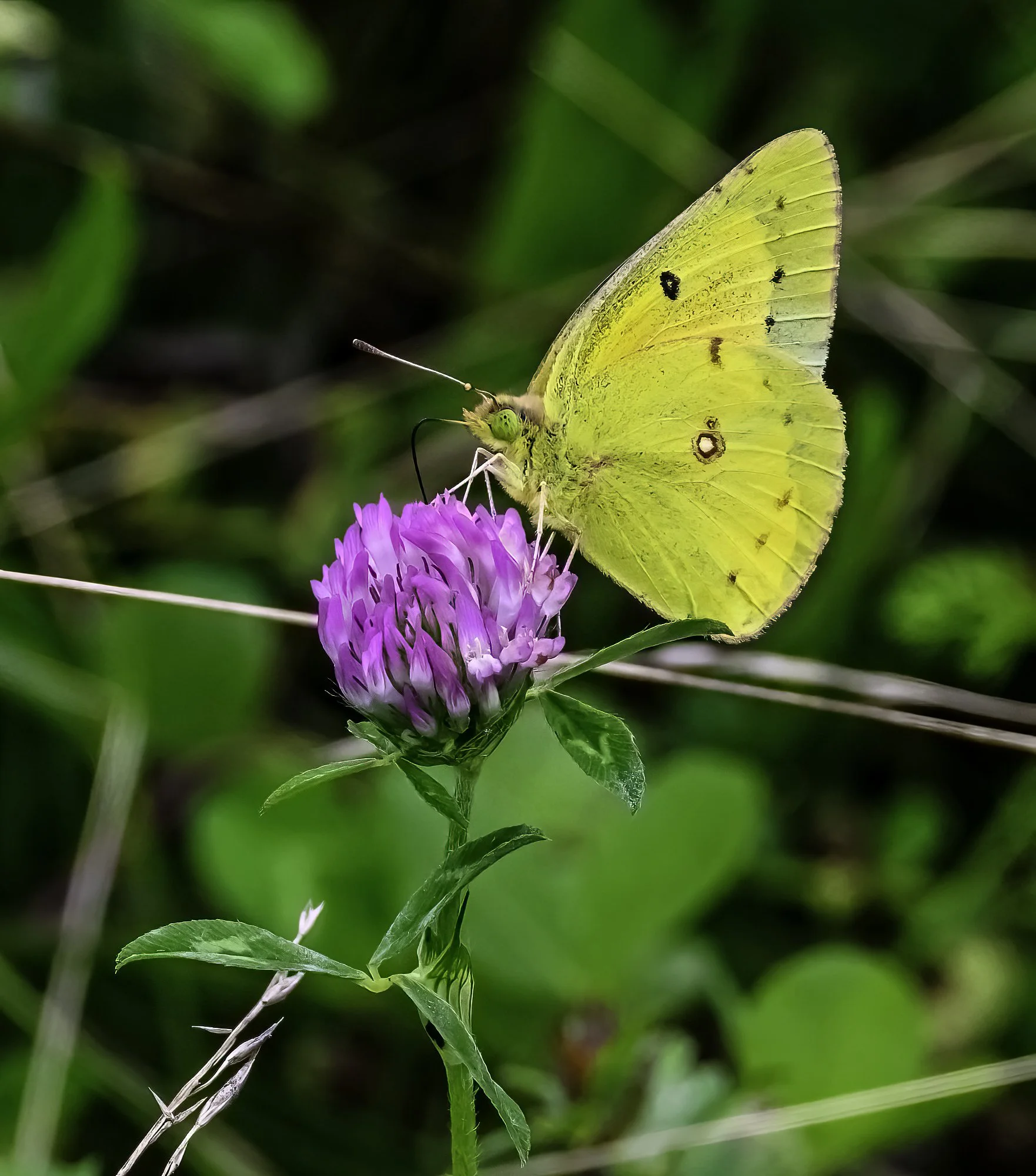
Orange sulphur - Cedar Pond Meadow - 8/25/26
The Orange Sulphur butterfly (Colias eurytheme) is a vibrant, medium-sized species commonly found across fields, meadows, and roadsides in North America. As the name implies, it is recognizable by its bright orange-yellow wings edged with a narrow dark border and, in females, often a variable amount of dark scaling. Males typically show more uniform orange coloration, while females can range from yellow to deep orange and sometimes exhibit a distinct dark form; both sexes have a small central spot on the forewing which is easily seen on this photo. They are strong fliers that favor open sunny habitats where their host plants—mainly clovers and other legumes—are abundant.
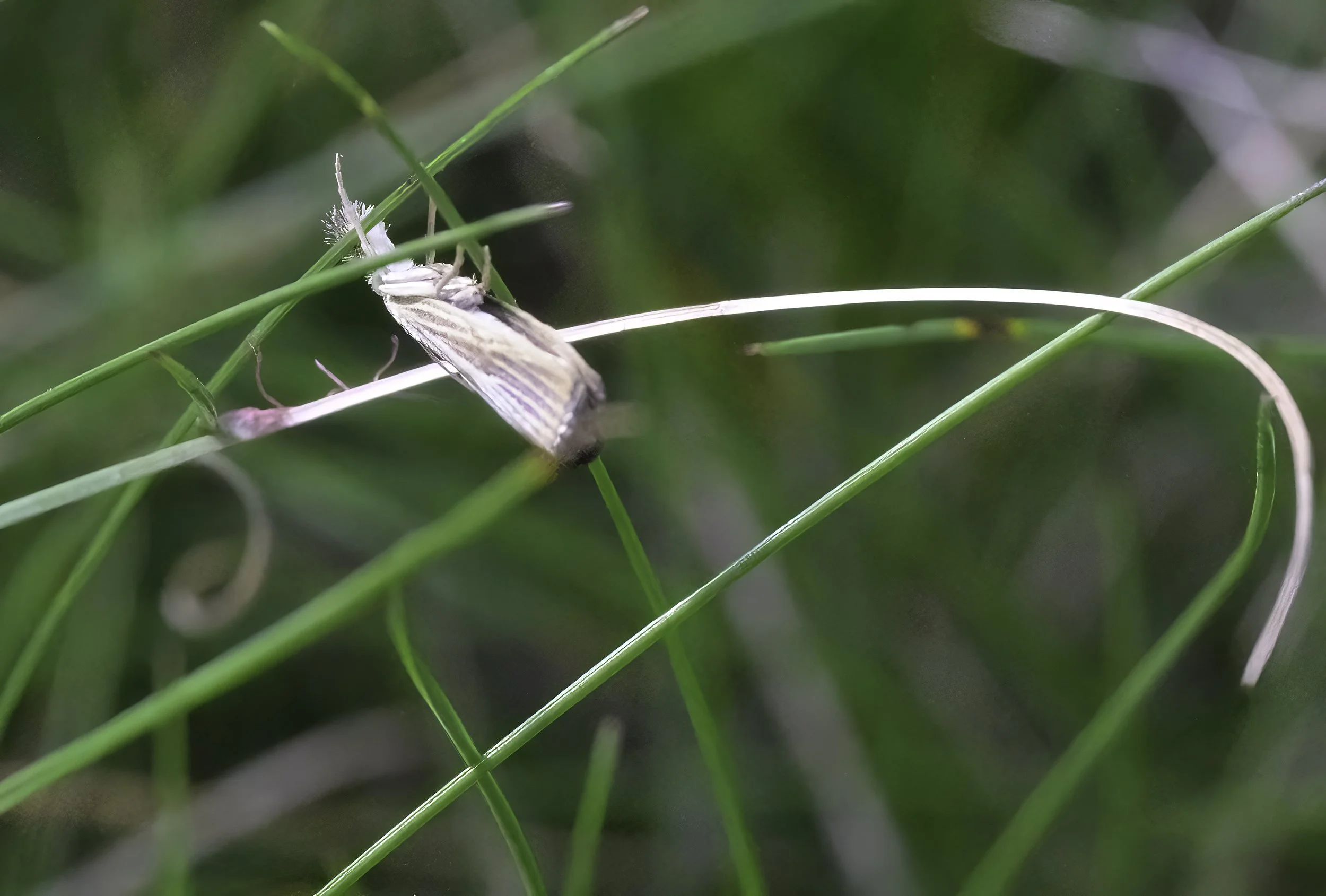
Vagabond Sod Webworm Moth - Cedar Pond Meadow - 8/26/26
Among the tiniest denizens of the meadow, the Vagabond Sod Webworm Moth is a small, inconspicuous moth whose larvae are notable turf pests. Adults display muted brownish-gray wings with subtle wavy lines and a wingspan around 1 to 1.25 inches, while the caterpillars feed on grass blades at night and hide in thatch or soil during the day. Photographing these little pests can be quite daunting as they fly to a blade of grass and then collapse their wings, looking much like the plant on which they are resting. You can walk along and not notice them until they take flight right below you.
Yet another moth that inhabits this meadow is the Forage Looper. With its dusky brown wings and its proclivity for perching down in the lower strata of the grasses, it also is a species fairly hard to locate until it takes flight.
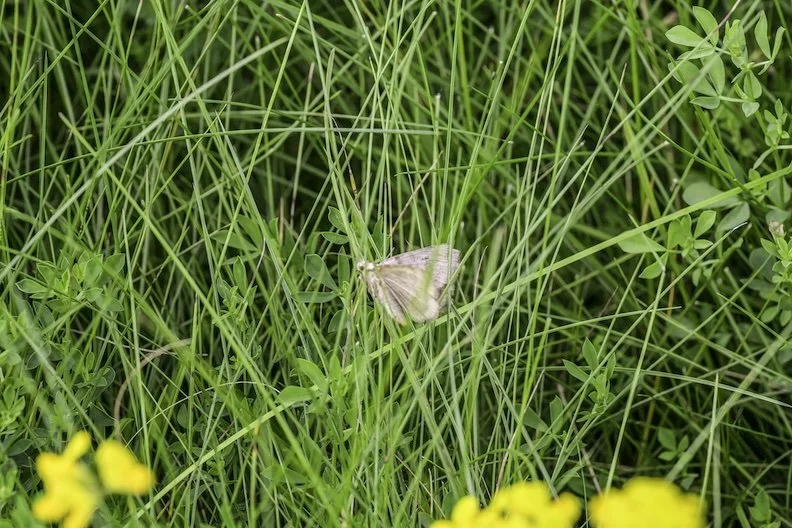
Forage Looper Moth - Cedar Pond Meadow - 8/26/26
Finding this moth during the day is not always easy unless you happen to “stumble” upon one. The Forage Looper moth (family Noctuidae) is a medium-sized nocturnal moth with a mottled brown body and gray forewings patterned with subtle wavy lines providing excellent camouflage against bark and dead leaves. It derives its name from the larvae—commonly called loopers or inchworms—which move in a characteristic looping gait, feeding on a variety of herbaceous plants and crops, which can make them agricultural pests in some regions. Adults are attracted to nectar and play a modest role in night-time pollination and as prey for bats and nocturnal birds.
A second species of Looper moth, the Clover Looper, was also found in the meadow.
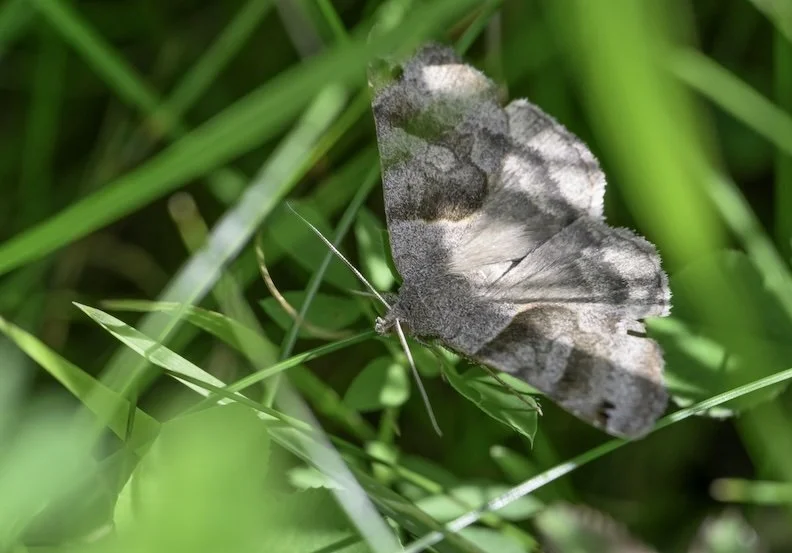
Clover Looper Moth - Cedar Pond Meadow - 8/25/26
The Clover Looper Moth (Caenurgina crassiuscula) is a similar medium-sized noctuid whose mottled gray-brown wings and scalloped wing margins also provide excellent camouflage against bark and leaf litter. The name is derived from the fact that the caterpillars feed on clover among other vegetation.
And so, as can be seen in these two posts, there is an abundance of life hiding out in the tall grasses of meadows. Without exaggeration, I could not walk more than 5 steps without sending a butterfly, moth, grasshopper, katydid or other leaf hopper flying or jumping off in one direction of another. I am sure that I only found a fraction of the species that inhabi this one relatively small patch of grassland. Nature abounds all around us….we just have to take time out to look a bit more carefully.