Meadows - III
Final post of this week continues with the theme of meadows. This time, however, we are visiting a patch of grasslands located on the grounds of the Hudson Highlands Nature Museum in Cornwall, New York. I’m still searching for Monarch Butterfly eggs on milkweed as well as milkweed bugs. In my search among the milkweed plants along the periphery of this meadow, I did not find any eggs, but did find both the small and the large milkweed bugs as well as several other species that were new to my meadows’ checklist.
Of course, there were still grasshoppers and the most prevalent was the quite common Red-legged species which was numerous at the Cedar Pond Meadow visited earlier this week.
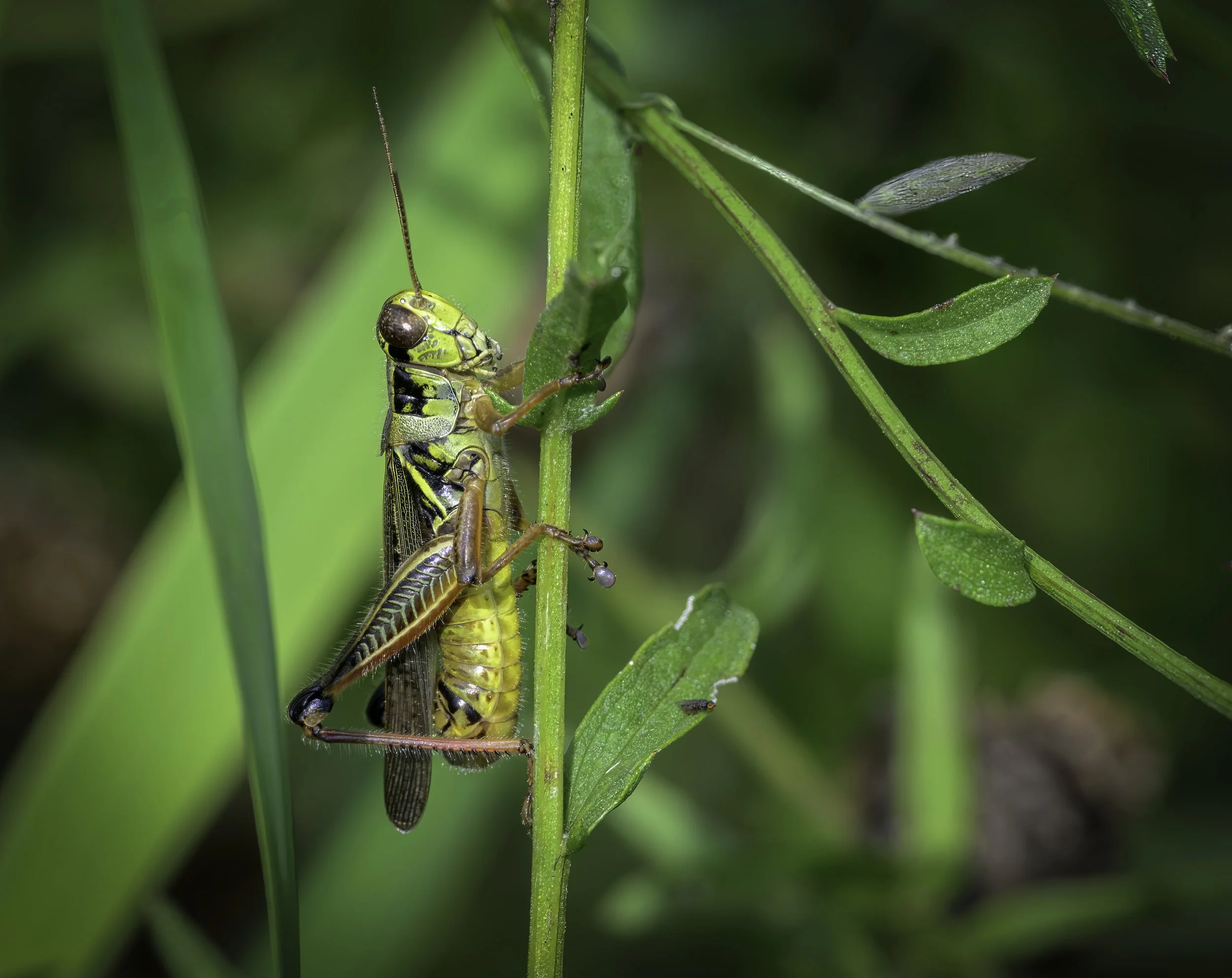
Red-legged Grasshopper - Hudson Highland Nature Museum (HHNM) - 8/28/26
Having talk about this grasshopper earlier this week, I’ll just mention once again how the “herring bone” pattern on the large hind legs makes this individual an easy one to positively identify in the field. So crypticaly patterned, it is well camouflaged and is easiest to find by looking for movement of the blades of grass.
I spent most of my time examining the milkweed plants and found several insect species on the leaves and stalks of these toxic plants. The first was a tiny (1 cm) fly which I could only identify as belonging to the genus Amobia. While difficult to get a positive identification due to its tiny size, I did hazard a guess that this could be a Mason Wasp Satellite Fly. Researching this species on the web, it is not common at all in this area, and so I am skeptical about my hoped for Id. But I have submitted it to BugGuide and iNaturalist for further more positive identification and it certainly would be neat to find out that this fairly rare species is living right here in our neighborhood.
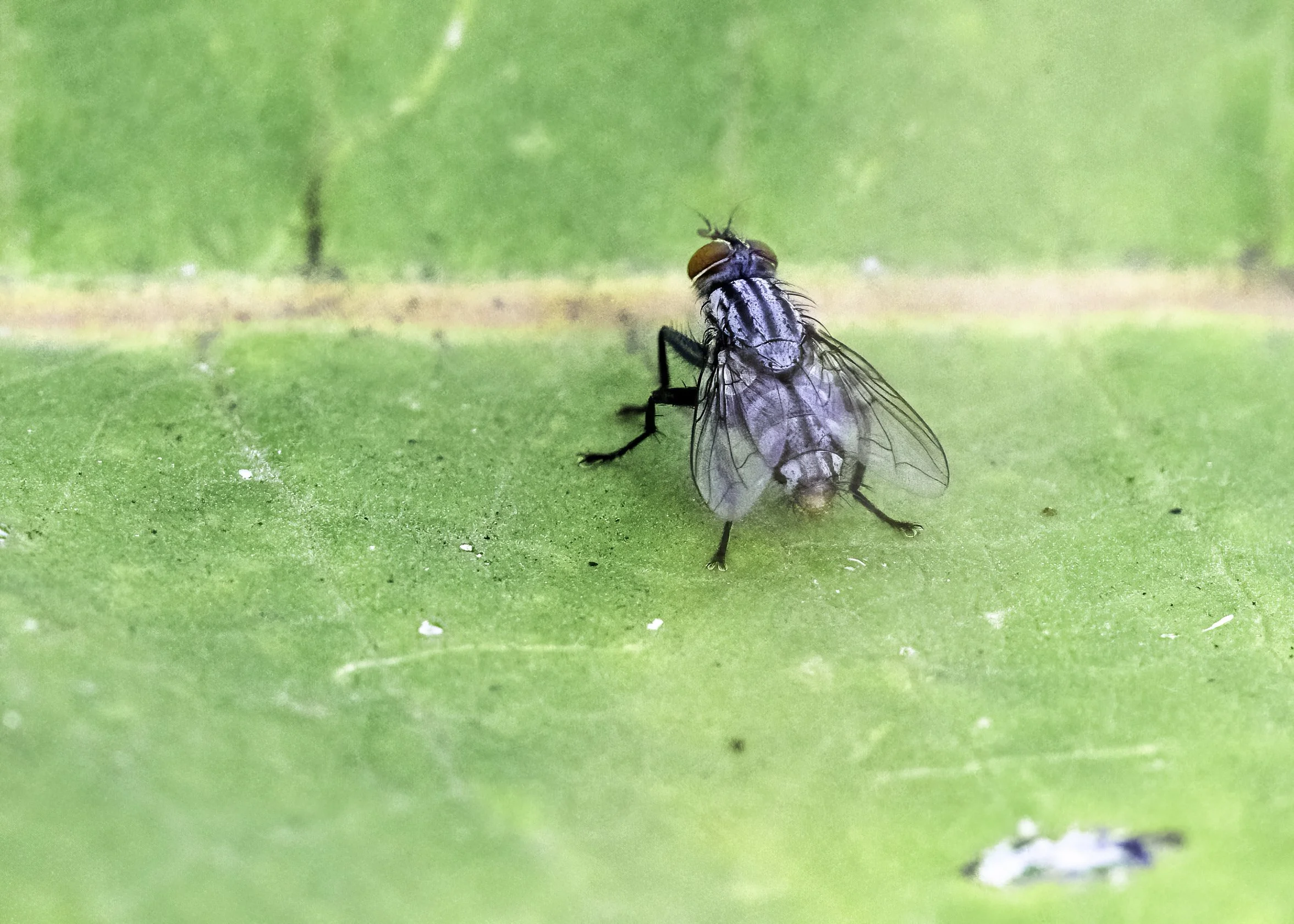
Genus Amobia (possible Mason Wasp Satellite Fly?) - HHNM - 8/28/26
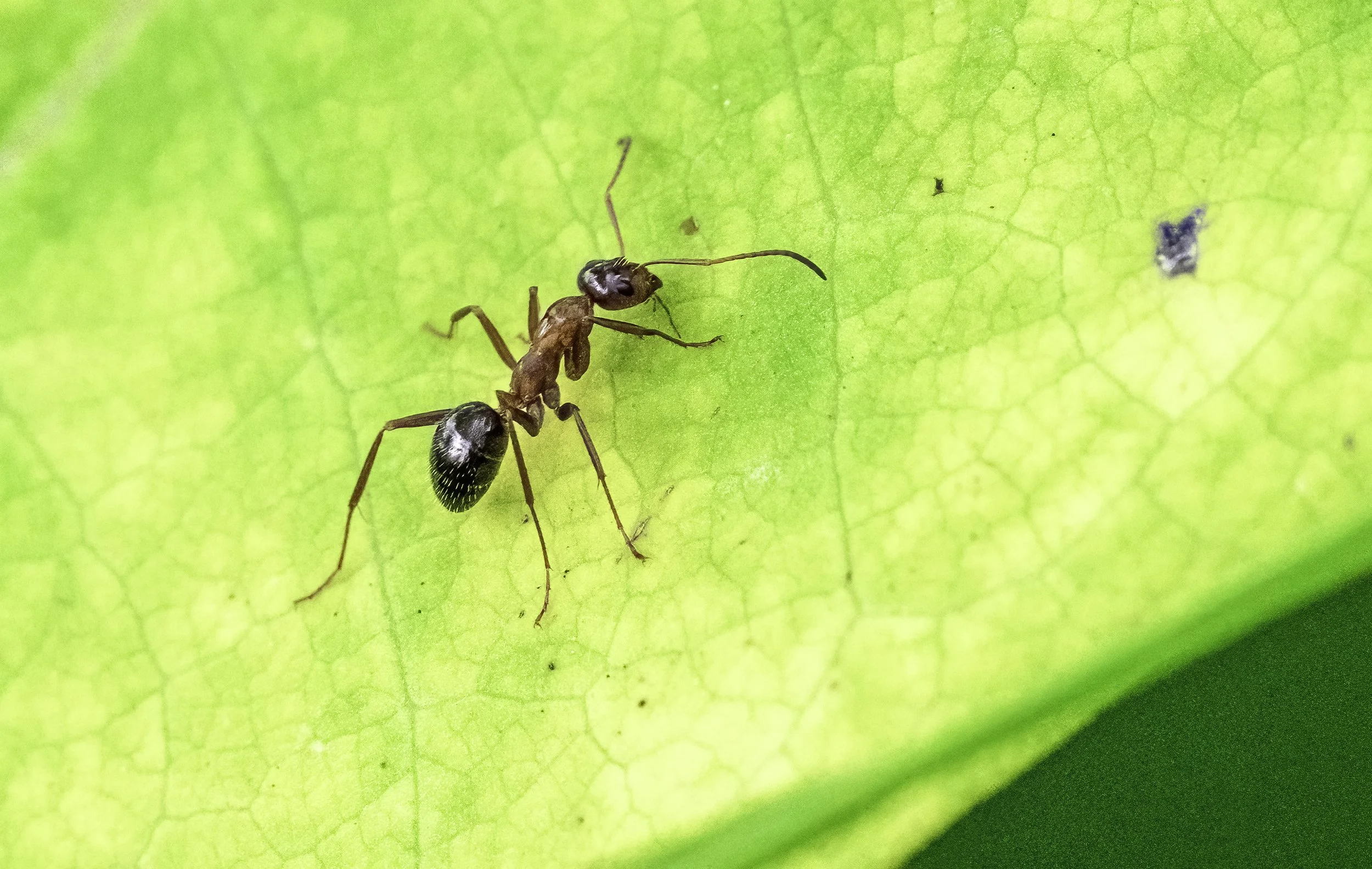
Variable Field Ant - HHNM - 8/28/26
Crawling along the same milkweed leaf was a Variable Field Ant. This red to dark brown ant is found in a variety of habitats living primarily in underground nests. It is often associated with other “slave-making” ants which raid its colonies. They are omnivores feeding upon nectar from plants and juices from fallen fruits as well as live and dead invertebrates which I’m guessing is why this individual was found on this milkweed leaf.
Another tiny invertebrate found again on the same milkweed leaf was a Neortholomus scolopax, a member of the “seed bug” family. These are small true bugs which feed exclusively upon plant seeds. There are approximately 9 species within this genus, but this is the one most expected here in the NE part of North America.
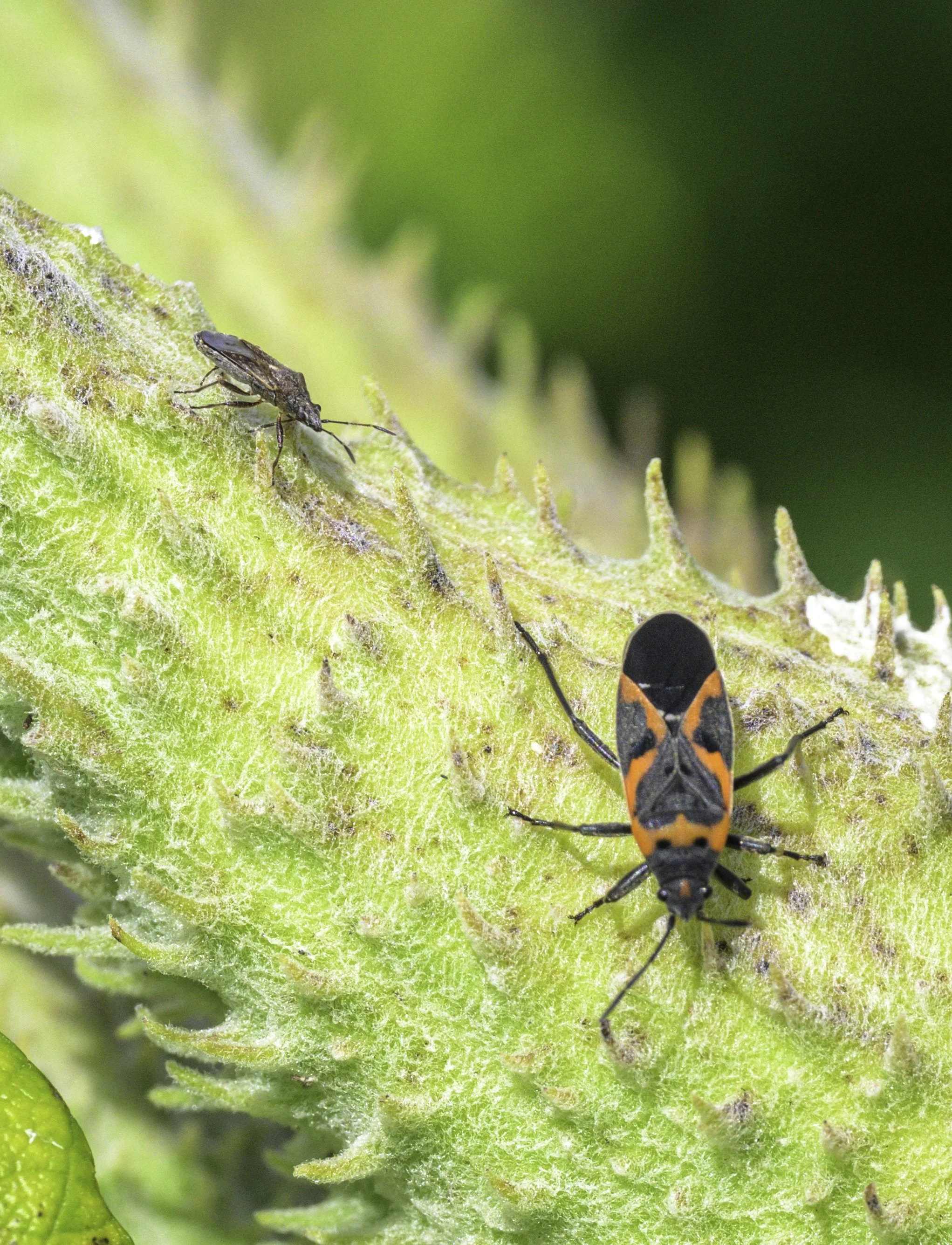
Neortholomus scolopax (upper left) with Small Milkweed Bug on seed pod of a Milkweed plant - HHNM - 8/28/26
The other insect seen in the above image is the Small Milkweed Bug. Another member of the “seed bug” family, Closely associated with the Large Milkweed Bug, it can easily be distinguished by its smaller size and its distinctive “X” shaped red and black pattern on its back. Gaining some toxicity from its host plant the milkweed, the coloration serves as a warning to would-be predators. The nymphs feed on the seeds and sap of the milkweed while adults are less picky eating seeds, nectar and other insects. The Small Milkweed Bug will deal with the harsh winter climate of the northeast by burrowing under leaf debris.
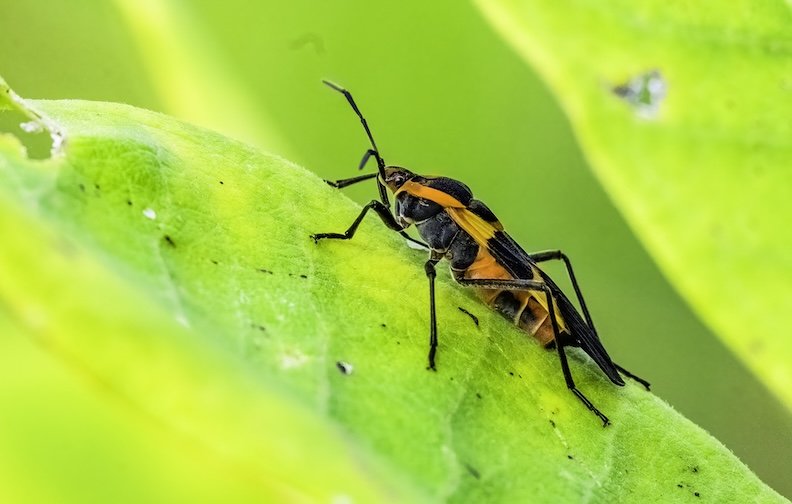
Large Milkweed Bug - HHNM - 8/28/26
Another species, the Large Milkweed Bug, was also found on a Milkweed leaf. As with its smaller relative, this bug displays bright orange and black coloration to warm predators of its acquired toxicity. These bugs do feed primarily on milkweed seeds. Unlike the Small Milkweed Bug, these bugs do migrate to escape the cold winter climate. They will head south to warmer climes during the winter and return north in spring.
Large milkweed bugs mate by locking from end to end as seen in the image below. (Of interest not only to me but to the small milkweed bug who also took note of this amorous activity!)

Small Milkweed Bug taking notice of the mating activity of two Large Milkweed Bugs - HHNM - 8/28/26
Approximately 2 weeks after mating, the female will lay up to 30 eggs in the crevices in the milkweed seed pods. It is estimated that over the course of her life, she may lay as many as 2000 eggs. Did you have any idea all this was going on in these meadows we pass by in our vehicles or walk past every day?
Just a note that while I’ve been concentrating of the milkweed plants and their associated species, there was plenty of other action going on throughout the meadow. These meadows are thriving ecosystems with literally thousands of individuals going about their daily business. This Western honeybee was just one of many visiting the wildflowers of the meadow.
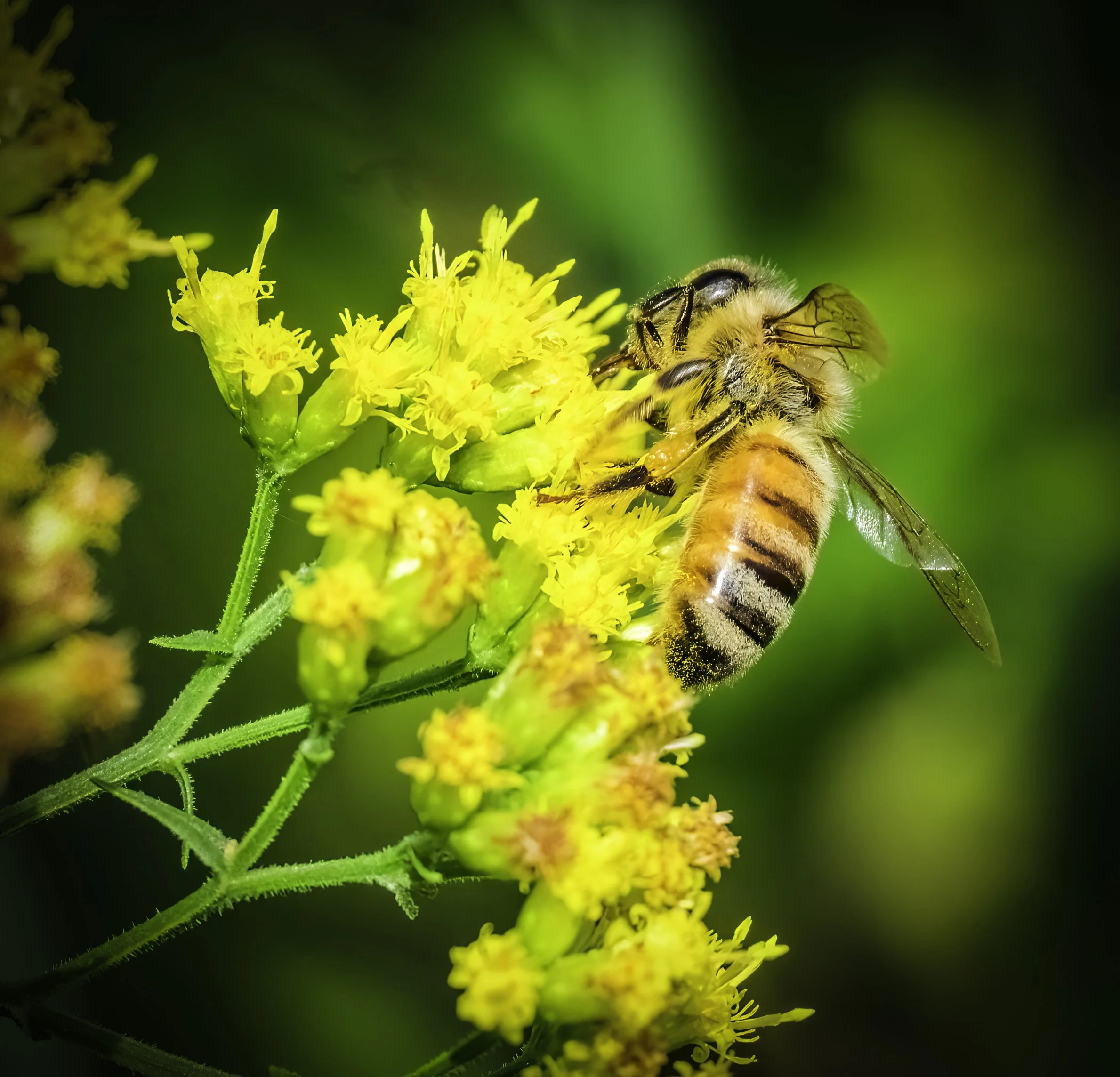
Western honeybee - HHNM - 8/28/26
There is always some place to visit to find nature’s inhabitants hard at work. This week, it was the meadows. Of interest, I found very few birds at this time of year although I did hear Field sparrows, Red-winged blackbirds, and a distant Common Raven in the distance earlier in the week. Other meadows are vibrant with Eastern meadowlarks, Bobolinks, and even an occasional Upland sandpiper found in this part of the state. It’s all a matter of being at the right place at the right time, but for this past week, I was very happy to spend time with the smaller denizens of the meadow…the butterflies, moths, grasshoppers, katydids, and smallest of the bugs. Always fun to go out exploring to see what Mother Nature has to offer.