More from the Mountain
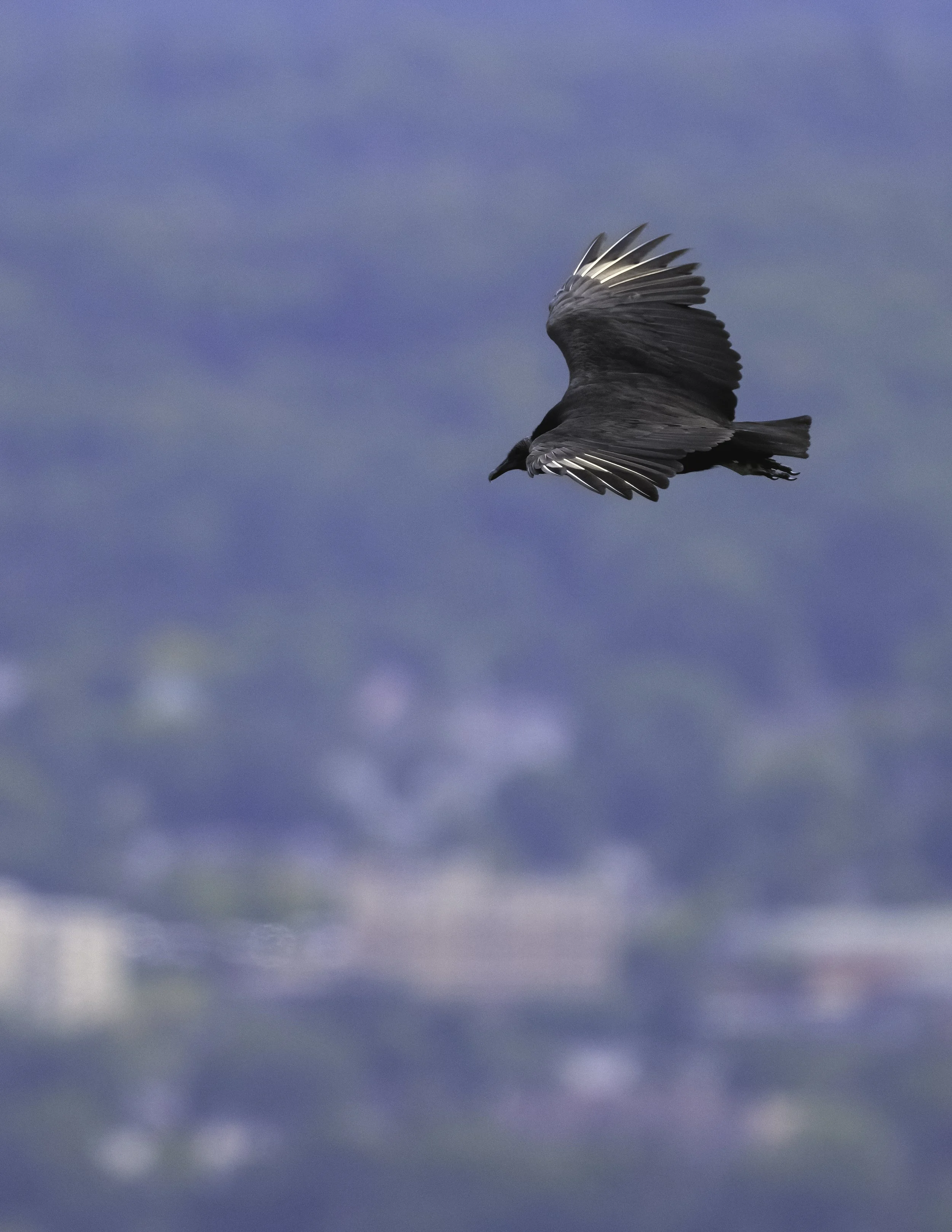
Black vulture - Bear Mt Hawkwatch - 9/24/26
After last week’s massive flow of Broad-winged hawks through our area, things have quieted down considerably. But…there is always something to see during these months from our perch on Bear Mountain. Vultures are among the most beautiful fliers on the planet (if you can get past that face!) The Black vulture seen above is one of two species that are commonly found in this part of New York. Black vultures have a surprising history in New York: once rare or absent from the state, they began expanding northward in the late 20th century and by the 1990s had established breeding populations on Long Island and in our part of the Hudson Valley. Their range expansion is tied to changes in land use, warmer winters, and increased availability of food from roadkill and human-associated sources.
Unlike the more solitary turkey vulture seen below, black vultures are social and often roost in large groups, which helped them colonize new areas rapidly.
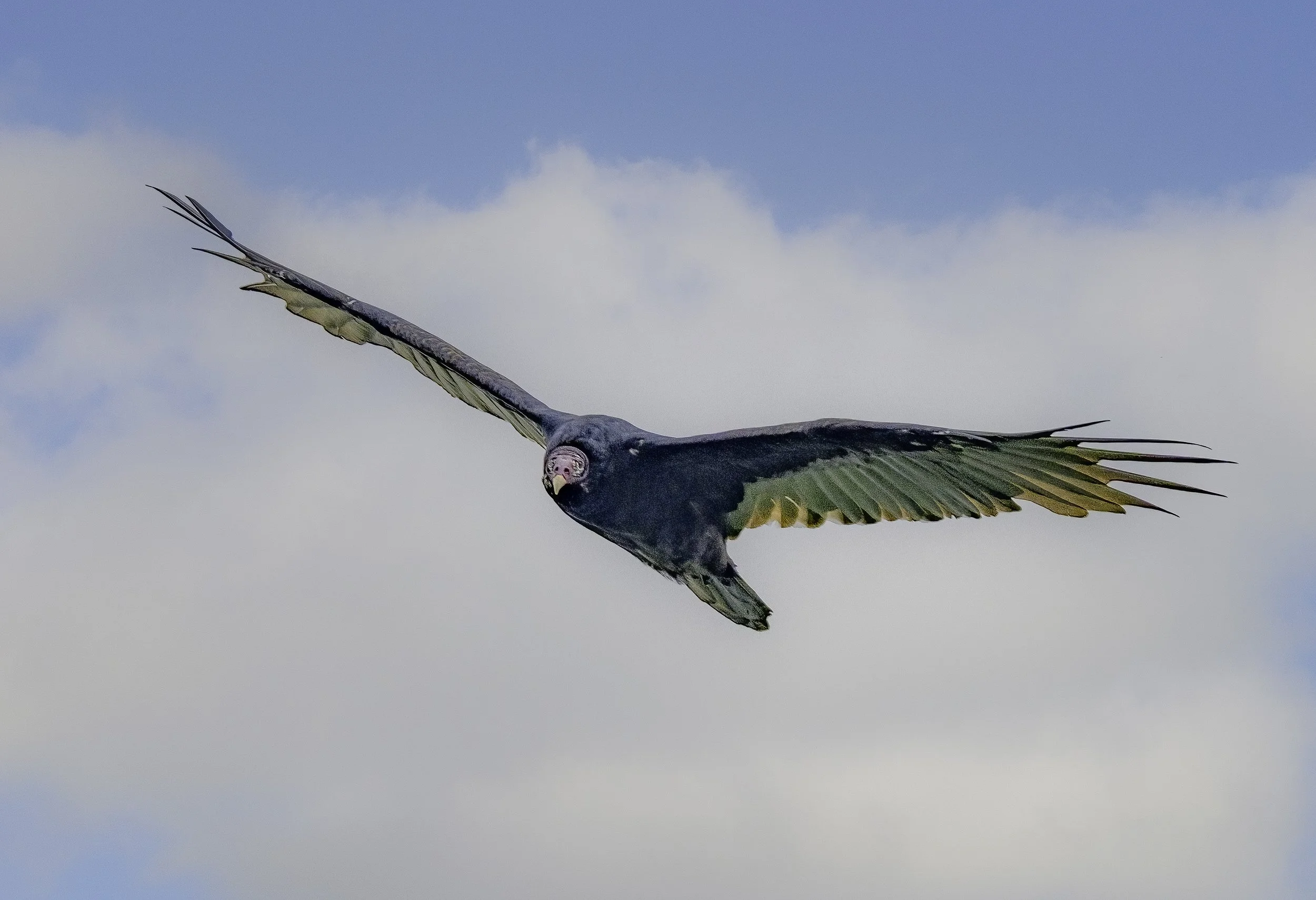
Turkey vulture - Bear Mountain Hawkwatch - 9/25/26
Turkey vultures are common across New York, especially in open areas, along highways, and near landfills and along the ridge here at Bear Mountain where they scavenge for carrion and apparently fly for the sheer joy of it! Identifiable by their large wingspan, dark plumage, and distinctive fingered wingtips, they often soar in thermals along the ridgeline with a characteristic V-shaped wing posture. They use keen smell—unusual among raptors—to locate food, playing an important ecological role by rapidly cleaning up carcasses and reducing the spread of disease.
Both species of vultures found here at the hawkwatch are here throughout the spring and summer months, and those that we are seeing now will hang around for another month or so before heading south. When there is little else flying overhead, you can count on having a few vultures to occupy your time.
Another high-flying bird that is a summer resident here is the Red-tailed hawk. The largest of our buteos, the Red-tail is another master of the skies. This is the only buteo that can “kite”, pointing into the oncoming wind and being pretty much stationary as the wind holds his position aloft. The image seen below pictures a Red-tail in such a situation, making nice clear shots pretty easy!
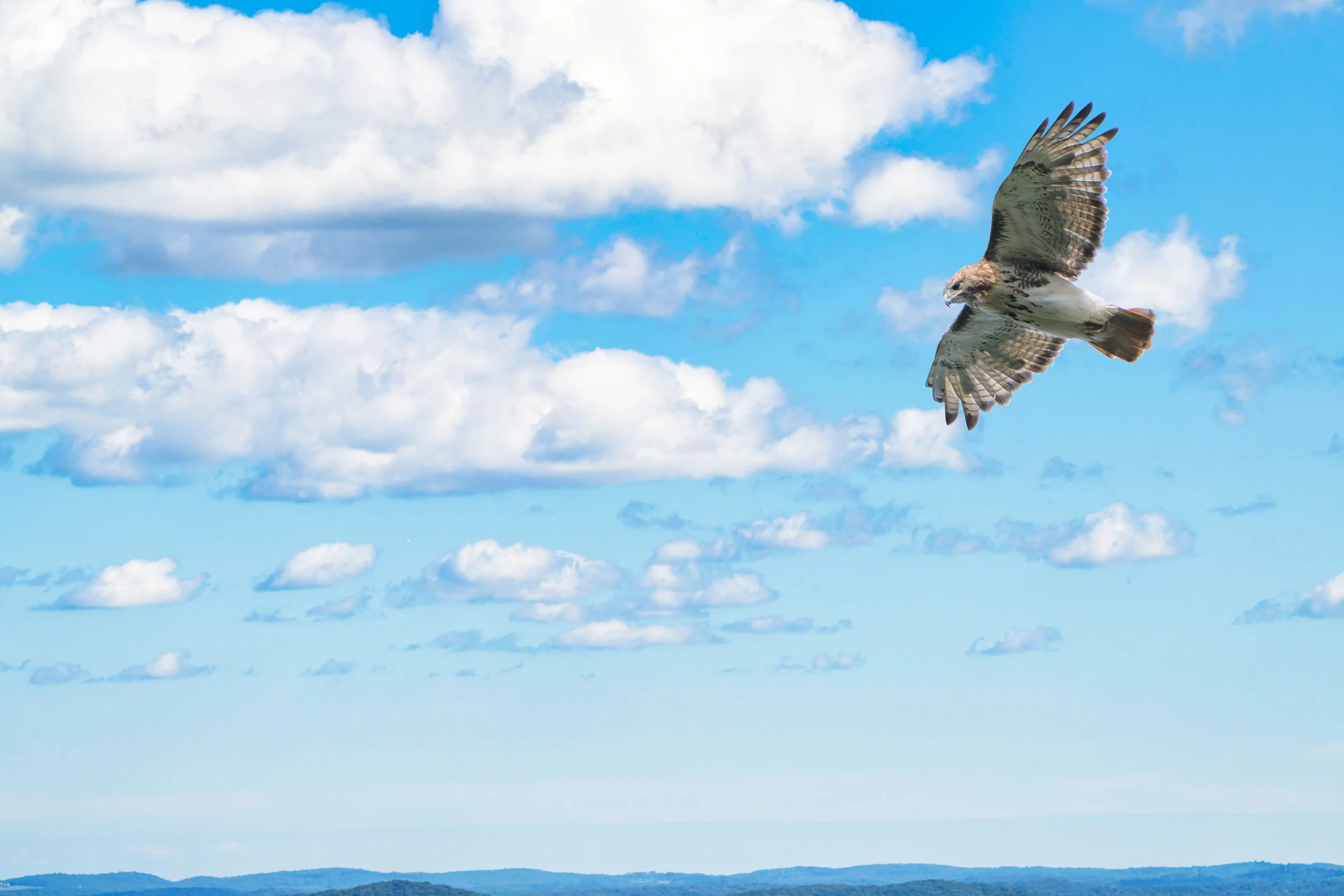
“Kiting” Red-tailed hawk over Bear Mountain - 9/25/26
Like the vultures, most of the Red-tails we see here right now will remain on-site for another several weeks before moving south. Each fall, Red-tailed Hawks funnel through New York as they move from northern breeding grounds to warmer wintering areas. Peak migration occurs from October through November, with raptors riding thermals and ridge lift along the Adirondack and Hudson Highlands corridors. Watch for adults with broad, rounded wings and a rich, rust-colored tail—juveniles show more banding in their tails. Migration numbers vary year to year with weather and food availability, but clear, cool days after frontal passages often produce the strongest movements. Every day we come up to the mountain is different and we never know quite what to expect.
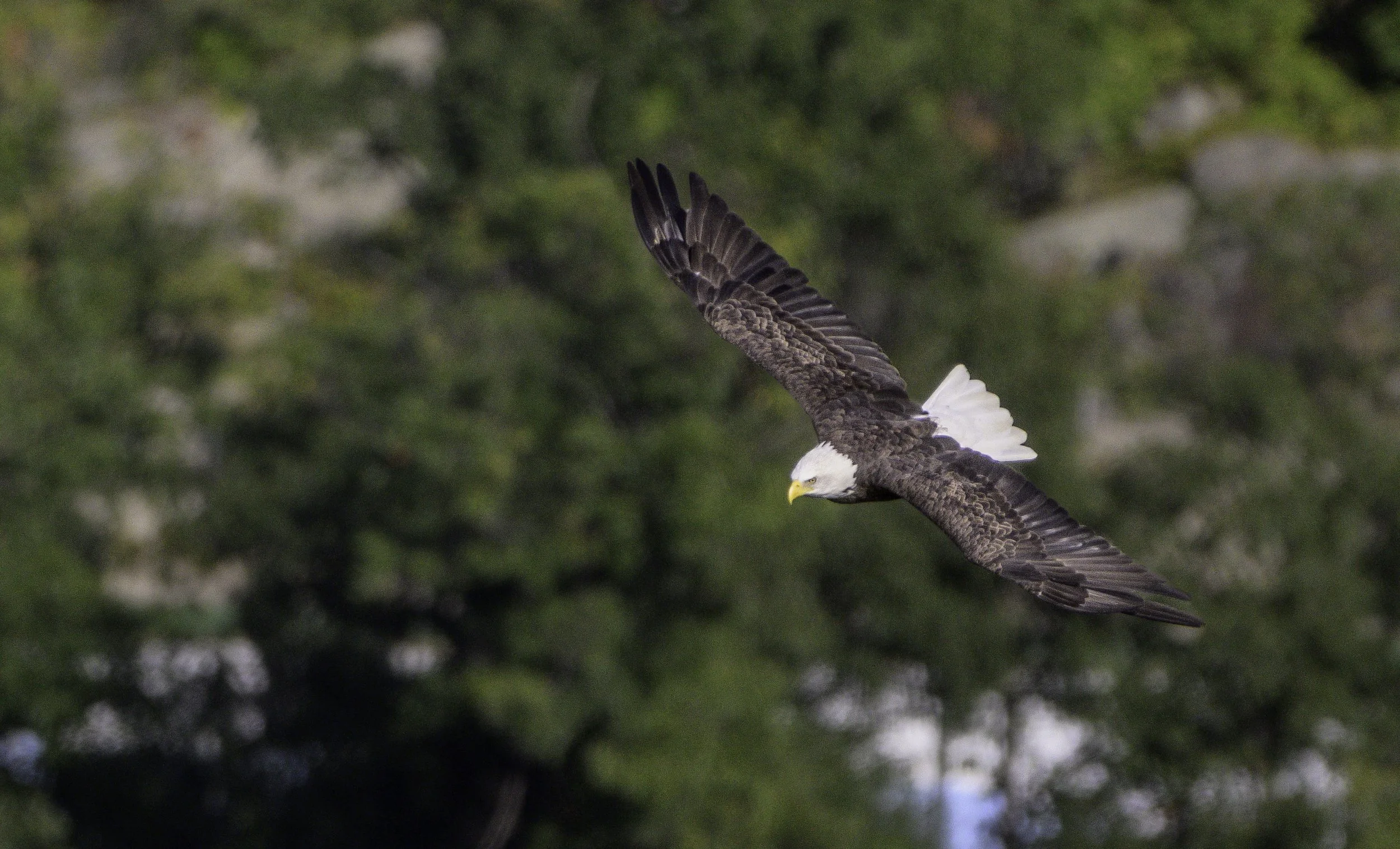
Bald eagle - Bear Mountain Hawkwatch - 9/24/26
The iconic national symbol, the Bald Eagle, is another species which has become a resident of the Highlands over the past several decades. Some of the eagles we spot during this time of year are indeed migrating birds from the north while others are some of our residents. We have to look carefully and follow their flight patterns to discern whether individuals are indeed moving through on their way south or are simply some of our “locals” which are on their daily flights in search of their next meal.
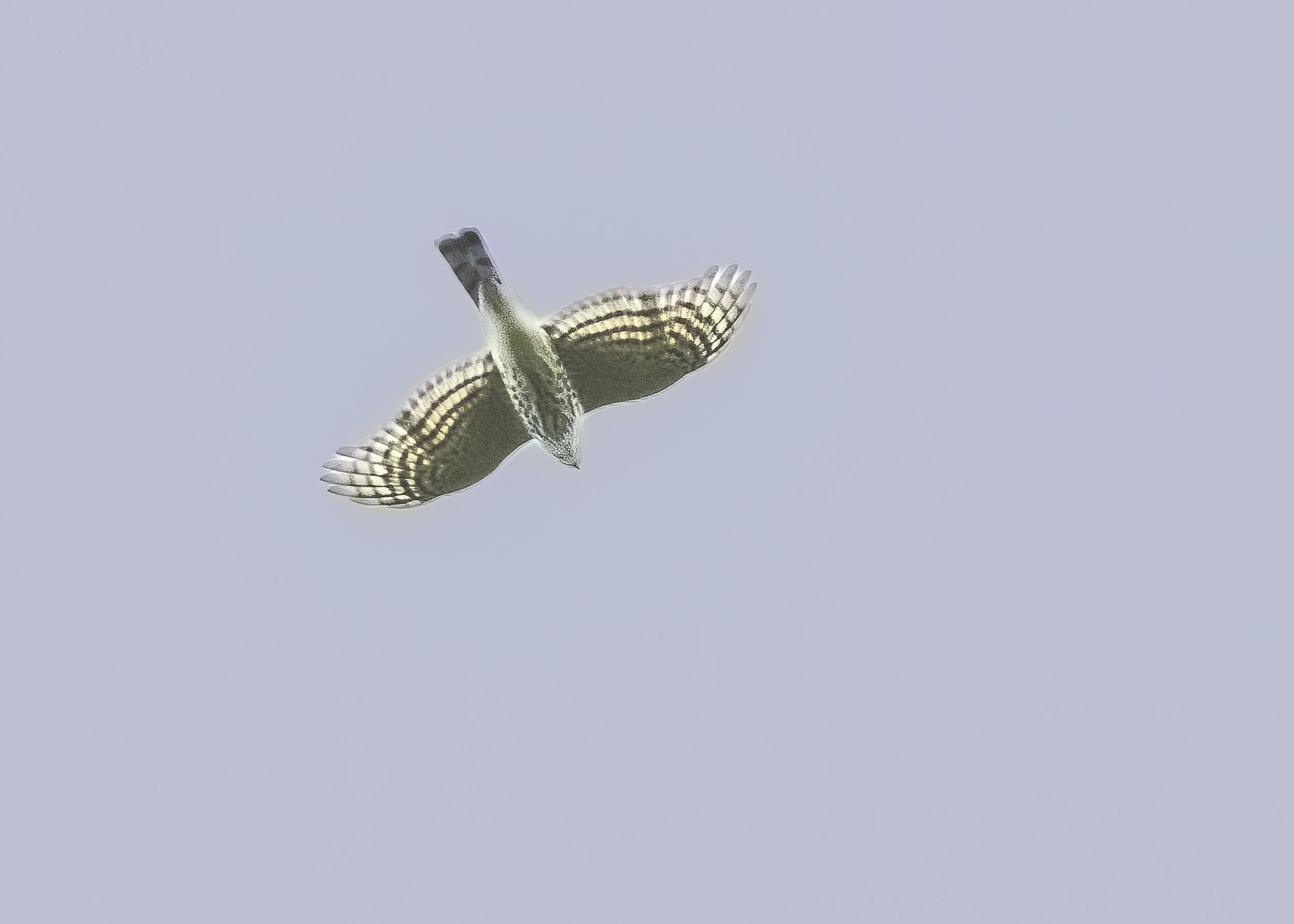
Sharp-shinned hawk - Bear Mountain Hawkwatch - 9/25/26
Another group of hawks we’ll be watching for now that the Broad-wings have pretty much departed are the accipitors. These are smaller hawks built for pursuing and capturing smaller birds in woodlands as their primary pray. Their shorter stocky wings and long tails provide fast maneuverability in dense overgrowth. The two most common species we see here on the mountain are the Sharp-shinned hawks as seen above and the slightly larger Cooper’s hawks. The Sharpies generally have a squared off tail and a slightly smaller head helping in identifying one species from the other. These birds will be moving through this area over the next month….sadly for the photographers often staying high in the sky!
As I’ve mentioned before in previous blog posts, birds are not the only game in town on Bear Mountain. Monarch butterflies have been making a steady flight on their way to Mexico for the winter. Smaller songbirds such as the Cedar waxwings are also on site.
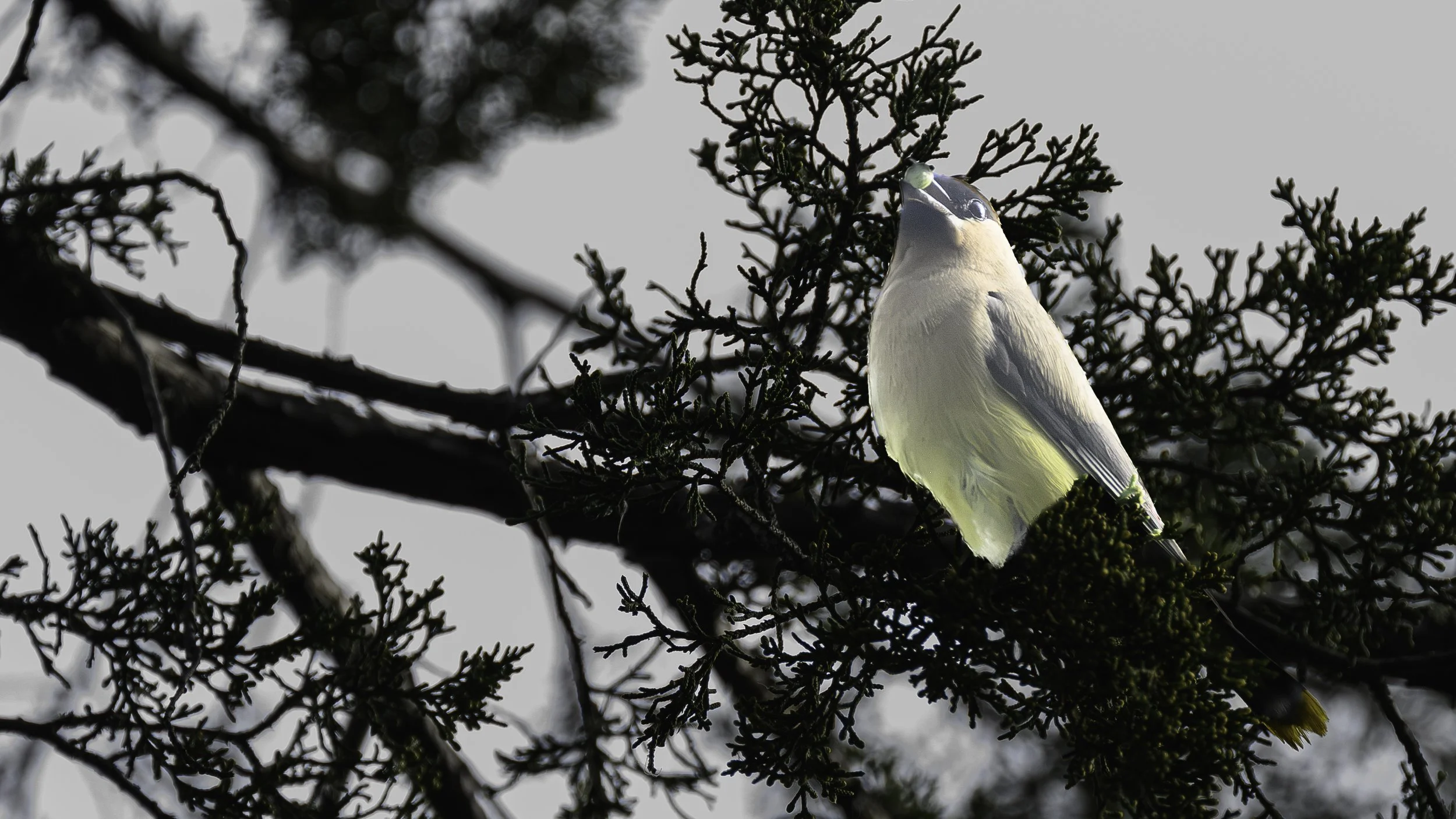
Cedar waxwing feeding on Cedar berries - Iona Island - 9/25/26
Cedar waxwing migration in New York brings a sleek, soft-browed presence to parks, orchards, and roadside trees from late fall into early spring. These nomadic, fruit‑loving songbirds move in loose flocks that follow berry and fruit abundance rather than strict migratory schedules, so movement peaks after frosts or when native and ornamental fruiting shrubs—like hawthorn, chokecherry, and crabapple—are plentiful. The bird seen in the photo above may hang around well into the winter months if food is still available.
Insects of interest are still in abundance here at Bear Mountain. Temperatures are still quite mild and conditions are favorable for the invertebrates. This Fork-railed Bush Katydid was found perched on the roof rack of one of our vehicles at the watch.
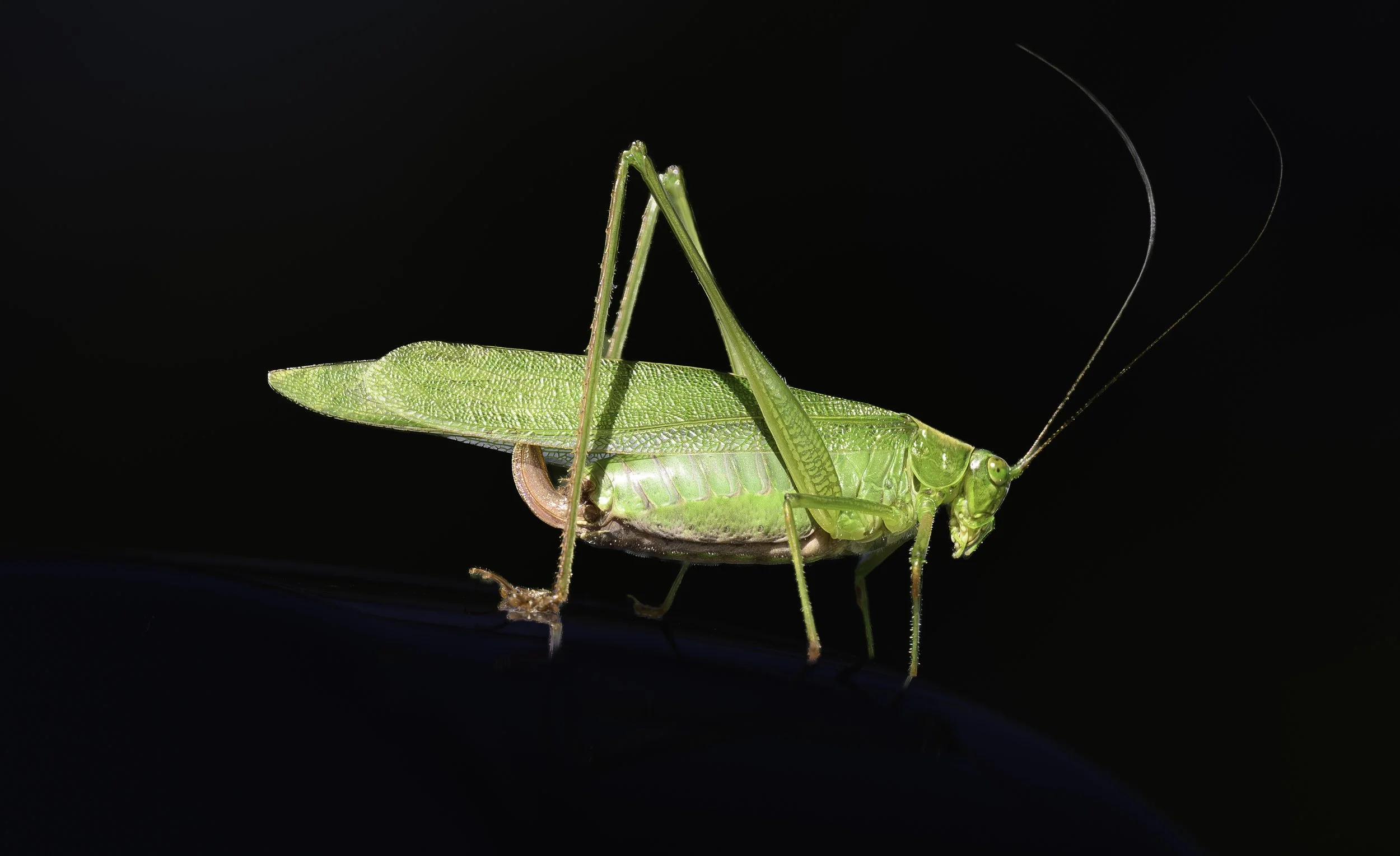
Fork-tailed Bush Katydid - Bear Mountain Hawkwatch - 9/24/26
We sometimes find that we are not the ones doing all the “watching”. A group of White-tailed deer passed by with caution and were apparently as interested in us and we were in them.
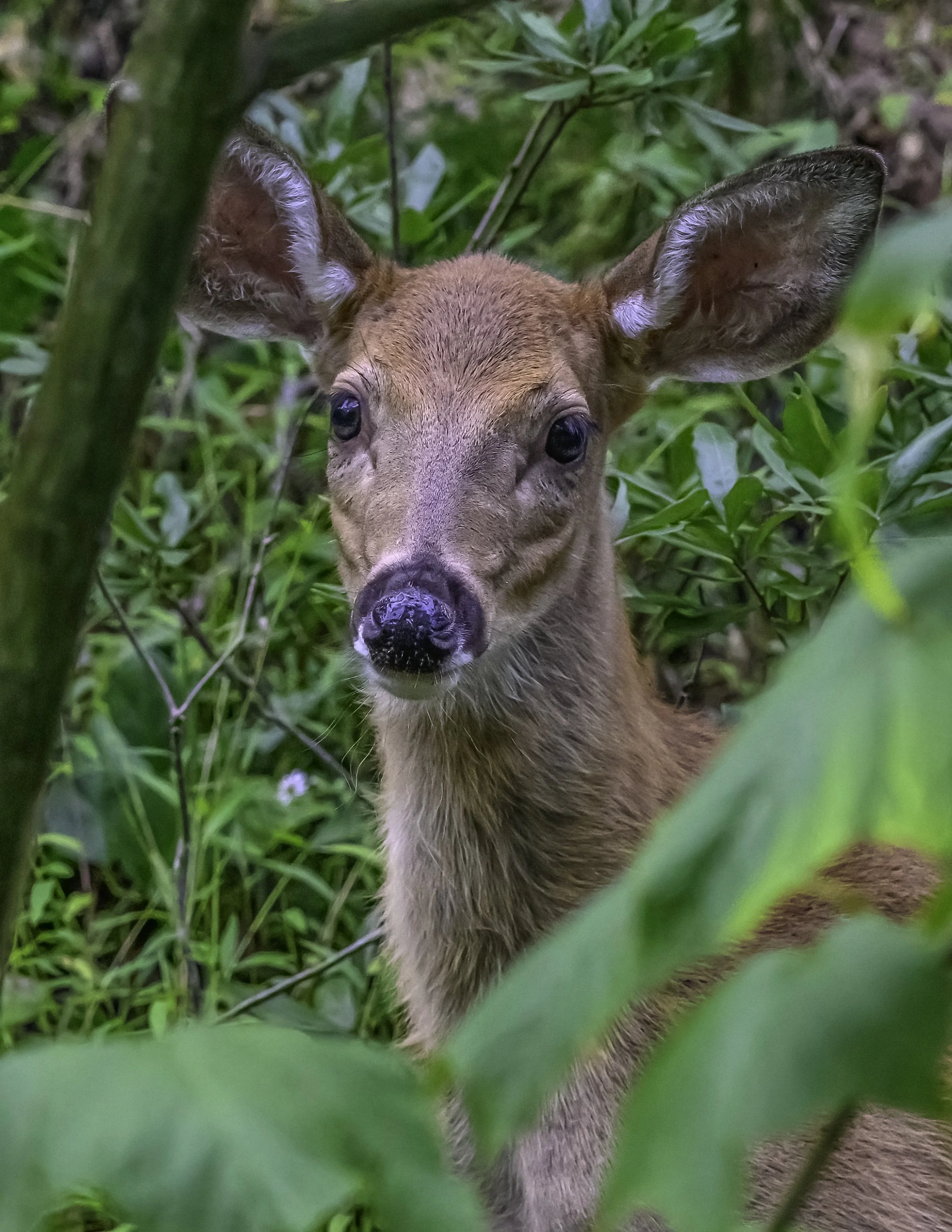
White-tailed deer - Bear Mountain - 9/24/26
And so, we’ve entered into the Fall months which promise to bring us more exciting encounters with nature’s residents. It’s always an exciting time here of year in the Hudson Highlands as the foliage begins too herald the coming of winter and the colors of the mountainsides morph into a most beautiful palette of nature’s making. We have had some serious winds and rain in the last couple of days with the passing of a Nor’easter, so hopefully the leaves are still strong enough to be holding on until it’s their “time” to turn and fall. Nature dictates the natural progression of these events, so we’ll simply have to sit back as see what she has to offer.