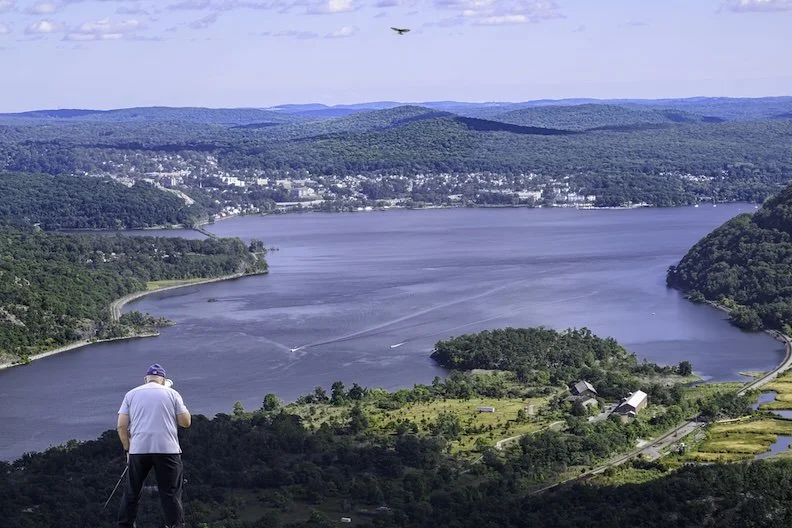
Hawkwatch composite - Bear Mt Hawkwatch - 9/21/26
On the last day of Summer, a number of us converged upon the overlook of Bear Mountain on the chance that we might catch the tail end of the annual Broad-winged hawk migration through southeastern New York. The forecast had been for rainy skies on this day, but when the sun prevailed, a good number of us decided it was too nice to not be on the mountain. We were indeed blessed with good fortune. What we all thought would be a last chance to spot a few migrating hawks turned into one of the finest days we’ve had on Bear Mountain in years.
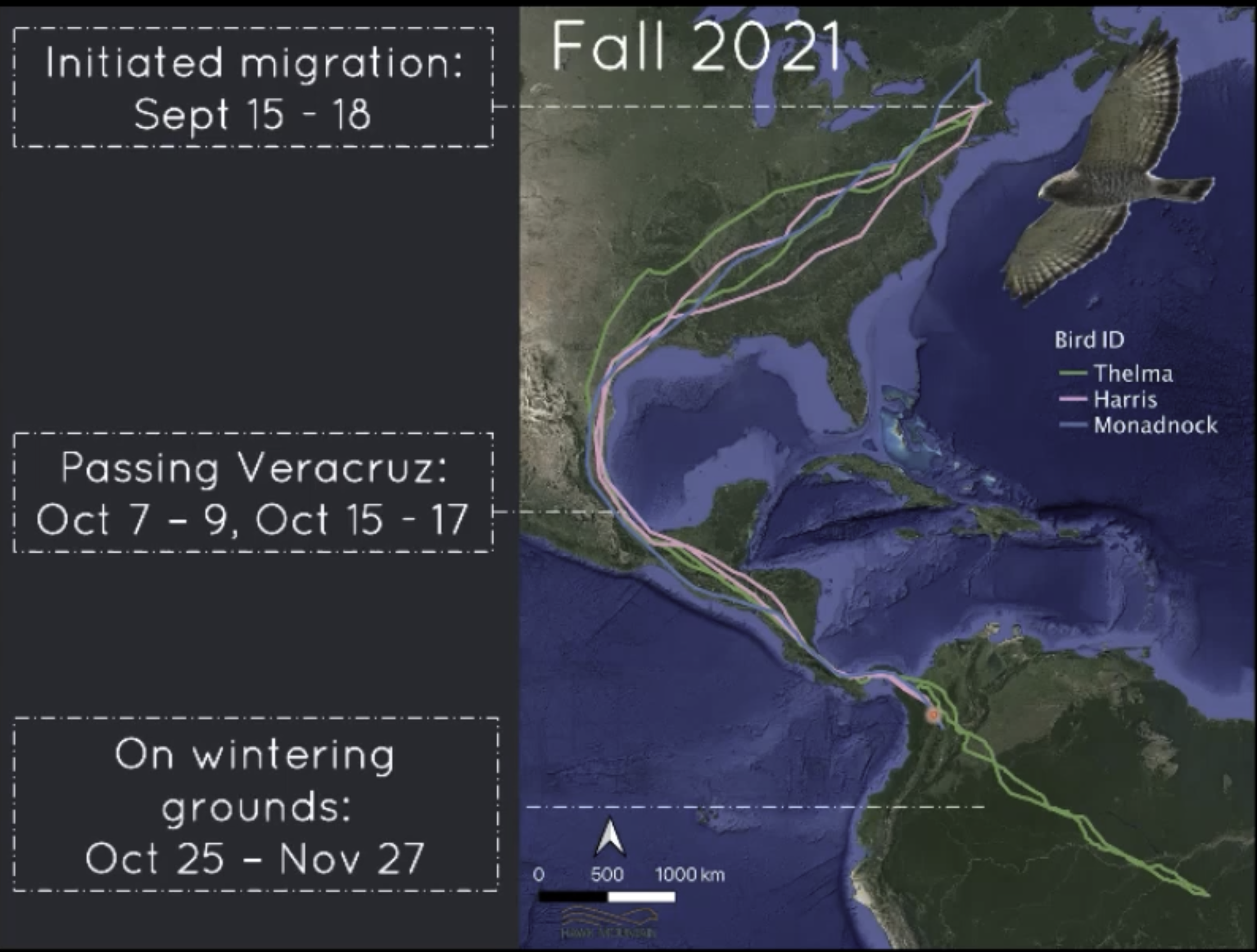
Screen shot from a 2014 presentation by Hawk Migration Association at Hawk Mountain
As shown in the diagram above, several Broad-winged hawks fitted with GPS transmitters in New Hampshire were tracked all the way from their nesting grounds south to their winter quarters in South American. This schematic shows the path followed by hundreds of thousands of these migrating hawks and careful examination shows that the path will occasionally pass right over our location in SE New York. Note that most of the hawks depart from their nesting sites during the third week of September. For that reason, the hawk watches up and down the mountain ridges of the United States are populated by anxious birders hoping to catch sight of one of nature’s most spectacular shows. We were hoping to catch the initial stage of what would be a one to two month journey for these birds as they worked their way south. And so, within a week or so of the expected time of departure from points north, here they came! Remember that these hawks are coming from Canada and other parts of the northern US at about the same time, so we are only seeing a small sample of the total population.
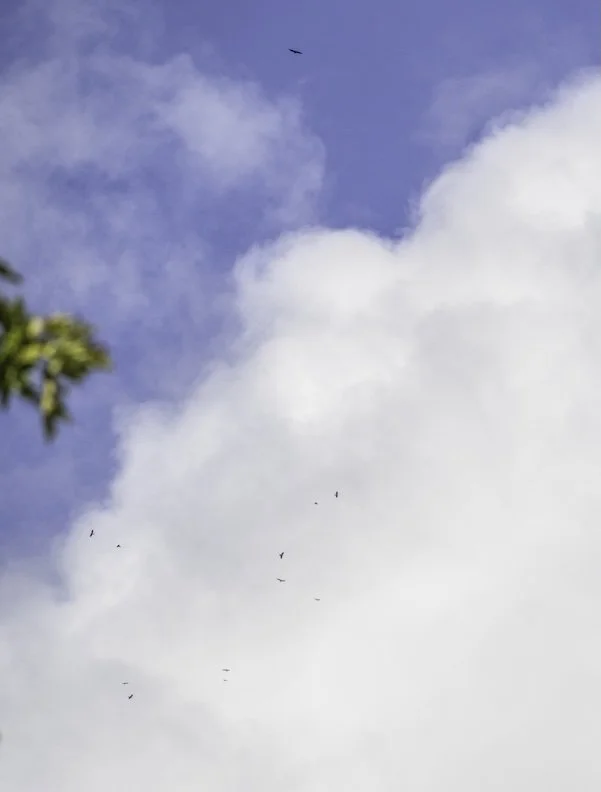
The leading edge of a kettle of Broad-winged hawks over Bear Mt - 9/21/26
The next several images portrays a sequence of the gradual appearance over several minutes of one of the kettles we observed today. The first sighting of this kettle was made by one of our observers who called out the landmarks for us to use to locate these high fliers. The image is taken with a telephoto lens and with the naked eye, these birds appeared as “popper flakes” against the white clouds. Without that backdrop, these birds may well have passed right over our heads without anyone noticing.
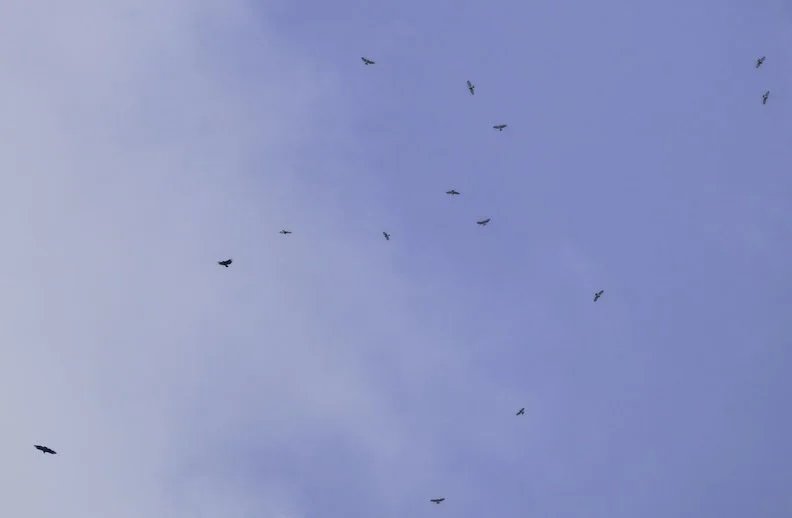
The “kettle” gradually grows thicker as the group fills more and more of the sky above - 9/21/26
Getting a reasonable count of the birds is becoming more and more of a challenge, but all 8 of the observers do their best to make an accurate count, often by making a mental border of a section and multiplying the number by how many of those areas are covered with birds. Taking an average of what we all came up with gives us a pretty good idea. That number can be further substantiated by watching for the birds which are spiraling upwards on thermal currents to start “peeling off” and heading south. That elongated stream is easier to count and can be compared to our original counts to come up with what is a pretty good estimate to the actual number.
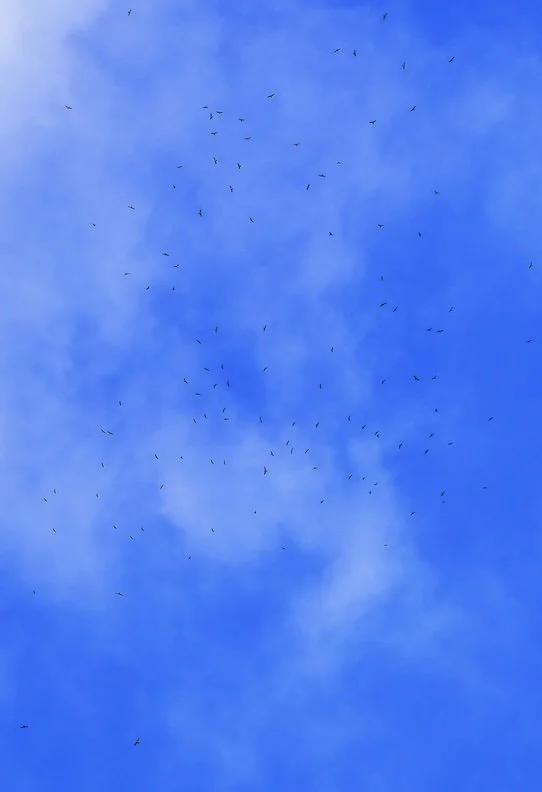
The Kettle continues go grow as we continue to count - 9/21/26
Backing off on the telephoto range, I can now get more of the birds in the frame. This one shot represents about a third of the total area covered by this group at this time. Counting the birds in the photo, I come up with about 105, so simple math tells us that there were about 315 birds in this one kettle. By day’s end, we came up with a count of 1,243 of these Broad-winged hawks passing over Bear Mountain on this one day. That total brings our sightings of Broad-winged hawks for 2026 up to 1867. Will that number increase? Probably, but if the trends of previous years holds true, most of the Broad-winged hawks have already left their nesting sites and have probably passed by. A few late comers are likely to come by, but the climax of this phase of migration has likely passed.
Other species will be following different time schedules and perhaps different paths, and none of them match the Broad-wings for sheer numbers being observed. But, we will continue to monitor the mountain ridge for further activity and will report back to you on our sightings. For not, we will revel in a spectacular day on the mountain.