Mid-October Hawks
On a gorgeous mid-October day, several Hawk watchers convened atop Bear Mountain to count the migrating hawks passing over the ridge. We were blessed with partially cloudy skies which make for a good backdrop against which to see the hawks in flight. We also had the good fortune to have a steady south wind at higher altitudes based upon the cloud movement. We conjectured that because of the strong headwinds the birds were facing as they venture south, they maintained a lower altitude, closer to the ridge. This brought them in closer to us making counting and photographing them a bit easier.
At the time of year, the major thrust of the Broadwinged hawks has pretty much come to an end. Now, in mid=October, we are finding mostly the accipiters - Cooper’s Hawks and Sharp-shinned hawks. In smaller numbers, the falcons - Kestrels, Peregrines and Merlins - can also be found in mid-October and into November. Today, it was primarily the Coops and the Sharpies. The image below is a Cooper’s hawk that flew over the watch site.
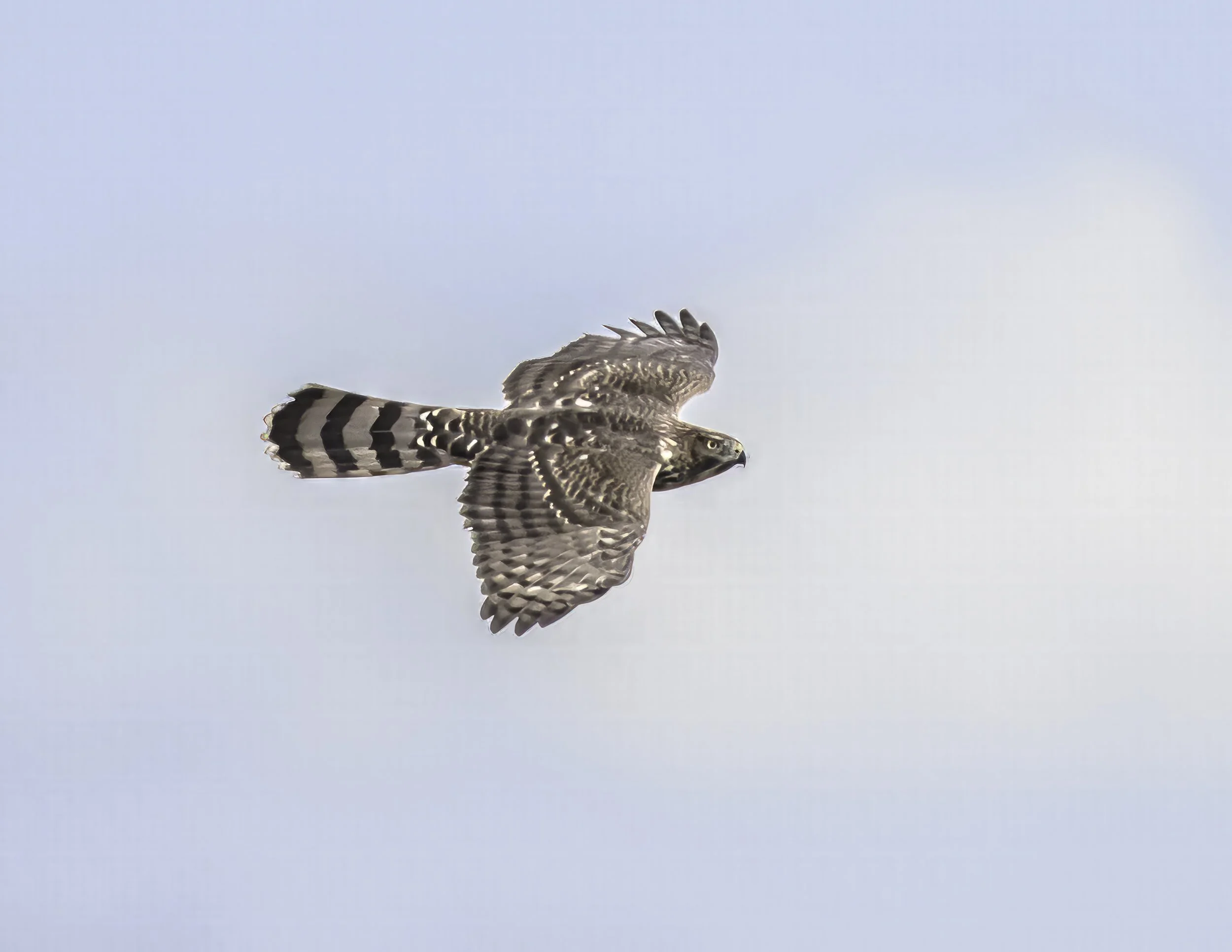
Cooper’s hawk over Bear Mountain
Medium-sized and long-tailed, they move with purposeful, agile flight—flapping bursts interspersed with fast, level glides. Fall migration peaks September–October southbound, though stragglers appear outside those windows. Look for sharp-headed silhouettes, a rounded tail with dark bands, and the adult’s warm, reddish-barred chest. Unlike the Broad-winged hawks he had earlier this fall, the Cooper’s hawks are pretty much solitary and rarely are they seen in anything other than a lone bird passing over.
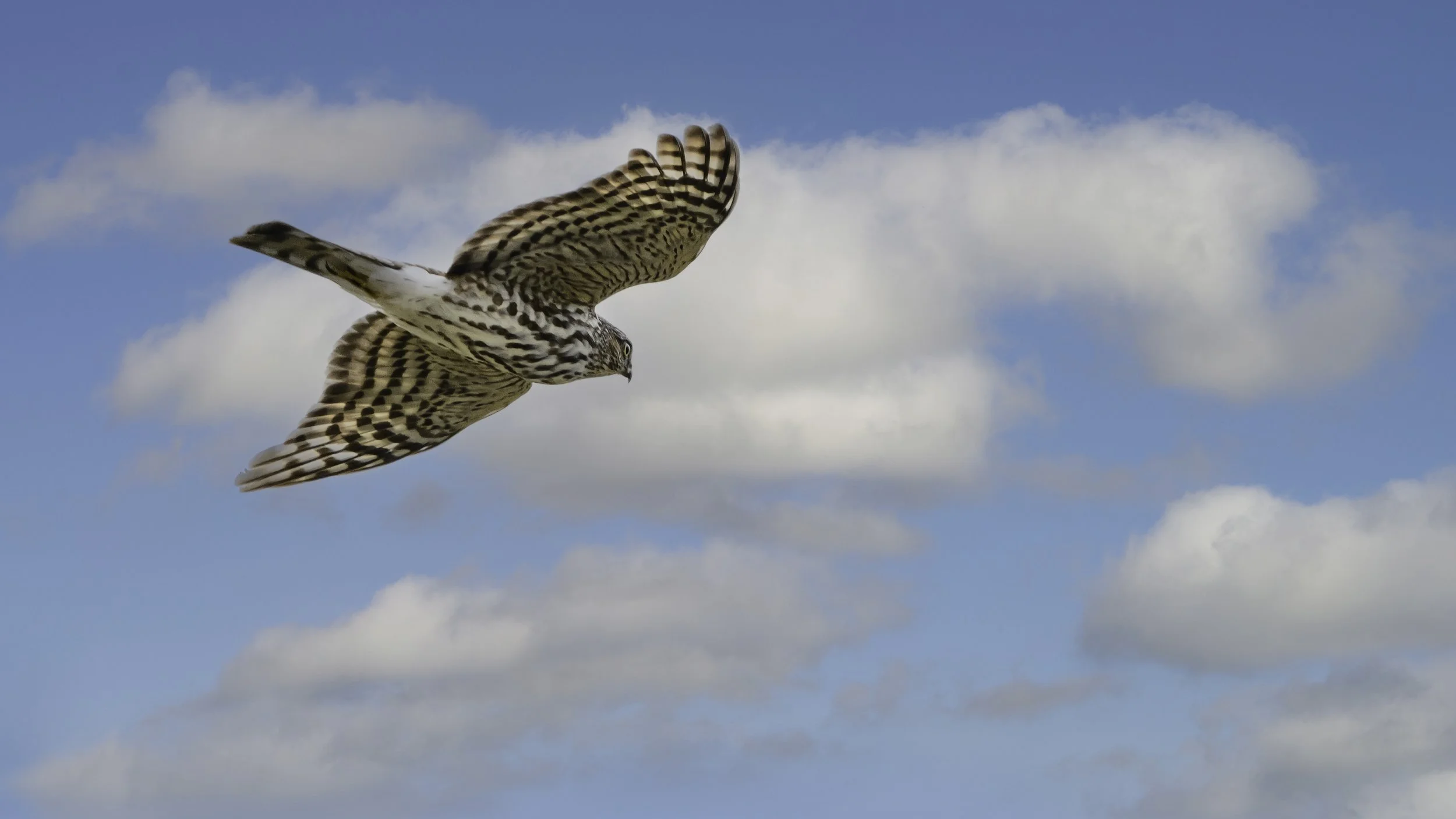
Sharp-shinned hawk = Bear Mountain Hawkwatch- 10/13/26
Similar in appearance but smaller in size, the Sharp-shinned hawk is most easily distinguished from the Coopers by its squared off tail, smaller head, and a rapid wing beat. If you can count the wing beats, it’s probably a Cooper’s hawk. If the wingbeats are so rapid it is difficult to count, most like it is a Sharpie.
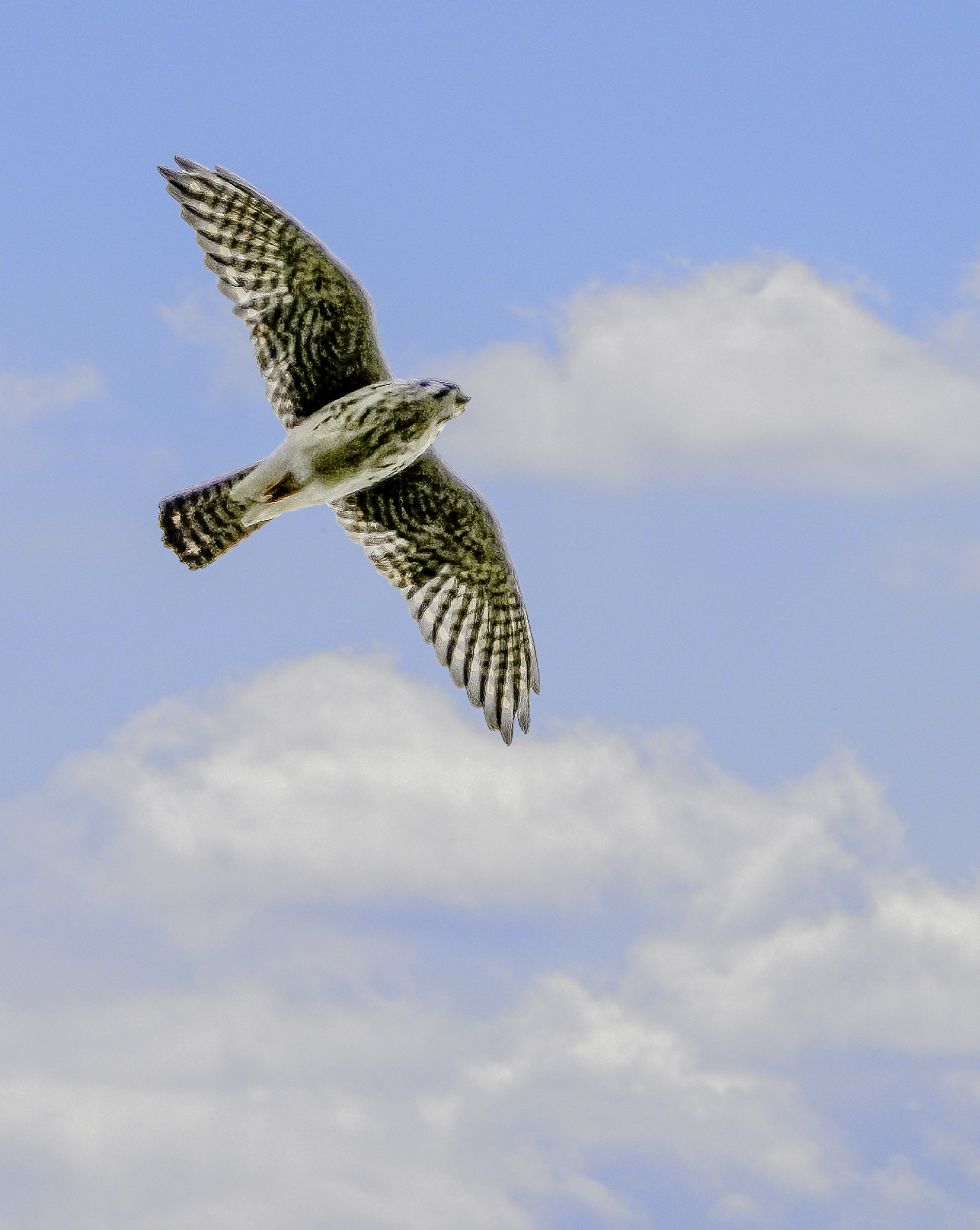
American kestrel - Bear Mt Hawkwatch - 10/13/26
Other than several kettles of vultures seen migrating south today, the third most common bird of prey was the American kestrel. This is our smallest falcon, and unfortunately this guy was high in the sky, making for a rather fuzzy photo. Even so, this is a pretty easy bird to id at the watch. It is fast and its wings are long and pointed.
Kestrels sail along thermals and wind-swept ridgelines during fall migration in New York, their compact silhouettes flashing rusty backs and boldly patterned tails against low autumn light. These nimble falcons use subtle air currents to conserve energy as they move southward, pausing to hunt voles, insects, and small birds. Migration days with clear skies and steady winds bring the best viewing here in the Hudson River Valley where they often appear as individuals or in small, intermittent groups rather than large kettles.
Last but not least, we did have several small kettles of both Black and Turkey vultures. Each fall, New York hosts a dramatic movement of turkey vultures and black vultures as they shift range to follow food availability and milder weather. The Turkey vultures often form long, bobbing lines or kettles moving along ridgelines and thermals from the Hudson Valley to the Adirondacks. Black vultures—less reliant on soaring air currents—concentrate more in southern and coastal areas where carrion and human-associated food sources are abundant. Both species benefit from warm autumn thermals that allow energy-efficient travel, and their presence signals ecological cleanup at a time when roadkill and late-season wildlife mortality create plentiful foraging opportunities.
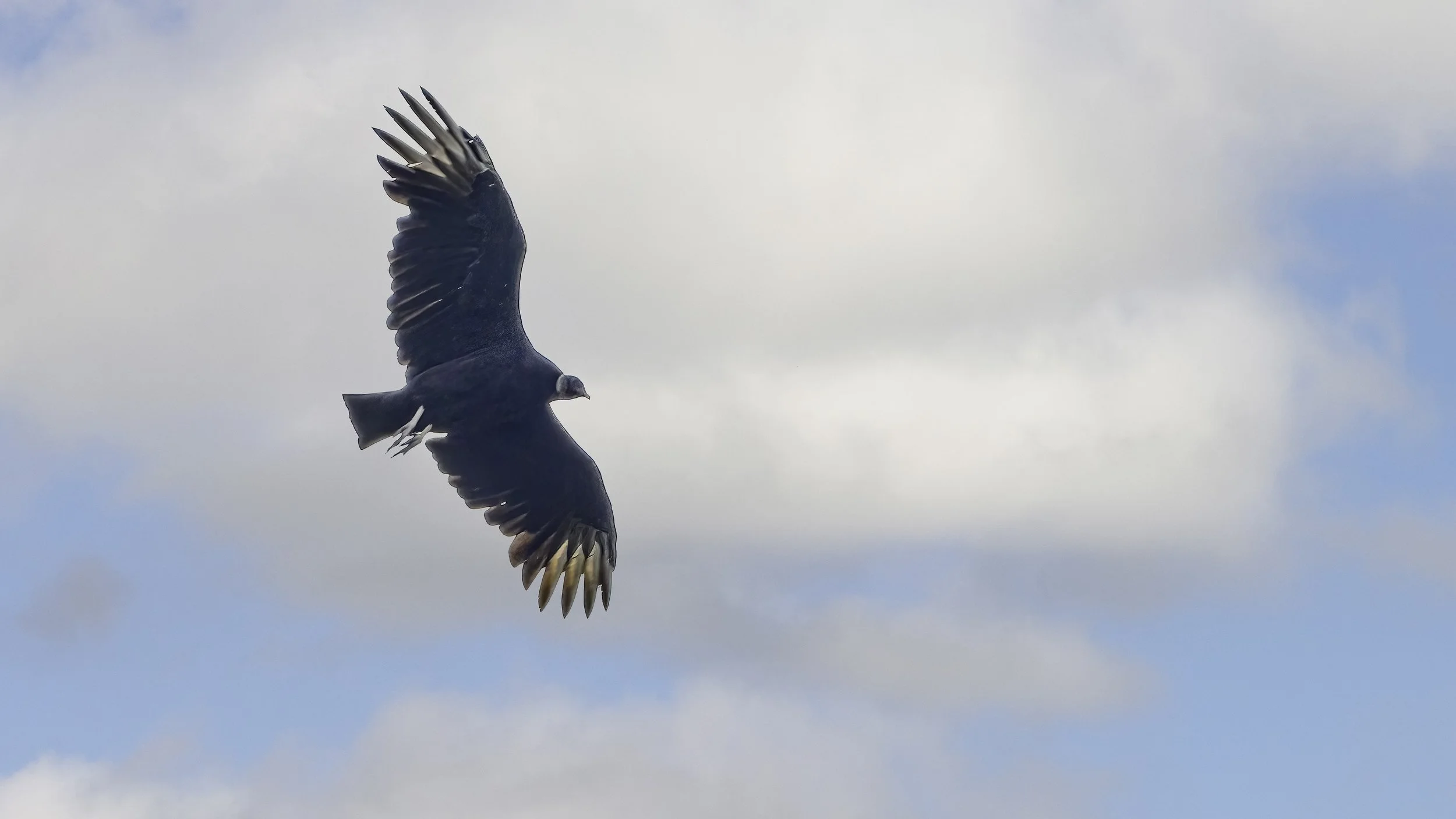
Black vulture - Bear Mt. Hawkwatch - 10/13/26