Yellow-rumps on the move
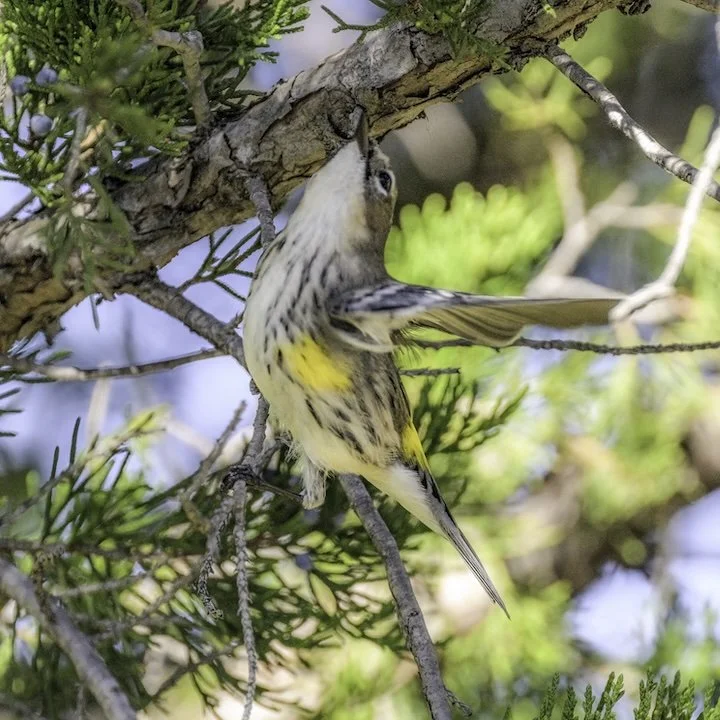
Yellow-rumped warbler - Iona Island - 10/12/26
One of the most common warblers to be seen moving through the Hudson Valley at this time of year is the Yellow-rumped warbler. Yellow-rumped Warblers pass through southeastern New York in noticeable numbers during the fall migration, typically from mid-September through October, with some individuals lingering into November. They favor mixed woodlands, shrubby edges, and coastal thickets where berry-bearing shrubs and insects are available. They are often seen gleaning in trees or flitting through understory while joining mixed-species foraging flocks.
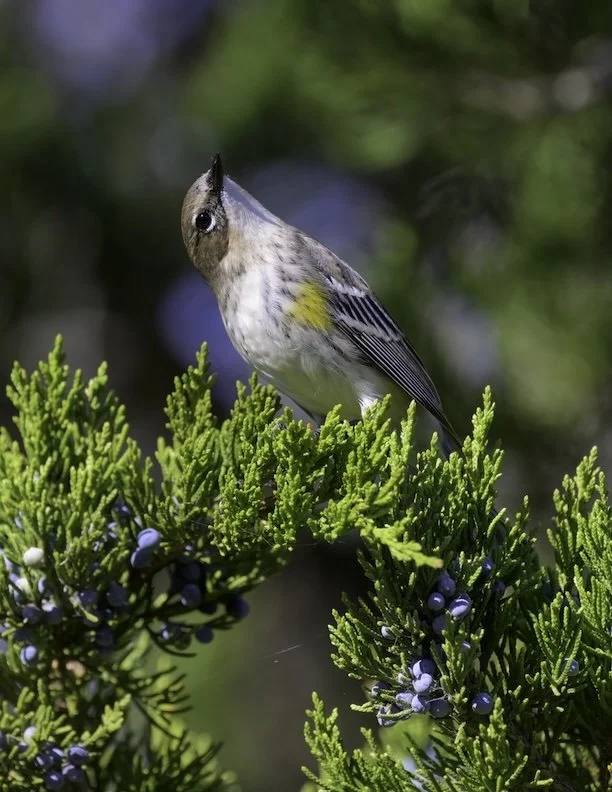
Yellow-rumped warbler - Iona Island - 10/12/26
TheYellow-rumps are aptly named and quite easy to identify when seen from the rear. A frontal view, however, makes id a little more difficult except for the fact that the eastern sub-species “Myrtle Warbler” has a brilliant white throat and a small yellow shoulder patch. When seen from the dorsal angle, that yellow rump patch stands out like a beacon and makes identification unmistakable.
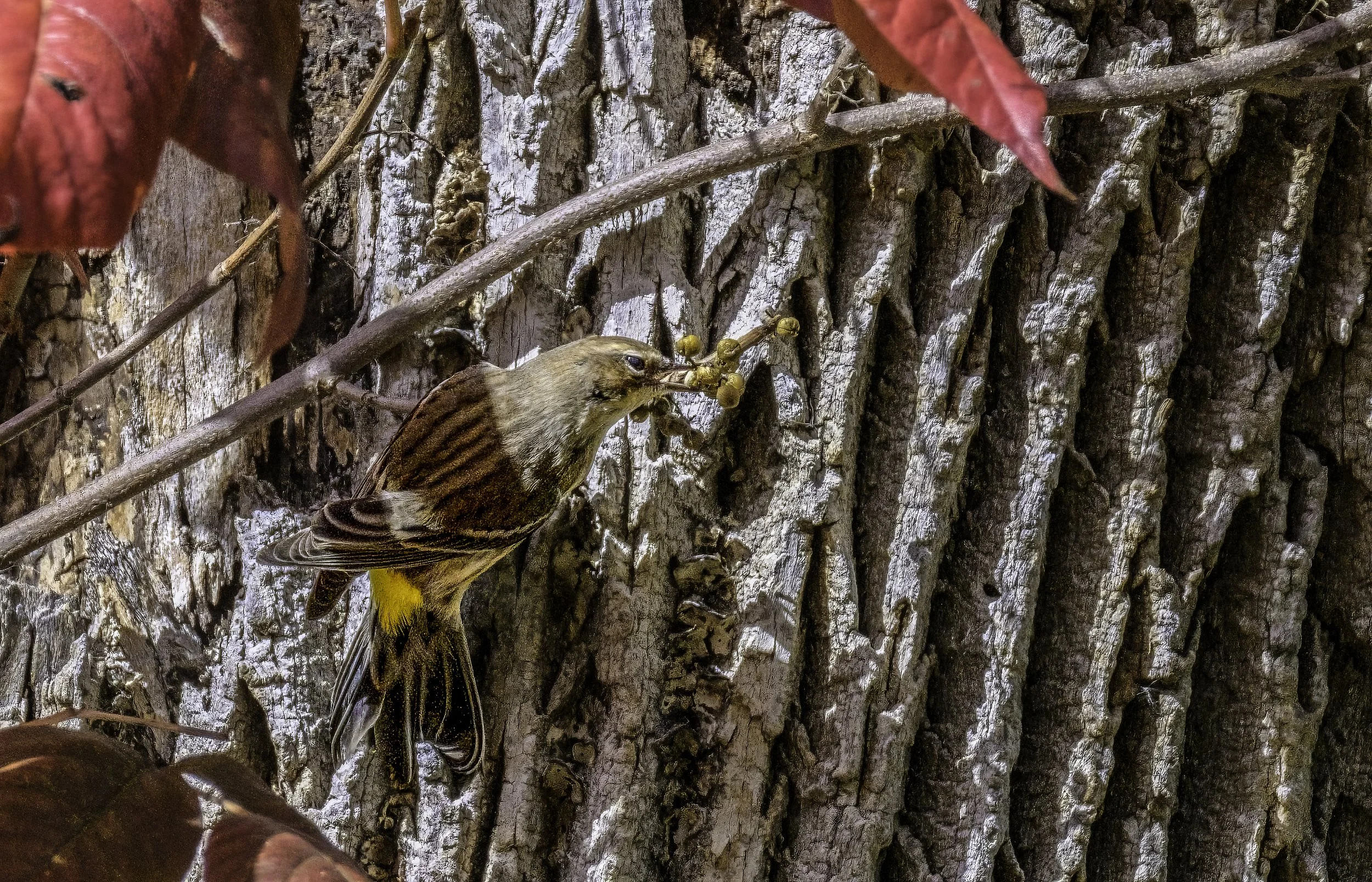
Yellow-rumped warbler - Iona Island - 10/13/26
A brief drive through Iona Island this afternoon found many of these little birds throughout the canopy of many of the trees. Where there were Poison Ivy vines which had changed color to brilliant red as their fall foliage hue, the warblers were jockeying for position to get at the many berries the vines had produced. In the tree seen above, at least 10 yellow-rumps were flitting back and forth and making the most of the offering.
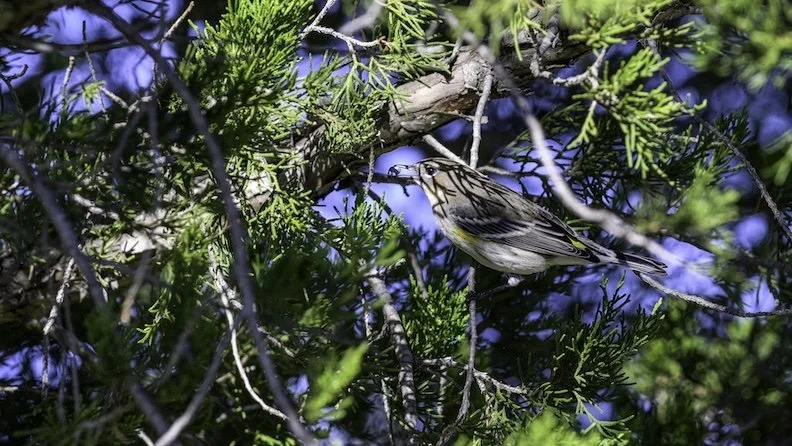
Yellow-rumped warbler - Iona Island - 10/12/26
There are quite a few Red Cedars on the island and at this time of year, there is an abundance of tiny nutritious cedar berries for these hungry warblers. On virtually every cedar, a short wait would produce at least a half dozen of the warblers coming in to savor these morsels offered up by the trees. Although some of these warblers will only venture as far south as the southern most terminus of their breeding range, many will head far down into southern states and the tropics. It’s a long journey for some of these birds and they spend much of the day refueling before flying south mostly under the cover of night. Those that remain behind can survive during the colder months by feeding on waxy berries and fruits that most other birds cannot digest. How long these warblers will remain at Iona Island is anybody’s guess, but it will be a joy to watch them as long as they choose to hang around!