Layover
As the birds are heading back to their wintering quarters in the southern states or perhaps Central or South America, most need to occasionally take a break. Resting and refueling as it were are important components of a long journey. Each winter, Sharon and I make the drive down to our “wintering grounds” in East-central Florida. We have found that by making periodic stops and “layovers”, the trip becomes much more doable. We need to refuel both the vehicle and our bodies. For most birds, the same is true.
Today, I came across an avian way-station where Great blue herons were taking a break from their long journey and were replenishing those resources necessary for a safe and successful trip.
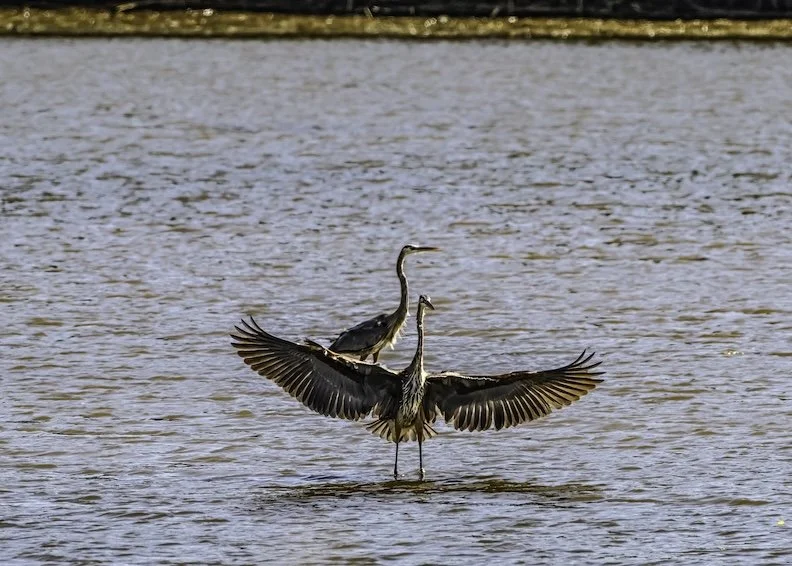
Great blue herons - Croton Train Station - 10-5-26
Seeing Great blue herons through the summer season is not all that big a deal. But today, there were 17 of these magnificent birds all congregating here at the mouth of the Croton River. What’s the attraction? Each spring and fall, great blue herons migrate through southeastern New York along a network of wetlands, estuaries, and river corridors, using the Hudson River and Long Island Sound as key navigational and foraging routes. During migration they often fly singly or in loose lines, taking advantage of thermals and coastal updrafts to conserve energy, and stop at marshes, flooded fields, and tidal creeks to rest and feed on fish, amphibians, and crustaceans, making them a visible and vital component of the region’s seasonal avian movements and an indicator of wetland health.
When I first arrived on site, I noticed a large group of Ring-billed gulls circling around a lone Great blue heron. I soon noticed what the draw was….
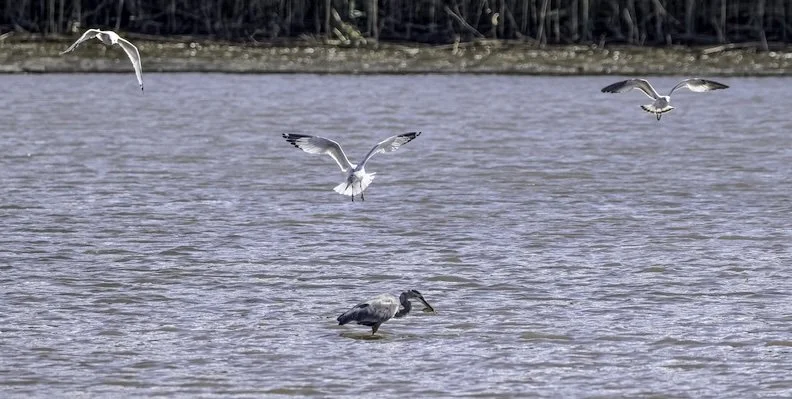
Great blue heron and Ring-billed gulls - Croton Train Station - 10-5-26
A heron had snagged a nice fish and the Ring-bills were hoping for an error on the part of the hunter. Sadly for them, the heron handled his catch flawlessly and quickly devoured his quarry.
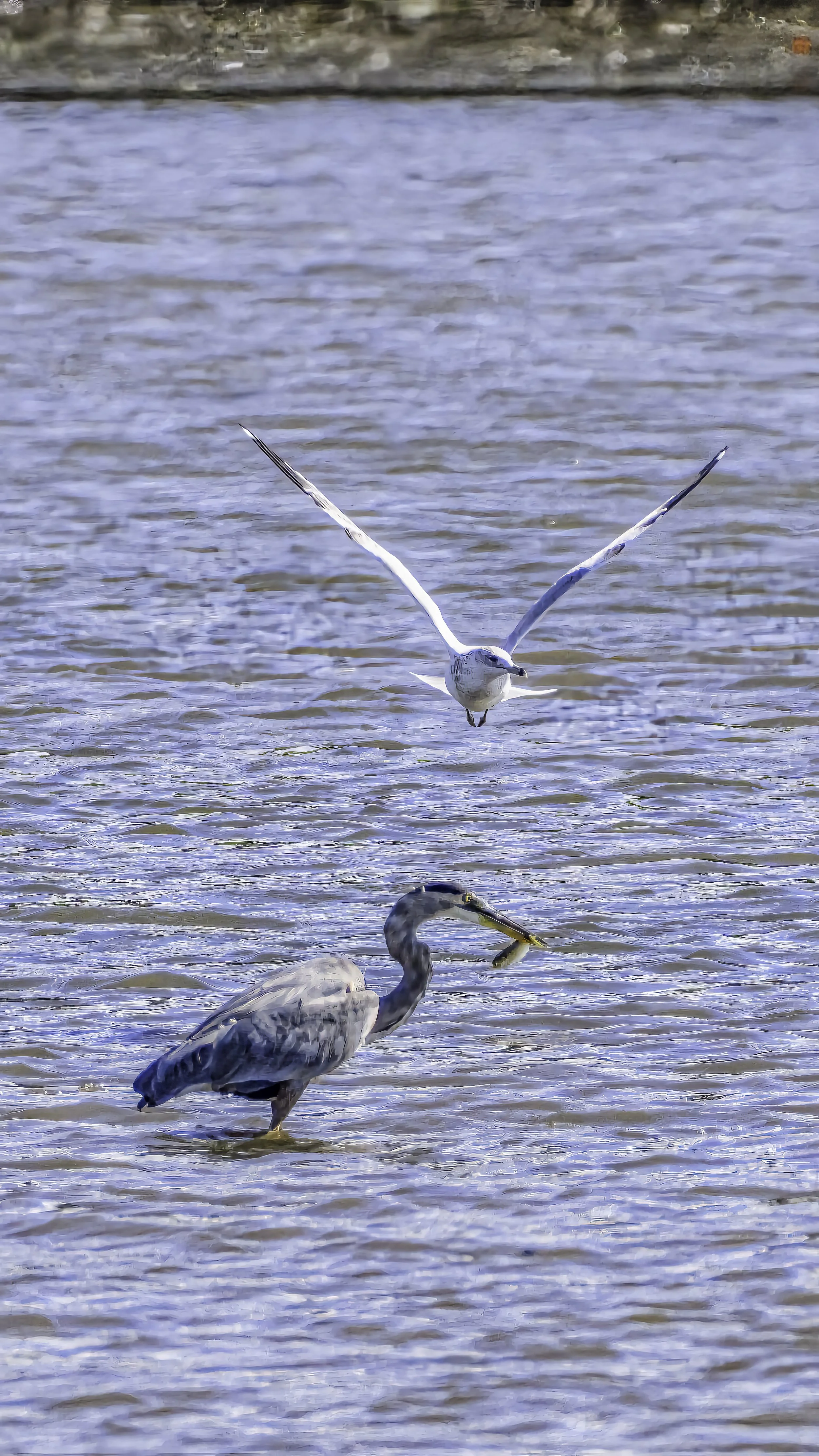
Closer look at the first image….
Eventually, one of the gulls tried to provide for himself by using his own prowess. Unfortunately, he came up empty handed (or taloned as the case may be). Still, others were hoping he’d be successful and were ready to pounce on any part of the pray which might be left behind.
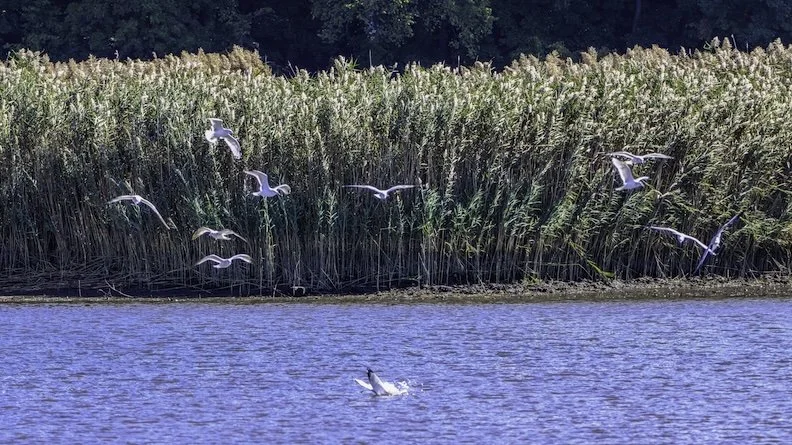
Gulls pursuing prey - Croton Train Station - 10-5-26
While not present in as many numbers as the Great blue herons, there were also a few Great egrets which has stopped by looking for a quick bite at this site. At least one seen below was successful. Obviously, this site has an abundance of available food during the lower tidal periods.
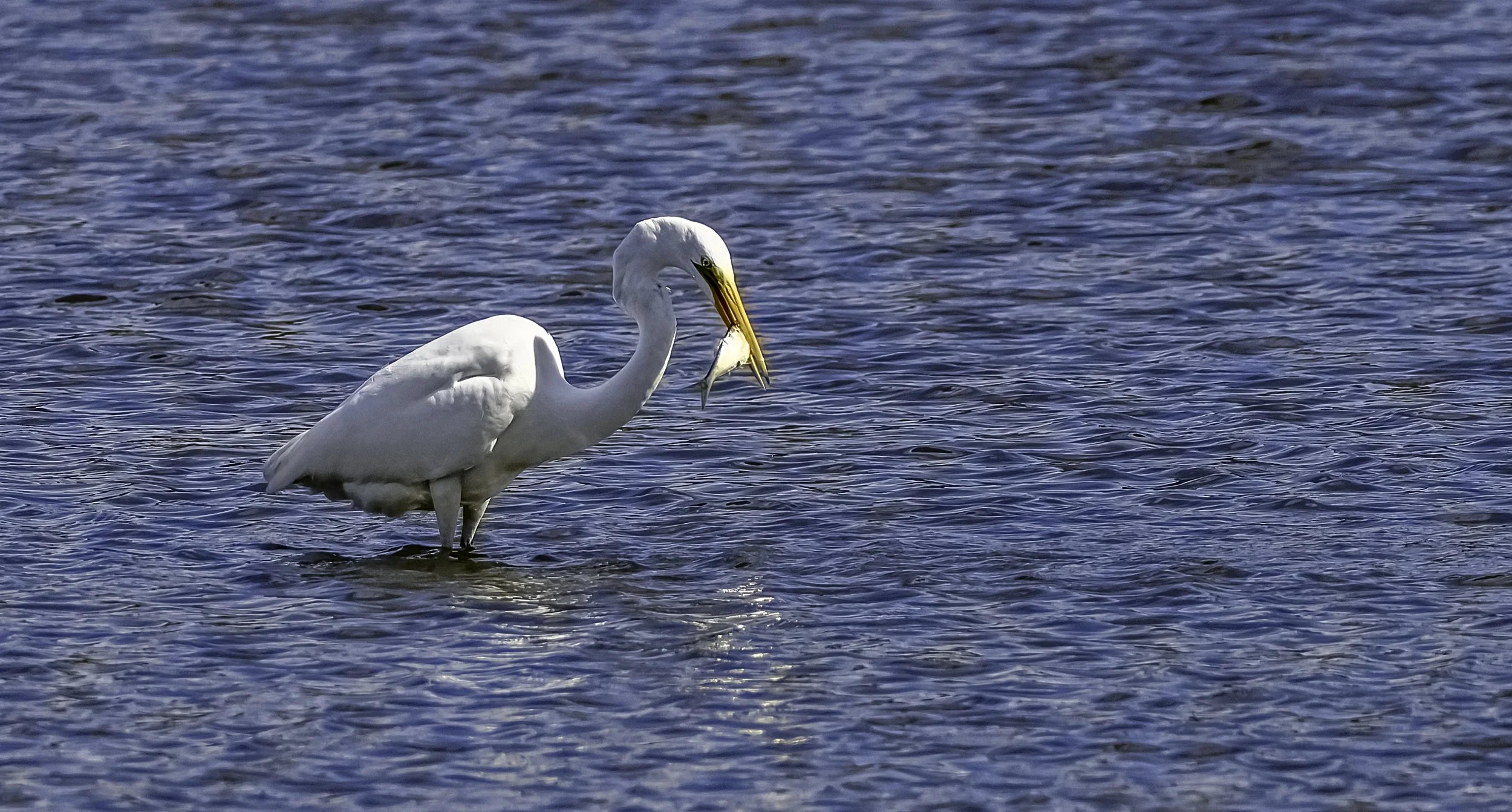
Great egret with fish - Croton Train Station - 10-5-26
During the “down time”, the gulls chose to sit back and wait for a heron to make another run at the schools of fish in the bay. Like the herons and the egrets, many of these gulls are migratory and most will be flying south to the Gulf of Mexico or along the Atlantic coastal areas.
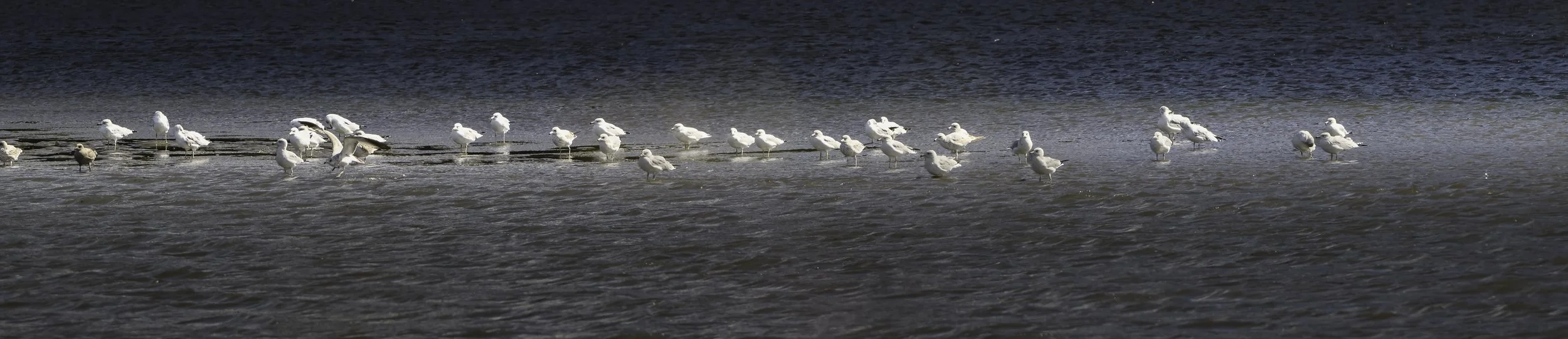
Flock of Ring-billed gulls - Croton Train Station - 10-5-26
It’s a great time to keep our eyes out for movement and activity associated with these migrations. Many birds are on their way or are in fact already on their wintering grounds, but there are still plenty of birds yet to come through the upcoming months.