Hawk migration through southeastern New York continues in November as sharp-shinned, Cooper’s, red-tailed, Red-shouldered hawks and northern harrier populations move south along ridgelines and coastal corridors. Cold fronts and northwest winds concentrate migrants, producing spirited flights over Hudson Valley ridges, the Appalachian foothills, and Long Island’s coastal flyways. One advantage to us photographers is that thermals weaken during this season, shifting activity to low-level commuting and ridge-top passage. Today, numbers were down but the expected species did make an appearance.
Red-shoulders were the most commonly appearing migrants mostly soaring at low enough altitudes to afford us decent looks and photographic opportunities. One of the quickest ways to determine that these hawks are indeed Red-shoulders is a clear bright “window” towards the end of the wingspan. The only other hawk that might show these highlights are juvenile Red-tailed hawks. The Red-tails will have a dark band crossing their breasts however whereas the Red-shoulders have a speckling across the breast and belly.
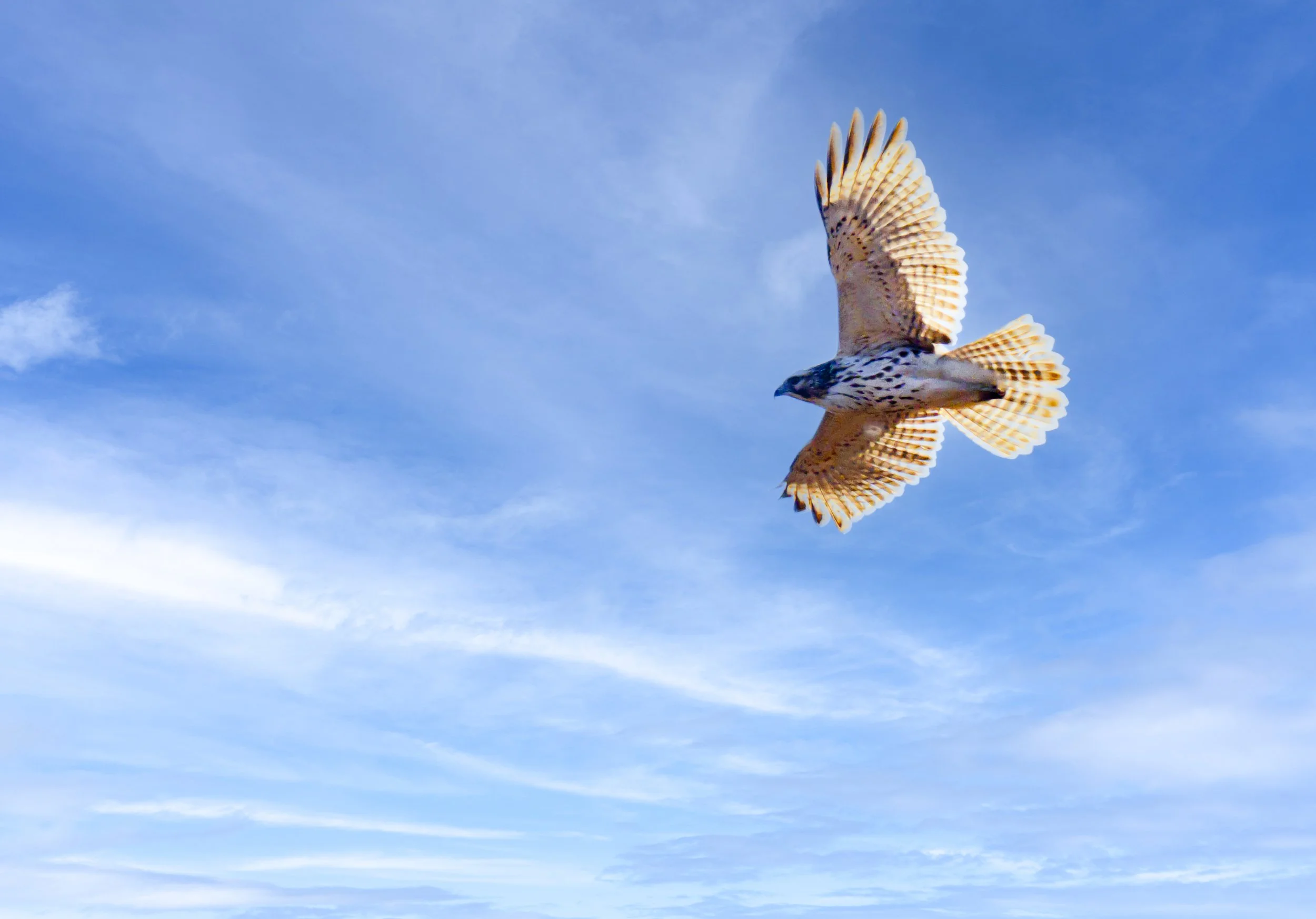
Winds were from the SW for us today which is usually a condition which increases the odds of finding migrating hawks at Bear Mountain. Those Cirrus clouds seen in this shot were an indication that unstable weather was headed our way. That also generally brings us more hawks that stable conditions.
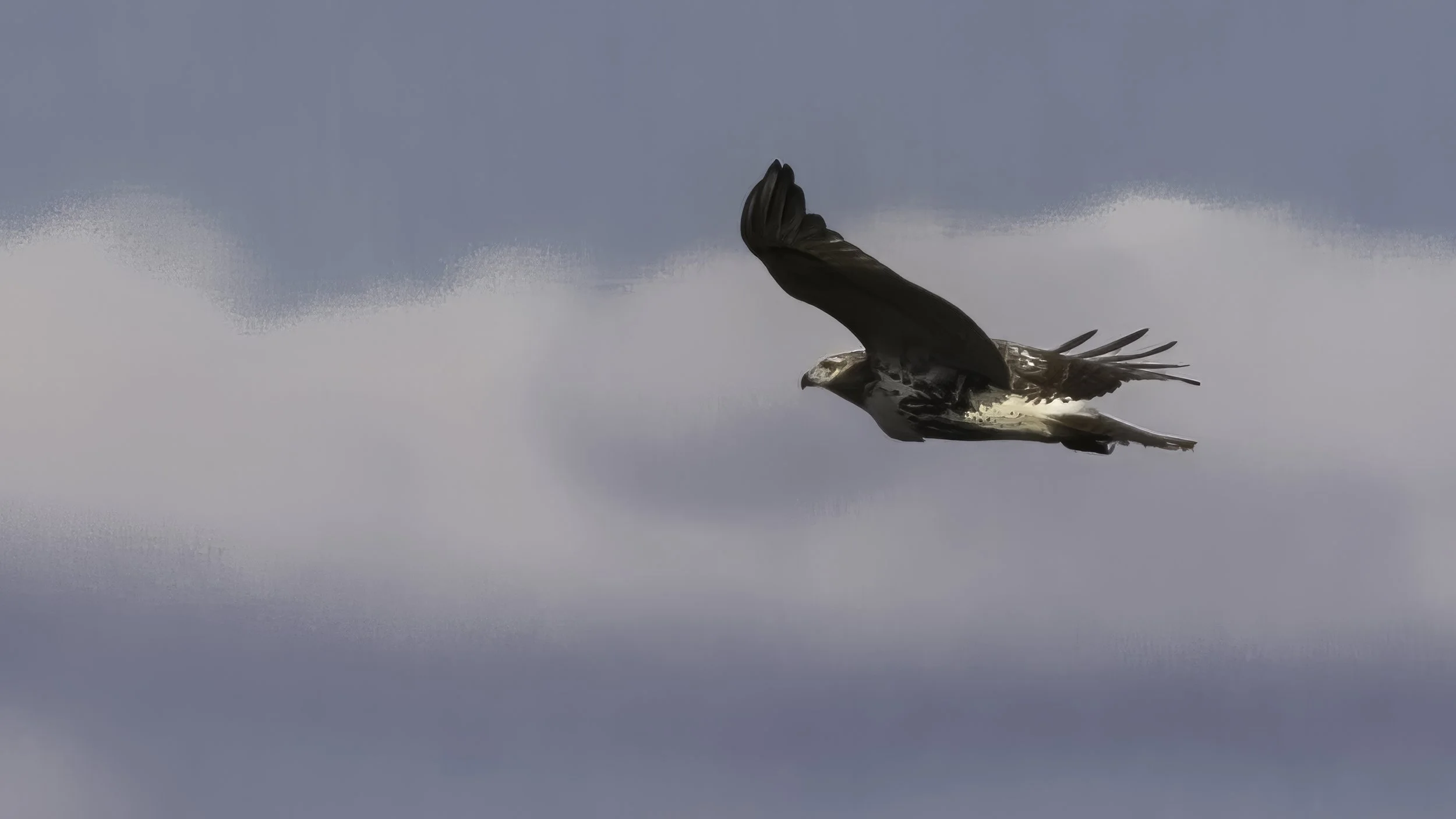
Red-tailed hawk from several years ago - Bear Mountain Hawkwatch
The image above shows that dark “belly-band” which is absent on the Red-shouldered hawk
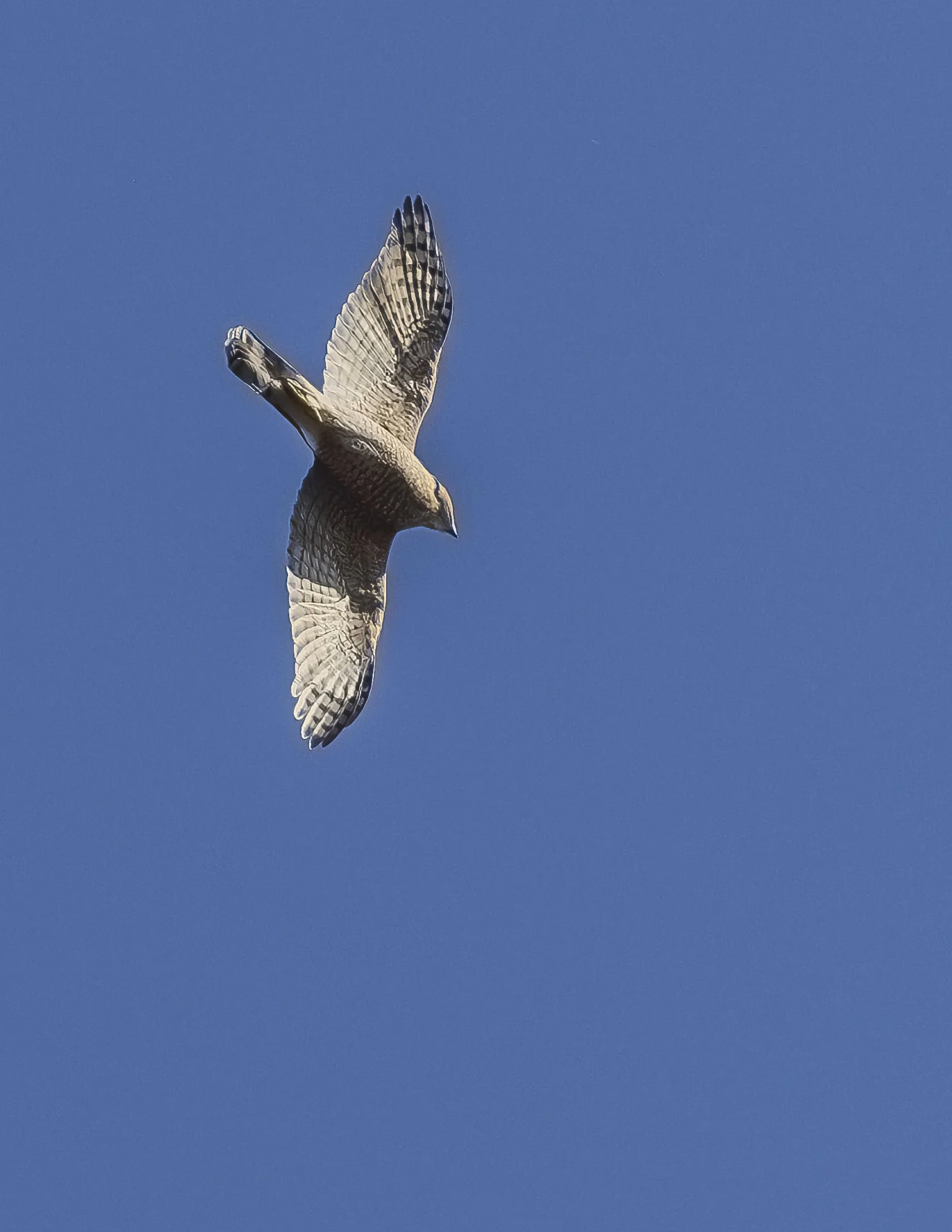
Cooper’s Hawk - Bear Mountain Hawkwatch - 11/3/26
Cooper’s Hawks have been coming through for a couple of months now and continue to be one of the more reliable hawks showing up during this time of year. These are considerably smaller than the Red-shoulders and have a much more rapid wingbeat typified by a flap-flap-flap-glide pattern.
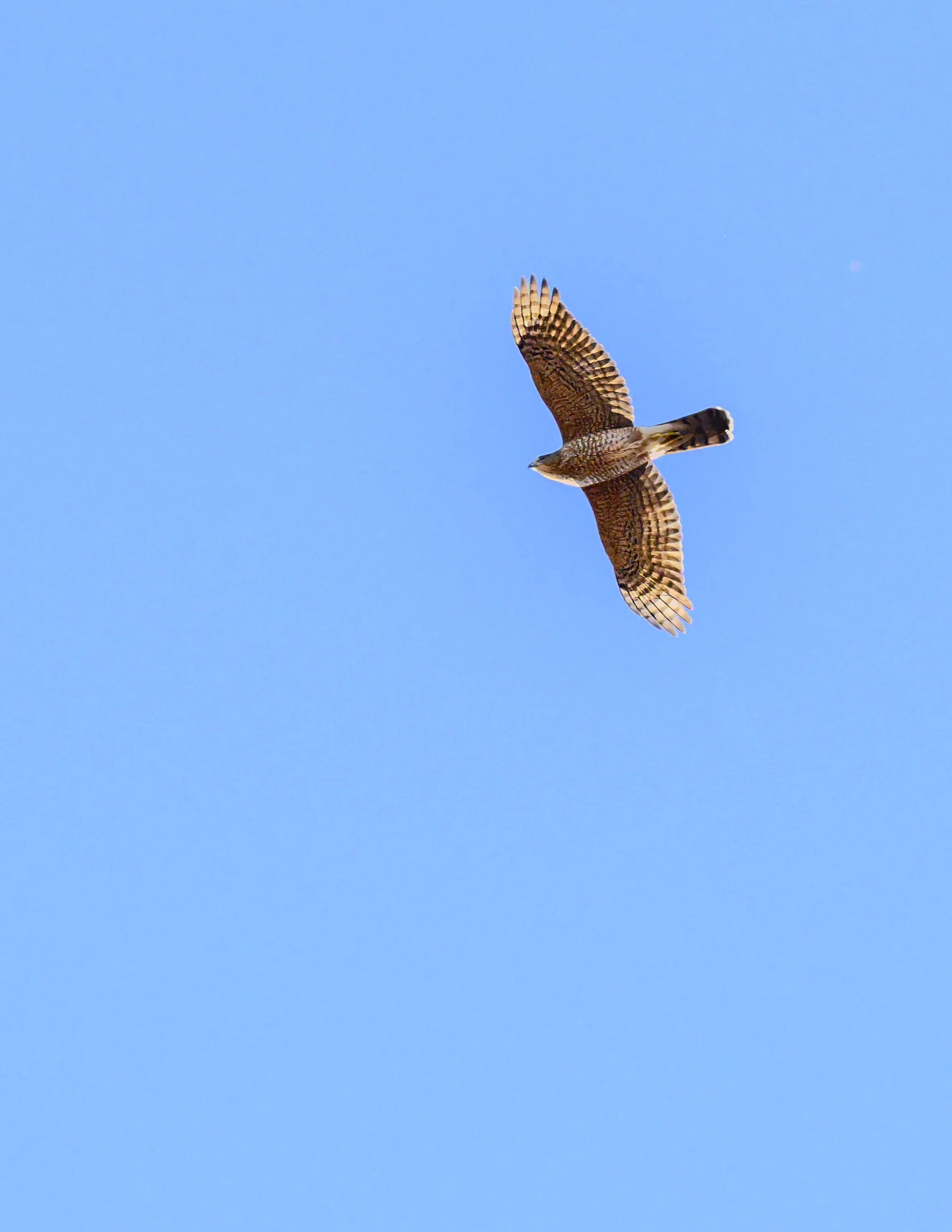
Another of today’s Coopers
While the main migrating raptors joining the hawks today was the Black vulture, the most entertaining species was the Common Raven. These birds are some of the most intelligent and the most social birds we encounter. Their call is loud and unmistakable, said to resemble a crow with a mouth full of marbles. We heard the calls of a pair off in the distance and before long, one came flying past and alighted in a nearby bare tree.
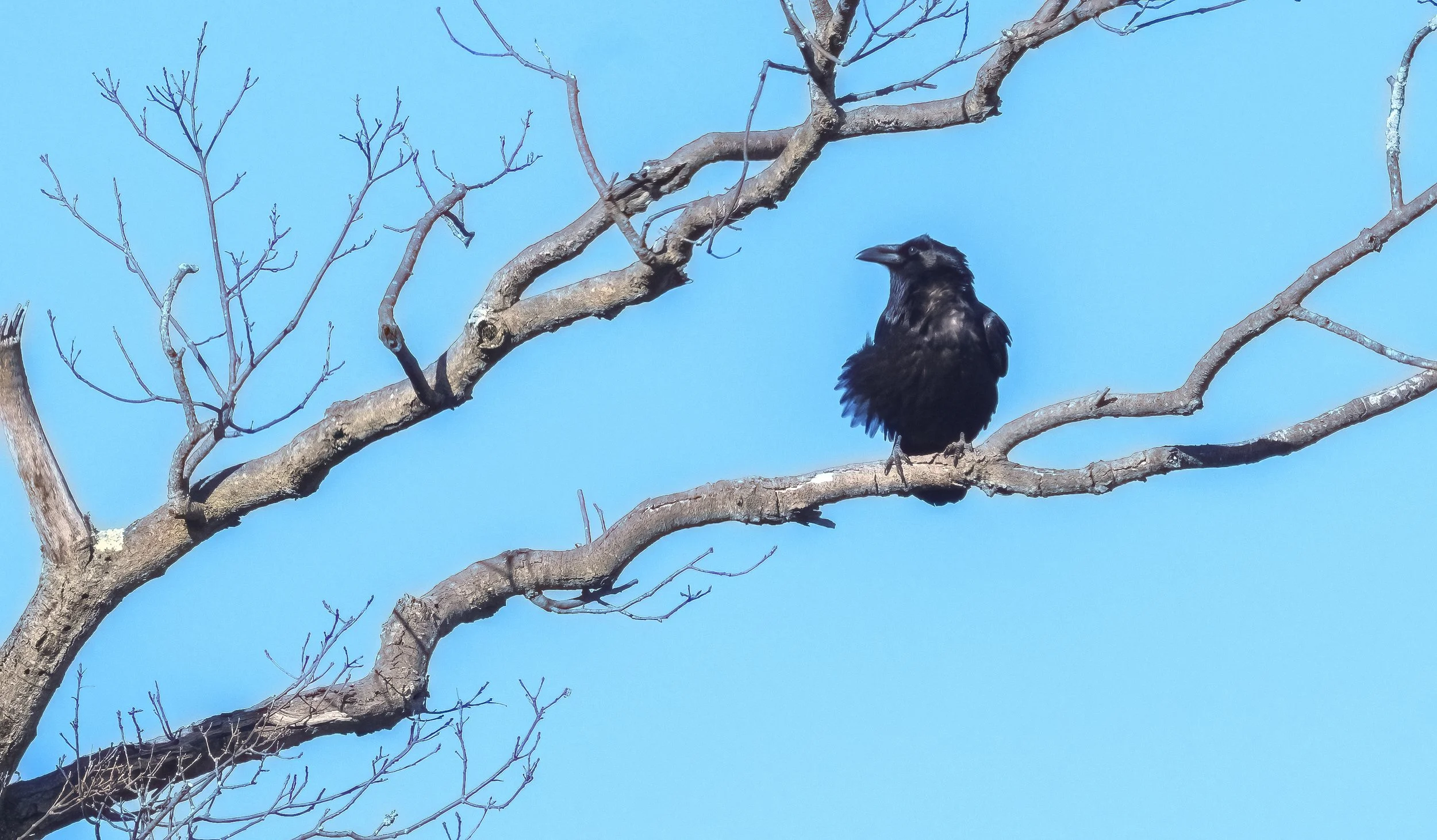
Common Raven-Bear Mt Hawkwatch-11/3/26
These birds seem to be constantly in flight, so when it came into land on this perch, I made sure I crept a bit closer to get a good image. I was surprised when I heard a second bird calling. That bird soon came in to join the first and the two sat side-by-side with the new arrival doing most of the talking!
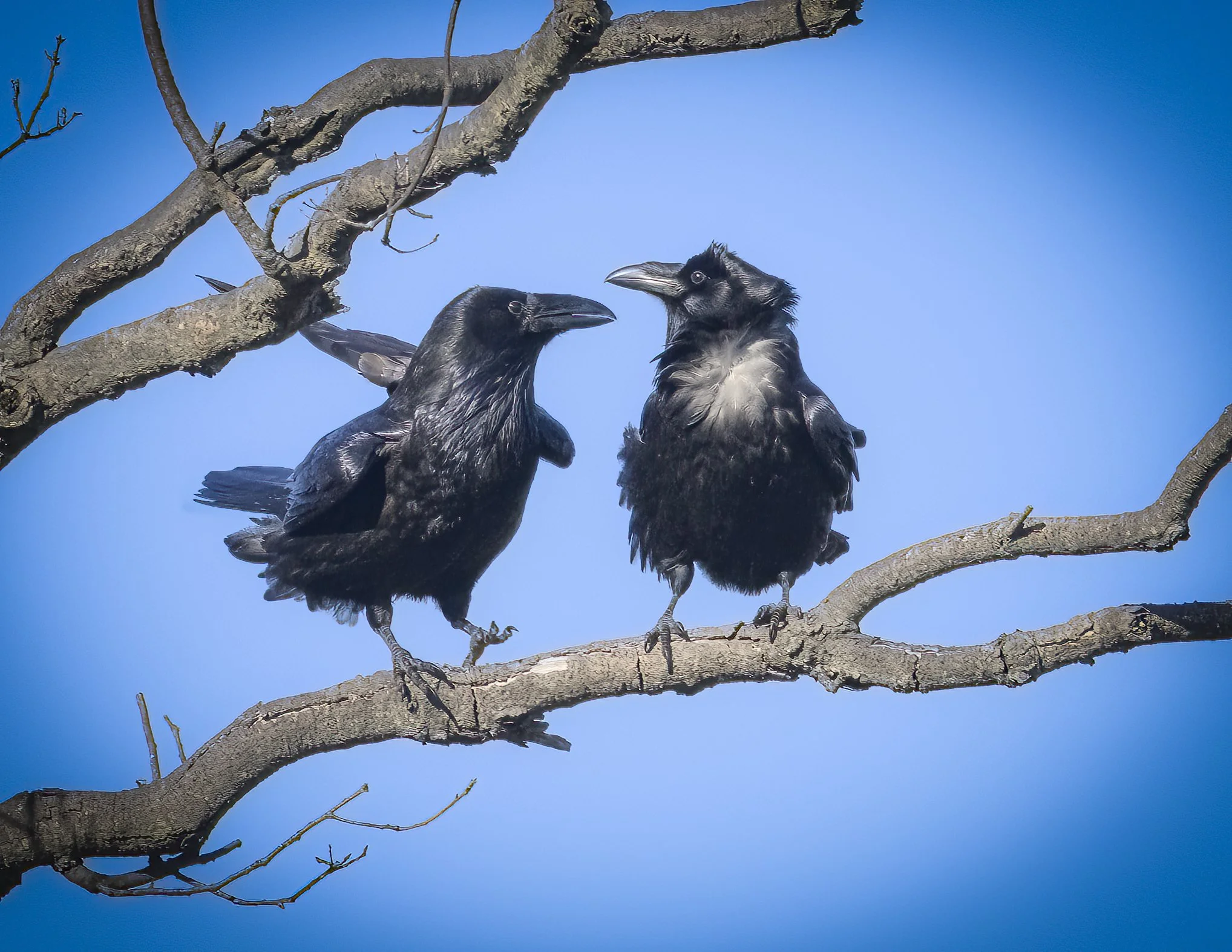
Raven pair - Bear Mt Hawkwatch - 11/3/26
After a short period, it appeared that the birds and said what needed to be said the the second bird took his leave, again calling out his raucous call all the way past our location.
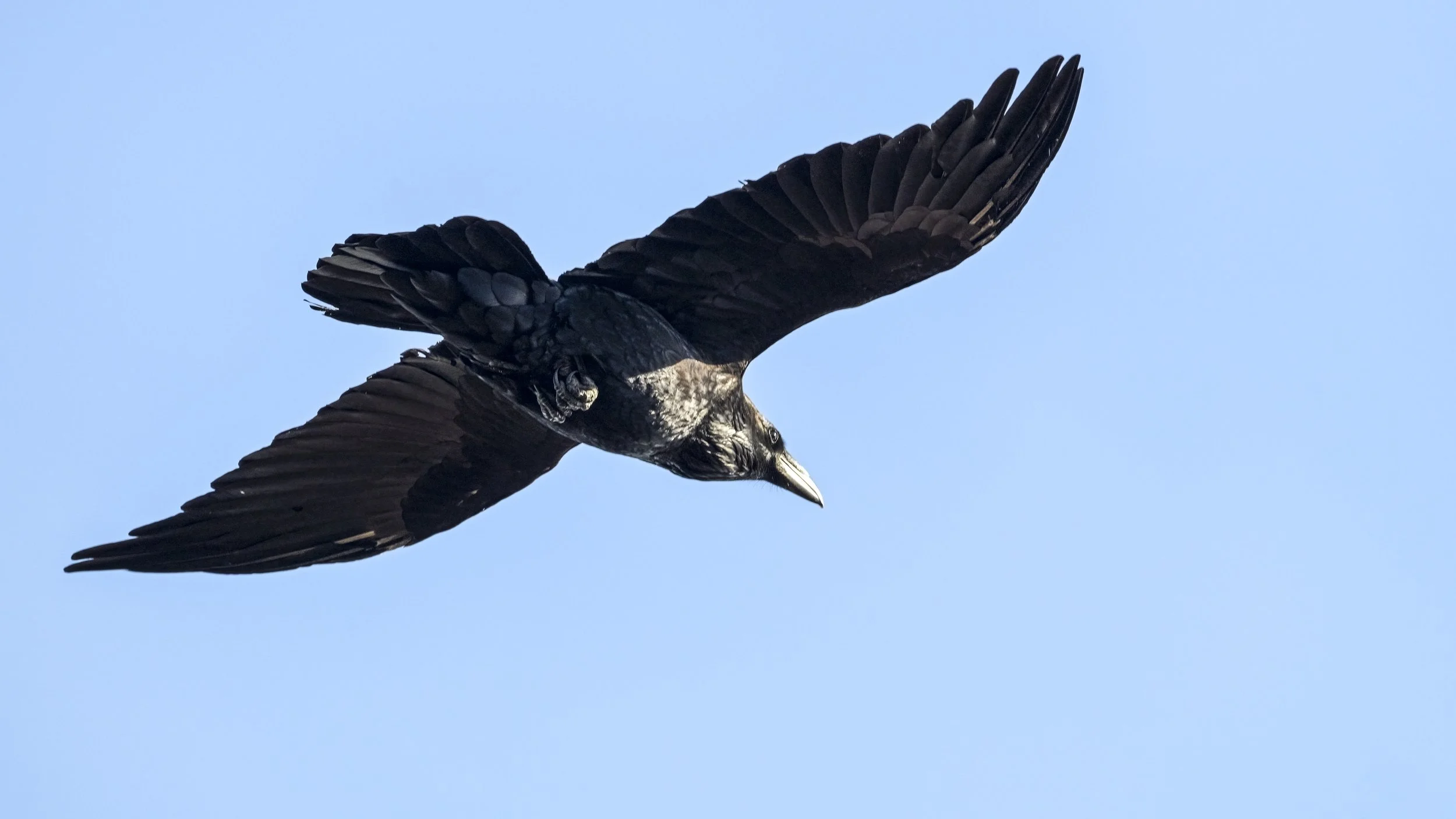
Raven takes his leave - Bear Mt Hawkwatch - 11/3/16
With the winter cold rapidly approaching, we will be keeping our “eyes to the skies” in the hopes of finding that elusive Golden eagle. This is a rare find for us. It’s been several years since our last sighting, but we know they are moving south. It’s just a case of one or two “deciding” to use the Hudson Highlands as the corridor of choice. We can only hope.