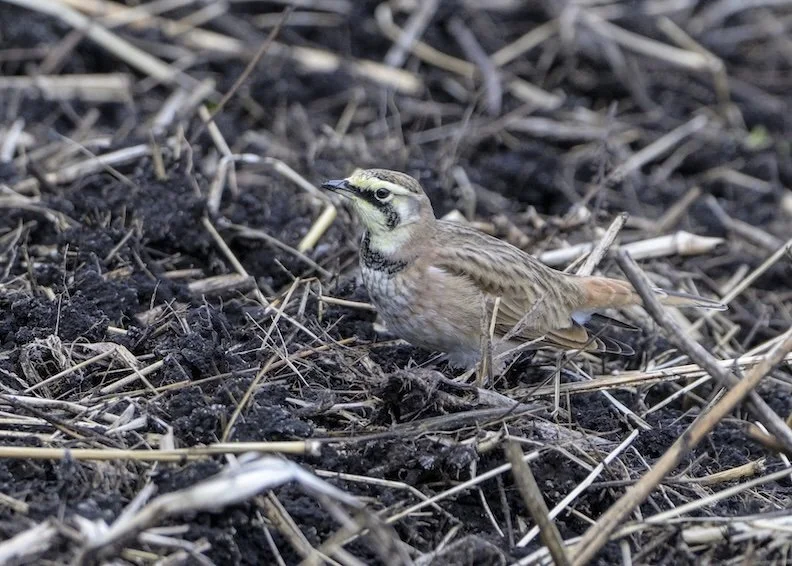
Horned lark - Skinners Lane - 11/23/26 Nikon Z8, Z 180-600mm, 1/800 sec, f/8, ISO 1800
On an overcast blustery November day, I made an attempt to find and photograph one of the iconic birds of the Black Dirt agricultural area in Orange County, NY. These small birds can be found in the onion fields and sod farms of Chester, Warwick, and Goshen year round, but they are perhaps easiest to find when the crops have been harvested and the fields are newly plowed.
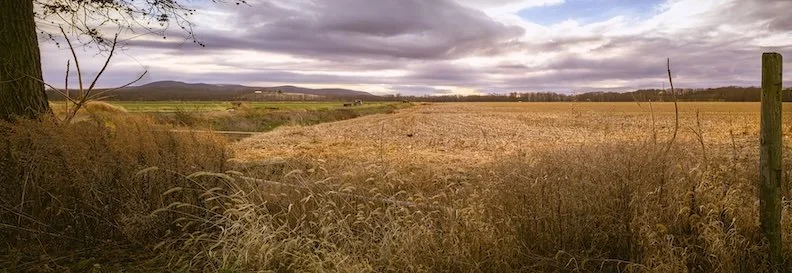
Black Dirt Farm - Carr Ditch - 11/23/26
The Black Dirt Region of New York, centered in Orange County’s Pine Island and parts of neighboring towns, supports some of the richest vegetable farming in the northeastern United States because its deep, dark muck soils—remnants of drained glacial lakes and peat bogs—are exceptionally fertile and retain moisture, enabling high-yield production of onions, carrots, cabbage, and other market vegetables. After a recent plowing of any of these fields, worms and insects are exposed or close to the surface attracting a wide variety of song birds, shorebirds, and migratory birds in winter. Other birds that we find during the winter months include Snow bunting, Lapland longspur, Golden plovers, Snow geese, Short-eared owls, and even an occasional Snowy owl. Today, the primary bird on site was the Horned lark.
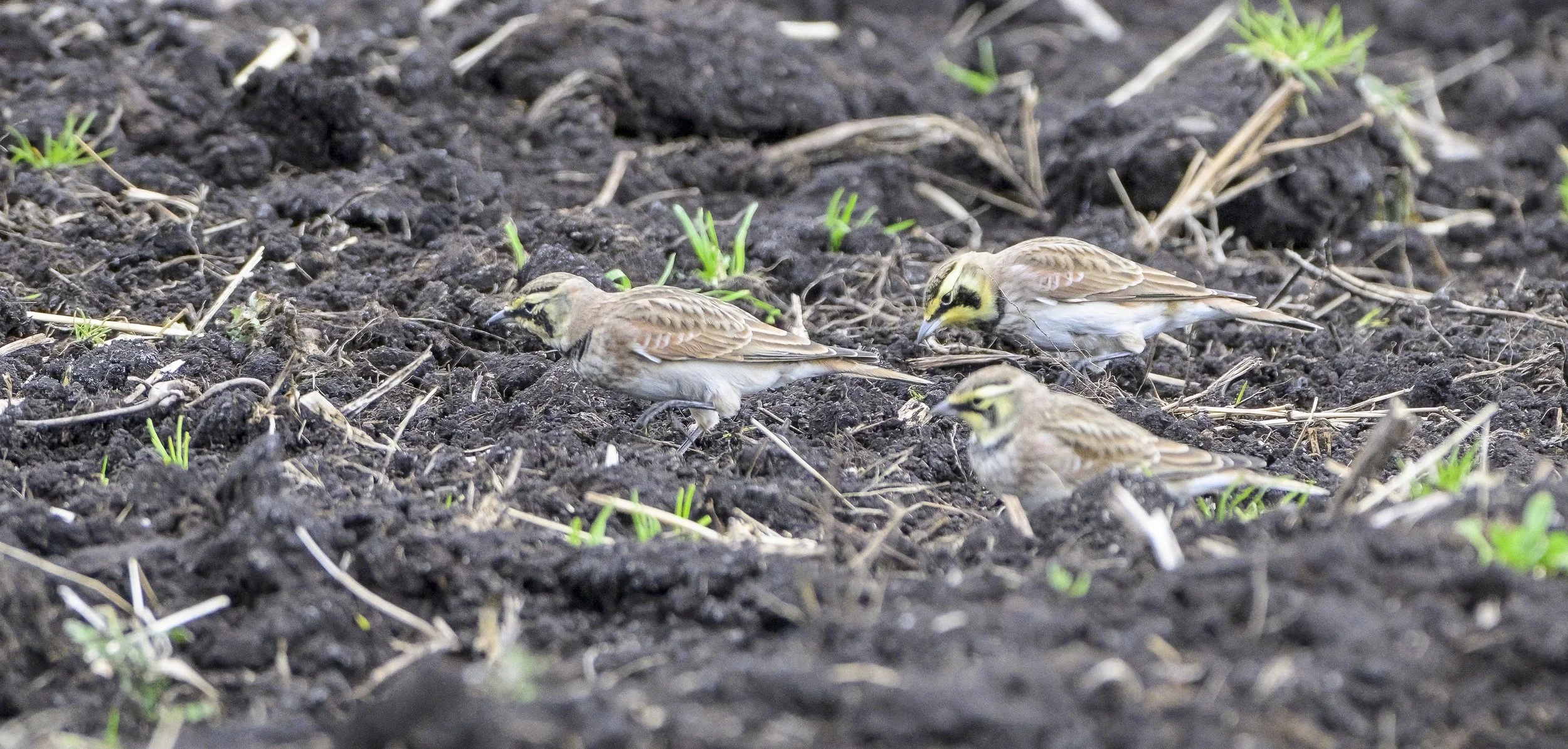
Horned larks - Skinners Lane - 11/23/26
Horned larks in farm fields forage primarily on the ground, running or hopping between short grasses, stubble, and bare soil to pick up seeds, small grains, and insects. During these winter months, their diet is dominated by weed and crop seeds—such as millet, chickweed, and spilled grain—while in spring and summer they will shift toward insects (beetles, grasshoppers, caterpillars, and flies) to meet higher protein needs for breeding and raising young. They often feed in small flocks, using short flights to move between exposed patches, and exploit the tilled areas where seeds and invertebrates are more accessible.
In winter, the small tufts of feathers atop their heads for which they are named are not generally visible. The other facial features of these birds make them easy to identify, however. These larks (the only lark species in North American) sport a black mask and bib set against a pale yellow or buff throat and eyebrow stripe, giving the head a pronounced contrast. While the males in breeding plumage often show those tiny black "horns" — tufts of feathers at the forehead — that give the species its name, these can be subtle or absent in females and nonbreeding birds. The upperparts are warm brown and streaked, providing camouflage on open ground, while the underparts are pale with variable streaking on the flanks.
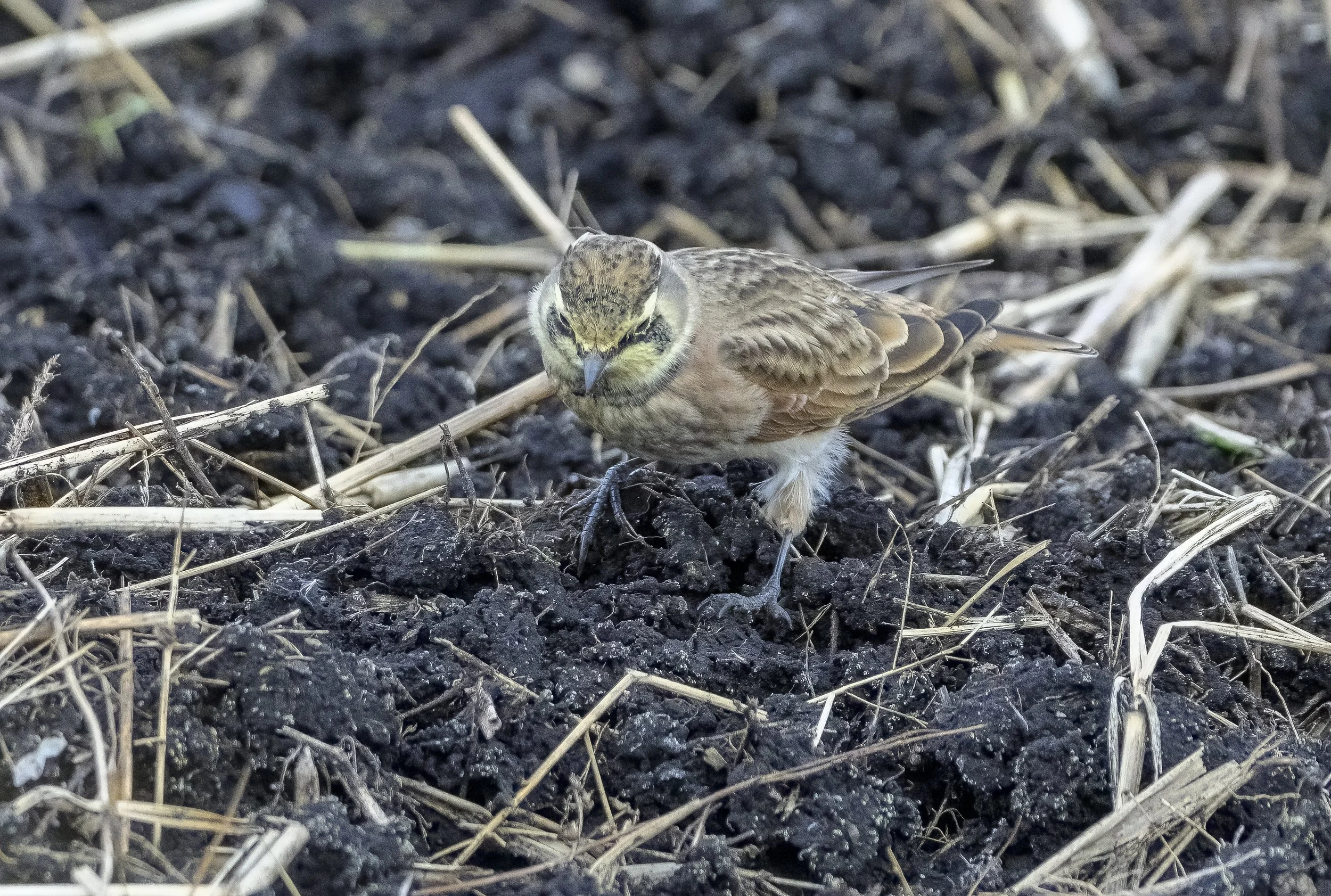
We’ll return to this area in search of the buntings, longspurs, owls and Rough-legged hawks which are sure to show up as the winter progresses.