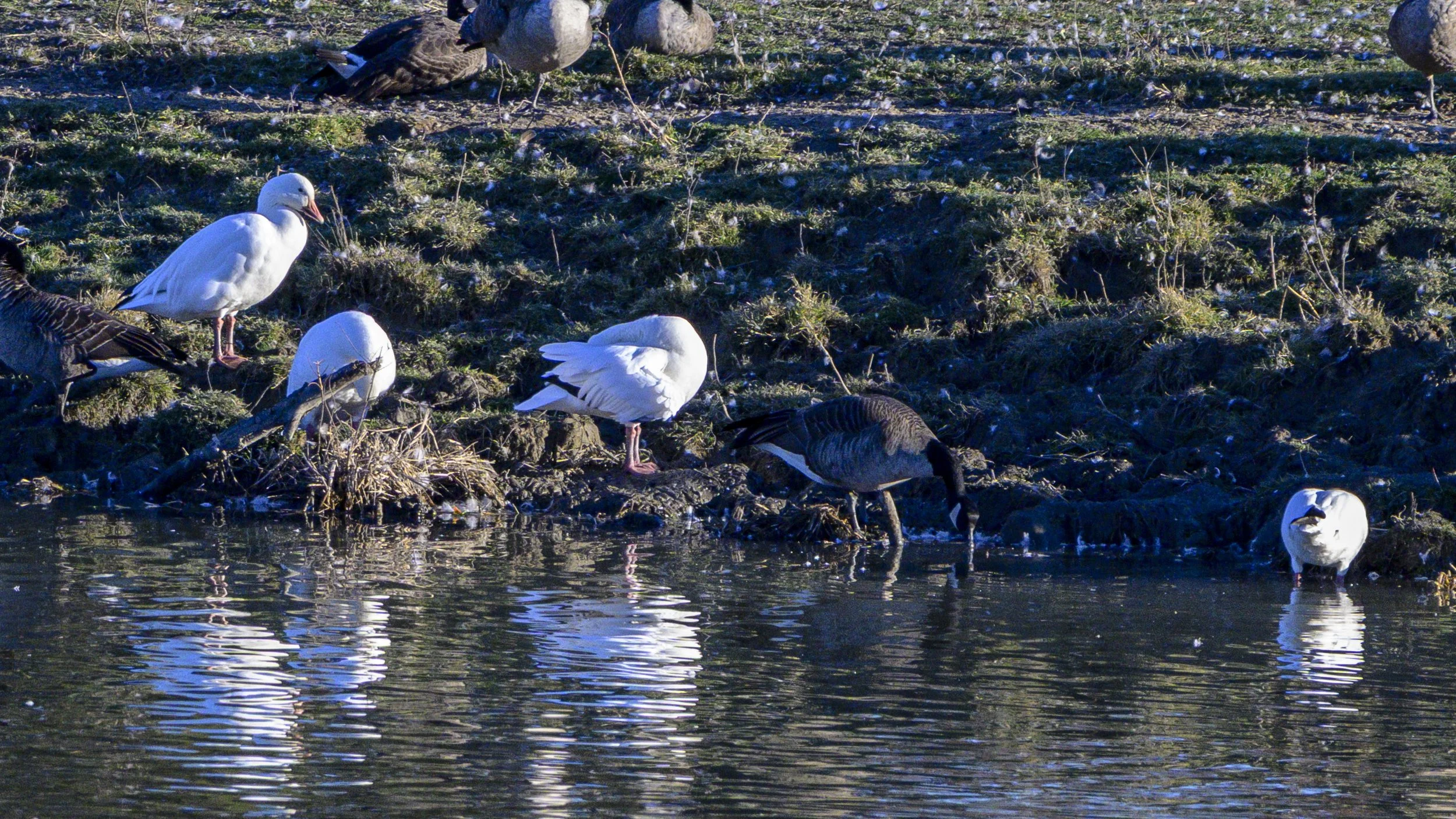
Snow Geese - Breeze Hill Road - 11/17/26
For many bird enthusiasts, keeping lists is an important element of the pastime. We keep lists of all the birds we’ve seen in our lifetime (Life List), those we’ve seen in our county, state, or country, lists of birds we’ve seen this year, and more. It’s getting towards the end of 2026, so new birds for the year are an exciting addition to our “Year Lists”. Such birds are often annotated as “FOY” or “First of the Year” in our notes and journals.
This past week produced two “FOY”s for me - the Snow Goose and the Brown Creeper. The Snow Goose was the result of our social networking through the app known as What’s App. Members of our bird club who sign on to this service can communicate instantaneously with one another, communicating the sighting and location of birds we think would be of interest to other members. As it so happened this past Tuesday, I was already out in the Black Dirt region of our county near Chester when an alert came from one of our members concerning the presence of four Snow geese within a couple of miles of my present location. I quickly finished surveying the area where I was looking for Horned larks and Pipits, and after spotting a flock of larks which “flew off into the sunset”, I quickly headed over to the site where the geese had been seen.
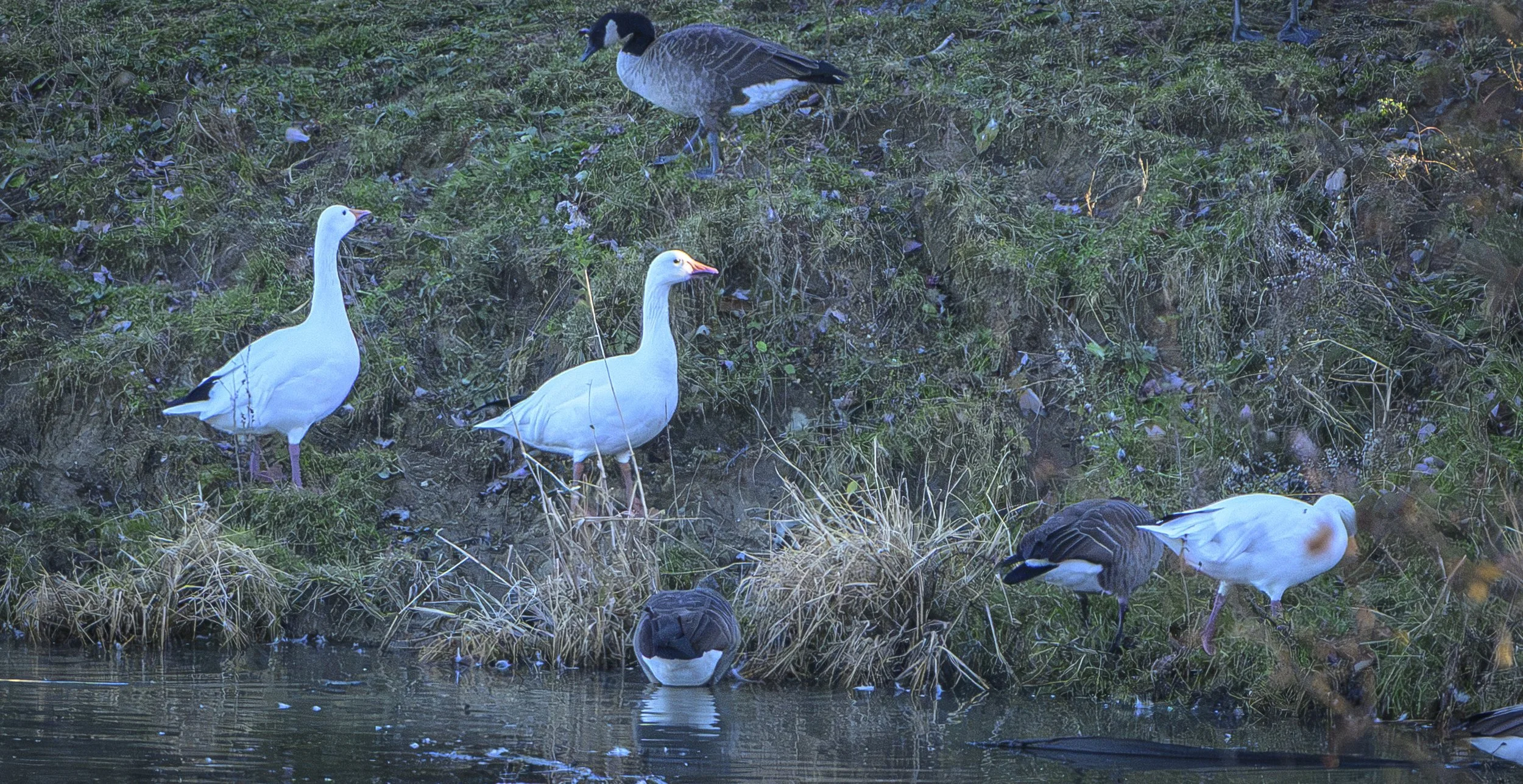
Snow geese - Breeze Hill Road - 11/17/26
Snow geese appear in marshes and fields of southeastern New York in late Autumn with their striking white bodies and black-tipped wings often gathering in noisy flocks as they stage before continuing south. Today, there were no big flocks - just a small group of four hanging out with a larger congregation of Canada geese. The Black Dirt region of Orange County is an attraction for Snow geese as they feed energetically on leftover vegetation often concentrated on agricultural fields where overnight roosts offer safety. As the season progresses, we hope to witness cacophonous vocal exchanges, coordinated flights, and sudden lifts when predators approach, all set against the season’s cool temperatures and chilly winds — a vivid reminder of migration’s rhythm as the geese prepare for longer journeys.
The second FOY bird discovered this week was along Mine Road. As I drove past one of the dirt access roads down to Stillwell Lake, I noticed a small group of birds flying from tree to tree and figured I’d better check it out. A quick U-turn on this sylvan road brought me back to a pull-off where I could turn off the engine and monitor the woods for any sounds or sights of autumn birds. My Merlin app which identifies birds according to their calls informed me that it had detected a Brown Creeper nearby….one of my “nemesis birds”.
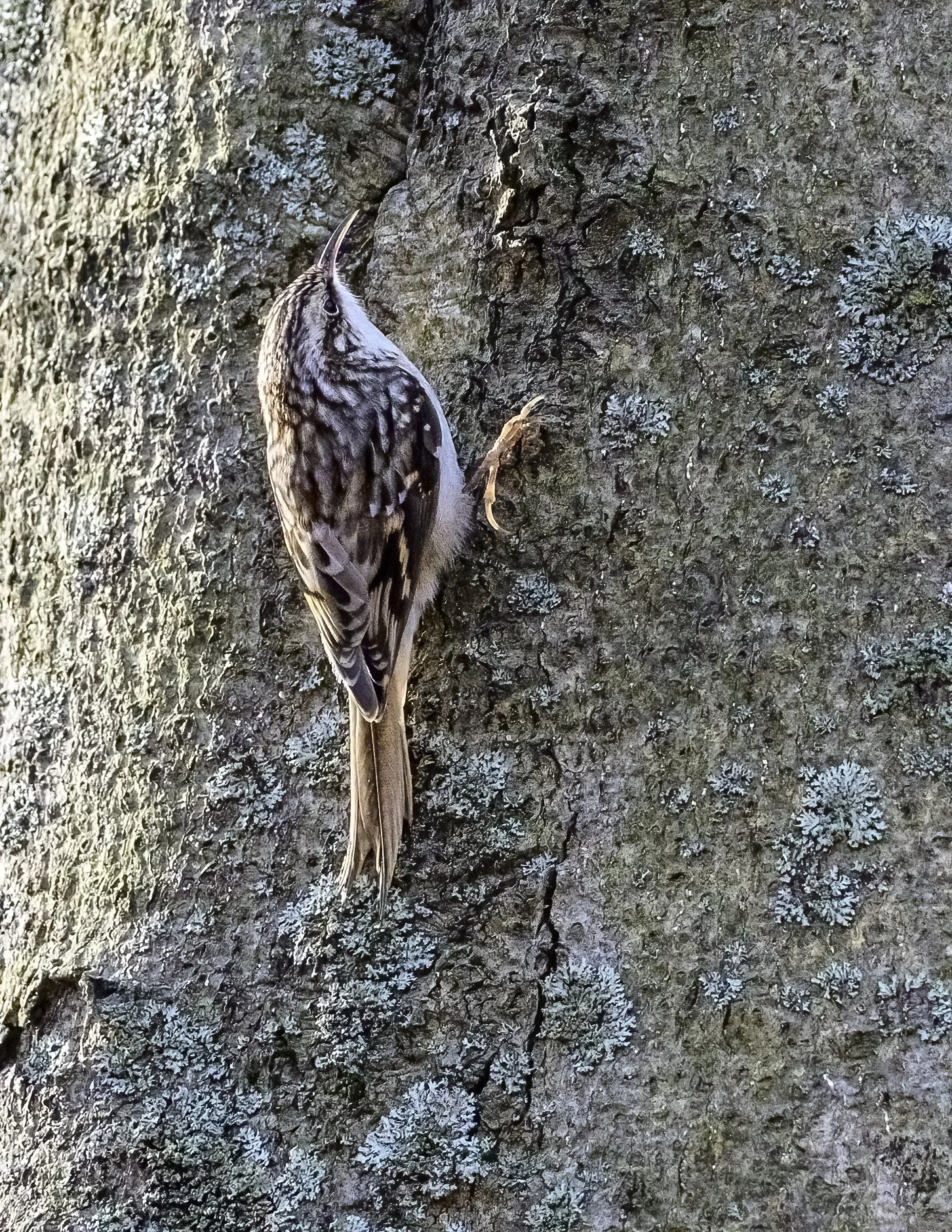
Brown Creeper - Mine Road - 11/21/26
A “Nemisis Bird” is a species which birders find difficult to spot and/or photograph. The Brown Creeper in New York is a year-round resident in many forested parts of the state, most commonly found in higher elevations in mature deciduous and mixed woodlands from the upper Hudson Valley northward and across the Adirondacks. During winter it may be more widespread, appearing in suitable wooded suburbs and parks, while in the southernmost counties and Long Island it is less common as a breeding bird and may occur primarily as a transient or winter visitor.
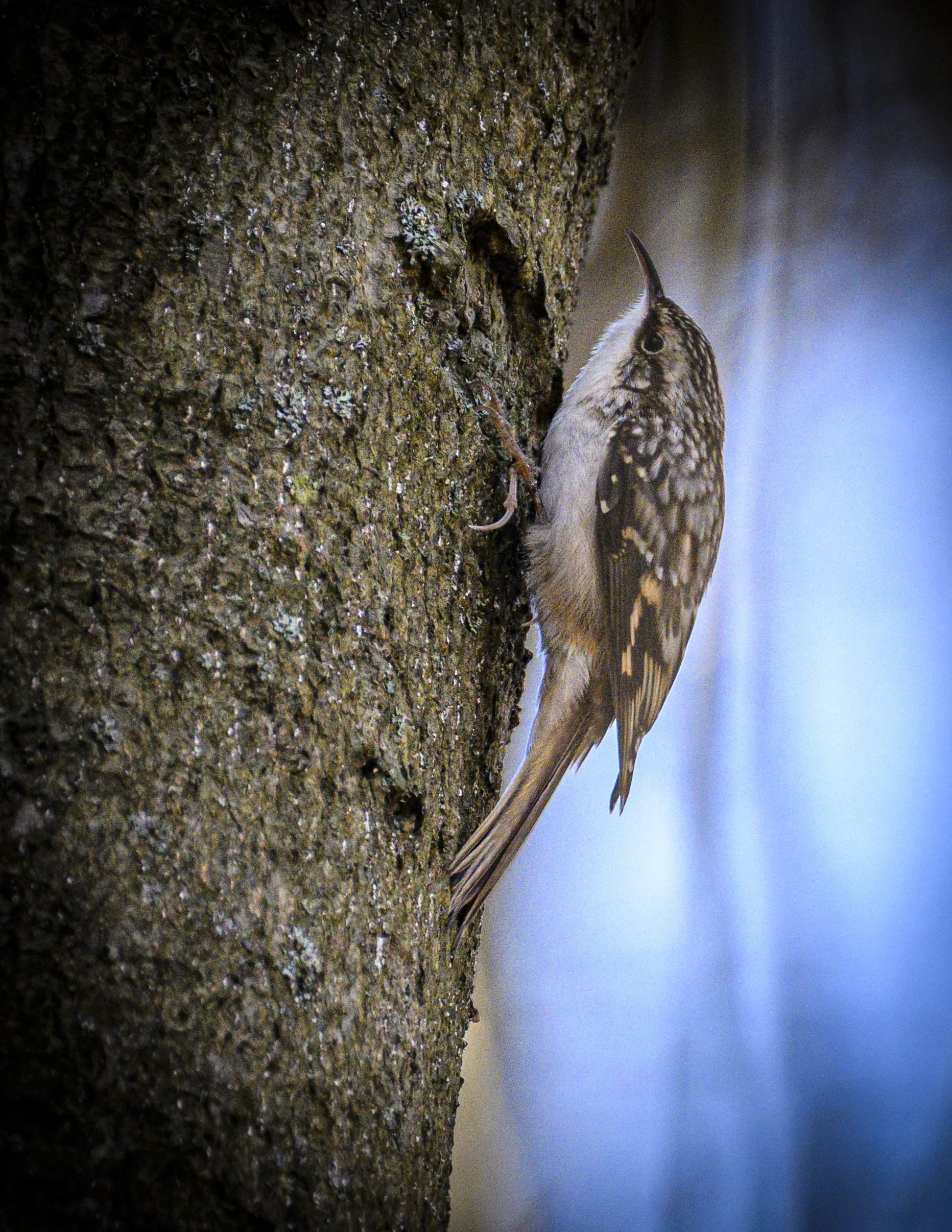
Brown Creeper - Mine Road - 11/21/26
The Brown Creeper is a small, sparrow-sized cryptically colored North American songbird known for its distinctive behavior of spiraling up tree trunks as it probes bark crevices for insects and spiders. Its mottled brown back and white underparts provide excellent camouflage against tree bark (see the photo below), while a thin, slightly curved bill and stiff tail feathers help it cling and forage vertically. The bird often nests behind strips of loose bark or in natural cavities making it even more difficult to find. TheCreeper often forages alone or in mixed-species flocks with chickadees and woodpeckers in winter.
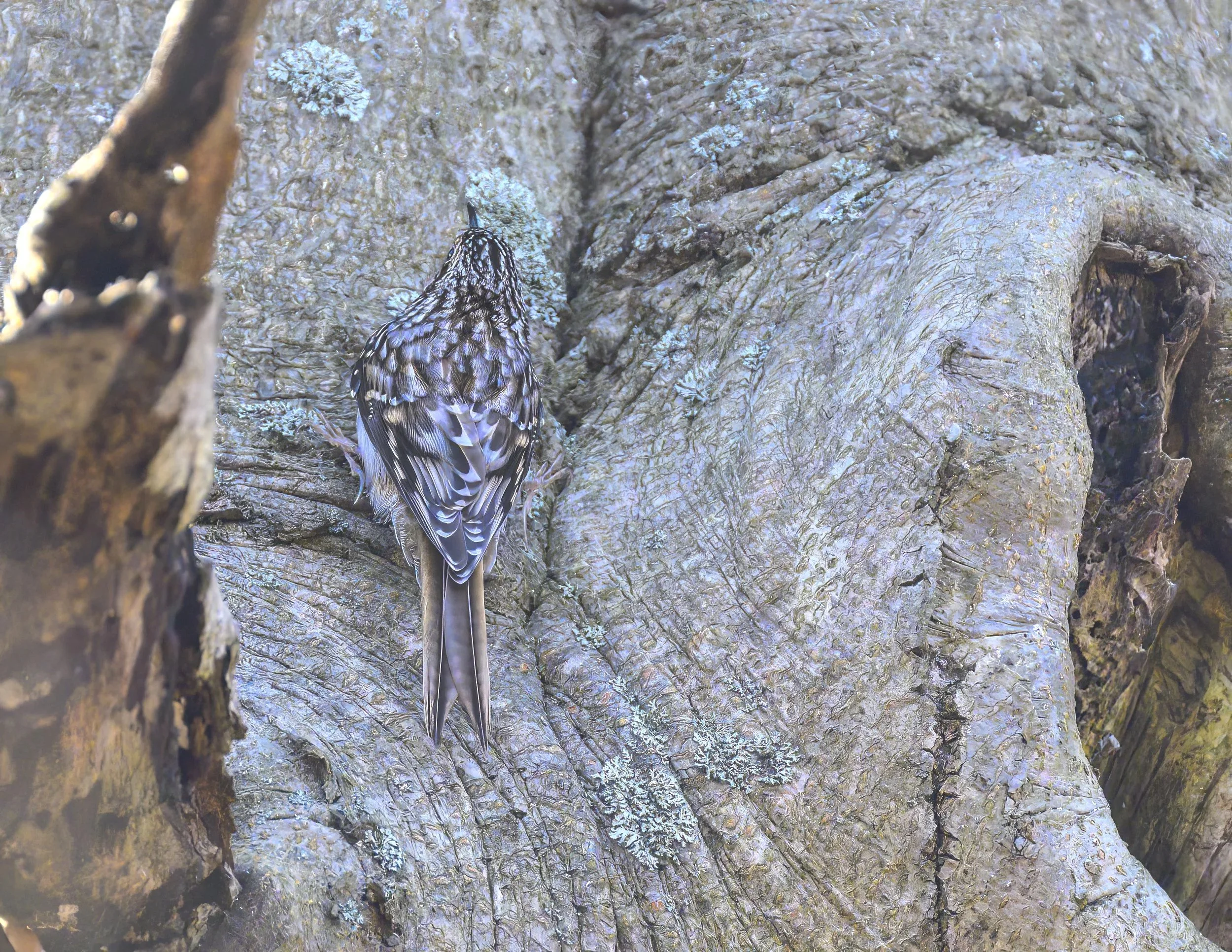
Brown Creeper against tree trunk - Mine Road - 11/21/26
As the little creeper works its way around the circumference of the tree, constantly spiraling up the trunk, it hugs the tree so that its back plumage blends in seamlessly with the surrounding bark. One more reason that this can be so difficult to spot when searching for this bird in the forest. Even its vocalizations seem to be designed to thwart detection as it sings a thin very high pitched call very difficult for all but those with the best hearing to be aware of. When you finally have the chance to see this little bird and get the chances to photograph it that I had today, you should feel very fortunate and blessed.