A Walk along Roe Pond
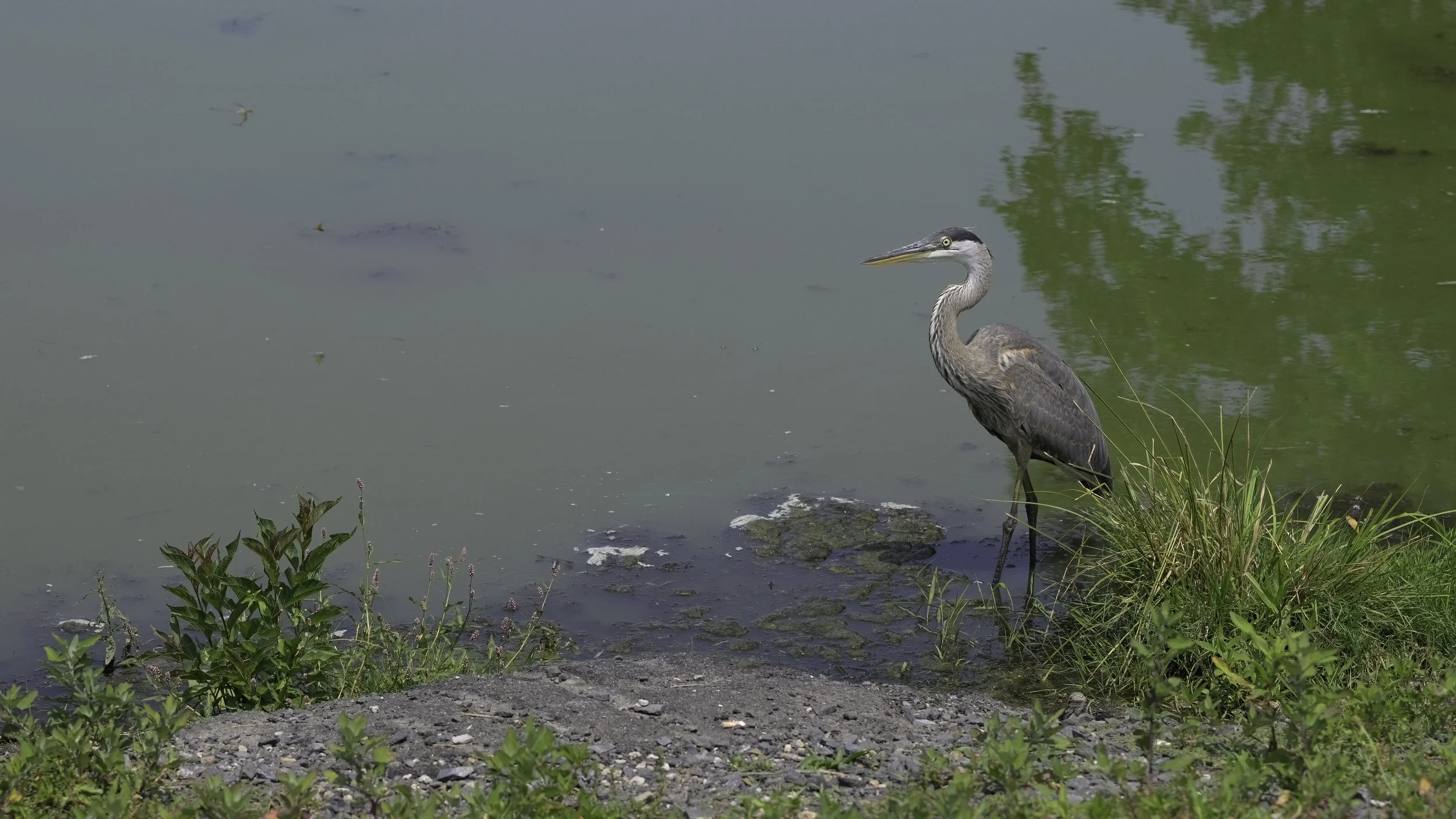
Great blue heron - Roe Pond - 7/25/26
I am indeed fortunate to live in an area that has 6 small lakes within a 5 minute drive from home. One small pond is Roe Pond which is no more than a 5 minute walk from my front door. It is not the most pristine setting by far, surrounded by ball fields and roads, but it does serve as an excellent habitat for some of my favorite photo subjects in the summer months. The Great blue heron seen above is not common, but it does show up on occasion along the ponds edge or on the tiny island in its center. I was pleased to see this specimen plying the waters’ edge along the Little League Baseball field parking lot. Waders and shorebirds are certainly not among the expected quarry when I venture out to this venue - camera in hand in July, but you just never know what you might encounter.
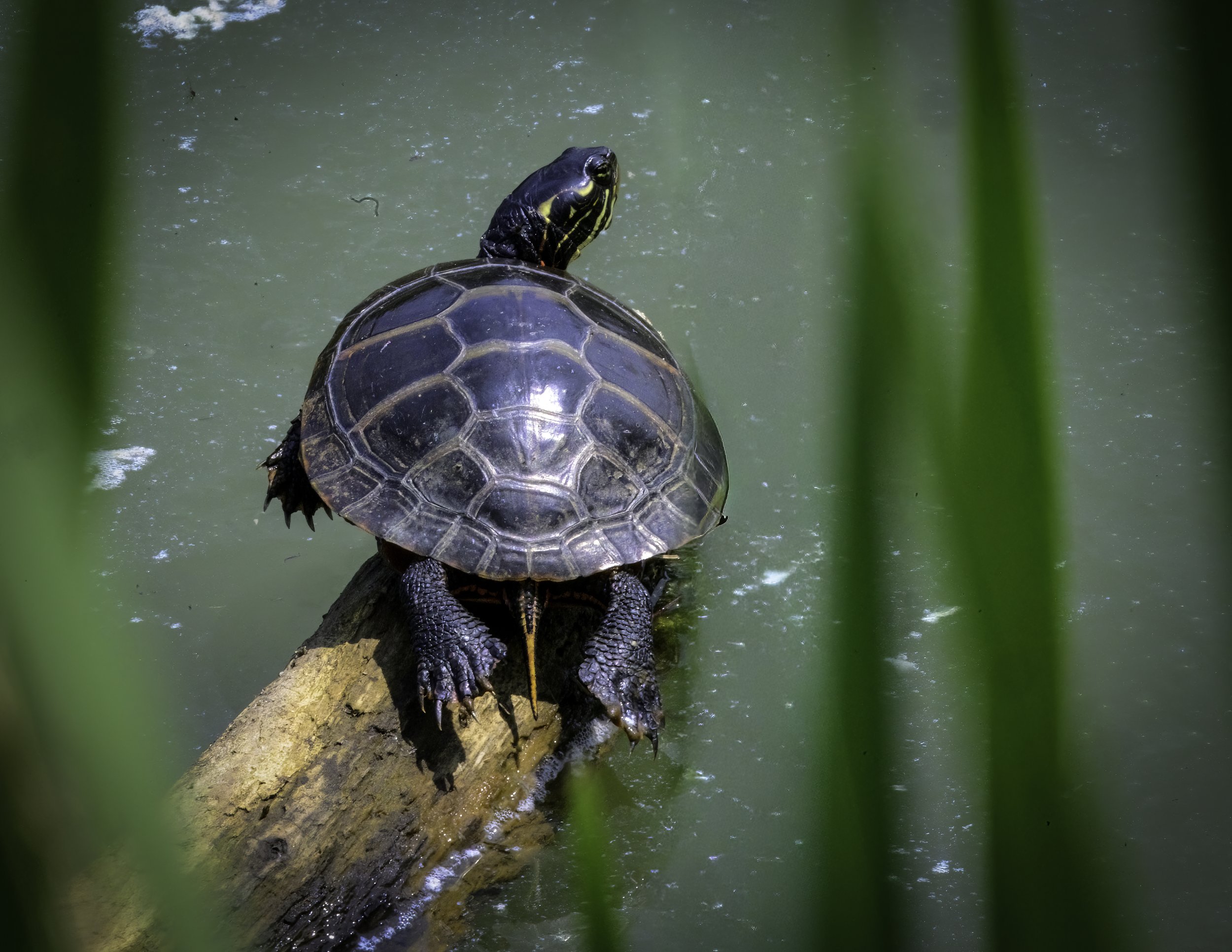
Eastern Painted Turtle - Roe Pond - 7/25/26
Turtles are a more common type of wildlife that you would expect to find in these warm month at Roe Pond. Today, they were not prolific, but I did find this Eastern Painted Turtle basking on a partially submerged log. These turtles are the state’s most widespread pond turtle, recognized by their smooth, dark carapace with red and yellow marginal markings and a bright, patterned plastron. Adults typically measure 4–10 inches and inhabit slow-moving waters: ponds, marshes, ditches, and sheltered lake edges with abundant aquatic vegetation and basking sites. They are omnivorous—feeding on aquatic plants, insects, small fish, and carrion—shifting more toward plant matter as they age. Spring and summer are active seasons for basking, feeding, and nesting. I did find a tiny juvenile hauled out on a nearby log, but unfortunately he was quicker than me and I didn’t get that shot. Next time…..
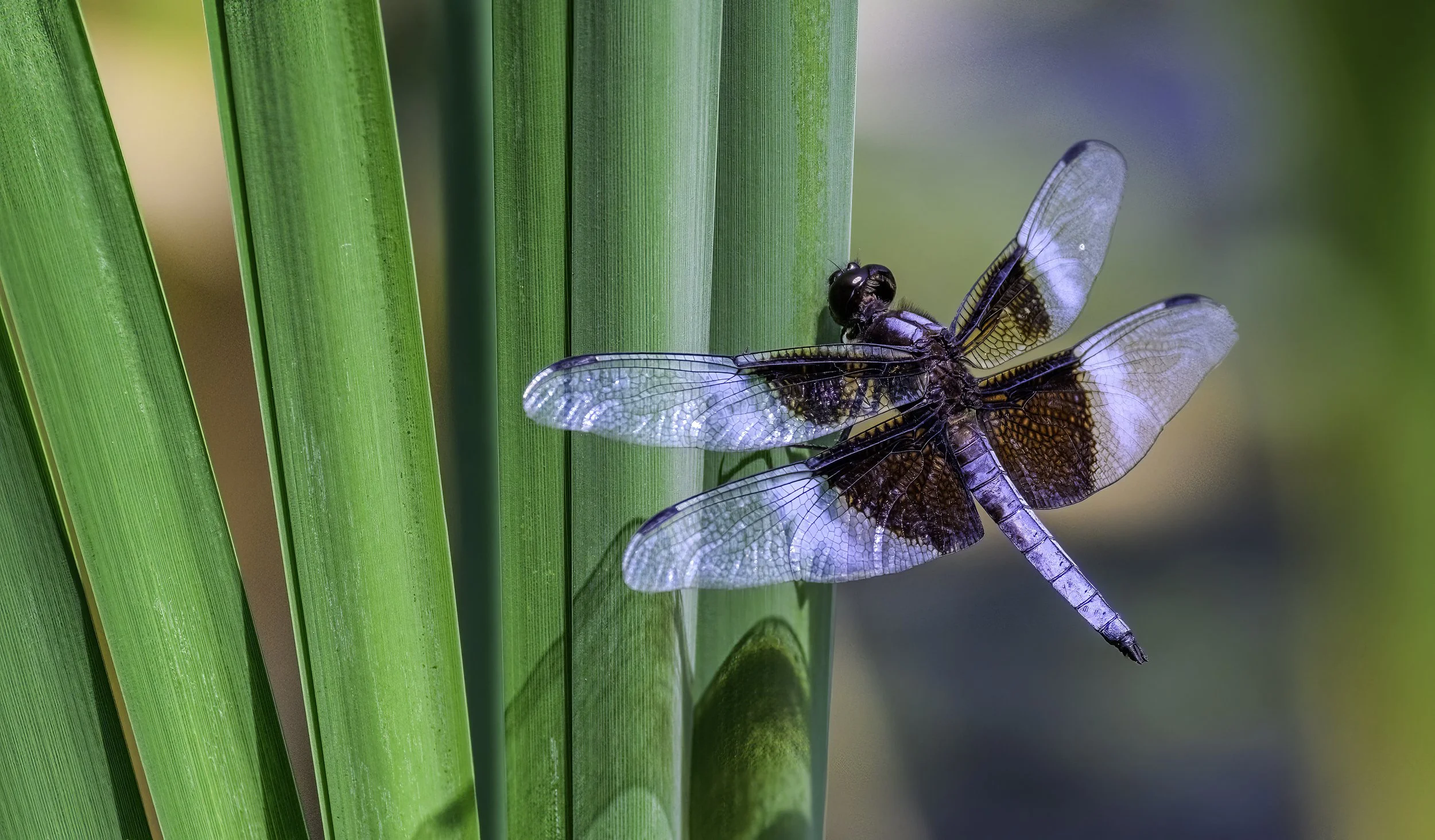
Widow skimmer - Roe Pond - 7/25/26
By far the most dominant group of critters to be found along the pond’s perimeter are the dragonflies. The entire western shore of the pond today was in constant motion with dragonflies of several different species flitting from plant to plant and from log to log. Each species seems to have its preferred perch and many individuals will repeatedly return to the same twig of rock outcrop. This makes for great opportunities for photography when you can plan ahead and get the camera settings and focus all set before the insect gets into the frame. The Widow skimmer seen above is the largest of the dragonflies that were onsite today and also one of the most interestingly patterned. Males like the one seen in this photo are notable for their broad, smoky-black wing patches and powdery blue abdomen, creating a dramatic contrast with the clear wing tips. Females and immature males display brownish bodies and white shoulder stripes, making them easier to confuse with related species at a glance. Active during warm months, widow skimmers perch openly on floating vegetation, logs, or shoreline plants, darting out to catch flying insects and returning to sunlit perches. Their bold wing patterns and calm, watchful behavior make them a favorite subject for us nature photographers.
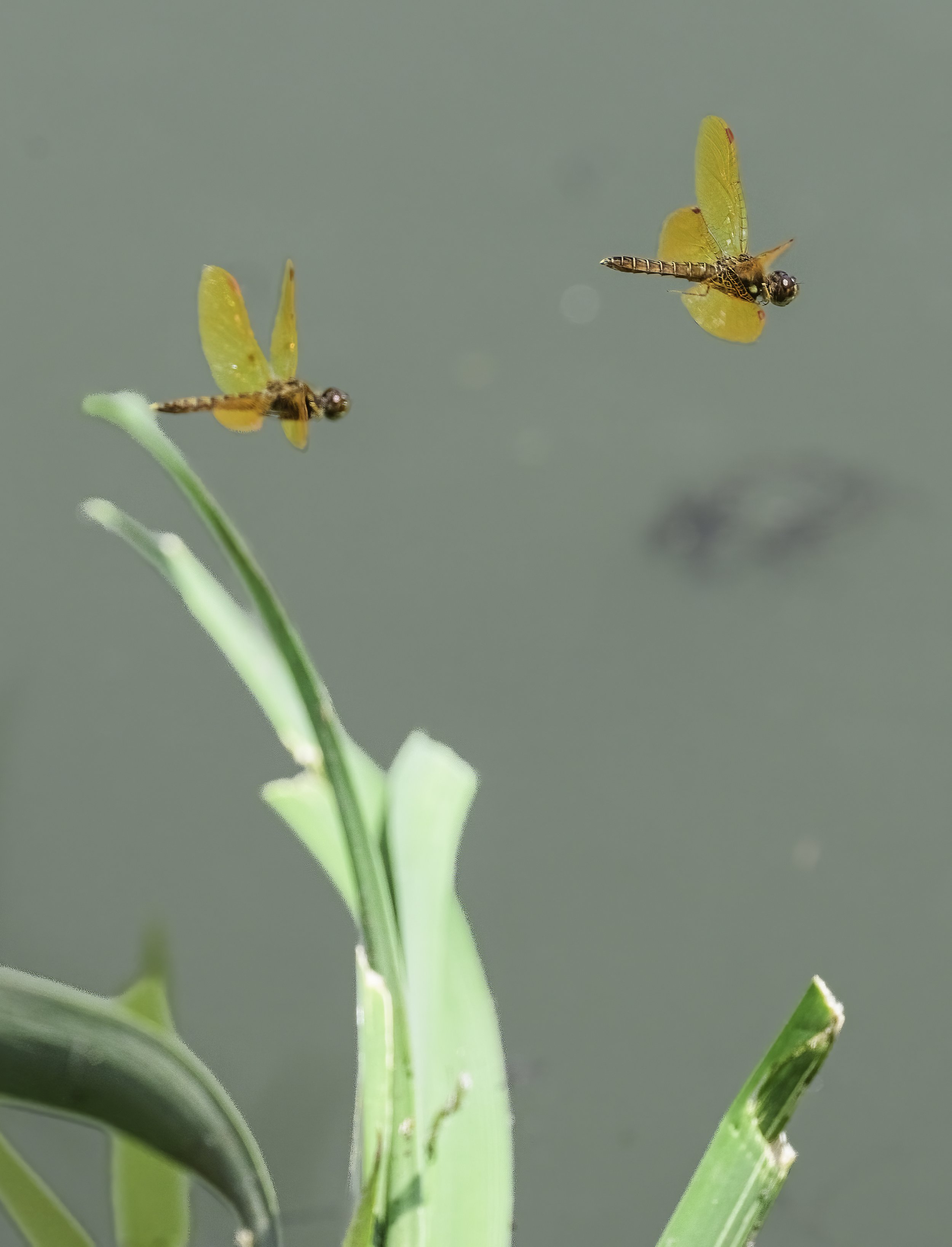
Eastern amberwings - Roe Pond - 7/25/26
While those Widow skimmers make it easy for the nature photographer to capture an image, the Eastern amberwing lies at the other end of the spectrum. The Eastern Amberwing is a diminutive, vividly colored dragonfly commonly found across eastern North America. Measuring about 25–35 mm in length, males display bright amber wings and a reddish-brown body that helps them stand out among reeds and emergent vegetation. Females and immature males have more yellowish or golden tones. These dragonflies favor shallow, still water—ponds, marshes, and slow backwaters where they hawk for tiny flying insects. Remarkably agile despite their small size, Eastern Amberwings are often seen in groups and are known for their quick, darting flight which they seem to favor over perching. To capture these dragonflies usually means refocusing the camera and hoping the insect flies into the correct field of view!
Next on the list is another common dragonfly I find at virtually every pond I visit in July and August…the Eastern pondhawk.
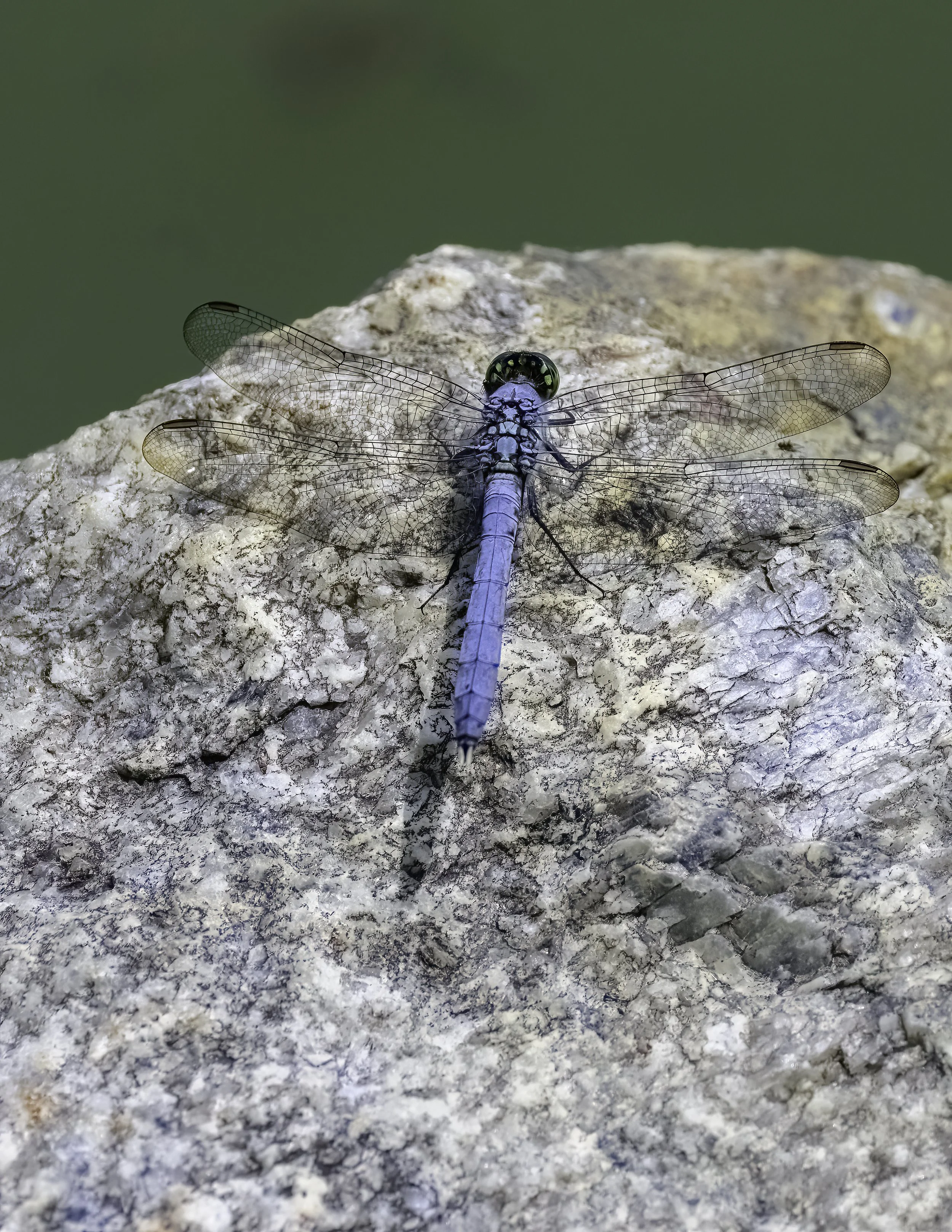
Eastern Pondhawk - Roe Pond - 7/25/26
Having already discussed this dragonfly in a number of previous blogs ( found everywhere as I mentioned) we won’t spend a great deal of time other than to say it is easily identified by their powdery blue bodies with a slim, tapered abdomen and black-striped green faces, often perched low over water. Females and immature males are bright green with dark dorsal stripes and a characteristic pale triangle at the base of the abdomen. Sometimes these can be confused at first glance with the Blue dasher seen below.
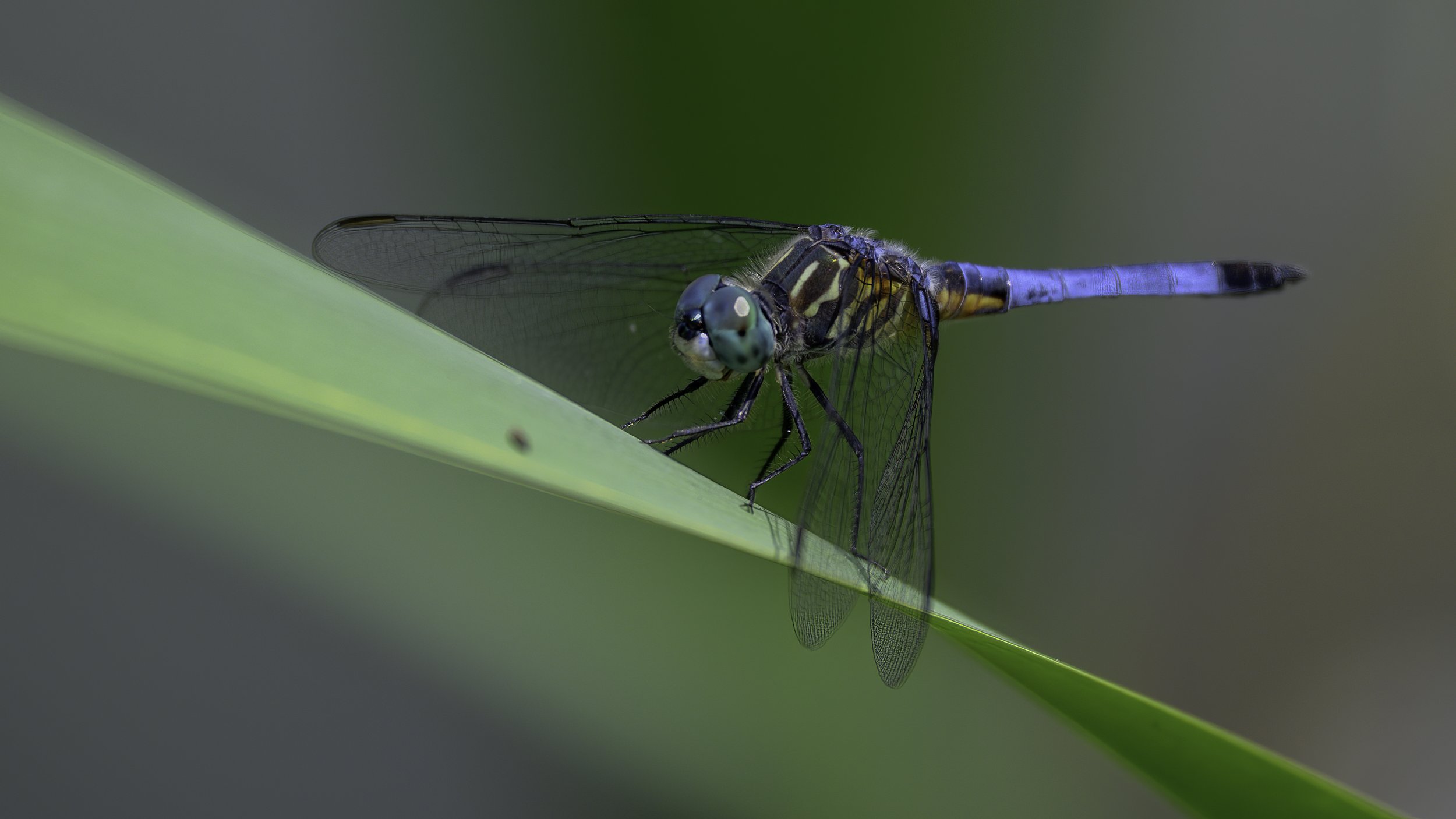
Blue dasher - Roe Pond - 7/25/26
The Blue Dasher (Pachydiplax longipennis) is a common, wide-ranging dragonfly easily recognized by its vivid sky-blue body in mature males and contrasting dark wing bases. Males have bright blue thoraxes and abdomens with a black tip and greenish-yellow legs; females and immature males display brown or tan bodies with blue flecking and bold yellow lateral stripes. Both sexes show large, bulging compound eyes and a robust, stocky build with relatively short, clear wings that may have a dark patch near the base.
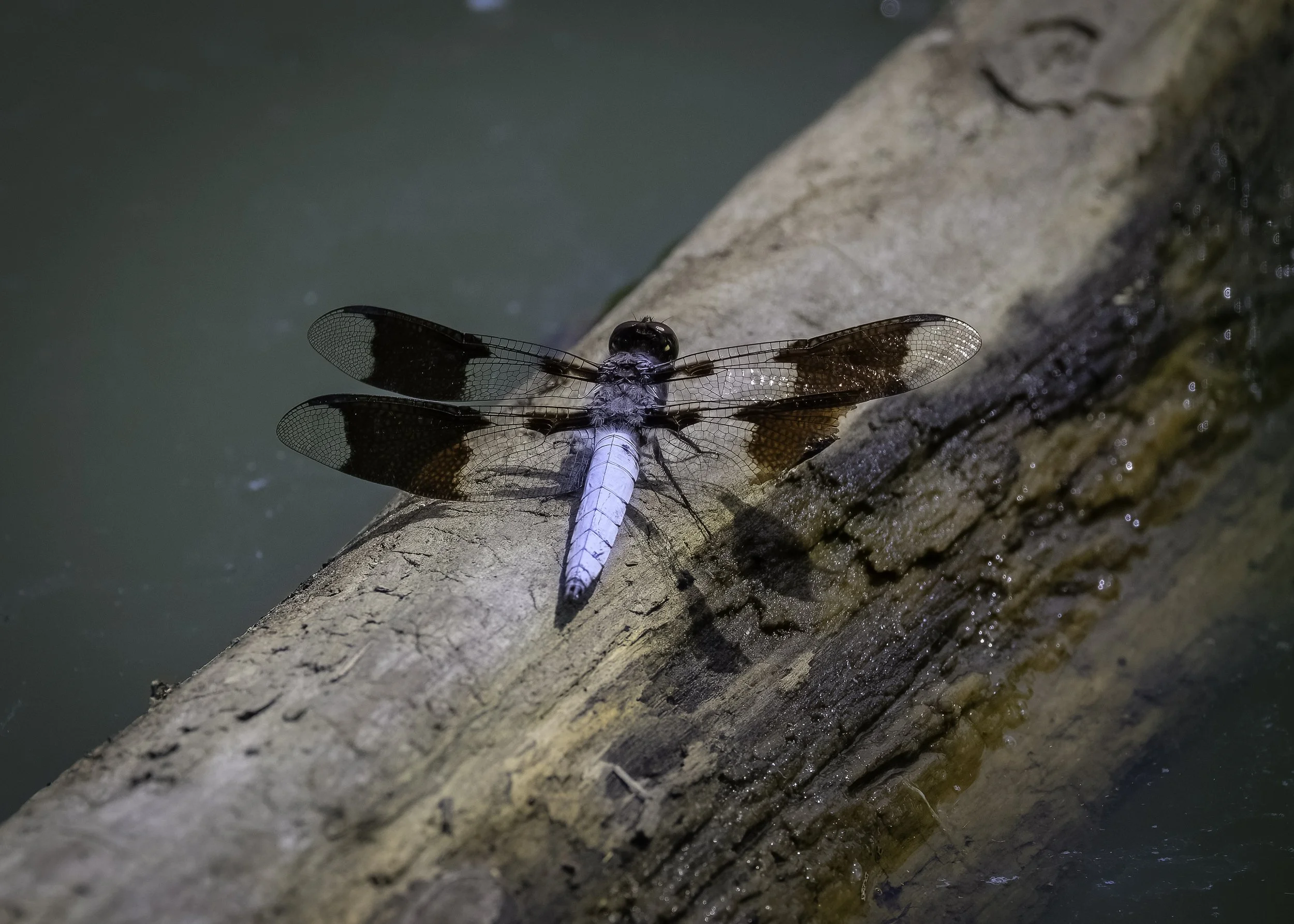
Common whitetail - Roe Pond - 7/25/26
Last but not least is a dragonfly which at first glance can be confused with the earlier discussed Widow skimmer. This is the Common whitetail, a medium-sized dragonfly easily recognized by its distinctive wing pattern and opaque white abdomens Key ID features: flattened, paddle-like white abdomen in adult males; broad basal wing bands and contrasting clear tips; females’ brownish, patterned abdomen and heavily mottled wings. Size ranges roughly 1.6–2.0 inches (40–50 mm) body length. Both sexes hold their wings flat at rest and favor perches near ponds, marshes, and slow streams.
So once again, while the birds are relatively quiet and they tend to their nests while others prepare to head back to their southern wintering grounds (yes, already! ), we will keep an eye on the butterflies, dragonflies, bees and other members of the insect world for the time being. There is always something of interest and beauty to keep our attention and provide us with subjects for the camera’a lens.