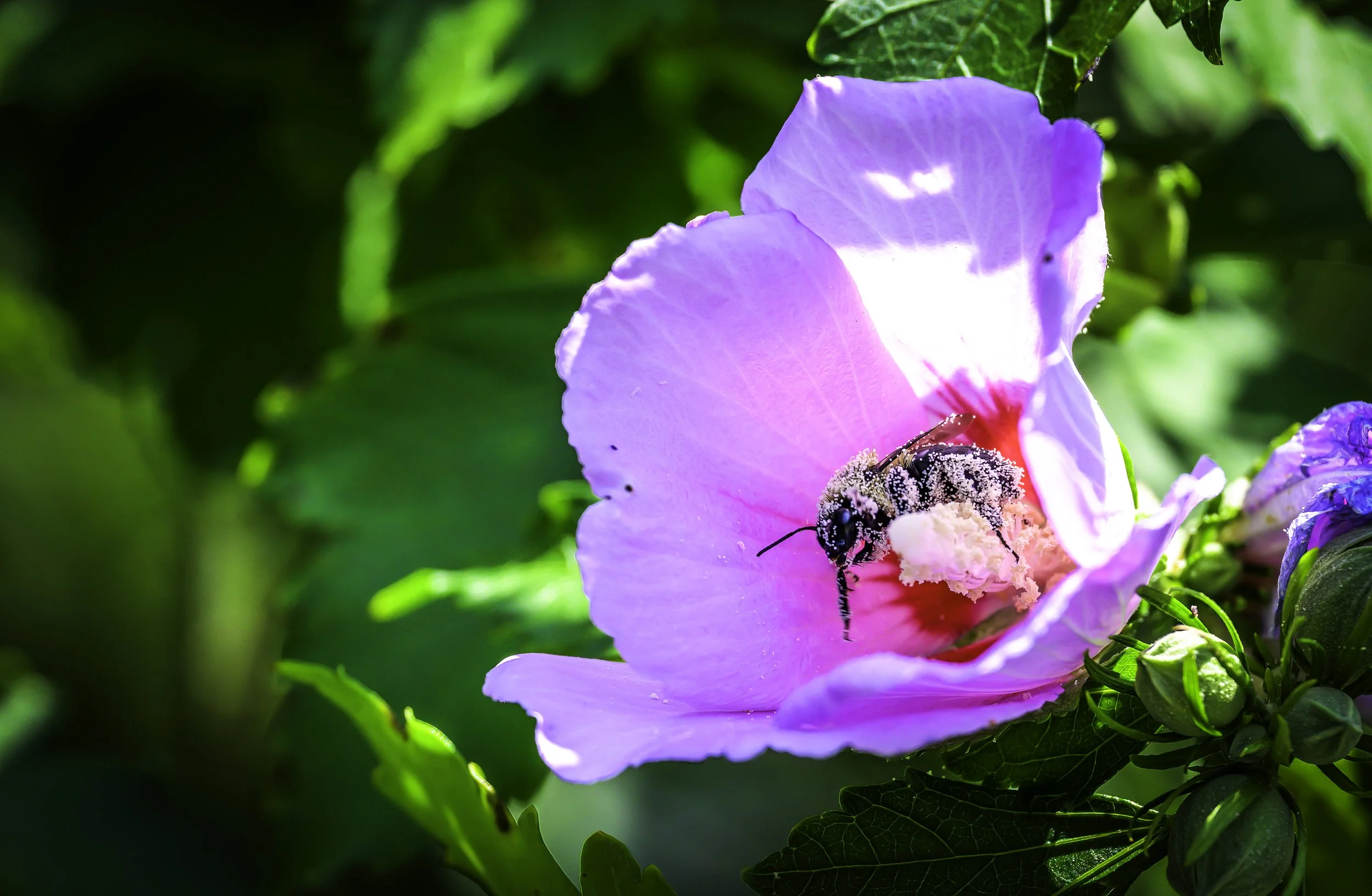
Pollen laden bumblebee on Rose of Sharon - Ondaora - 7/23/26
The bumblebee in the image above is most likely a Brown-belted bumblebee, but because it is literally encased in pollen grains, identifying this bee is quite challenging. Our Rose of Sharon bush is in full bloom and the bees are enjoying the nectar rich flowers while collecting a copious amount of pollen to transfer to neighboring blossoms. I recently read about the physics behind the collection of pollen by these bees and there is much more than meets the eye! Basically, it is quite dependent upon static electricity rather than just direct contact with sticky pollen grains.
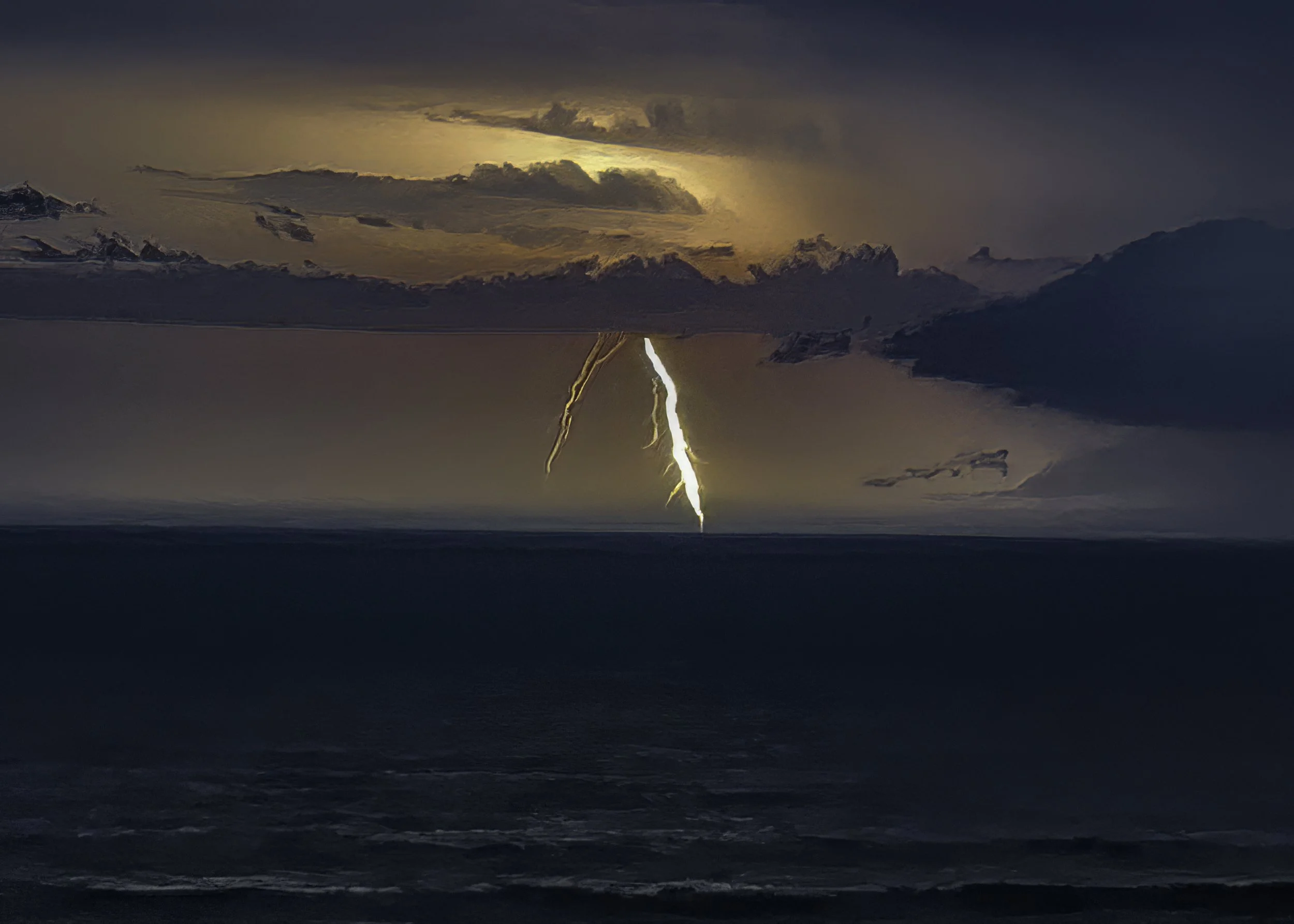
Lightning over New Smyrna Beach - 3/31/25
When we think of static electricity in nature, our thoughts pretty much always turn to lightning. It just so happens that Mother Earth is strongly negatively charged. During powerful storms like the one pictured above outside our condo in Florida, rising warm air masses and falling precipitation result in buildup of static electricity through a process called Tribocharging. The earth’s surface builds up a negative charge while the atmosphere develops strong positively charged conditions. Occasionally, the differential in charges will result in a violent “rebalancing” resulting in spectacular lightning bolts.
It just so happens that the excess negative charge distributes itself across the earth’s surface as noted by Michael Herben in his book, The Physics of Birds and Birding. Herben notes that this negative electrical charge is imparted to everything living on the earth’s surface including plants, flowers and their pollen. However…..Mother Nature has imparted a positive charge affinity to birds and insects, so that when bees come into close proximity to the pollen grains on the plants’ anthers, static electricity causes the pollen grains to “jump” to the positively charged bees. The pollen is in some cases very sticky and will adhere to the bee until it flies close enough to another flower where the pollen is again attracted to the flower’s stigma and wha-lah! Pollination occurs.
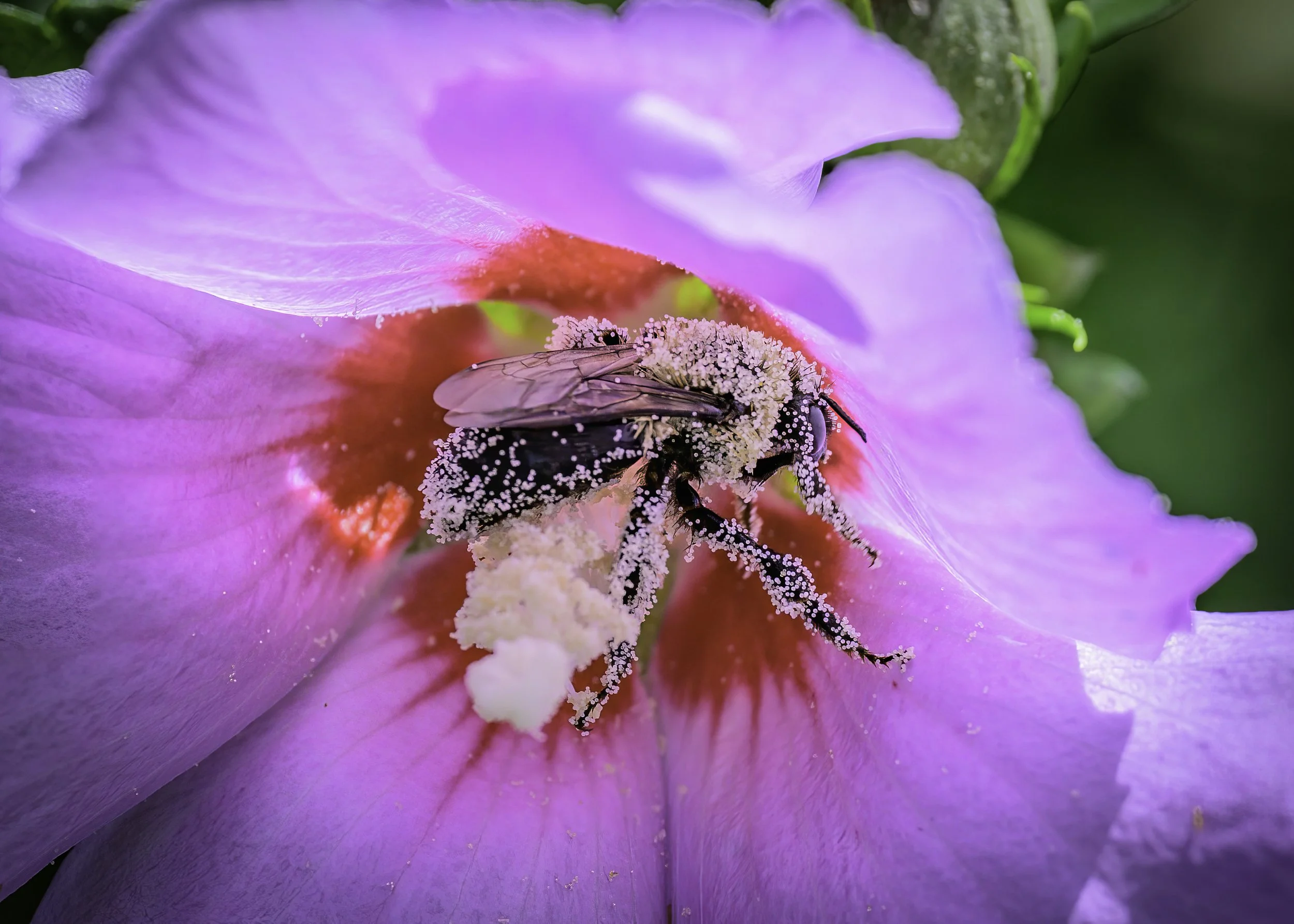
Another pollen laden bee in a Rose of Sharon - Ondaora - 7/23/26
Another agent of pollination is active in our yard as the Ruby-throated hummingbirds visit the nectar rich Firecracker plants to feed.
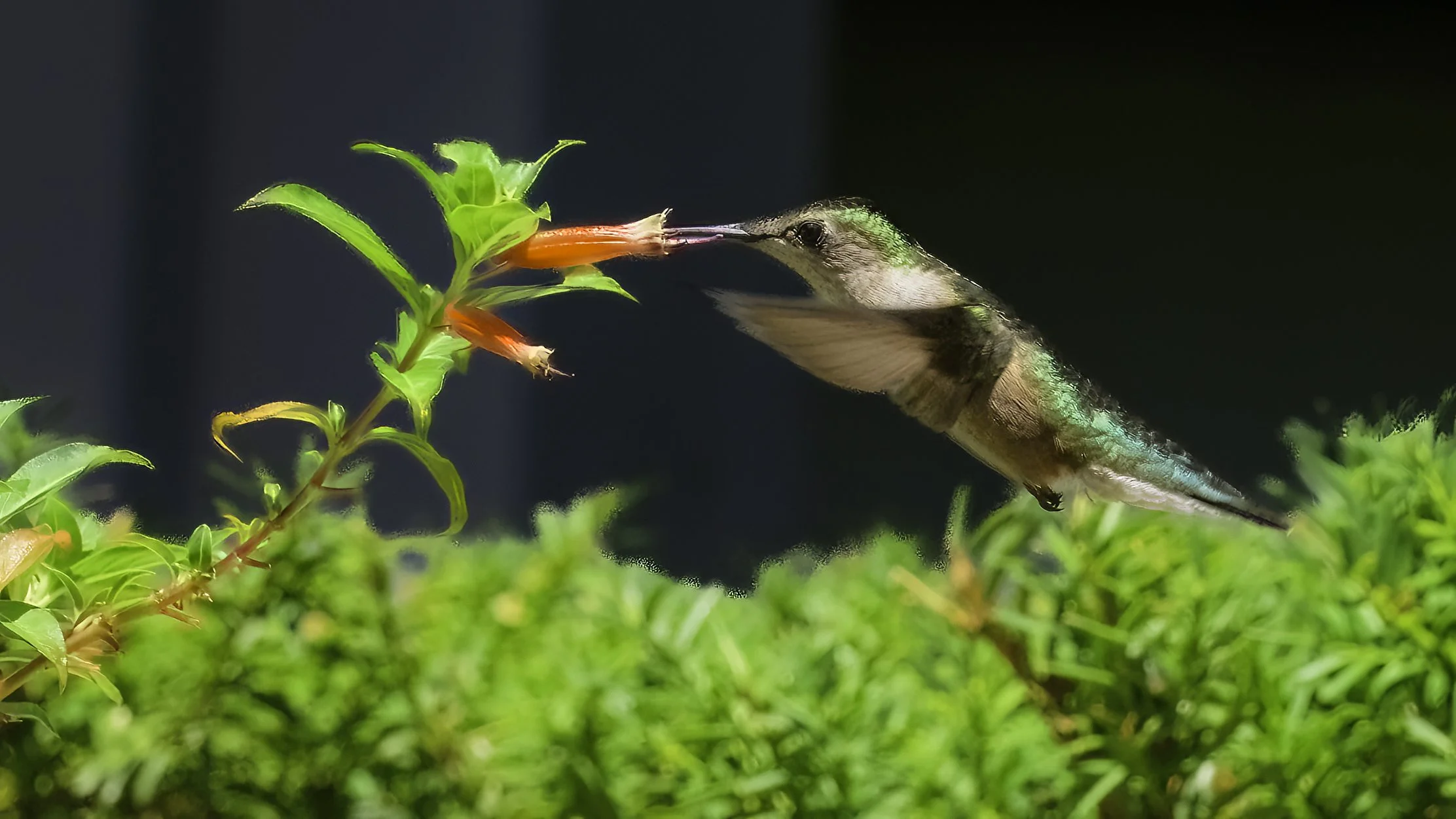
Ruby-throated hummingbird - Ondaora - 7/23/26
Ruby-throated hummingbirds play a vital role in pollination by transferring pollen as they feed on nectar from tubular, brightly colored flowers. Their long, slender bills and hovering flight allow them to reach deep corolla tubes that many insects cannot, while pollen adheres to their forehead and throat and is deposited on the next flower they visit. These birds are especially important for plants that have evolved red or orange tubular blooms like these “Vermillionaires” and produce copious, high-energy nectar suited to hummingbird metabolism. Because hummingbirds typically visit many flowers across fragmented habitats and travel between gardens and wild areas, they can promote genetic diversity and help maintain plant populations. Their foraging behavior—quick, repeated visits and territorial defense of rich nectar sources—also shapes floral communities by favoring species adapted to bird pollination.
And last but certainly not least, we also have butterflies in our gardens which contribute to the pollination process. Today, there were a number of Cabbage whites flitting from flower to flower on this lavender plant.
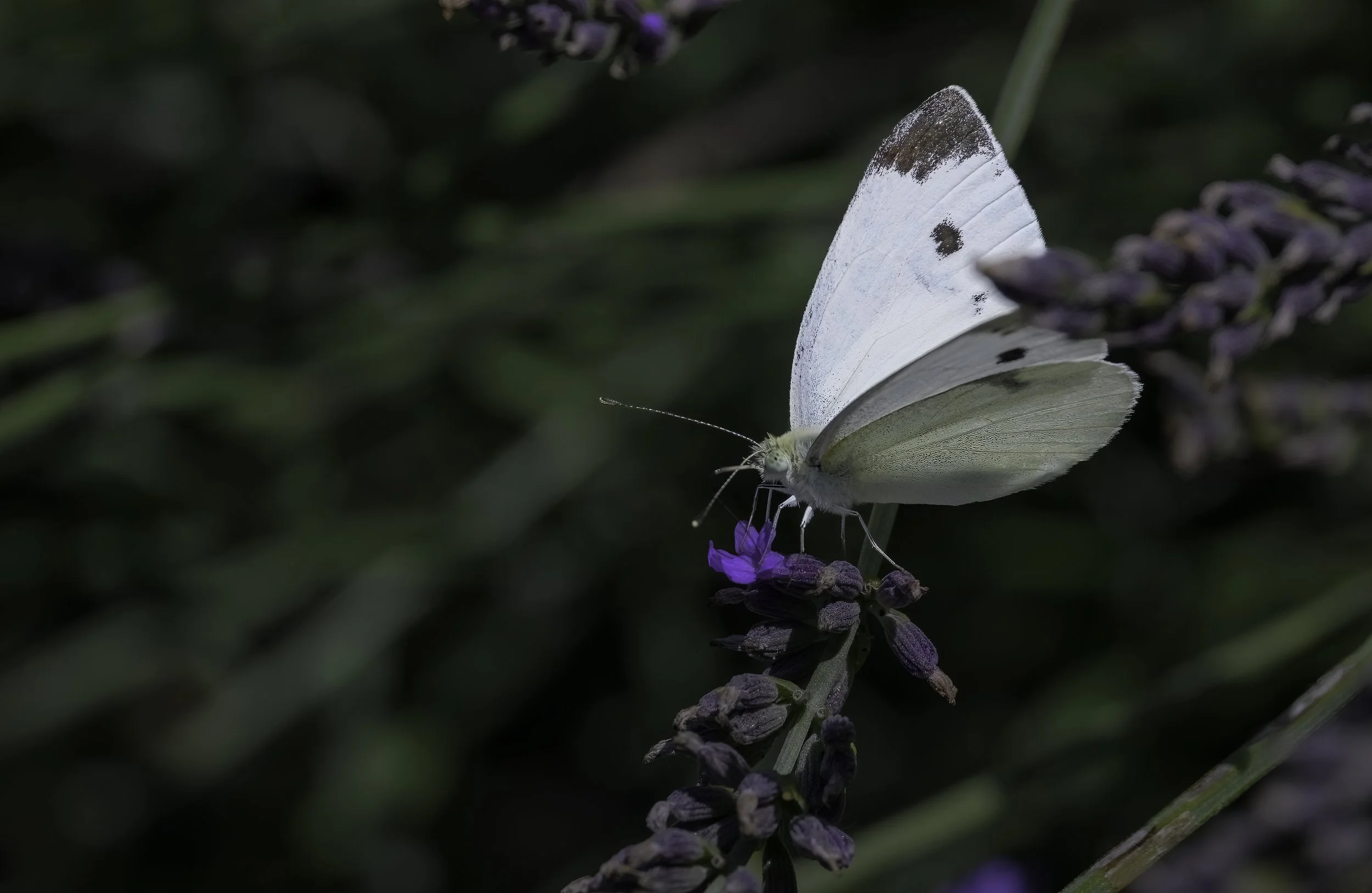
Cabbage white on Lavender - Ondaora - 7/23/26
Cabbage whites visit blossoms such as mustard-family weeds, clover, and garden brassicas, transferring pollen on their proboscises and bodies as they feed on nectar, while their fast, fluttering flight and frequent revisits make them effective at moving pollen within and between nearby plants. Though not as specialized as some native bees, their abundance and their presence in gardens and roadside verges provides a visible indicator of local pollination activity. Environmental factors in New York, including temperature, habitat fragmentation, and pesticide use, influence cabbage white populations and thus their pollination contribution.
At this time of year, pollination is a critical component of the propagation of wildflowers and garden plants alike and provides nature lovers with an ideal setting for watching natural activities up close and natural. Great time to be out and about with a camera in hand.