Nature’s Nursery
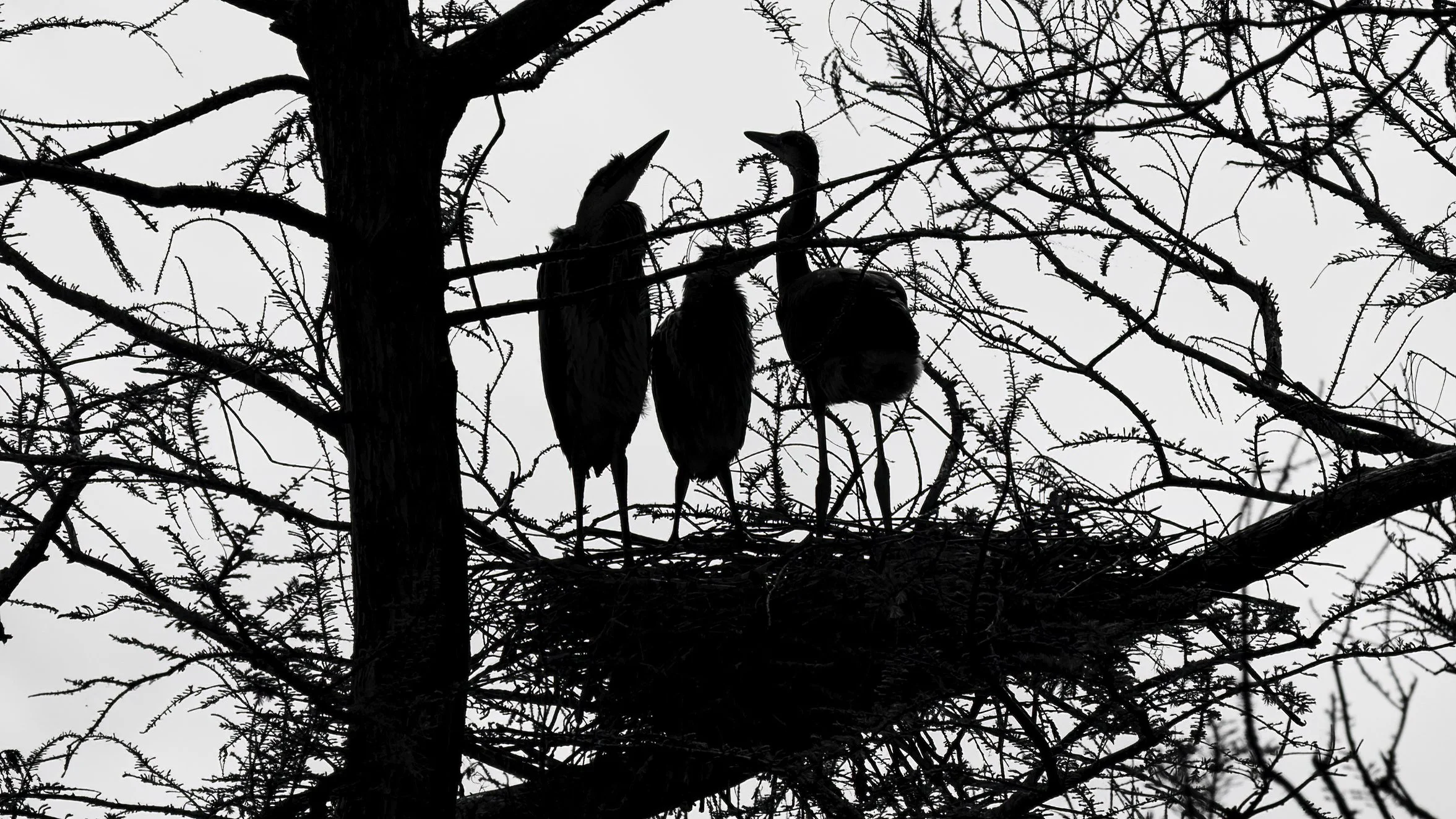
Heron chicks silhouette - Orlando Wetlands - 3/13/26
Today we ventured back out to Orlando Wetlands to check on the progress of the many nesting birds at this marvelous site. Many of the nests have progressed nicely and have chicks many of which appear to be on the verge of fledging while others are still in their infancy. Most of our nesting birds were found adjacent to the boardwalk, but we also had a number of excellent birds on our preliminary tram tour.
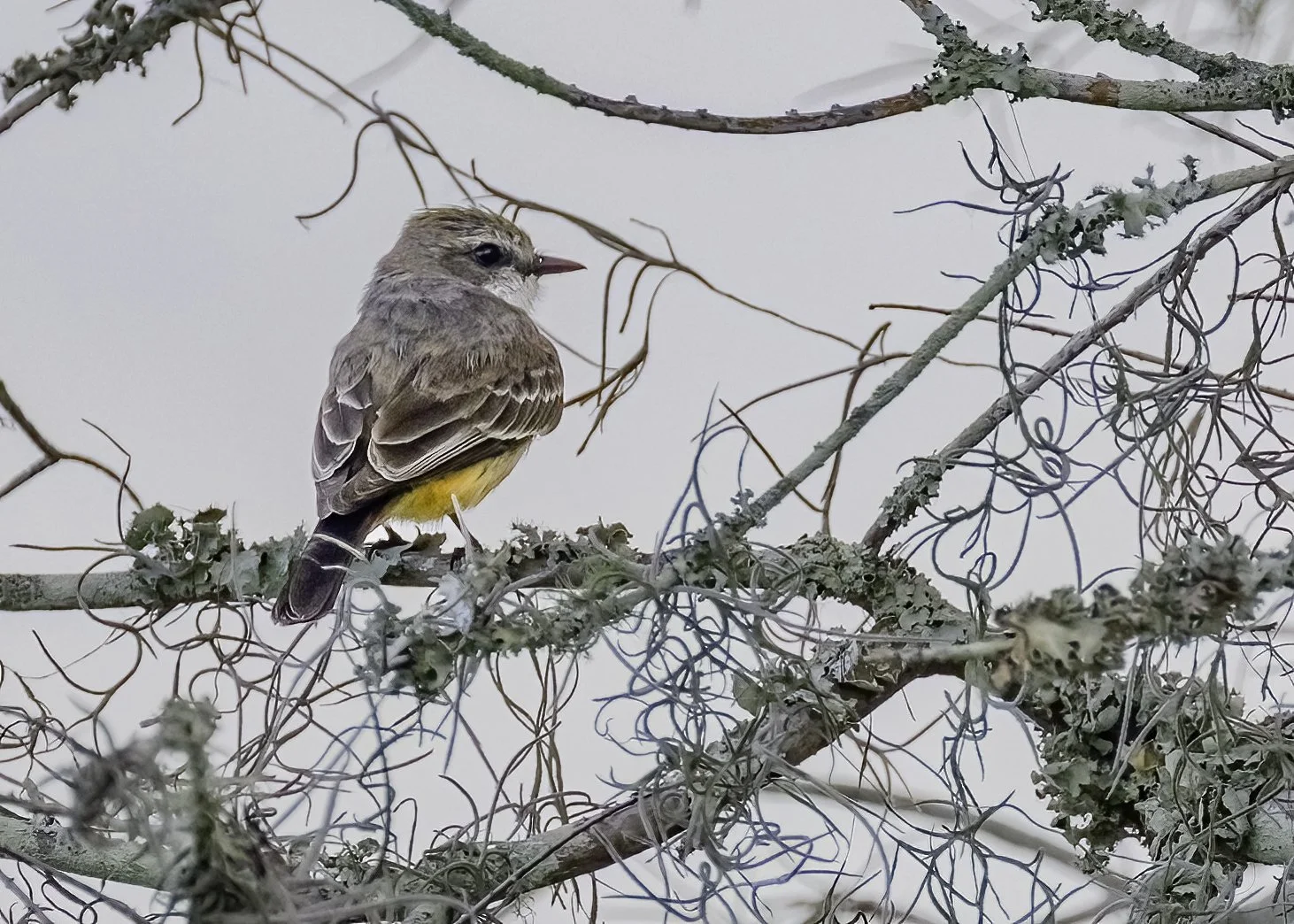
Female Vermillion flycatcher - Orlando Wetlands - 3/13/26
One of the highlights of the day was the spotting of a Vermillion flycatcher. This bird has come to be somewhat expected here at the wetlands on an annual basis. And this year, the bird did not disappoint. It is not a common sight at this time of year here in Florida, so it usually draws a crowd when sighted. Our tram guide informed us that this is not the most productive time of day for this bird to be out foraging, but I guess she did not get the message.
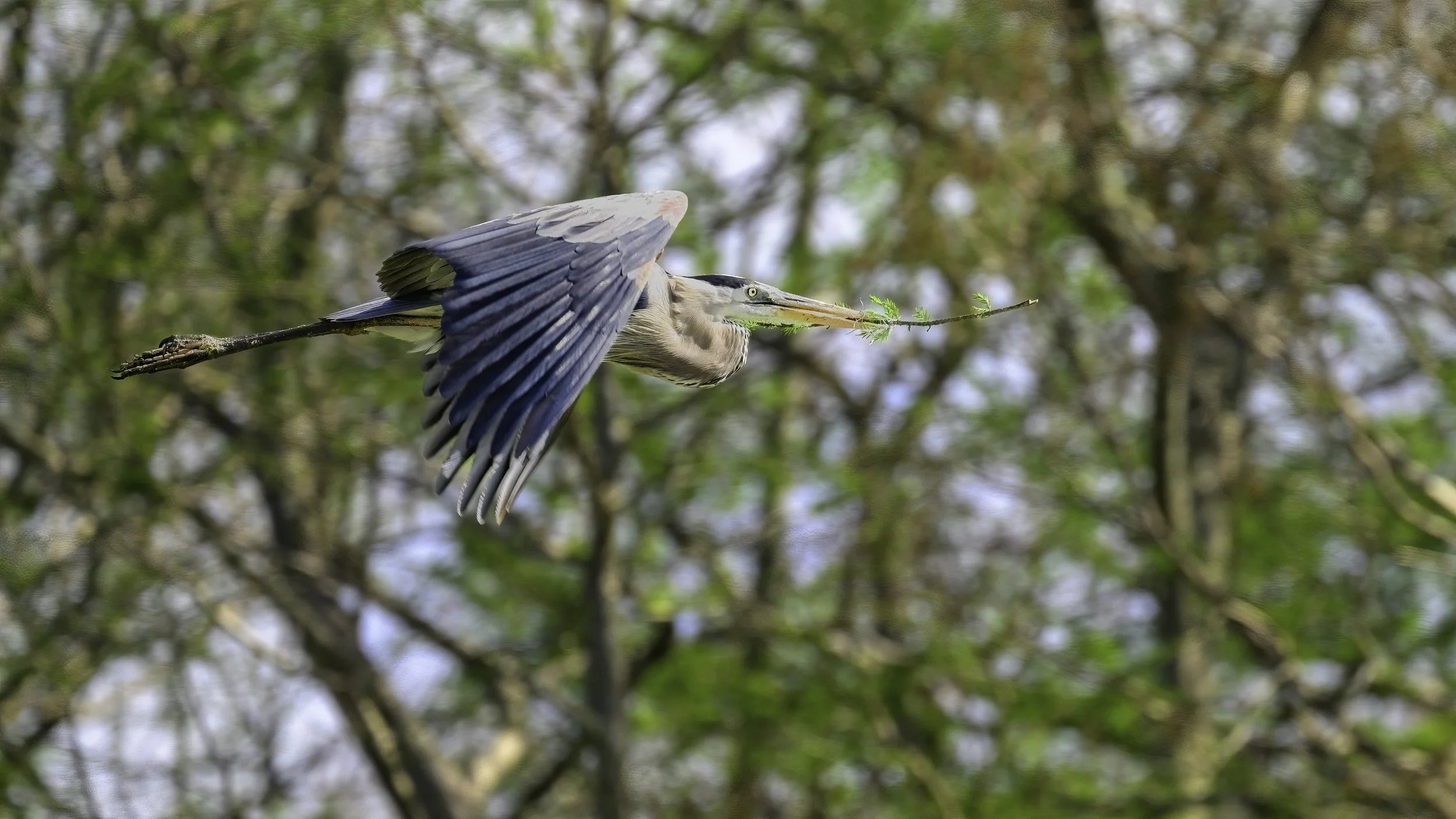
Great blue heron with nesting material - Orlando Wetlands - 3/13/26
Nesting is progressing at varying stages with most birds already actively tending to their young. Meanwhile, others such as this Great blue heron are still in the process of creating their nests. This male was bringing material such as this small bough into his mate who would take the offering and put it into place or reject it. Fortunately for him, she found this piece to be acceptable. Other Great blue herons were much further along and had already reared their brood to the point of their impending departure.
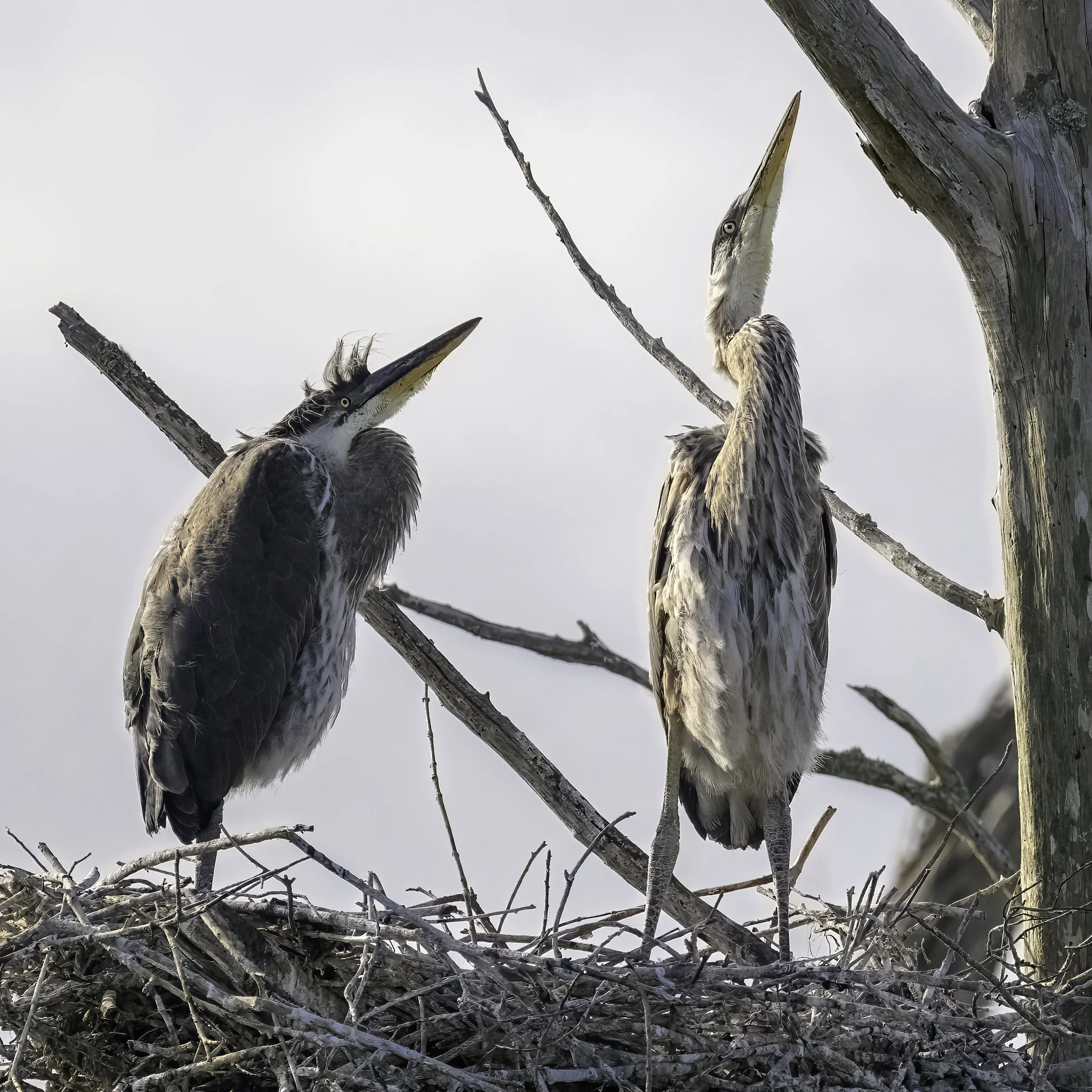
Two young Great blue heron chicks awaiting lunch - Orlando Wetlands - 3/13/26
One of the most exciting findings was a nest of a pair of Black-crowned night-herons with a pair of little ones. While there are a large number of mating birds out here, the number of night-herons is relatively small, so to see this pair with their young was special indeed.
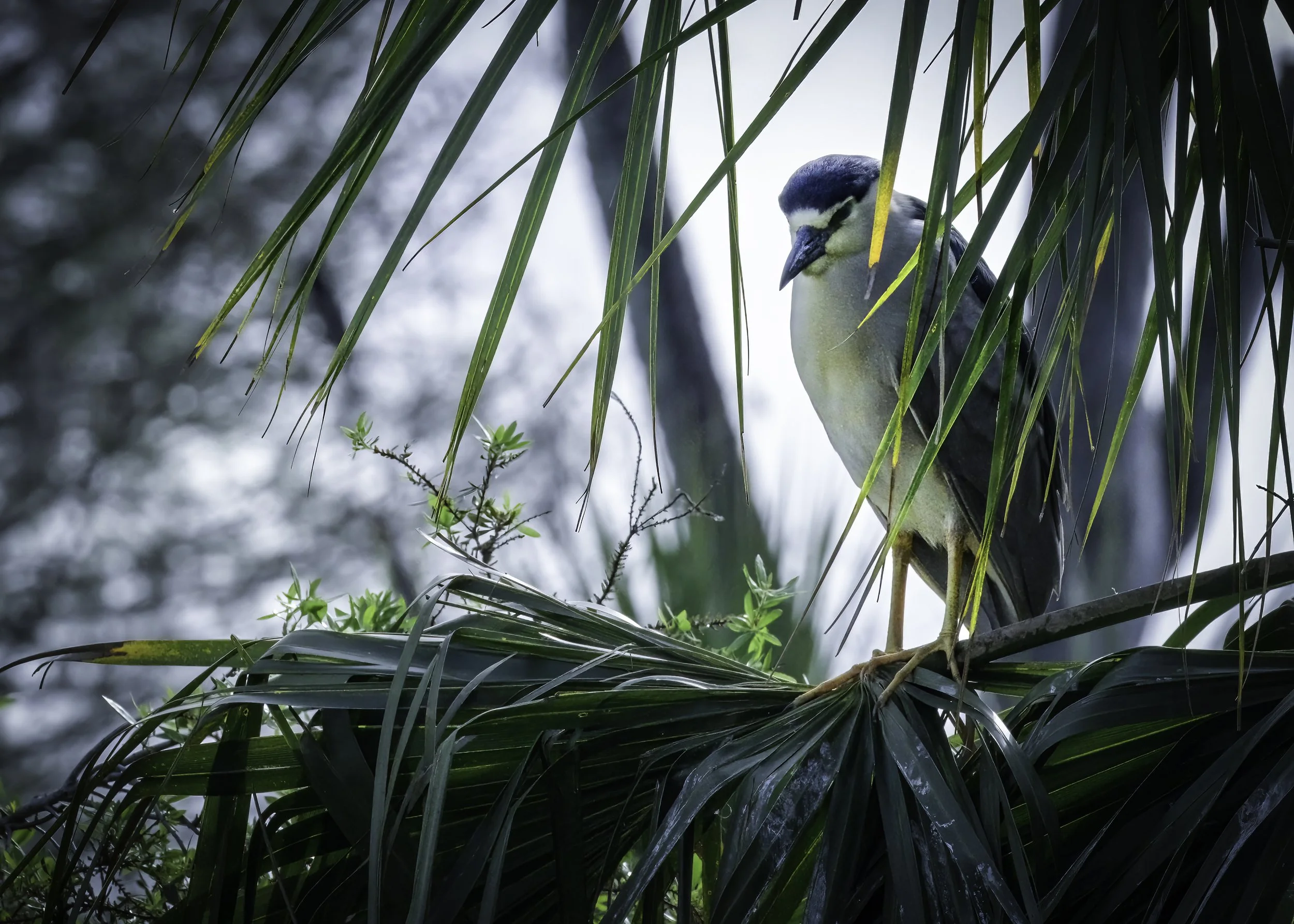
Black-crowned night-heron in the same palm as the nest - Orlando Wetlands - 3/13/26
Black-crowned night-herons are known to nest in colonies, often choosing trees or shrubs near water where dense foliage provides concealment. This pair on the other hand had were on their own. Their platform nest of sticks lined them with leaves, reeds, or other soft material was shared with two chicks. Breeding pairs may reuse or refurbish existing nests from previous seasons while both parents share responsibilities—males typically gather nesting material and defend the site, and females arrange the nest and incubate. Clutches usually contain three to five pale bluish eggs incubated for about 21–26 days, and hatchlings are altricial, remaining in the nest for several weeks while parents regurgitate food (small fish, crustaceans, amphibians, and insects) directly to the young. Judging from the size of these little guys, they are pretty young and will be here for some time to come.
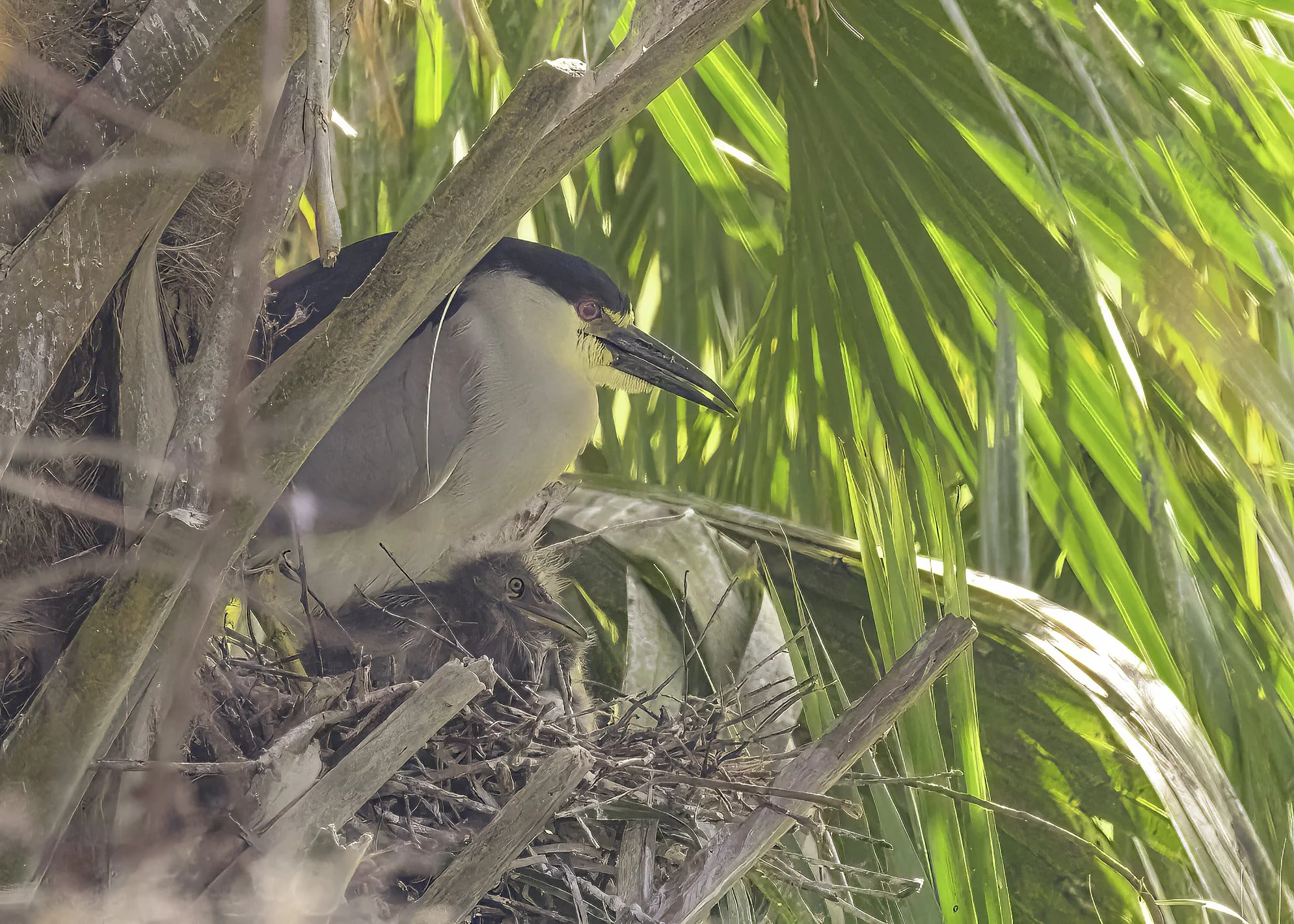
BCNH on nest with one chick visible - Orlando Wetlands - 3/13/26
One of the most prominent species nesting here by the boardwalk was the Roseate spoonbill.
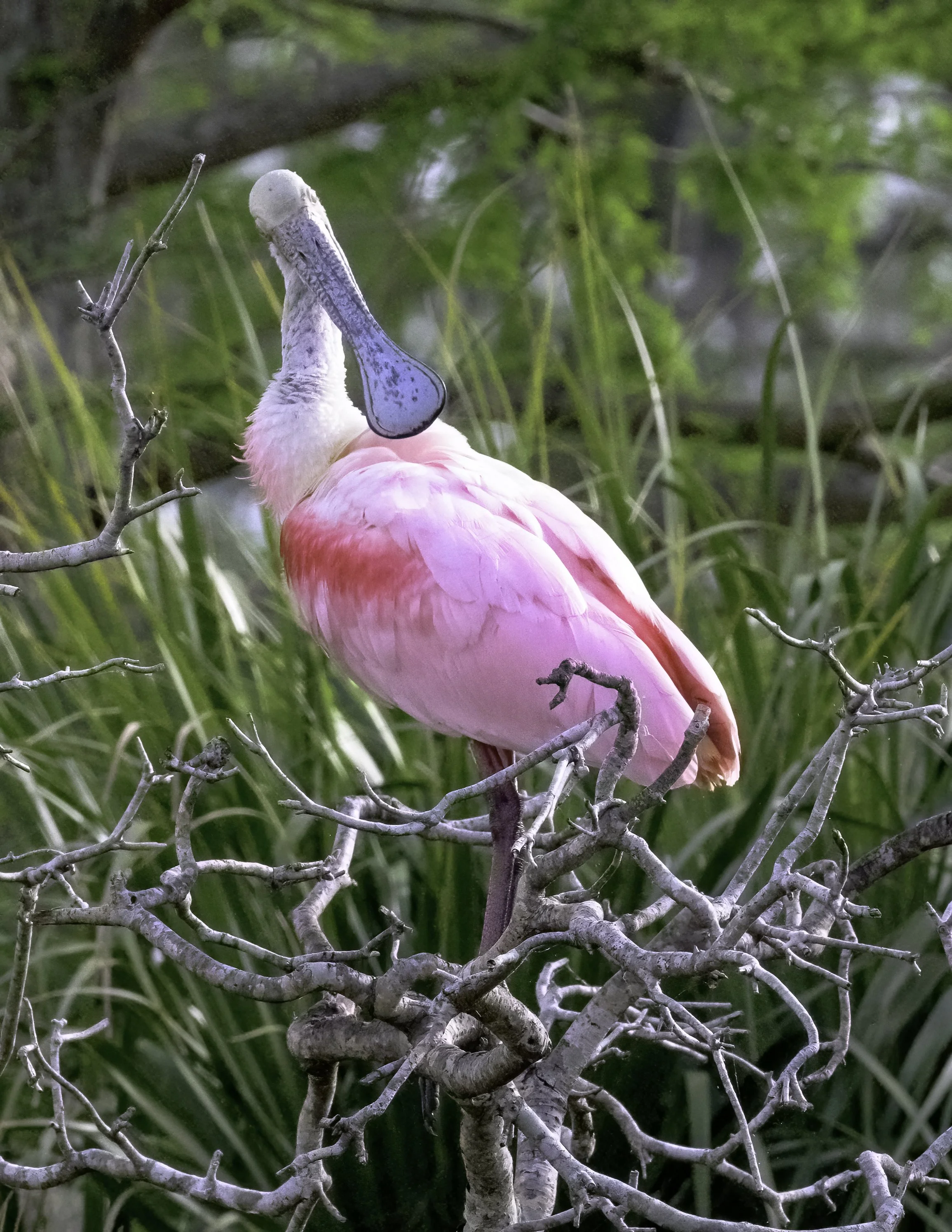
Roseate spoonbill - Orlando Wetlands - 3/13/26
It was of interest to notice the variation in the size and apparent ages of the chicks. Some were already nearly adult size and ready to fledge while other like these seen below appear to be recent additions to the bird world. It taks spoonbill chicks a good 5-6 weeks to be able to maneuver around the nest. Strong flight may take 8 -10 weeks, however.
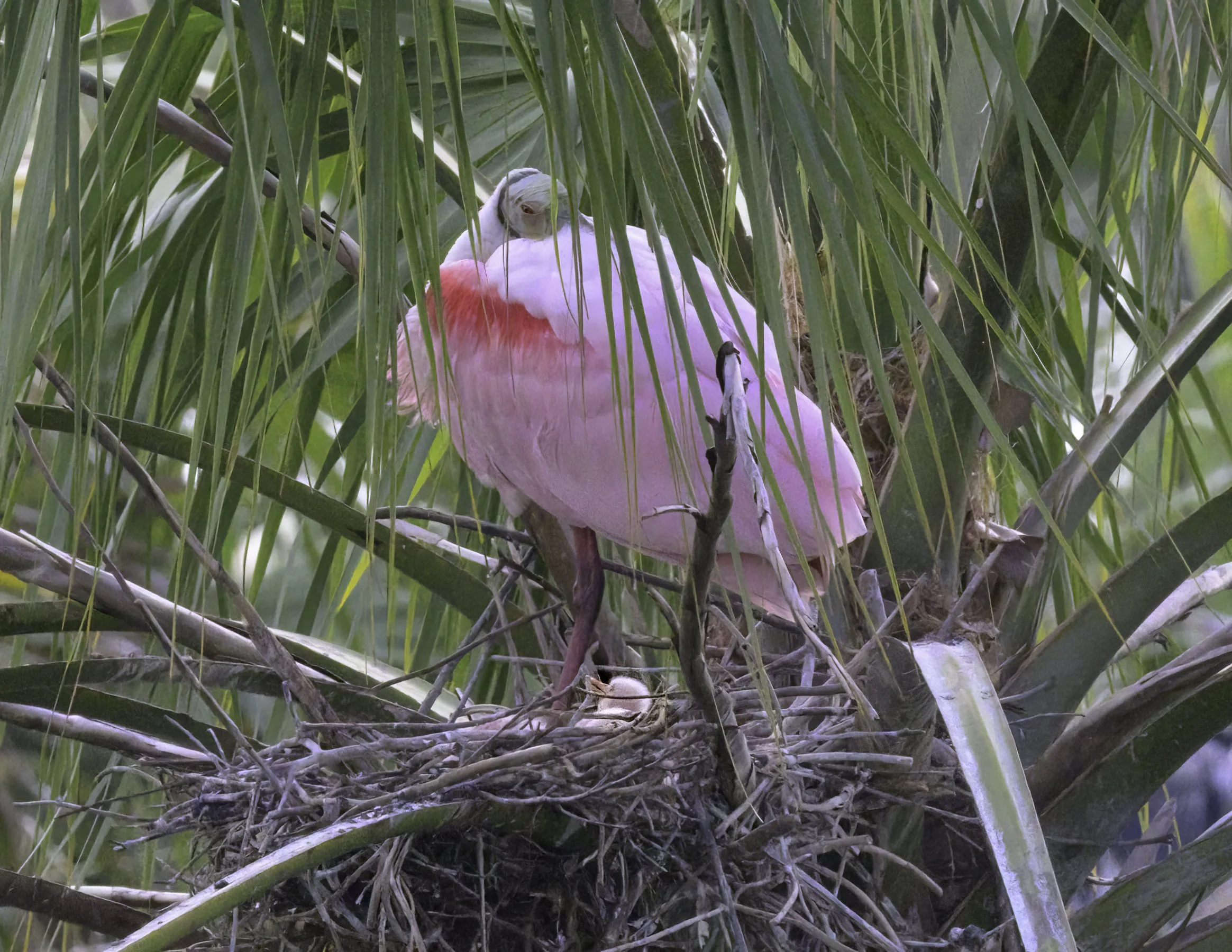
Brand new chick! - Orlando Wetlands - 3/13/26
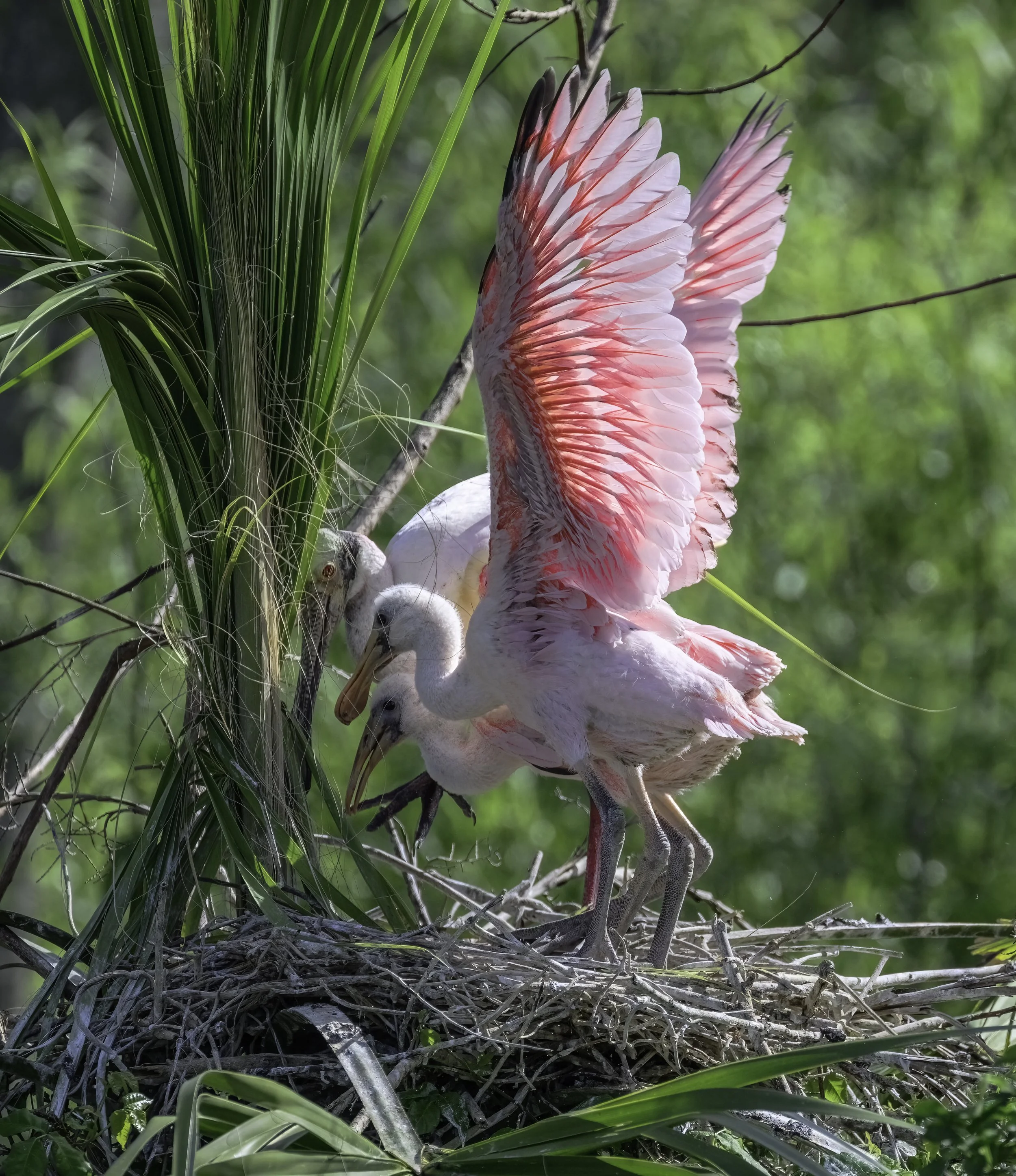
Rambunctious “teen” spoonbill chicks - Orlando Wetlands - 3/13/26
One last species to report on. Not all the nesting birds we found today were up in the trees. A pair of Sandhill cranes were busy tending to their eggs out in the reeds and it was only with considerable difficulty that we were able to see their eggs through the intervening grasses. This is the time for the cranes to start their families, usually laying 2 eggs and then taking turns incubating them for around 4 weeks. As is true with most large birds, the nestlings will then have a longer period of getting used to this world. In fact, it will be close to a year before the young leave their parents.
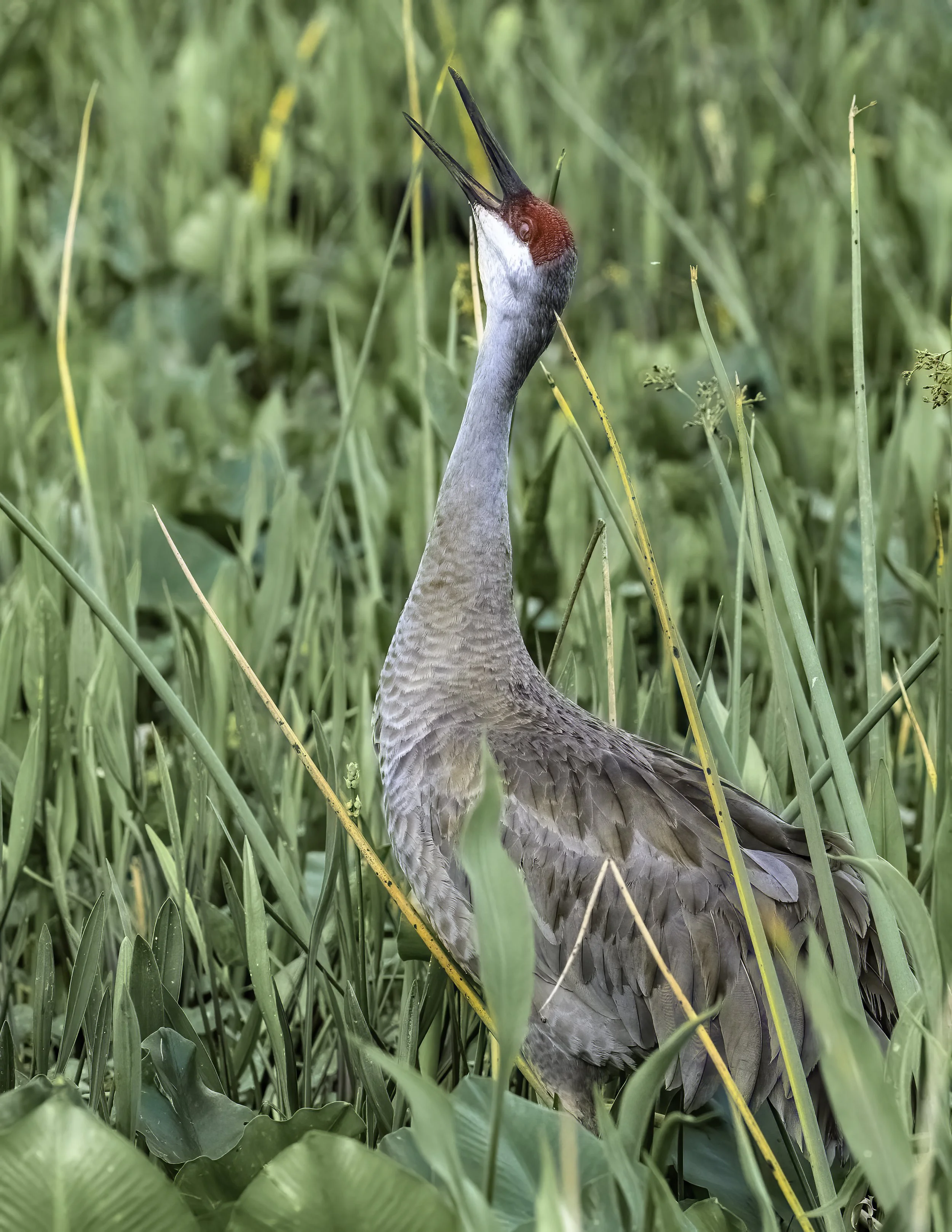
Sandhill crane calling to its mate - Orlando Wetlands - 3/13/26
The final image today will be a short video of the noisy neighbors in the nursery, the Great blue heron chicks.