East winds
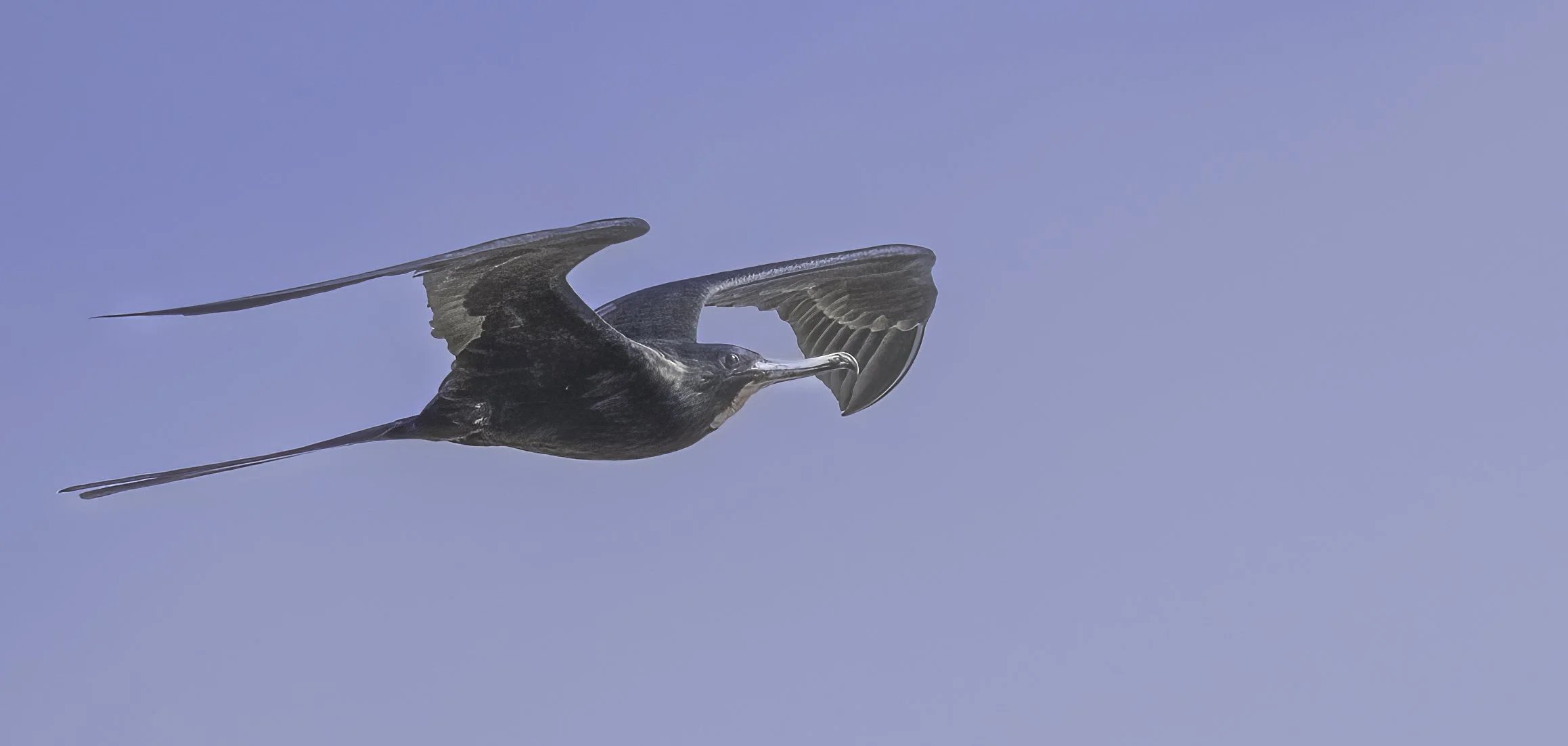
Magnificent frigatebird - Lot 4 Canaveral NS - 3/29/26
With strong east winds blowing onto the shore, we are hoping that some pelagic species might just get blown in closer to shore making for good viewing and photographing. We’ve set up at the boardwalk overlook located at Parking Lot 4 of Canaveral National Seashore. We were scoping out the distant crashing waves when a Magnificent frigatebird appeared flying south down the coastline and right over our heads.
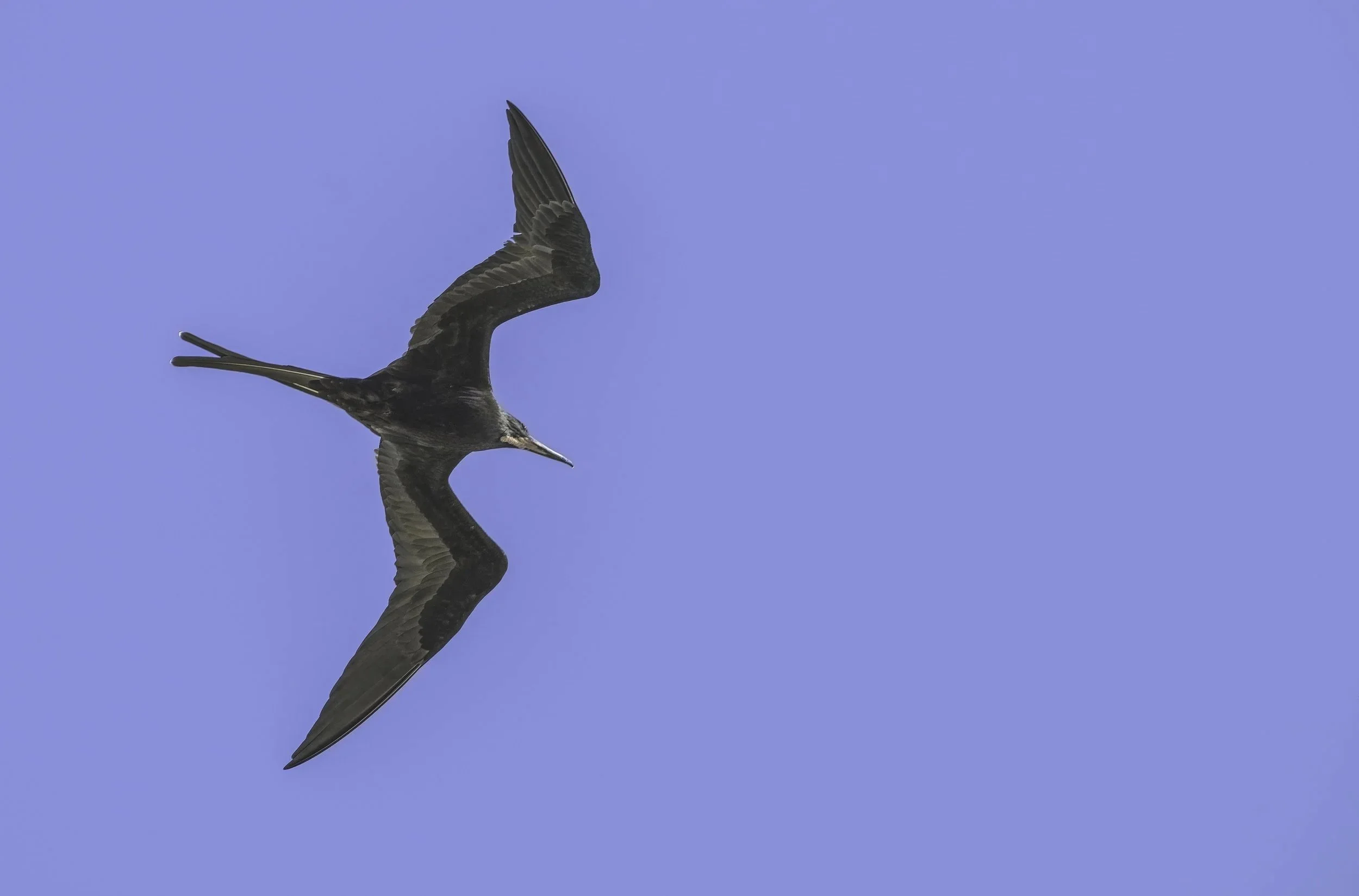
Magnificent frigatebird - Lot 4 Canaveral NS - 3/29/26
The Magnificent frigatebird is a striking seabird known for its long, forked tail and slender wingspan that can exceed 7 feet. It soars effortlessly over tropical oceans, often kleptoparasitizing other seabirds by harassing them until they drop or regurgitate fish. To see this bird along the coast of New Smyrna is a real treat as it normally spends its time during the winter months down in the southernmost parts of Florida. During the summer, it will show up in Northern Florida and along the gulf coast, bur rarely is it seen here in March. This bird may well have been out off the coast and have been blown into our area by these heavy east winds.
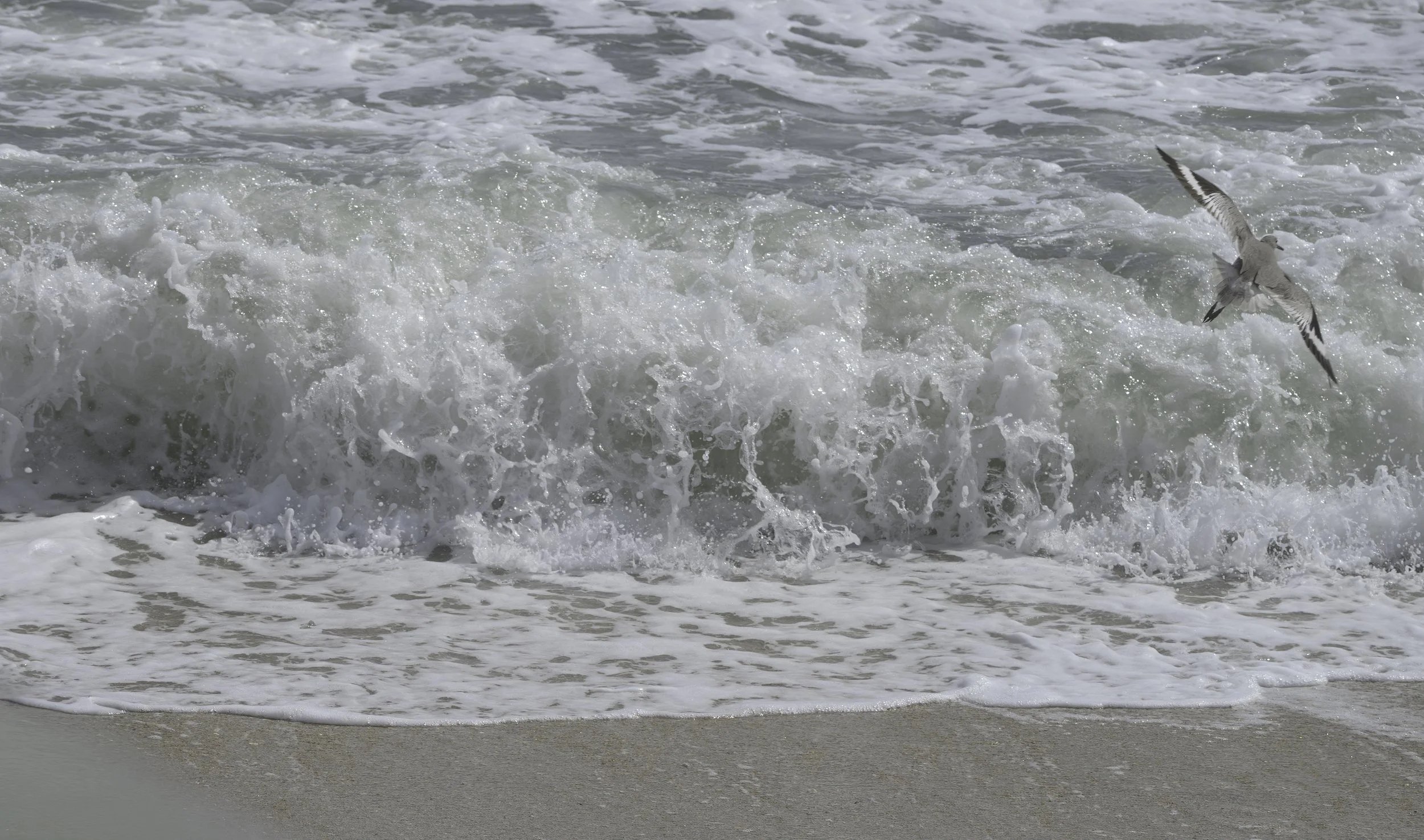
Heavy surf keeps this Willet moving - Lot 4 CNS - 3/29/26
Unfortunately, our hopes for birds from further out to sea like Northern gannets and Jaegers have not materialized, so we decide to make a quick drive down to Parking Lot 5 and take a look at the sheltered lagoon waters.
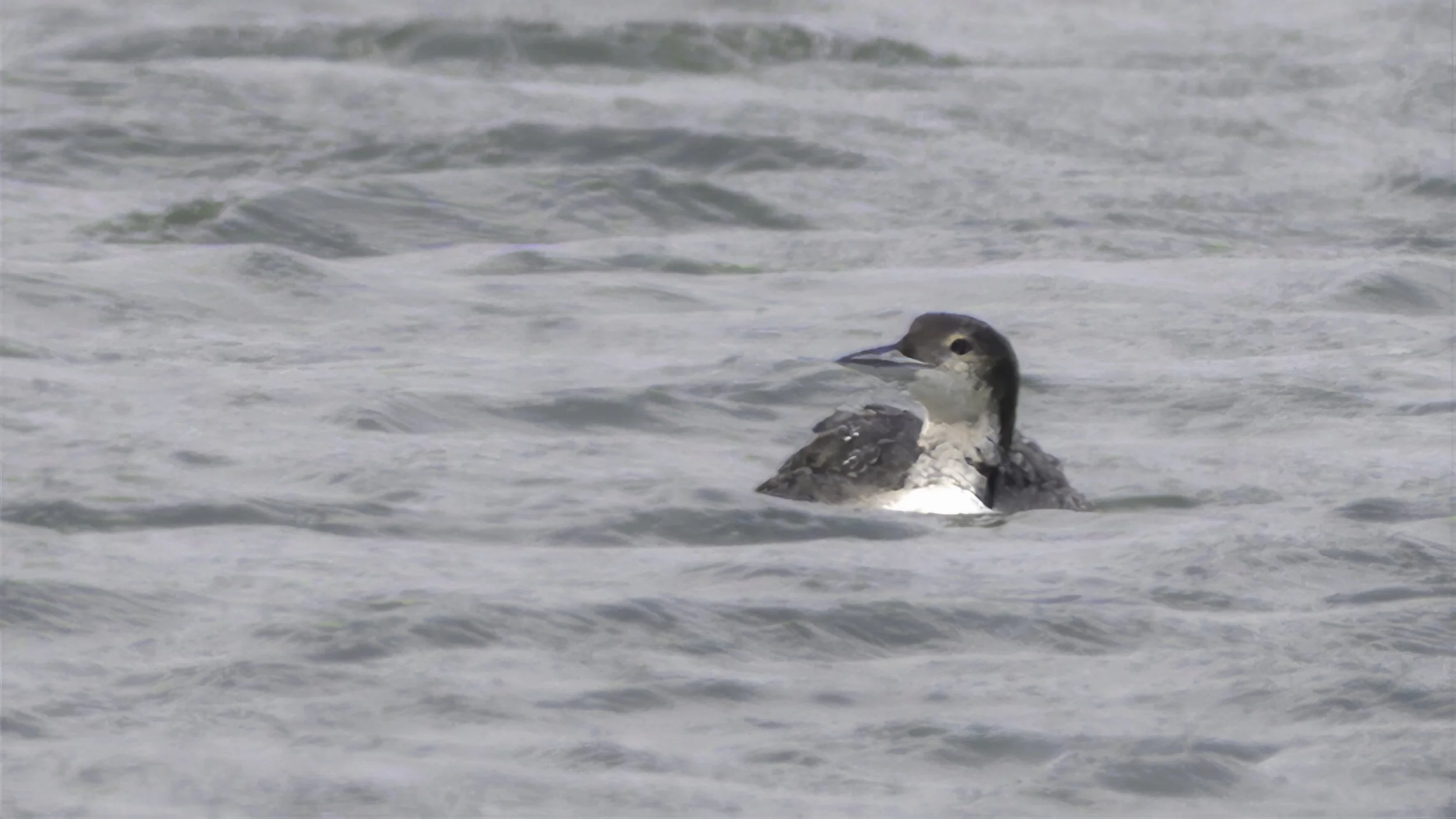
Common loon - Lot 5 CNS - 3/29/26
We find a Common loon which appears to be molting into its breeding plumage not too far from shore. During the breeding season in summer, the loon is found in the far north on large lakes in forested landscapes. During the winter months, we find this bird down here in Florida along the coast and in shallower lagoon waters such as the Indian River where we found this individual today. Surely, he will be heading back to his northern abode before too long. He may migrate in small flocks, but often his journey is a lonely one as he moves north alone along the coastline staying close to the waters surface. He’s pretty silent while down here but when we see him back in the Adirondacks of New York, he’ll entertain us with his long wails and yodeling calls.
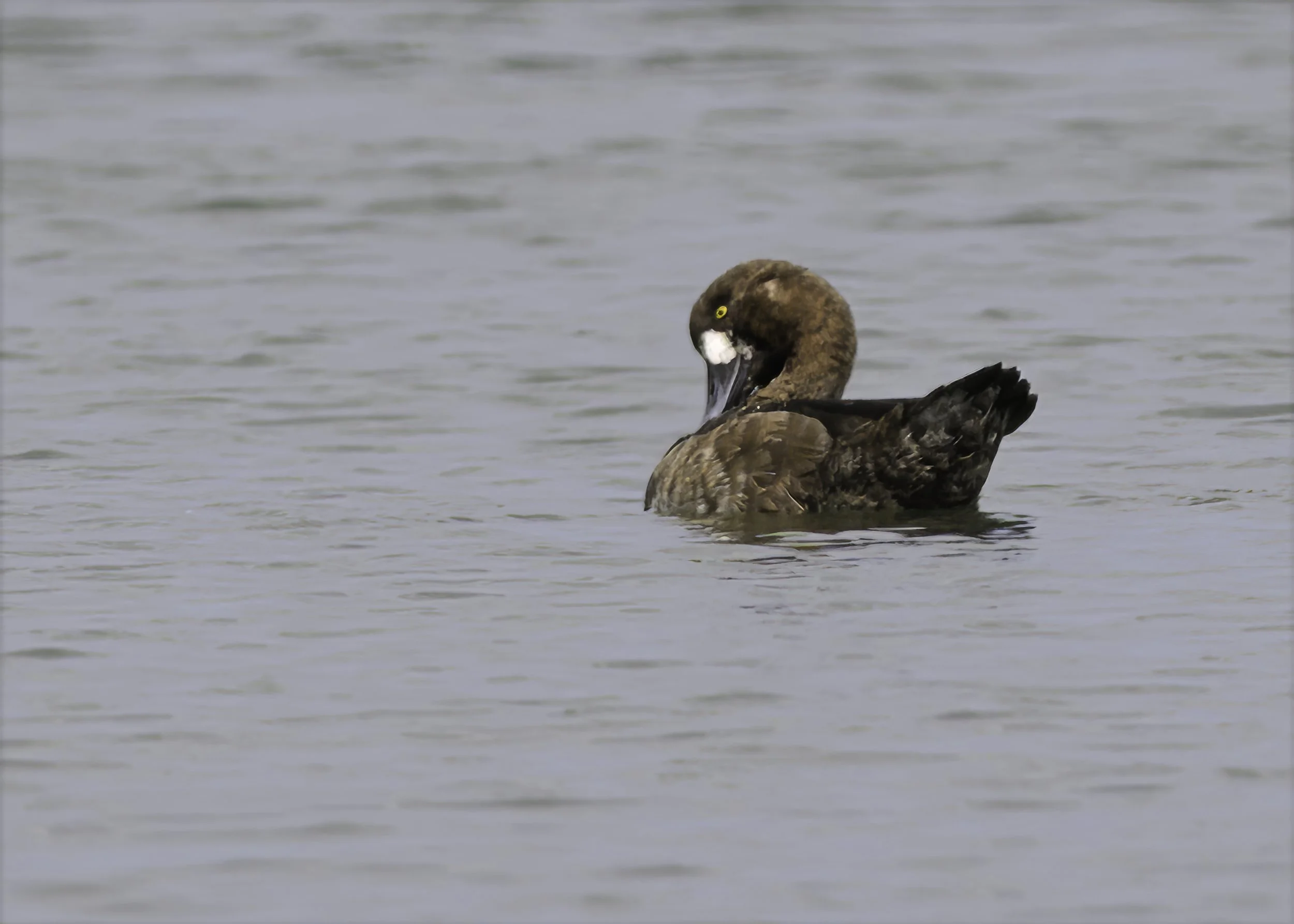
Greater scaup - Lot 5 Canaveral Nat Seashore - 3/29/26
A bird we generally see in our Florida environs during the winter months are the Greater and Lesser scaup. For whatever reason, this species has eluded us this year, so it is a pleasant surprise to find this female on the quiet Indian River Lagoon waters this morning. All in all a fairly quiet morning as far as number of species, but what we lacked in quantity we made up for in quality.