Christmas in Florida
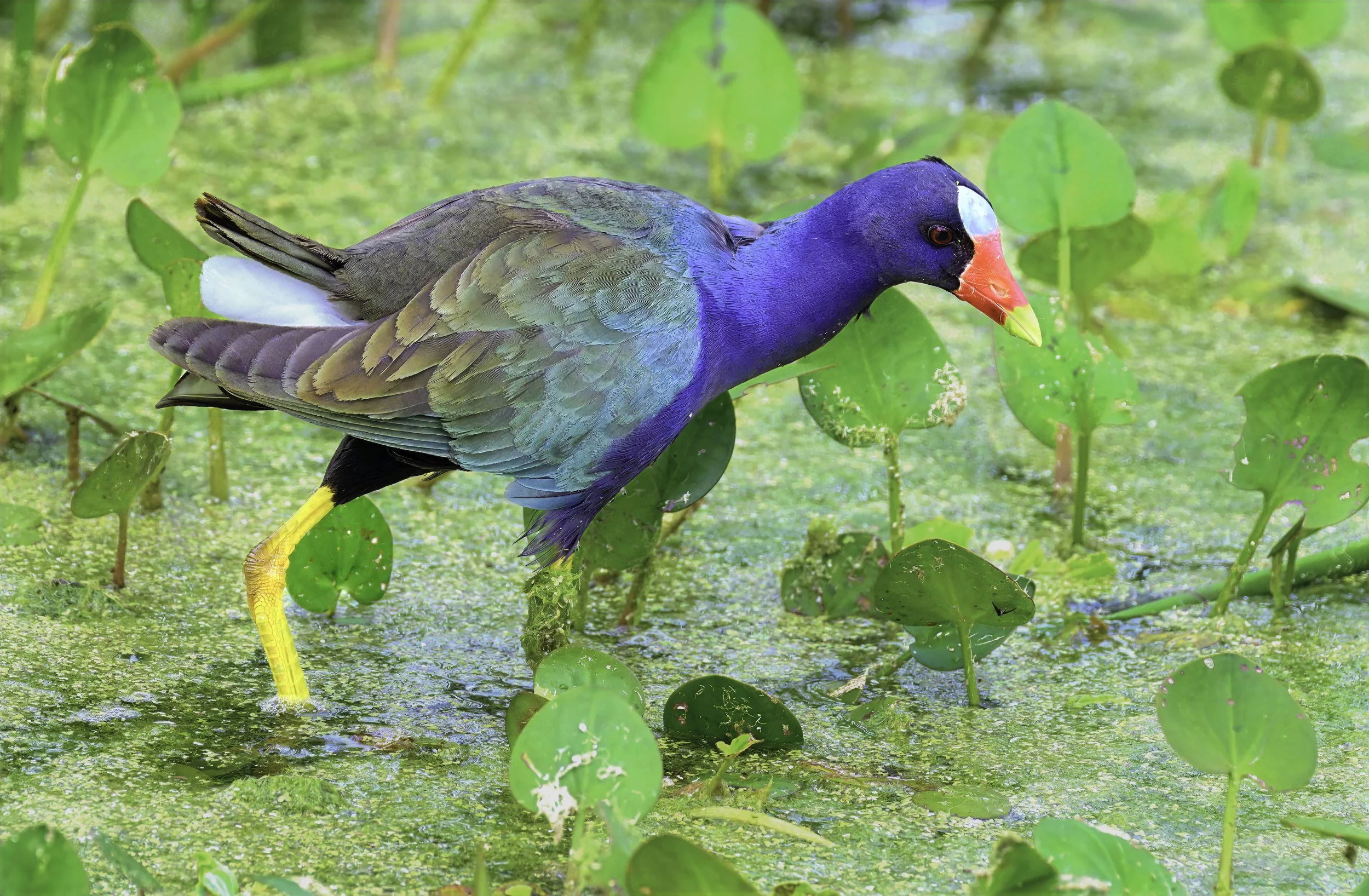
Purple gallinule - Orlando Wetlands - 3/31/26
I know it is only the end of March, so why Christmas? Christmas happens to be the name of little spot in Florida that is home to two of our favorite birding locations…. Orlando Wetlands and Tosohatchee Wildlife Management Area. Today, I visited both with two long-time fellow birders, Joe from back in New York, and Don who like me spends winters here. Don is an elite birder whose numbers are up there with the best of them. Always a pleasure to be out with a birder of his stature.
Anyway, we started out with a cruise through Tosohatchee WMA. Our targets for this sight are always the Bachman’s sparrow and the Brown-headed nuthatch. On this trip, we have added Red-headed woodpecker to that list as it has been sighted here recently with some regularity. Not long after getting on the service road that leads us through the preserve, we spot two woodpeckers. With eager anticipation, we locate the birds only to find that they are the much more common Red-bellied species.
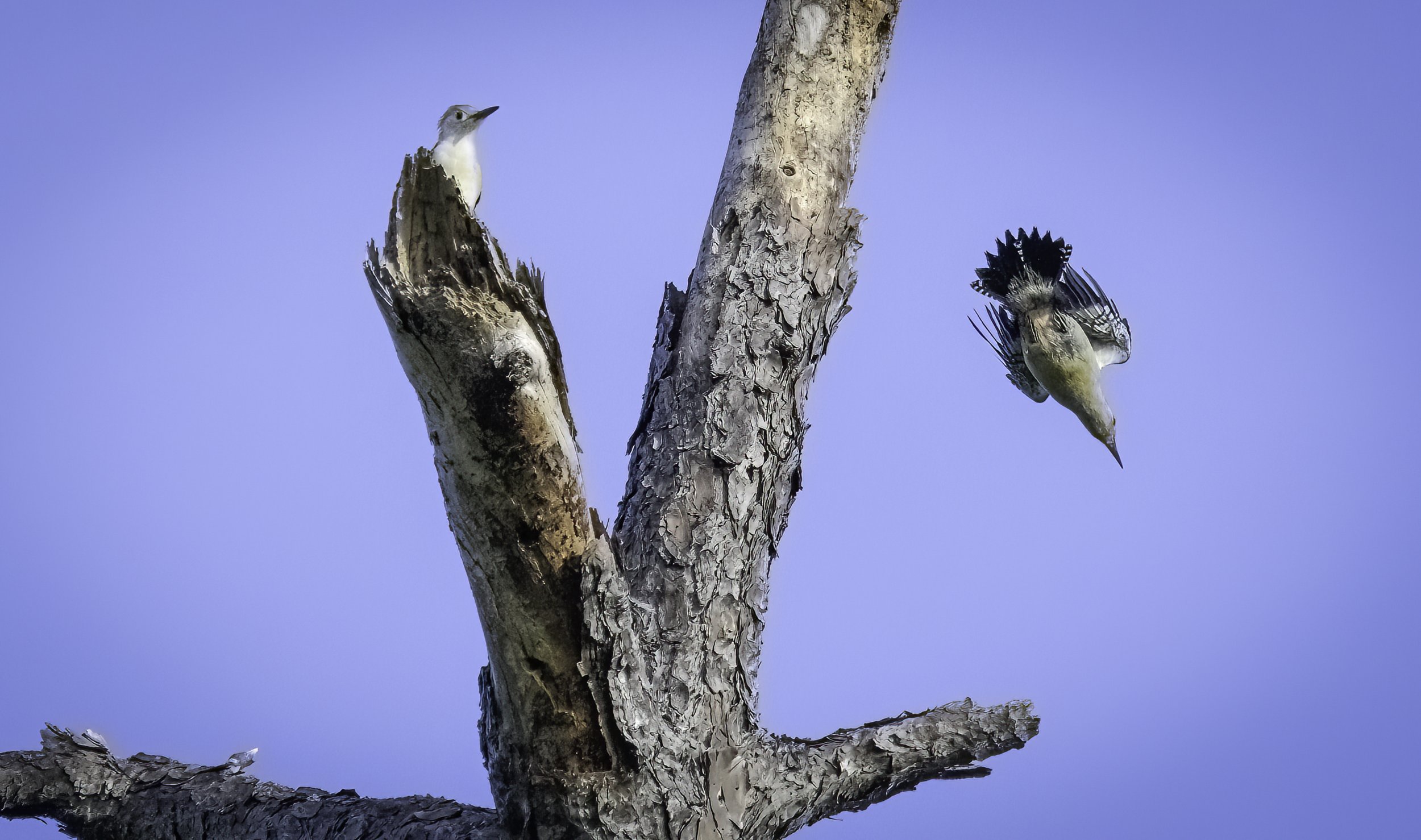
Red-bellied woodpecker - Tosohatchee WMA - 3/31/26
Pretty birds indeed, but not today’s target. The Merlin app is detecting the Red-headed, however, and it is not long before we can all hear the distinct raucous call of this bird. Following the apparent direction of the “Querr call”, Joe finally locates the bird and we are all immediately on it. Lighting is not ideal for a photograph, so I work my way down the road a bit for better illumination and at the same time, the woodpecker moves from behind the trunk of the tree to give me a better is not perfect pic.
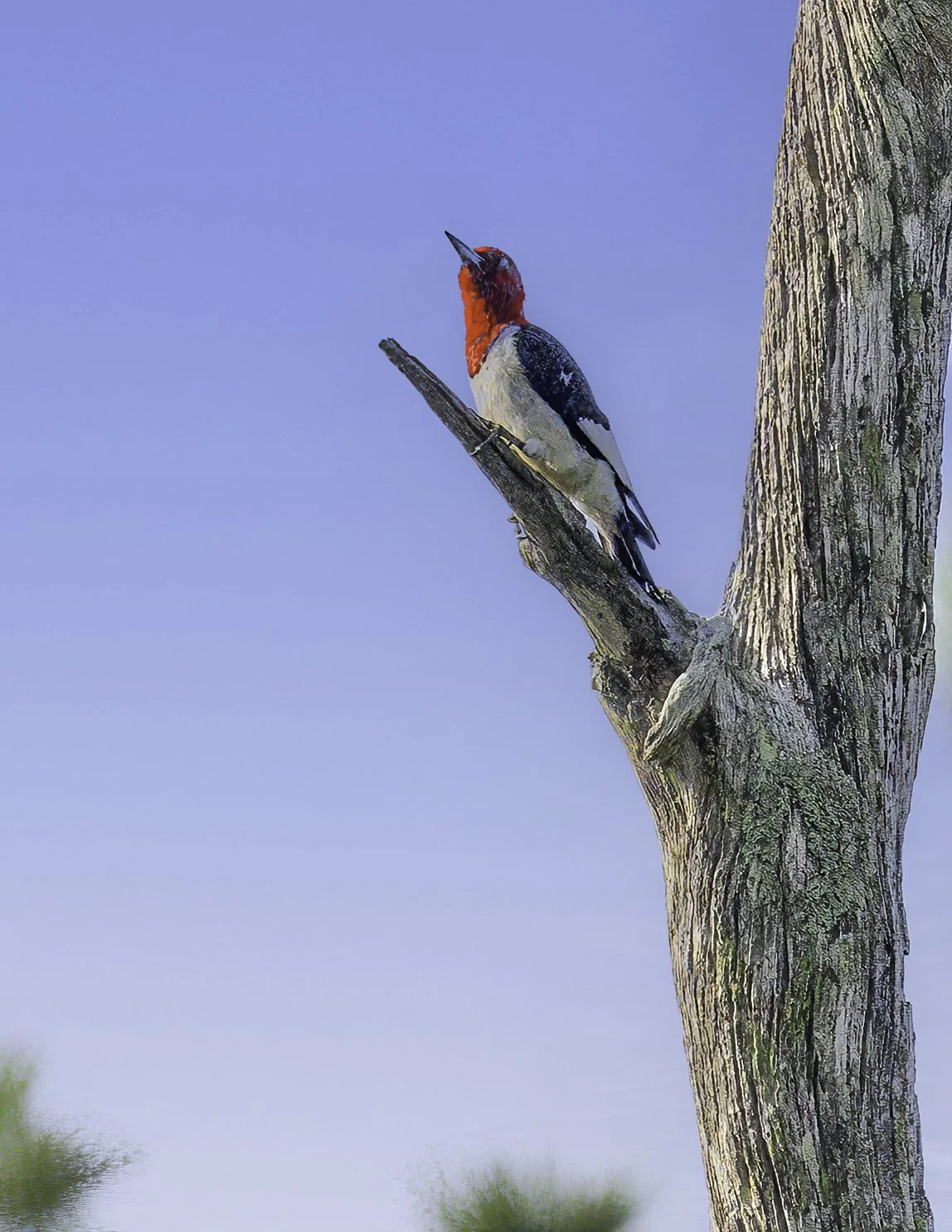
Red-headed woodpecker - Tosohatchee WMA - 3/31/26
On to the next target, the Bachman’s sparrow. Short and (not so) sweet. The bird was heard at a considerable distance, but never seen. A photograph of this bird will have to wait til another day. While looking for the Bachman’s however, we were treated to a decent flyover and sighting of a Brown-headed nuthatch.
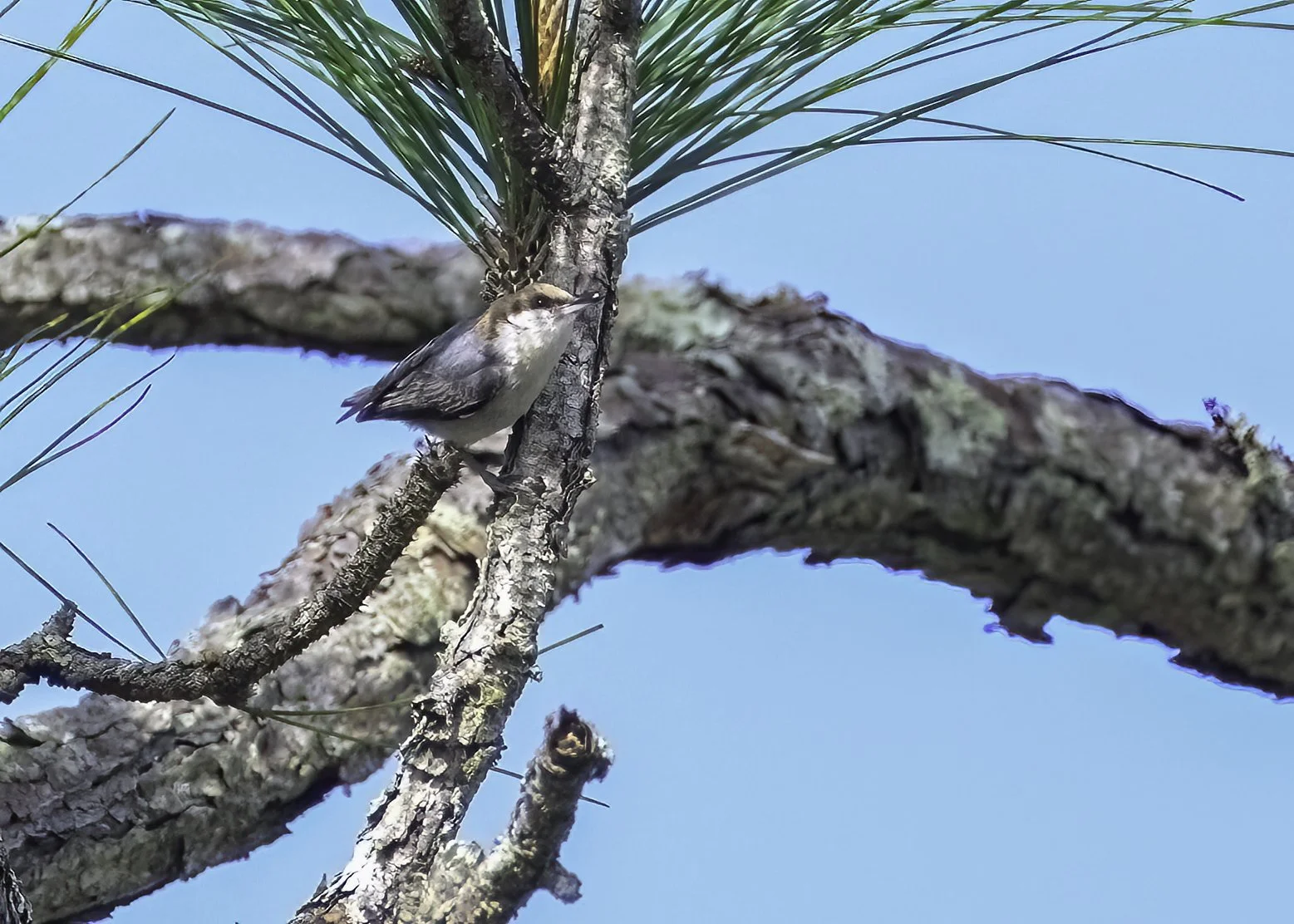
Brown-headed nuthatch - Tosohatchee WMA - 3/31/2//6 Nikon Z8 with 100 - 400 mm and Z 1.4 telex tender
The Brown-headed Nuthatch is a small, stocky songbird native to these pine forests of the southeastern United States, recognizable by its warm brown cap, pale face, and bluish-gray back. It has a short, stout bill used to pry insects from bark and to wedge seeds into crevices for hammering. Highly social and often seen in family groups, this species uses a distinctive nasal call and even a unique toy-like “rubber duck” squeak among its repertoire. Always a great find down here in the Sunshine State.
Further along the dirt road, we enter a more heavily forested area where we often pick up migrating warblers and other songbirds. We hear and see a Pine warbler, but as usual, he chooses to remain high in the canopy and while visually present, not so much for gathering images. A White-eyed vireo is much more interested in our presence, however, and calls loudly from a much lower perch.
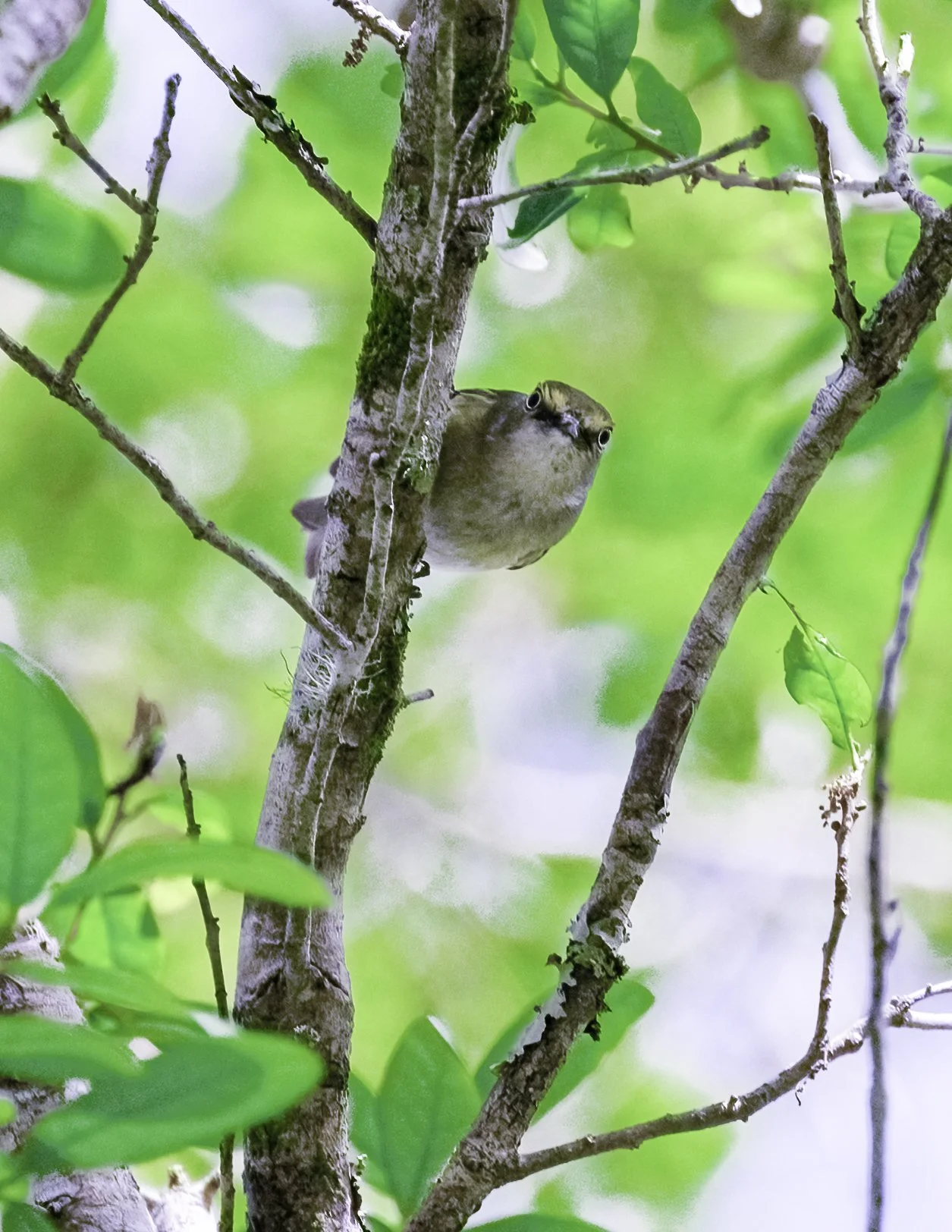
White-eyed vireo - Tosohatchee WMA - 3/31/26
Among Joe’s target species today are the Purple gallinule and Limpkin, so we decide to head across Route 50 to Orlando Wetlands. As mentioned in an earlier post on this blog, the wetlands is a waste water reclamation facility that serves as a beautiful habitat for many migrating as well as nesting species. Out on the boardwalk, we have a nice visual of the Limpkin, so Joe can check that bird off the year-list.
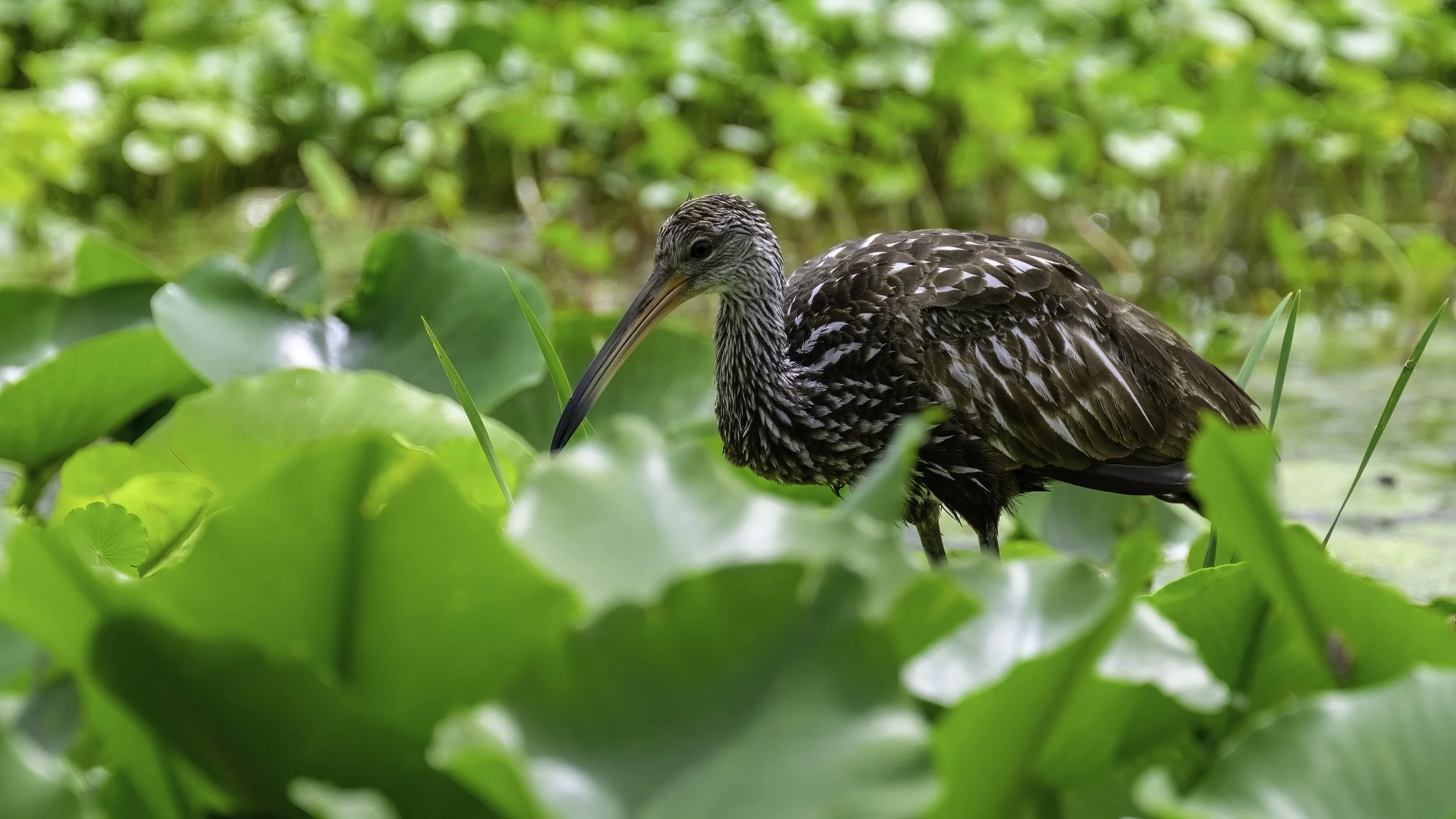
Limpkin - Orlando Wetlands - 3/31/26
And, only a short distance down that same boardwalk, we encountered our first Purple gallinule of the day. While these can be a tough bird to find in many Florida wildlife areas, here at Orlando they are pretty much a sure thing.
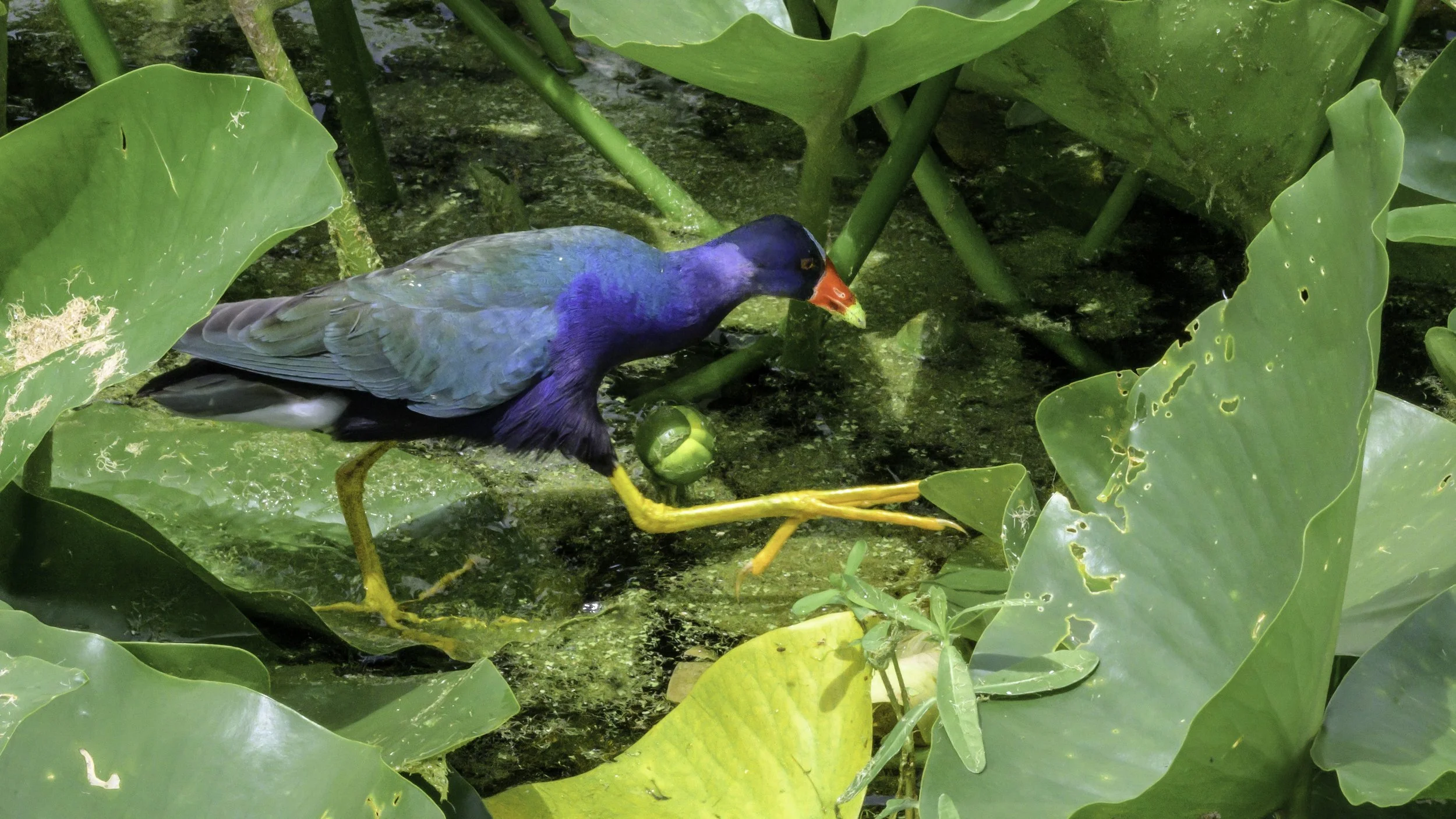
Purple gallinule - Orlando Wetlands - 3/31/26
Acting almost like “snow shoes”, the relatively huge feet of this bird distribute its weight across the lily pads upon which it walks in pursuit of prey. Structurally similar to the more prevalent Common gallinule, this bird is easily distinguished by its iridescent plumage with no lateral white stripes and its bright blue shield which is positioned above the reddish forehead plate found on the Common gallinule.
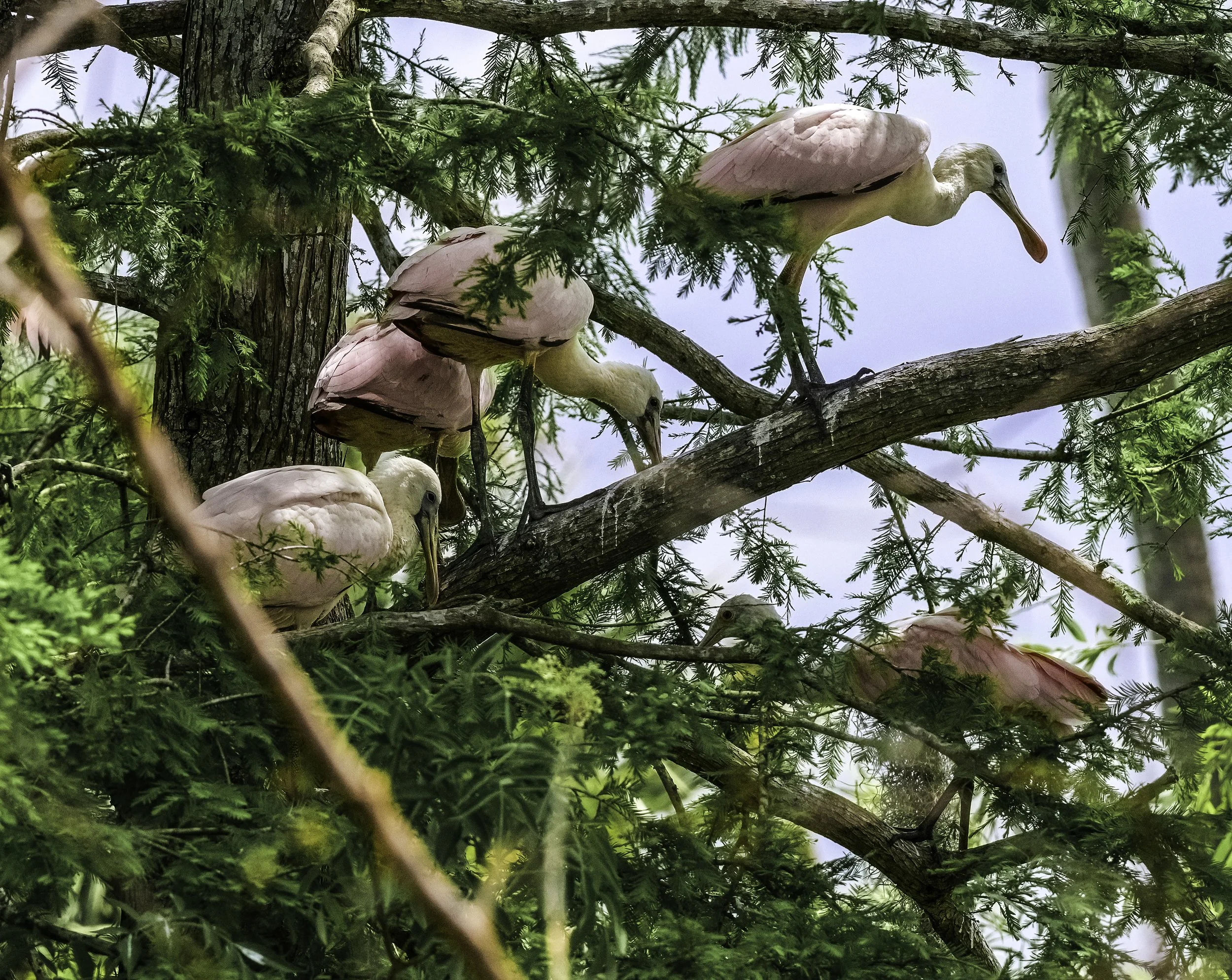
Roseate spoonbill family - Orlando Wetlands - 3/31/26
We’ve been out to the wetlands a few times this winter and have enjoyed following the breeding cycle of a number of species which take advantage of the relative safety this location provides. Among those species is the Roseate spoonbill. This could all be part of the same family as spoonbills with lay up to 5 eggs during breeding. As they mature, they leave the nest and can be observed clamoring about the nearby limbs as seen here. In 5 - 6 weeks they will leave the nesting area. There is evidence that some of these birds may move between Florida and Cuba seasonally.
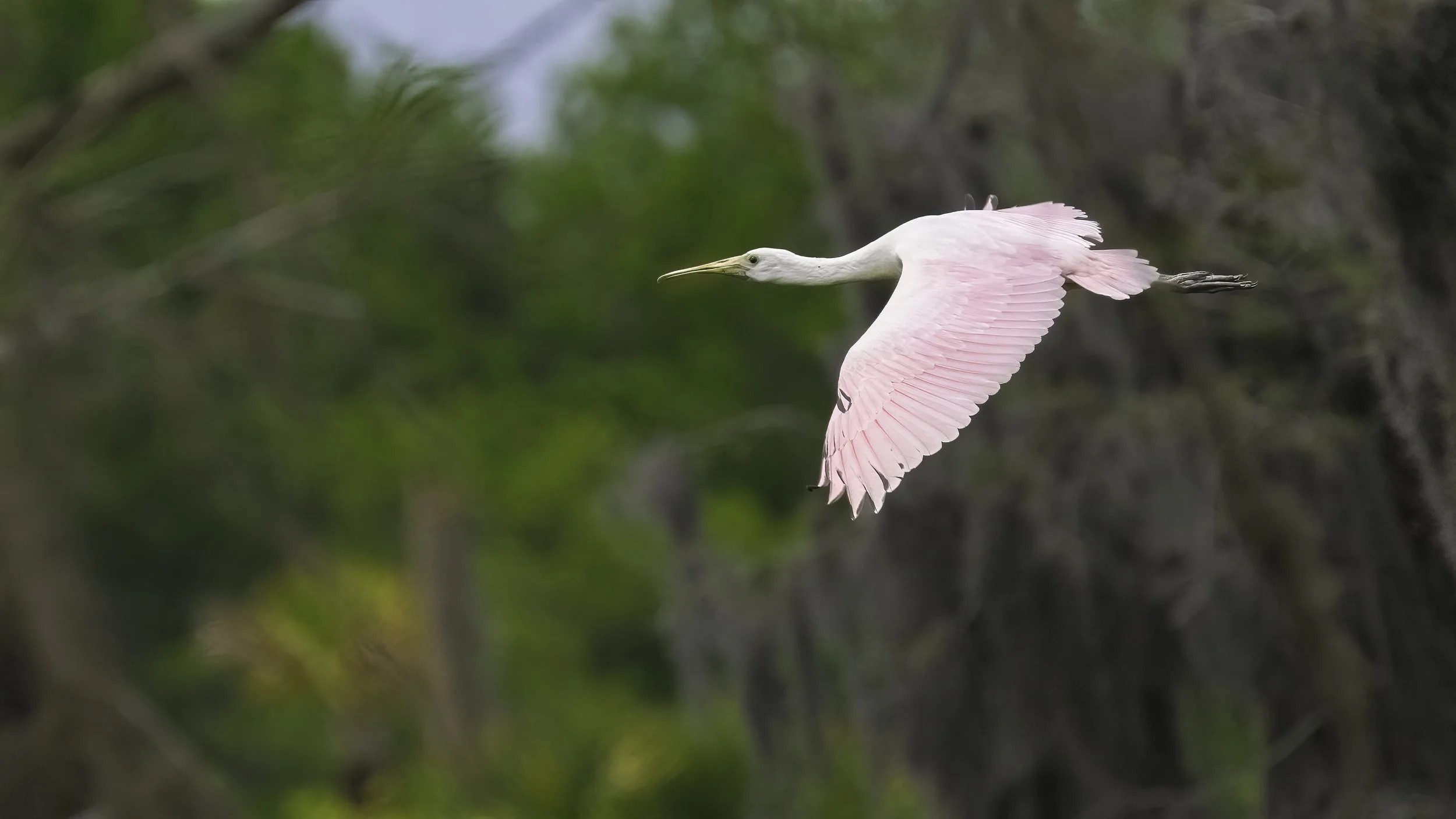
Spoonbill fly-by - Orlando Wetlands - 3/31/26
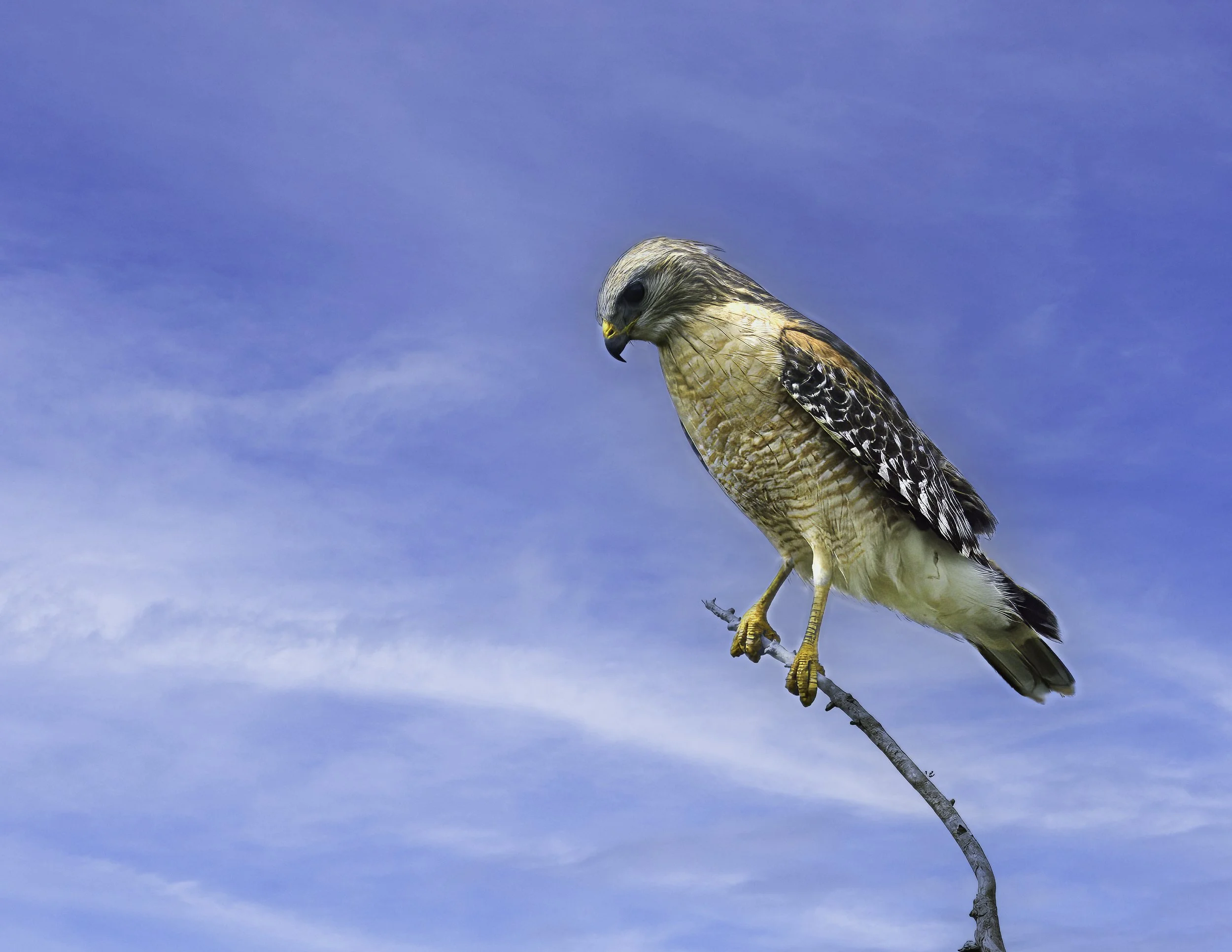
Just before heading back off the boardwalk, we hear two Barred owls calling to one another in the distance. As they call, a Red-shouldered hawk flies by and lands in a nearby snag. He sits patiently waiting of movement in the wetlands below and eventually sweeps down in an attempt to seize his prey. Whether he was successful or not we could not tell for he remained down in the vegetation perhaps enjoying the spoils of the efforts. Always a pleasure to visit these two sites and a real “must” for birders passing through this species-rich region.