Chicks ….
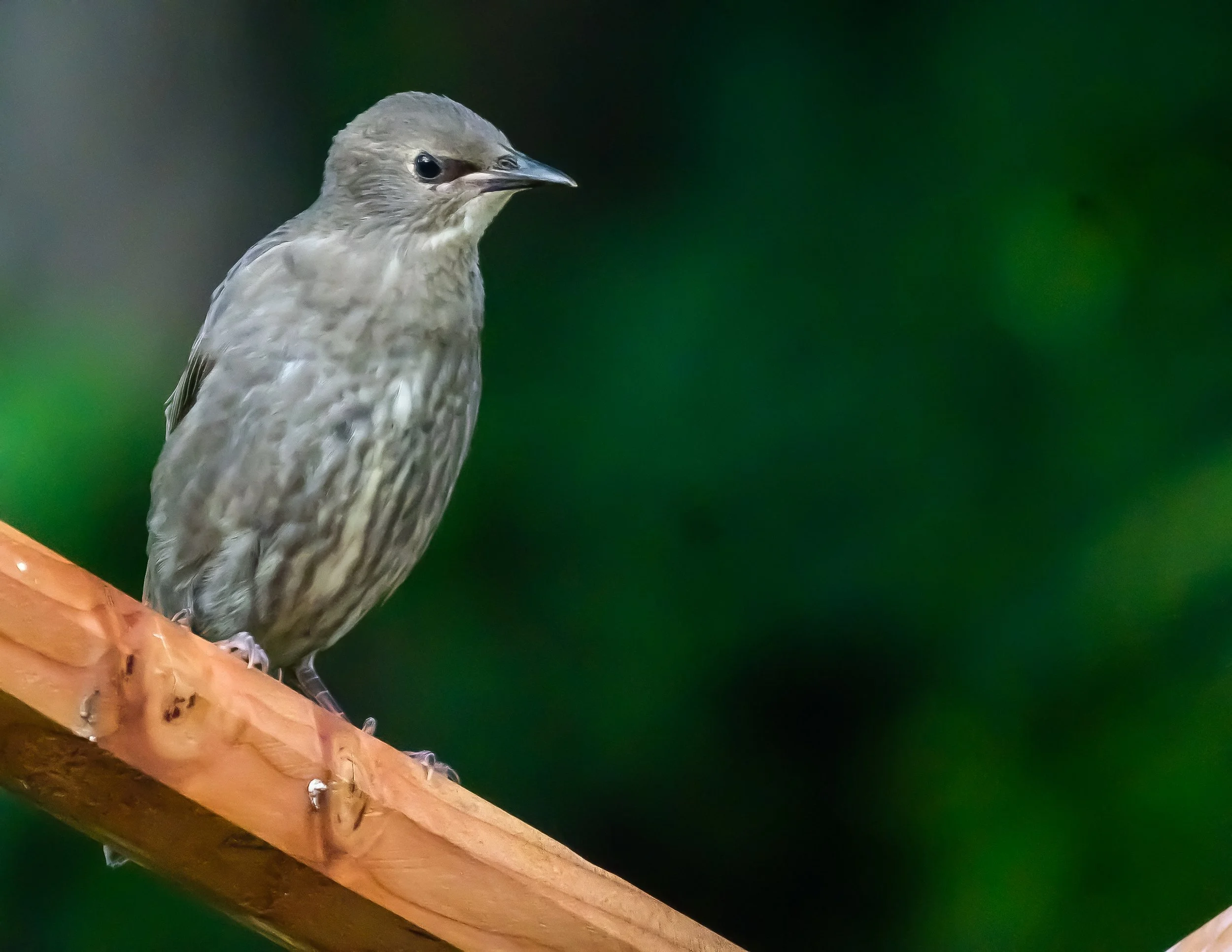
European Starling chick - Backyard feeder - 6/1/26
We're officially into the “unofficial” start to summer having passed Memorial Day. With the onset of the season, young birds are making their appearance, and this week I was treated to the sighting of chicks of several species. The first sighting of a youngster was on the first of the month….a young European starling. It was only a matter of time before the parent showed up with nourishment for the little one. The meal? A highly nutritious dollop of suet from our feeding station. I’m sure we’ll be seeing these birds around for some time to come!
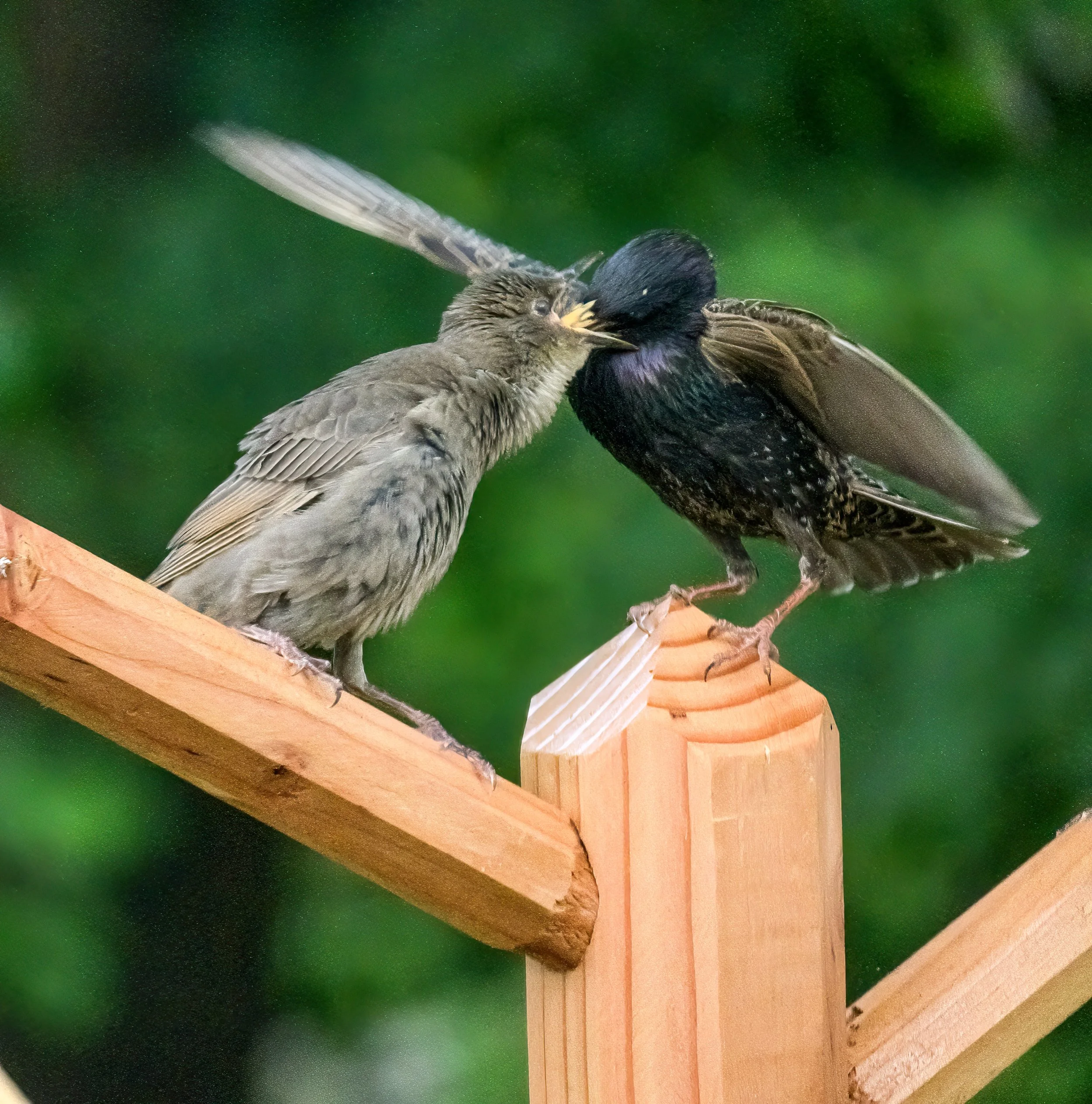
Adult with chick - Home feeder - 6/1/26
In the photo above, the adult still has some vestiges of the white spots which are so visible during the fall months. These white tips on the feathers gradually wear off so that during spring and summer, plumage with only a glossy blue'/green sheen is normally seen.
The Cliff swallow nest site we’ve been monitoring over the past month at Silver Mine is now showing more activity than ever. While the actual nests are out of my field of view, we can see how many swallows are continually visiting the site while there seems to be quite a bit fewer at the mud seep where the nesting material is gathered. Are the nests complete? Are there young being tended to? With so many swallows entering the bridge, I have to believe that by this time there are young present.
Cliff swallows are extremely social and build their nests in colonies. These colonies can number from a few dozen birds to thousands. The dense communal roosts promote cooperative behaviors such as protection from predators, sharing information about food and nesting material supplies. Such close proximity may have a down side, however, as cliff swallows are known to fight for nest sites with the “loser” of these territorial spats sometimes falling into the water below. The photo below shows a swallow coming into an occupied nest, and from what I could ascertain, this may well be an adult bring food into the site…admittedly pure speculation on my part!
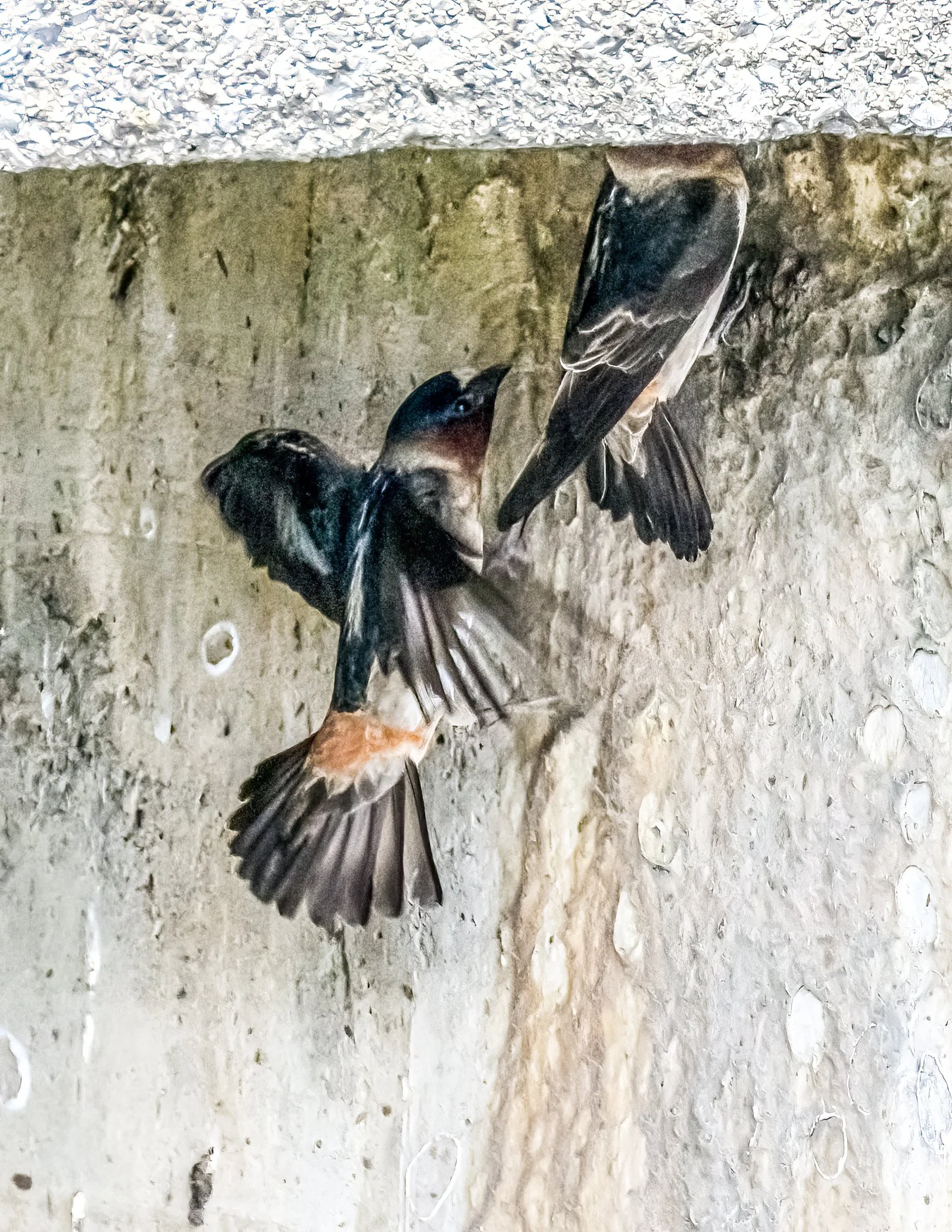
Cliff swallow visiting nest site - Silver Mine - 6/2/26
Later during the week, I had a much better visual of chicks being tended to by an adult. In this case, it was House finches along the road into Piermont Pier. Young fledglings were seen high up in bare branches of a tree. The youngsters were soon visited by an adult bringing in food.
Parent house finches are devoted caregivers, arriving at the nest with beaks full of food throughout the day to feed their rapidly growing young; they regurgitate softened seeds and small bits of fruit so nestlings can easily swallow, and parents take turns bringing food and standing guard against predators. Nestlings beg with wide, gaping mouths and loud chirps, which prompt efficient, frequent feedings—often every 10–20 minutes when demand is highest. As the chicks develop, parents adjust the diet to include more seeds and caterpillars, and they gradually encourage fledging by spacing out visits and perching near the nest to teach young birds to hop and fly. Within two to three weeks the fledglings leave the nest but continue to be fed and protected by their parents for several days as they learn to forage independently.
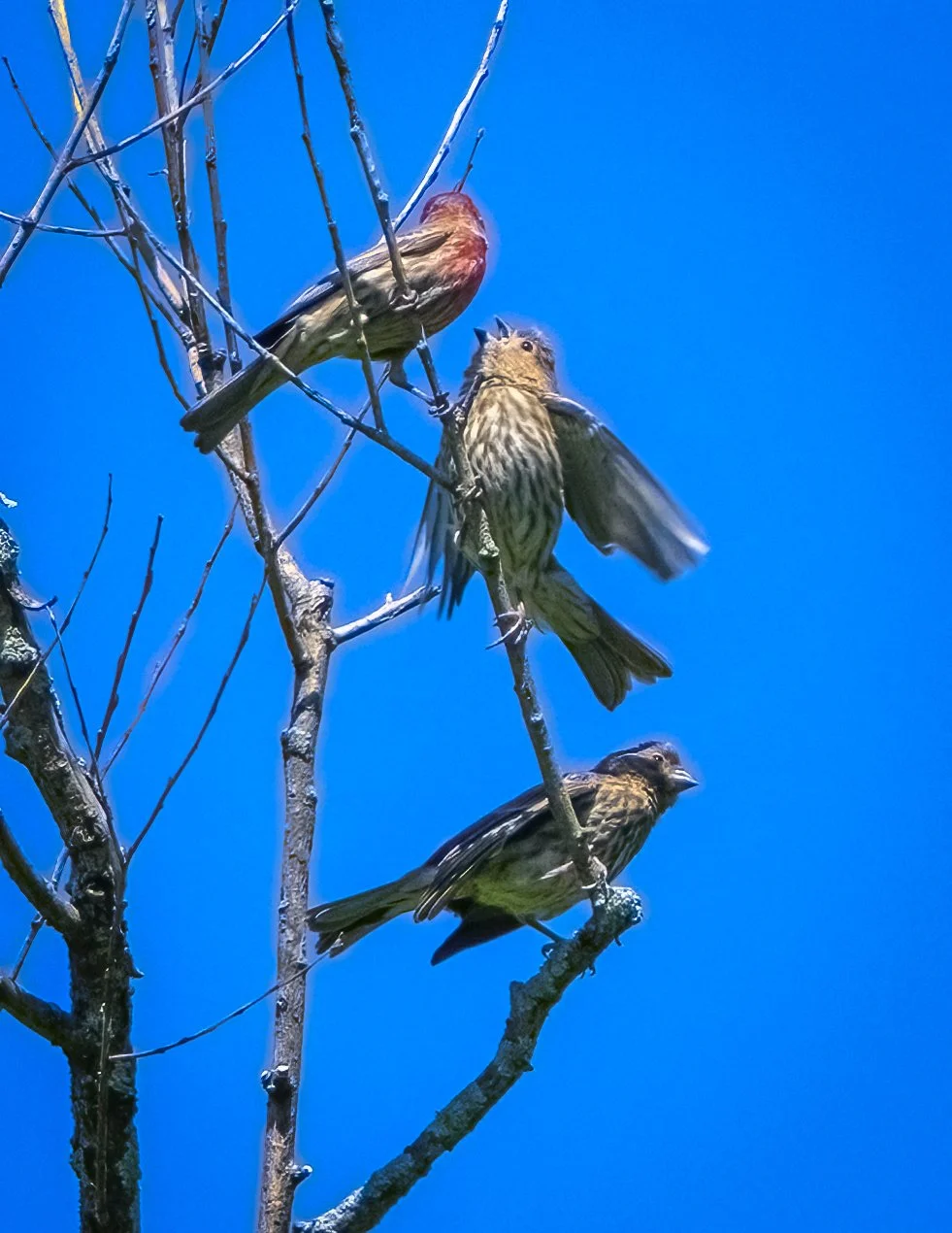
House finch chick begging for food-Piermont Pier-6/2/26
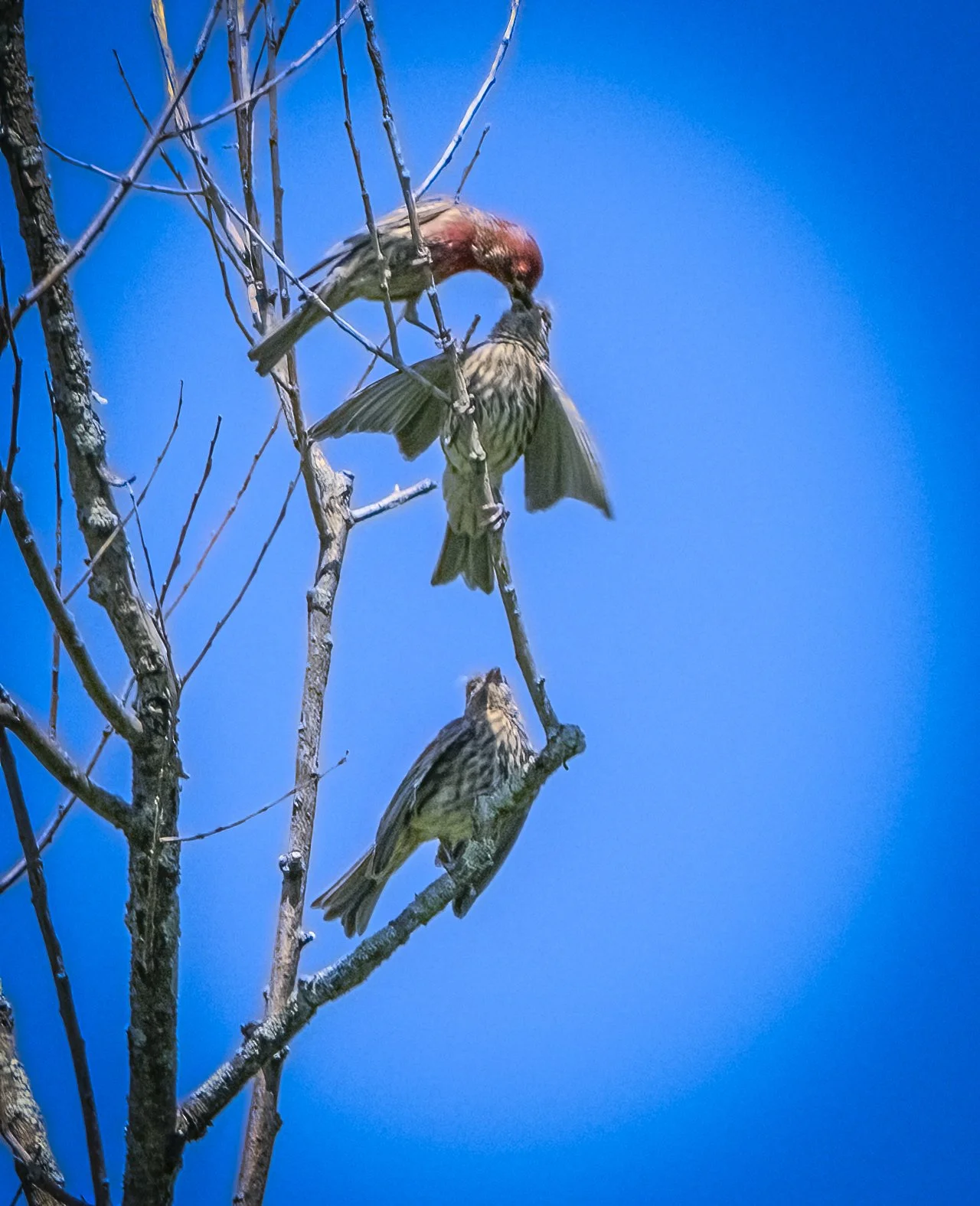
The parent obliges -
Our next young birds are a family of Canada geese spotted at Morgan Farm near our home. Canada goose chicks, known as goslings, hatch covered in soft yellowish down. These chicks are considered “precocious” meaning they are able to walk, swim, and feed within hours, closely following their parents for warmth, protection, and instruction. These goslings are in the first few weeks of their lives and they will grow rapidly. Here, they aer learning to forage for grasses and aquatic plants while a parent vigilantly guards against predators. Even so, mortality occurs early from predation and harsh weather, but strong family bonds increase survival with juveniles gaining adult plumage and flight capability after several months.
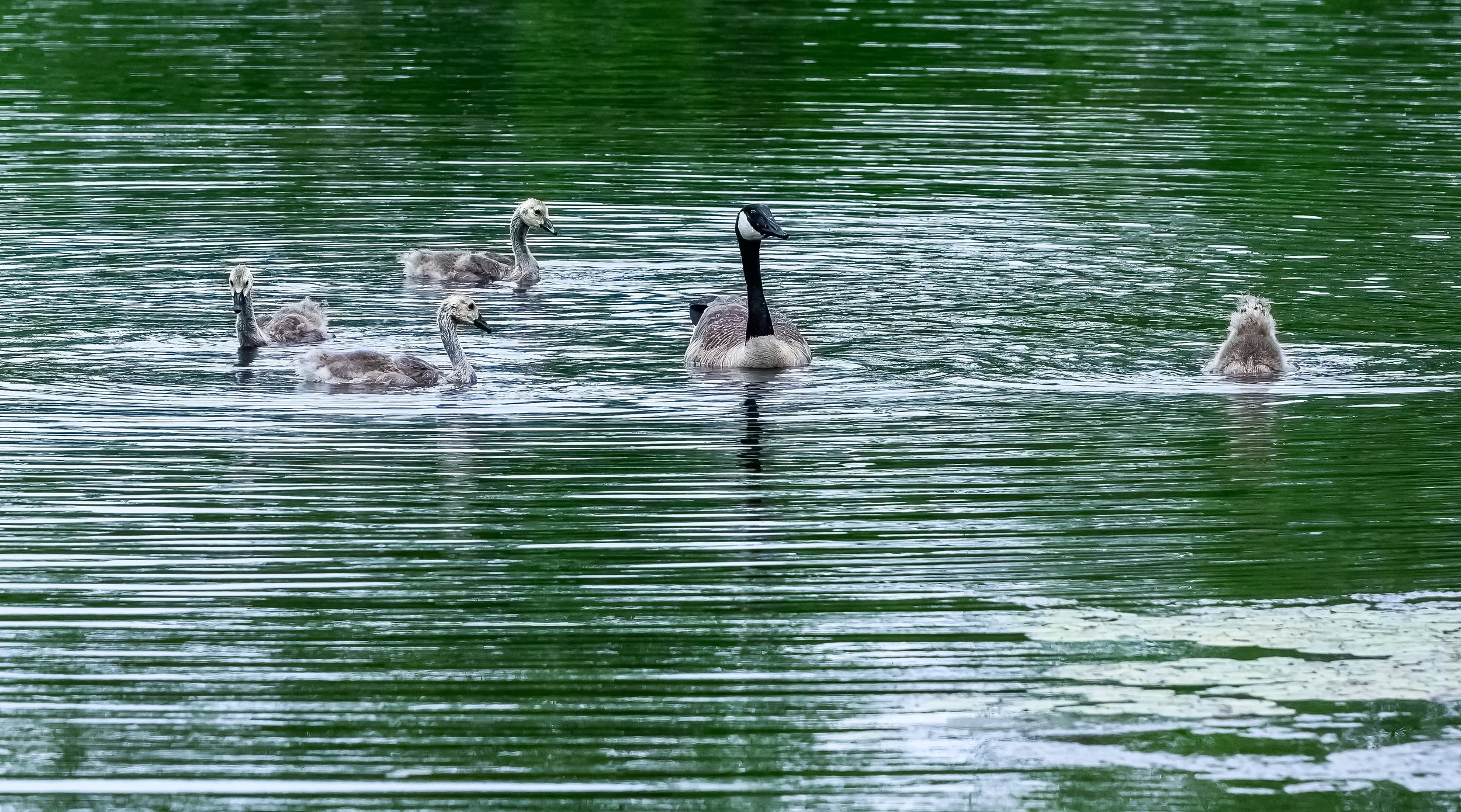
Young Canada goose family - Morgan Farm - 6/4/26
As the warm months of the season progress, we expect to see more evidence of avian procreation and will hopefully be afforded some more photo-ops. It’s also time to begin watching for the emergence of butterflies, dragonflies, amphibians and reptiles to be making an appearance. Nature’s stage always seems to be ready to bring on another act, and we will be anxiously awaiting the next chapter of the story she has to tell.