South for the winter…
As we’ve done for the past 25 years, we join our feathered friends that migrate south and head into warmer climates for a few months. It’s always exciting to be in Florida in January as most of the migrating birds are already there and very few have even thought about heading back north. The old phrase of “birds of a feather flock together” certainly holds true during this month and it was truly amazing to see the vast numbers of individuals of the same species that were indeed “flocking together”. Our first major field trip for the winter in Florida took us to Merritt Island National Wildlife Refuge in Titusville. The preserve is huge and one of the best ways to get a true flavor of the place is the Black Point Drive route. This 8 mile long loop through the wetlands affords visitors excellent views of the habitat and the birds that are enjoying those environs during these winter months. On that 8 mile trek today, we encountered about 40 species. That’s impressive enough, but what is truly amazing is the Thousands of individuals present.
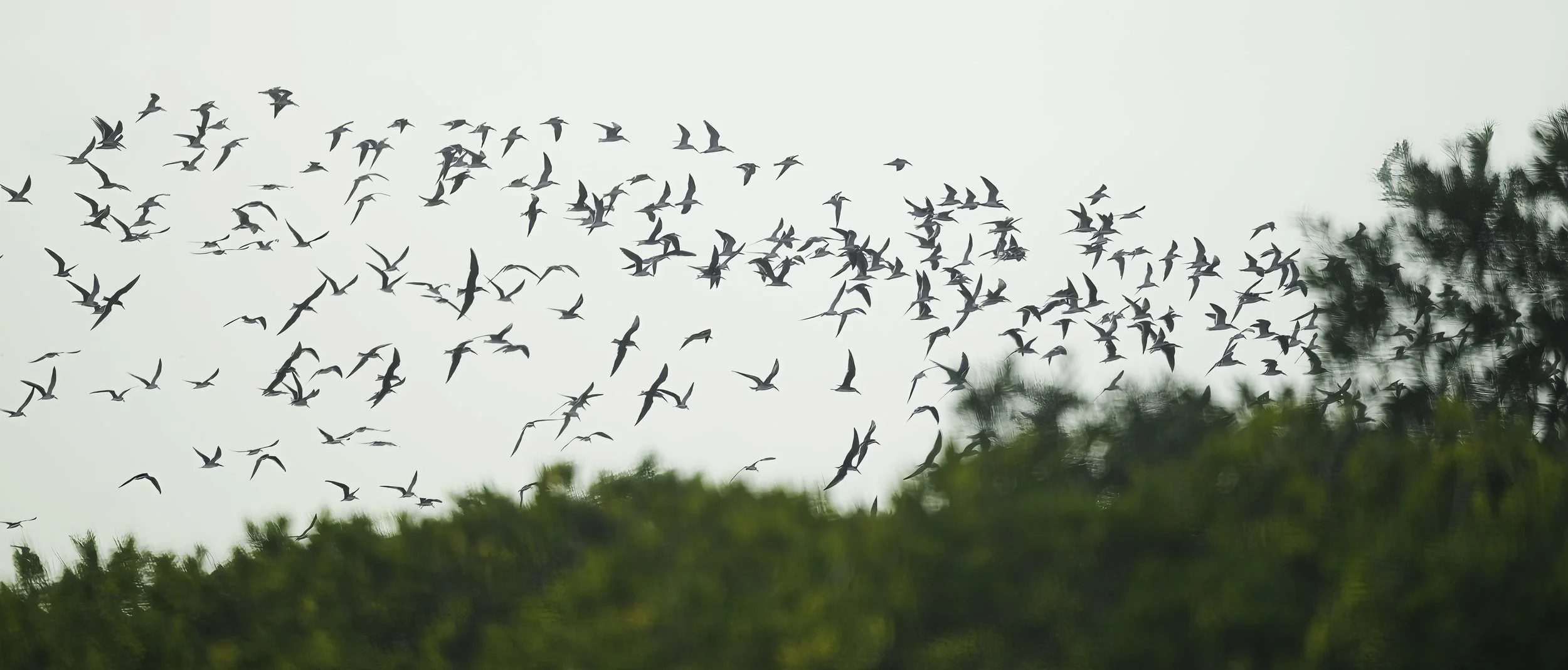
Black skimmers - Black Point Drive - 1/13/26
Black skimmers are striking coastal birds known for their unique feeding behavior and bold plumage: adults display a black cap and upperparts contrasted with bright white underparts and a vivid orange bill with a longer lower mandible. Found along sandy beaches, estuaries, and barrier islands, they feed by flying low over calm water at dusk and dawn with their lower bill skimming the surface to catch small fish and crustaceans. Social and often colonial nesters, Black skimmers lay their eggs in shallow scrapes on open sand where both parents guard and incubate the clutch; this ground-nesting habit makes them vulnerable to disturbance, habitat loss, and predation. Their distinctive silhouette in flight as seen in this photo and specialized hunting technique make them a memorable subject for nature photographers. During the warmer months when we are back in the northeast, we are fortunate to see two or three together skimming along the shallows in places like Brigantine NWR in Jersey. Today, however, we were thrilled to see massive flocks plying the “skinny” waters of the impoundments along Black Point Drive. The above photograph does not do justice to the actual numbers present in the air and on the ponds. In this shot of a small portion of the flock, close to 200 skimmers can be counted. The total at this one site easily exceeded 600 birds. “Birds of a feather….”
Out next example of this flocking behavior is an image of one of the impoundments where a huge number of birds were found. White pelicans, Blue-winged teal, Long-billed dowitchers, Northern shovelers, Greater yellowlegs, and the most predominant species seen in this image, the Glossy ibises, were all gathered together in this shallow body of water. Obviously there’s good eating’ here if you are a shorebird and obviously the word has gotten out!
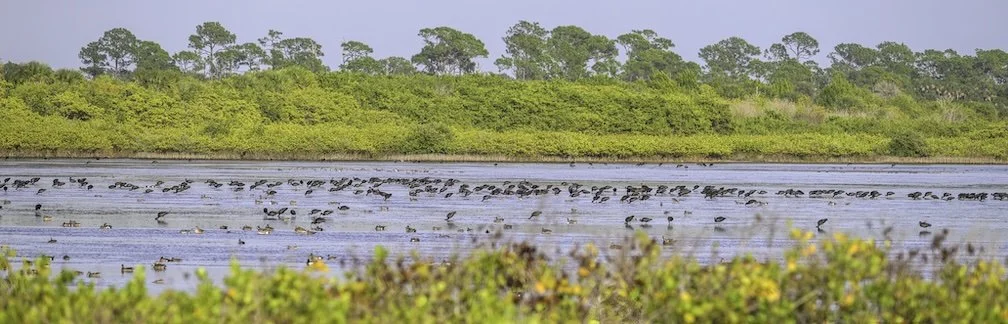
Glossy Ibises and other shorebirds - Black Point Drive - 1/13/26
Here again, the numbers were amazing. In this group alone we counted over 200 glossies. So the question is, “Why do so many birds of a similar species flock together like this during the winter months?” Part of the answer lies in the fact that huge numbers of birds flock together to improve survival: flocking increases foraging efficiency by allowing birds to locate scarce food more quickly, reduces individual predation risk through safety in numbers and shared vigilance, and conserves energy by taking advantage of communal roosting and aerodynamic benefits when flying in groups. Many species are also drawn to the southern regions because milder temperatures and concentrated food resources—such as plentiful seeds, fruits, or open water—support larger populations, and migratory timing causes multiple species and populations to converge at the same favorable wintering sites. Social behavior and learned migration routes further concentrate birds into established wintering grounds, where information transfer and habitat familiarity help them endure the season. I wonder if the same can be said about all of us northern humans who have converged at these “more favorable climes”?
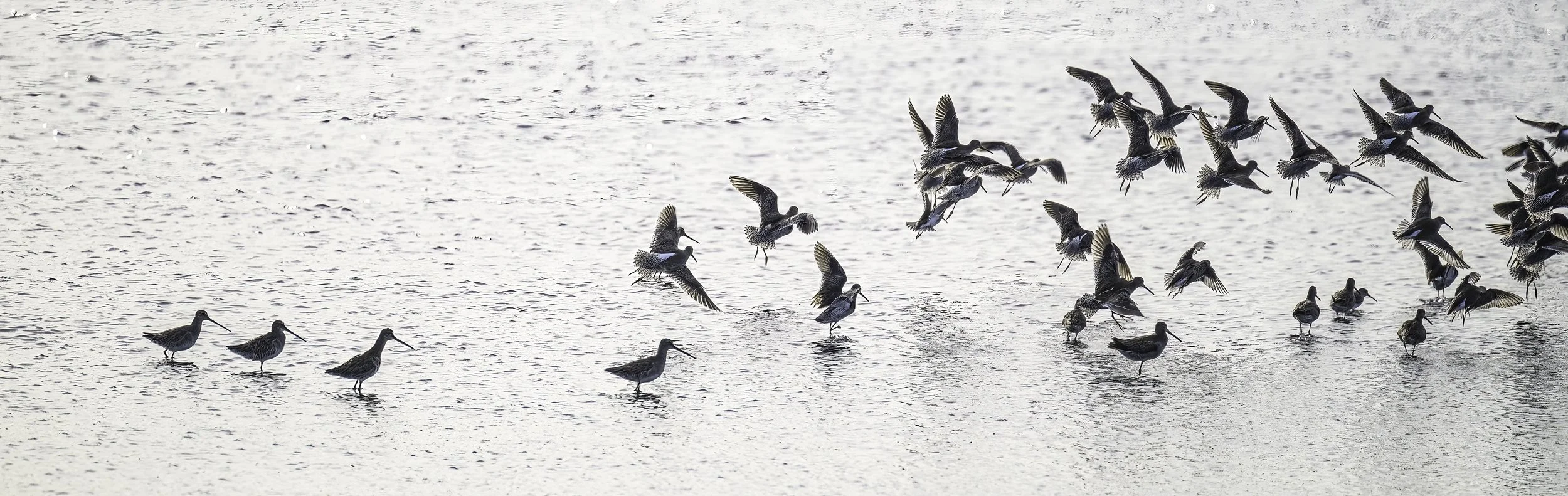
Long-billed dowitchers - Black Point Drive - 1/13/26
One last shot of a species we found in large numbers today are the Long-billed dowitchers. While these were present in much smaller numbers than those species I must pointed out, to see such concentrations of these shorebirds concentrated in small pockets was all the same impressive. And so, this is just a sign of things to come this winter. One of the great things about spending 4 months down here is that the “cast of characters” changes with the seasons. It is surprising to me that so many of the birds we are seeing now will start heading north earlier than we would expect. Many of the ducks we see will start to head north in early February for example. But in similar fashion, other birds which are presently wintering further south in Central and South America will eventually coming though our part of Florida as they head north later this year. Meanwhile, we’ll continue to explore the many wonderful reserves and habitats that we have close to our winter home and we’ll keep our eyes to the skies for avian activity.
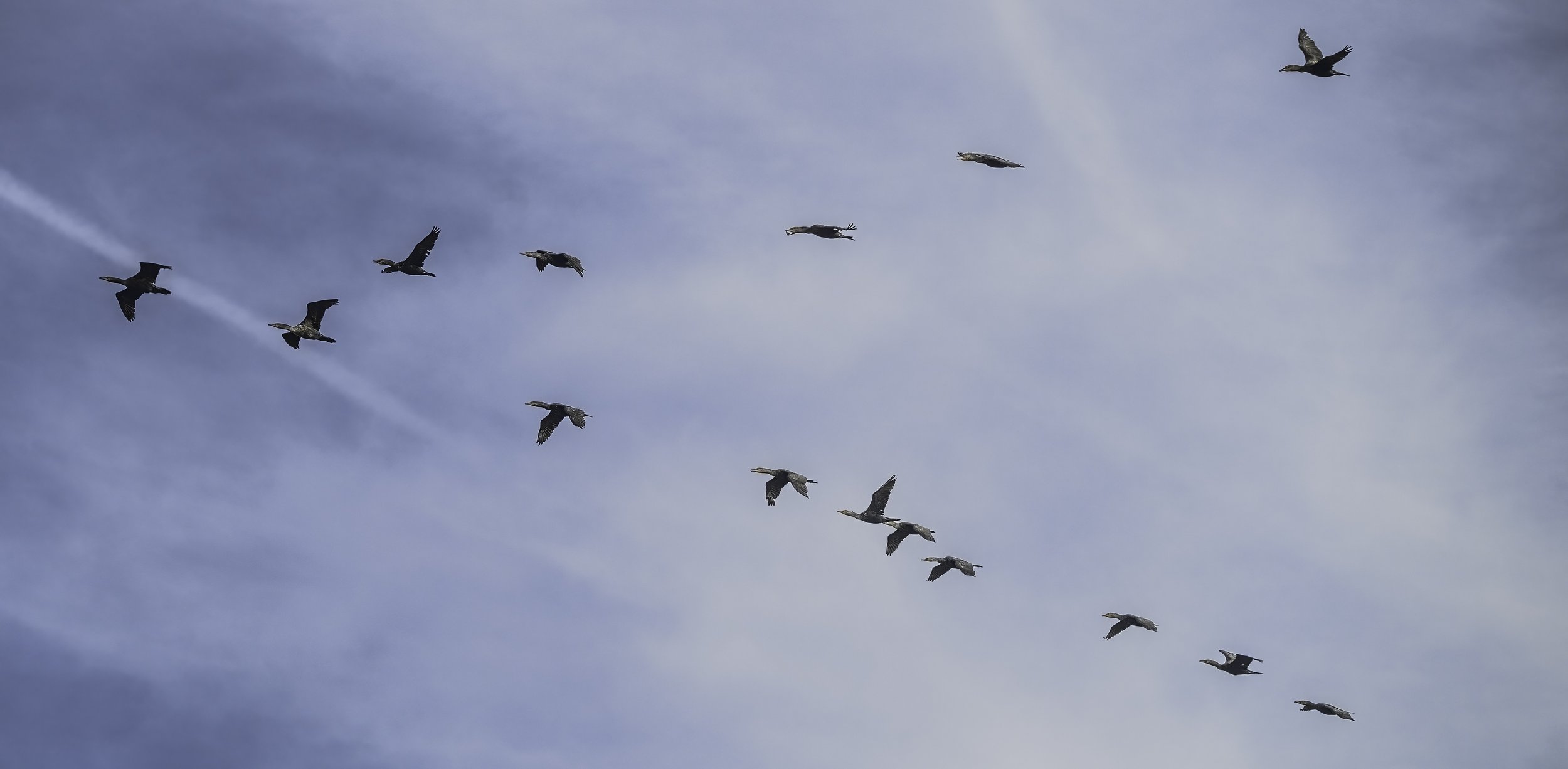
Double-crested cormorants - Black Point Drive - 1/13/26