Loners
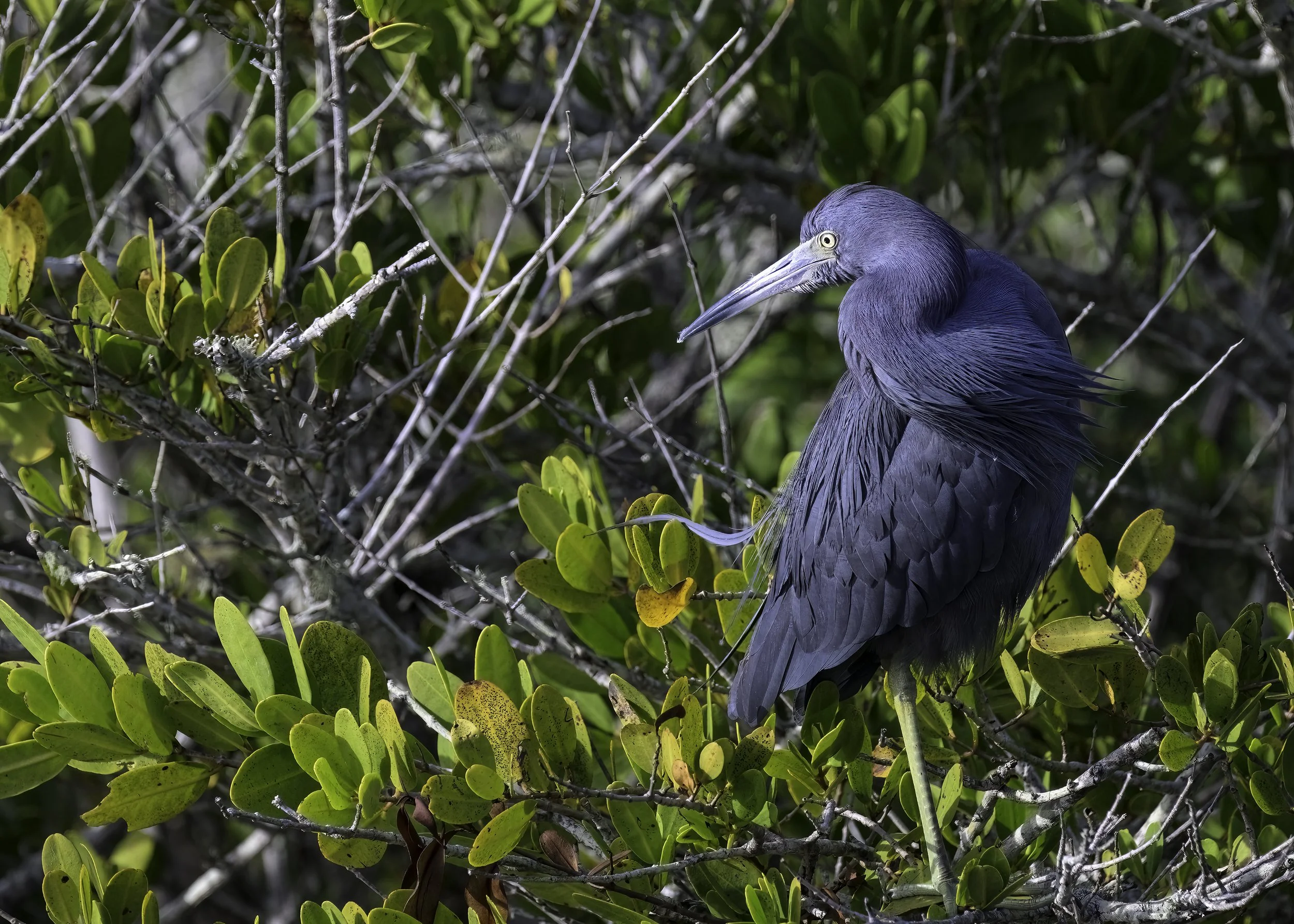
Little blue heron - Black Point Drive - 1/13/26
Yesterday’s post featured those species we found that obviously liked being part of the crowd. All along our tour of Black Point Drive in Merritt Island NWR, however, we did find a good number of birds which preferred hanging out by themselves….loners. As luck would have it, these birds were on my side of the vehicle (our blind) and the sun was shining in from the drivers side, ideal lighting conditions. Our first “Loner of the day” is the Little blue heron. In their early stages, the Little blue is actually white, but as time moves on, the bird becomes this beautiful shade of slaty blue. The shallow waters of the impoundments and canals here in Merritt Island are ideal hunting grounds for this little guy and he’ll hang around here until possibly migrating north in spring. Set among the mangroves, the Little blue heron made for a nice portrait typical of the wildlife found in this refuge.
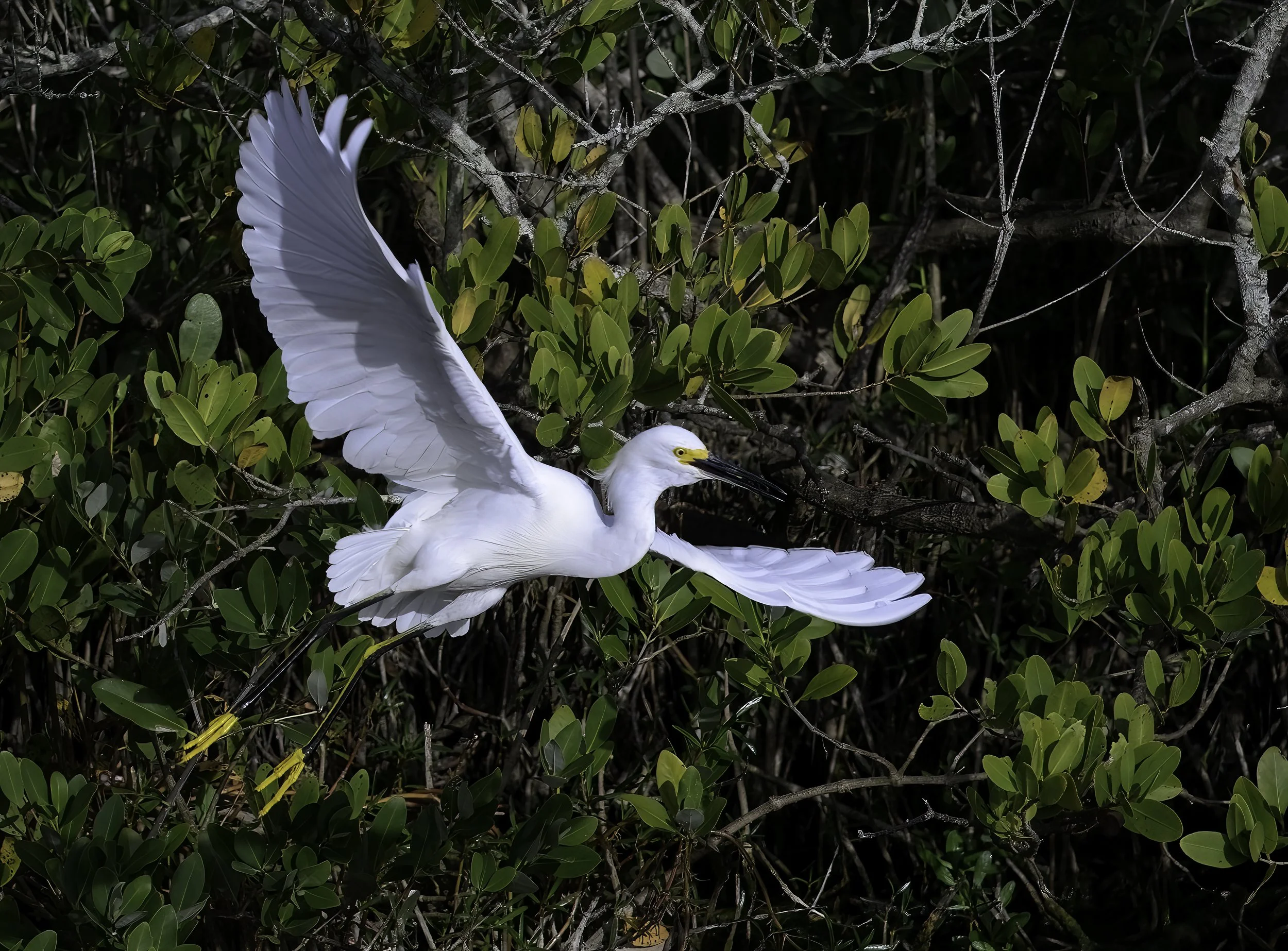
Snowy egret - Black Point Drive - 1/13/26
Next up, a close relative of the Little blue…the Snowy egret. With black legs, slim black bill, and “yellow slippers”, this is an easy bird to identify. One of the most prolific and iconic birds of the south, the snowy egret is a graceful, medium-sized wading bird that displays elegant breeding plumes during courtship, using elaborate dances and bill clapping to attract mates. Found along coasts, marshes, and wetlands across the Americas, snowy egrets feed on fish, crustaceans, and insects, often stirring prey with rapid foot movements or using their wings to cast shade and concentrate food. Their beautiful plumage almost led to the specie’s demise during the age of the “plume hunters” when the feathers of these birds were prized for adorning ladies’ hats. Thankfully, the advent of the Audubon society led to the preservation of the species, and today we can appreciate the beauty out in the natural world rather than on a hat along Broadway!

Green heron - Black Point Drive - 1/13/26
As easy as it is to find Snowy egrets with their brilliant white plumage, it is much more difficult to find the Green heron lurking among the mangrove roots along the water’s edge. The Green Heron is a small, stocky wading bird notable for its compact build, glossy greenish-black cap, chestnut neck, and short yellow legs; it favors freshwater marshes, ponds, and wooded shorelines across much of North and Central America. Unlike larger herons, Green Herons often hunt from low perches or the water’s edge, using stealth and patience to ambush fish, amphibians, and insects; they’re also known for their tool use, dropping bait such as insects or feathers onto the water surface to lure prey. As you can see in this image, they are typically solitary and secretive. Definitely “loners”.
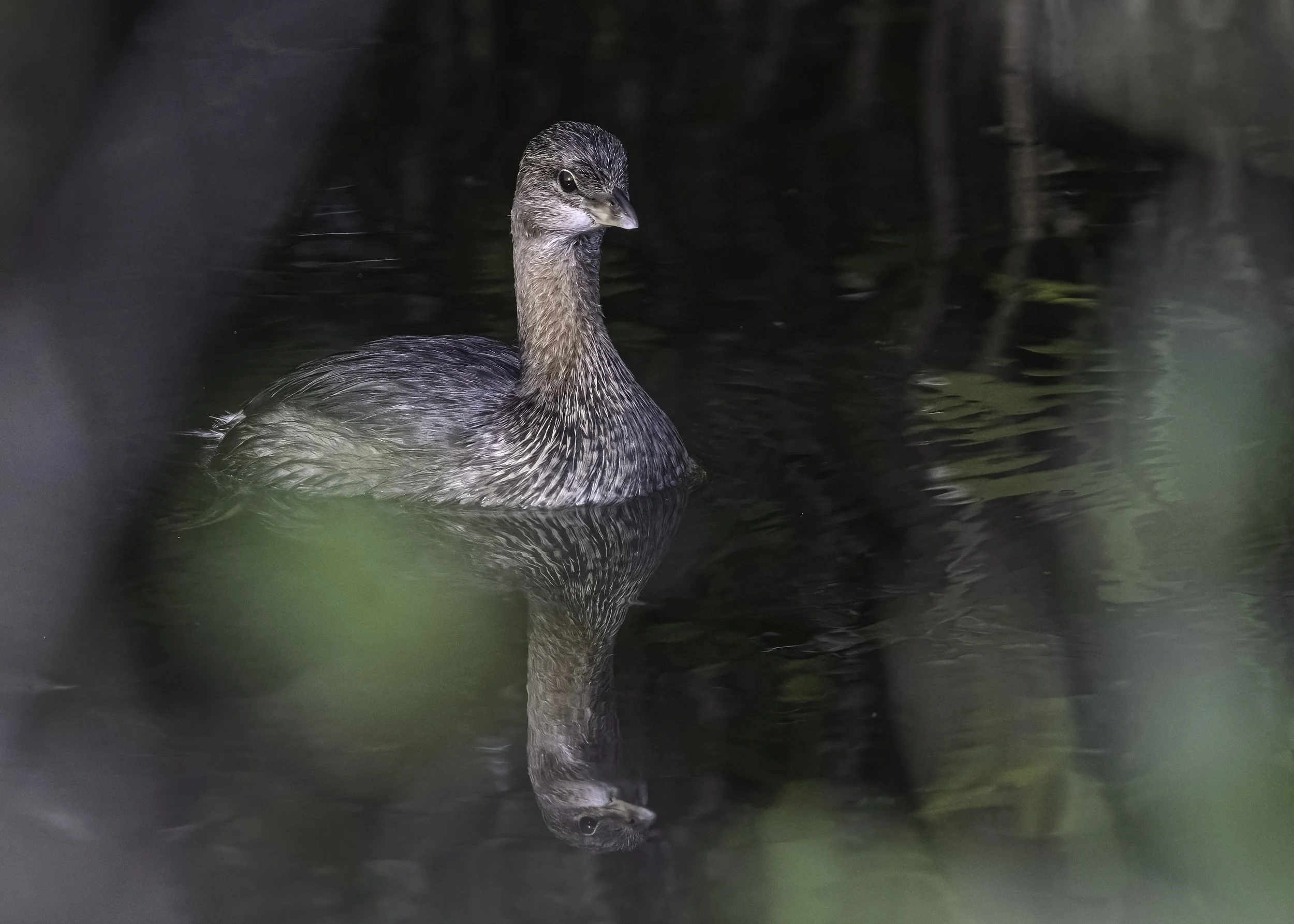
Pied-billed grebe - Black Point Drive - 1/13/26
Our final “loner of the day” is the Pied-billed grebe. The term “pied” generally refers to “two colored” and young individual has not quite developed that stark contrast that will develop as he approaches breeding stage. Today, he was tucked in among low hanging vegetation on one of the quiet canals, making for a lovely reflective image softly framed by the blurry mangrove edges. He’s a diver, searching for its main food source aquatic insects. So, it was nice to catch him while he was almost motionless making for glassy waters. This is the kind of bird you’d love to bring home as a pet…definitely charismatic. While most grebe species are quite sociable, this little guy is a classic loner and a fitting final image of today’s post. What a great beginning to our winter in natural Florida.