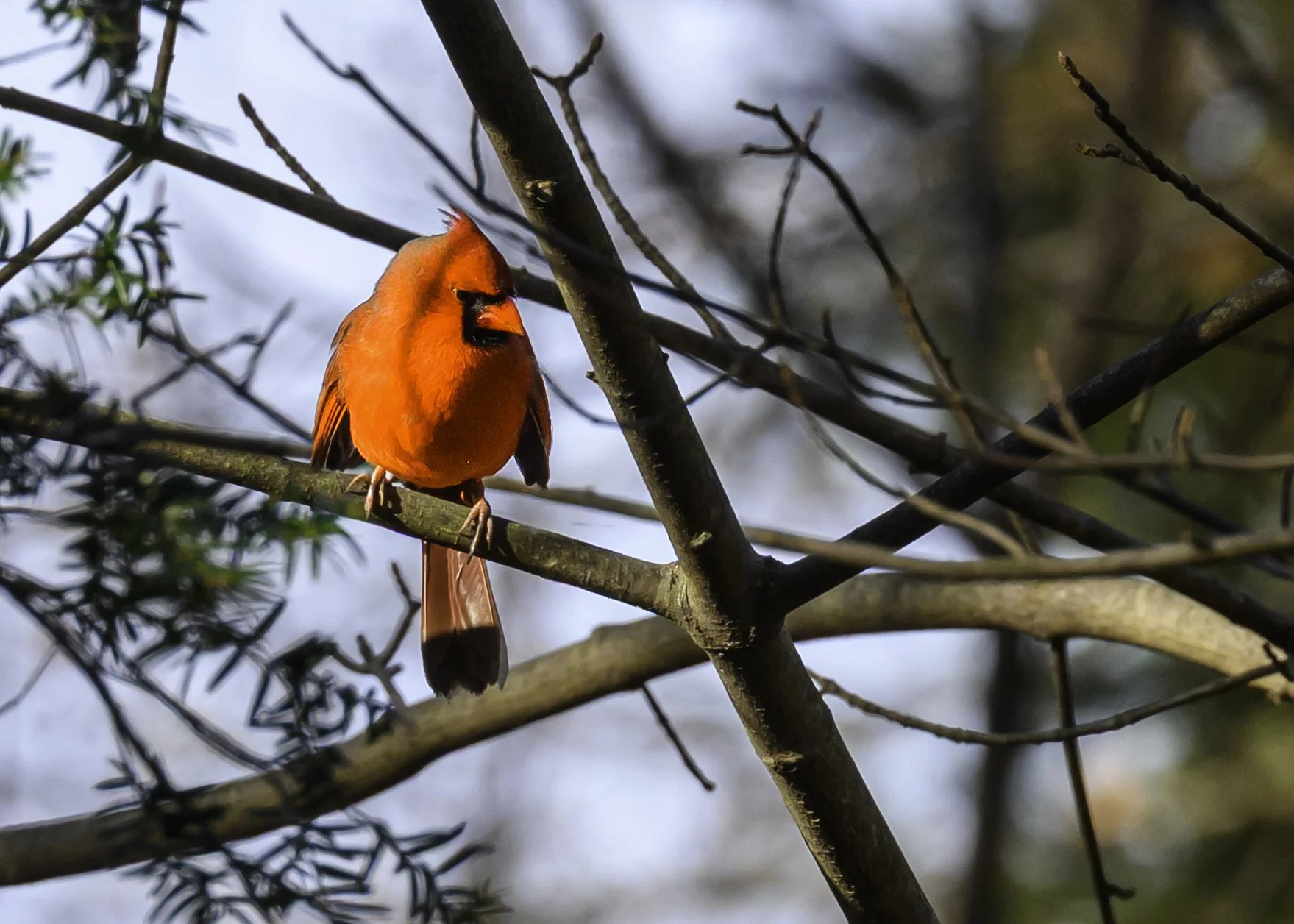
Northern cardinal - Christmas Bird Count - 12/20/25
“The Audubon Christmas Bird Count is an annual citizen-science survey organized by the National Audubon Society that brings together volunteers to count birds across designated 15-mile-diameter circles during the winter season, creating the longest-running wildlife census in the Western Hemisphere; started in 1900 as an alternative to holiday hunting traditions, the Count now provides invaluable data on bird population trends, distribution shifts, and the impacts of climate change and habitat loss, informing conservation decisions and scientific research while engaging birdwatchers of all skill levels in community-based monitoring and education.”
Today, our group of 8 birders from the Edgar A Mearns Bird Club joined other members and birders throughout the county, state and country in this traditional project. We have an area with very few ponds or lakes and only a few streams, so waterfowl is at a premium. Our prime areas are actually developments where folks have their feeders set out for the winter. The shot above was made at an area known as Mountain Lodge Road where modest houses in close proximity to one another are set in a sylvan landscape on a forested mountainside. We generally find a good number of songbirds along the small roads that transect the community and today did not disappoint. While not providing anything out of the ordinary, the numbers were pretty decent with one small patch of thickets holding at least 35 - 40 sparrows and juncos.
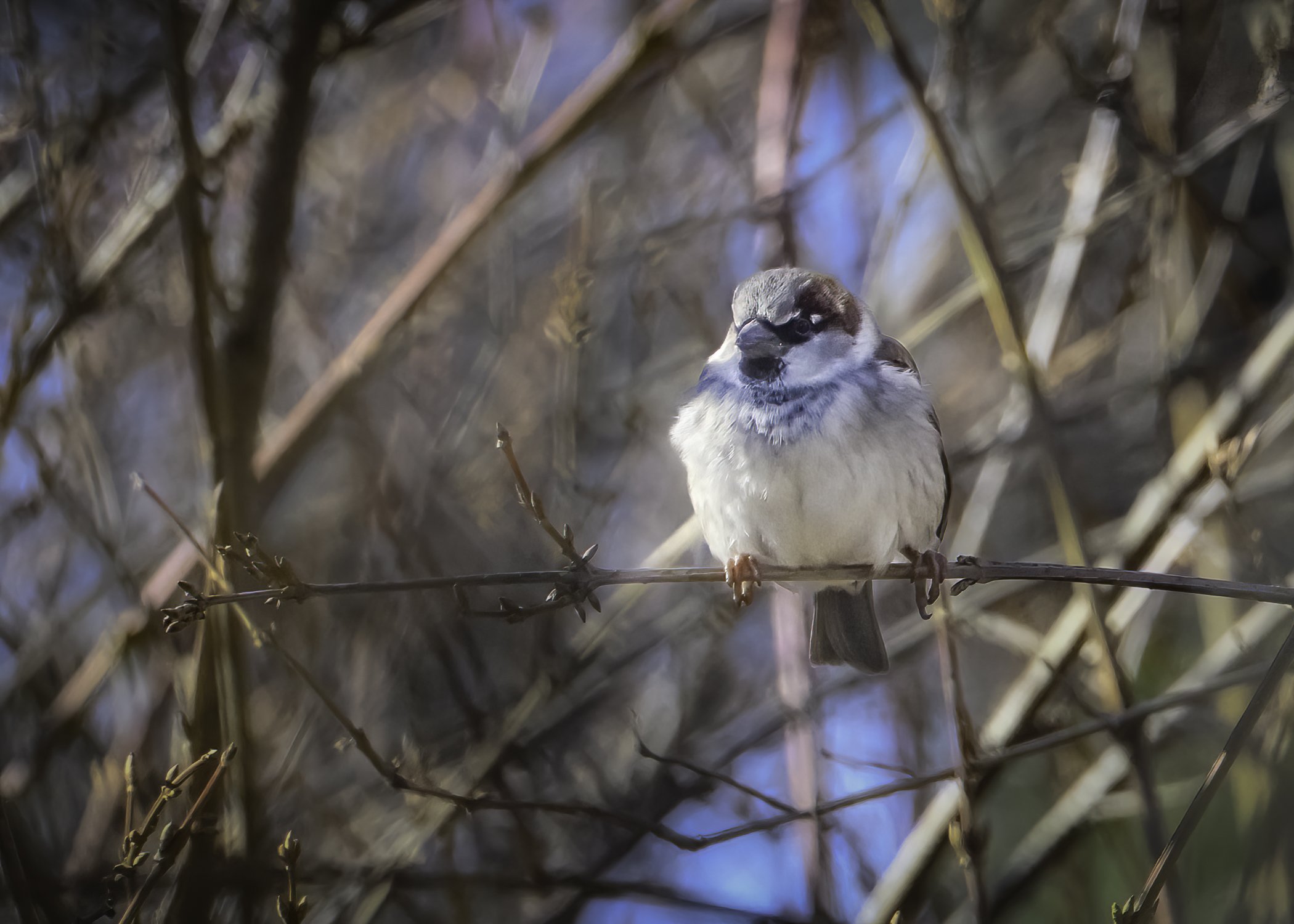
One house sparrow of the 40 or so in one thicket 12/20/25
Out total aggregation of species was around 40 when we tallied all of our team’s individual counts, making sure that the same areas (and therefore the same birds) were not counted twice. We did in fact have some interesting finds. One of the sightings that we found rather curious was on a porch located in a different part of our assigned region. Two black vultures were perched on the railings and roof of the front porch which in and of itself we found interesting, but to top that off, they were joined by the owner’s cat who apparently was more than willing to share his turf with these avian intruders.
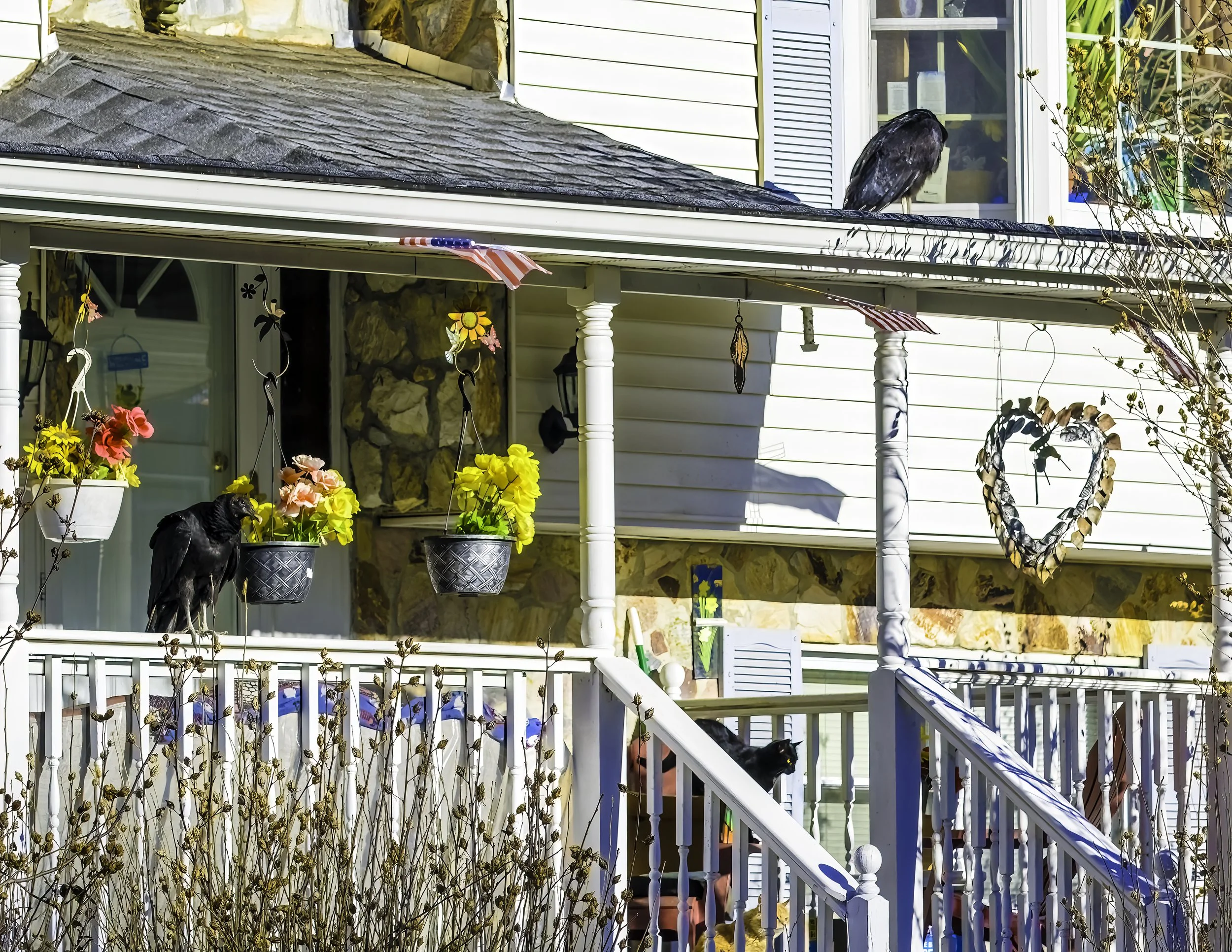
Black vultures and a black cat - CBC - 12/20/25
Among the more elusive species we found on our journey throughout the county today was a beautiful Red-shouldered hawk. In Florida, this is the most common hawk we find, but up here in New York, the Red-tail is the species most often seen and heard. Our Florida birds are a slight blond color, but here in the north country, they have a striking rusty breast. This individual was perched on a limb over a small frozen pond across from a farm field. That field more than likely offered up a meal or two of field mice for our Red-shoulder.
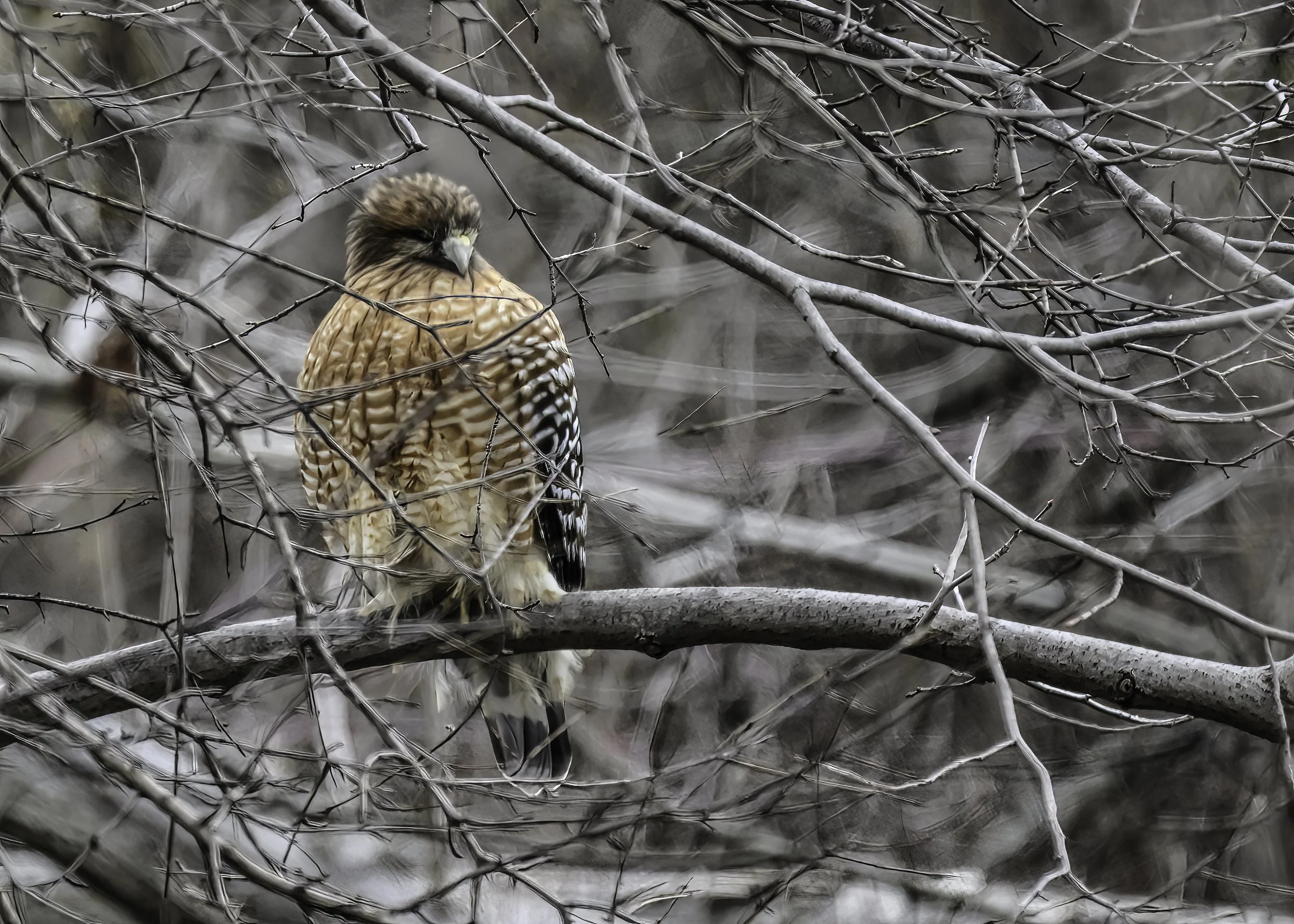
Red-shouldered hawk - CBC - 12/20/25
An.other species which I was lucky enough to photograph is one of our most handsomely plumaged birds, the Cedar waxwing. These are nomadic birds and their numbers in the area vary from year to year. Where you find one Cedar waxwing, you are bound to find a group. Commonly, they perch high in the tops of the trees, but today, they were feeding on berries down near the roadside and this one posed for a nice portrait.
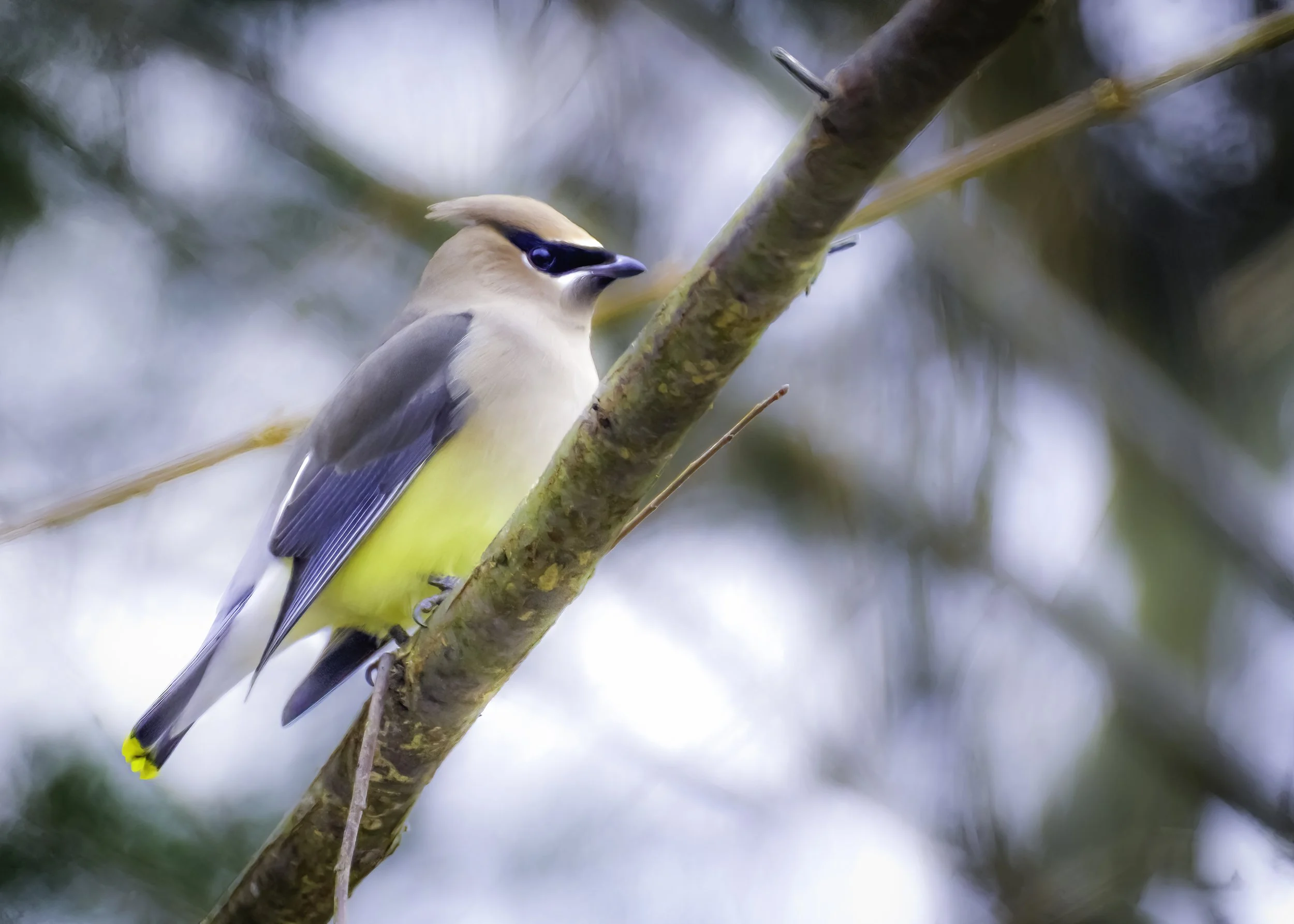
Cedar waxwing - CBC - 12/20/25
Typically, these birds rarely have a single feather out of place and you can see this individual has read today’s dress-code.
Today’s count for our entire county will be tallied and entered into our club’s data base for future reference. How are the birds doing overall? Are certain species trending in a positive direction, or do they seen to be in trouble? Audubon has kept records of all the counts since the program’s inception in 1900 and it is indeed a pleasure and an integral part of our holiday season to take part in the annual affair with some of our close birding friends. What a wonderful way to spend the final day of the fall season 2025.