Showing Off
As we prepare for our Thanksgiving family gathering, I stayed close to home for today’s images. It was the usual cast of characters near the feeders, but today the birds took pity on me and decided to “show off” for some interesting shots. The first of the day was the House finch. While we see a lot of these birds around our property, they never cease to be attractive with their bold stripes and strawberry plumage. So that I wouldn’t take the bird for granted, however, this one decided to come in for a landing with all the “flaps down”. A pretty bird just showing what he’s got…..
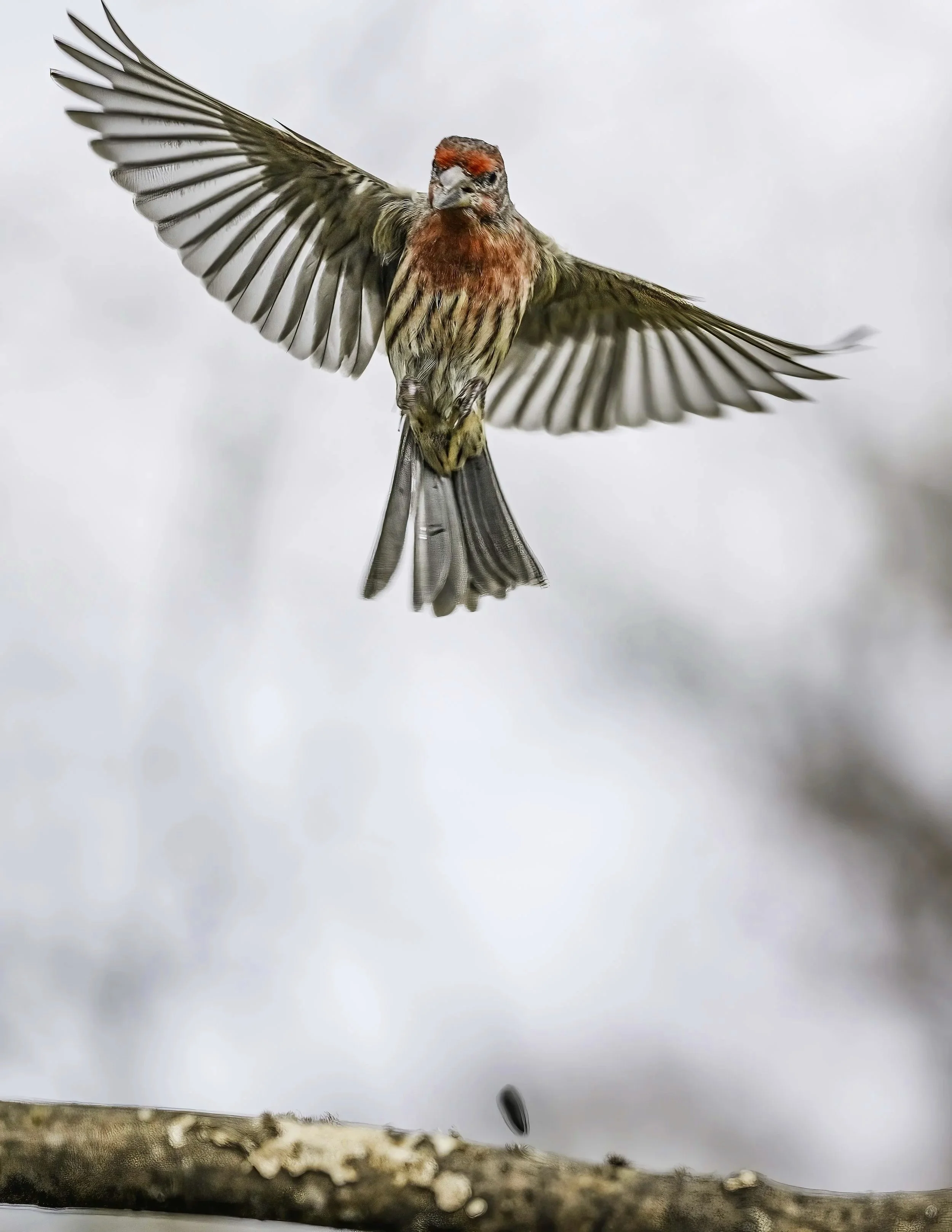
House finch - Backyard - 11/26/25
As if not to be outdone, the next bird to come flying into our perch was a Mourning dove. Once again, this is a very common visitor to our yard and we too often take him for granted. Sometimes we don’t look close enough to appreciate the intricate patterns and “engineering “ that goes into the design of these avian wonders. So here’s what he had to offer today….wings of an angel!
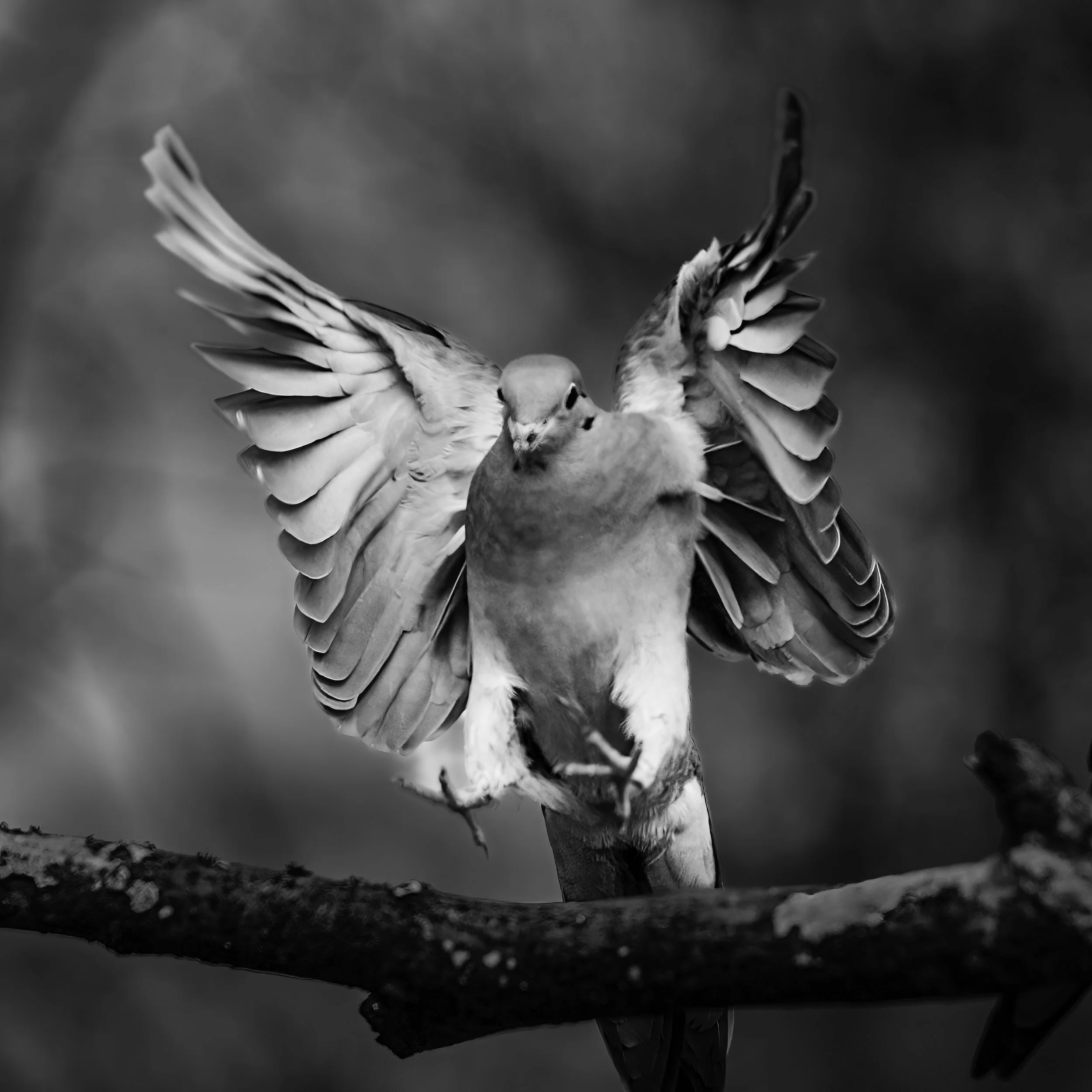
Mourning dove - Backyard - 11/26/25
Next on the scene was a Tufted titmouse. He decided to do his little dance with one wing rather than two like our dove. His version of a “high five” I suppose.
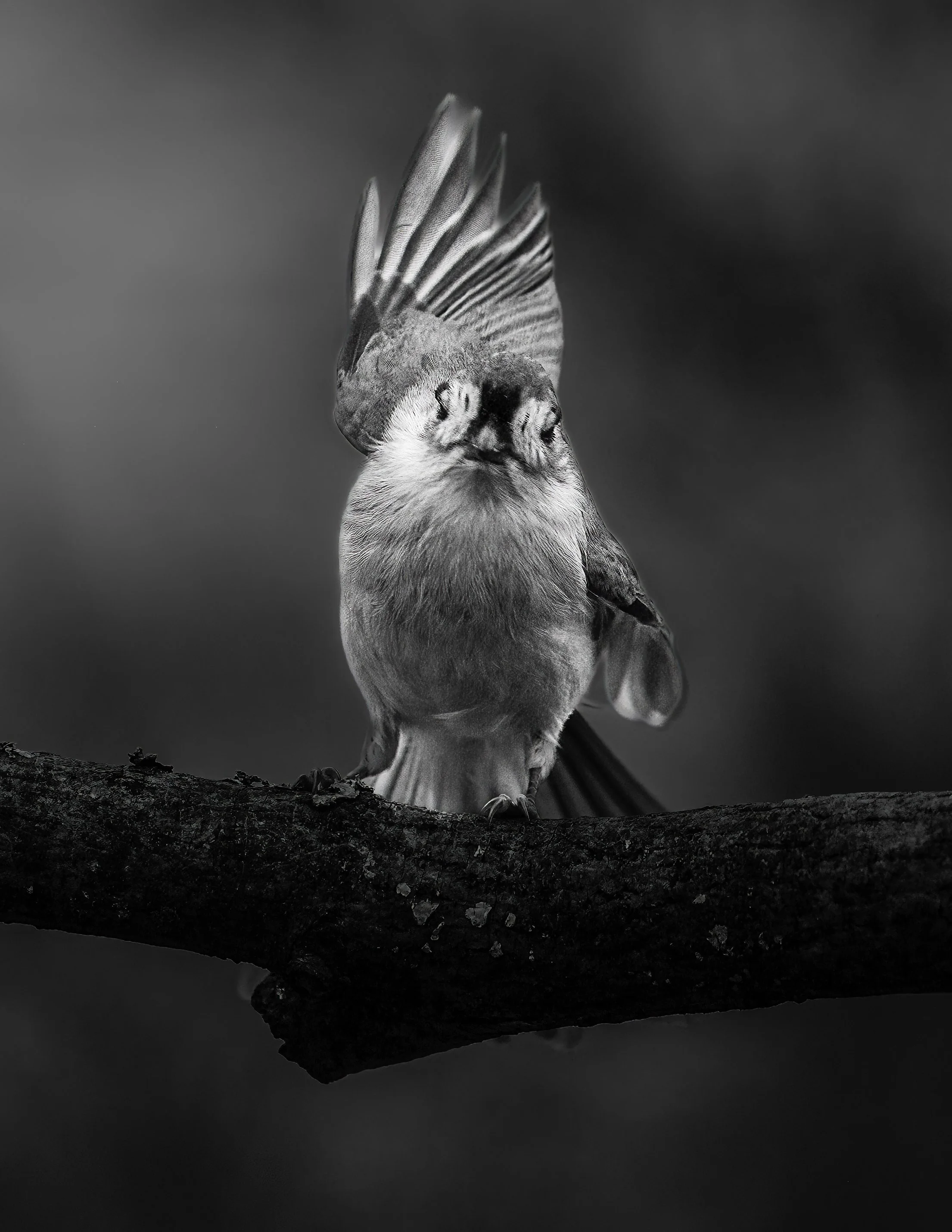
Tufted titmouse - Backyard - 11/26/25
And last but certainly not least, the Blue jay. This bird can show off by his color alone. But having seen the previous performers, he decided that he could do his leap with NO wings extended. Apparently showing us he does not need wings to fly, he went from the present perch to the one above him simply by the power of his legs. He might know that if he extended his wings, the vibrant blue would not be nearly as brilliant. The pigment of a Blue jay is Melanin, which is actually brown. The blue hue is caused by scattering light passing through the barbed cells of his feathers. Much more vibrant if he keeps those feathers compact as he’s done here……
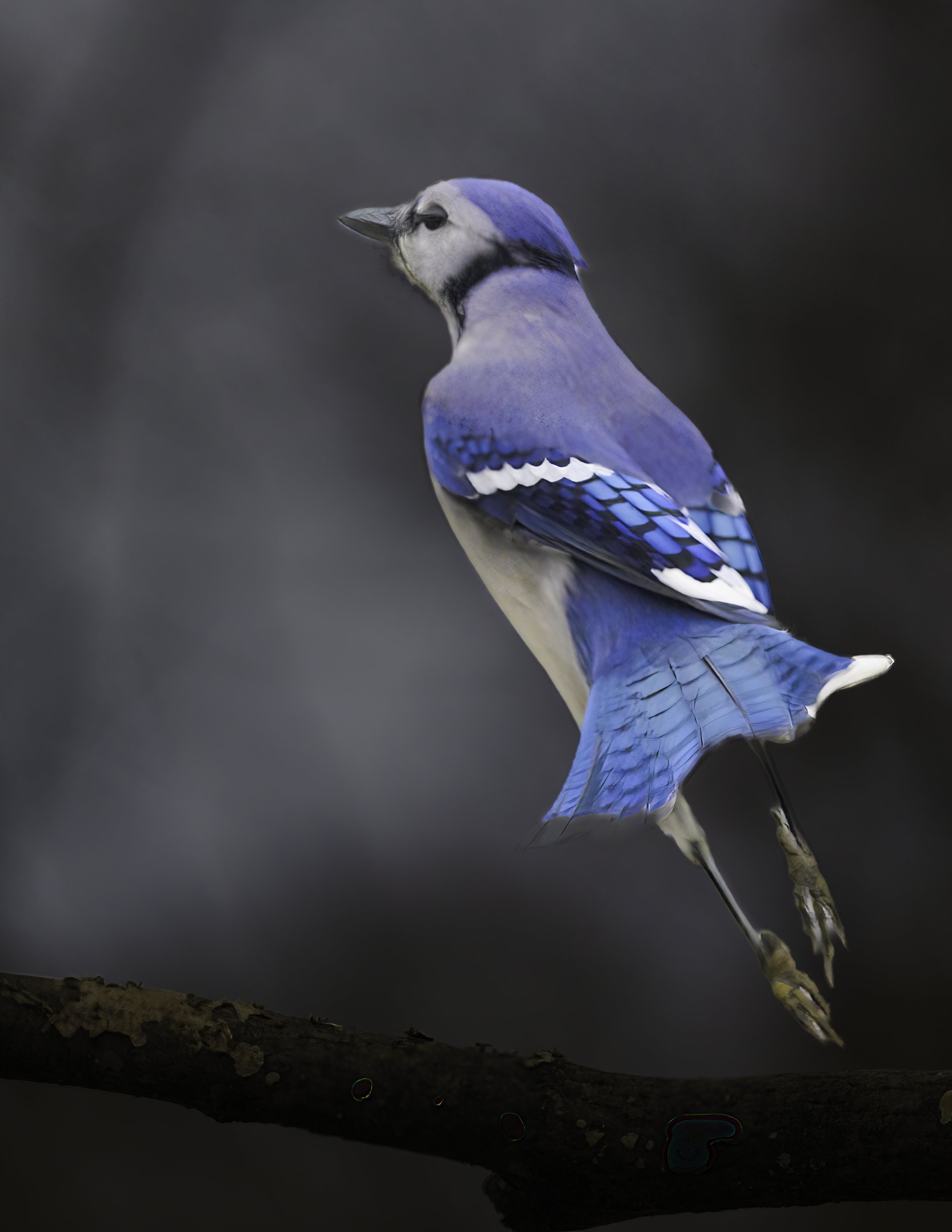
Blue jay - Backyard - 11/26/25
And so….consciously “showing off”? Probably not. But for the camera and for those of us fortunate to see what the camera captured, we can imagine that they knew just what they were doing. Just one more thing we can be thankful for on this upcoming Thanksgiving Day.
Tech Tip - The beauty of the contrasting wings in the dove and titmouse shots was accentuated in this case by shooting in Black and White. “Monochrome” as we refer to it was the way most of us photographers who learned the craft in the 60s and 70s - the days of film- became acquainted with “picture-taking”. It’s kind of nice to return to those roots every so often, and in the case of the dove and titmouse, they are pretty much muted or “monochrome” subjects to begin with and black and white photography emphasizes the contrasting tones in these birds actually making them appear more “vibrant”. So here’s to the memory of Kodak Tri-X which is remarkably still available today!