Muskrat Scramble
On a sunny but chilly end of November day, I return to Iona Island to see if any new “winter birds” have shown up since my last venture down here. I was pleased to find a couple of nice over-wintering birds, an American Tree Sparrow and a Dark-eyed junco, along with the omnipresent Northern mockingbird.
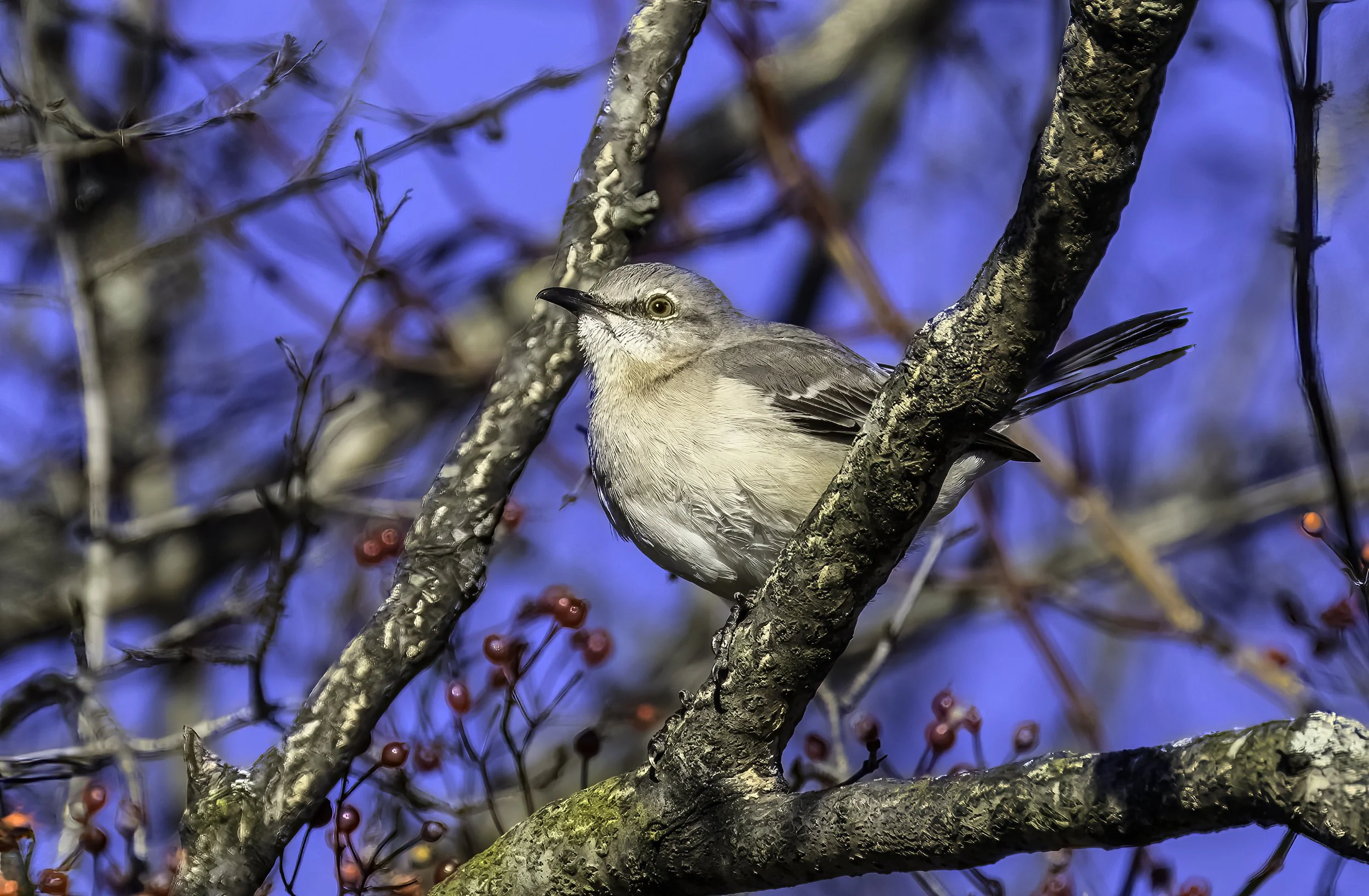
Northern mockingbird-Iona Island 11/29/25
Even though this mockingbird is almost “always” seen here on Iona Island, it is still always a pleasure to see and fun to photograph. Gregarious and inquisitive, it is rarely a challenge to get the bird within close proximity for nice clean shots. Today was no different. When I first spotted this bird, his back was to me and showed little interest. As I maneuvered around to get a better angle however, the mocker noticed me and hopped over to get a better view of me! I grabbed a couple of shots and was on my way in no time. Good to capture a nice image of a handsome bird, but not exactly a “winter- bird” I was hoping for.
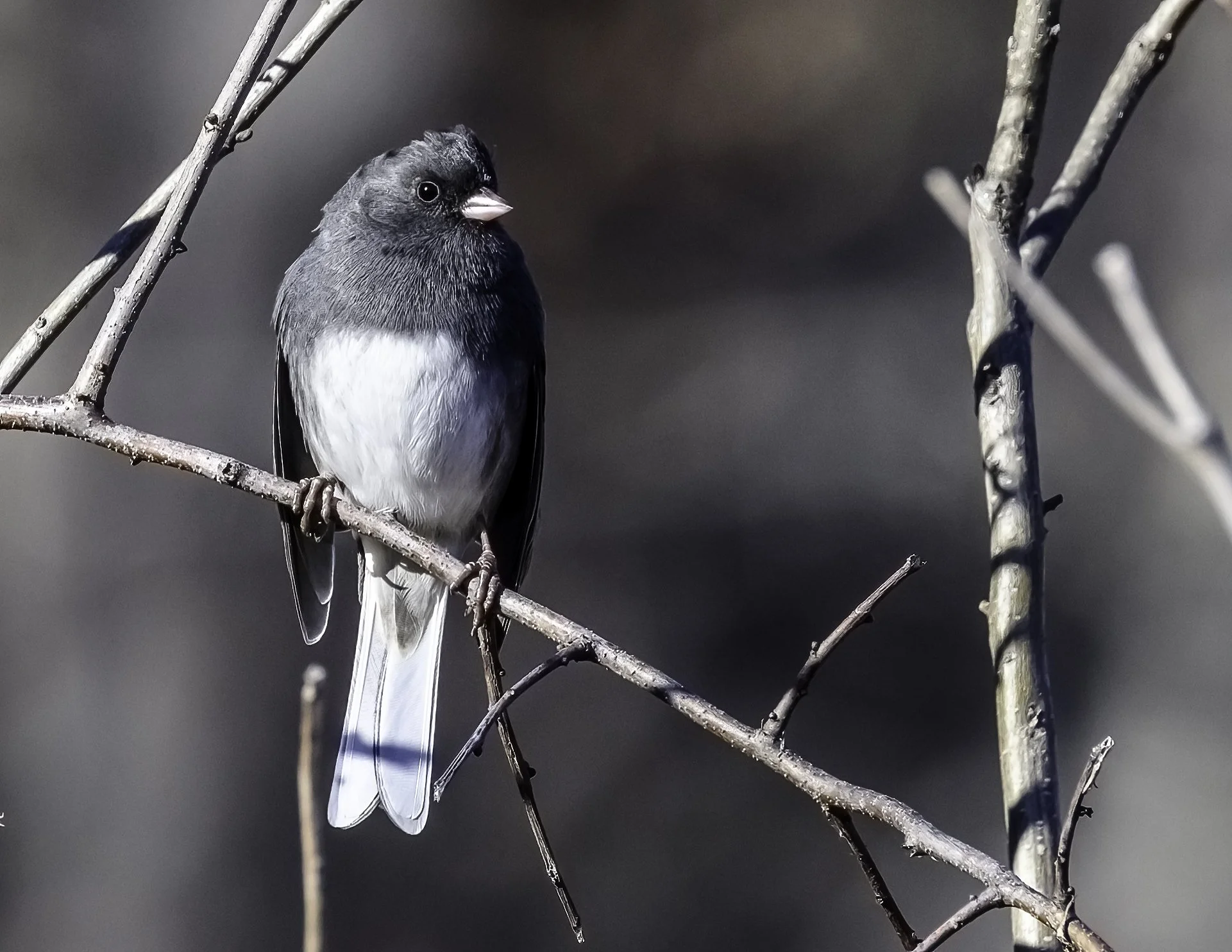
Dark-eyed junco - Iona Island - 11/29/25
Rounding a corner heading out onto the island, I noticed a small group of birds scurrying along the roadside. Tell-tale white tail feathers indicated to me that this was one of the birds I was trying to photograph today….the Dark-eyed junco. The Dark-eyed Junco is a common and easily recognizable bird in New York, especially during the winter months. Characterized by its slate-gray head and back, white belly, and strikingly pink bill, this small sparrow is often seen hopping along roadsides in winter. It is known for its distinctive tail pattern, with white outer tail feathers that flash during flight. Its presence here today is a welcome sign of the changing seasons, as many migrate from northern breeding grounds to spend the colder months in southeastern New York.
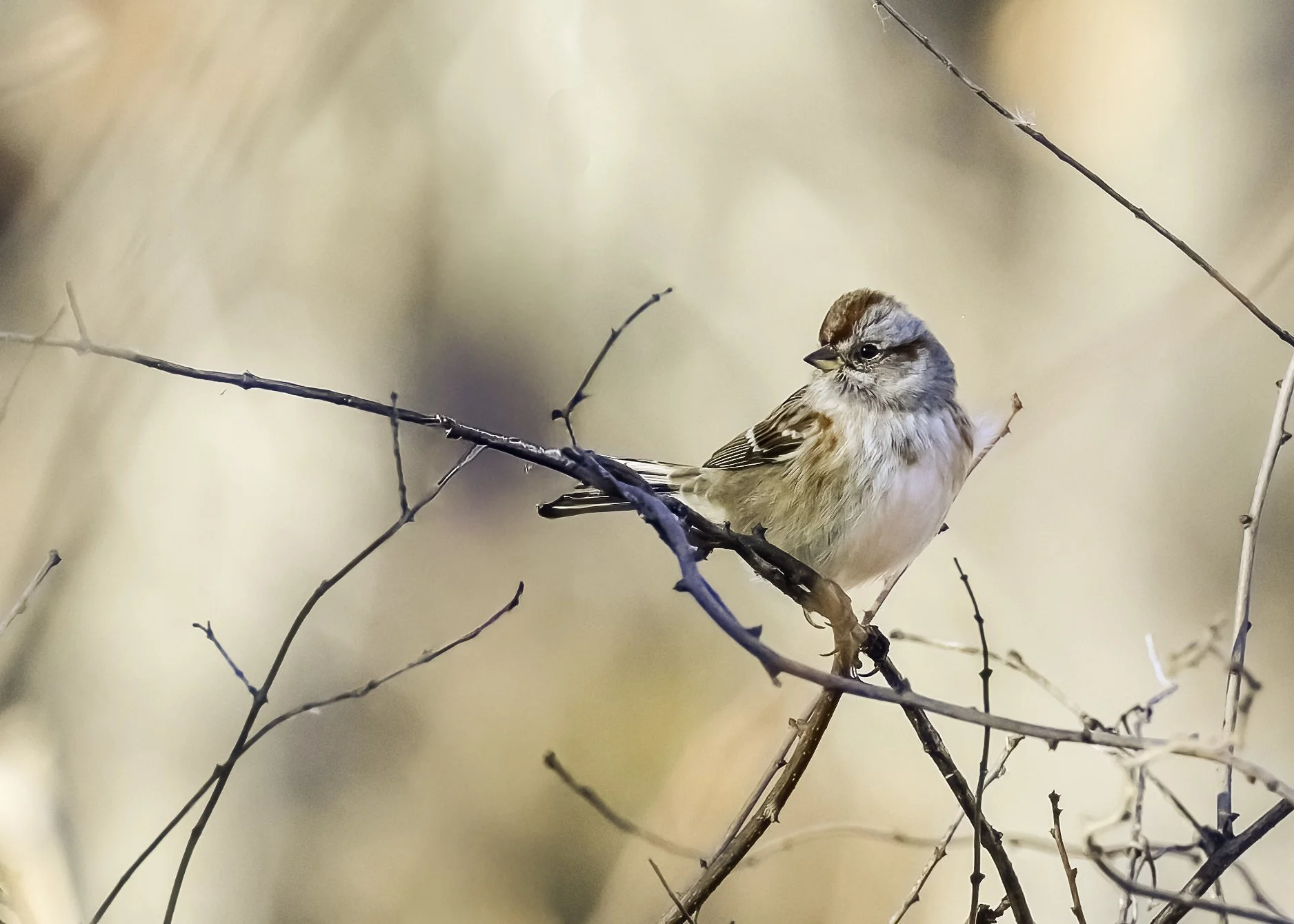
American Tree Sparrow - Iona Island - 11/29/25
Another bird I always consider to be a sign of the season it the American Tree Sparrow. This sparrow and the junco are two birds that will show up at my feeders pretty much exclusively in the colder months of winter. The Tree sparrow nests way up north and inspite of its name, spends much of the nesting season on the tundra above the tree line in summer. It is similar in plumage to the more diminutive Chipping sparrow, but there is little chance of mistaking one from the other in winter as the “chippie” leaves the area for warmer climes to the south as the Tree sparrow moves in from its northern nesting sites. So with two nice photo-ops offered up with these two birds, I am happy to call it a successful day.
But wait….there’s more!
In the channel that runs along the northern side of the causeway leading out to the Island, I saw a long tailed mammal cruising along the water’s surface. Muskrats inhabit the waters of the marsh but are not readily visible at all times. Today, however, there were three of them swimming up and down the channel and occasionally pulling into shallower water along the channel’s edge.
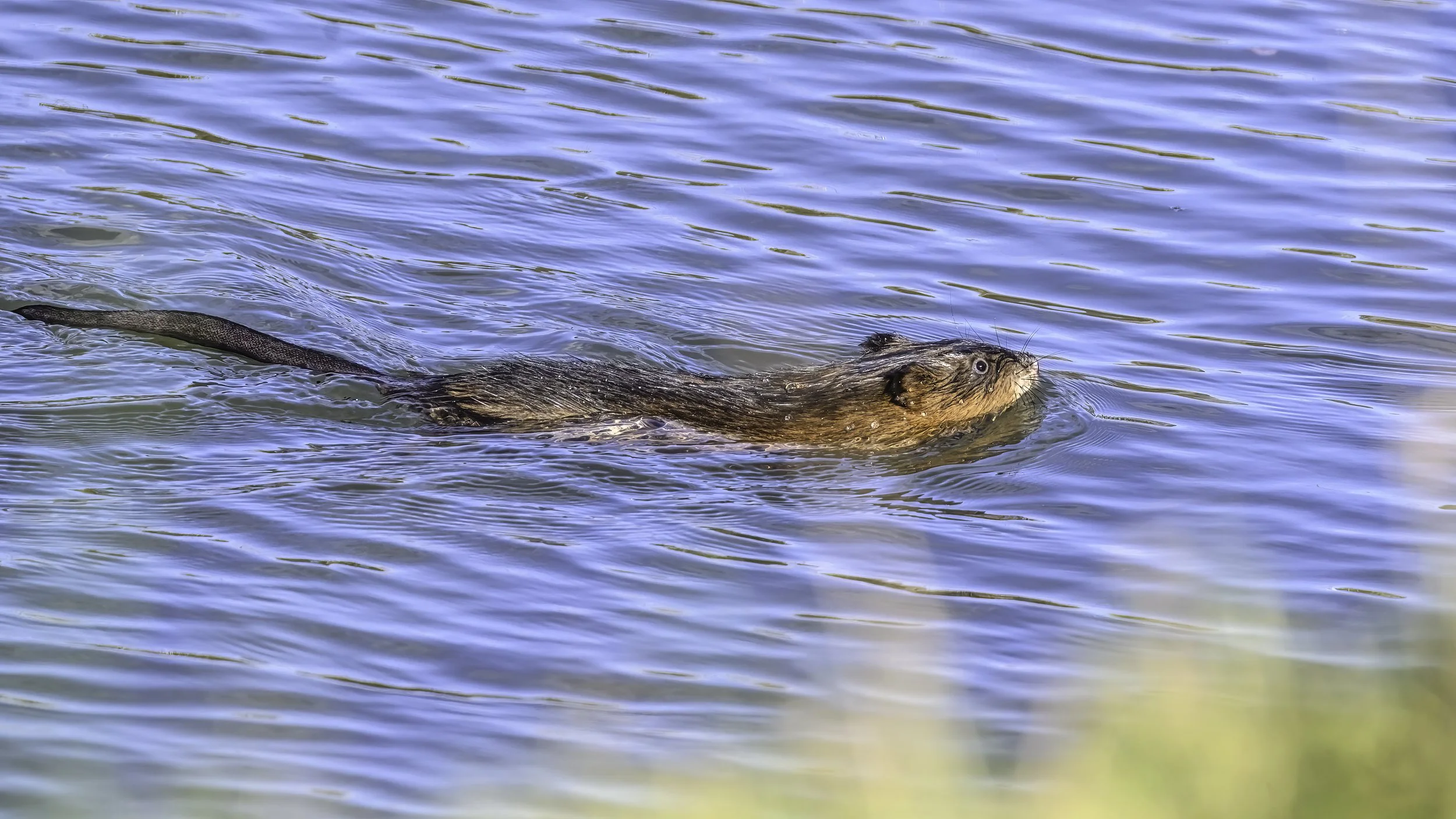
Muskrat - Iona Island - 11/29/25
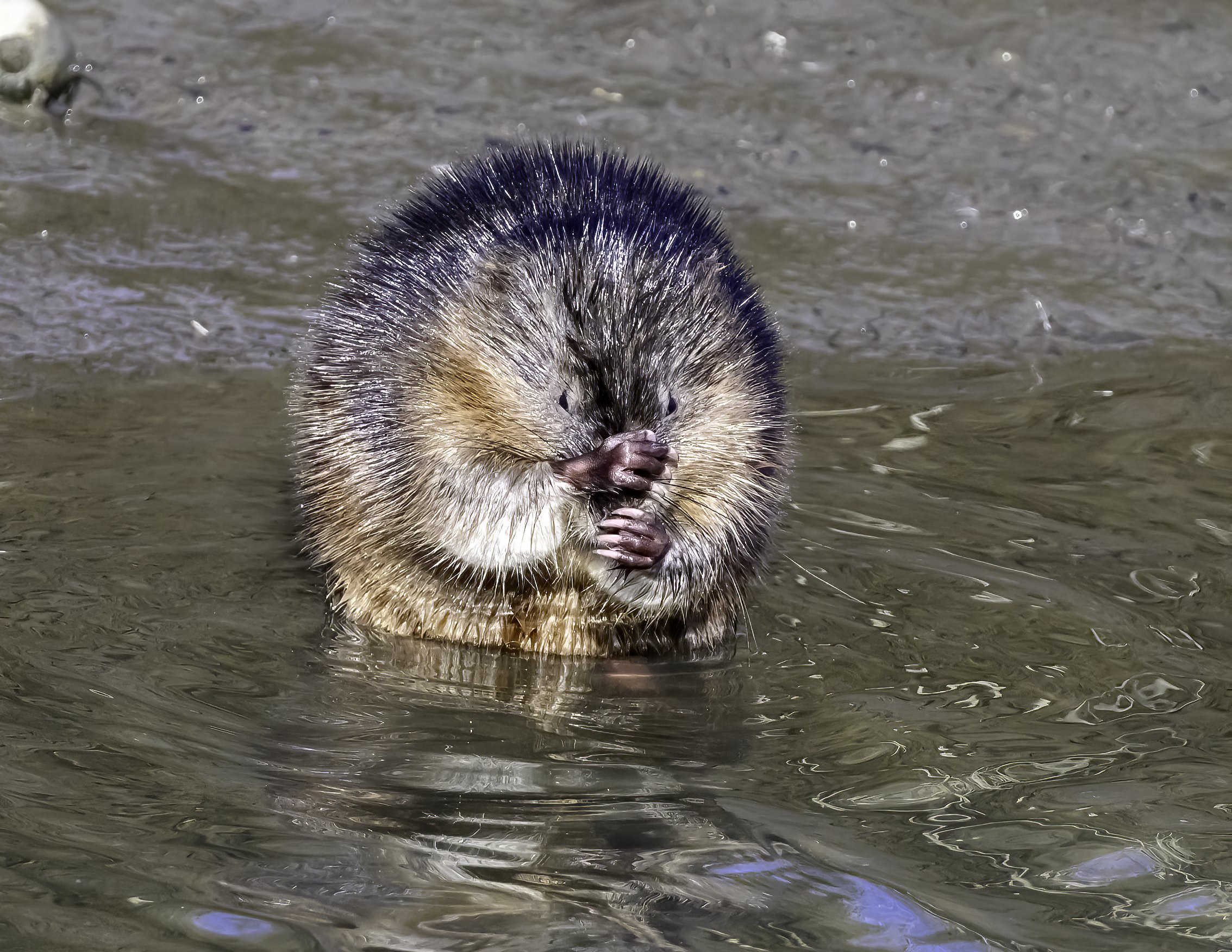
I took advantage of the fact that this muskrat decided to pull out opposite my RAV4 and allowed me to capture a number of images from the comfort of my vehicle. Muskrats are common inhabitants of wetlands, ponds, and slow-moving streams throughout New York. These medium-sized rodents are well adapted to aquatic environments, building dome-shaped lodges from vegetation or burrowing into riverbanks. Their diet primarily consists of aquatic plants, but they may also consume small aquatic animals. Muskrats are active mainly at night and during twilight hours, so I felt lucky to capture these images. Eventually, this individual had had enough of my intrusion and without warning, headed into the deeper water with a spontaneous dive. I appreciated the time we had together in spite of his abrupt departure!
As we head into December, colder temperatures and perhaps some snow will undoubtedly bring even more northern migrants into the Hudson Valley. Among these wintering birds are the Bald eagles which descend upon us once the waters to the north of us freeze solid and block the eagles’ main food source. Another winter visitor that is always a joy to see and photograph is the Short-eared owl which shows up around this time of year in the “Black-dirt” region of our county as well as up at the Shawangunk Grasslands NWR. We shall see what transpires in the upcoming weeks.