Return of the Flamingos
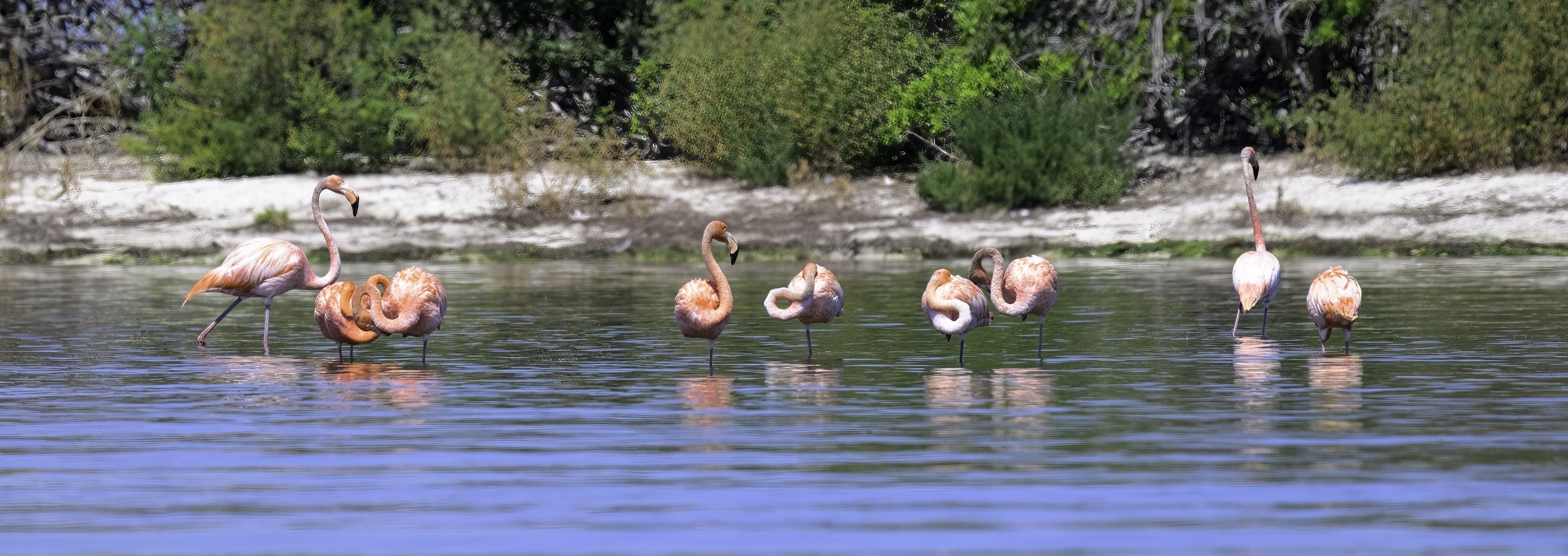
A “Flamboyance” of Flamingos - Haulover Canal MINWR - 4/17/26
In 1832, James Audubon ventured to Florida in large part to find and document the presence of the American flamingo. “Ah! reader, could you but know the emotions that agitated my breast! I thought I had now reached the height of all my expectations, for my voyage to the Floridas was undertaken in a great measure for the purpose of studying these lovely birds in their own beautiful islands.”
Before 1900, Flamingos were plentiful in Florida. Groups known as “flamboyances” of more than 1000 were recorded primarily in the keys and the Everglades. Extensive hunting for meat (people ate flamingos!) and feathers decimated the population, however, and by the early 1900s, the birds had disappeared from the Sunshine State….this country’s only habitat. In fact, by the mid 1900s, only four known nesting sites of these beautiful existed….none in Florida.
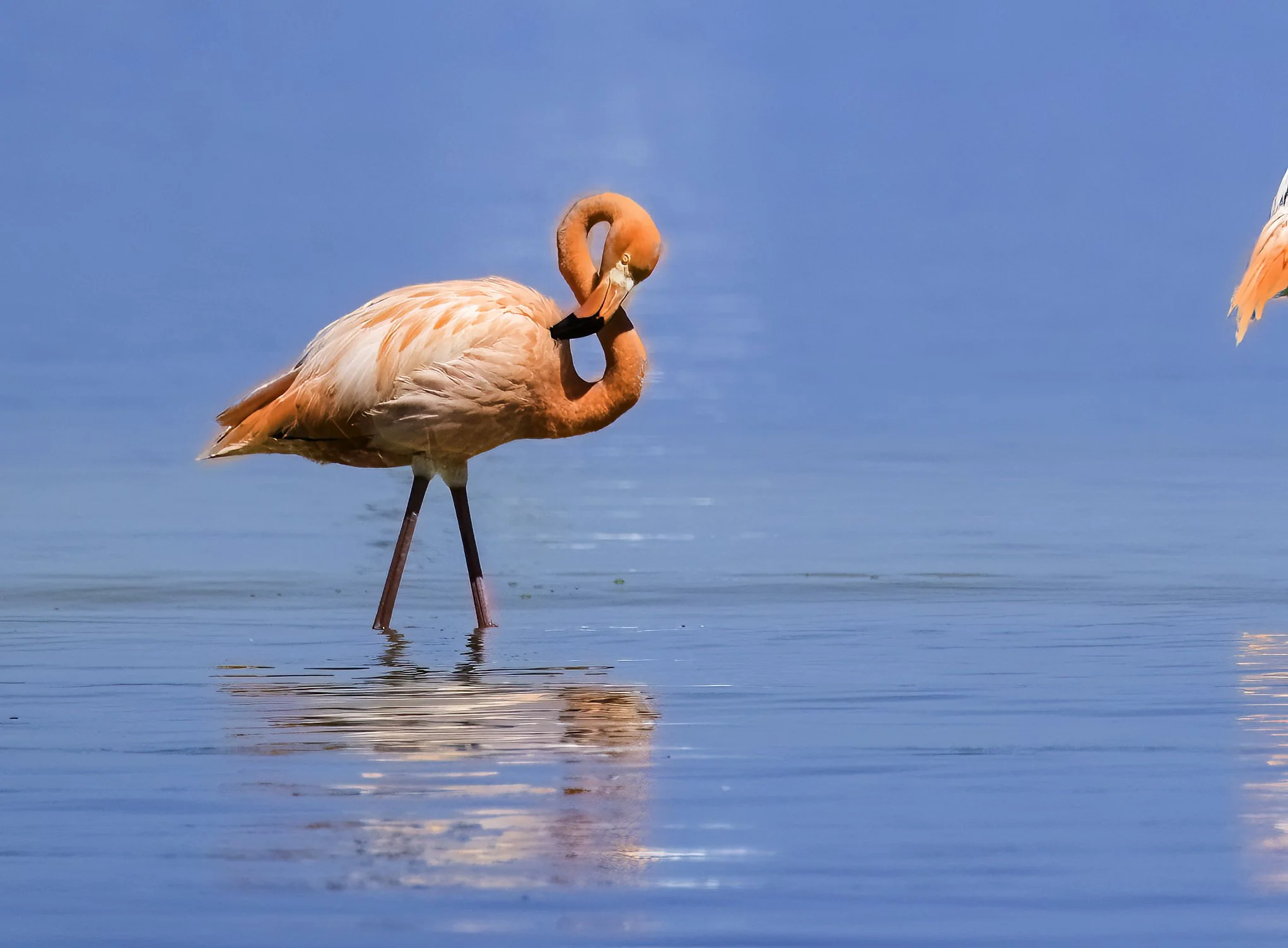
American flamingo - Haulover Canal - 4/17/26
Now! Fast forward 120 years and here comes Hurricane Idalia, bringing with its fierce winds from the Gulf of Mexico good numbers of these spectacular birds and depositing them into Florida and points north. Like many of us “snow-birds” from the north, many of the most northerly deposited birds retreated back into the friendlier climes of Florida and specifically the Indian River in Merritt Island National Wildlife Refuge.
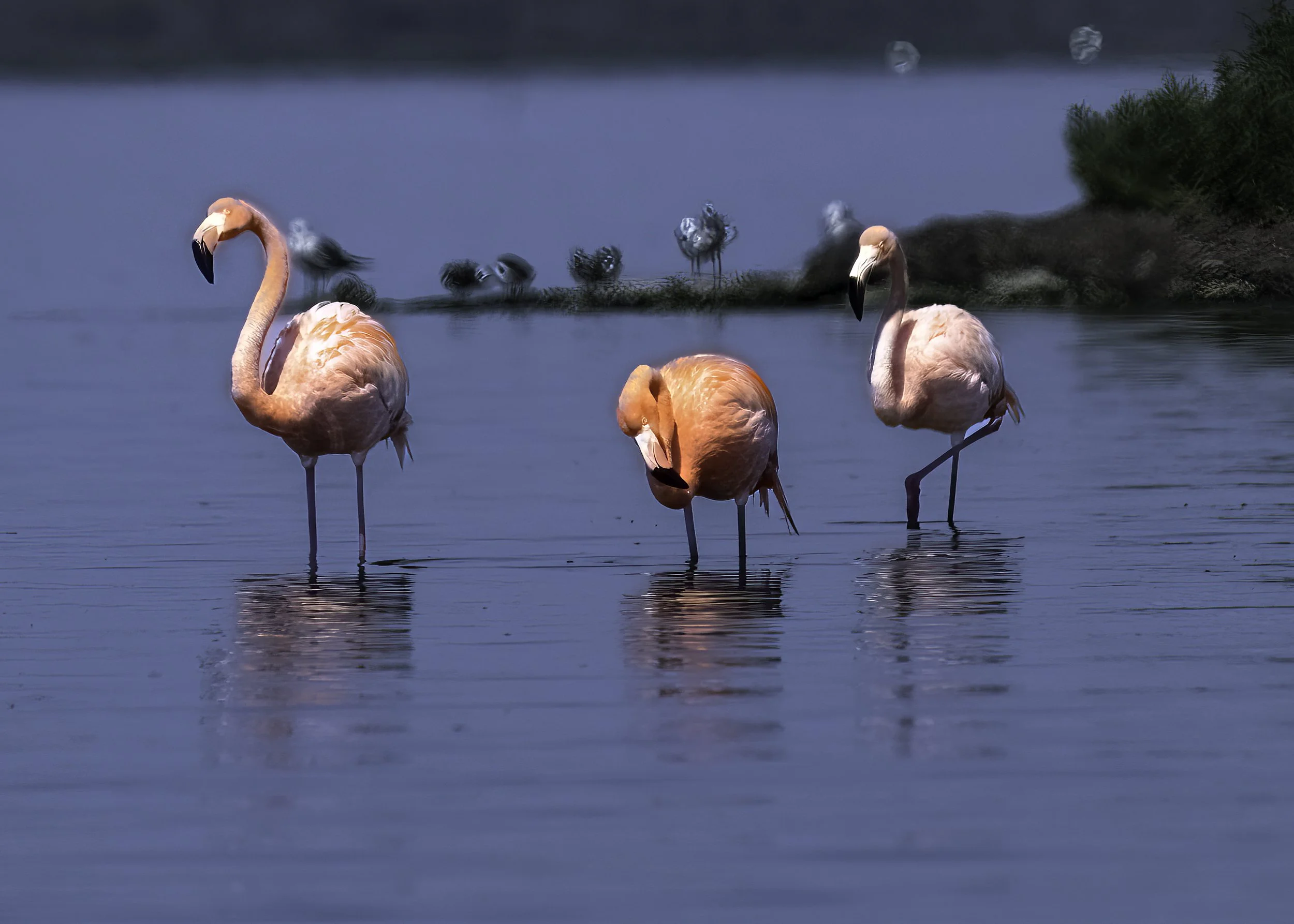
American flamingos - Haulover Canal - 4/17/26 Note color variation from pink to orange hues
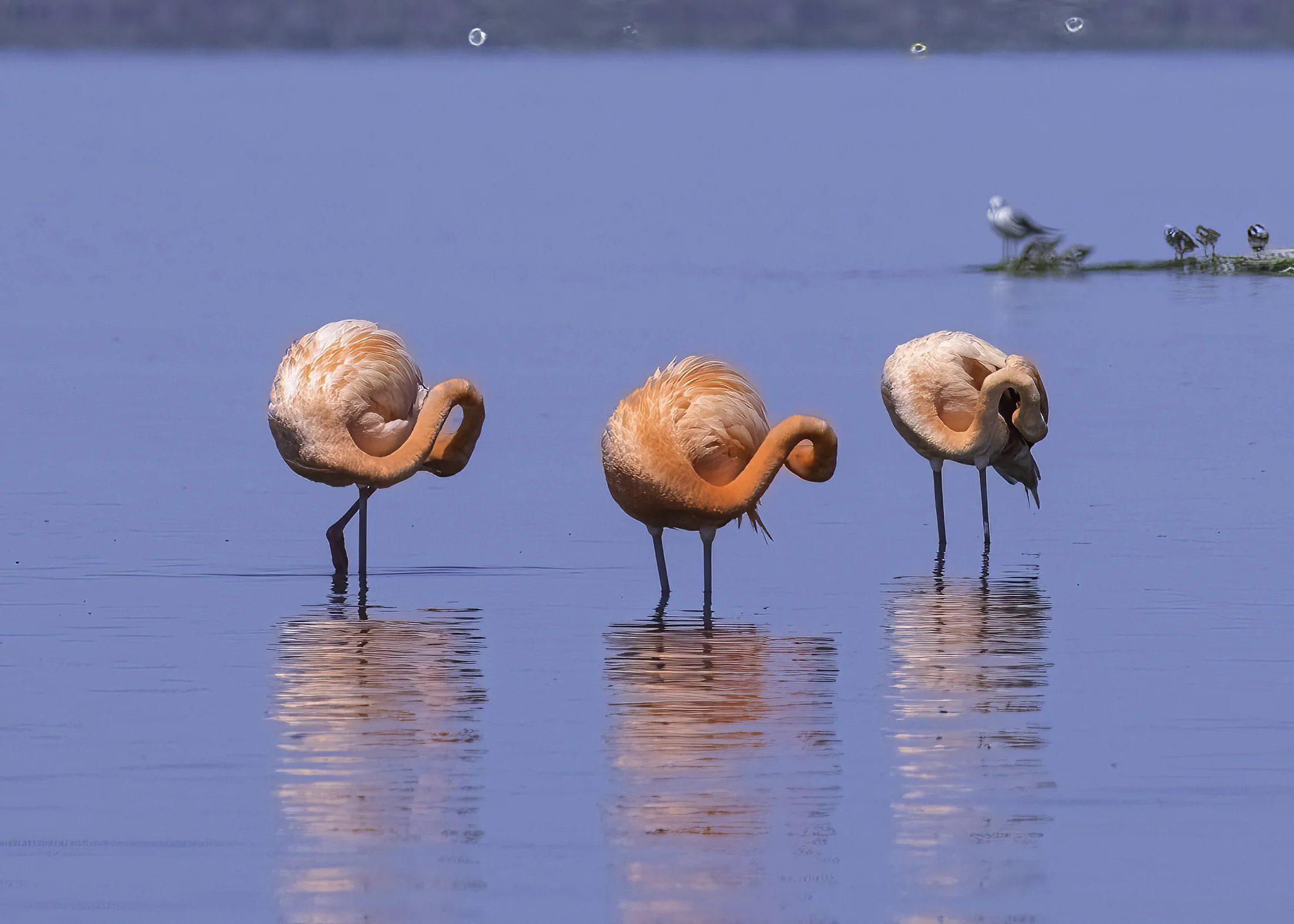
Synchronized like a chorus line!
Numbers seem to be increasing with each succeeding year. Originally, 14 of the flamingos had been documented on these flats, but there are now more than 30 in this flock. It’s great to be able to see this iconic species back in the state and hopes are that they will eventually become a breeding colony. The climate and the habitat are just right, but there is fear that there is too much “traffic” from human activity to be conducive to mating and setting up a breeding colony. Only time will tell.
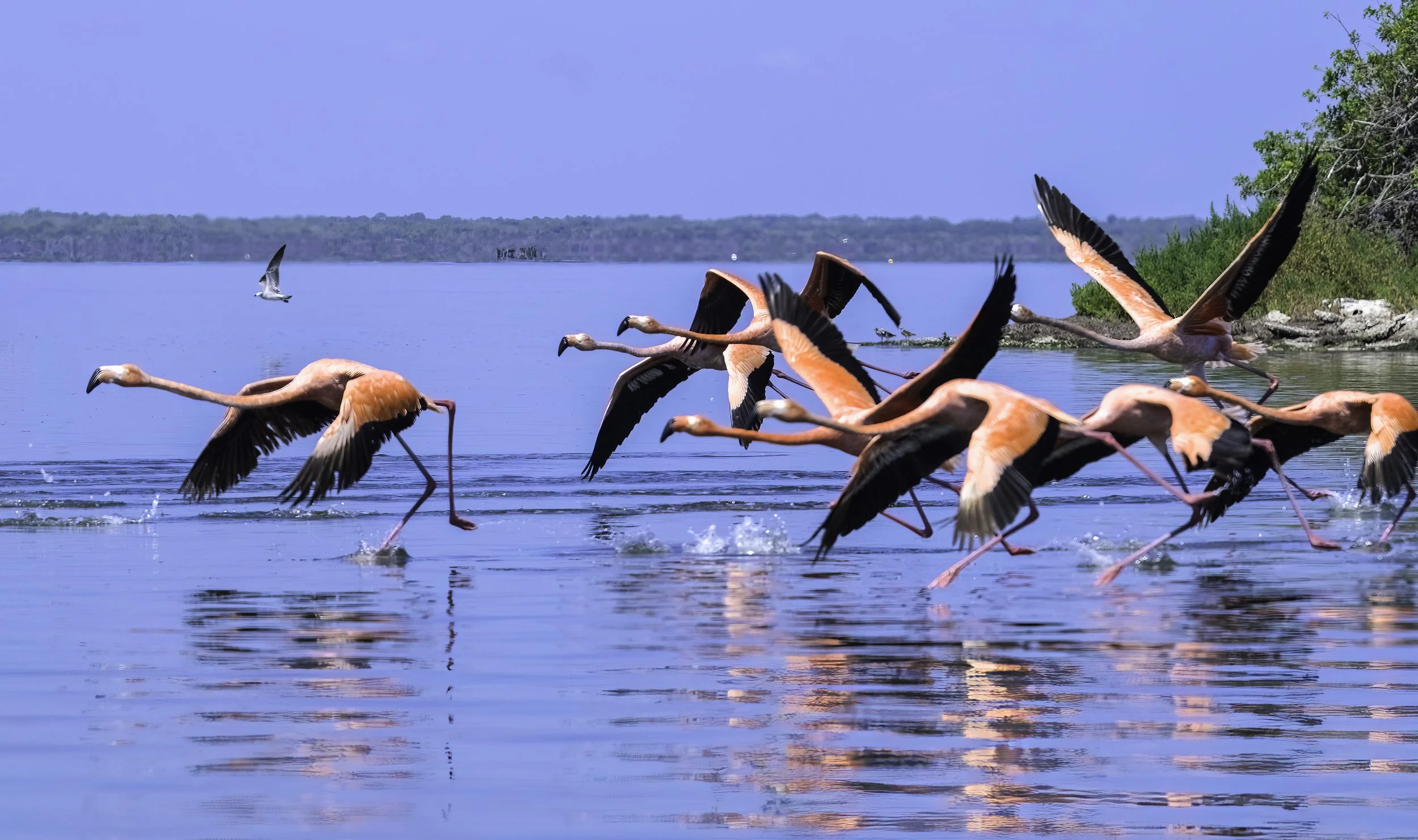
Off and running….
We were fortunate enough to be out with a friend from our local Audubon group on his small “flat waters” boat. The refuge has set out markers telling local boaters to stay at least 500 yards from the birds preferred area known as “Bird Island” and we were careful to adhere to those admonitions. Still, on two occasions the birds were spooked either by kayakers getting a bit too close or some predator in the vicinity and took flight, running along the water’s surface to gain enough speed to allow for take-off.
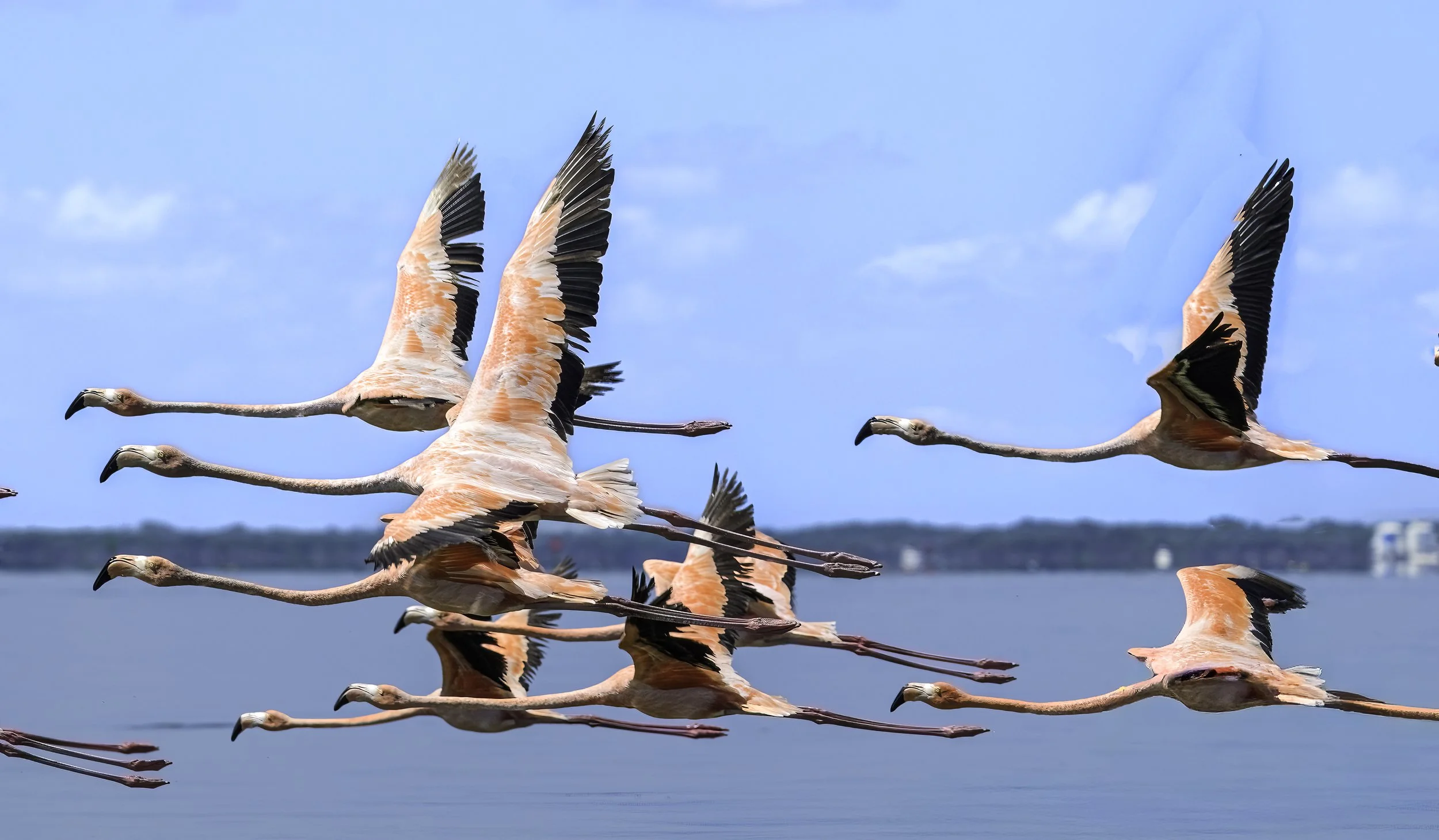
Flamingo fly-by - Haulover Canal - 4/17/26
The birds flew only a short distance to another area of shallow water where they settled down a bit further from the curious on lookers. We can only hope that these birds will decide to hang out here in the refuge when they are ready to start their families and that they will become a permanent part of the Merritt Island avian family. We are so fortunate to spend a good part of our lives here in an environment where sights like these are so accessible if not common.
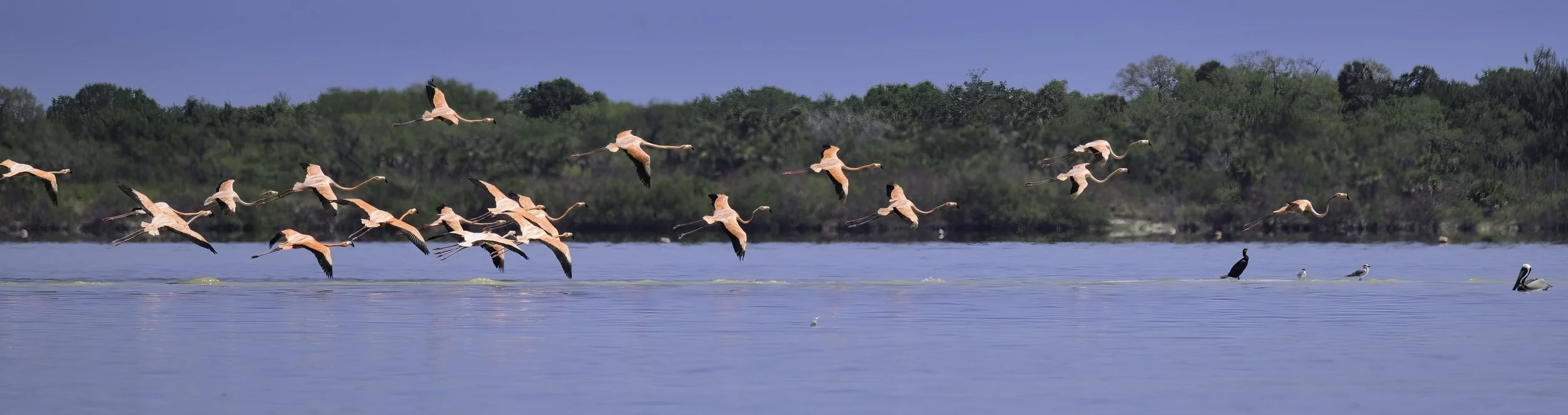
Coming in for a landing - Haulover Canal - 4/17/26
Tech Tip - Most modern cameras have the ability to change “Focus Areas”. Focus area in modern cameras refers to the specific region or zones within the frame that the autofocus system evaluates and uses to acquire sharpness. Most contemporary systems offer selectable single-point, zone, and wide/automatic patterns that let photographers prioritize subjects, track movement, or rely on the camera’s subject-detection algorithms (faces, eyes, animals, vehicles) for faster, more reliable focusing. High-end models often combine phase-detection and contrast-detection pixels across large portions of the sensor to achieve coverage that approaches edge-to-edge, while advanced AF firmware enables predictive tracking, focus-relock, and customizable sensitivity for different shooting scenarios. Choosing the appropriate focus area affects composition, responsiveness, and focus accuracy—single-point for precise focus on small subjects, zone for erratic motion, and wide/auto for general-purpose shooting—and should be matched to subject size, movement, and the lens’s depth-of-field characteristics to get consistently sharp results. It is wise for the aspiring nature photographer to experiment with the different focus modes and to learn how to quickly change from one mode to the next so as not to miss that special opportunity. In the very first shot of today’s post, I used a single-point focus to make sure that the flamingo and not the background was in sharp focus. When the birds began to stir and take flight, I switched over to “wide area” so that I could get most of the birds in focus as they flew by. Single-point would be very difficult to acquire as the birds were all moving by at a fairly rapid pace. Practice makes perfect!