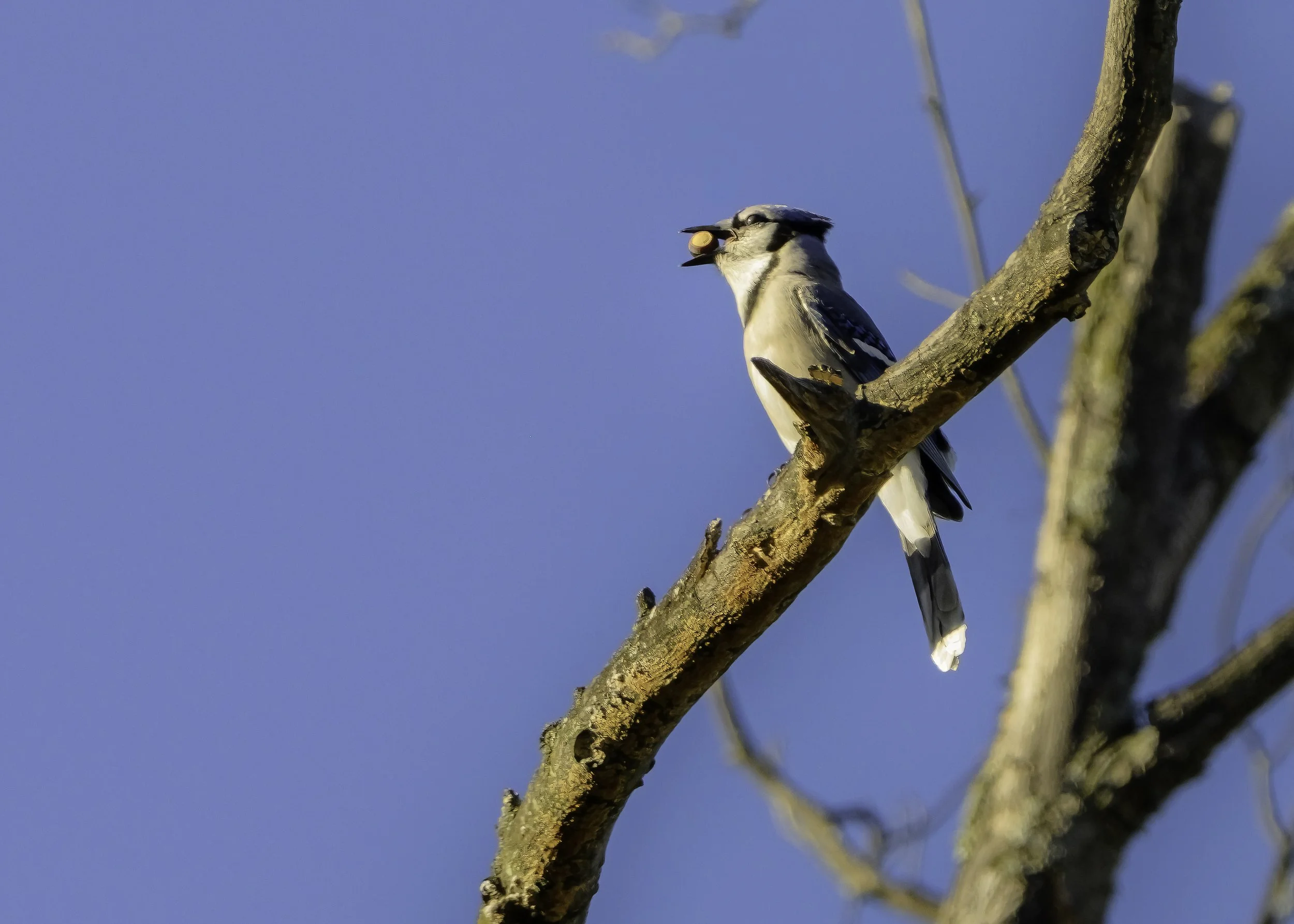
Blue jay - Iona Island - 10/19/26
We're well into Autumn now and plants and animals alike are preparing for the colder late autumn and winter months which are sure to descend upon the Hudson Valley in the very bear future. Many birds which remain here in this area are getting ready by caching food for use in the leaner times to come.
Blue jays in New York become avid cachers in autumn, slipping acorns, beech nuts, and other seeds into soil, leaf litter, and tree crevices as they prepare for winter. Their storage behavior helps them survive more demanding months and inadvertently aids forest regeneration when forgotten caches sprout into new trees. Once the cold temps and snowfalls appear, this jay will return to the spot where he hid this acorn months before
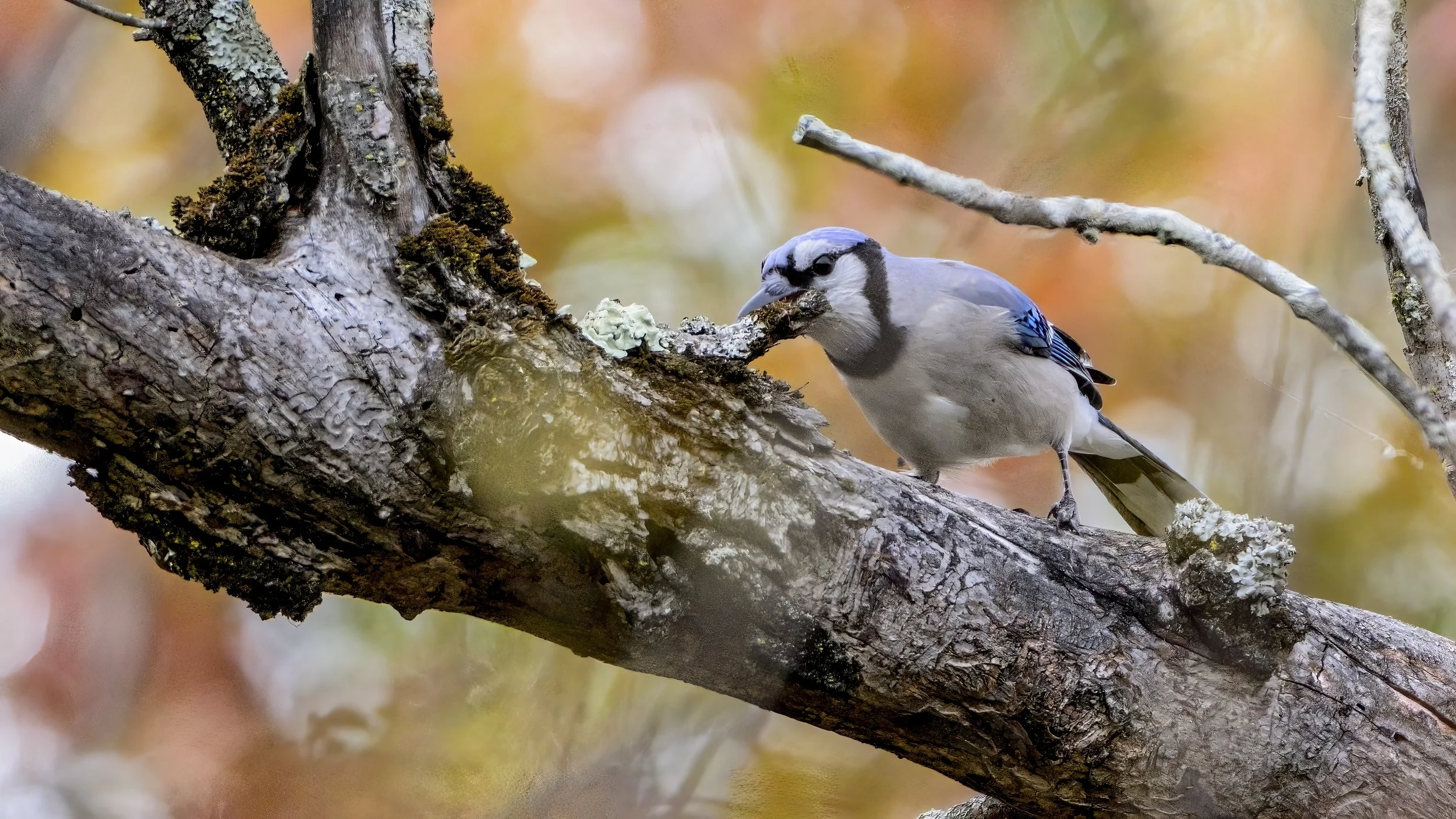
Blue jay perhaps caching seeds beneath moss/lichen on a dormant branch - Iona Island - 10/28/26
While not as common as burying future food supplies below leaf litter and in the soil of the forest floor, Jays will occasionally hide a future meal beneath layers of moss. I can only surmise that this jay is doing just that (although he may simply be looking for a quick meal to be consumed on the spot)!
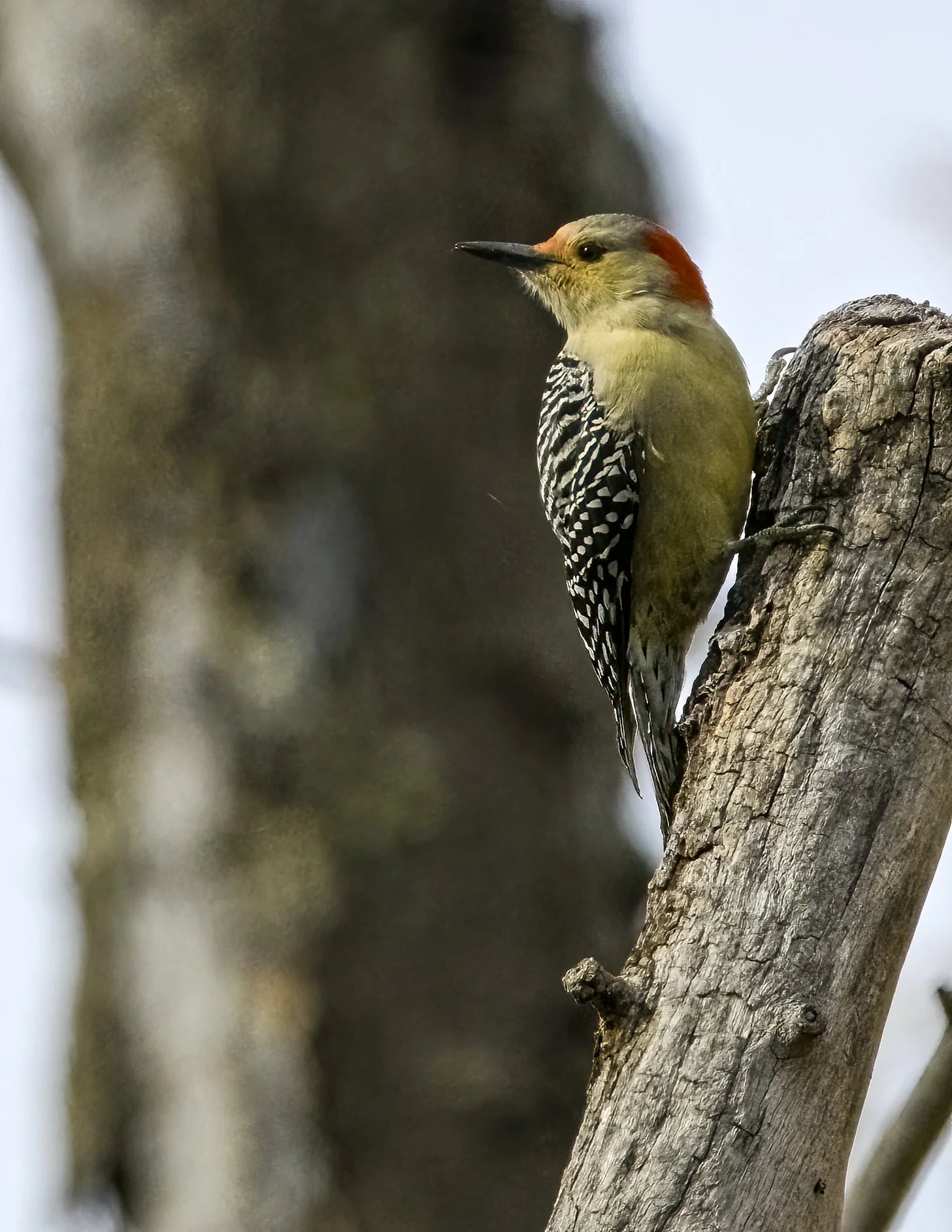
Red-bellied woodpecker - Iona Island - 10/28/26
Another species which hides nuts and seeds for future consumption are the woodpeckers. In fall across New York, Red-bellied Woodpeckers begin caching food to prepare for leaner months, tucking acorns, nuts, and insect larvae into crevices in tree bark, behind loose wood, and in old woodpecker cavities; these compact, systematic stores are often placed in oak and hickory stands near mixed hardwood edges and suburban yards, where the birds remember dozens of cache locations through spatial memory and incidental landmarks, returning to retrieve items during cold snaps or when insect prey is scarce. I was hoping to find a Red-belly in the act of caching today. While that did not happen, I did note that this woodpecker when taking flight displayed his tell-tale “red belly”, a feature for which this bird is named but also a feature that is not always obvious.
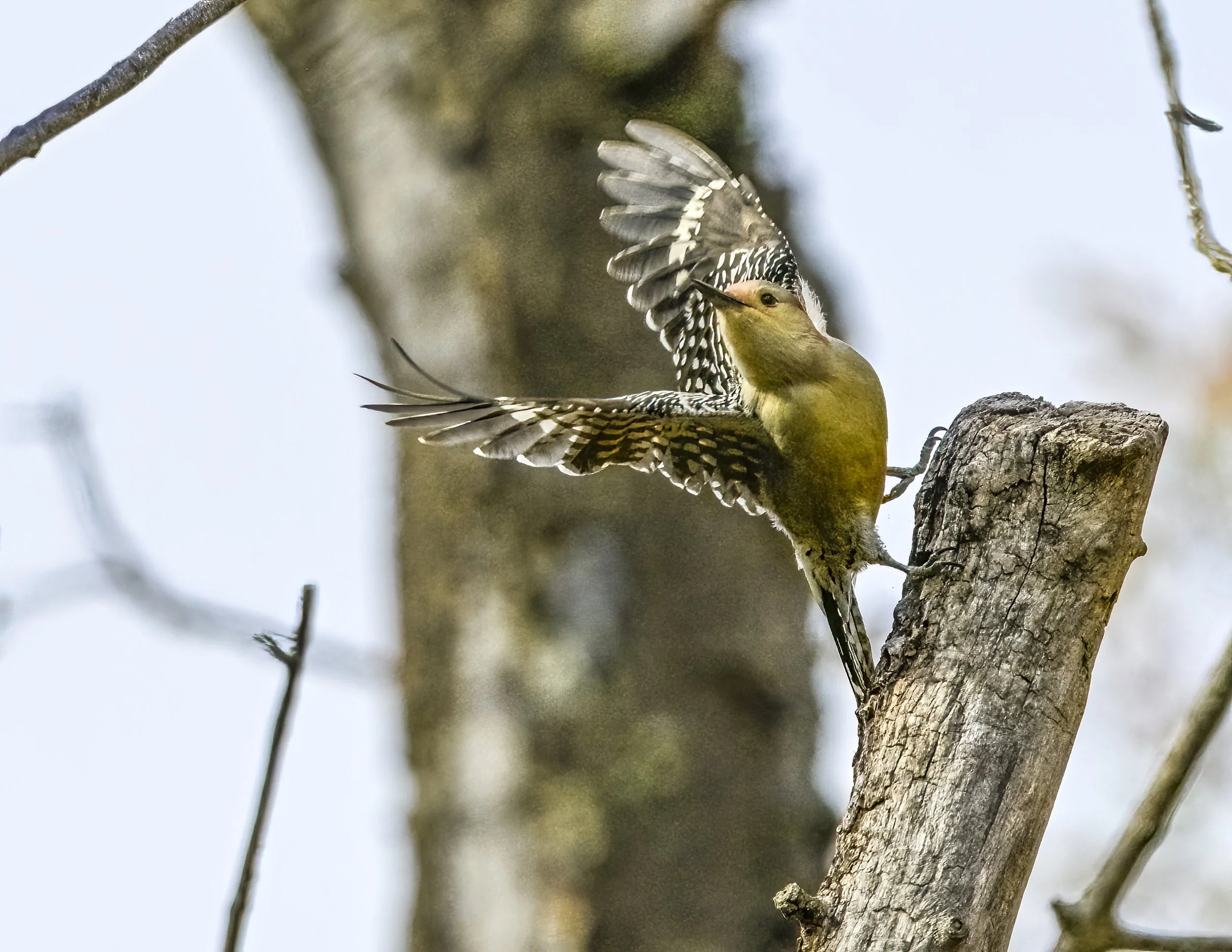
A red-belly takes flight - Iona Island - 10/28/26
While not all that visible at take-off (above), the small red blotch did become evident upon examination of the photo of the woodpecker once he was in full flight (below).
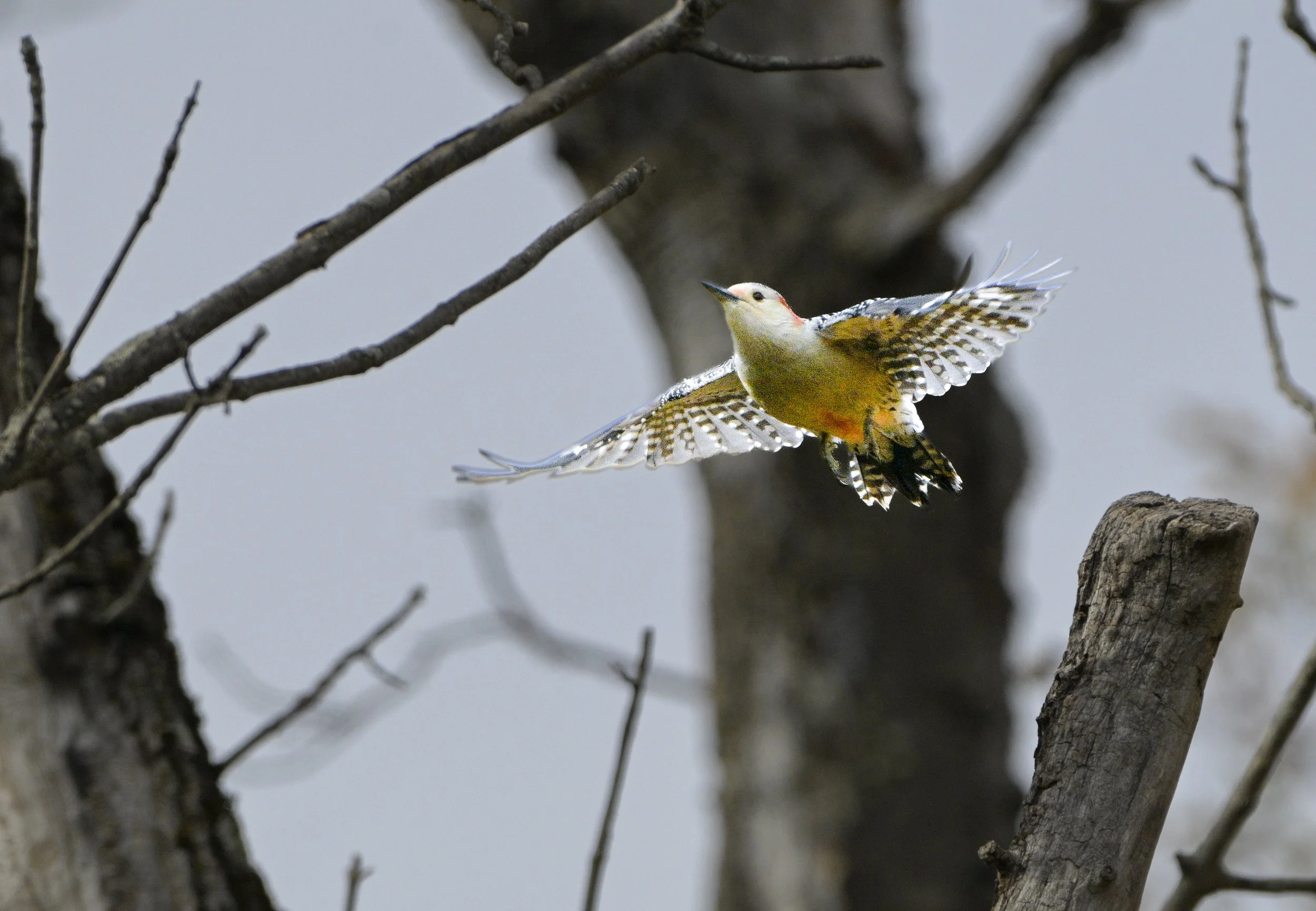
Red-belly of this woodpecker is pretty obvious in this flight shot …..
The birds are not the only living things reacting to the shorter hours of daylight and cooler temps. In New York, we are blessed to have some pretty spectacular changes in the color of the leaves as plants stop producing chlorophyll for photosynthesis thus exposing the other less dominant red, yellow, and orange pigments found within the leaves. The Red maples take it a step further. These trees actively produce new red and purple anthocyanin pigments in the fall. This new pigments protect the leaves from excess sunlight and help trees salvage the remaining nutrients in the leaves before dropping them. The result? Check out the photo below!
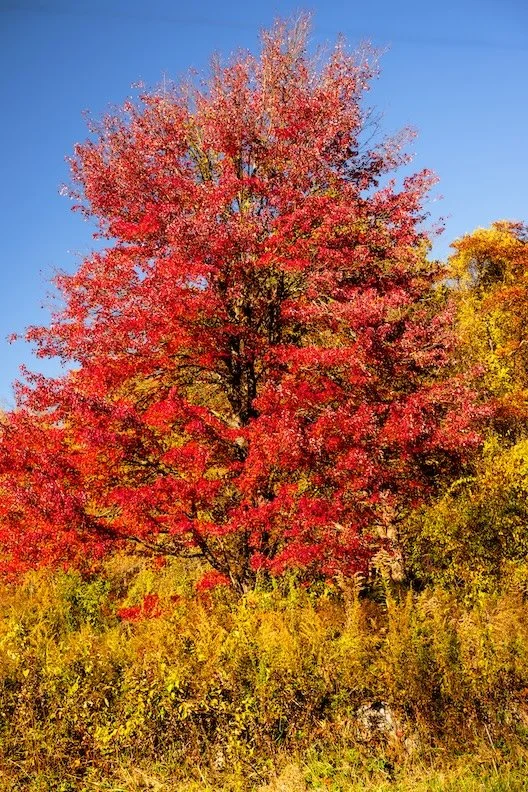
Red maple - Mine Road - 10/28/26
We’ll be watching for other changes in the natural world which are sure to occur over the upcoming months. Autumn is indeed a season of change and this is not more obvious than during the days of late October and early November. Let’s see what this upcoming week brings.