Break-a-hundred: Scouting
Each year, the Mearns Bird Club of Orange County holds its annual “Break-a-hundred” event during which teams of 2 to 4 birders attempt to find as close to 100 species (or more) during a 24 hour period. This year, we can bird any 24 consecutive hours beginning at midnight on Friday through Saturday. I am teaming up with long time birding bud Joe this year, and we have decided to bird all day Friday in an effort to avoid some inclement weather forecast for Saturday. Let’s see how that works out for us.
In preparation for the event, I am going out on Thursday afternoon to check on a couple of the areas we plan to bird to see which might provide some decent numbers of species on Friday. My first stop is Iona Island which has not “heated up” yet as far as providing good numbers of birds. My first really good bird of today is the Orchard oriole which is pretty reliably found here at this time of year.
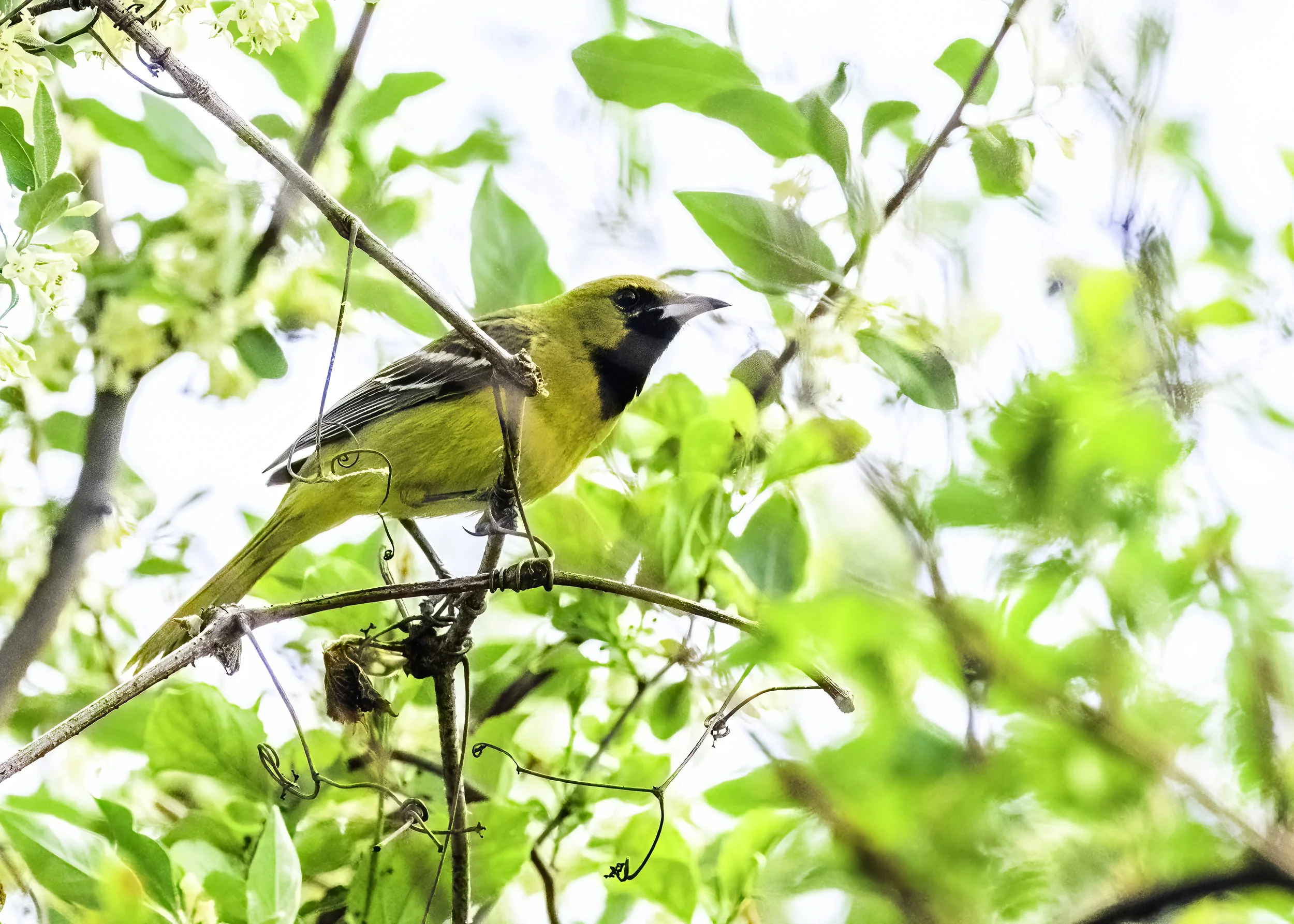
Immature male Orchard oriole - Iona Island - 5/7/26
The bird is found at a spot where I have found this species in early May over the past several years, so it looks promising for tomorrow’s Break-a-hundred event. But is it worth traveling here if this is the only unique species to be recorded? We’ll have to consider its value tomorrow. If we find it earlier at another site earlier in the day tomorrow, we can forego this area and check out other places which may be more productive.
The other area worth checking out today is Silver Mine. I addition to the lake, there are a couple of places at this park where I find I can get decent numbers of different species by simply parking the SUV and waiting to see what I can hear. At the lake, I have the usual Canada geese and Mallards.
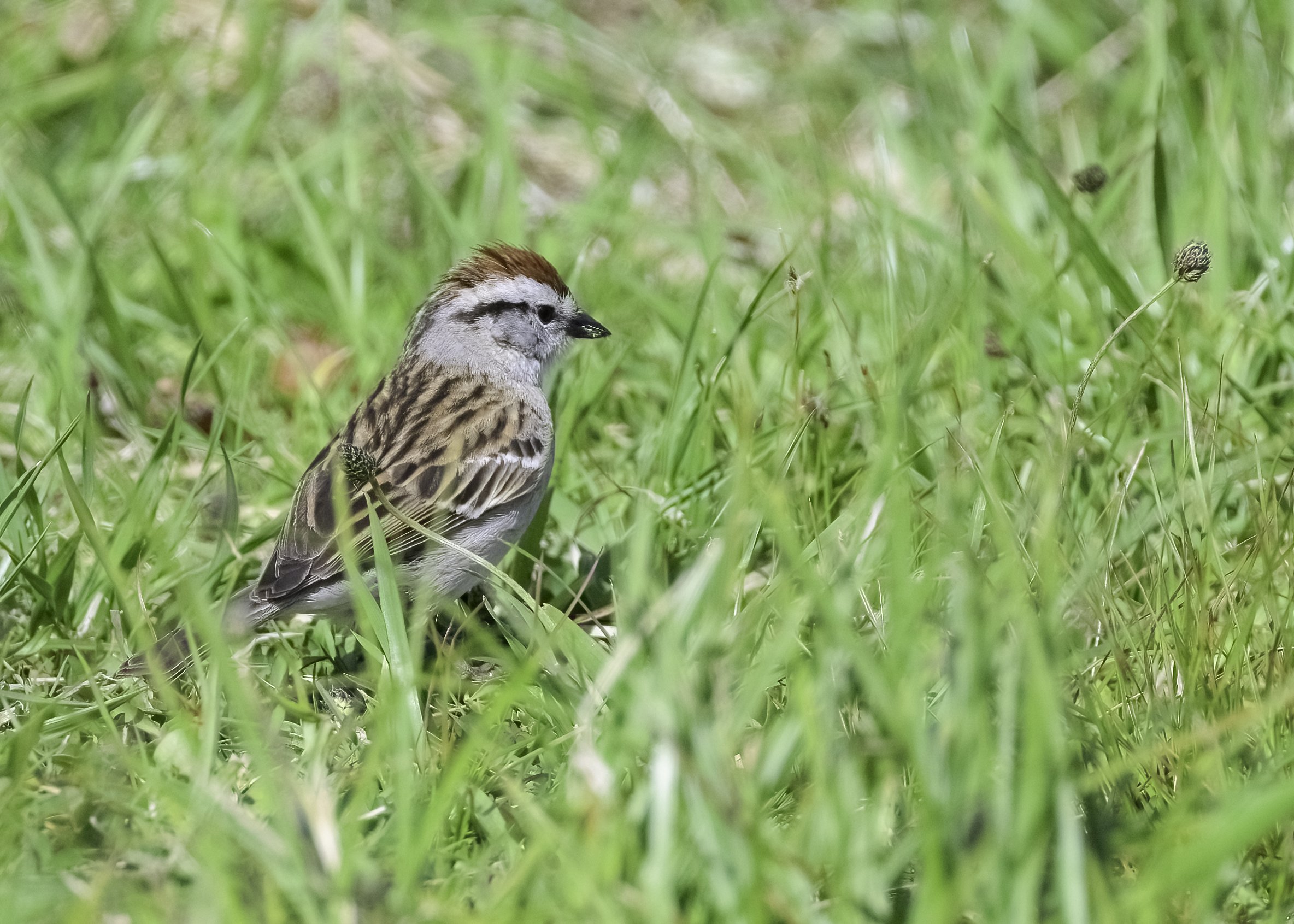
Chipping sparrow - Silver Mine - 5/7/26
Along the near edge of the lake, several Canada geese and two Chipping sparrows are picking through the heavy grass. Both tree swallows and Barn swallows are skimming over the water, so this one spot has provided me with 5 species to look for tomorrow. Next, I head over to the spot where I’ll park and wait to see what birds appear and hope for the best.
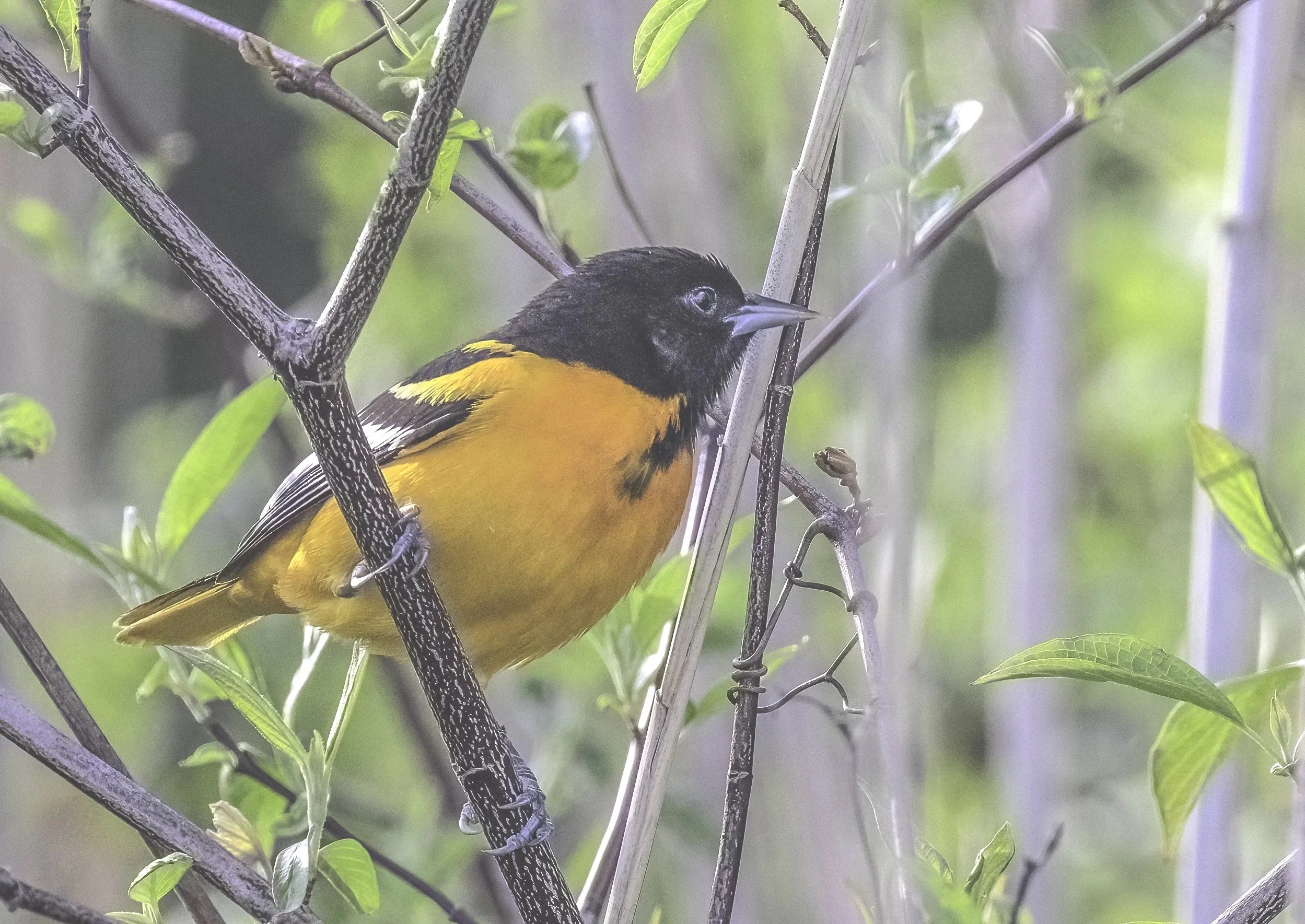
Baltimore oriole - Silver Mine - 5/7/26
First bird to show up for me is a beautiful Baltimore oriole to compliment the Orchard oriole I had earlier. There’s a lot of chatter in this thicket, so it would appear that this will be a good place to hang out for awhile.
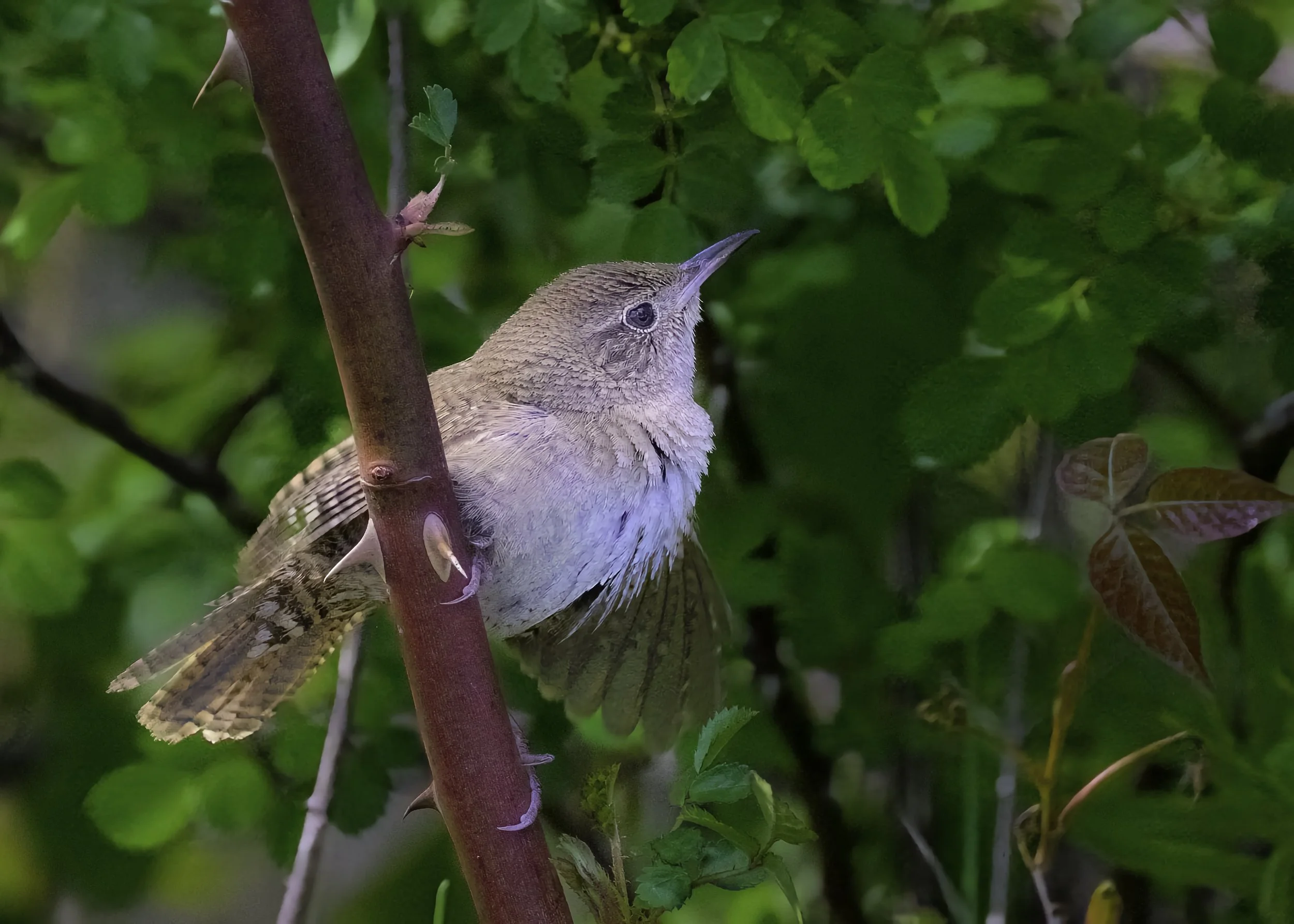
House wren - Silver Mine - 5/7/26
Almost immediately after the oriole, a Northern house wren make his appearance and poses nicely close to the car. This little guy is wondering what I’m doing here and continues to scold me. Along with his chipping away, there is plenty of other song to be heard. It is getting later in the afternoon and that is prime time for bird chorus. During the event, we do not have to see the bird, but at least two members of the team must hear the call and be able to definitively id the bird by its call. I’m picking up a good number of birds some of which do come in close enough to be photographed. Next on the list, the Northern Yellow warbler, one of the most common and conspicuous warblers in early spring here in SE New York.
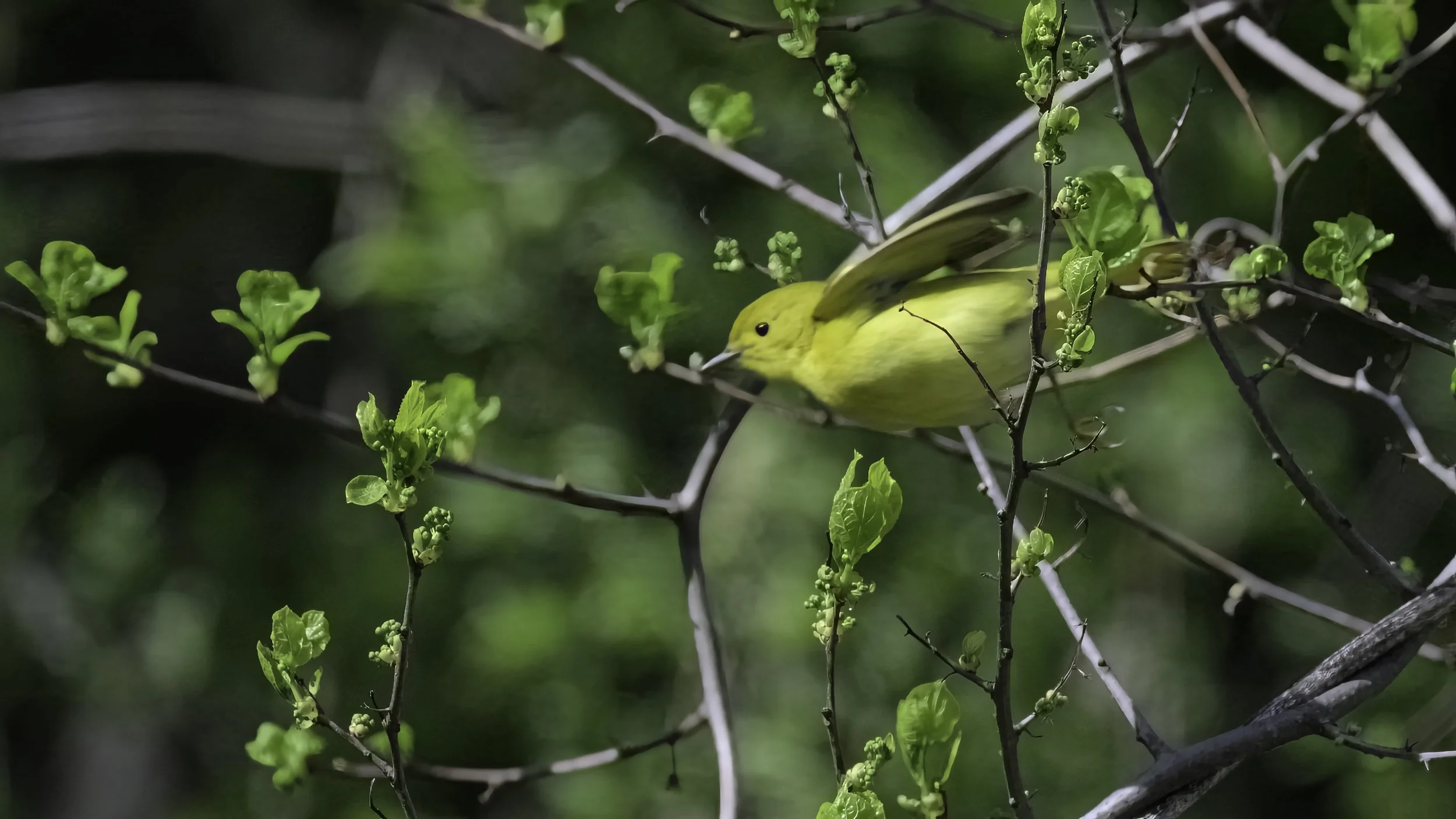
Fleeing Northern Yellow warbler - Silver Mine - 5/7/26
In early May, it is hard to walk along any woodland trail and not hear a number of these little gems singing their song of “Sweet-sweet-little more sweet”. Bright yellow and a fairly loud persistent song make this a warbler which most birders will hear and see on their birding ventures in this part of New York in spring and summer.
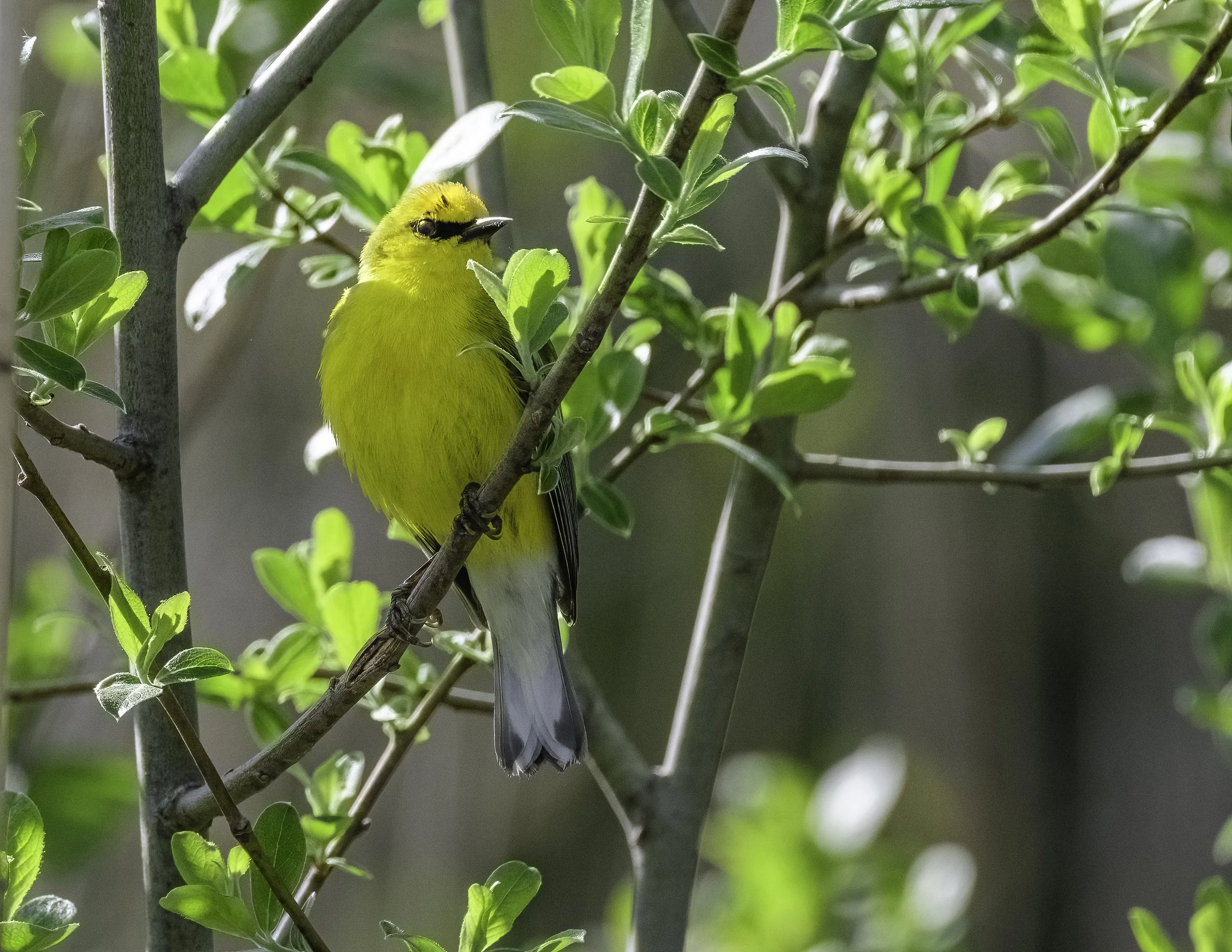
Blue-winged warbler - Silver Mine - 5/7/26
Another warbler which is not so easily seen but can be often heard in early spring is the Blue-winged warbler. I was surprised to find this bird here as I do not recall seeing him at this site in the past. I generally think of the Mine Road area that we will bird later tomorrow as the place we’ll see this wood warbler, so to find him here today only adds to my conviction that we really should have this site on our list of places to bird during the “Break” tomorrow.
Among the other birds heard this afternoon is one of the most ethereal calls of all the spring chorus. The Veery is one of the thrush family and sings a spiraling downward song which is actually made by singing two separate notes simultaneously. Birds produce vocalizations through vibrations through an organ known as the syrinx. The syrinx is located at the point where the trachea forks into the lungs and thus those two separate sounds can be produced. The downward spiral of the two notes is classic Veery vocalization and these birds are often heard rather than seen.
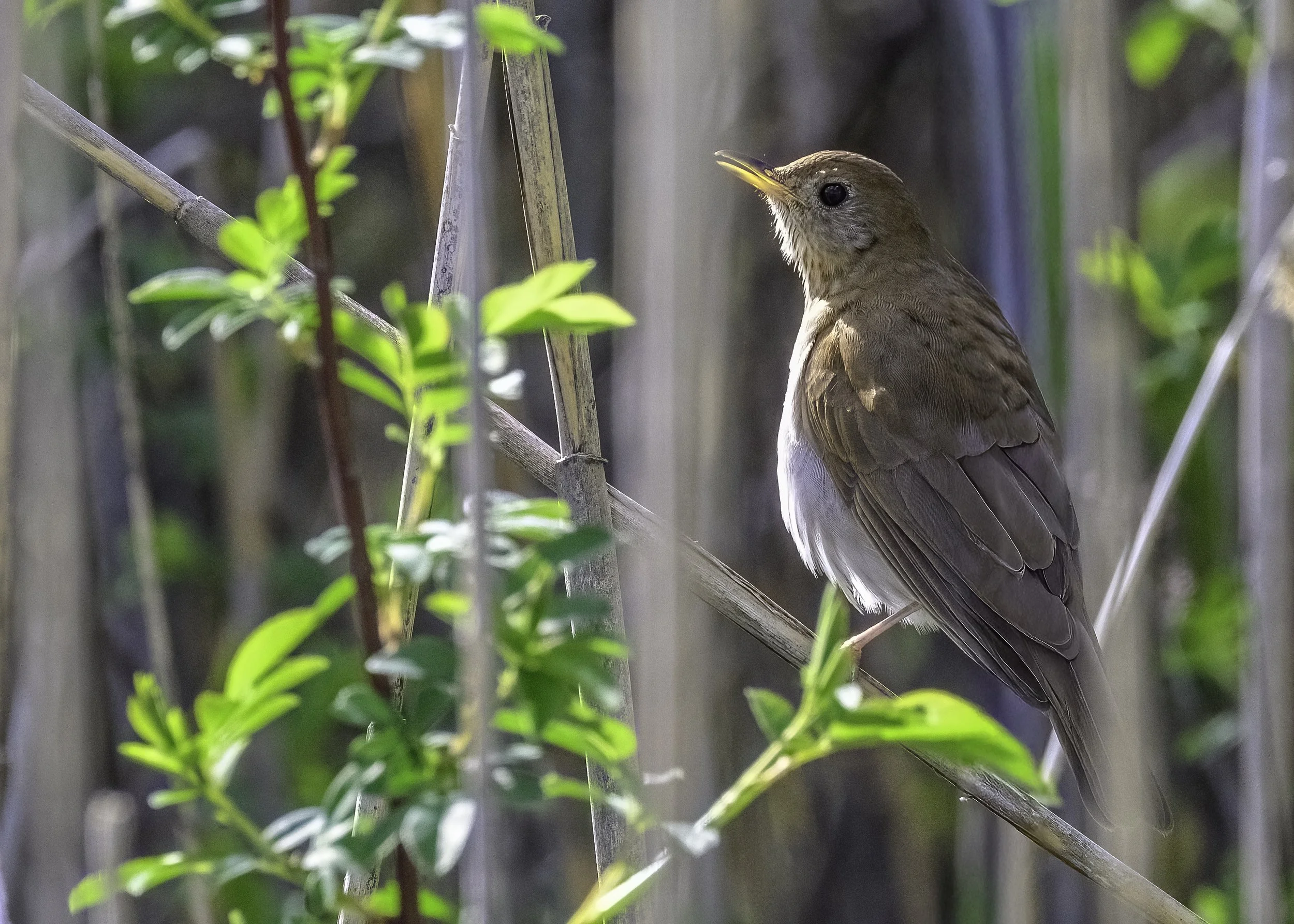
Veery - Silver Mine - 5/7/26
This Veery was calling continually and was difficult to spot until be briefly emerged, sang his song, and returned into the deeper vegetation. Sometimes you just have to be patient.
Tomorrow, we’ll head out around 7:00 AM and plan on birding throughout the day before ending up around sunset when we will try to hear the sounds of the Whip-poor-wills and the “Peeenting” of the Woodcock. After that, hopefully some Owl calls before our full day of birding is done. For now, we’ll be happy knowing that this spot offers some excellent chances for picking up a fair number of species without the need to waste a lot of time traveling between sites. Should be fun.