Birdies and Eagles….
I’ve mentioned before that I think a lot of golf courses get a bad rap when it comes to the imact they have on the environment. True, many courses overdo the use of pesticides and herbicides to control unwanted flora and fauna. Others, however, are “greener” and choose to use more environmentally friendly means of pest control. The other benefits of golf courses are the introduction of “edges” to the environment which (with the exception of cowbird incursion) are mostly helpful to birds.
“Edges” are the transitional zones where two habitat types meet, such as forest and field or wetland and upland. They provide birds with a concentration of resources and ecological opportunities that boost survival and reproductive success. These edge areas often offer greater food diversity and abundance, combining insects, seeds, and fruit from both adjoining habitats, along with varied foraging substrates and perches that facilitate hunting and vigilance. Edges also supply a mix of nesting sites and cover options, allowing species to select microhabitats that balance concealment from predators with access to food and mates. For many bird species, edges create microclimatic heterogeneity and structural complexity that support higher insect densities, increased light for visual foraging, and safer opportunities for movement and territorial display. While some species specialize in deep interior or open habitats, edge environments support a unique assemblage of adaptable and opportunistic birds, enhancing local biodiversity and ecosystem function.
As a person who plays the game of golf (I hesitate to say I’m a “golfer”), I love the fact that I can enjoy birding while suffering through a round of golf. My wife Sharon often joins me in the cart even though she does not play. She keeps tally of strokes and birds seen. Today, we are out at Hidden Lakes Golf Course in New Smyrna Beach. I played 9 holes in the early afternoon and then led a Southeast Volusia Audubon field trip around the course in the evening.
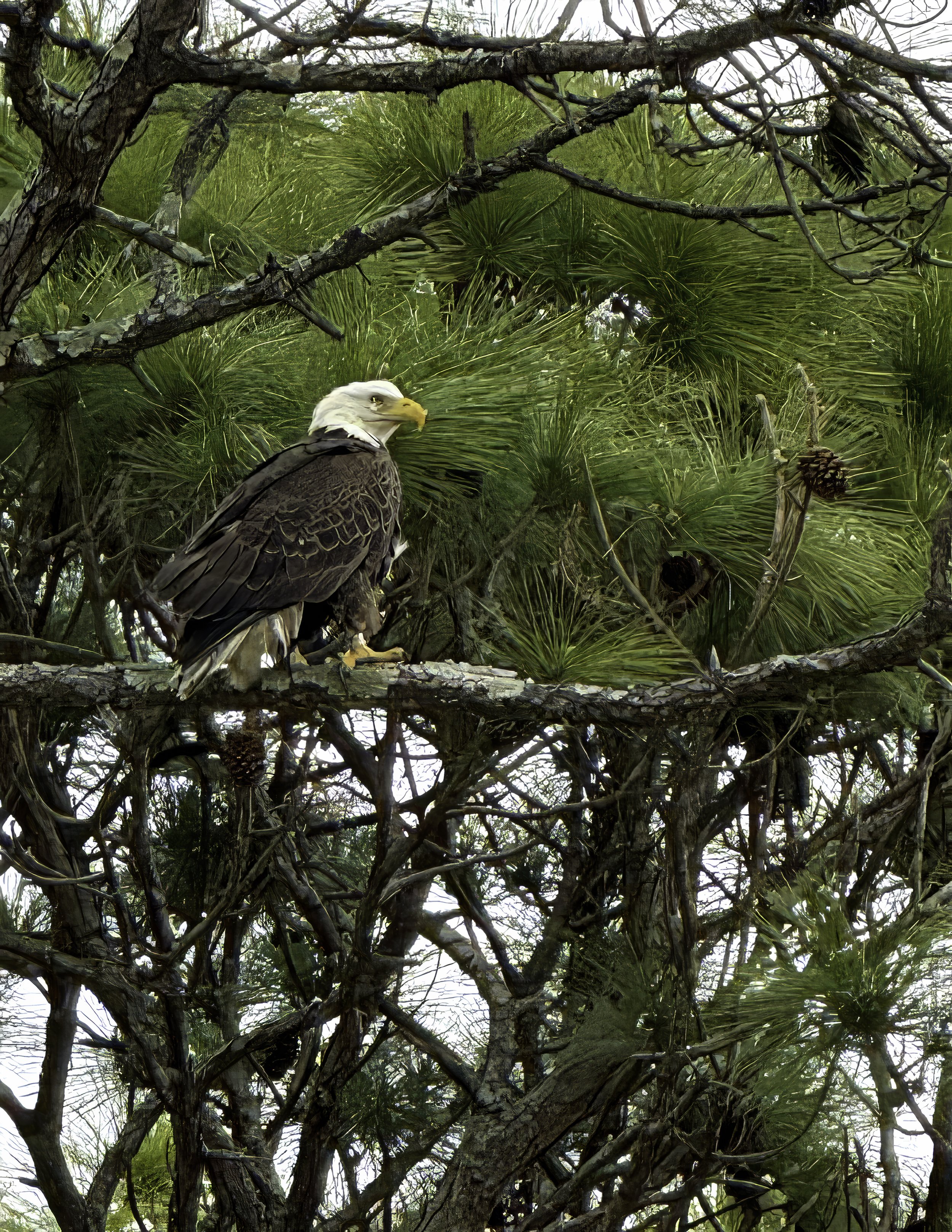
Bald eagle on #2 Tee box - Hidden Lakes GC - 3/19/26
During the early afternoon round, as we approached the number 2 tee box, a beautiful Bald eagle came soaring in and landed above the tee box as if to observe and perhaps offer suggestions on how to improve my swing. A Boat-tailed grackle came in and landed on the tee box which brought in a second eagle with talons extended. He was just bluffing apparently and flew up into a second nearby tree. Couldn’t get them both in the same frame with my phone camera, but this one gives you the idea of their vigilance.
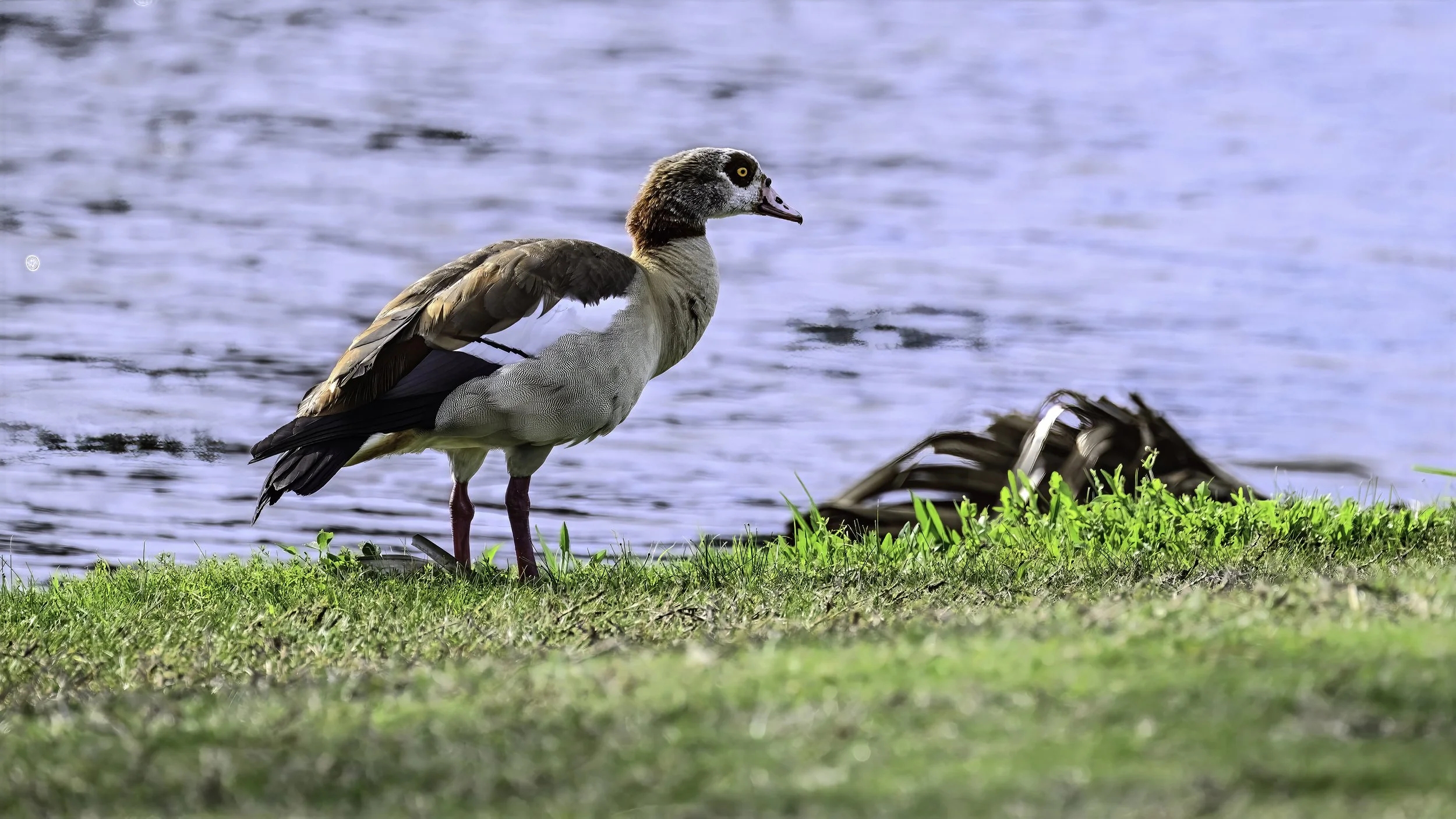
Adult Egyptian goose - Hidden Lakes Golf Course - 3/19/26
Later, as I was signing our Audubon group in, a trio of Swallowtail kites flew over the heads of our assembled team of birders out loading into the golf carts that would take us around the course. Sorry I missed them, but glad the group got a chance to see these early spring arrivals to this part of Florida. As we headed out onto the course, we immediately spotted a lone Egyptian goose. This species is native to Africa, but it has established a growing presence in parts of Florida after escaping captivity and breeding in the wild. Its bold chestnut eye patches, buff body, and dark wing patches make it unmistakable in parks, ponds, and golf course water hazards. Often found in small flocks, these geese feed on grasses and aquatic plants and can be territorial during nesting season, sometimes displacing native waterfowl. While their colorful appearance draws birdwatchers and photographers, managers and conservationists keep an eye on their expanding populations which were evidenced by a family of 5 chicks we later observed on the course.
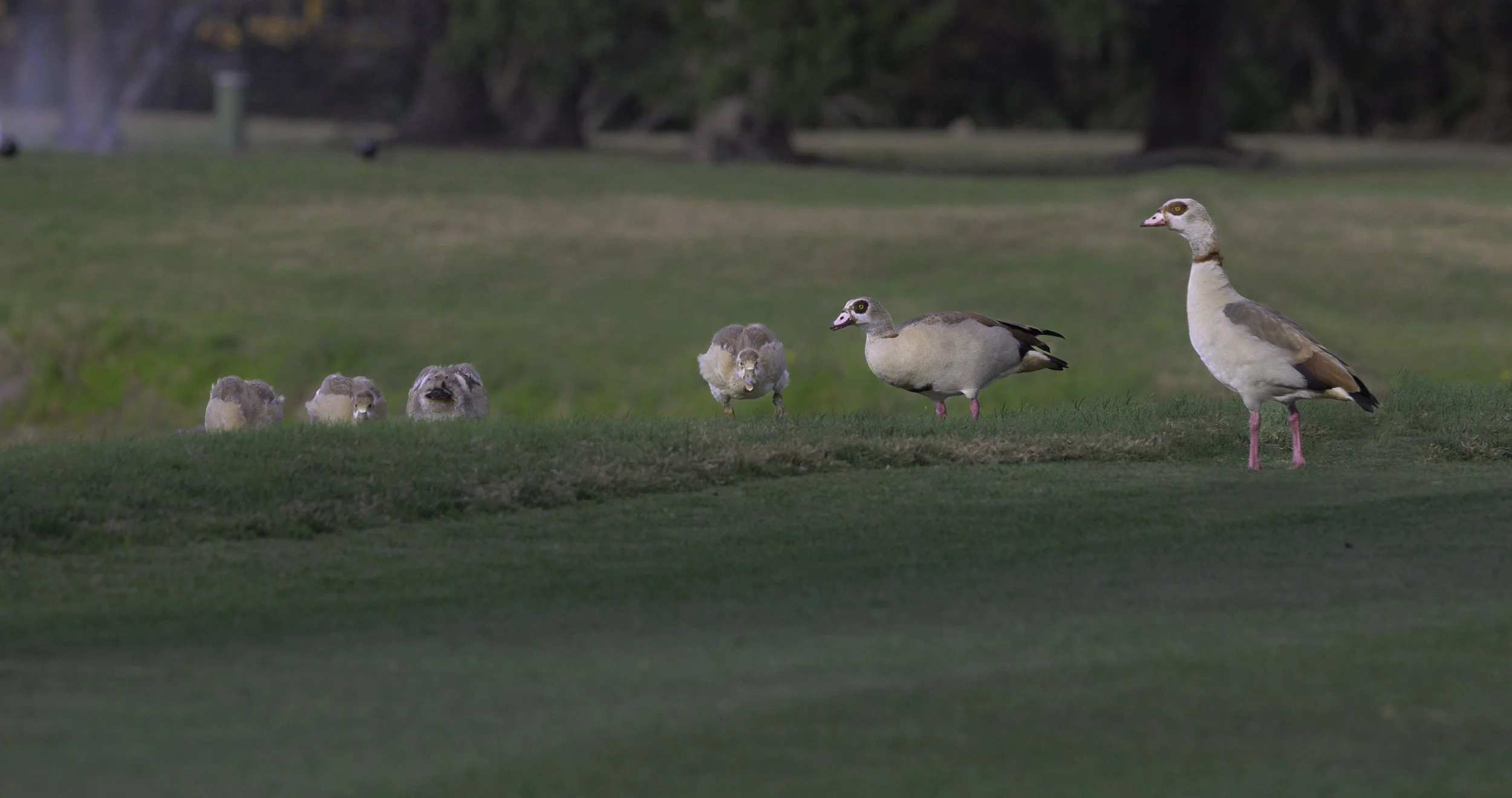
Egyptian goose family - Hidden Lakes - 3/19/26
Continuing around the course, we ran into a single Sandhill Crane standing in the middle of fairway #3. These birds are rarely seen alone, especially at this time of year when they are beginning to breed. As we drove by, the bird began its loud unmistakable call as if summoning its mate. I fear something may have happened to the partner as their was no response to this birds beckoning .
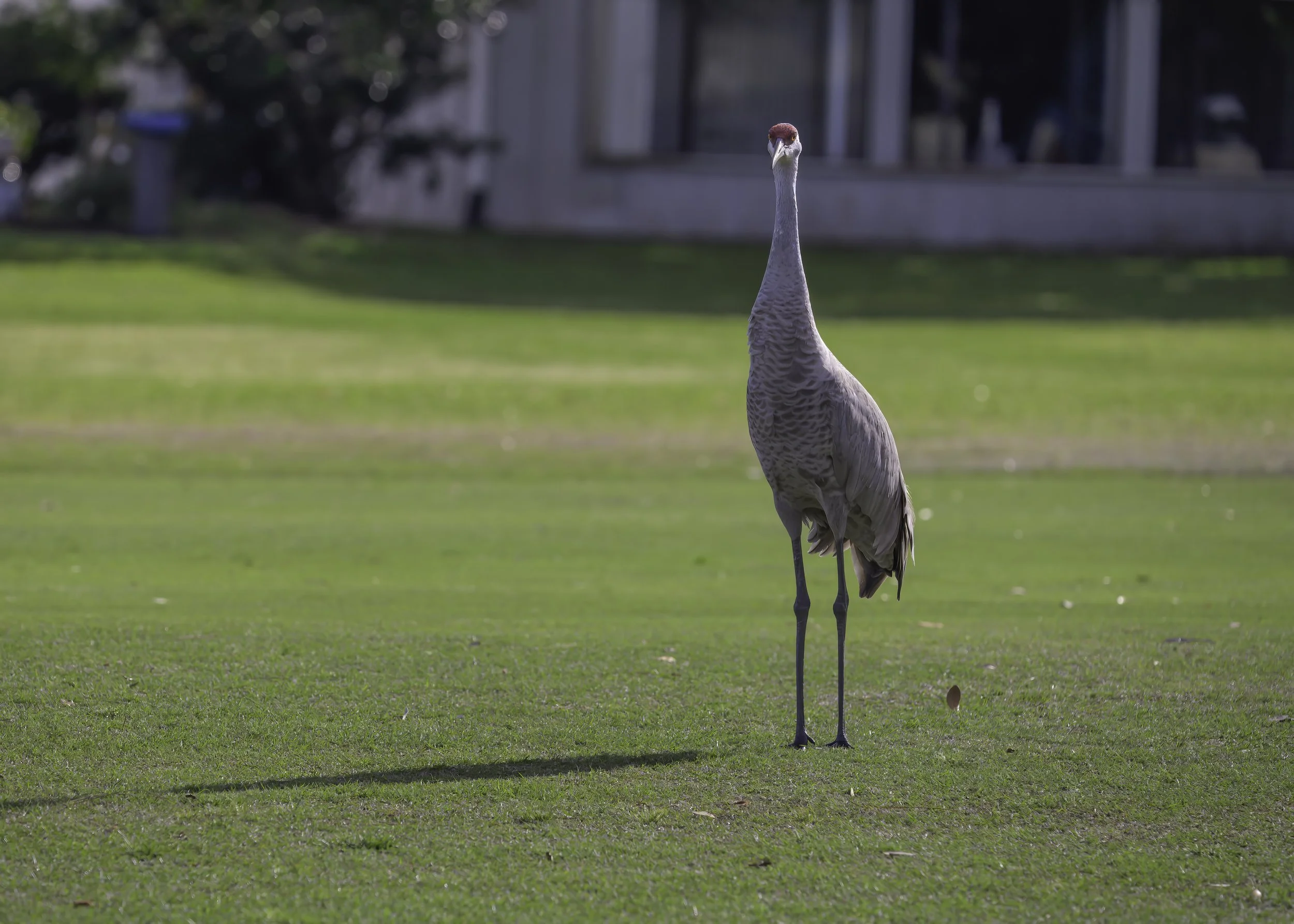
A lone sandhill crane - Hidden Lakes - 3/19/26
Just beyond the crane along the same fairway, one of our number spotted a hawk flying into a tree adjacent to the open course (another edge). This was a Red-shouldered hawk, a raptor very common to the southland. Those of us in the northern states are familiar with the ubiquitous Red-tailed hawk. Down here in Florida, the default hawk is this Red-shouldered.
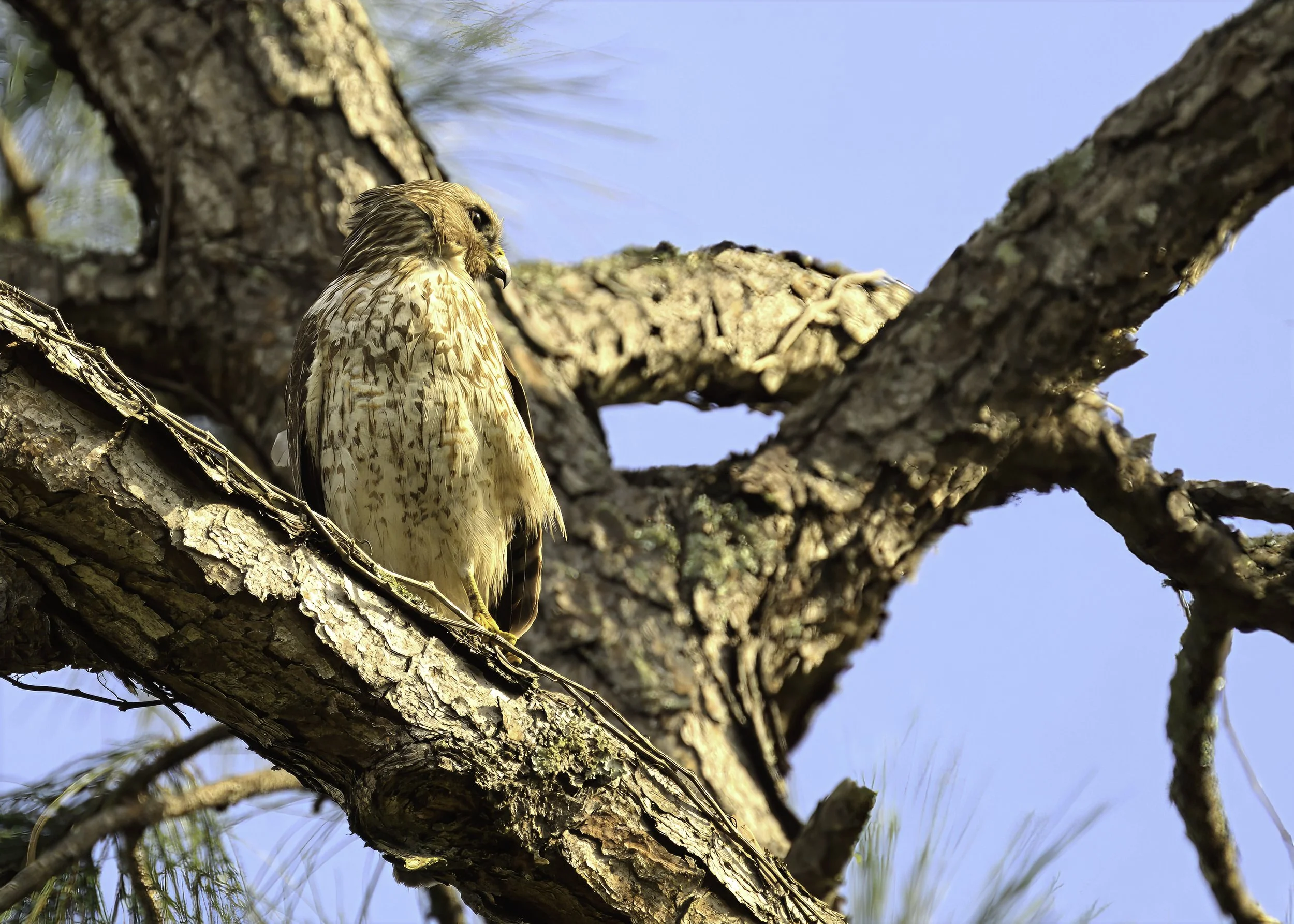
Red-shouldered hawk - Hidden Lakes - 3/19/26
Continuing around the course, we first ran into a flock of Catbirds feeding on the berries of an invasive Brazilian pepper bush. A bit further along, we found this gorgeous Eastern bluebird. It too was enjoying its dinner, but this bird prefers good ole meat to the vegetarian diet the catbirds were dining upon. This time of year always brings out the finest colors in most birds and the plumage of this bluebird is certainly no exception.
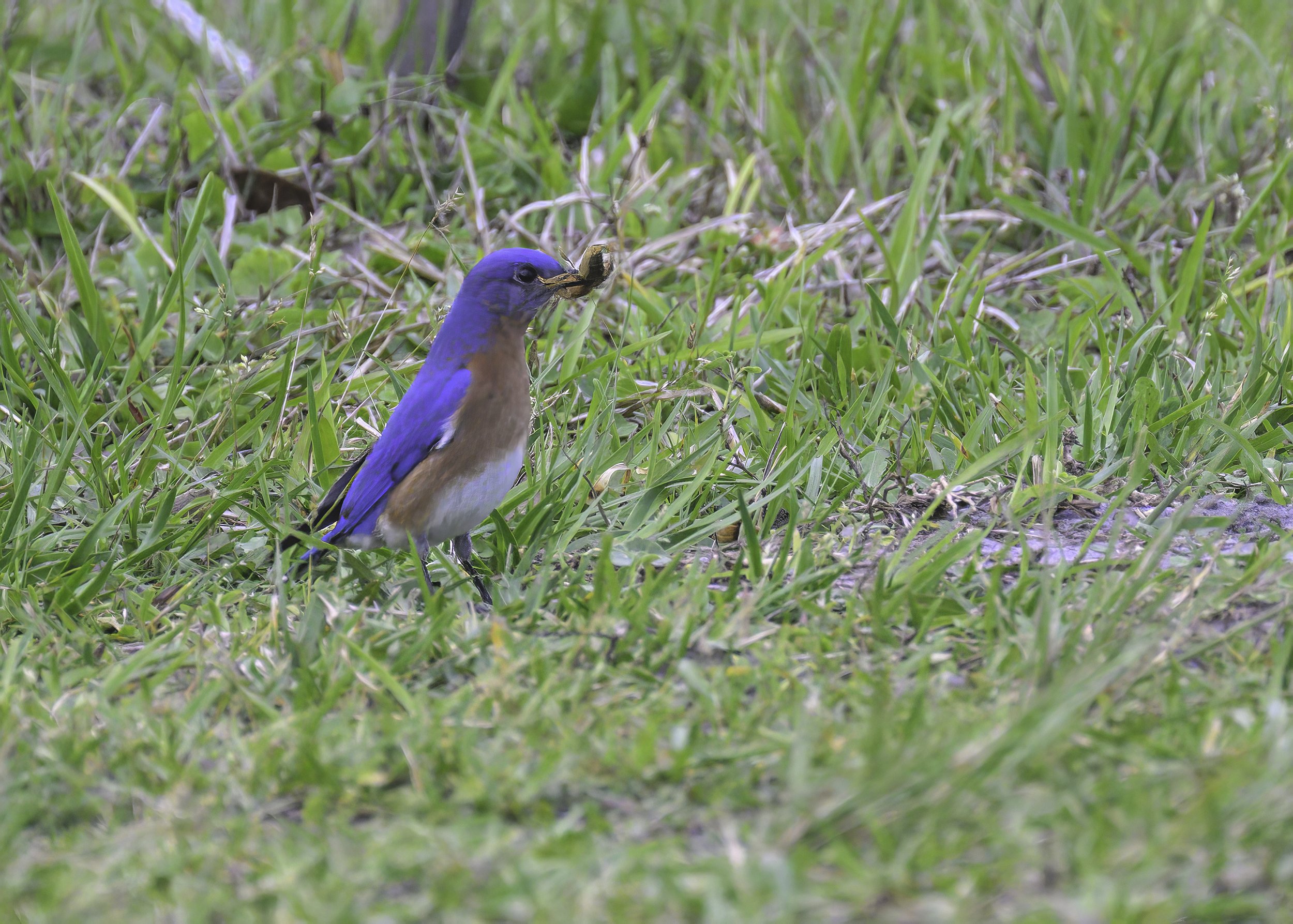
Eastern bluebird - Hidden Lakes - 3/19/26
In a nearby pond, a Snowy egret was hunting for its evening repast as well. Distinguished by its “golden slippers”, this bird was once hunted almost to extinction for its fine plumage. The Audubon Society has its origin in the efforts to put an end to the senseless slaughter and the conservation of this beautiful species.
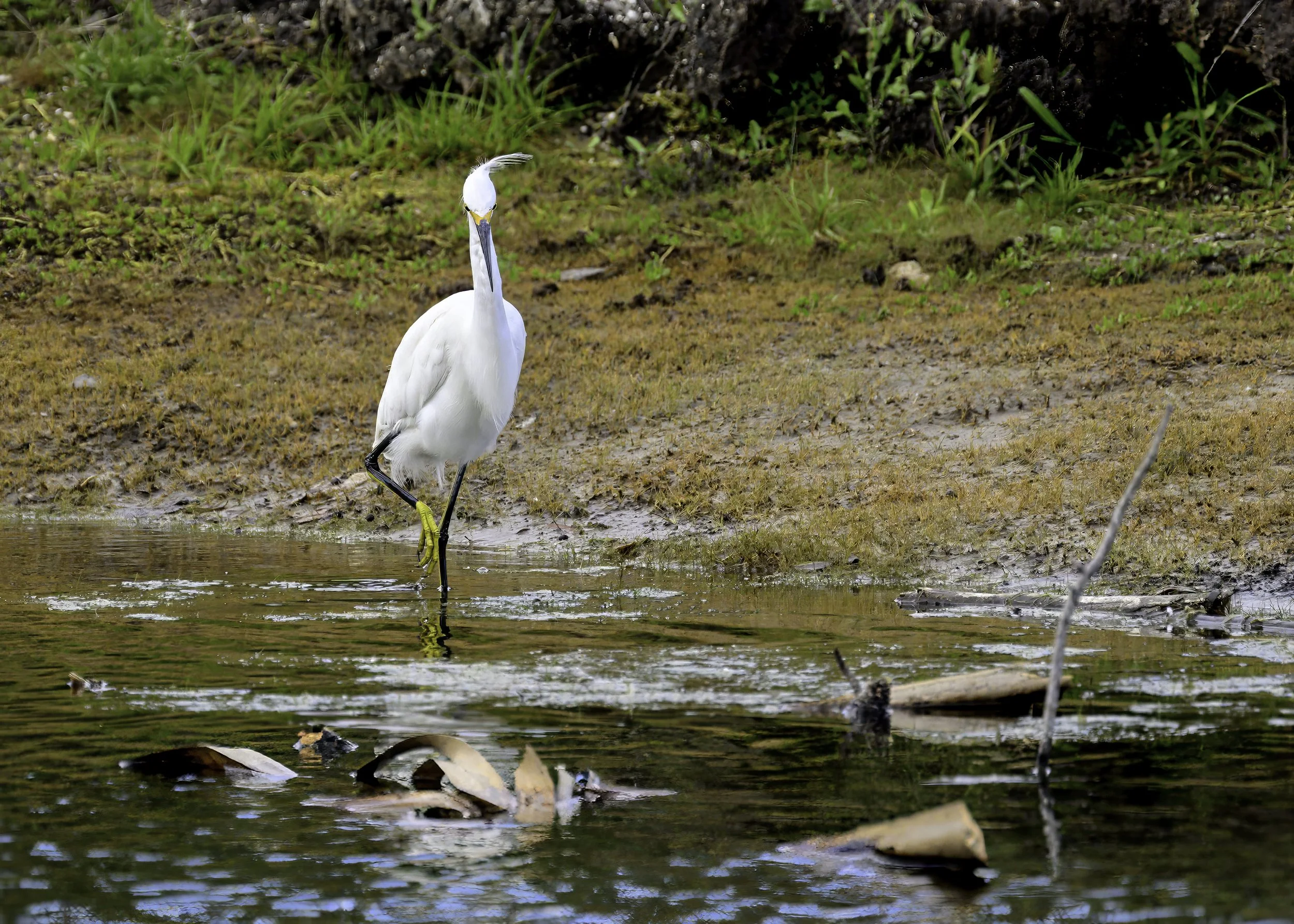
Snowy egret - Hidden Lakes - 3/19/26
Just a few more species typical of this evening’s sightings….first the Mottled duck found on another of the large
not-so-hidden lakes of Hidden Lakes Golf Course.
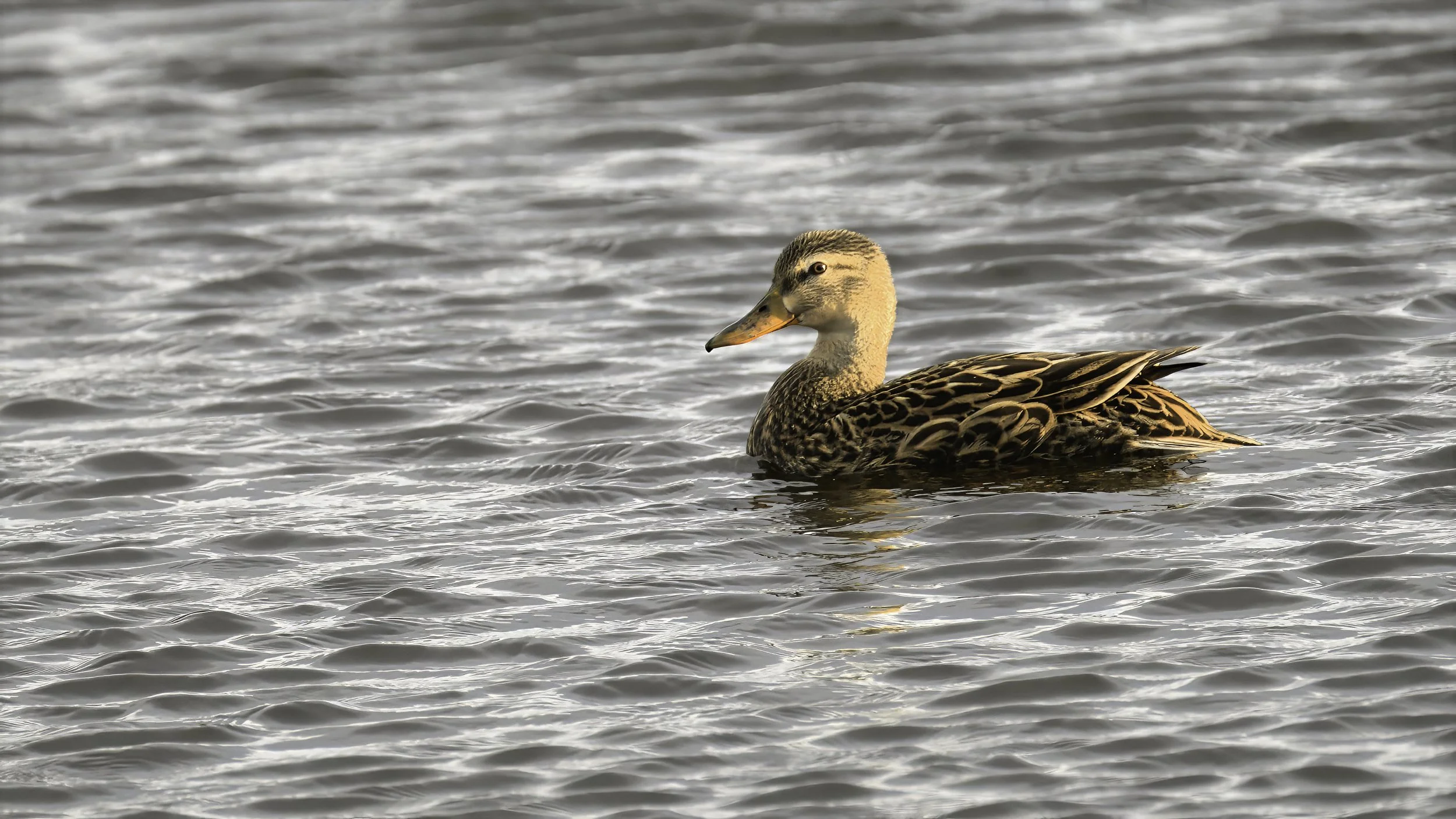
Mottled duck - hidden Lakes - 3/19/26
Next, the Double-crested cormorant seen on an island in the same lake. You can actually see the “crests” on this birds head. These are signs of breeding readiness and are not visible thoughout most of the year. Yet another sign of spring which officially begins tomorrow.
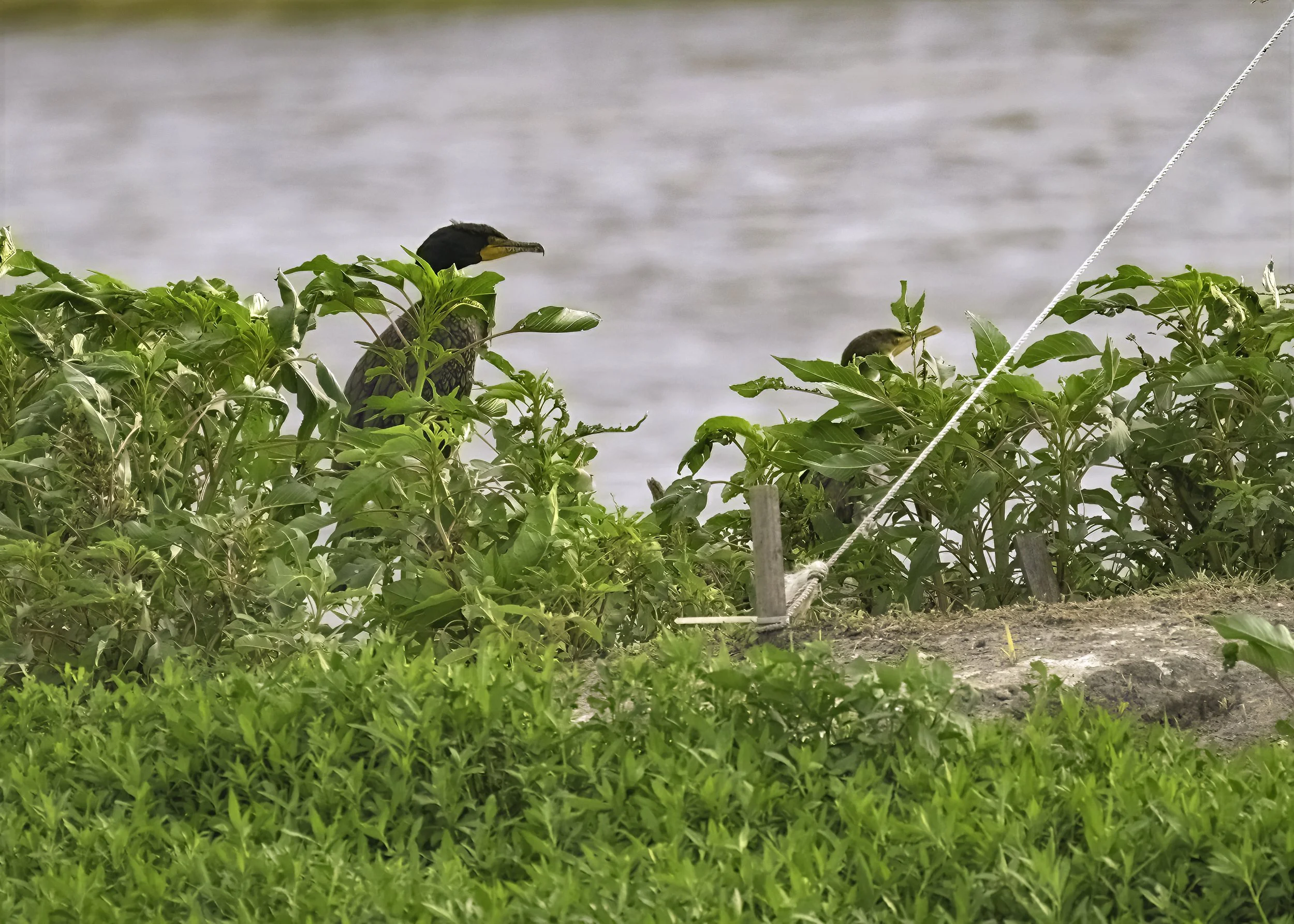
DC cormorant - Hidden Lakes - 3/19/26
Last but not least, we had a Great blue heron looking for its evening snack on a small inlet by the 18th tee. Hopefully, this images in today’s post give a good impression of the wide variety and number of birds which find this golf course among many others as suitable habitat in which to thrive. Thanks to Robert and the staff of Hidden Lakes for giving us access to this wonderful environment for an afternoon of birding. Just another example of how golf courses can enrich the habitat and care for the local wildlife by providing marvelous habitat and a beautiful place for golfers and nature lovers alike to enjoy the beauties of the great outdoors.
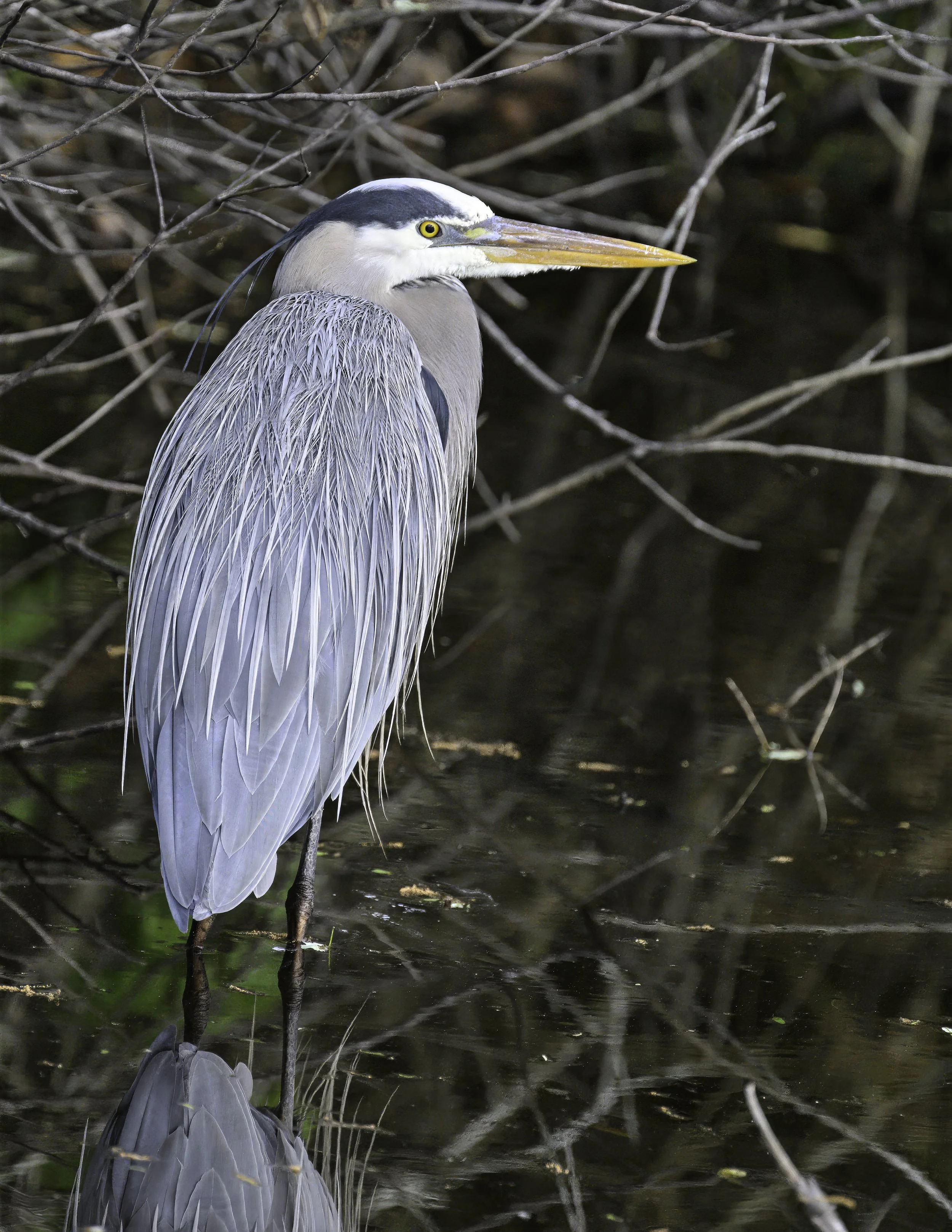
Great blue heron - Hidden Lakes - 3/19/26