Backyard Biodiversity-Mammals
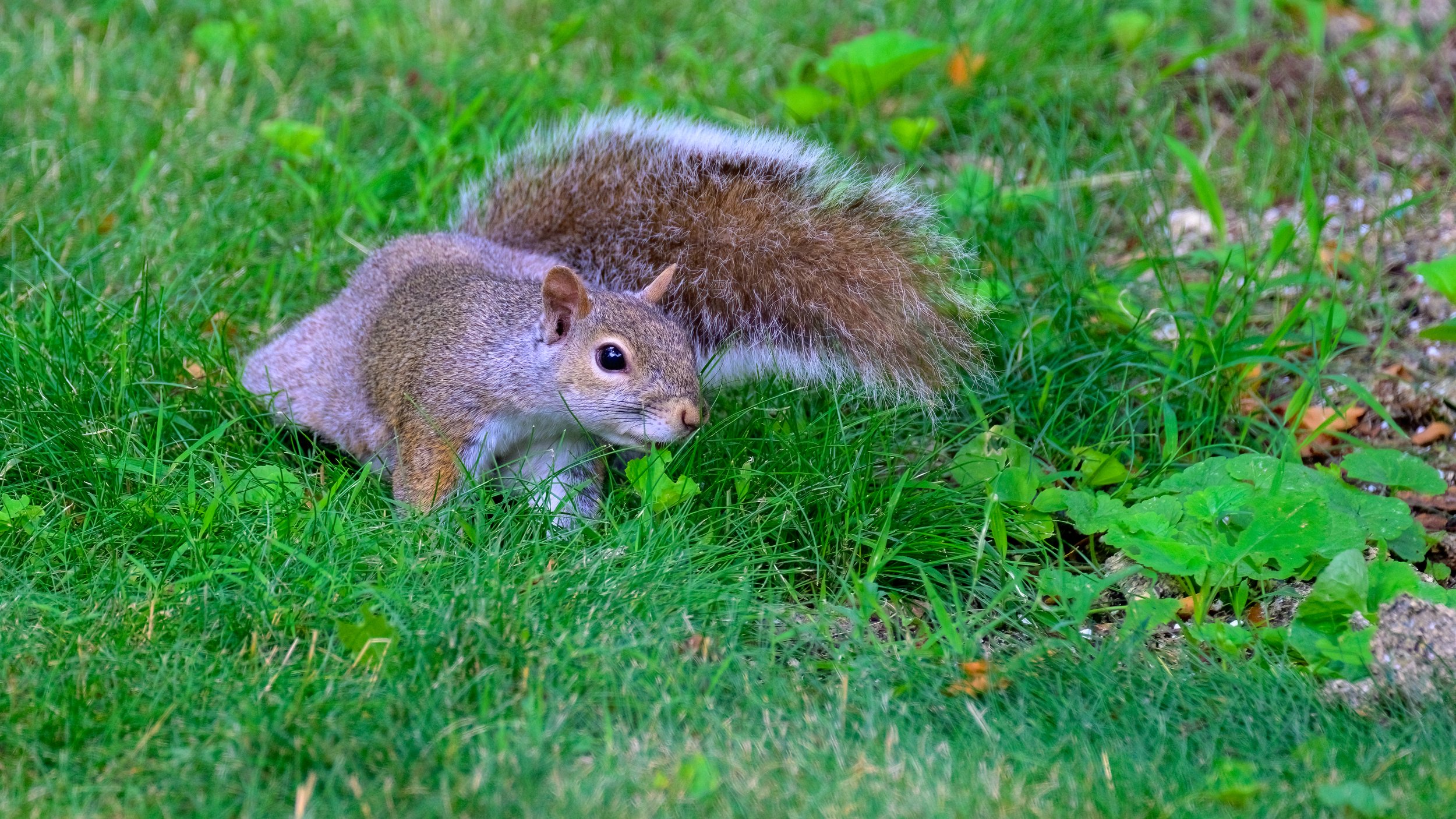
Gray squirrel - Backyard - 6/30/26
With the onset of our first official heat wave and forecasts for “feels like” temps in the triple digits, I chose to limit my sphere of observations this week to our own backyard. That old saying of “can’t see the forest for the trees”literally means that there are so many trees right in front of you that they block you from stepping back to see the beauty of the entire woods. During this week, however, I plan to dive more deeply into my “forest” (aka back yard) and return to looking more closely at what makes up the ecosystem I’ve spent my entire life living in. I’ve done this exercise before, but too often I forget to get down on my hands and knees (no easy task these days) to take a closer look at what surrounds me.
Let’s start with some of the “megafauna” in this small plat of land (100’X75”). Usually, we refer to animals around 100 pounds plus as true megafauna, and yes, I have observed animals this large in the little bit of Eden I call home. Black bears (face to face!) and White-tailed deer are occasional visitors, but admittedly they are pretty rare of late. So rather than something that large, let’s just start with small mammals I have seen in this yard. One species that is certainly hard to miss is the Gray squirrel. Anyone who feeds the birds will know that in fact they are feeding the squirrels.
Gray squirrels in southeastern New York are a common and adaptable presence in parks, suburban yards, and fragmented woodlands, easily recognized by their bushy tails, gray-brown fur with occasional rust tones, and white underparts. Active year-round, they forage for acorns, walnuts, seeds, fruits, and fungi, caching many items in scattered shallow holes that they sometimes recover later, which helps with tree regeneration. They breed twice a year—typically late winter and again in mid-summer—producing litters of two to four young (I truly believe that ALL chose to stay here), and their acrobatic tree-to-tree movements and vocal chattering are quite familiar to us. Gray squirrels thrive near human habitation because of abundant food sources and nesting opportunities in tree cavities or dreys, but they can also compete with other species and, occasionally, cause minor property damage by gnawing on wood or raiding bird feeders. On our property, there are no fewer than 8 residents that keep us entertained and frustrated at the same time.
Next mammal is the Red fox. This fellow is pretty much nocturnal and it is only on rare occasions that I will see him trotting across the property during daylight hours. More often, his presence is known by the images he leaves behind on the “Trail Cam” I have trained across the yard in the nighttime hours.
In the past, I’ve encountered moles, voles, chipmunks, House mice and Norway rats on the property, but lately, these have not been observed. Perhaps the presence of the fox has led to this paucity. These rodents can be attracted to seed that falls from the backyard feeders, and it is often around the feeders that Mr Fox shows up. Correlation and causation? As Steve Irwin used to say, “It’s Nature’s way”.
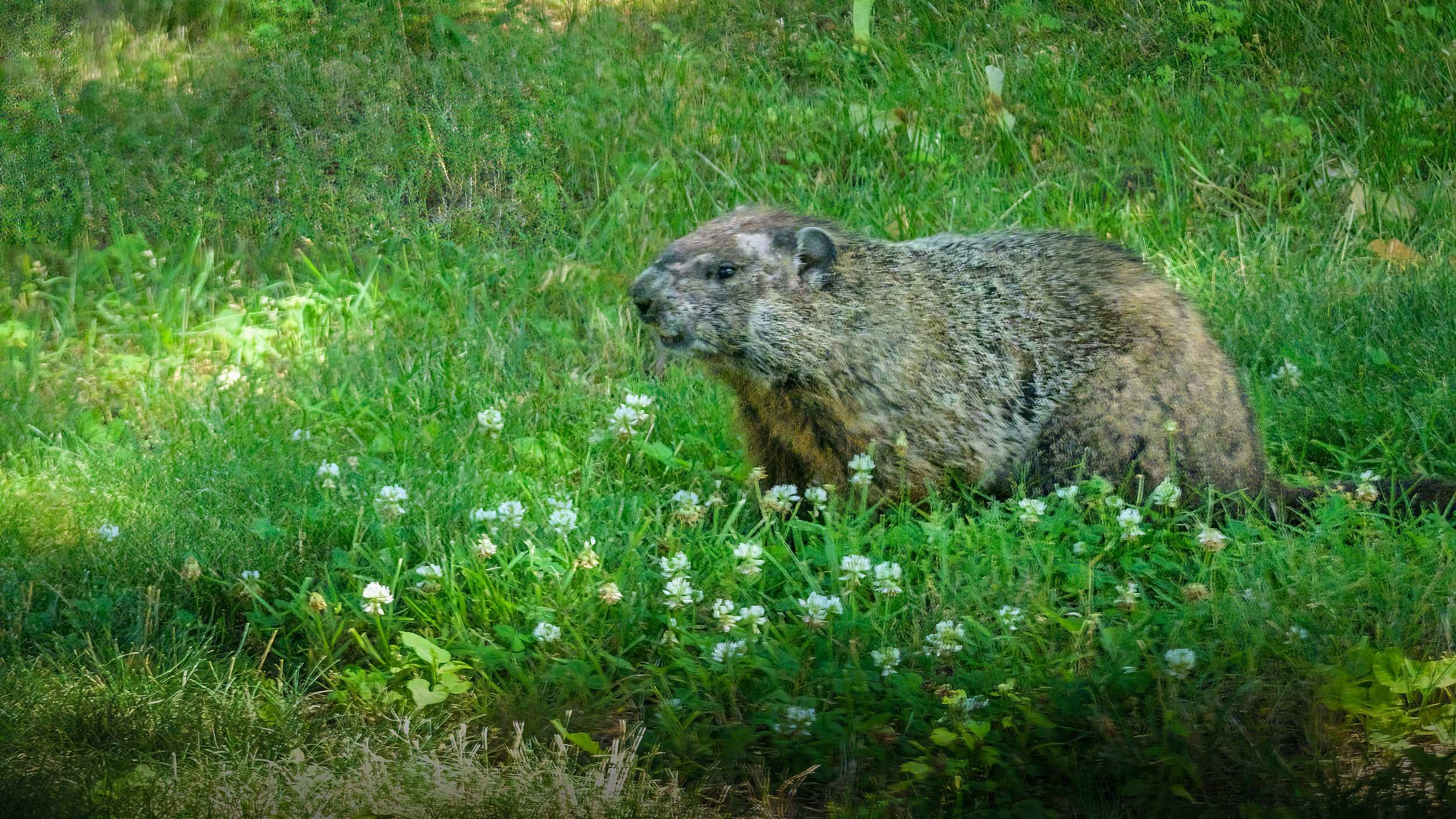
Ground hog - Back yard - 6/18/26
Another back yard resident in my small plot of land is the Groundhog. Also commonly referred to as Woodchucks and less so as whistlepigs, these are large burrowing rodents in the squirrel family. This rodent lives in a burrow that he has excavated under our tool shed on the back border of our property. In southeastern New York, Groundhogs are common residents of fields, edge habitats, and suburban yards, where they feed on grasses, garden vegetables, and young tree shoots. Our resident individual loves to feed on the clover found in our lawn. Adult groundhogs there are usually 4 to 9 pounds and can be seen basking on sunny days in spring and summer, when they are most active. Their population dynamics are influenced by habitat availability, predation (foxes, coyotes, raptors), and human activity such as road mortality and garden control measures. I find it is necessary to plant ornamental plants and our tomatoes in the deck close to the house to dissuade this fellow from dining on the flowers. Last year, I had a small crop of squash by the house. One day the garden was a wash of yellow as the squash was flowering. Next day….every single blossom was cut off as cleanly as if you had used a pair of scissors.
Finally, although I have no recent photos for documentation, I can report that we also have also seen shrews, skunks and opossums which frequent the property. So here at our home in a fairly crowded development, on a piece of land about 1/5 of an acre, I have recorded at least a dozen species of mammals that will show up at one time of another. And that’s just mammals…..