Lake Apopka
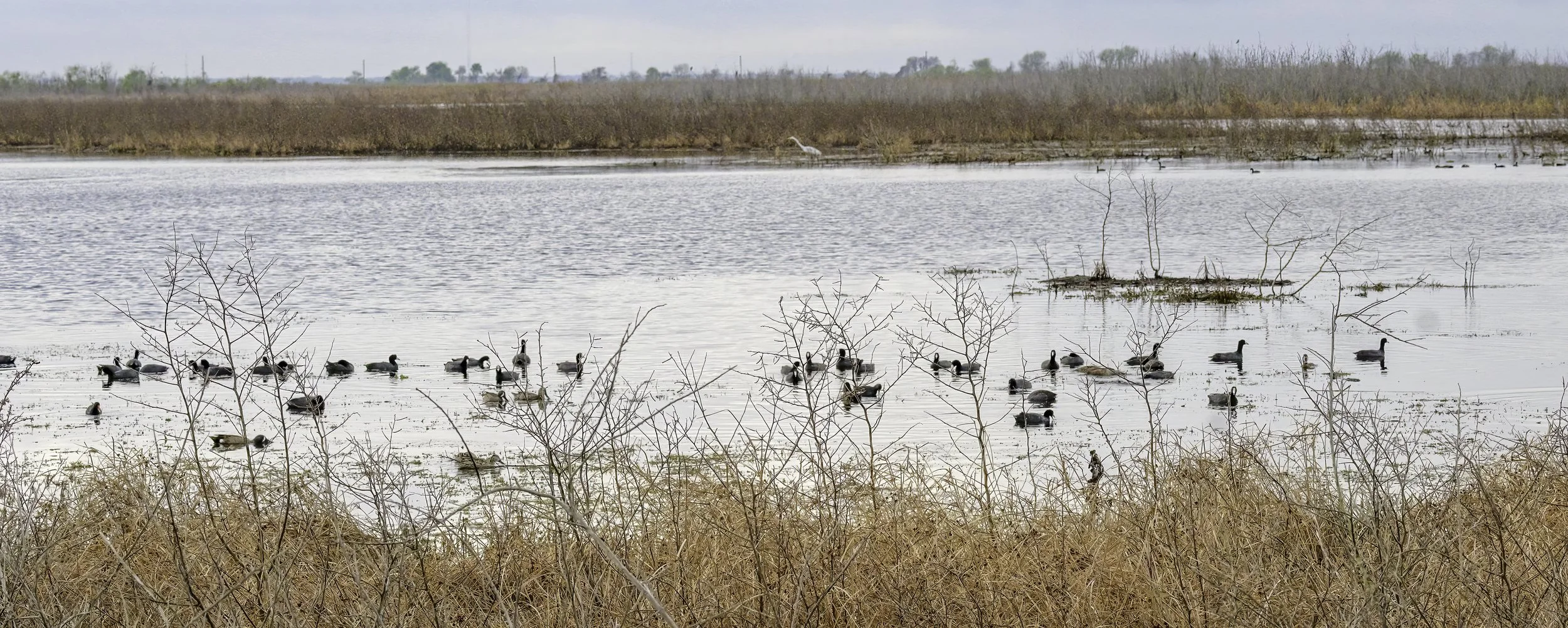
Raft of coots - Lake Apopka - 2/22/26
Lake Apopka North Shore Wildlife Drive offers a serene, wildlife-rich escape where visitors can drive, bike, or walk along a 11-mile loop through wetlands, marshes, and restored prairie, providing excellent opportunities to see wading birds, migratory waterfowl, alligators, and a variety of native plants. Pullouts allow for birdwatching and photography while seasonal changes—from spring wildflowers to wintering ducks—alter both the landscape and wildlife activity, making it a rewarding destination for nature lovers and photographers. A small group from the Southeast Volusia Audubon ventured out to this marvelous site in hopes of seeing birds such as the Gray-headed swamphen, Crested caracara, Fulbous whistling duck and a variety of waterfowl.
It’s amazing how long it can take to drive 11 miles when there is so much to see and so many photographic opportunities, Early on, we spotted a flycatcher which even with the help of several photographs we were not able to finalize a definitive identification. Such is the nature of our sport. The more we learn and think we know, the more we realize we are only scratching the surface. Today’s weather conditions did not help our cause in identifying much of the avian life we found. Birds in light rain and subdued light can be quite difficult to get good looks at. Here is another way in which photography contributes greatly to the success of our endeavors. The picture of the Merlin seen below is quite defiitive and no-one who knows their birds would hesitate to see this as a Merlin.
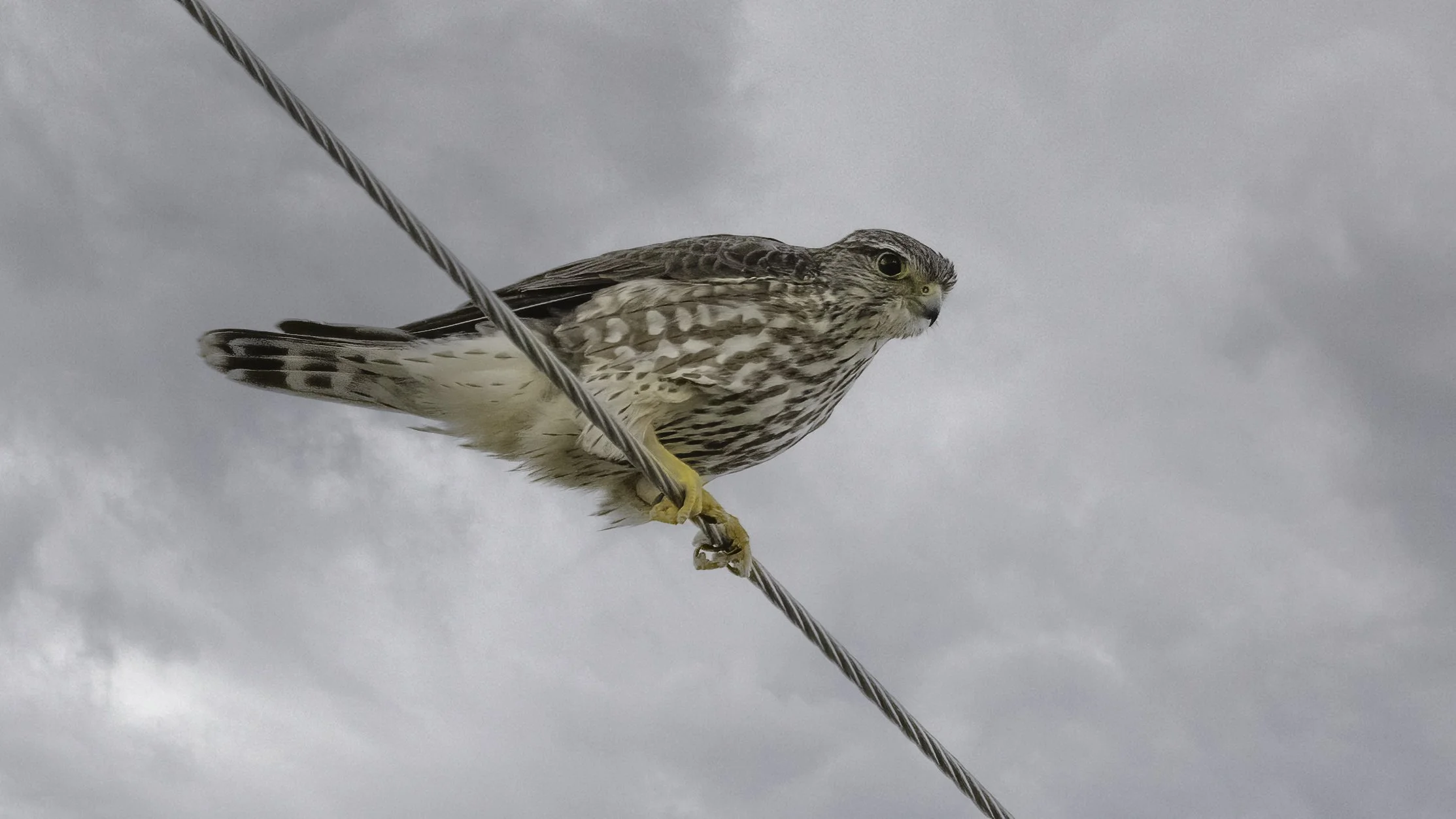
Merlin - Lake Apopka - 3/22/26
And yet, in subdued light, through a rain-streaked windshield, we had trouble getting a real good look until we rolled down the window and captured an image of the bird. The camera generally sees so much more than the human eye, and this was the case with this bird. Another falcon which we did not have any trouble identifying was perched right next to the dirt road and we all quickly recognized this handsome Peregrine falcon.
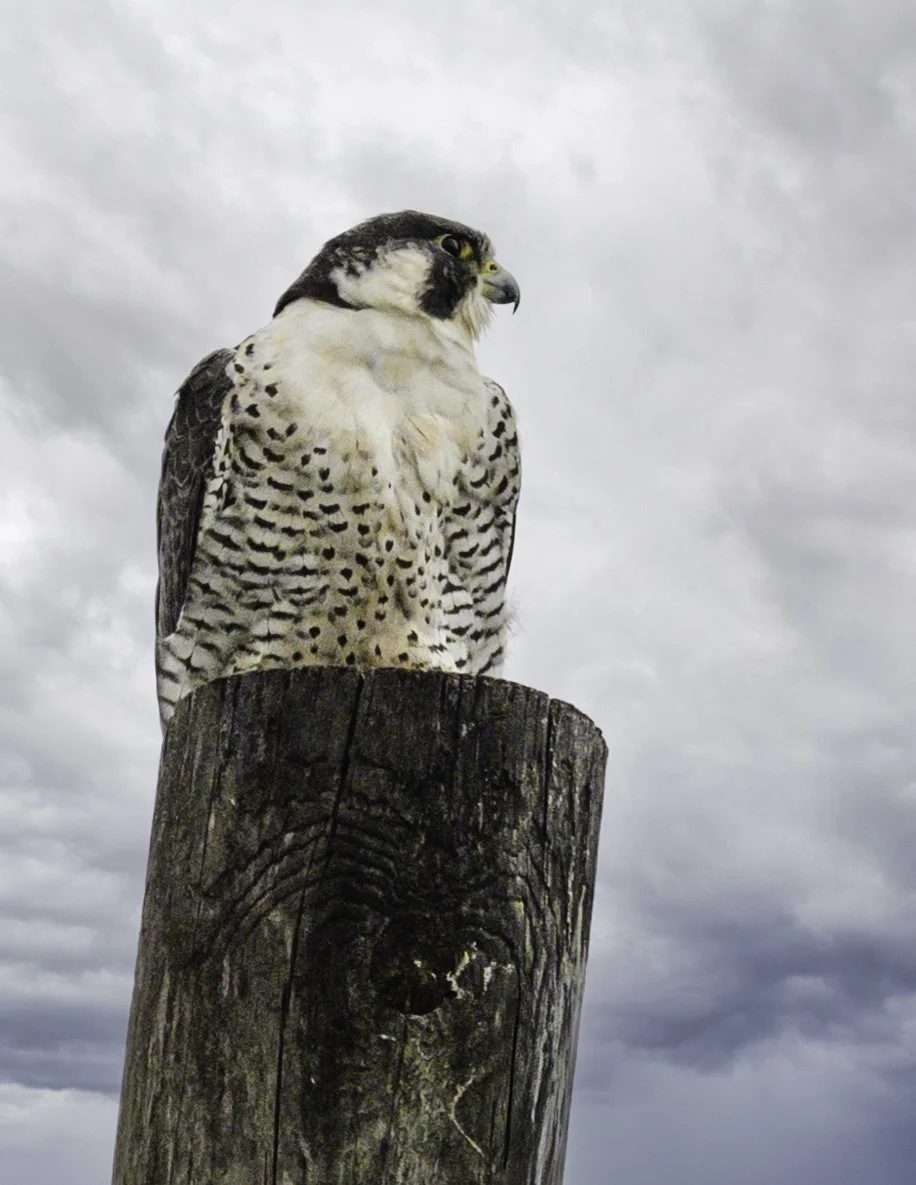
Peregrine falcon - Lake Apopka - 2/22/26
The ducks were certainly in their own element today with the “on again-off again” periods of rain and drizzle. It was nice having many of them coming close to the roadside and giving us great looks and opportunities for photographs. The Rind-necked ducks were numerous and oh so well adorned!
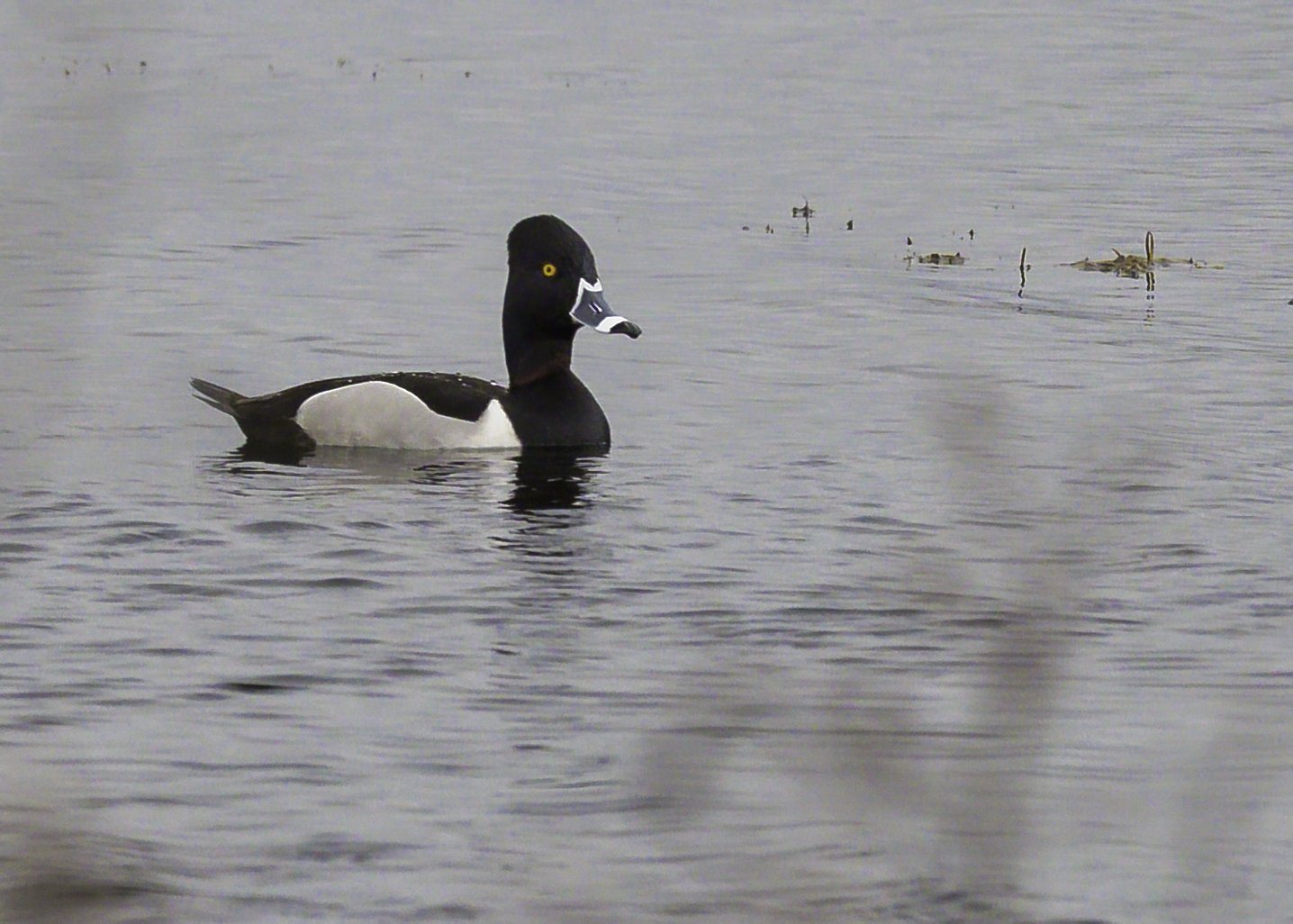
Ring-necked duck - Lake Apopka - 2/22/26
People wonder why this duck is called “ring-necked” rather than “ring-billed”. The latter is certainly a better descriptor as the ring around the neck (yes…there is in fact a very faint light ring around this bird’s neck) is so much less obvious than the pure white ring around the bill!
Another fine looking duck, the Gadwall, was also found in good numbers today. The gadwall is a medium-sized dabbling duck with understated, elegant plumage. Males display a finely patterned gray-brown body with a jet black rear end and subtle chestnut patches on the wings, while females are mottled brown and more muted. Both sexes show a distinctive white speculum that flashes in flight. Gadwalls feed mainly by dabbling and grazing on aquatic vegetation, seeds, and small invertebrates, often joining mixed-species flocks with other dabblers like teal and pintails.
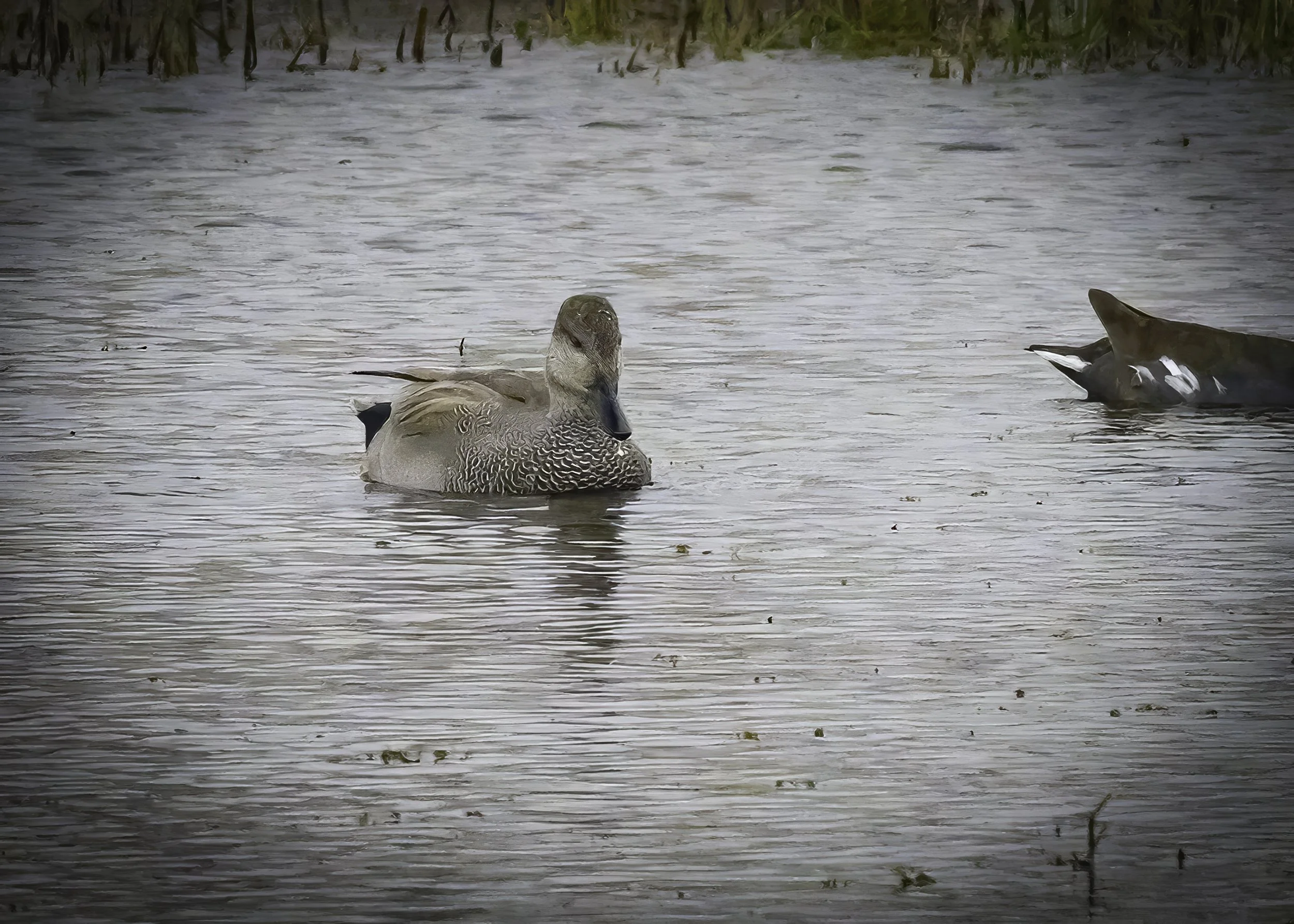
Gadwall - Lake Apopka - 2/22/26
One of the target birds for a trip to Apopka is the Gray-headed swamphen. The grey-headed swamphen is a n impressive waterbird known for its vivid plumage and large size featuring deep blue and purple body feathers, a grey crown, and a prominent red bill and frontal shield. It inhabits freshwater wetlands, marshes, and rice paddies across South and Southeast Asia and parts of the Middle East. During the 1990s, some of these birds escaped from captivity and have since established themselves as an entrenched breeding population in the southern part of Florida.
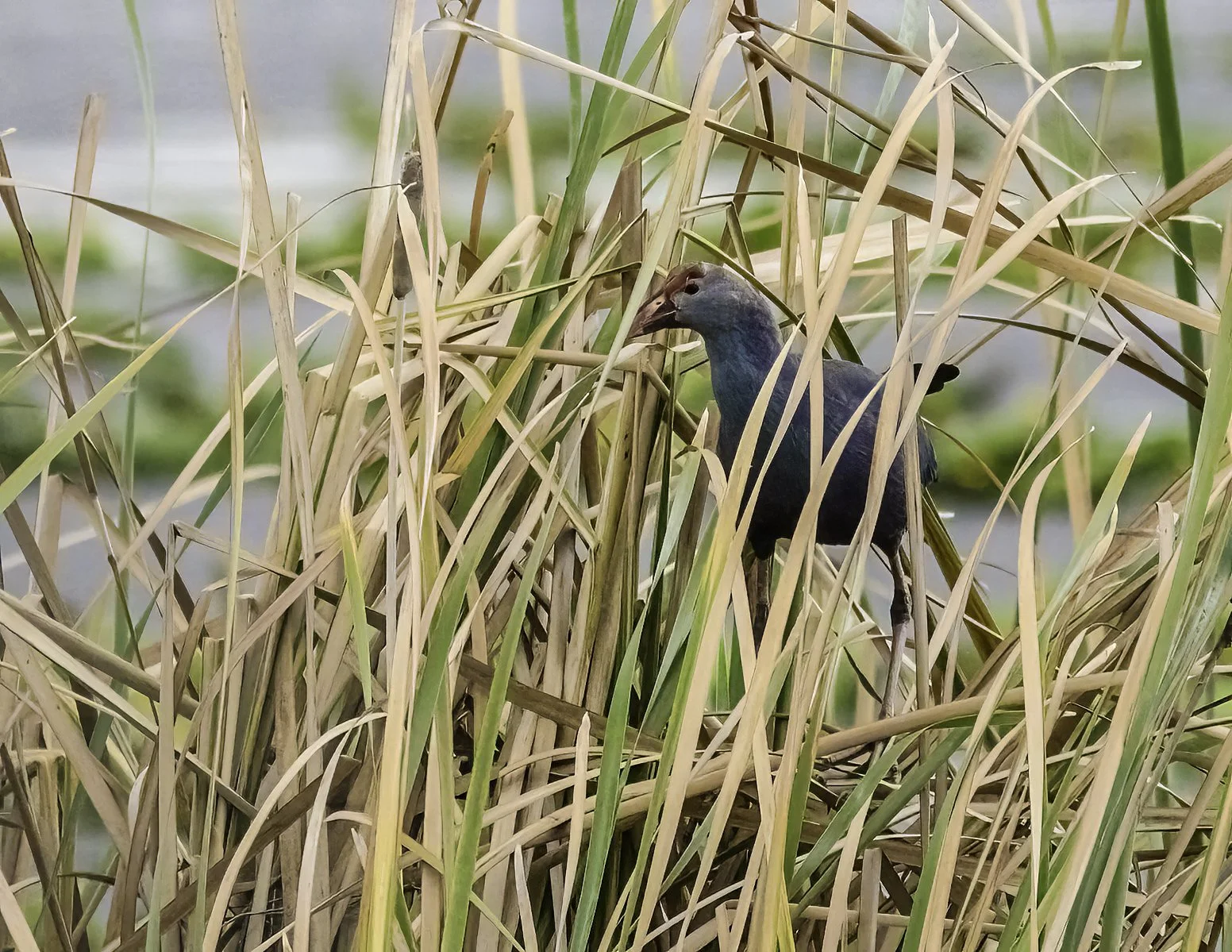
Gray-headed swamphen - Lake Apopka - 2/22/26
One final bird of note on today’s trip is the Purple gallinule. This striking marsh bird is known for its iridescent plumage—deep purples, blues, and greens—contrasting with a bright red and yellow bill and long, slender toes that allow it to walk on floating vegetation. Found across the southeastern United States, it favors freshwater wetlands, ponds, and marshes where it feeds on a varied diet of seeds, fruits, invertebrates, and small vertebrates. It closely resembles the Common gallinule (formerly known as the Common moorhen) but lacks the white slash seen on the sides of the “common” and sports a bright blue shield on the front of its face.
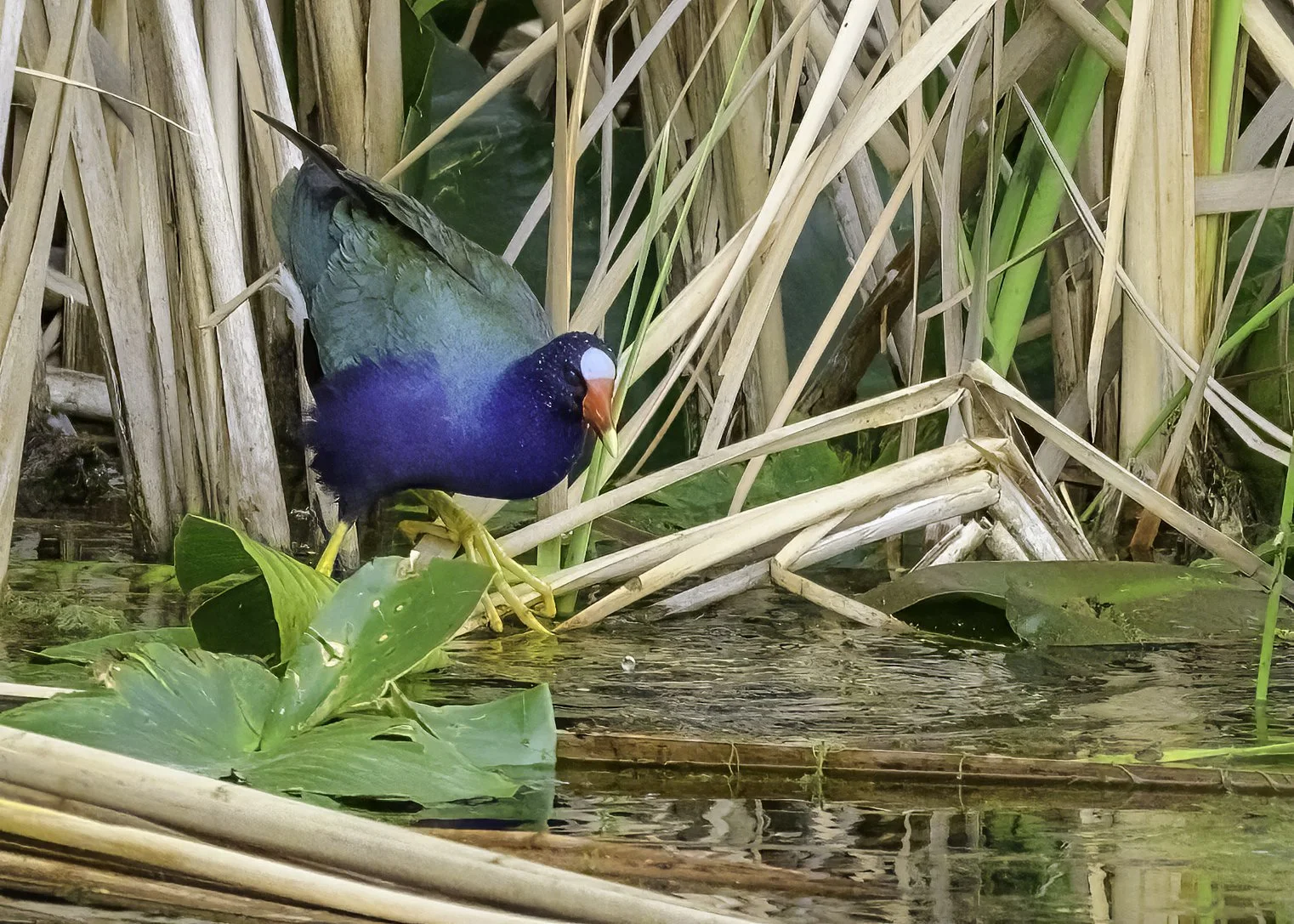
Purple gallinule - Lake Apopka - 2/22/26.
While we did not get to see any of the elusive Fulvous whistling ducks, we did find several groups of related Black-bellied whistling ducks hanging out on the dikes adjacent to the canals.
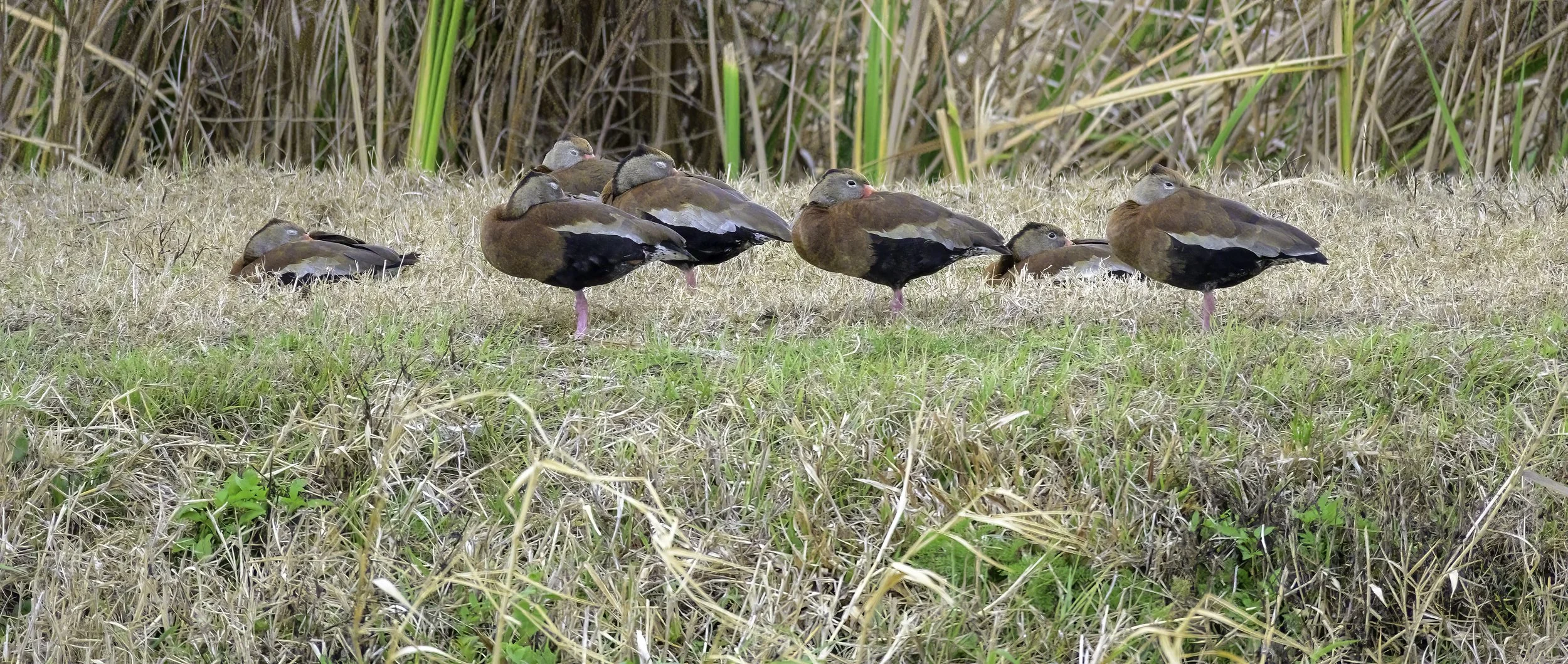
Black-bellied whistling ducks - Lake Apopka - 2/22/26
All of the avian life we saw today (in large numbers) have to be wary of one of the other common inhabitants of this preserve….the alligators. I’ll close here with a video clip from several years ago that I shot here in Lake Apopka. These gators will eat anything and everything that crosses their paths, so all you other forms of fauna….be forewarned!