With a forecast for heavy snow looming, it seems like a good idea to get out this afternoon and check on the Hudson waterfront along Haverstraw Bay. Haverstraw Bay, a broad, curving stretch of the Hudson River between Croton Point and Stony Point in southern New York, is the river’s widest freshwater expanse and a biologically rich mosaic of shallow waters, tidal marshes, and mudflats that support diverse birdlife, fish nurseries, and riverine plants. Historically, this area is a center for brickmaking and river commerce. I love the fact that the lighthouse at my other “home” in New Smyrna Beach, Florida is actually constructed from bricks that were made in Haverstraw only 12 miles from my New York home. It is indeed a small world.
I have two goals today….to see what winter waterfowl have shown up (hoping for Canvasbacks) and to locate an eagle roost to show my grandson’s girlfriend. This is her first time visiting New York and she has never seen an eagle in the wild, so we want to make sure we remedy that! Eagles are known to frequent the bay here because of those shallow waters I mentioned….great fishing spots for Bald eagles. It’s also great for diving ducks like the Common mergansers.
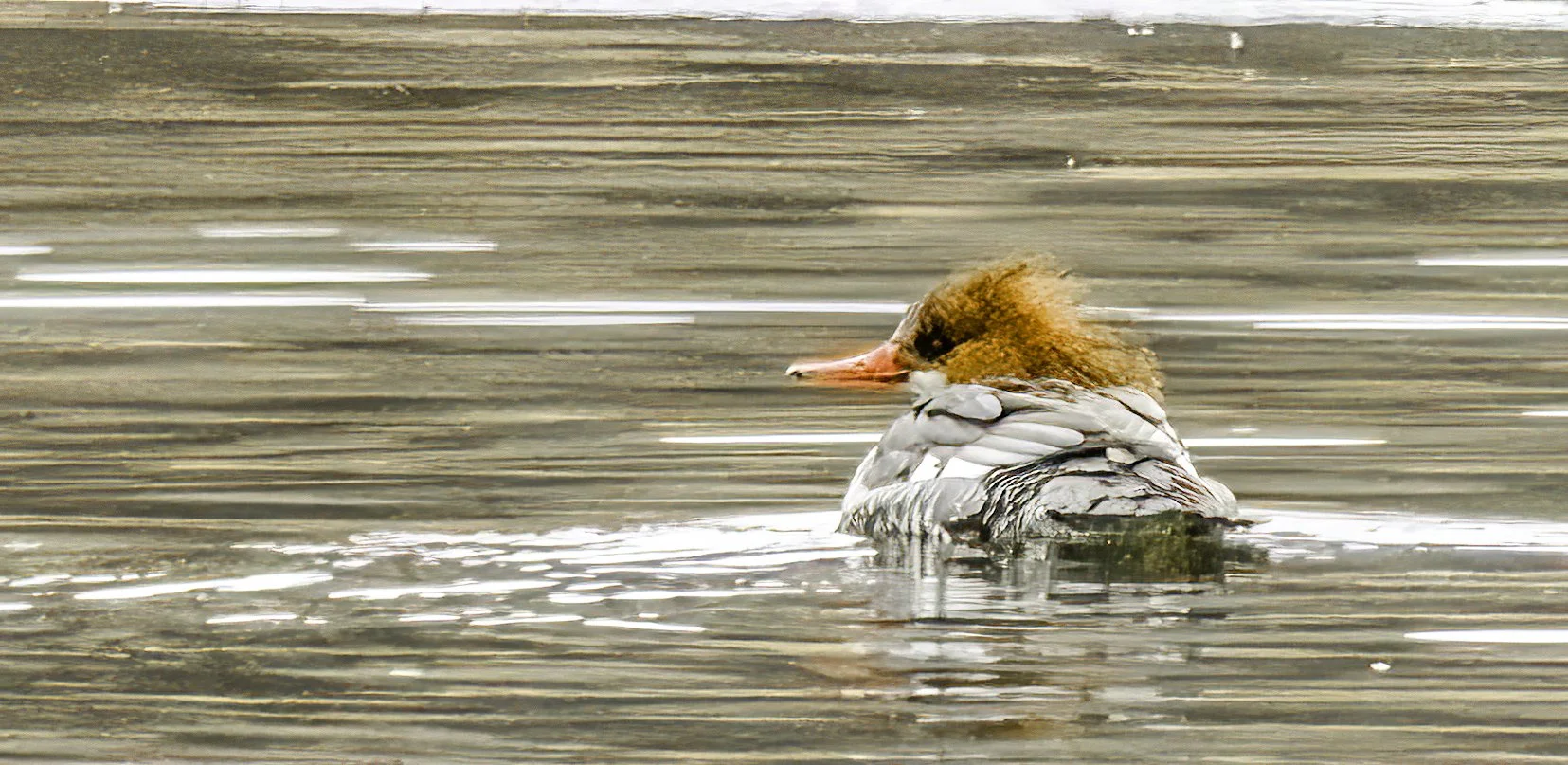
A not so flattering image of a female Common merganser - Haverstraw Bay - 12/26/25
Male Common mergs are quite striking being a rather large duck with a green head and a long sleek white body. Females, however, have a rusty brown head seen above and a gray body. They are a hardy breed and can stay in these colder climes as long as we have open water on the Hudson. I did have a few males with this female, but unfortunately they were too distant to make for a respectable photo.
A second species of Merganser, the Hooded, was seen in this same area of Haverstraw Bay. These males are also quite handsome with a brilliant white hood which they can retract to form a think white line or raise (especially when trying to attract a nearby female) to form a beautiful white Hood as the name would imply.

Hooded merganser - Haverstraw Bay Park - 12/26/25
To the novice birder, the next species, the Bufflehead, can easily be confused with the Hooded merganser, especially at some distance. Close examination, however, shows how different these duck are once you get past the head. The Buffleheads also have a white hood, but it is not the retractable model. Also, the black outline at the back of the hood is missing on a Bufflehead.
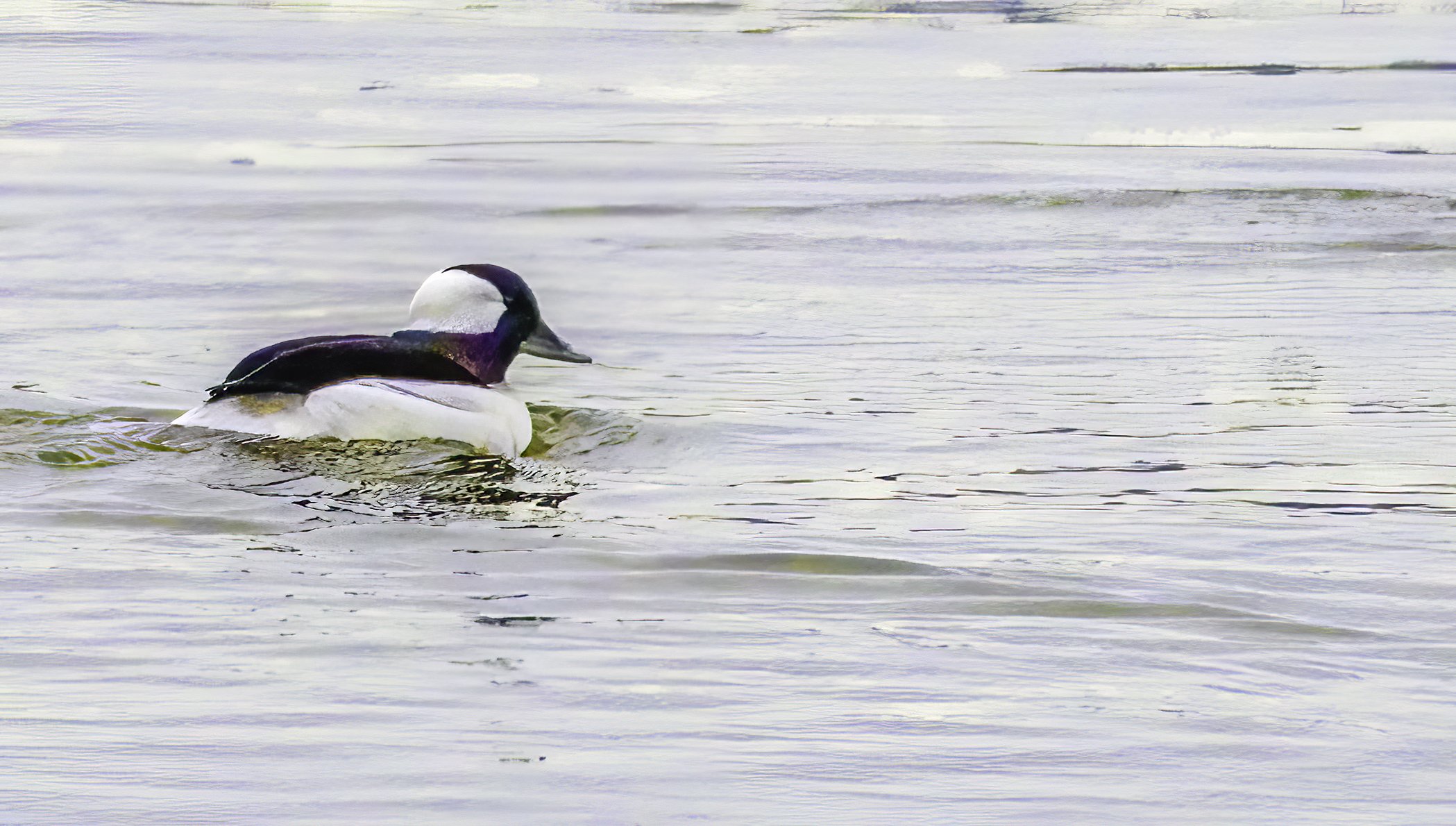
Bufflehead - Bowline Park - 12/26/25
The duck is quite a bit smaller than the merganser and has a pure white side compared to the Hooded merganser’s white-outlined mahogany flanks. This Bufflehead was one of a mated pair I found in a riverside park just south of the last ducks. Bowline Park is an area where eagles are often located, but today they were not to be found. Another species of what we refer to as “charismatic megafauna”, the White-tailed deer are here in good numbers all winter, however. I get the feeling that someone is probably feeding them from their car, for several, including this young doe, came very close to my RAV4 and looked as if she was hoping for a handout.
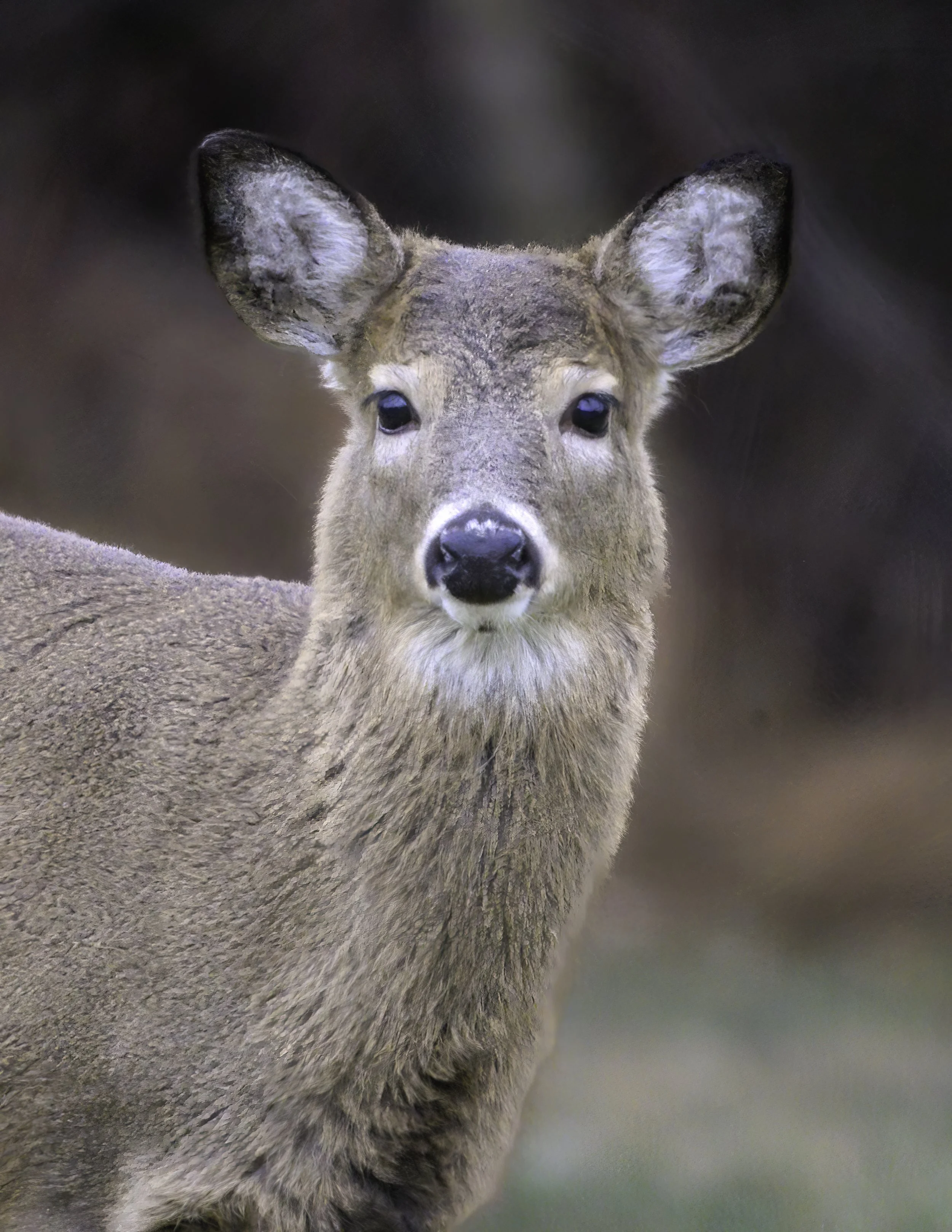
Doe- Bowline Park - 12/26/25
While the deer did make for a nice portrait subject, it was not the hoped for Bald eagle, and as the days are short now, it was time to head home as the sunlight waned. One more stop, however, along the road home was my last chance at out national bird. At the northern end of West Shore Drive , I know of an eagle’s nest that has been a permanent fixture for a number of years now. I was hoping that one of our resident eagles would be around to afford me my last shot of the day.
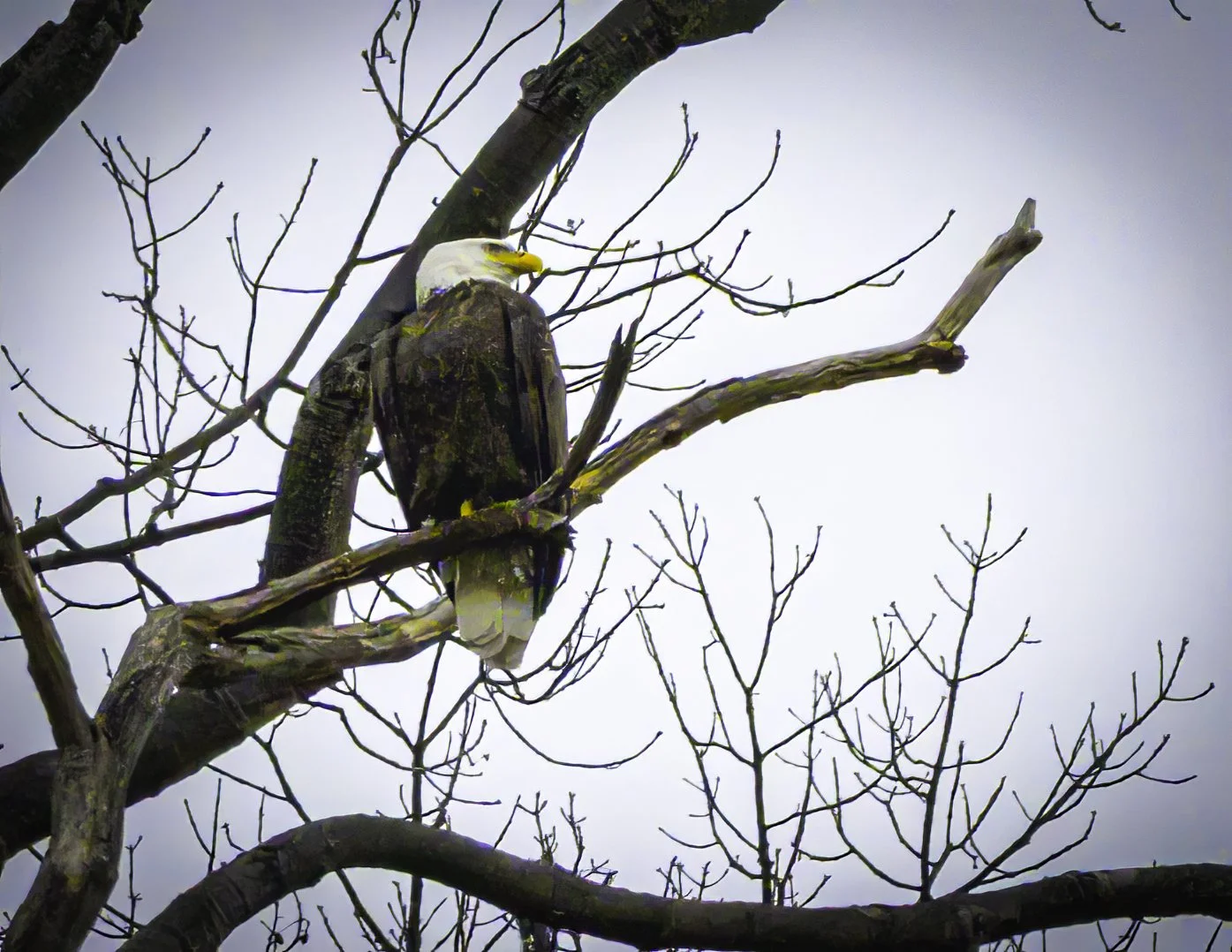
Bald eagle - West Shore Drive - 12/26/25
Sure enough, in the final sunlight of the day, I was able to pull the car over and shoot out my window to capture my final target bird of the day. This is a nice adult Bald eagle, at least 5 years old as it takes about 5 years for the birds to develop their pure white heads and tail plumage. I appreciated the fact that the bird had decided to perch in such an opportune position to afford me a shot in less than ideal lighting. So….no Canvasbacks, yet, but enough wintering ducks, several curious deer, and a resident eagle to keep me entertained for a nice afternoon outing.
Tech Tip - I always carry a photo bean bag with me when out looking for wildlife shots in case I have the opportunity to capture an image from the car. Draping the large bag filled with rice rather than beans over the window sill of the car makes for a rather sturdy platform from which to shoot. In low light, it’s often necessary to use a lower than optimum shutter speed, but with the bean bag and using the vibration reduction features in today’s cameras, shots that use to be close to impossible are now quite routine if you just use the right setting and have the right gear.